


Likes
Comments
Share


@C_More_Budz
Follow
Bud sites are getting more dense and terps have ramped up a bit. The room smells like candy 🍬 when the door is open. But everything is on cruise control. 1 plant is showing a deficiency but is not affecting the growth at all. Gonna let them go for another 4 weeks then chop them down. All input is appreciated

Likes
19
Share


@adam_pawloski87
Follow
Let’s go Day 46 from seed!! What a great week it’s been, girls structured up real nice veg has been huge for us, looking super healthy an catching a nice smell ! This will be the last week of feeding them the veg schedule, next we will be dipping right into bloom, starting Monday yall We will be in full bloom !! Can’t wait to watch these ladies stack over the next few weeks 😍! I hope you all enjoy an have an amazing productive day an week ! Peace love an positive vibes y’all Cheers 😶🌫️💨💨💨💨💨🤙🏻


Likes
2
Share

@Phileed
Follow
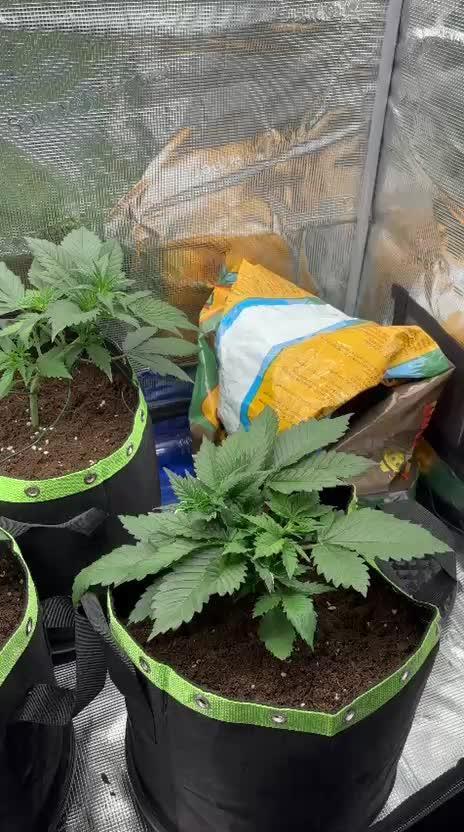
End of week 3 at the beginning of this week I did some lst… on some it turned out better than others but have to do some defoliation in next days.
Pls send some suggestions ( I really appreciate) since it’s my 2nd time growing
Week 2 for papaya cookies… lst very soon


Likes
10
Share

@The_Holy_Herb
Follow
Hello all! I hope y'all doing well. Happy new year!
Im trying to make good videos and pictures but the site can't handle too much quality...so it is what it is.
Anyway
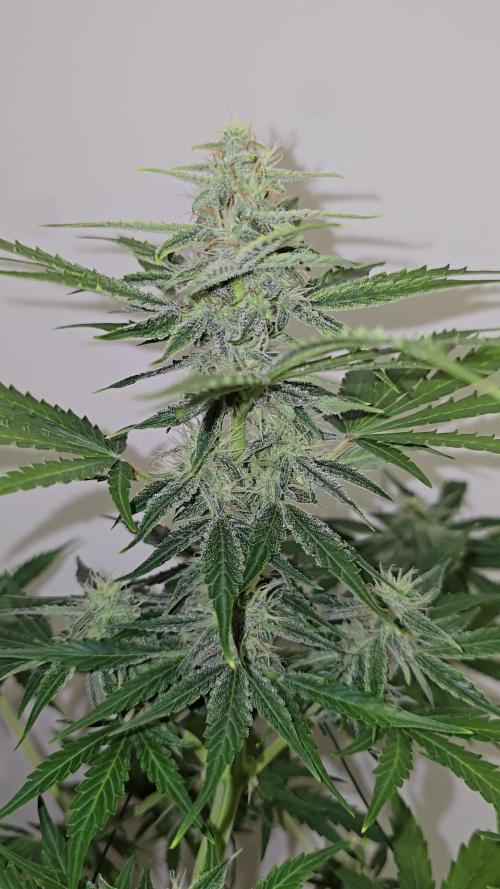
Today we are closing the second week of flowering.
This week went on quite easy, the plant is growing as expected.
Couple of days ago I applied some extra defoliation to the little Titan, just 2 leaves, nothing too special. The plant is responding well to the various treatments and techniques, even from a newbie like me.
Also do you remember about the broken branch? The plant fully recovered that within 2 weeks.
I am super happy and satisfied, is even having two bud sites on it. Not bad huh ?
Two days ago the plant got 1.5 L of water with nutrients, the final pH of the water was 6.2.
Im happy that finally I overcome the soil pH issue, was way too low.
The pot didn't drain any water after the watering.
Next time I will step up a little bit, maybe 2 liters, maybe not. We will see.
The flowering is finally going "full speed", I can see the flowers growing day by day.
Also the smell got much more intense right now, maybe since a week.
I can definitely feel it, it has a very distinguished smell, a little bit of mango or papaya in the back notes when you smell it.
Also the plant is becoming more frosty and a lot of little crystals are forming here and there. Gotta love it man!
I will catch you guys next week for another update! See yaa

Likes
11
Share


@eldruida_lamota
Follow
Que pasa familia, vamos con la segunda semana de crecimiento de estas Gorilla cookies Auto de FastBuds.
Tiene muy buenas reseñas y pues me animé a colocar 4 plantas.
Han sido plantadas directamente en macetas de 7 litros y salieron las 4, 100% de éxito en el ratio.
La tierra que utilizamos que está en la publicación anterior es plagron all mix, aparte alimentamos nuestras plantas con Agrobeta.
El tetra 9 lo apliqué vía foliar.
Por supuesto el ph se mide en cada riego y se mantiene en 6.2, regando cada 24 horas e intentando mantener la humedad un poco alta al principio.
La temperatura está entorno al 22/24 grados y la humedad anda sobre el 60%.
De uno de los ejemplares la cague un poco, como siempre que no falte, al quitar la piel de la cáscara de la semilla? Pues arranque los cotiledones sin querer, pero no pasó nada salió adelante y todo perfecto.
Mars hydro:
Code discount: EL420
https://www.mars-hydro.com/
Agrobeta:
https://www.agrobeta.com/agrobetatiendaonline/36-abonos-canamo
Hasta aquí todo, Buenos humos 💨💨💨

Likes
13
Share


@FlavoursUk
Follow
Day 15 - The start of week 3 and the girls are really taking off, from 1-2 Inches of vertical growth daily. Consuming a good amount of water, almost leaving the bucket empty. lol.
Lightly defoliating to keep the bud sites exposed to light, as they get bushy very fast and recovery is only taking a day for them to bounce back. Pretty happy with how things are going right now. Slightly increased the EC by .2 but not enough to burn them.. which is the goal. Grateful for my trolmaster unit as it has made keeping tracking of my parameters much easier and effortless.
Day 16- Topping up the res with RO water every two days. Otherwise I'm sure it would be empty! Pistils are showing and the bud sites are very visible. Seeing one pheno with slightly more sativa dominant traits. Luckily I took clones so I can run the best pheno next time around, although all these plants are special. Still going through the flower stretch. Excited for what is to come. Stay tuned for the results.
Day 18 - As you can see, the difference is night and day over a period of 2 days they have had an explosion of growth. They were
heavily defoliated on day 17 and bounced back within a day. Happy plants preying. Bud sites are forming everywhere now. Not much to report. Until the end of week 3 in a few days. Bring on week 4.
Follow my Instagram and YouTube (link in bio)


Likes
5
Share


@CannabisAprendiz
Follow
Se deja de fertilizar con nutrientes , solamente se riega con agua para empesar el proceso de lavado de raiz / It stops fertilizing with nutrients, only watered with water to start the root washing process


Likes
24
Share


@OGOZHigh
Follow
Leider spielt das Wetter nicht so mit daher langsame Fortschritte.
Update : 21.06
Das Wetter wird besser und die Ladys geben langsam richtig gas 🥦🔥
Likes
7
Share


@MadeInGermany
Follow
Hey everyone 🤗.
This week you really put your energy into your growth 👍.
They look beautiful, thanks also to the nutrients in Green Buzz Liquids 😍👌.
Next week she will be moved to the flower tent 👍.
I wish you lots of fun with the update, stay healthy and let it grow 😎
You can buy this Strain at
https://thecaliconnection.com/original-sour-diesel.html
You can buy this Nutrients at
https://greenbuzzliquids.com/
Type:
Original Sour Diesel ( Clone )
☝️🏼
Genetics:
Fem seeds- Original Sour Diesel to Original Sour Diesel BX3 RVSD Male
Reg seeds- Original Sour Diesel x Original Sour Diesel BX3 Male
👍
Vega lamp:
2 x Todogrow Led
Quantum Board 100 W
💡
Bloom Lamp :
2 x Todogrow Led
Cxb 3590 COB 3500 K 205W
💡💡☝️🏼
Soil :
Canna Coco Professional +
☝️🏼
Fertilizer:
Green Buzz Liquids :
Organic Grow Liquid
Organic Bloom Liquid
Organic more PK
More Roots
Fast Buds
Humic Acid Plus
Growzyme Big Fruits
Clean Fruits
Cal / Mag
Organic Ph - Pulver
☝️🏼🌱
Water:
Osmosis water mixed with normal water (24 hours stale that the chlorine evaporates) to 0.2 - 0.4 EC. Add Cal / Mag 2 ml per l water every 2 waterings . Ph with Organic Ph - Pulver to 5.8 .

Likes
31
Share


@Untergrownd
Follow
Week Twelve
Flower Week 6 and so far so okay. I got worried about nanas on the sfv, but it turned out it was just new growth. The fungus gnats came back, stronger than before, so I covert the soil with sand to prevent them from laying more eggs.
Alle the plants looking fine, on some days I had to fight high humidity and temps. This will bite me a week later, check week 13 ;)


Likes
5
Share


@Johngrowbr
Follow
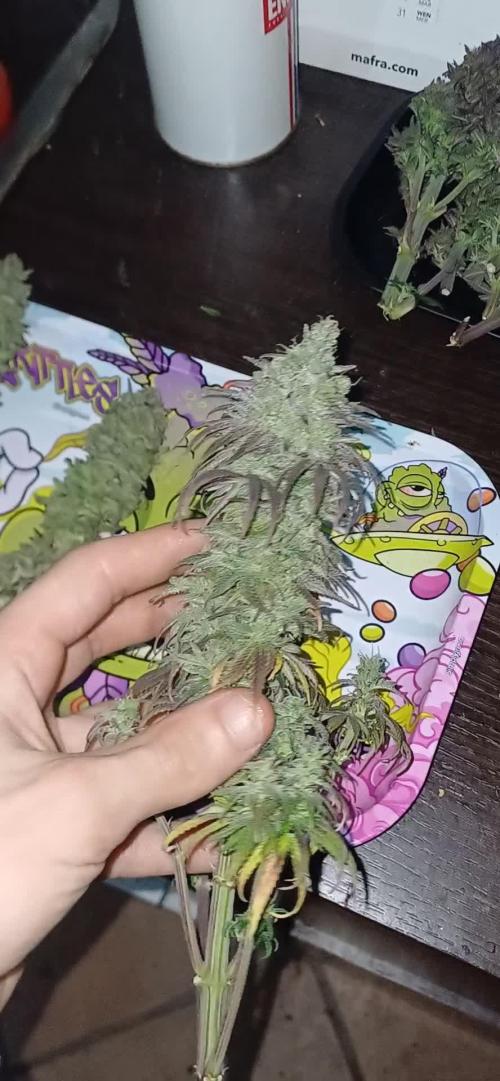
They start to creat a very different type of buds, it’s looks so amazing and smells good

Likes
4
Share

@Randagio
Follow
Farò un Aggiornamento del ricavato e dell'efficacia dei fiori appena saranno pronti


Likes
7
Share

@BlossomB
Follow
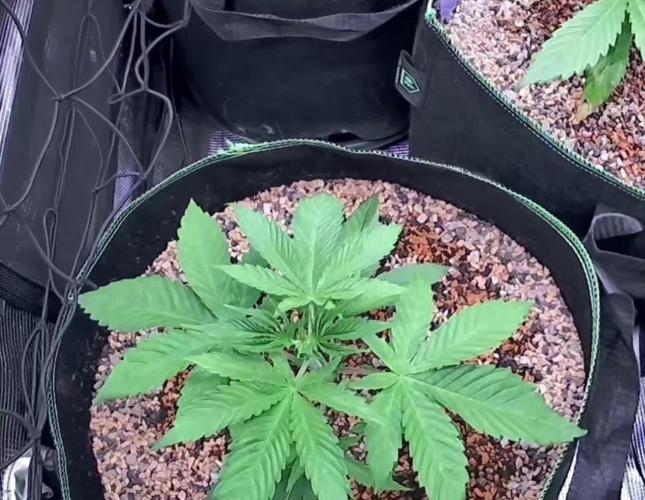
The Perfect Student & My First Topping
🌿Unstoppable Perfection🌿
Die Tropical Chimera ist seit Tag 1 mein absoluter Musterschüler. Sie ist das Paradebeispiel für eine wunderschöne, perfekt symmetrische und kerngesunde Pflanze. Ganz ehrlich: Wenn ich es nicht besser wüsste, würde ich glatt behaupten, sie ist eine Kunstpflanze – so makellos steht sie da. Sie wächst, und wächst, und wächst... einfach unzerstörbar!
🌿A Heartbreaking Milestone: First Topping🌿
Diesen Samstag war es so weit. Da sie meine erste photoperiodische Pflanze ist, hatte ich durch sie auch mein „erstes Mal“ beim Toppen. Ich muss gestehen: Es fiel mir wahnsinnig schwer, mein Baby zu „köpfen“ . Ich trauere dem entfernten Kopf immer noch ein bisschen nach...
🌿
Aber die Chimera? Die ist aus Stahl! Während ich noch trauere, zeigt sie absolut null Anzeichen von Stress. Sie hat sich keine Sekunde hängen gelassen, keine schlaffen Blätter, nichts. Sie ignoriert den Eingriff einfach und wächst munter weiter, als wäre nichts passiert. Wahnsinnige Vitalität!
🌿Pure Vitality – No Additives🌿
Auch hier bleibe ich meiner Linie treu: Kein Dünger, absolut nichts. Sie ist so gesund, vital und tiefgrün, dass sie offensichtlich alles hat, was sie braucht. Am liebsten würde ich sie einfach ewig weiterwachsen lassen und unendlich viele Klone von dieser perfekten Genetik ziehen.
Likes
44
Share


@rhodes68
Follow
10/27 Last week for these guys for sure.
Really not happy with the soil as things turn out but thats why I have four cubic feet of buffered coco ready for next grow.
Worry about soil next spring.
Held off watering today as I may decide to go ahead and chop, tricones are ready and few new hairs so... need em dry.
10/28 Gave 1.5 liter of 6.5 PH water and 1 tbs Karo /gal each, just enough to get things to the 30th Harvest day with no further issues.
Some new hair growth noted so buds still building on all but Jen, she is done but no where to put her till the drying tent is free so... on it goes for a couple. :)
Likes
21
Share


@CanadianFillmore
Follow
Welcome growfessors to the harvest of Mandarin dreams pheno 2. She's typical light, airy fluffy buds.
Wet trim and then vacuum sealed and into the freezer. Experimenting with this strain, freezing before turning into bubble hash.
Will update with some sort of weight in the future.

Likes
15
Share


@Cannabeast40
Follow
Week 3 and a repot is done and now in day 3. Finally it’s settling down after the repot, which was not pretty at all😂
Hope to get some massive plants this run 🌱
________________________________________________________________________________________
Light from @MedicGrowLED 😎
NEO 780 LED🔥
780 Watt⚡️💥
PPF of 2184 μmol/s & 2.8 μmol/J🔥
Full Spectrum V1/F1 🌈
WiFi smart connection & Smart Aura Control 😱
Likes
24
Share


@MrPott
Follow
love seeing all the buds getting thicker and thicker by day. Tempted to harvest it early but I HAVE to be patient. Just a few more weeks and they'll be solid. Bottom leaves are dying so there's quite a bit to clean up but overall, really happy with how the ladies are turning out.

