Likes
Comments
Share
Likes
1
Share
Next defoliation at fourth week of flower. Watering with BioEnhancer 1g/l And compost Tea .
Likes
2
Share
Day 1 week 2 Day 2 week 2 Day 3 week 2
Likes
8
Share
@Roberts
Follow
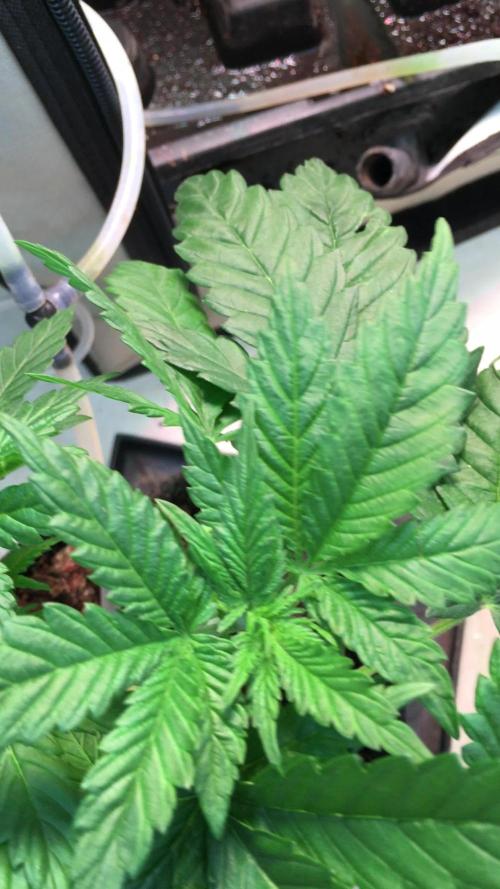
Fast version A is doing good. I did some defoliation and lst training on the extending branches. Everything is looking good. Thank you Dutch Passion, SSSC, Medic Grow, and Athena nutrition. 🤜🏻🤛🏻🌱🌱🌱 Thank you grow diaries community for the 👇likes👇, follows, comments, and subscriptions on my YouTube channel👇. ❄️🌱🍻 Happy Growing 🌱🌱🌱 https://youtube.com/channel/UCAhN7yRzWLpcaRHhMIQ7X4g.
Processing
Likes
7
Share
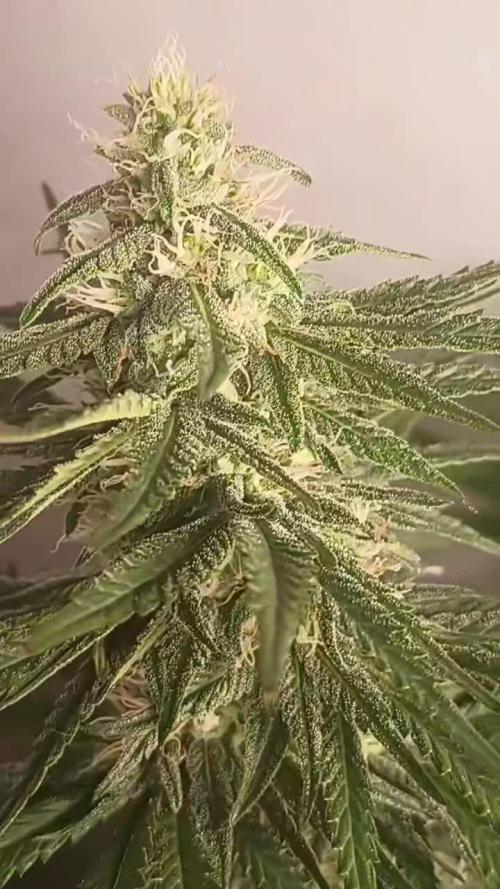
WEEK 3 of flower, A lot went on this week. The watering's in between feeding were made up of CAL MAG and SILICA and I boosted the P & K in the feeding, another round of defoliation and a deep watering after the feeding dried up from last week. I have seen a minuscule amount of nutrient burn only on a few leaves, 1 or 2 at most. It looks like the increase in canopy can handle the extra food, If you see the time lapse it was in 8 days and the stretch is very apparent a super speed version at the end ala Gary Numan,
Likes
30
Share
Great week! She grew 10in and responds well to the full dose of nutes. Cut back on the Gro and upped Bloom. Smell up 1100sq feet nicely. She’s been under a 600w and will be put in a 5x5 soon with a 1000w LED.
Likes
2
Share
@erbear
Follow
I missed a bunch of weeks, but the plants have been living outside full time for a few weeks now. I supported them with plant wire and bamboo. They didn't get nearly large enough before flowering.
Likes
6
Share
@Lazuli
Follow
14th Fastbuds Blue dream 🌲🌲💚
Likes
10
Share
@Erickchz
Follow
Buds growing dense, this week I added 2 uvb-a lamps to help increase resin production. Smell is also great, like sweet lemon tart.
Likes
Comments
Share
This week, we feed mycorrhizal fungi to the plants and it gets the excellent results. The plants grow extraodinarily.
Likes
7
Share
@Bmy88
Follow
Crecen muy rápido, esta semana apliqué top veg, y empezaré con microbita dentro de unos días.
Likes
4
Share
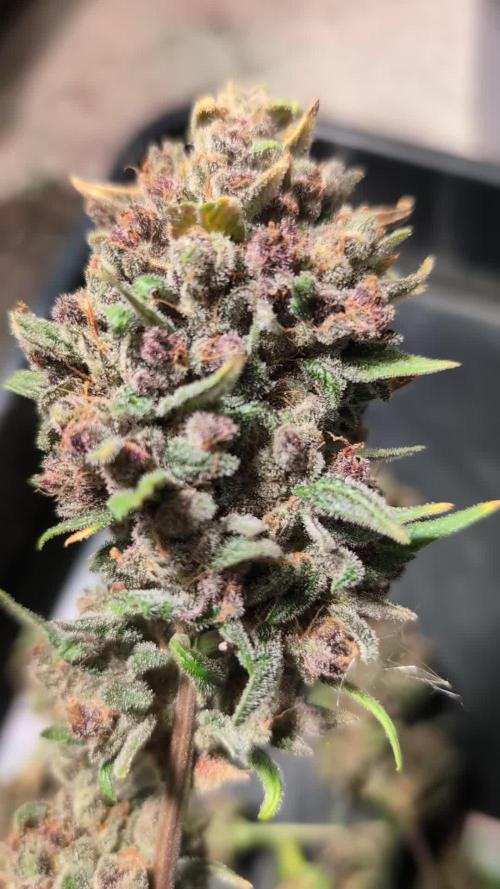
Vamos familia, actualizamos la novena y última semana de floración de estas Runtz de MSNL. La temperatura que estuvo entre los 22-24 grados y humedad dentro de los rangos correctos. Este armario se contaminó esta semana , tengo que para un poco para desinfectar todo bien. Las flores acaban madurando bien y se llenaron de tricomas, por el momento todo correcto, os dejé también alguna novedad y un cambio en la sala, agradecer al equipo de Mars hydro por el nuevo TSW2000. (los últimos 5 años cultive solo con los leds de esta marca). - os dejo por aquí un CÓDIGO: Eldruida Descuento para la tienda de MARS HYDRO. https://www.mars-hydro.com Hasta aquí todo, Buenos humos 💨💨💨
Likes
8
Share
End of week 4 and what a week. This poor girl was getting roasted by the heater because silly me had put the thermometer too far away 🤦‍♂️ lesson learned and problem solved. I also may have been slightly over watering her. I'll surely be more vigilant on the coming weeks. On day 22 I started LST with this girl, just bending her over to open up the new growth to the lights. Day 27 I brewed up a compost tea and they reacted very well. I used 1 cup of Herbis brew starter, 1 cup of worm castings and 1 cup of organic compost. I used the left overs as a top dress And today on day 28 I realized she was getting cooked next to the heater so moved them all away and re-positioned the thermometer to properly warm them. Today I also lightly defoliated her and continued LST Learned a lot this week and will not be making these same mistakes again. Hope you all had a good week and thanks for checking in 🙏
Likes
11
Share
@cangrowz
Follow
Ende Woche 4 / Anfang Woche 5 – Grow Diary Mimosa x 🍊👊🏻 Barney’s Farm Die beiden haben nochmal ordentlich Stretch hingelegt 💪 Seit die Runtz raus ist (Ernte lief sauber durch), wirkt das Zelt jetzt etwas leer – aber gibt den Mimosas schön Platz, sich voll zu entfalten. Die ersten Blütenstempel kommen jetzt richtig stabil durch, genau so will man das sehen 🔥 Wenn das so weitergeht, werden das am Ende richtig schöne Ladies. Klima bleibt weiterhin im sweet spot – weder zu feucht noch zu trocken, Temperatur passt auch konstant. Genau so hält man sie happy in der Phase. Bis jetzt wieder mal sehr zufrieden mit dem Run und der Genetik von Barney’s 👌 Happy Growing Growmies 🌱?💚
Likes
12
Share
@la_piper
Follow
ола washing machine пересажены в горшки на пмж и включены в систему. ppm 590. ph 5.9. полив: через час после включения света(7.00) помпа включается на 30минут и через 12часов ещё на 30минут
Likes
18
Share
Green light is radiation with wavelengths between 520 and 560 nm and it affects photosynthesis, plant height, and flowering. Plants reflect green light and this is why they appear green to our eyes. As a result, some growers think that plants don’t use green wavelengths, but they actually do! In fact, only around 5 – 10% of green light is reflected from leaves and the rest (90 – 95 %) is absorbed or transmitted to lower leaves [1]. Green wavelengths get used in photosynthesis. Chlorophyll pigments absorb small amounts of green wavelengths. Light that doesn’t get absorbed is transmitted to leaves that are shaded out from direct light. This means that leaves at the bottom of the canopy get more green light than leaves at the top. A high proportion of green wavelengths compared to other colors tells lower leaves that they are being shaded out, so they are able to react accordingly. Lower leaves may react by opening or closing their stomata or growing longer stems that help the leaves reach brighter light [1, 2, 3]. When it comes to growing cannabis, many cultivators are interested in the quality of light used for the flowering stage. In many plants, flowering is regulated by two main photoreceptors: cryptochrome and phytochrome. Both photoreceptors primarily respond to blue light but can also respond to green, although to a lesser extent. Green can accelerate the start of flowering in several species (although cannabis has yet to be tested) [1, 4, 5]. However, once flowering has begun, it’s important to provide plants with a “full spectrum” light that has high amounts of blue and red light, and moderate amounts of green, in order for photosynthesis to be optimized. Green light mediates seed germination in some species. Seeds use green wavelengths to decide whether the environment is good for germination. Shade environments are enriched in green relative to red and blue light, so a plant can tell if it is shady or sunny. A seed that senses a shaded environment may stay dormant to avoid poor growing conditions [1]. Some examples of plant species where researchers have documented this response are: ryegrass (a grass that grows in tufts) and Chondrilla (a plant related to dandelion) [1, 6]. Although green wavelengths generally tell plants NOT to germinate, there are some exceptions! Surprisingly, green wavelengths can stimulate seed germination in some species like Aeschynomene, Tephrosia, Solidago, Cyrtopodium, and Atriplex [1, 6, 7]. Of course, light is not the only factor affecting seed germination – it’s a combination of many factors, such as soil moisture, soil type, temperature, photoperiod, and light quality. When combined with red and blue light, green can really enhance plant growth [1, 8]. However, too much green light (more than 50% of the total light) can actually reduce plant growth [8]. Based on the most current research, the ideal ratio of green, red, and blue light is thought to be around 1:2:1 for green:blue:red [9]. When choosing a horticultural light, choose one that has high amounts of blue and red light and moderate amounts of green and other colors of light. Not many studies can be found about the effect of green light on cannabis growth or metabolism. However, if one reads carefully, there are clues and data available even from the very early papers. Mahlberg and Hemphill (1983) used colored filters in their study to alter the sunlight spectrum and study green light among others. They concluded that the green filter, which makes the environment green by cutting other wavelengths out, reduced the THC concentration significantly compared to the daylight control treatment. It has been demonstrated that green color can reduce secondary metabolite activity with other species as well. For example, the addition of green to a light spectrum decreases anthocyanin concentration in lettuce (Zhang and Folta 2012). If green light only reverses the biosynthesis of some secondary metabolites, then why put green light into a growth spectrum at all? Well, there are a couple of good reasons. One is that green penetrates leaf layers effectively. Conversely red and blue light is almost completely absorbed by the first leaf layer. Green travels through the first, second, and even third layers effectively (Figure 2). Lower leaf layers can utilize green light in photosynthesis and therefore produce yields as well. Even though a green light-specific photoreceptor has not yet been found, it is known that green light has effects independent from the cryptochrome but then again, also cryptochrome-dependent ones, just like blue light. It is known that green light in low light intensity conditions can enhance far red stimulating secondary metabolite production in microgreens and then again, counteracts the production of these compounds in high-intensity light conditions (Kim et al. 2004). In many cases, green light promoted physiological changes in plants that are opposite to the actions of blue light. In the study by Kim et al. blue light-induced anthocyanin accumulation was inhibited by green light. In another study it has been found that blue light promotes stomatal opening whereas green light promotes stomatal closure (Frechilla et al. 2000). Blue light inhibits the early stem elongation in the seedling stage whereas green light promotes it (Folta 2004). Also, blue light results in flowering induction, and green light inhibits it (Banerjee et al., 2007). As you can see, green light works very closely with blue light, and therefore not only the amount of these two wavelengths separately is important but also the ratio (Blue: Green) between these two in the designed spectrum. Furthermore, green light has been found to affect the elongation of petioles and upward leaf reorientation with the model plant Arabidopsis thaliana both of which are a sign of shade avoidance symptoms (Zhang et al. 2011) and also gene expression in the same plant (Dhingra et al. 2006). As mentioned before, green light produces shade avoidance symptoms which are quite intuitive if you consider the natural conditions where the plants grow. Not all the green light is reflected from the highest canopy leaves in nature but a lot of it (50-90%) has been estimated to penetrate the upper leaves at the plant level ((Terashima et al., 2009; Nishio, 2000). For the plant growing in the understory of the forest green light is a signal for the plant of being in the shade of a bigger plant. Then again, the plants growing under unobstructed sunlight can take advantage of the green photons that can more easily penetrate the upper leaves than the red and blue photons. From the photosynthetic pigments in higher plants, chlorophyll is crucial for plant growth. Dissolved chlorophyll and absorb maximally in the red (λ600–700 nm) and blue (λ400–500 nm) regions of the spectrum and not as easily in the green (λ500–600 nm) regions. Up to 80% of all green light is thought to be transmitted through the chloroplast (Terashima et al., 2009) and this allows more green photons to pass deeper into the leaf mesophyll layer than red and blue photons. When the green light is scattered in the vertical leaf profile its journey is lengthened and therefore photons have a higher chance of hitting and being absorbed by chloroplasts on their passage through the leaf to the lower leaves of the plant. Photons of PPFD (photosynthetic photon flux density) are captured by chlorophyll causing an excitation of an electron to enter a higher energy state in which the energy is immediately passed on to the neighboring chlorophyll molecule by resonance transfer or released to the electron transport chain (PSII and PSI). Despite the low extinction coefficient of chlorophyll in the green 500–600 nm region it needs to be noted that the absorbance can be significant if the pigment (chlorophyll) concentration in the leaf is high enough. The research available clearly shows that plants use green wavelengths to promote higher biomass and yield (photosynthetic activity), and that it is a crucial signal for long-term developmental and short-term dynamic acclimation (Blue:Green ratio) to the environment. It should not be dismissed but studied more because it brings more opportunities to control plant gene expression and physiology in plant production. REFERENCES Banerjee R., Schleicher E., Meier S. Viana R. M., Pokorny R., Ahmad M., Bittl R., Batschauer. 2007. The signaling state of Arabidopsis cryptochrome 2 contains flavin semiquinone. The Journal of Biological Chemistry 282, 14916–14922. Dhingra, A., Bies, D. H., Lehner, K. R., and Folta, K. M. 2006. Green light adjusts the plastic transcriptome during early photomorphogenic development. Plant Physiol. 142, 1256-1266. Folta, K. M. 2004. Green light stimulates early stem elongation, antagonizing light-mediated growth inhibition. Plant Physiol. 135, 1407-1416. Frechilla, S., Talbott, L. D., Bogomolmi, R. A., and Zeiger, E. 2000. Reversal of blue light -stimulated stomatal opening by green light. Plant Cell Physiol. 41, 171-176. Kim, H.H., Goins, G. D., Wheeler, R. M., and Sager, J. C. 2004.Green-light supplementation for enhanced lettuce growth under red- and blue-light emitting diodes. HortScience 39, 1617-1622. Nishio, J.N. 2000. Why are higher plants green? Evolution of the higher plant photosynthetic pigment complement. Plant Cell and Environment 23, 539–548. Terashima I., Fujita T., Inoue T., Chow W.S., Oguchi R. 2009. Green light drives leaf photosynthesis more efficiently than red light in strong white light: revisiting the enigmatic question of why leaves are green. Plant & Cell Physiology 50, 684–697. Zhang, T., Maruhnich, S. A., and Folta, K. M. 2011. Green light induces shade avoidance symptoms. Plant Physiol. 157, 1528-156. Wang, Y. & Folta, K. M. Contributions of green light to plant growth and development. Am. J. Bot. 100, 70–78 (2013). Zhang, T. & Folta, K. M. Green light signaling and adaptive response. Plant Signal. Behav. 7, 75–78 (2012). Johkan, M. et al. Blue light-emitting diode light irradiation of seedlings improves seedling quality and growth after transplanting in red leaf lettuce. HortScience 45, 1809–1814 (2010). Kasajima, S., et al. Effect of Light Quality on Developmental Rate of Wheat under Continuous Light at a Constant Temperature. Plant Prod. Sci. 10, 286–291 (2007). Banerjee, R. et al. The signaling state of Arabidopsis cryptochrome 2 contains flavin semiquinone. J. Biol. Chem. 282, 14916–14922 (2007). Goggin, D. E. & Steadman, K. J. Blue and green are frequently seen: responses of seeds to short- and mid-wavelength light. Seed Sci. Res. 22, 27–35 (2012). Mandák, B. & Pyšek, P. The effects of light quality, nitrate concentration and presence of bracteoles on germination of different fruit types in the heterocarpous Atriplex sagittata. J. Ecol. 89, 149–158 (2001). Darko, E. et al. Photosynthesis under artificial light: the shift in primary and secondary metabolism. Philos. Trans. R. Soc. B Biol. Sci. 369 (2014). Lu, N. et al. Effects of Supplemental Lighting with Light-Emitting Diodes (LEDs) on Tomato Yield and Quality of Single-Truss Tomato Plants Grown at High Planting Density. Environ. Control Biol. 50, 63–74 (2012).
Likes
14
Share
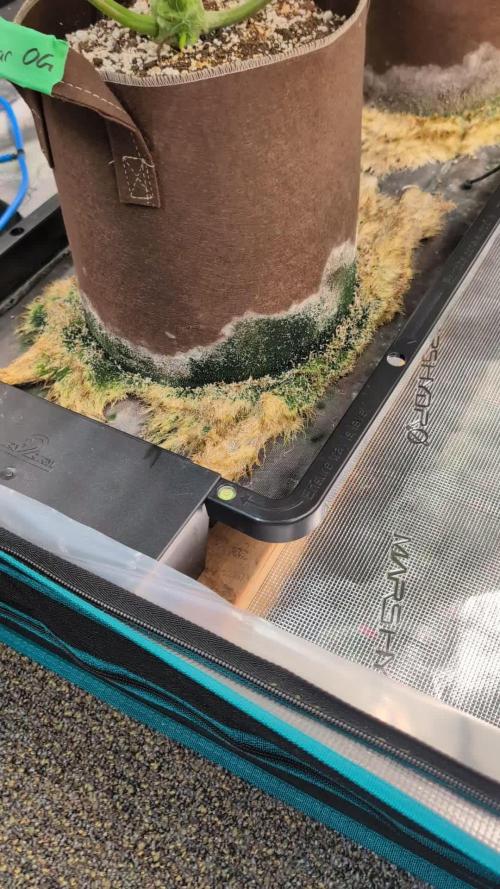
This is the third monday. The girls still look healthy, I gave blooming nutrients for the first time as the schedule suggested. The Attack of Gnats: Inside the tent there is a huge fan, which was unstable, if I tilted it too much, so I put a 20litre soil bag (with some cheap shitty soil for decorative flowers) at the base of it to make it solid. As the tent started to warm up, the soil was warm ask well. After a couple of days some gnats mysteriously appeared in the tent. First there were only two, but now there is a whole army. I bought a "special" trap for them, it came in a pear shaped plastic dispenser with some sort of "killer liquid" that will eliminate the enemy. As soon as I opened the little container with the liquid my first idea was to smell it. Surprisingly the smell was familiar, and I smelled it before in salads. I asked my girlfriend, and she immediately told me, that this killer liquid is nothing more than Apple Cider Vinegar. I searched google, and I found out, that you can make very effective gnat trap at home by using apple cider vinegar, sugar, and dish soap... This costs you almost nothing, because you can find everything at home. Learning every day.... :) Now there are only a few more gnats left, but I will kill them in the following days. 🙏 Namaste
Likes
24
Share
🌱 Divine Seeds Week Three Veg Report 🌱 Hey, fellow growers! 🌿✨ Welcome back to our weekly update on the Divine Seeds journey. We’re now into Week Three of the vegetative stage, and our plants are loving their new environment. The Moon Rock, Opium, and Big Demon are thriving after the transplant, and we’re excited to share the latest developments. 🌟 Week Three Highlights 🌟 This week, we plugged in the Autopots and turned them on, letting gravity do its magic. From now on, we’ll rely on the Regulator and CaMg-Boost in the reservoir. Our soil is rich in organic matter and nutrients, so we’re testing if just the organic inputs in the soil, plus CaMg and Regulator, can sustain the entire run. Let’s dive into the details: 1. Moon Rock 🚀 • Growth: Vigorous vertical and lateral growth, with lush, broad leaves. • Health: The transplant has boosted its vigor, and the plant looks healthier than ever. • Notes: Moon Rock is showing exceptional adaptability and strength. 2. Opium 🌸 • Growth: Steady and balanced growth with symmetrical leaf development. • Health: Opium is thriving, with no signs of stress or deficiencies. • Notes: This plant continues to flourish with grace and beauty. 3. Big Demon 💪 • Growth: Robust and vigorous, with thick stems and expansive leaf growth. • Health: The transplant has enhanced its already impressive growth. • Notes: Big Demon remains a powerhouse in our garden. 🌟 Nutrient Strategy 🌟 Our feeding regimen this week focuses on: • Regulator (0.15ml/L): Helps reduce stress and improves overall plant health by regulating plant processes and enhancing nutrient uptake. • CaMg-Boost (0.25ml/L): Provides essential calcium and magnesium, preventing deficiencies and supporting strong cell wall development and photosynthesis. Our rich organic soil is packed with biolife and nutrients, so this experiment will test if these organic inputs, combined with CaMg and Regulator, can sustain the plants through their entire growth cycle. 🌟 LED Lighting and Control System 🌟 To support our plants’ growth, we’re using the Lumatek Zeus 465 Compact Pro LED. Here’s why it’s amazing: • Efficiency: Provides high light output with low energy consumption, ensuring optimal growth while being energy-efficient. • Full Spectrum: Delivers a balanced spectrum of light, mimicking natural sunlight to support all stages of plant growth. • Coverage: The compact design ensures even light distribution across the entire canopy, promoting uniform growth. We’re also using the TrolMaster Hydro X controller with its impressive 3-in-1 sensor for temperature, humidity, and light detection. This controller allows us to: • Monitor and Control: Keep precise control over the grow environment, ensuring optimal conditions for our plants. • Automation: Automate various aspects of the grow room, reducing manual work and improving efficiency. • Data Insights: Gain valuable insights into environmental conditions, helping us make informed decisions. 🌟 Key Observations 🌟 • Plant Response: The plants have responded exceptionally well to the transplant and nutrient strategy. • Growth Rate: Significant increase in growth rate, thanks to the balanced environment and nutrient-rich soil. • Health and Vigor: The plants are healthy, with vibrant foliage and strong structures. 🌱 Next Steps 🌱 As we move into Week Four, our focus will be on: • Monitoring the Autopots: Ensuring the system runs smoothly and the plants receive consistent moisture. • Observing Plant Responses: Keeping a close eye on how the plants respond to the nutrient strategy. • Maintaining Optimal Conditions: Using the Lumatek LED and TrolMaster controller to maintain perfect growing conditions. Stay tuned for more updates as our Divine Seeds continue to flourish. We’re excited to see the results of this nutrient strategy and share every milestone with you on this incredible journey! Happy growing, and may your gardens be ever green! 🌿💚 #DivineSeeds #WeekThreeVegReport #AptusHolland #MoonRock #Opium #BigDemon #GrowDiaries #PlantMagic #GreenThumb #Inspiration #LumatekZeus #TrolMasterHydroX Germination method 🌱 @thecannakan Genetics @divine.seeds Nutrition @aptusholland 🌿 @aptus_world 🌎 @aptus_es 🌍 @aptusbrasil 🌱 @aptus_thailand 🌿 @aptus_portugal 🌳 @aptususa_officiala 🍀 @aptusplanttechnz 🌺 @aptusplanttechaus 🍃 Ambient controls🎮 @trolmaster.eu @trolmaster.eu.support @trolmaster.support @trolmaster.agro Soil @promix_growers_eur @promix_cannabis LED - @lumatekeu Watering- @autopot_usa @autopot_global Love and attention- @dogdoctorofficial #aptus #aptusplanttech #aptusgang #aptusfamily #aptustrueplantscience #inbalancewithnature #trolmaster #trolmastereurope #trolmastersecrets #Autopots #GreenJoy As always thank you all for stopping by, for the love and for it all , this journey of mine wold just not be the same without you guys, the love and support is very much appreciated and i fell honored and so joyful with you all in my life 🙏 With true love comes happiness 💚🙏 Always believe in your self and always do things expecting nothing and with an open heart , be a giver and the universe will give back to you in ways you could not even imagine so 💚 More info and complete updates from all my adventures can be found ⬆️link in the profile description ⬆️ Friendly reminder all you see here is pure research and for educational purposes only 💚Growers Love To you All 💚
Processing
Likes
6
Share
@Weedzoks
Follow
La plante a fortement jauni cette semaine et des taches sont apparues Flo 23: Arrosage eau Flo 24: Pulvérisation de 3ml de Vita Race