


Likes
Comments
Share


@TeamQuality420
Follow
Will be adding a whole lot of notes to the last couple weeks just trying to get all my harvest pictures up :)
This one was a pure treat to grow . I am confident using exotic seeds that they can produce some if the world's best cannabis , hands down .
They all were bushes , not too much stretch in flower at all .
Usually in the first run with a strain I'm just figuring it all out.

Likes
20
Share


@Med_in_Tropic
Follow
Muay Thai is still slowly growing. She is 65 cm tall.
This week grow is slight and won’t turn her into a 3-meter sativa dominatrix. The key thing is that she won’t finish any time soon if she keeps growing.
My experience is that Thai sativa can go for nearly a year. I doubt it is the case for this auto. But Muay Thai sure takes her time. The good thing about longevity is that head high seem to increase with flowering time.
Muay Thai is in the sunniest spot. Bad part about this spot is that she is next to aphid and black mold nest. Neighboring plant is a hibiscus and magnolia. This is aphid season. With aphid sugar secretion, there are black mold everywhere. I think it is aspergilus niger and not that dangerous. Still, I went overboard with anti-pest microbe spray. The microbes comes in wheat flour format. And after frequent spray without the rain, white marks accumulate on leaves.
Growing environment, midst of tropical winter. By European standard, mild climate but with 11 hours day light.
VPD
T RH %
Hottest
1.88 28 50%
Morning day
1.40 23 50%
Night
1.21 18 41%
Feeding what I am feeding my other plants. This is milk, molasses, and fish bone tea. Muay Thai would be fine without the feeding. But since I already made it for other plants and I don’t think it will overdose Muay Thai, I also fed here with these.

Likes
6
Share
@all_about_420
Follow
Wir stehen kurz vor der Ernte.
Die Farben und die Blätter sprechen für sich, das ist eindeutig der Herbst.
Dem Duft nach, könnte ich direkt reinbeißen.
Aufs ernten freue ich mich schon, da die Mimosa Cake mit eher weniger Blättern ausgestattet ist, so wie ichs gerne hab.
Das macht die Arbeit leichter und schöner...

Likes
9
Share


@THE_KING_OF_GROWERS
Follow
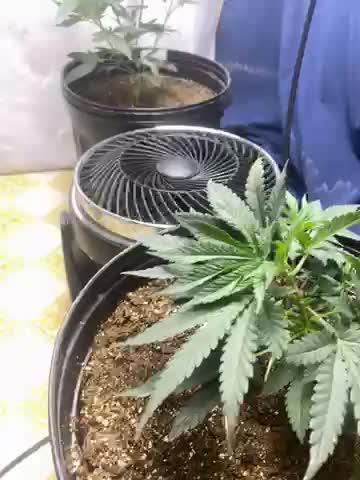
Ultima settimana di fioritura, tra 7 giorni si taglia tutto finalmente!!!



Likes
5
Share


@Deltatigrou0169
Follow
Salut salut les Amis
Nous voilà déjà à la fin du mois, mes fifilles viennent de passer en pré-floraison depuis vendredi je suis trop content de mes fifilles.
J'ai commencé à leur mettre de l'engrais (PRO ORGANIC Grow et Bloom) pour la pré-floraison.
Je mettrai le (Bloom Booster) pour la floraison.
Je vous souhaite une bonne soirée à tous et à dans deux jours 😉🙃🙃


Likes
4
Share


@The_Projexx
Follow
Welcome to week 2 of flower on this lovely project! The ladies are stretching like crazy and it won't be long till we see some lovely flower tops starting!
Some really cool genetics featured this run by a really cool breeder Hidden Vault Genetics.
Genetic breakdown:
Banana Smoothie ( Banana Split x G.O.S )
Creamy Cereal Crunch ( Watermelon Z x G.O.S )
MacMelonz ( Mac Burger x Zour Watermelon )
Huge shouts go to both the breeder and @MarsHydroLED for the awesome gear they make! Huge huge shout out goes to all my followers and supporters you guys inspire me to become the best grower I can be!
Be sure to follow along for the latest updates cause this shows getting juicier by the day!
-The Projexx
Day#8F Put in net , trained down some of the taller plants. Plants are stretching along nicely.
Day#9F Plants bounced back from the scrog training very quickly. They're picking up the pace with stretching!
Day#10F Plants are just bursting in new growth, Creamy Cereal Crunch is getting huge!
Day#11F We got the start of cotton balls going!
Day#12F Pictures N/A. Ladies continue to explode in growth, defoliated some of the older leaves that aren't getting any light.
Day#13F The ladies continue their stretch! Creamy Cereal is absolutely beasting out!
Day#14F Cotton balls are getting bigger and bigger. Plants continue to stretch with minor signs of slowing down.
Recap: Things went extremely well this week , the plants absolutely exploded in growth and have developed cottons balls. With some time left on the stretching period and lots of time left overall on this grow I'm very excited to see the end results with these cool genetics.


Likes
3
Share

@Jardineiro_Br
Follow
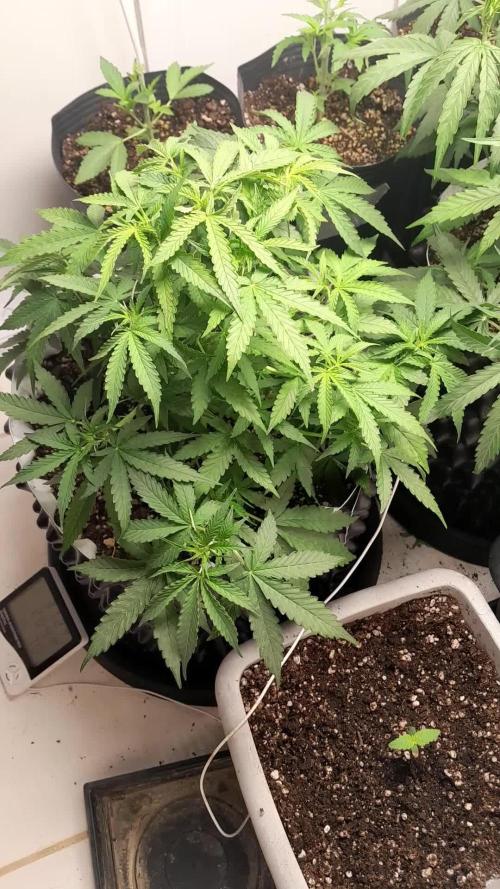
Cheguei a um bom tamanho de copa , ela esta um belo arbusto com um caule firme e relativamente grosso, bem ratificada e cobrindo a área toda do vaso , agora e manter a fertilização no máximo e ver o resultado.
Likes
3
Share

@Ninjabuds
Follow
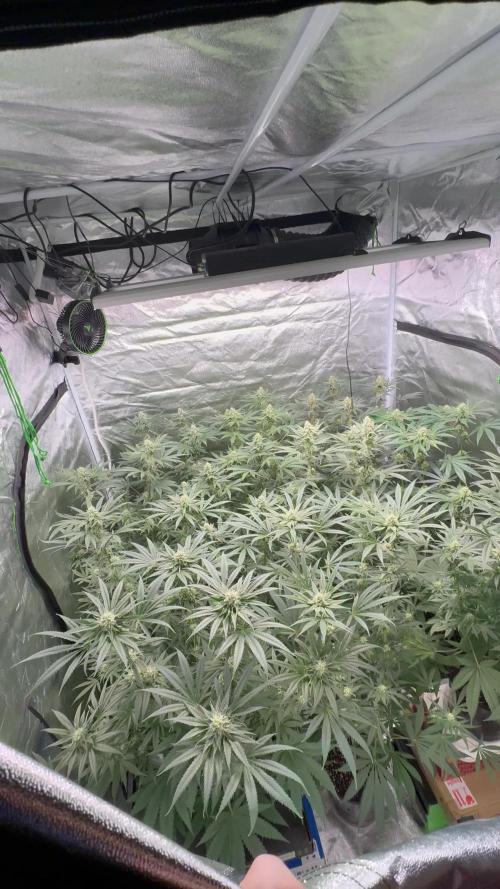
Everything is looking great for now. Busy week. Check back next week for individual photos of he plants will be starting to be pretty fat by then


Likes
9
Share


@Cogollo_eu
Follow
**Encontrarás la traducción a español al final de la descripción**
From/Desde: 23/09/19 || To/Hasta: 29/09/19
From day/Desde día: 22 || To day/Hasta día: 28
Ocean Grown Cookies Diary / Diario de las Ocean Grown Cookies:
https://growdiaries.com/diaries/38831-oceangrown-cookies-blues-sisters
If you like this week, please hit a like, it costs you nothing! 👊. Thanks in advance 😉!
-----IMAGES & VIDEOS-----
I'm so sorry about the quantity of contents for this week and the following ones, as I've been telling I was under hard work pressure, and this week and the next one where the worst of them. In fact this week has some more images, but I decided to move them to next week or otherways next week is empty of contents.
V1: Timelapse week video that covers 4 days. At about sec 25 I performed the topping on the babies, as I told before abobe 5th node, and one of them abobe the 6th.
P1: BlueBerry Cookies Left <--•--> Ocean Grown Cookies Right
-----WEEK SUMMARY-----
This week the growing was georgeous, the BlueBerries have doubled in size, the went from 15 to 31 cm even topping them. Sad I don't have pics of the distribution of the branches because is very beautiful, however, if you take a look into the week 4 of the Ocean Grown, there's a video where you can perfectly see the structure, they're very similar.
-----WATERING CALENDAR-----
28/09/19 DAY 27 - 1.5 l with all week nutrients @ (1.2 EC | PH 6.2 | 25.1ºc)
*****ESPAÑOL*****
Por favor, si te gusta esta semana dale un like, no te cuesta nada 👊. ¡Gracias por adelantado 😉!
-----IMÁGENES & VÍDEOS-----
Siento mucho la carencia de contenidos de esta semana y las que vienen, como he estado comentando he estado bajo muchísima presión de trabajo y esta semana y la siguiente han sido las peores de todas. De hecho esta semana tenía alguna imágenes más, pero he decidido pasarlas a la que viene, si no la semana que viene estaría sin contenidos.
V1: Un video Timelapse de 4 días. En el segundo 25 les realizo la poda apical a las pequeñas.
P1: BlueBerry Cookies Izqui <--•--> Ocean Grown Cookies Dere
-----SUMARIO SEMANAL-----
El crecimiento de esta semana ha sido brutal, las BlueBerry han doblado su tamaño, han pasado de los 15 a los 31 y eso que les he realizado la poda apical. Es una lástima que no tenga imágenes de la distribución de ramas de las BBerry pues es muy bonita, no obstante si le echáis un vistazo al diario de las Ocean Grown, en este hay un vídeo en el que se ve perfectamente la estructura de las plantas, que aunque difiere un pelín son muy parecidas.
-----CALENDARIO DE RIEGO-----
28/09/19 DAY 27 - 1,5 l con todos los nutrientes semanales @ (1,2 EC | PH 6,2 | 25,1ºc)
Likes
8
Share


@pzwags420
Follow
On day 1 I did another light defoliation. The plants are progressing as expected. The only issue I'm dealing with is fungus gnats... ugh. I will keep applying BTI weekly until the population is under control. On day 3 the plants are putting out more pistils and seem to have stopped or slowed down their "stretch" phase. On day 4 I'm starting to see some trichomes forming on the sugar leaves, no smell that I can discern yet. I also changed out my reservoir and applied a BTI soil drench. On day 5 I adjusted the PH of my reservoir down to 6.1. I also purged my blumat system to make sure there are no clogs as my reservoir has fertilizer particles due to my water heater causing separation. I must keep the water heater on as I am growing in the northeast coming into the cold time of the year and can't have my reservoir freeze on me. On day 6 I adjusted the PH of my reservoir down to 6.1. On day 7 I adjusted PH in reservoir to 6.1.
Likes
Comments
Share

@hassehujasse
Follow
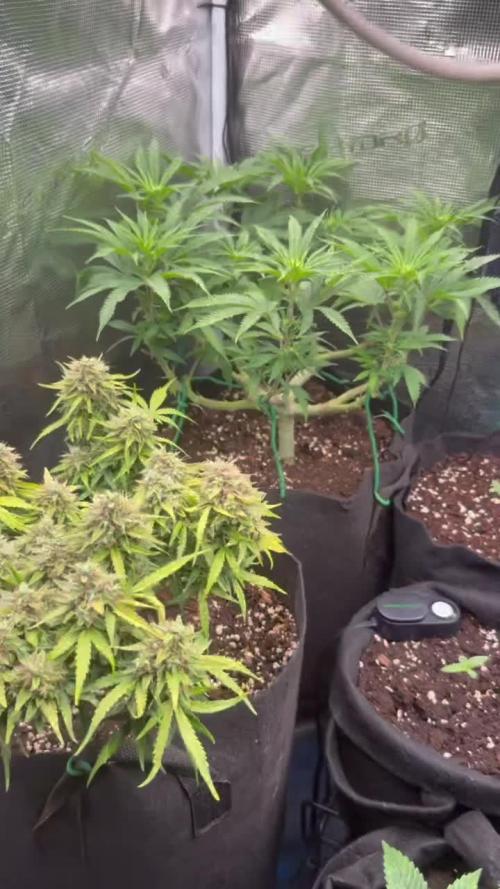
Weekly data logging provided . los grabacione de los sensores incluidoCritical Kush is going fast and furious looking ahed of best flowering moments
Critical Kush se empeso la semana por la via rapido i espero que todo se vaya todavia mejor
Likes
4
Share


@GodZilla_Owner
Follow
Week 9 – Day 65
Flower Day 35
🔄 Looking back:
One of those weeks where everything just runs smoothly… 😎
The BioBizz pH+ is finally making a difference:
📈 Drain pH is now increasing by 0.1 to 0.2 points – a noticeable improvement compared to Canna pH+.
Other than that – just the usual routine: water, observe, and enjoy the view 🙌
🌿 Plant status – Mimosa Evo
📏 Holding steady at 104 cm, stretch is definitely over
🌼 Bud development is progressing steadily – no issues at all
✅ Still the most reliable performer in the tent – strong, stable, and stress-free!

Likes
Comments
Share


@SGCFarms
Follow
Day 17, and she’s starting to show sugars from the top down. I can’t wait for a smell to develop, but when I did smell something during the first opening of the tent it smells something fruity. She’s drinking at least 4 gallons a day at this point.

Likes
10
Share


@Roscio99
Follow
hello beautiful ones, they managed to enter flowering!! everything is going smoothly apart from a few insects... I think it's normal when you do them outdoors. They have been flowering for a week and continue to grow every day! DAJE ROMA DAJE
Likes
49
Share


@masterofsmeagol
Follow
6/15. Glad I listened to my intuition and held off watering. IT Rained andctheb again last night. Plants seem to be doingvreal well. Slight burn on lower leaves where it was before from being in the garage and I found on spot that LOOKED like it could've been caused by a pillar but it's right on a burn. I sefoliated one leaf. This is minor stuff. Next watering I'll be adding silica. I'm not giving nutes until the plants tell the need them. The 3 gallon ones may receive nutes first as they'll run out. I'll update as I progress.
Went back over at 8:30. It's just overcast with showers. Plants seemed to like it. They all look good. Noticed a chunk out of a leaf and a POSSIBLE pillar spot. I'm going to have to get the BT out and and give the girls an application. I'm waiting until they settle in a bit more though. I need to start LST as well AND the light dep. Unfortunately "life" has made things difficult. I'll get back over there today though and I'll start the light dep. Kinda makes me wonder though. The 1pth planet I wanted to light deo is tge same size as the others in the much bigger containers. The thought came that maybe I should just hold on to them as extras in case something happens. I also am going to start silica next watering but it will be a few weeks before any nutes are given.
UPDATE: WENT BACK OVER AT FIVE AND TOOK ACSHOT TON OF PICTURES. IM TRYING TO UOLOAD NOW. THINGS ARE POPPING OFF AND IM GETTING A NICE SWEET SKUNKY ODOR. WHILE I WASCTHERE WE GOT A QUICK SHOWER. DIDNT LAST MORE THAN TEN MINUTES BUT IT RAINED HARD. I FOUND A TEMPORARY SPOT TO LIGHT DEP THE TWO PURPLE PUNCH AND THE ONE TENTH PLANET. I DONT SEE ANY LIGHT LEALS AND ITS SURE AS HELL DARKER THAN IT IS AT NIGHT. I'LL SEE HOW IT GOES LEQVING THE COVER ON ALL NIGHT. IF IT DOESNT WORK I MAY JEED TO ADD A FAN OR CHANCECTHE SPACE. I ALMOST DIDNT WANT TO DO THIS AS THE 10TH PLANET IS KEEPING PACE WITH ITS SISTERS, DESPITE THE SMALLER POT. OH WELL I WANT TO GIVE IT A SHOT AND I DONT WANT MY CAGE OVER CROWDED. I'M LOOKONG TO DO A 6:30 TO 6:30 SCHEDULE.
6/16 First night of light dep for the three little ones. I won't be able to call them that soon. I'm currently trying to upload a video. My grow buddy mentioned the droopiness of a couple of my plants in this video and how I hadn't been watering. This kinda scared me so I ran over and checked the too few inches on the two that had a little droop and came out dry. I had some water already phed ready to go (I'm hoping that the ph doesn't change if it's stored a day or two) and used the gallon to moisten the dry topsoil. Looking back over my diary we have had nothing but rain. I then tried the "lift the pot method" and came to the conclusion that these bags were indeed still holding moisture. I assumed they would be considering the thunderstorms we've had. I held off on fullt watering because the weather said the next dry day is going to be Monday. Today is Friday so thats two solid days of rain. Three if you count today through the night. I concentrated my watering of the one gallon on the couple plants that appeared to droop. If it doesn't rain like they say it will I will need to water. I need to set up a decent watering schedule but I need it to hold off raining long enough to do so.
UPDATE: I WENT BACK OVER AND PUT THE 3 GALS IN FOR BED AND CHECKED OUT THE REST OF THE GARDEN. I WATERED THE 3 GAL GIRLS A LITTLE MORE SINCE THEY WONT BE OUTSIDE. THE BIT OF WATER I GAVE SEEMED TO HELP LIFT SOME OF THE GIRLS. AT LEAST I THINK IT DID. THE RAIN SHOULDVE COME ALREADY. I WOULDVE WATERED MORE HAD THE BAGS NOT BEEN SO HEAVY.
6/17 Rained all night which is good. Brought the three transplants out but left them under the overhang so they. Dont get soaked. So far light depoing is going good. Well its only been two nights but we'll see. I'll update as I go. Not feeling well today. Went back over and checked on the plants and did a video. Probably won't get uploaded until tomorrow. I'm giving it a shot. It's raining in good shape. Plants looked fine when I was there. I need to get my supports and my trellis in place. Video won't upload. No suprise. I'll get it tomorrow.
6/18 Uploaded videos if they fuck up from me editing I'm gonna be pissed. Anyway it's still pouring with high winds. I added a couple supports where it looked like it needed it. I need to put my trellis up. I've been able to keep up with the light dep and those plants haven't been used and abused. They stay in the building facing the sun when the weather is this bad. I think they're looking great. I may start a new diary just for them. Sun came out around four. Trying to upload a couple videos but doesn't look like it's going to happen. Tucked the three little ones in at six. It had stopped raining and the wind died down some. If adverse conditions create good plants then I'm on the way to a great harvest. Minor bleaching and burns on a few lower fan leaves and some wrinkling on some from wind burn other than that plants seem to be acclimated. Did a video but will have to wait until tomorrow to upload
6/19 It's not raining! We got four inches this past storm lol. Having the bags raised on pollens I believe has greatly helped. As did the high winds that help dry the soil in the bag. Had to add a few temporary supports. Light dep is going good. Adjusted amd found a better spot. I'm considering getting "pool noodles" or some other thing like a Hulu hoops or pvc pipe and making either a frame on the roof for the entire cage or on top of each individual plants posts so I could roll clear plastic over it when it rains. I'm thinking about later on in the fall when this could really help. I found a roll of plastic. Also thought about putting that up on the back wall but I didn't. What I'm doing right now is working. I just need to keep up with it. I also need a solid watering schedule to stick too. It's hard when each plants needs are different. Oh well. I'm just happy to be growing again. I pray to the cannabis gods and the Lord above himself that I'm not plagued with the problems of last year.
6/20. I'm sick as fuck but I got the little girls out in the sun. Light dep is going good. Plants look great. I'll update when I feel better and if I do anything. Still feel like shit. Luckily I looked up just in time to get to the grow and put the little ones to bed. They were thirsty (especially the bushy 10th planet so I gave them about 3/4 of a gallon of water. Got lots of run off from 10th planet. Didn't notice as much from the others but I was hurrying. I'll upload later. Still sick.
6/21 Plants seem to be doing great. I removed some lower growth on a few just to see how they respond. I'm going to do some defoliation down low and I want to see how the plants respond. I'm planning my first full watering Thursday as we have a real good stretch of weather after that. Grow bags are still heavy as hell so they have sufficient water. I'll be adding silica nextcl watering. Not time for nutes but I think it would be okay to start the silica and in another week I might start small doses of nutes. The light dep on the little girls is go8ng great! It's cool I'll get to sample some of these strains before fall. I'll update after I do something. Tucked the girls in at 6. I might need to think about transplanting that 10th planet in the 3 gallon. I watered until runoff yesterday and it's light as hell today. Plus I fimked it and it's bushy as hell. I've Bern turning it si it gets all angles of the sun. I have a bag of 707 left and a 5 gallon bucket with holes drilled all over it like an air pot and a ten gallon grow bag. This will take some thought. Hot af today. I wad able to lift the grow bags so I decided tomorrow will be the girls first real watering. I think I'll be adding silica and possibly kelp me kelp you due to the heat stress I've been noticing. Nothing bad just a few tacoed leaves. I've had several people that have seen my grow in person tell me that this is by far the healthiest (not biggest I've had bigger) but by farcthe healthies5 crop I've grown. They believe I'll have my best year ever this year. I hope they are right. Vid won't be uploaded until tomorrow.
6/22 WATERED TODAY. I'm still a little gun shy with watering. That fusarium last year pretty much traumatized me. I left the container plants alone. I gave them a little water but not enough to do much. I used a pump sprayer on a mist setting and went one by one and back around gently watering the entire medium. This took forever and I'll be finding a different way to water. I hope this was enough water. I'll check later on and if they look like they want more I give it to them. I started LST on the light dep 10th planet and tucked some branches of a another under the tomato cage. I had missed that earlier. I also went around and cleaned up the bottoms on most. Getting rid of things that will amount to nothing. I noticed what looked like thrip damage on ONE leaf on ONE plant. I also saw a chunk missing from a grasshopper bite and a finger of a fan leaf petiol was broken so I'm going to need to get my ipm up and running. I'm unsure whether I'll be using chemicals or predators. Probably BT and spinosad. That's what I've had the best luck with. I also noticed bottom leaves dying off on the bottom of a couple plants. It was where the burns were though so I'm almost 100% its just related to the light burns they got when i first put them up. I'll be updating the diary as I do more stuff.


