


Likes
Comments
Share


@Burndylugs
Follow
Day 59 of flower, last day of light. Gonna give 48hrs of bro science darkness then chop. The smell from this tent is dam near unfathomable. Extreme and complex fruits. Punchberry cookies legit smells like Hawaiian Punch, and the lemon berry candy og smells like sour lemon skittles. Go figure

Likes
38
Share


@MrSpooky882
Follow
Die Woche ist ansich gut verlaufen, 2 Pflanzen haben irgendetwas aber ich weiß nicht woran es liegt.
Morgen/heute werden alle plants ausgedünnt, und ich werde die beiden Kastenventilatoren rechts und links an den Zelt Wänden gegen oszilierende monky Fans an den Mittel Stangen anbringen, ich spare Platz in der Mittel Reihe den ich brauche.
Ich bin sehr zufrieden bisher mal sehen ob ich raus finde was die 2 Pflanzen haben...ansonsten wünsche ich euch eine schöne woche und stay high 😬😁👌
Ach so an Dünge tagen gieße ich immer easy 2L pro Topf. Und dazu von Madame Grow alle 4 bis 7 Tage Flower Karma rauf sprühen das Zeug ist top!👌
The week itself went well, 2 plants have something but I don't know what the reason is.
Tomorrow all the plants will be thinned out, and I will put the two box fans on the right and left of the tent walls against oscillating monky fans on the middle poles, I save space in the middle row that I need.
I'm very satisfied so far, let's see if I can find out what the 2 plants have... otherwise I wish you a nice week and stay high 😬😁👌
Oh, on fertilizer days I always pour easy 2L per pot. And spray Madame Grow with Flower Karma every 4 to 7 days, the stuff is great!👌😬

Likes
17
Share


@Colibri_grow
Follow
Runtz muffin with 9 days from germination (15/02/22)
Strawberry, gelato and Jack dream - 4 days
Strawberry, gelato and Jack dream - 7 days (04/03/22)
As strains mais recentes foram para terra no dia 24, dia 25 já estavam nascendo.

Likes
6
Share


@Lazuli
Follow
Its ripening, final week before harvest
I love the fade this plant has so purple/yellow/blue

Likes
2
Share


@Naujas
Follow
14 days, the girl looks great, a little wrinkled due to the humidity which is only 40-45%, but I don't know if all this will soon resolve itself, I just need to water it more often :) this week I'm changing the light to mars sp150 which will stay until the end of growth :) I'm giving the girl 6.3 ph water with 2 ml of heaven :) good luck to everyone.
Likes
24
Share

@sanibelisl
Follow
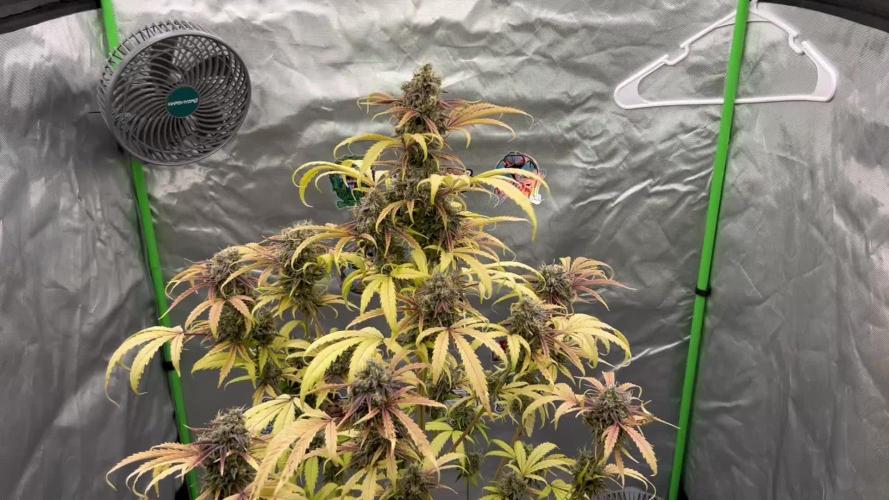
This will be the last week of summer camp and as expected nothing went as planned. The 91 Grapes will be the best and last plant to be harvested. I think she will yield between three and four ounces of finished product and the buds are simply amazing. Hard as rock and covered with resin with plenty of terpines to go around as well.
After receiving a good dose of molasses on Saturday she smells amazing Sunday afternoon and those buds continue to swell. She is ready at any given moment for the next few days it really just boils down to when I want to devote a couple of hours of trimming her up.

Likes
5
Share


@Macx39
Follow
Nervous and excited as it's my first grow. 1700hrs on the 1st I put them both in separate glasses and used bottled/spring water. PH was over 7.3 so I Ph'd it down to 6.4/5. Both have sunk to bottom of glasses by morning. All good so far. Still deciding whether to go paper towel next or wait and go straight into coco coir. Bit of a trial run about to go down 🤣. I feel like even with all the best equipment in the world, without some sound knowledge and some commitment and dedication youl still pull a shitty grow. Wish me luck..... Quick update! Once they dropped I decided to put them in their coco perlite mix, was advised by a gro shop dude to pop them in the mix now that they've dropped in a glass of water he said they'll be sweet 🤞🙏. Please dude 🤣🤣🤣🤣. He also said to get some canna A+B put through the mix beforehand as coco got no nutes and itl do the seedlings good. So I've gone on his advice but minimal amounts. Popped about 8ml of both in 2l of tap water, could have been 5,6, or 7ml aswell tbf only by eye. So got home and sorted that. Soil seems moist enough but not soaked. Now there potted I'm just hoping and praying for some good old smoke🤞🤞🤞🤟👊👊. Il keep the updates coming. Any feedback always welcome I'm not a dick. Don't be a dick either. Peace!..... Update.... they broke soil on the 5th. So yeah both good seeds. Checked them at lunch time, both have first leaves now aswell and look healthy. Lights on baby let's play!
Likes
7
Share


@Mr_nugs_lover_David
Follow
This strain had to suffer a little bit at the end of the cycle due to a fungus gnats issue but she managed great, her buds are really citrussy and dense and she has grown at a very fast pace in her vegetative stage. I really hope you guys enjoyed, this lady has been grown with kush FLO (Living soil blend) and water.

Likes
23
Share


@Scarface_007
Follow
Week 4 Still no good weather. Rain and some sun +-15 Celsius . In the end of week 5 25 Celsius good weather
Likes
4
Share

@Fyno_TH
Follow
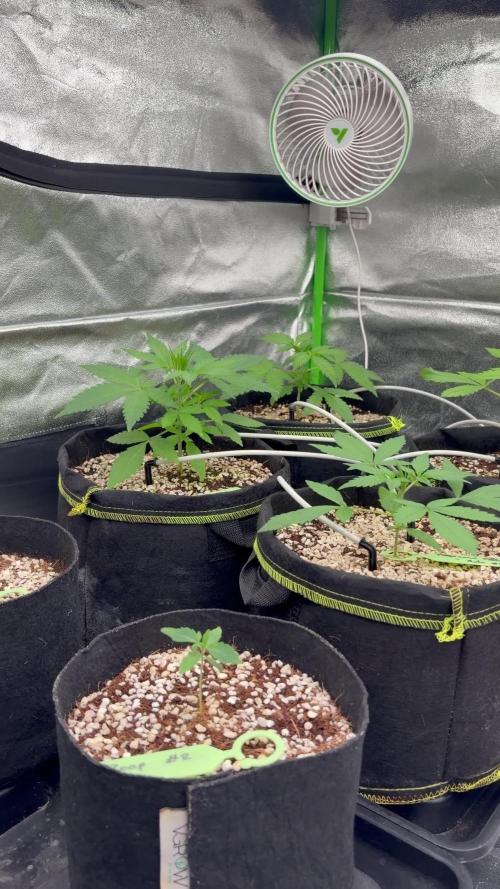
Strong vegetative growth with vibrant green fan leaves and tight node spacing.


Likes
1
Share


@Blucha
Follow
Did 2 flushes now. They have only one more week to go and they're finally ready.


Processing
Likes
12
Share


@Dineh
Follow
nice seeing them creaping up..
some colder days menth less water..
some more lst on day 31
1 juli 2020
outdoor had some 30 degrees days
disaster...
cold weather 19 degrees
i have defoliated them again
buth they dont respond wel
difficult plant to grow up
for me at least...
and now !!!!!!!!!!!!!!!!!!
one of my dogs ate the top of the outdoors plant
ending its cycle outdoors
i have now taken her indoors in the hope she will pick up again
18 / 6 of light led viparspectra 600w
25 cl of clean water
i have no nutriens in the house to give them
so ..................
I KILLED THE DREAM
gonna put some autoflowers in the soil
from sweet seeds
and
royalqueenseeds
i am now tester for both
gooood journey to you all
see ya in the next diary

Likes
22
Share


@NanoLeaf
Follow
End of Week 7
CO2 is definitely increasing growth rates but also changes the game with controlling your environment now that it has to be sealed in order to not waste CO2 unnecessarily. You change one thing and it adds many other variables to keep everything in check. I am learning everyday and that's why I grow.
The trellis net is doing its job and the canopy is looking nice and even.
I also added a soil top-up and top dress of some BioBloom and Mycorhizae so it can start breaking down before I flip to flower next week (Slow release dry organic amendments). And the ladies are using up nutrients in the soil much faster because of the added CO2 (another variable to take into consideration - faster growth = faster nutrient consumption)
In detail:
-Carefully removed trellis netting
-Ammended each plant individually with my soil mixture and nutrients
-Placed them back in the tent
-Reinstalled trellis netting and trained the ladies to shape
Pest Report:
Thrips VS Ladybugs...
I decided to fight fire with fire - I purchased Swirski-Mites from Koppert (They are beneficial insects that feed on the eggs and larvae of thrips and other unwanted pests). As for the adult thrips - I got very lucky and found about 10 Ladybugs in my garden and decided to introduce them into my grow room as they will feed on adult thrips and any other unwanted pests.
I did not spray any insecticide this week and it really seems like the ladies are happy with my new method of bio-warfare and are wilting less and less often


Likes
36
Share


@pifflestikkz
Follow
Day 135
14/09/24 Saturday
De-chlorinated tap water pH 6 with Plagron products.
Day 136
15/09/24 Sunday
Light top up of 2L de-chlorinated tap water pH 6 only.
Day 138
17/09/24 Tuesday
Feed today using de-chlorinated tap water pH 6.
She is stacking now 😁💚
Picture and video up, ✌️😎
Day 140
19/09/24 Thursday
De-chlorinated tap water pH 6 only today.
Day 142
21/09/24 Saturday
Another feed to push this week they seem to be handling it 💚. Fattening up on the buds now and pistils starting to mature.
Day 143
22/09/24 Sunday (End of week)
Damn!!
Noticed I have leaf rollers!!! Damn caterpillar, from moths. So I have removed affected leaves and areas.💚

Likes
43
Share


@Coopmc
Follow
Oh Ya looking good smelling stinky
Got some lowers for Fresh Frozen Nug Rince
Likes
10
Share


@SolitudeCorners
Follow
Last week of flowering (72days from the light switch) Gonna cut soon when the dirt is dry. A quite late harvest. Many buds denser more, and stem can’t longer resist.
This season so satisfy. Thank for all mentor and comment. You all are my inspiration for grows.
Feeding 💦🌱
23/1 Water 13.5L+Flawless 20ml ppm80 ph6.2
MDR 3L 2Lx5
Runoff
MDR 1400 /1155
Zkittle 1600/1300/1150
Pineapp 900/600
Purp 1300 /1200
Sapp 2000/1100
Dozdos 1100/1000
25/1 10.42 6L ppm9 ph6 1L per pot
3L+Flawless6ml ppm116 ph5.9 1.5/1.5 Purp, Zkittle
4.5L+ Flawless7ml ppm119 ph6 1.5/3 Sapp,MDR
Runoff
Purp 1300
Zkittle 1500/1200
Dozdos 1400
Sapp1300
Pineapp850
MDR950
27/1 runoff
Pineapp 500
Purp 900
MDR 600
Zkittle 400
Sapp 300
Dozdos 400
Likes
26
Share


@Ageddd
Follow
Last week, 2 irrigations, gave her plain water.
Beautiful colours, it was a pleasure to grow such a pretty plant, production is going to be like 10 grams i expect, Cloudy days and bad weather while growing and flowering, but quality seems pretty good, she is so frosty and smells like fruits.
1 week of drying, and curing at the moment.
Put the weed in jars with Boveda 62.
Im making a harvest post with the smoke effects flavour and all the stuff, so you can get more details about the high, flavour and quality.
Harvested 1/07/2018
Good vibesss

Likes
7
Share

@Naujas
Follow
my girl got bad water with bad ph for a while :( 2 ph meters broke, but now the problem has been solved, she got good water with calmag, the girl started to look better little by little :) good luck to you

Likes
27
Share


@Mrs_Larimar
Follow
These Genetics are very recommendable. They were growing Vigor, and needed no big Montitoring. Great for Outdoor// guerilla Outdoor
I think the Outcome is good to . iam Guessing for 50-65 G per Plant
They got in Flower 2 NPK feedings, But every Day Beneficals, and i enriched my Soilmix with Microbacteria
After Outdoor Weather turned not so optimal, they were 3 Days under the LED_Light.
They ripened here very fast, so I could Harvest them Today
SMOKINGREPORT:
a little skunky, gassy but not tooo hard of it... i vaped it ansdit tasted well. Effects: Its agood Hybrid between Indica and some Sativa energy.
So you can smoke it in the daytime.... and still function properly... and in the evening it helps you to relax.
A good Composition!!!!!!
:
:
:
Thank you @ Doctor´s Choice for the Genetics
