


Likes
Comments
Share


@Lickey
Follow
Not much of a producer. Basically a joke. Nice and frosty and good trichrome production for what is there

Likes
17
Share


@DoctorCannas
Follow
Good morning friends of growdiaries,
As you can see in the photos the two automatic, grow and begin to bloom, although not in the same way.
A has reached 50cm and is visibly healthy, robust and fit.
B has reached 36 cm, but is not as fit as A.
Despite the fact that the pots, substrate, nutrients, care and method is the same.
We will see in the end what comes.
Have fun and happy grow.
Doctor Cannas

Likes
1
Share


@Urunascar
Follow
This week the plant is more uniform, vid is from February 24th, I still don't know how to tell how many weeks it got left, I don't even know how many weeks it has of actual flowering since it's been 2 months since it showed the first signs of flowerinf
Likes
49
Share


@smzzz
Follow
Its beginning to be realy interesting out here !
the two on the back are like twin sisters, and the other one is more short.
Its realy hard to take pictures now, so i try to take at least one video at the end of every weeks.
feeded them with 1ml biogrow/biobloom/topmax /L
see ya !

Likes
19
Share


@CookiesAndCake
Follow
Week 15
Day 99 (20/11/2020):
Unfortunately did not have time today to take pictures or check them because have been quite busy.
Day 100 (21/11/2020):
Woow day 100 today, which seems a bit crazy but I think the girls just need another month and they will be ready for harvest. It has been a great grow so far and although 100 days seems like a lot, the girls have definitely come really far.
Day 101 (22/11/2020)💧:
Measured the pH of the girl today before watering and it was at 5.78 which means it needs to be increased slightly. I wonder why it keeps dropping because apparently the BioBizz soil is supposed to maintain the pH pretty well but I guess she is quite big and must be taking in more nutrients. I also keep noticing that there still seems to be quite a prevalent Calcuim deficiency even with the CalMag and since the pH is not that low I will also be increasing the CalMag for this week to see if the spots on the leaves improve. So I watered with the usual 1.5ml of BioGrow, 4.5ml of BioBloom, 1.5ml of TopMax, and now 4ml of CalMag. And on top of that I gave 0.75ml of pH+ to increase the pH by 0.5 points. The buds are definitely fattening up more and the trichomes are looking much more dense as well. I also can’t get over the smell, it is so sweet and citrusy!
Day 102 (23/11/2020):
Not that many updates today actually, just happily growing 🌱
Day 103 (24/11/2020):
Every time I come to check the girls I just cannot get enough of Sweet Zkittlez’s smell. It definitely lives up to the “Sweet” in the name. It is so incredible and super sticky as well! I absolutely cannot wait to see how this one tastes, I really think it will be super unique.
Day 104 (25/11/2020)💧:
Today I watered the girl with 1.5ml of BioGrow, 4.5ml of BioBloom, 1.5 of Topmax, and 4ml of CalMag. I really don’t think I can do much about the yellowing leaves at this point. I think it is just getting closer and closer to harvest and is withdrawing all the nitrogen from the leaves. I won’t correct for it now and just let it do its thing, I think I am feeding it enough nutrients 😅
Day 105 (26/11/2020):
Managed to take some lovely pictures and a video of a close up of those beautiful snowy trichomes. This girl will definitely be a hard hitter – all the trichomes are so densely packed. Amazing progress from last week and the flowers are definitely fattening up.

Likes
26
Share


@APOLLO
Follow
This is nuts lol 😆
I may have fast forwarded through the pictures, apologies, they are loads and more difficult to work through. Consider a week and a half missing from flowering so far.
She is not close to finishing yet as far as I can tell. As new white hair are growing, very obviously. the orange hair is quiet a few but they were kind of there all along.
Smell is sweet fruity but not as powerful yet. Buds are sticky and solid, Every cola is sticky, solid and huge and still growing.

Likes
44
Share


@RakonGrow
Follow
Note :
+ jegliches Zubehör wird in der GermniationsWoche aufgelistet . Zeitraffer Videos folgen immer nachträglich.
+ videos werden so geschnitten das nur ein geschlossenes Zelt erscheint , ergo Fehlen paar reale Minuten (ca 1 Std) .
Day 71:
Da Phase III , zeigen sich nun deutliche Mangelerscheinungen . Einige Blätter werden aufgefuttert :))
Day 72:
+ 1.75 Liter Flaschenwasser
+ + Dünger für Blühte Generative Phase III
+ + + Canna Terrar Flores (Achtung wirkt wie PH-)
+ + + Canna Boost
+ + + Cannazym
+ + + Canna Rhizotonic
+ + + Canna PH+
+ + PH 5.82
Day 73:
Trichome sind schon OK . Viele Bernsteine . Ergo 8 Stunden Dunkelphase als Erntevorbereitung.
Die Schwester bleibt noch im Zelt und hat dafür Besuch bekommen von der Apple Fritters dessen Platz im 160cm x 60cm x 60cm zu klein wurde.
Final : Komplett Entlaubung . Cut . UpSideDown into the Darktent .
Danke an alle Likes und Watcher und Follower . Es hat viel Spass gemacht und mein 2. Grow ist entscheident besser geworden als der Erste !!!
Wir sehen uns nach dem Trocknen und vor dem Curing .
+ + + + + + + + + + + + + + + + + + + + + + + + + + + + + + + + + + + + + + + + + + + + + + + + + + + + + + + + + + + + + + + + + +
Day 74: ZOE'S SCHWESTER
+ 2.0 Liter Flaschenwasser
+ + Dünger für Blühte Generative Phase II (Düngeplan siehe Germinations Woche)
+ + + Canna Terrar Flores (Achtung wirkt wie PH-)
+ + + Canna Boost
+ + + Cannazym
+ + + Green House Feeding - BioEnhancer (vorher 8 Minuten im lauwarmen Leitungswasser aufbereitet)
+ + PH 5.9
Day 75: ZOE'S SCHWESTER
Heute werde ich mal etwas defloration betreiben da es doch recht dich ist und ich mir etwas sorgen mache was im inneren so abgeht .
Leichte Entlaubung abgeschlossen .
Day 76: ZOE'S SCHWESTER
+ 2.0 Liter Flaschenwasser
+ + Dünger für Blühte Generative Phase III (Düngeplan siehe Germinations Woche)
+ + + Canna Terrar Flores (Achtung wirkt wie PH-)
+ + + Canna Boost
+ + + Cannazym
+ + + Canna Rhizotonic
+ + + Canna PH+
+ + PH 5.9
Day 77: ZOE'S SCHWESTER
Heute macht das Wetter mir unter 55% Luftfeuchtigkeit und ich kann kühlen. Bringt zwar gar nichts in der letzten Phase. Aber so ist es halt. Ich geh also Baden und lass die Tür offen ;)) Da ich hier noch 1 am Trocknen hab und eine Nachbaring im Zelt die auch gerne mehr Feuchtigkeit hätte , muss ich jetzt zwischen pest und kolera wählen . lieber für die Ernte oder lieber für nahende Ernte oder ganz auf den Neuling ... Ich hab mich für die Ernte entschieden , die sollte nie und nicht Schimmeln :))
Woche 11: Day 78: ZOE'S SCHWESTER
Die 11 Wochen seit Samensetzung sind rum . Sie macht sich gut . Und die Trichome sehen auch schon sehr nett aus . Aber noch ist das Trockenzelt nicht frei . Also bekommt es noch Licht bis das Zelt frei wird .
Woche 11: Day 79: ZOE'S SCHWESTER
+ 2.0 Liter Flaschenwasser
+ + PH 7.49
Woche 11: Day 80: ZOE'S SCHWESTER
Sieht super an den Spitzen aus. Ein Meer aus Trichomen. Kollege meinte das muss Schimmel sein. Microskope strafte Ihn mit lauter Trichomen.
Woche 11: Day 81: ZOE'S SCHWESTER
Trockenzeit wird eingeleitet . Morgen dann ins Trockenzeilt für paar Stunden längere Nacht und dann UpSideDown zum Trocknen aufhängen .
Woche 11: Day 82: ZOE'S SCHWESTER
Ist trocken genug , ab ins Dunkelzelt .
Woche 11: Day 83: ZOE'S SCHWESTER
Totalentlaubung , UpSiteDown . Trockenzelt. 480g nass mit Baum.
Woche 12 :
Trockengewicht 90g

Likes
2
Share

@GREENPHOENIX6262
Follow
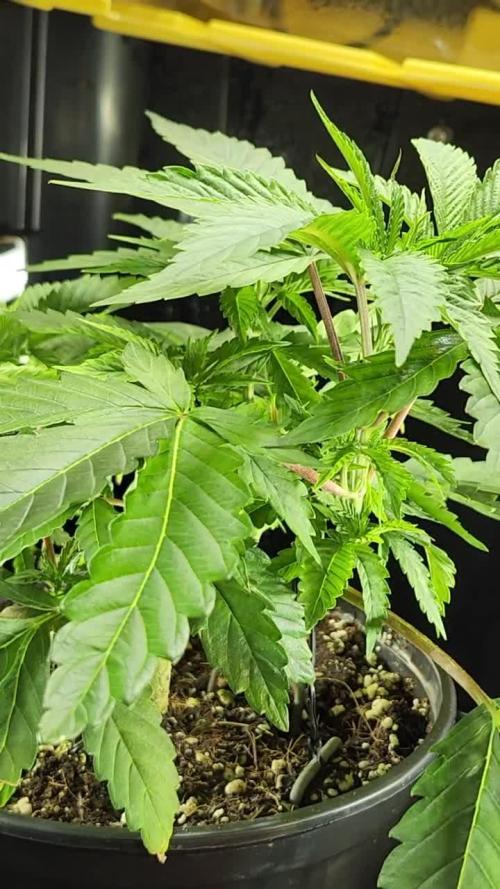
11/03 - Mother moved into her own 17 gallon tote - running lights on dome and in tote - super topped - running high humidity and high temps - nute feeds are the same - tied down all 4 coles thus far.
11/06 - tote dome is holding up nicely - transplanting into 7 gallons and 2x2 tent swap.
11/09 - Opened up the lid more to give her space to blow out from the sides - Blitz humidity for about a week (90%) - Temps running 89F - Clean water feed for the week.

Processing
Likes
7
Share


@Kushizlez
Follow
Day 31 - 38
(Day 32) I’m going to lower the humidity in the room to 55-60.
Still no bananas but I’m still quite worried about #3 fully popping and ruining my whole crop. Since there is a good chance it’s going to herm, I’m going to give it with a small feeding today and watch it like a hawk this week.
I think the boost actually made a decent difference in #5 from last week. I’m seeing slightly fatter main colas but that could just be from less topping/smaller plant or less nitrogen. I’ve decided to push my luck and give a boost to each plant. These things just aren’t filling out like they should. They look like they are on day 23 not 33. I’m going to top dress 3 tablespoons of 1-4-2 Destiny launch and later tonight I’m going to water in a low strength feeding of 0-0-15 kelp extract.
I’m going to give a final heaping tablespoon of nature’s pride bloom to #5 so it can stretch to the end.
I’m also going to lower the lights by a few inches. The tallest cola is now about 13 inches away and the rest of the canopy is at about 18–24. If I see signs of light stress I’ll raise it back up but I’m sure it could use the extra light on the lowers.
(Day 33) I’ve been reading that bigger plants just take longer to mature and that’s probably why my plant hasn’t fully filled out or is about a week behind. I still could have done a better job defoliating some of the smaller larf branches on the bottom which just robs the good branches of energy. The more I think about it, the more I think I did a very poor job of defoliating the middle canopy. I’m still seeing lots of larf and small buds on the inside not getting much light. I’m still really worried about herms after finding that branch so I don’t want to stress them anymore. Removing suckers now is pointless. I missed my window of opportunity and now I have to deal with it.
I’m going to slide an old DVD player underneath #6 to bring it up to canopy level. It’s lower buds are definitely not getting enough light.
(Day 34) Ever since lowering the light, the canopy has gotten a few degrees warmer.
I’ve noticed the buds don’t feel as sticky on top compared to the lower tucked branches that feel almost wet with resin. Outdoor weed grown in my climate will never reach the temperature where it degrades resin luckily.
(Day 36) The buds are definitely swelling but not to the degree I want. Call me picky but I prefer my nugs as chunky as possible. I’m seeing lots of pistils but not much nug matter. Ive heard too many pistils can be caused by the overuse of alfalfa, kelp and seaweed extracts because of the natural PGR’s in them. I’m definitely going to reduce the amount of that stuff I use next round. I hope I’m just wrong and this tent is going to really fatten up this week but I have my doubts.
(Day 37) A purple fade is starting on the underside of every plant except the bush who still is super dark green still. Last watering I got a nice amount of runoff so I’m just going to leave her until the end. I’m seeing a bit of yellowing on #5. I’m going to give it one final full strength feeding plus some rock dust and oyster shell tomorrow and that’s a wrap for nutrients. I might as well hit everything else with a final low strength 0-0-15 too.
(Day 38) I’m amazed at how much this stuff smells compared to my last round. It smells very earthy and floral with a hint of pine. Definitely not that gassy smelling pine but more of a sweet pine.
Likes
8
Share

@GrowX420
Follow
🌱🍒 Banana Cherry Cookies | Woche 7
Hey Growfreunde! 👋🌿
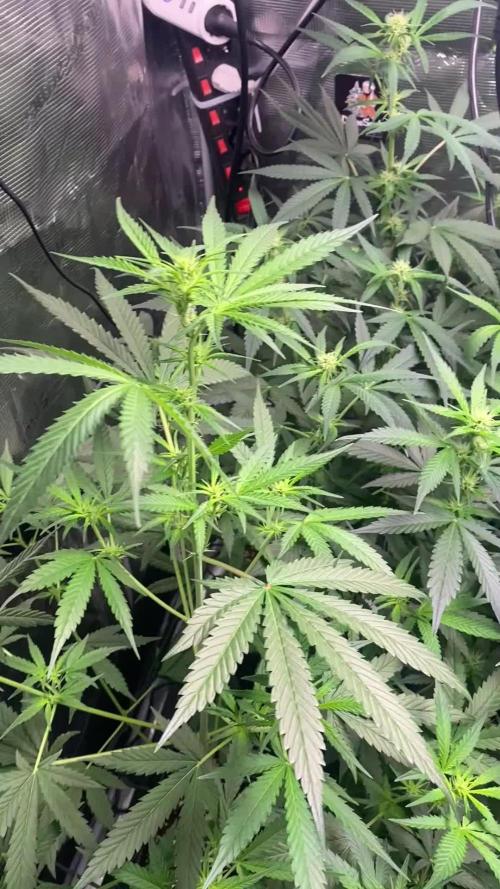
Woche 7 ist vorbei und die Banana Cherry Cookies haben diese Woche wieder ordentlich gezeigt, was in ihnen steckt! 🚀😍 Im SCROG-Netz konnten die Damen ihr Potenzial jetzt richtig entfalten und haben mittlerweile zu sechst das komplette 120 × 120 cm Zelt ausgefüllt. 😳🌳🌿 Das Blätterdach ist mittlerweile richtig dicht geworden!
🌸 Die ersten Blüten sind inzwischen deutlich zu sehen und langsam nimmt das Ganze richtig Fahrt auf. Die größte Lady ist aktuell schon etwas über 80 cm hoch. 📏🔥 Wenn man sich anschaut, wie klein sie vor ein paar Wochen noch waren, ist das schon eine heftige Entwicklung! 😅
✂️ Durch das mittlerweile sehr dichte Blätterdach werde ich diese Woche auch ein bisschen beschneiden, damit wieder etwas mehr Licht ins Innere kommt und die unteren Bereiche besser erreicht werden. 💡🍃
💡 Außerdem bekommt das Setup ab heute Unterstützung von einer zweiten Jackson Nemesis mit weiteren 200 Watt. Zum Start werde ich diese erstmal auf 60 % Leistung laufen lassen und schauen, wie die Ladys darauf reagieren. Zwei Lampen über dem inzwischen komplett gefüllten 120er Zelt jetzt wird’s hell! 😂☀️🌱
Beim Füttern gibt es ebenfalls ein kleines Upgrade. Die Banana Cherry Cookies bekommen weiterhin den S&R Organics 5in1 Dünger, mittlerweile mit 7 ml auf 1 Liter Gießwasser. Dazu gibt es von BioBizz Bloom und TopMax jeweils 2 ml auf 1 Liter Gießwasser. 💧🌸
🌡️ Zum Glück haben sich die Temperaturen inzwischen etwas beruhigt. Während der Lichtphase liegen wir aktuell bei angenehmen 22–24 °C. 🙏😎 Nach den heißen Wochen im Dachgeschoss bin ich darüber definitiv froh!
Ansonsten machen die Ladys einfach richtig Spaß. ?🏻🌿 Sie wachsen, blühen und füllen das Zelt komplett aus bisher läuft dieser Grow wirklich unglaublich entspannt. ❤️
Jetzt bin ich richtig gespannt auf die kommende Blütephase und darauf, was die Banana Cherry Cookies aus dem voll ausgefüllten Zelt noch rausholen werden. 🍒🌸🔥
Auf in die nächste Woche! 🚀?🏻


Likes
9
Share


@KcKush
Follow
*Increased Ppm from 750 to 800
*1st week of flowering actually Tomorrow is :D
* I got different phenols. Ones short, ones wide, and the other one is a mixture of both let’s see which one comes out better.

Likes
42
Share


@GanjaReaper
Follow
This week I used Canna RHIZOTONIC as a leaf spray instead of only putting it in my feeding for the roots.
I have never done that before but i have seen good results when doing it.
So now i will switch between Canna Cure and Canna RHIZOTONIC when spraying the plants.
Did some LST again and a little Defoliation, i really try to keep the plants as small as i can keep them.
Because i don't want them to get higher then my balcony fench.
The plants are like 20 cm +- in height and the distance between the top of the plants and the top of the french is 60cm.
Since I grow some sativas as well I expect them to grow a lot while in flowering stage, so i have to keep bending them because
they can only grow for another 60cm maximum.
I also have to clean stuff around the plants to give them some more space lol and might have to make a larger roof or a door,
because some rain still rains inside from the side.
I hope yall enjoyed :)


Likes
43
Share


@Hashy
Follow
********************************************
Week 6 Late Veg.
********************************************
Light cycle=16/8
Light Power=175w 73%
Extractor controller settings
High temp= Day 25c, Night 20c
Low temp= c
Temp step=0c
High Rh= Day 56%, Night 60%
Low Rh= %
Rh step=0%
Speed max=9
Speed min=2
Smart controller settings (during lights on).
Lights on=6.00am
Top fan on=+23.5c
Top fan off=-23.0c
Smart controller settings (during lights off).
Lights off=10.00pm
VPD aim=0.6-1.4
DLI aim=30-45
EC aim=0.2-2.0
PH aim=6.0-6.5
NPK(26-8-17)
💧💧💧💧💧💧💧💧💧💧💧💧💧💧💧💧
Method= Autofeed 6 drippers.
Feed=Veg Nutes.
Neutralise=0.1ml/L
Grow=4.0ml/L
Roots=0.2ml/L
Silicon=1.0ml/L
Calmag=1.0ml/L
Volume=12L
Easy Ph down= 0.125ml/L
Ec=2.0 PH=6.3/6.3
Runs=17
Run times=4min (296ml each)
Gap times=16min
Total runtime=68mins (5.0L each)
Total flowrate= 147ml/min (74ml/min each)
Auto start time=7.00am
Auto stop time=12.24pm
💧💧💧💧💧💧💧💧💧💧💧💧💧💧💧💧
********************************************
📅23/6/24 Sunday (day 36)
📋 To help the battle against heat I have dropped light time to 16/8
H=33cm D=37cm Dli=28.7 Ppfd=498 16/8
Raised light and increased power to 73%
H=33cm D=47cm Dli=30.3 Ppfd=527 16/8
📅24/6/24 Monday (day 37)
📋 Hottest day of the year so far.
📅25/6/24 Tuesday (day 38)
📋 Hotter then yesterday.
💧💧💧💧💧💧💧💧💧💧💧💧💧💧💧💧
Method= automatic
Feed=Nutes veg
Volume=12L
Ec=2.0 PH=6.3/6.3
Volume left=2L
Volume used=10L (147ml/min)
Volume each=5L (74ml/min)
Runoff.
Total runoff=1.2L
Ec=3.2 PH=/6.1
💧💧💧💧💧💧💧💧💧💧💧💧💧💧💧💧
📅26/6/24 Wednesday (day 39)
📋 Hottest day of the year.
H=42cm D=39cm Dli=35.0 Ppfd=607 16/8
Turned light power down to 152W 63%
H=42cm D=39cm Dli=30.4 Ppfd=528 16/8
📅27/6/24 Thursday (day 40)
📋 temps have dropped a good 10c outside, it'll take a few days before my grow room cools off.
Very tiny defoliation, 4 leaves that were past there best.
LST
📅28/6/24 Friday (day 41)
📋 manageable temps.
💧💧💧💧💧💧💧💧💧💧💧💧💧💧💧💧
Method= automatic
Feed=water
Volume=13L
Ec=0.2 PH=6.4/6.4 (PH D=0.012ml/L)
Volume left=3L
Volume used=10L (147ml/min)
Volume each=5L (74ml/min)
Runoff.
Total runoff=0.5L
Ec=1.6 PH=6.7
💧💧💧💧💧💧💧💧💧💧💧💧💧💧💧💧
📅29/6/24 Saturday (day 42)
📋 H=48cm D=33cm Dli=39.6 Ppfd=688 16/8
Lights are going out an hour early and starting the 1st night of 12/12
********************************************
Weekly roundup.
📋 Impressive plant, she's a lot stronger then the other plant in the grow. She has been through a heat wave this week and a bit of LST and defoliation. I could have flipped this one to flower last week and now the other plants strong enough I'm going to flip to 12/12.
Take it easy.
Back soon.
********************************************
Likes
5
Share


@GrowFunMD
Follow
Look at Cobbler Crisp!!! Day 79 today. Showing out!!! It ha been 11 full weeks. Today is day 1 of Week 12. I will harvest the larger two tomorrow (Friday) and I think the smaller two can go at least another week. Beautiful Plant!

Likes
18
Share

@sellem
Follow
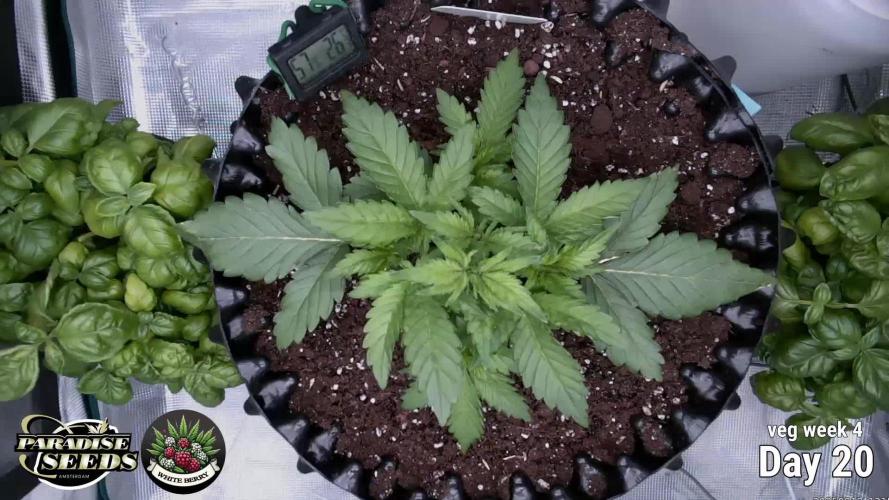
Just a nice 10 Day dry followed by some curing. It already smells really pungent in the glasses. Really happy with the result in total! couldve probably gone a bit crazier on the training. 😈


Likes
5
Share


@Mz876
Follow
I was slightly disappointed with the yield but I’m content with the taste and affect that I got from the plant .
Likes
21
Share


@ethnoGrow420
Follow
o Going to flower before my cream and cheese gets to big.
o twice a day watering
o humidifier on
o one oscillating fan one fixed
o added super thrive
o increased bokashi juice


Likes
5
Share


@Wobbleysausage
Follow
Letting her rip. Full on feeding now she seemed to have a deficiency this last week. Seemed it was a bit too cold for her new growth. It has darkened up as I turned the heat back up in my house. Strawberry cough is stinky. The smaller one doesn't really smell. Not expecting much from her. Started my vanilla frosting haze crosses on like Wednesday.
Oh I added worm castings to both top soils and a layer of rice hulls over top as a mulch layer. I did this to help the soil in case the yellowing was from a ph issue or somehow a nitrogen issue which I doubt.
