Likes
157
Share
@Qutro
Follow
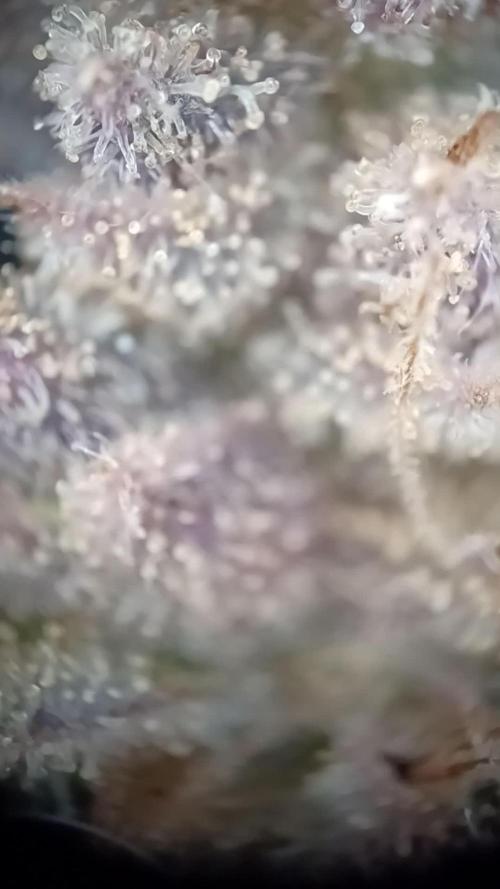
Hi Growmies, This was her last week, as she was cut down at the end of the week;) I fed her Final Part another 3 days and then changed the reservoir to PH-ed tap water with Flash Clean for 5 days. Dimmed back the light to 50%. I took out her from the tent for an inspection and I saw more and more milky trichomes turning to amber. This is a clear sign of her maturing beautifully. After she went with another girl from for 48 hours of darkness before she was chopped.🌱⚔️ Her root ball was looking healthy and much better after the flushing process so next time, I'm sure I won't be using powder silicate because it only made the roots tangled. The total number of flowering days was 65 since we changed the light cycle to 12/12. I moved her to the drying tent with 55% RH. She is sharing it with the Dos-si-dos’33 girls. They will remain there as long as needed. Will come with a longer report next week as I have a lot of thoughts in my mind about this journey to Japan with her.💚🇯🇵 Have a lovely weekend fellow cultivators! Peace🏻
Processing
Likes
16
Share
@S1993
Follow
Rapid plant growth in the last week.
Likes
15
Share
@Messypies
Follow
13/07/2020 - growth looking good. Highered lights to try to get plant to stretch 14/07/2020 - plants green and seems to be responding well to nutrients. 15/07/2020 - all looking good
Likes
3
Share
@HookahCli
Follow
d39 ya no me caben dentro del Indoor, debajo del foco pequeño que tengo. Todavía se espera lluvia para la semana que viene, pero no caben y temo que alguna se ponga a florar por estrés, entonces las sacaré al exterior y las aclimataré. d40 Las he sacado a exterior , no les da mucho el sol, están a media sobra, esperemos que no se pongan a florar debido al cambio de fotoperiodo, son menos horas que en el Indoor, podía pasar, lo bueno es que las hemos sacado y ahora cada día están aumentando las horas de luz, mas o menos cada día tenemos 2 minutos más de sol, uno por la mañana y otro por la noche, amanece antes y se va más tarde poco a poco, si se adaptan bien, van a crecer mucho, pero si se ponen a floración veremos que hacemos, esperemos que no pase. Se le han puesto unas piedras para que se aguante la maceta, es de 2LT y con que haga viento la maceta se va al suelo y no queremos que pase eso. También se ha quitado el primer par de nodos LBP(Lower Branch Pruning), que normalmente salen ramas que no llegan a ser gran cosa. Se han quemado del sol, se ve que les da directo y no lo han soportado y se han secado, la tierra esta bastante seca al igual que muchas hojas, por suerte me he dado cuenta al cabo de unas horas, no esperaba que el sol ya pegase tan fuerte, las he cambiado de sitio y se han puesto donde no da el sol directo en ningún momento del día y están solamente a la sombra. Se han regado con un poquito de agua para que se recuperen, les he puesto una maceta más grande por fuera para que si diese el sol, que no le de a la maceta de dentro(2L) que es más pequeña y se calientan las raíces. d42 Se han regado y añadido aminoácidos(más Pro XXL 42% Aminoácidos) ya que eso ayudará a que la planta se recupere, por la tarde-noche les da el sol, no hay otro sitio que le de menos el sol directo, se han secado un pelín más la hojas, pero los brotes nuevos están blanditos y parece que las plantas seguirán creciendo bien.
Likes
34
Share
Yellow butterfly came to see me the other day; that was nice. Starting to show signs of stress on the odd leaf, localized isolated blips, blemishes, who said growing up was going to be easy! Smaller leaves have less surface area for stomata to occupy, so the stomata are packed more densely to maintain adequate gas exchange. Smaller leaves might have higher stomatal density to compensate for their smaller size, potentially maximizing carbon uptake and minimizing water loss. Environmental conditions like light intensity and water availability can influence stomatal density, and these factors can affect leaf size as well. Leaf development involves cell division and expansion, and stomatal differentiation is sensitive to these processes. In essence, the smaller leaf size can lead to a higher stomatal density due to the constraints of available space and the need to optimize gas exchange for photosynthesis and transpiration. In the long term, UV-B radiation can lead to more complex changes in stomatal morphology, including effects on both stomatal density and size, potentially impacting carbon sequestration and water use. In essence, UV-B can be a double-edged sword for stomata: It can induce stomatal closure and potentially reduce stomatal size, but it may also trigger an increase in stomatal density as a compensatory mechanism. It is generally more efficient for gas exchange to have smaller leaves with a higher stomatal density, rather than large leaves with lower stomatal density. This is because smaller stomata can facilitate faster gas exchange due to shorter diffusion pathways, even though they may have the same total pore area as fewer, larger stomata. Leaf size tends to decrease in colder climates to reduce heat loss, while larger leaves are more common in warmer, humid environments. Plants in arid regions often develop smaller leaves with a thicker cuticle and/or hairs to minimize water loss through transpiration. Conversely, plants in wet environments may have larger leaves and drip tips to facilitate water runoff. Leaf size and shape can vary based on light availability. For example, leaves in shaded areas may be larger and thinner to maximize light absorption. Leaf mass per area (LMA) can be higher in stressful environments with limited nutrients, indicating a greater investment in structural components for protection and critical resource conservation. Wind speed, humidity, and soil conditions can also influence leaf morphology, leading to variations in leaf shape, size, and surface characteristics. Small leaves: Reduce water loss in arid or cold climates. Environmental conditions significantly affect gene expression in plants. Plants are sessile organisms, meaning they cannot move to escape unfavorable conditions, so they rely on gene expression to adapt to their surroundings. Environmental factors like light, temperature, water, and nutrient availability can trigger changes in gene expression, allowing plants to respond to and survive in diverse environments. Depending on the environment a young seedling encounters, the developmental program following seed germination could be skotomorphogenesis in the dark or photomorphogenesis in the light. Light signals are interpreted by a repertoire of photoreceptors followed by sophisticated gene expression networks, eventually resulting in developmental changes. The expression and functions of photoreceptors and key signaling molecules are highly coordinated and regulated at multiple levels of the central dogma in molecular biology. Light activates gene expression through the actions of positive transcriptional regulators and the relaxation of chromatin by histone acetylation. Small regulatory RNAs help attenuate the expression of light-responsive genes. Alternative splicing, protein phosphorylation/dephosphorylation, the formation of diverse transcriptional complexes, and selective protein degradation all contribute to proteome diversity and change the functions of individual proteins. Photomorphogenesis, the light-driven developmental changes in plants, significantly impacts gene expression. It involves a cascade of events where light signals, perceived by photoreceptors, trigger changes in gene expression patterns, ultimately leading to the development of a plant in response to its light environment. Genes are expressed, not dictated! While having the potential to encode proteins, genes are not automatically and constantly active. Instead, their expression (the process of turning them into proteins) is carefully regulated by the cell, responding to internal and external signals. This means that genes can be "turned on" or "turned off," and the level of expression can be adjusted, depending on the cell's needs and the surrounding environment. In plants, genes are not simply "on" or "off" but rather their expression is carefully regulated based on various factors, including the cell type, developmental stage, and environmental conditions. This means that while all cells in a plant contain the same genetic information (the same genes), different cells will express different subsets of those genes at different times. This regulation is crucial for the proper functioning and development of the plant. When a green plant is exposed to red light, much of the red light is absorbed, but some is also reflected back. The reflected red light, along with any blue light reflected from other parts of the plant, can be perceived by our eyes as purple. Carotenoids absorb light in blue-green region of the visible spectrum, complementing chlorophyll's absorption in the red region. They safeguard the photosynthetic machinery from excessive light by activating singlet oxygen, an oxidant formed during photosynthesis. Carotenoids also quench triplet chlorophyll, which can negatively affect photosynthesis, and scavenge reactive oxygen species (ROS) that can damage cellular proteins. Additionally, carotenoid derivatives signal plant development and responses to environmental cues. They serve as precursors for the biosynthesis of phytohormones such as abscisic acid () and strigolactones (SLs). These pigments are responsible for the orange, red, and yellow hues of fruits and vegetables, while acting as free scavengers to protect plants during photosynthesis. Singlet oxygen (¹O₂) is an electronically excited state of molecular oxygen (O₂). Singlet oxygen is produced as a byproduct during photosynthesis, primarily within the photosystem II (PSII) reaction center and light-harvesting antenna complex. This occurs when excess energy from excited chlorophyll molecules is transferred to molecular oxygen. While singlet oxygen can cause oxidative damage, plants have mechanisms to manage its production and mitigate its harmful effects. Singlet oxygen (¹O₂) is considered a reactive oxygen species (ROS). It's a form of oxygen with higher energy and reactivity compared to the more common triplet oxygen found in its ground state. Singlet oxygen is generated both in biological systems, such as during photosynthesis in plants, and in cellular processes, and through chemical and photochemical reactions. While singlet oxygen is a ROS, it's important to note that it differs from other ROS like superoxide (O₂⁻), hydrogen peroxide (H₂O₂), and hydroxyl radicals (OH) in its formation, reactivity, and specific biological roles. Non-photochemical quenching (NPQ) protects plants from damage caused by reactive oxygen species (ROS) by dissipating excess light energy as heat. This process reduces the overexcitation of photosynthetic pigments, which can lead to the production of ROS, thus mitigating the potential for photodamage. Zeaxanthin, a carotenoid pigment, plays a crucial role in photoprotection in plants by both enhancing non-photochemical quenching (NPQ) and scavenging reactive oxygen species (ROS). In high-light conditions, zeaxanthin is synthesized from violaxanthin through the xanthophyll cycle, and this zeaxanthin then facilitates heat dissipation of excess light energy (NPQ) and quenches harmful ROS. The Issue of Singlet Oxygen!! ROS Formation: Blue light, with its higher energy photons, can promote the formation of reactive oxygen species (ROS), including singlet oxygen, within the plant. Potential Damage: High levels of ROS can damage cellular components, including proteins, lipids, and DNA, potentially impacting plant health and productivity. Balancing Act: A balanced spectrum of light, including both blue and red light, is crucial for mitigating the harmful effects of excessive blue light and promoting optimal plant growth and stress tolerance. The Importance of Red Light: Red light (especially far-red) can help to mitigate the negative effects of excessive blue light by: Balancing the Photoreceptor Response: Red light can influence the activity of photoreceptors like phytochrome, which are involved in regulating plant responses to different light wavelengths. Enhancing Antioxidant Production: Red and blue light can stimulate the production of antioxidants, which help to neutralize ROS and protect the plant from oxidative damage. Optimizing Photosynthesis: Red light is efficiently used in photosynthesis, and its combination with blue light can lead to increased photosynthetic efficiency and biomass production. In controlled environments like greenhouses and vertical farms, optimizing the ratio of blue and red light is a key strategy for promoting healthy plant growth and yield. Understanding the interplay between blue light signaling, ROS production, and antioxidant defense mechanisms can inform breeding programs and biotechnological interventions aimed at improving plant stress resistance. In summary, while blue light is essential for plant development and photosynthesis, it's crucial to balance it with other light wavelengths, particularly red light, to prevent excessive ROS formation and promote overall plant health. Oxidative damage in plants occurs when there's an imbalance between the production of reactive oxygen species (ROS) and the plant's ability to neutralize them, leading to cellular damage. This imbalance, known as oxidative stress, can result from various environmental stressors, affecting plant growth, development, and overall productivity. Causes of Oxidative Damage: Abiotic stresses: These include extreme temperatures (heat and cold), drought, salinity, heavy metal toxicity, and excessive light. Biotic stresses: Pathogen attacks and insect infestations can also trigger oxidative stress. Metabolic processes: Normal cellular activities, particularly in chloroplasts, mitochondria, and peroxisomes, can generate ROS as byproducts. Certain chlorophyll biosynthesis intermediates can produce singlet oxygen (1O2), a potent ROS, leading to oxidative damage. ROS can damage lipids (lipid peroxidation), proteins, carbohydrates, and nucleic acids (DNA). Oxidative stress can compromise the integrity of cell membranes, affecting their function and permeability. Oxidative damage can interfere with essential cellular functions, including photosynthesis, respiration, and signal transduction. In severe cases, oxidative stress can trigger programmed cell death (apoptosis). Oxidative damage can lead to stunted growth, reduced biomass, and lower crop yields. Plants have evolved intricate antioxidant defense systems to counteract oxidative stress. These include: Enzymes like superoxide dismutase (SOD), catalase (CAT), and various peroxidases scavenge ROS and neutralize their damaging effects. Antioxidant molecules like glutathione, ascorbic acid (vitamin C), C60 fullerene, and carotenoids directly neutralize ROS. Developing plant varieties with gene expression focused on enhanced antioxidant capacity and stress tolerance is crucial. Optimizing irrigation, fertilization, and other management practices can help minimize stress and oxidative damage. Applying antioxidant compounds or elicitors can help plants cope with oxidative stress. Introducing genes for enhanced antioxidant enzymes or stress-related proteins over generations. Phytohormones, also known as plant hormones, are a group of naturally occurring organic compounds that regulate plant growth, development, and various physiological processes. The five major classes of phytohormones are: auxins, gibberellins, cytokinins, ethylene, and abscisic acid. In addition to these, other phytohormones like brassinosteroids, jasmonates, and salicylates also play significant roles. Here's a breakdown of the key phytohormones: Auxins: Primarily involved in cell elongation, root initiation, and apical dominance. Gibberellins: Promote stem elongation, seed germination, and flowering. Cytokinins: Stimulate cell division and differentiation, and delay leaf senescence. Ethylene: Regulates fruit ripening, leaf abscission, and senescence. Abscisic acid (ABA): Plays a role in seed dormancy, stomatal closure, and stress responses. Brassinosteroids: Involved in cell elongation, division, and stress responses. Jasmonates: Regulate plant defense against pathogens and herbivores, as well as other processes. Salicylic acid: Plays a role in plant defense against pathogens. 1. Red and Far-Red Light (Phytochromes): Red light: Primarily activates the phytochrome system, converting it to its active form (Pfr), which promotes processes like stem elongation and flowering. Far-red light: Inhibits the phytochrome system by converting the active Pfr form back to the inactive Pr form. This can trigger shade avoidance responses and inhibit germination. Phytohormones: Red and far-red light regulate phytohormones like auxin and gibberellins, which are involved in stem elongation and other growth processes. 2. Blue Light (Cryptochromes and Phototropins): Blue light: Activates cryptochromes and phototropins, which are involved in various processes like stomatal opening, seedling de-etiolation, and phototropism (growth towards light). Phytohormones: Blue light affects auxin levels, influencing stem growth, and also impacts other phytohormones involved in these processes. Example: Blue light can promote vegetative growth and can interact with red light to promote flowering. 3. UV-B Light (UV-B Receptors): UV-B light: Perceived by UVR8 receptors, it can affect plant growth and development and has roles in stress responses, like UV protection. Phytohormones: UV-B light can influence phytohormones involved in stress responses, potentially affecting growth and development. 4. Other Colors: Green light: Plants are generally less sensitive to green light, as chlorophyll reflects it. Other wavelengths: While less studied, other wavelengths can also influence plant growth and development through interactions with different photoreceptors and phytohormones. Key Points: Cross-Signaling: Plants often experience a mix of light wavelengths, leading to complex interactions between different photoreceptors and phytohormones. Species Variability: The precise effects of light color on phytohormones can vary between different plant species. Hormonal Interactions: Phytohormones don't act in isolation; their interactions and interplay with other phytohormones and environmental signals are critical for plant responses. The spectral ratio of light (the composition of different colors of light) significantly influences a plant's hormonal balance. Different wavelengths of light are perceived by specific photoreceptors in plants, which in turn regulate the production and activity of various plant hormones (phytohormones). These hormones then control a wide range of developmental processes.
Likes
1
Share
Blooming! I really enjoy this stage. These buds already have some color to them so I am hopeful they turn out well. A bit more growth all around as she puts her effort into the flowers.
Likes
32
Share
@Ciocanna
Follow
From the 9th day I started adding Hesi Root Complex 1ml and 2ml PowerZyme per 1L of water. We poured out water only as needed and did not water the stem! Day 13. I increased Hesi Root Complex to 5ml/1L Hesi PowerZyme 2ml/1L We poured out water only as needed and did not water the stem!
Processing
Likes
21
Share
I've turned the light up to 35000 lux. Up'd the bloom to 1.5ml/l. There still stretching and could do with more room but there doing well 😎
Likes
Comments
Share
@n1mbu5
Follow
Ok guys so wet weight is 220 off the strong girl and the other one when I took her apart was 80g wet. Obvs the one that is 80 is the one with bad root rot, basically no root she just fell over. The other one had an amazing root very strong and she survived the newbie abuse. Anyway, it's a shame these two didn't reach their full potential but I've definitely learned a lot with this grow and hope I do better next time round!
Processing
Likes
11
Share
@Microsun
Follow
Flowering is going amazing, this candy cane is growing some very fast weight and caking up with Trichome’s. The sweet and slightly minty berry smell is growing in power day by day, and I’m very happy with how the size of the buds are developing since adding the increase of 2-8-4 and fish bone meal, just a little bit, not too much at all and she’s reacting great, knowing that the candy cane is a larger auto in size makes me a bit sad with the total size of this plant, but in its young age as my very first auto I believe I probably stunted it, but after all this and how she looks now Im more than happy with the growth, yield and quality of it, just speaking now as I do not obviously know how much I Will revive from it, I’m guessing about a ounce. No small bud sites other than maybe one on a lower branch that already has a main top cola on it. The main cola is massive and packing on a lot of size. I’ve switched the light to a hour less now as I am growing 2 photo indica L.A grape and with the season change I am having to fix my temp and humidity more for the photos, so changing to a 17-7 schedule has actually helped quite a lot and also has helped my other autos veg slightly better. But all in all I’m very exited!
Likes
21
Share
@Dunk_Junk
Follow
Her flowers are forming nicely now. Pistils JUST starting to change colour. A few weeks left yet!
Likes
5
Share
@Ensign420
Follow
Week 02 Introduction This week has been a bit of a struggle. Had my first experience dealing with slime and brown algae. But I think adding enzymes and increasing the beneficial bacteria helped to fix the issue. Also experienced nutrient burn for the first time. My nutrient solution strength got as high as 671 PPMs. So backed it down to about 430 PPMs during the end-of-week reservoir change. Also cut Hydroguard (expired?), CaliMagic, and Superthrive from this grow. Now she's still stunted, but is starting to recover. Hopefully... [START OF WEEK 02] Day 01 - Monday - 08/10/20 - Total Days: 008 ----------------------------------- - [0830]: Still looks a bit yellow. But getting larger! --- Solution strength was at 248 PPMs. --- Just topped off with a bit of distilled water --- PH went up to 6.1 so PH'd down to 5.8 --- Ran the top feed for a bit to wet the hydroton. - [2130]: She's looking even more yellow now. --- Even the new leaves are really yellow. --- Decided to add more base nutes. --- Added 4ml of Sensi A --- Added 4ml of Sensi B --- Now at about --- Solution Strength went up to 304 PPM. --- PH was at 6, --- Also raised the water level a bit more. --- I really hope it's a nutrient deficiency and not an over-watering issue. --- Please live! Day 02 - Tuesday - 08/11/20 - Total Days: 009 ----------------------------------- - [0830]: Looking less droopy. But still yellow. --- Decided to do a reservoir change. --- 4.5gal of distilled water --- 8ml of Sensi Grow A --- 8ml of Sensi Grow B --- 8ml of Voodoo Juice --- 4ml of B-52 --- 4ml of CaliMagic --- 4ml of Hydroguard --- 4 drops of Superthrive --- PH'd down to 5.8 --- Solution strength: 302 PPM --- Since I didn't want to risk over-watering the rockwool, I did not to do a top feed, may do one tonight after the sleep cycle (lights are still set to go off at 10am and back on at 4pm). --- As I was doing a reservoir change, I noticed that the tubes and bucket were a bit slimy. Didn't really stink or anything. Is this normal? Maybe due to the Hydroguard and Voodoo Juice? --- I hope she gets better soon! - [2215]: Getting larger! But still yellow. --- Also can see a root growing through the net pot! Tiny little thing but it's there! Will have to start dropping water once more appear. --- After looking over a few DWC diaries using AN nutes, seems like my solution strength is still too low. Most around this stage average around 500 PPMs with about 4ml per gallon. --- Top fed for a minute to wet the top of the hydroton. --- Solution strength went down to 263 PPM. --- Added 8ml more of Sensi A --- Added 8ml more of Sensi B --- Now base nutes are at 16ml for 4.5 gal of water. --- PPMs went up to 411. --- Still lower than 500 PPMs, but that's okay. --- PH was at 6. Not sure if I should adjust PH using AN nutes. So going to not ajdust unless PH goes above 6.1. Day 03 - Wednesday - 08/12/20 - Total Days: 010 ----------------------------------- - [0830]: Looks like more root growth! --- She still looks yellow. But leaves are perky. --- PH was at 6.2 so lowered down to 5.8. --- Solution strength was at 394 PPMs --- Since roots are still growing, I decide to lower the water level a bit. Now water level is a bit below the net pot. - [2200]: Root is getting longer! --- Slime is returning. Not sure why. --- Solution strength: 357 PPMs --- PH: 6.1 --- Decided to add an enzyme along with more beneficial bacteria to hopefully cure the slime. --- Added 16ml of Sensizym --- Added 5ml of Hydroguard --- Added 8ml of Voodoo Juice --- New solution strength: 430 PPMs --- New PH: 6.1 --- Top fed for a minute. --- This slimy residue is really freaking me out! I hope the added enzymes will help eliminate the slime. --- Going to do a full reservoir sterilization/nutrient change over the weekend. Please survive until then girl! Day 04 - Thursday - 08/13/20 - Total Days: 011 ----------------------------------- - [0930]: I think the enzymes worked! There is little to no slime now! --- Although I think the root was also dissolved in the process. It's now just a little stub sticking just below the net pot. The enzyme is also suppose to dissolved dead roots too but guess that root was too weak? Not sure what happened there. But I think the slime is cured! --- Solution strength went down to 395 PPMs. Decided to add more base nutrients. --- Added 8ml of Sensi A --- Added 8ml of Sensi B --- Added 4ml of B-52 --- Solution strength went up to 598 PPMs. --- PH was at 6.1 --- As long as the PH is between 5.5 and 6.3, I'm not going to use PH Up or Down. But still will monitor PH levels. - [1715]: Checked up on her after her nap and shes looking alive but stunted. But no slime! --- Decided to add some sugars to help maintain the enzymes and beneficial bacteria. --- Solution strength was at 587 PPMs. --- PH was at 6.2 --- Added 8ml of Bud Candy --- Solution strength went up to 671 PPMs. --- PH also went up to 6.3 --- Lowered water level a bit to hopefully promote more root growth. --- Top fed for a minute. --- She is getting bigger, but still looks yellow. Day 05 - Friday - 08/14/20 - Total Days: 012 ----------------------------------- - [0915]: Leaves look a little burnt on the tips. Still no slime. --- Going to back off on the PPMs to hopefully fix the nutrient toxicity. --- Solution strength was at 632 PPMs --- PH was at 6.3 --- Added/Removed water until PPMs were at 536. --- PH was still at 6.3 --- Raised water up a bit, then top fed for a minute. - [2200]: Looking better. Still yellow though. --- Solution strength: 514 PPMs --- PH: 6.5 --- Added PH down. --- New solution strength: 518 PPMs --- New PH: 5.2 --- PH was kind of high. So decided to PH down. Had to use quite a bit to bring it down. But eventually got it to drop down to 5.3. A little low, but so far, the PH has always gone up so wanted to start it really low. --- Ran the top feed for a minute to re-saturate the top of the hydroton. Day 06 - Saturday - 08/15/20 - Total Days: 013 ----------------------------------- - [0830]: She looks stunted. leaves are still yellow. --- Solution strength: 514 PPMs --- PH: 5.6 --- Top fed for a minute. --- Not sure what to do at this point. Going to do another reservoir change soon. Hoping she lives until then. - [2145]: Looking pretty much the same. --- A bit of slime has returned. Since I've been diluting the nutrient solution, the enzyme ratio has dropped. So I guess this is expected. --- Also noticed that slime build up was on the air-stones. Never really checked the stones so not sure how long that has been there. Looks brown too, which can't be good. --- Going to do an H202 sterilization of the system (minus the net pot) tomorrow so did not add anything. --- Lowered the water level to below the net pot. --- Then top fed for a minute. Day 07 - Sunday - 08/16/20 - Total Days: 014 ----------------------------------- - [0900]: STERILIZATION DAY! --- Decided to skip today's night cycle for a deep clean. --- I'm hoping that skipping a night cycle won't be too stressful. --- Temporarily moved her to a new bucket. --- Used about a half of gallon of straight distilled water to flush out the net pot. --- Drained the system and wiped up all the brown sludge. Also removed the air stones and cleaned up all the goo. --- Filled the system with 2 gallons of distilled water and at least 30ml of food grade hydrogen peroxide (35% strength). --- Yea its a lot, but since I'm not going to sterilize the system overnight, I went with a really high doseage. Basically I kept adding until I started to see little bubbles start to form. --- Then I ran the water pump. - [0915]: Boiled the air stones in tap water for about 10 min. Then reconnected them to the airlines. --- I let the air stones and hose soak in the sterilization solution for about 5 minutes so the peroxide can absorb into the stones. Then ran the air stone to help mix and agitate the solution. --- Occasionally, I'd repeat the process of turning the air pump off for a few minutes to let the stones soak. - [1000]: Covered the top two row of holes of the net pot with some aluminum tape. Hopefully this solves the light leaking in through the hydroton. - [1200]: Used an old toothbrush and scrubbed the pump clean. Then drained the system. --- Refilled with more distilled water and peroxide. Again added a lot. --- Ran system again to sterilize even more. - [1530]: Drained the system and refilled with distilled water to rinse. --- Ran the system for a few minutes, then drained and rinsed again. --- Did this a few more times over about an hour. - [1630]: Added 4 gallons of fresh distilled water. --- Added 15ml Sensi Grow A --- Added 15ml Sensi Grow B --- Added 12ml of B-52 --- Added 16ml of Voodoo Juice --- Added 16ml Sensizym --- Solution strength was at 430 PPMs --- PH was at 5.6 --- I was going to add Hydroguard, but I think the bottle is expired. Since 2017 or 2018!? I think Hydroguard is good for up to 2 years from the date on the bottle or 6 months after opening. So not going to use from now on. I wonder if this could have contributed to the slime build up. --- Also removed the CaliMagic and Superthrive too. Going to only use AN products to eliminate the chance of incompatible nutrients. --- Placed her back in the bucket and top fed for a minute. --- Here's hoping for the best. Going to let it ride until morning! Please feel better! [END OF WEEK 02]
Likes
1
Share
Salut les Growmies Nouvelle semaine de croissance , nouvelle coupe d'apex. Les filles vont bien et sont en pleine forme. le rempotage a accéléré leur croissance.Au regard de l evolution je pense les passer en floraison d ici deux semaines
Likes
41
Share
DAY 28 : Hi all , hope your past week has been a positive one with lots of love and affection. I am at the point now where flowering should be starting to show throughout the plants usually. Their are many tiny white pistil hairs showing their female genetics across the bracts of them all now so it looks like flowering has begun !!!! The FC3000 has really given them plenty of light on their perfect spectrum to develop those nice fat fan leaves and now will no doubt take them through a great flowering period. It doesnt produce much heat at all and you can touch it for a while and still not feel too much heat. Ideal for stealthy gardens.. The Tip Spreading has been continued up to this point and it is clear to see how it works on keeping the heights down. By using additional l.s.t that wont slow growth down like the leaf tucking and threading the growing tips above the larger fan leaves that are still being used like solar factories producing copious amounts of food for the developing growth tips. The stems on the majority are nice and thick from the close stacking of the nodes and their is very little popcorn to remove from lower down. I will be keeping them all as open as I can now that we are going into the stretch periods pre flower. The potential is there now to create very chunky bud stacks but I think the Strawberry Pie have ideas of bursting out more . ! They are certainly all a lot more happy than the bonsai Mexican that has emerged in #1. Still very short and half the size ( or less!) than her sister in the next bed. She looks happy and healthy now but her initial shock at the soils make up had a negative impact very early on. Overall it has been a good week for their tip spreading l.s.t and setting them up for flowering and I hope that our next update will be the bud porn early stages. Be well and prosperous growmies
Likes
8
Share
@jen_zee
Follow
The kids are alright. They stopped stretching and invest their strength in growing buds now. They smell all different and very good in their own way. Light intensity is set to 80 percent. Adlites still as last week. Skywalker and Slush Mint Cake have been top dressed with Herbi's Living Soil booster again. I really start to like this product more and more. Cheaper than Flo's or Chicken Sh*# and the results look promising so far. I will start defoiling the lower branches soon. No signs of hermanphrodites - I will keep my fingers crossed it stays that way.
Likes
25
Share
@Ratch33
Follow
All went steady! Re-Adjusted my Fan positions & velocity! Full 900W running again - Lights were moved further from canopy to decrease leaf temperature. I pruned some affected leaf tips/fingers Pest & Mould prevention H2o2 Lets hope for the best