


Likes
Comments
Share


@Mr_Awesome_Badass
Follow
This girl is done. Getting the chop tonite.
Been so much damn fun. Bathroom photo shoot turned out great. Very happy with this girl.
Gonna be sad to chop her down.

Likes
36
Share


@Roberts
Follow
Gorilla Glue has been growing good. I topped her today. I also turned down the G300W light a little. I removed the 1st, and 2nd nodes on her. Trying something a little different. Everything is looking good to go. Thank you Spider Farmer and Amsterdam Marijuana Seeds. 🤜🤛🌱🌱🌱
Www.amsterdammarijuanaseeds.com
Thank you grow diaries community for the 👇likes👇, follows, comments, and subscriptions on my YouTube channel👇. ❄️🌱🍻
Happy Growing 🌱🌱🌱
https://youtube.com/channel/UCAhN7yRzWLpcaRHhMIQ7X4g
Spider Farmer G300w: https://amzn.to/3S2zvsd
Spider Farmer 10X20 Heat Mat Kit - https://amz.fun/lsa0J
Spider Farmer Amazon Store: https://www.amazon.com/spiderfarmer
Spider Farmer Official Site: https://spider-farmer.com
Discount code: saveurcash


Likes
7
Share


@Car1bGrow
Follow
The growth cycle was pretty short, realizing that I planted it late in the year with the sun setting way sooner. Overall great experience
Likes
51
Share


Likes
44
Share


@BLAZED
Follow
Week 16 (Harvest)
1-2 Drying day 1
Temperature: 24.5 to 19.5 degrees
Humidity: 65% to 50%
The girls are ready to be harvested!
Before chopping them down, i took a lot of pictures.
I was able to remove most of the soil from the Biscotti #2 to see the rootball.
I hang the plants as a whole to have a slow dry.
The exhaust fan is on setting 4.
2-2 Drying day 2
Temperature: 19.1 to 17.5 degrees
Humidity: 62% to 57%
I changed the exhaust fan to setting 2 because setting 4 was a bit high in my opinion.
3-2 Drying day 3
Temperature: 19.9 to 18 degrees
Humidity: 62% to 59%
Today i checked up on the drying plants, and i see there are some buds touching other buds, so i chopped the plants in half.
The buds are still to the main stem for a slow dry, but are hanging more spreaded out to prevent any budrot issues.
I changed the exhaust fan to setting 1, as someone told me that it was enough air movement for drying.
4-2 Drying day 4
Temperature: 19.8 to 18.5 degrees
Humidity: 62% to 59%
5-2 Drying day 5
Temperature: 19.9 to 18.8 degrees
Humidity: 62% to 59%
Today i checked on the drying plants and the buds are shrinking a bit, they are getting a little bit crispy on the outside aswell,
I hope they wont dry as fast, and i aim for a 12/14 day dry.
For the next grow i already germinated 2x Chemdog (GreenHouseSeeds) 2x Gorilla Kush (GanjaFarmerSeeds) and 1x Deep Candy CBD (GreenHouseSeeds)
And I have some upgrades planned aswell!
I bought a autopot kit with 4 15L pots, this way the plants will have water and air 24/7 whenever they need it. I have seen alot of great results using autopots so i am very exited to try it out!
And I bought a small camera so i can shoot some weekly timelapses!
Feel free to Follow me if you like to get notified for the upcoming diaries!
Thanks for checking out this diary, peace!
(More harvest updates coming in the next couple of days!)
Huge thank you to Zamnesia for the seeds, and Plagron for the collection of nutrients, and the opportunity to participate in the POWERBUDS contest!
It was a fun and learningful adventure!

Likes
90
Share


@OrganicNature420
Follow
Germination date 🌱 29/11/2021
Day 84 23/02/2022
Strain 🍁 SinCity seeds Frosted Biscotti
(Biscotti Sundae x Whitenightmare)
THC% • Unknown
💡 Mars Hydro FC-E6500
• Power draw 650W + 5%
• Max coverage 5 x 5
• LED 3978 pcs high quality chips
• Max Yield 2.5g / watt
• Noise level 0 DB
• Removable Driver & Light bars
• Daisy chain
• Fast cool system
https://marshydroled.co.uk/ 🇬🇧
PROMO CODE • (organicnature420) DISCOUNT
https://www.mars-hydro.com/ 🇺🇲
PROMO CODE • (ORG420) DISCOUNT 👍🏻
⛺ Mars Hydro 150 x 150 x 200cm
📤📥 AC infinity 6inch
💧 10lt dehumidifier
❄️ 3.1kw air con system
💉 Nutrients Living soil (dry amendments)
Grow
Bloom
Bloom2
MycoBoost
Barley
🌱 Growing Media • Soil
Notes 📝
Faster improvements by lowering temps. Terpine production on point 👍🏻 a little behind the coco girls but not enough to worry about. Little feed of greenbuzz and bat guano 🌱💚
Discount codes in bio for Mars hydro

Likes
13
Share


@HashCakes
Follow
Everything going well. Girls got their first recharge bath and loved it.


Likes
14
Share


@MG2009
Follow
03/13/2022
Love the colors on Grape Skunk #1 others are not as purple, again i forgot Biscotti Skunk and lemon og.
03/14/2022
Uploading Biscotti Skunk pic's
I'm really loving 3 particular girls this run,all plants are exposed to PW intentionally I need girls that can take PW with no issues and three plants are spotless. The first is the only Biscotti Skunk that was female of 5 cloning for outside run but will do great in basement without PW issues. The second is lemon og spotless, and the third is the grape skunk thats got most color the second tallest of the grape skunks, cloning for testing in New England zone 7 should get at least one if not all 3 to finish before cold sets in.

Likes
30
Share


@Bread_n_Buds
Follow
The journey is over sister today it's time to tell you about the harvest of a wonderful Purple Haze Automatic by Zamnesia.
I have grown this plant many times and it has always given good results but here we are way beyond good we are at the highest levels that can be asked of an autoflowering.
Lots of grass a really great harvest, lots of resin everywhere and with a wonderful smell in the coffee/chocolate area.
Do we want to talk about the main cola? It's scary.
Majestic, like those of the past united, big. With the Haze forget about the ball-shaped blooms. This is a whole and long steak in full haze style.
The taste is something that I have really seen very few times, the color is normal, some shades of purple in the end but not the full purple that I have not found in this strain but patience because it is TNT, really the color for me is becoming above all a question of aesthetics I am a photographer and I love colored plants, but the normal ones drive me crazy too.
You should see how many times I smelled it. And how many times I sniffed my fingers. And how the plate I cleaned it on smelled.
A masterpiece of gentetics, maybe it's because of the entire Plagron Fertilizer Kit with all the 100% organic additives I used, maybe it's the golden period of cannabis that is cropstober even indoors, maybe it's because these plants started with the moon's favor, maybe it's all this together and much more like my fantastic geographical origin that gives me an ideal temperature, the plants vegetate great and when it's time to resinate the cold arrives.
We are from 70 to 90 grams dry here too it did very well on the scale.
Zamnesia Description // Have you ever wondered what Jimi played in 1967? With the Purple Haze Automatic, it has never been so easy to experience the magic of Purple Haze firsthand. In just 65 days, this compact autoflower will reward you with premium sativa buds that will take you on a long creative journey.
--- Get a seed of this amazing strain --- https://www.zamnesia.io/it/8174-zamnesia-seeds-purple-haze-automatic.html
The fertilizer kits that you can find on the Zamnesia website are perfect
for this purpose, there is everything. Choose them based on their mineral/organic composition and the soil you have chosen.
The plant has eaten the 100% Organic feeding of Plagron: Alga Grow and Alga Bloom as basic nutrients, the rooting Power Roots, the amino acids of Sugar Royal, the Enzymes of Pure Zym that eat the dead parts in the soil, Power Buds that always gives us immense satisfaction with rapidity of start of flowering and composition of the buds, the legendary Green Sensation that now needs no introduction, a name a guarantee. Also the foliar Vita Race used for the first time with success.
The fertilizer kits that you can find on the Zamnesia website are perfect
for this purpose, there is everything. Choose them based on their mineral/organic composition and the soil you have chosen.
at the link --- https://www.zamnesia.io/it/11457-plagron-easy-pack-natural.html
The quantity was measured using the sheet prepared on purpose on the Plagron website based on the soil chosen: Plagron Pro Mix + Perlite.
at the link --- https://plagron.com/en
The growbox is the DS120w by Secret Jardin as well as the DF16 ventilation system and all the fans
at the link --- https://www.secretjardin.com/it/
The light was supplied in the past by Viparspectra and it went crazy but it came back to me to produce very well too...
at the link --- https://www.viparspectra.com
A fantastic selection of seeds, a headshop and a selection of exceptional accessories on the world of cannabis, many other things about mushrooms, health, well-being and all the beautiful things that nature offers only on the Zamnesia website
at the link --- www.zamnesia.com
Instagram ----
@zam.nesia - @zamnesiawebshop - @zamnesia_usa - @bread_n_buds
Processing
Likes
14
Share


Likes
51
Share
@Bread_n_Buds
Follow
Here we are at the harvest of one of the masterpieces of the season, Ghost Train Haze Automatic by Zamnesia.
** We remind everyone that we have grown two plants per strain, one without the aid of any technique and the other instead worked with the techniques described below.
Technique used // The plant was worked with the MAINLINING technique, particularly successful in this case because the plant with a wide internodal distance put a lot of body until it swelled like a pig.
Better with the techniques or normal? It is a plant with a high distance between internodes, the Mainling was truly perfect. This time I am strong for the main lined plant. You can watch plant and I believe it will think the same
This is another confirmation that MAINLINING on AUTOFLOWERING in my opinion is only indicated in plants with medium-high internodal distance. This is a real monster not usual for soil in 11 lt pot.
Flower quality // The flowers are impressive, the classic haze shape is very long, some are really hard and heavy, I'm not crazy about the taste but by definition the pure haze taste is not among my super favorites but I love it anyway.
Check the article in your language // https://www.zamnesia.io/it/guida-growing-cannabis/333-lavaggio-delle-ceme
Trichomes // Here we have an absolute majority of milky and cloudy trichomes, still some transparent and some amber, it is not super ripe but for me it is fine.
Fertilizers // I am very happy with how I managed to unload the plant which at a certain point before going to flush was fed for a few days only with additives and then went to flush and we are discolored enough. This is a yellow that satisfies me to go to crop and vaporize a delicious plant with no residue of nutrients inside.
All Plagron fertilizers and additives in the green / 100% organic version have fully satisfied me. Choose your soil according to your style and calculate the sheet on the website www.plagron.com
The fertilizers instead are found in convenient all-inclusive packages on the Zamnesia website.
Try a seed of this variety belive in Zammi i superlove this strain..
---- https://www.zamnesia.io/en/12511-zamnesia-seeds-ghost-train-haze-auto.html
Zamnesia Description // From the day her cotyledons emerge from the substrate, Ghost Train Haze Auto will surprise you with her rapid growth and robustness. When she starts to flower, this short sativa will develop long and compact buds with pungent scents of spice, citrus and fuel.
Music and frequencies // For about 4/6 hours a day my plants listen to 432 Hz frequencies made especially for their well-being and sometimes a bit of black music to give them those vibrations that only music can give. www.radionula.com
All the best that mother nature has to offer is on ---- www.zamnesia.com
THE FLOWERS ARE MONSTROUSLY LARGE. HOLY MARY.
Likes
2
Share

@LaBurlaVerde
Follow
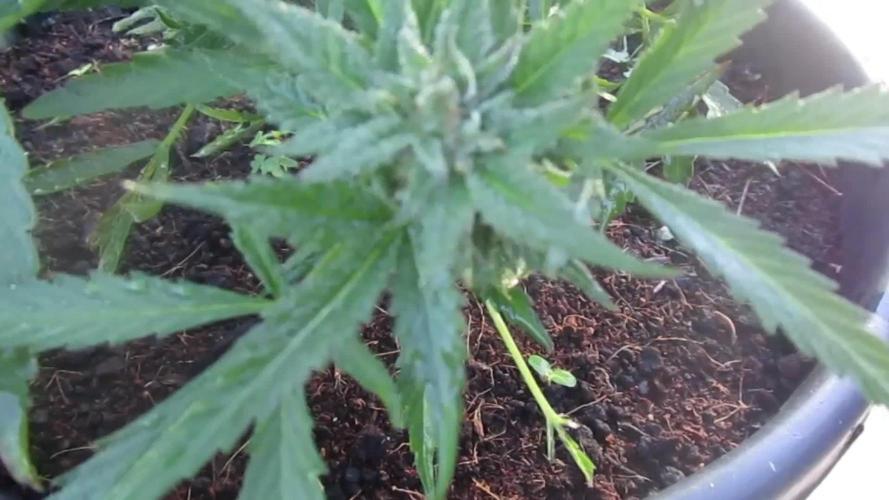
Lo primero perdonad por no actualizar esto mas seguido, el trabajo y las pocas horas de luz solar no ayuda, cuando salgo es de noche y llego a casa de noche y no puedo prestarles mucha atencion a las plantas y hacerles las fotos correspondientes.. Pues asi van las niñas de Divine Seeds, la Auto Moon Rock me esta encantando, que monton de resina saca esta planta.. Ya empiezan a oler muy bien.. Como veis una de las Auto Fractal va a tardar mas en cosecharse que la otra auto fractal y que la auto moon rock. Ahora ya estare con actualizaciones mas seguidas, para el final del cultivo, el concurso no voy ni acercarme a ganarlo, pero da igual asi e podido probar estas geneticas de Divine Seeds.

Likes
6
Share


@Lordviper28
Follow
Last week was very successful pretty happy about how turned out during veg no I got them flipping to flower on a 12 to 12 light cycle I'm feeding with envy part a & b with envy bloom trigger all plants looking healthy and can't wait to see bud start growing gotta give a shout out to experts seed for this strain
Likes
107
Share


@Tropicannibis_Todd
Follow
Alright Then
REMINDER I DO 2 UPDATES PER WEEK 👉WEEKLYROUNDUP👈👉MIDWEEKLY UPDATE👈
We just hit week 5 and all is well , have to admit she's just killing it super happy with how shes coming along 😃 .......
I'm still training her with LST looking good 👌 And she's filling out the pot perfectly👌
water given ,so far and rain water to be used entire growth
Lights being readjusted and chart updated .........👍
I GOT MULTIPLE DIARIES ON THE GO 😱 please check them out 😎

Likes
19
Share


@Master_weeda
Follow
Bonjour à tous les padawans et maîtres jedis
Jour98 arrosage avec 2 litres d'eau ph6.3
Jour101 arrosage avec 2, 5litres d'eau ph6.3
Jour103 arrosage avec 2 litres d'eau ph6.3
Likes
4
Share


@Shotter
Follow
These have been on water there entire lifes I'm I am a new grower and learned the hard way have now got a full parcel of green buzz liquids on the way

Likes
1
Share

@ReallySavoy
Follow
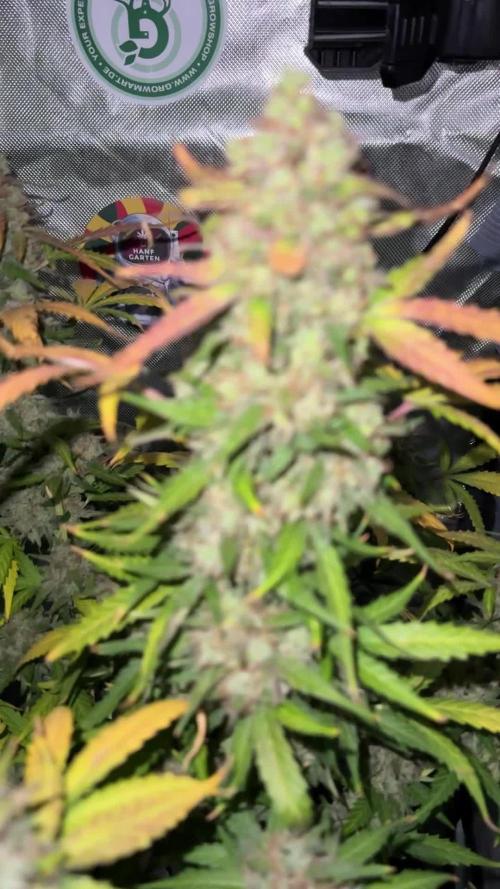
Final dry weight report (details later):
Final chop was on day 88.
First harvest was 184g of top-shelf from 5 colas. Then another 5 colas brought it up to 300g of top-shelf on sticks — all from the tent.
On the second-to-last harvest I took the rest, which added up to another ~300g including leaves.
Flushed with Terra Aquatica FlashClean (before that I was running Overdrive + honey with the base bloom nutrients).
In total: 3 days on water + FlashClean, followed by a step-by-step harvest and another 6 days just on water.

Processing
Likes
84
Share


@Beans
Follow
Earlier this week our very own sidelibe reporter Lyetah Nutherwon was able to catch up with the clone 1Leaf aka The 1, and discuss the plants recent success. We will now take you there live, to the transcript of that interview
L..N.:"So 1 Leaf, what has been the key to your recent success?"
1: "I think the biggest keys have been taking advantage of light and nutrients while also making sure i stay well hydrated."
L.N.: "How has all the success changed your life and is it hard not to let it go to your head?"
1: "Nah it doesnt go to my head cuz Im pretty much topped all the way around. I believe its important to stay in touch with your roots and remember where you came from. What makes you who you are. I had a rough dome life growing up and like to stay in touch with that part of me and use it as motivation.
L.N. "motivation for what? What would you like to change?"
1: "I don't want young clones growing up feeling the way I felt. Indica, Sativa, Hybrid....we're all the same genus. Indoor plants...outdoor plants....we all need to come together. We dont have to agree about everything just respect one another regardless of what color our leaves are, the spectrum we prefer, whether or not we are foliated or defoliated, nutrient burned or nutrient deficient."
L.N. "That sounds down right reasonable 1 Leaf. You should probably be ruler of the universe. What about all the strainists and haters? If plants want something to blindly hate then why not just hate seedling molesters? Just cuz an indica or a sativa wronged you doesnt mean they all will. There's good and bad phenotypes of all strains....but there aren't any good seedling molesters. So let's all just hate them instead.
L.N.: "That might be the most logical thing I've ever heard. That's fantastic. So how do u want to finish your career?"
1: "My ultimate goal is to get into flower and become a legendary bud and resin producer. That's my dream. Then once I'm done with the flower game, I want to be rolled up into a big ol' hooter, light me up and pass my ass around the world so everybody can get lit together and stop being dicks to each other. Then I want somebody to make Beans a big ass sandwich."👍
End
Wow....powerful stuff right there. I'd like to put that in my pipe and smoke it. That concludes this weeks edition of Legend of the 1Leaf Wonder. Tune in next week and find out what kind of sandwiches Beans prefers.

Likes
149
Share


@CBD_Sweden
Follow
Hi all the happy people here in GrowDiaries.
This is my second cultivation ever and it will be fun to try a bigger space than my closet grow.
First, I'm just going to say I'm done with the construction of my new growroom.
I put some pictures on the construction here in week one.
The room is 2.14 meters by 1.7 meters and has a ceiling height of 2 meters.
It provides a floor area of 3.6 square meters.
I use a 54 Watt Lightwawe T5 for germination and 2 Pcs 400 Watt HPS lamps.
I have a channel fan that replaces the room air about 40 times an hour to get a comfortable theme in the room, the air enters a fresh air intake from the outside.
The air is purified through a carbon filter to then leave the room to the rest of the basement.
Then I use that heat to heat the rest of the basement.
I will use 8 pcs 15 liter Autopots to grow with and a 100 liter water tank that supplies the pots of water and nutrition.
I will grow completely organically in soil and will watercure my buds to get the best possible medicine for me.
But there are no cultivation rooms to be displayed here, so I continue with what is most important.
Today I have put my seeds in my moisture dome and hope the seeds have germinated within a few days.
I am very excited to see how the new growroom will work and how this Blue cheese Auto from Royal queen seeds will turn out.
Blue Cheese automatic cannabis seeds are a cross of Blueberry Automatic and Cheese Automatic that has been perfected over five years of breeding and careful selection. The result is a feminized, autoflowering strain with superior yield, flavor, and effects to either of its distinguished parent strains.
THC: 16%
CBD: Low
Yield Indoor : 325 - 375 gr/m2
Yield Outdoor: 60 - 110 gr/plant
Height Indoor: 40 - 70 cm
Height Outdoor: 60 - 110 cm
Flowering: 7 - 8 weeks
Harvest month: 9-10 weeks after planting
Genetic Background: Blueberry x Cheese x Ruderalis
Type: Sa 35% In 40% Ru 25%
Effect: Cerebral and uplifting
Climate: Mild
..............................................................................................................................................................................................................................................................................................................................................
Update 2017-08-15. All 4 seeds have germinated and planted in small pots inside the humidity dome.
I'm so glad it worked so well and now it's just hoping they'll start growing and become 4 big healthy girls :)
...............................................................................................................................................................................................................................................................................................................................................
Update 2017-08-16. I have mixed my own soil today. Its 40% sieved peat harrow H2-H4 0-30 mm, 45% sieved peat harrow H4-H6 0-30 mm. 5% sand and 10% of compost soil. And i use 15% of perilite and mix it all together.
................................................................................................................................................................................................................................................................................................................................................
Update 2017-08.20. Nr1 and 2 grow and thrive.
Number 3 just got rid of the seedpod and is folding out the sheets.
Number 4 is a bit shy and can only be seen if you look carefully into the soil.
.........................................................................................................................................................................................................................................................................................................................................
Update 2017-08-21. Nr 1 and 2 is doing well. Nr3 is trying to catch up and Nr4 is still shy.
--------------------------------------------------------------------------------------------------------------------------------------------------------------------------------------------------------
2017-08-23. Transplanted 2 girls from humidity dome and the small germinating pots to 15 liter autopots. The other 2 girls have to wait a little more before transplant to the autopots.
................................................................................................................................................................................................................................................................................................................................................................................
2017-08-27. The girls have settled in to there new home of the 15 liters autopot after a little transplant chock. Now the real week 1 starts for me and the girls.
--------------------------------------------------------------------------------------------------------------------------------------------------------------------------------------------------------
2017-08-28. New pic and movies.
---------------------------------------------------------------------------------------------------------------------------------------------------------------------------------------
2017-08-28. Nr3 is transplanted in 15 liter autopot.
-------------------------------------------------------------------------------------------------------------------------------------------------------------------------------
2017-08-29. New movie of the girls. Its no water for 3 days now for Nr1 and 2 so the roots develop more and match the plant above the soil. The temp controlled fan is awesome, its easy to set what temp you like to have in the room. Right now its 28 celcius. And humidity is 56%.
------------------------------------------------------------------------------------------------------------------------------------------------------------------------------------------
2017-08-29.
Hello to you who read my diary, I just want to say that I am pleased that you have chosen to check in with me and in my diary.
I just want to say that I do this for myself and for a steady flow of my medicine.
Everything you read and see in my diary is 100% honest and I will never distort or beautify anything here.
I document my crops so that I can learn from my mistakes and also to look back at those different crops.
I try to update with pictures every day and with text if something special has happened in the garden.
This is my strainhunt for the best medicine and the beginning of my journey with cannabis and the cultivation of it.
-----------------------------------------------------------------------------------------------------------------------------------------------------------------------
2017-08-30. Cleaned the room this morning, just vacuuming and cleaning with chlorine solution. Im testing the fan to control temp and humidity, it works great.
Added some pics with measurements and movie. Everything is looking great right now.
---------------------------------------------------------------------------------------------------------------------------------------------------------------------------
2017-08-31. New pics and videos.
---------------------------------------------------------------------------------------------------------------------------------------------------------------------------------
2017-09-01. New pics and videos. Gave each of the girls with 2 ml Alg-A-Mic, 4ml Bio-Grow, 4ml Bio-Heaven and 10 ml Formulex mixed in 2 liters of water.
I hope they like it :)
-------------------------------------------------------------------------------------------------------------------------------------------------------------------------------------------------------------------------------------------
2017-09-02. New pics and the girls liked the water and nutrients yesterday.
-------------------------------------------------------------------------------------------------------------
2017-09-03. New videos of the girls this morning. Nr1 and 3 looks great and nr 2 is looking a little funny, maby a little stressed.
Kl. 16.00. Did some defoliation on the girls. Added video.
Kl.. 23.00. New videos, defoliation and leaftucking.
-----------------------------------------------------------------------------------------------------------------
