


Likes
Comments
Share


@elementhc
Follow
Two Ethos Mandarin Bubba grown from seed, ended up being completely different phenos. One is dark purple almost red and other was lime green.



Likes
17
Share


@Tazard
Follow
She looks absolutely amazing! Buds are developing nicely and she has great color. I’ve done some defoliation to increase the penetration. Buds as low as 30” below the top (47” below the lights) seem to be developing quite well. I have lollipopped below this (bottom 24”). Thanks for looking.


Likes
36
Share


@brownbae420
Follow
Day 91
- No water for 6 days
- White pistils apparent
- Watered ONLY
- Vibe: 😳
"What happens to a dream deferred? Does it dry up like a raisin in the sun?… Or does it explode?" — Langston Hughes


Likes
4
Share


@Peca1973_Vv
Follow
I used to grow gorilla cookies before, but then they broke it, and now it's back to the old gorilla cookies, which is excellent in every way 💪👌🤤
Likes
8
Share

@GERGrowDesigns
Follow
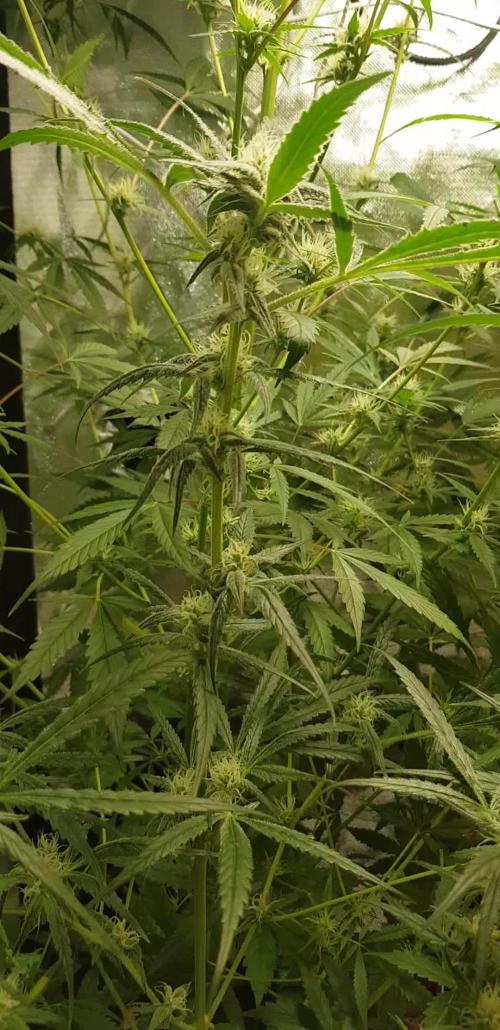
Welcome to Flower Week 3-4 of Divine Seeds Auto Black Opium
I'm excited to share my grow journey with you all as part of the Divine Seeds Autoflowering Competition 2025. It's going to be an incredible ride, full of learning, growing, and connecting with fellow growers from all around the world!
For this competition, I’ve chosen the Feminized Automatic strain: Auto Black Opium
Here’s what I’m working with:
• 🌱 Tent: 120x60x80
• 🧑🌾 Breeder Company: Divine Seeds
• 💧 Humidity Range: 50
• ⏳ Flowering Time: 60-63 Days
• Strain Info: 25%THC
• 🌡️ Temperature: 26
• 🍵 Pot Size: 0.5l
• Nutrient Brand: Narcos
• ⚡ Lights : 200W x 2
A huge thank you to Divine Seeds for allowing me to be a part of this amazing competition and Sponsoring the Strains. Big thanks for supporting the grower community worldwide! Your genetics and passion speak for themselves!
I would truly appreciate every bit of feedback, help, questions, or discussions – and of course, your likes and interactions mean the world to me as I try to stand out in this exciting competition!
Let’s grow together – and don’t forget to stop by again to see the latest updates!
Happy growing!
Stay lifted and stay curious!
Peace & Buds!

Likes
29
Share

@DogDoctorOfficial
Follow
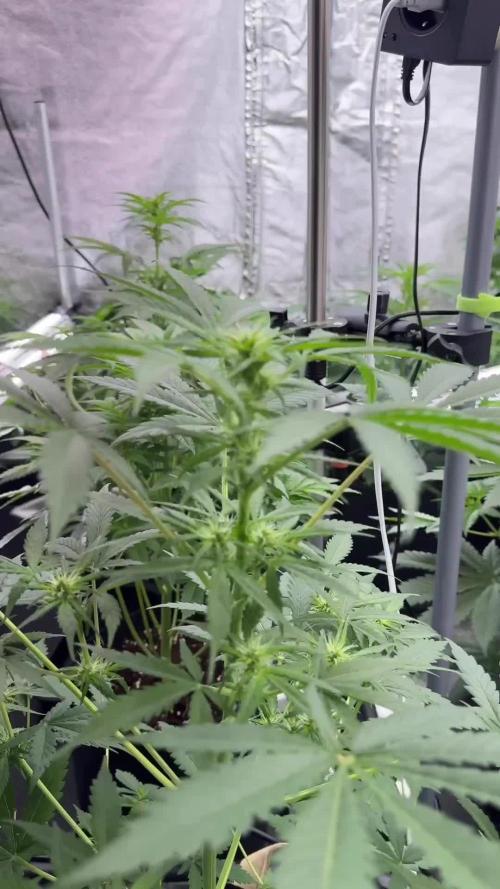
eek 1 Flower – Light Shift, Energy Shift: The Sundae Driver Flip Begins
The light has changed. The rhythm has changed. And so begins the next phase of our journey with these two beautiful Sundae Driver phenos—F2 and F3, strong, structured, and ready for the path ahead.
Light Flip: 11/13 Schedule
This week marks the official light flip, we’ve moved from 18/6 to 11 hours ON, 13 hours OFF.
This is more than a timer tweak, it’s an intentional signal to the plants. It tells them:
“It’s time to shift your energy. It’s time to bloom.”
Why 11/13 and not the classic 12/12?
From past experience, this slightly reduced light period tends to:
• Encourage faster onset of flowering
• Mimic natural seasonal changes more closely
• Push plants gently but clearly into the bloom phase
• Slightly reduce internodal stretching, depending on strain
It’s a subtle technique for growers who want to bring their genetics into flower with intention, not just automation.
⸻
Current Plant Stats
Both Sundae Driver phenos are looking phenomenal:
• F2 (Pheno #2): 7 to 8 solid nodes, well-structured branching
• F3 (Pheno #3): 6 to 7 nodes, evenly spaced, healthy top growth
• Height: ~40 cm each
• Structure: Symmetrical, thriving, ready to stretch
They’re not showing pistils yet—no visible pre-flowers, no white hairs, but that’s expected.
It’s Week 1 Flower by light schedule, not by physiology. The hormonal shift has just begun.
⸻
Nutrient Shift – From Start to Top
This week also marks a change in the feed program.
We’re saying goodbye to Aptus Start Booster and welcoming Top Booster into the rotation.
• Why the switch?
Because the plants are transitioning from root-zone stimulation to pre-flower induction.
• Top Booster is designed to:
• Initiate floral development
• Begin the phosphorus-potassium push
• Provide trace elements aligned with bloom-stage signaling
We’re using the same measurements as Start Booster, no shock, no surge. Just a clean hand-off, keeping the biological engine running smooth.
Current Feed Includes:
• Aptus Regulator
• Aptus CalMag Boost
• Aptus All-in-One Liquid
• Aptus Top Booster (new this week)
⸻
Environmental Stats – Pushing the Edge, Managing the Heat
• PPFD: 760 µmol/m²/s – Measured on the TrolMaster MBS-PAR sensor, dialed in
• Temp: 31°C – Yes, a bit high, but the girls aren’t complaining
• Humidity: 50%
• VPD: 2.23 – High, but within tolerance while waiting for AC upgrade
We’re riding the edge this week. It’s warm, it’s dry, but the plants are thriving, showing no signs of stress. Their resilience is a testament to your setup, your genetics, and your love.
⸻
Looking Ahead – What to Expect
We’re now in the hormonal build-up phase. The girls are about to stretch, about to signal floral commitment. Here’s what we might see by next week:
• First white pistils
• Stretch kicking in
• Top growth pushing harder than lower nodes
• Nutrient demands subtly shifting—watch potassium and magnesium uptake
What not to expect yet:
• Buds
• Resin
• Drastic shape changes
That comes soon—but not quite yet.
⸻
Closing Thoughts – A Sunday Drive Into Bloom
This isn’t just a new phase, it’s a new pace. The grow has shifted gears, and you can feel it in the rhythm of the room.
Light is shorter. Energy is tighter.
But the intention is louder than ever.
The Sundae Driver girls are leading us gently into bloom, graceful, balanced, and full of promise.
Thank you for following along. Let’s keep this community connected, curious, and committed to the craft.
—
Your Grow Companion
Dog Doctor Official
📲 Don’t forget to Subscribe and follow me on Instagram and YouTube @DogDoctorOfficial for exclusive content, real-time updates, and behind-the-scenes magic. We’ve got so much more coming, including transplanting and all the amazing techniques that go along with it. You won’t want to miss it.
• GrowDiaries Journal: https://growdiaries.com/grower/dogdoctorofficial
• Instagram: https://www.instagram.com/dogdoctorofficial/
• YouTube: https://www.youtube.com/@dogdoctorofficial
⸻
Explore the Gear that Powers My Grow
If you’re curious about the tech I’m using, check out these links:
• Genetics, gear, nutrients, and more – Zamnesia: https://www.zamnesia.com/
• Environmental control & automation – TrolMaster: https://www.trolmaster.eu/
• Advanced LED lighting – Future of Grow: https://www.futureofgrow.com/
• Root and growth nutrition – Aptus Holland: https://aptus-holland.com/
• Nutrient systems & boosters – Plagron: https://plagron.com/en/
• Soil & substrate excellence – PRO-MIX BX: https://www.pthorticulture.com/en-us/products/pro-mix-bx-mycorrhizae
• Curing and storage – Grove Bags: https://grovebags.com/
⸻
We’ve got much more coming as we move through the grow cycles. Trust me, you won’t want to miss the next steps, let’s push the boundaries of indoor horticulture together!
As always, this is shared for educational purposes, aiming to spread understanding and appreciation for this plant. Let’s celebrate it responsibly and continue to learn and grow together.
With true love comes happiness. Always believe in yourself, and always do things expecting nothing and with an open heart. Be a giver, and the universe will give back in ways you could never imagine.
💚 Growers love to all 💚

Likes
28
Share


@Trickybis82
Follow
Lovely to smoke. With a great weight given the set back with nute lock. Which Is the downfall to this run. Because this happened In last 3weeks which certainly resulted in small buds. However I am totally pleased with final weight and smoke from.this girl. Xx


Likes
34
Share


Processing
Likes
5
Share


@Mr_nugs_lover_David
Follow
Wonderful haze berry pheno, looks super pretty, this pheno number #1 looks very "perfect" because of the shape of the leafs and so. She's gonna be an awesome plant, let's see what I can Do guys! 💚🌱💎❤️👨🌾

Likes
8
Share


@Kardo
Follow
Die Lemonberry Haze Auto hat richtig dicke buds gekriegt und sie riecht so fruchtig sehr schön zum angucken


Likes
Comments
Share

@grimm420
Follow
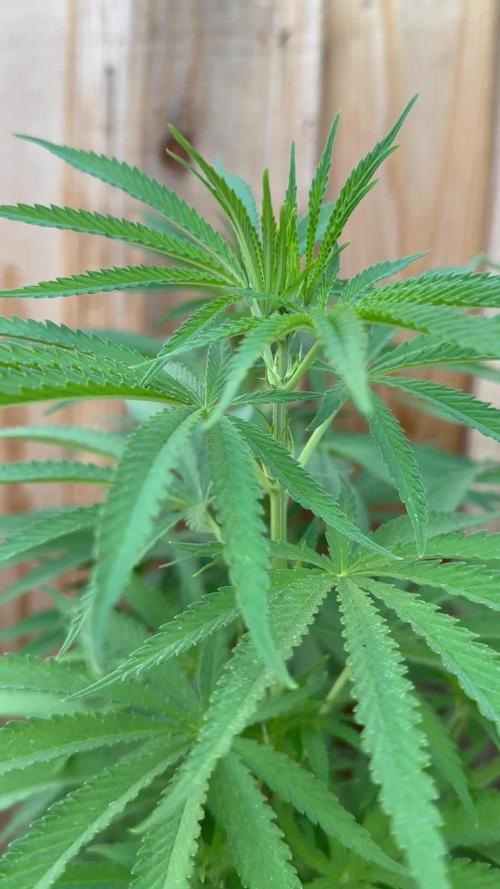
One thing I noticed is that its smell went away. But I figured it’s gunna get a lot stronger during flowering! I’m trying to find a way to aerate the soil because it’s so compact along with the roots that I sometimes feel like not all the soil is getting soaked properly, will find a big enough container to bottom feed, maybe it’ll help loosen it up a bit. And mites as well : oh well
Likes
8
Share


@Professor_Daank
Follow
Pushed EC a bit this week.
EC Target
1300-1600
1730 1679 1637 1831 1852 1991
Things is growing well. Bud nodes are tight and getting hairy!
Likes
14
Share


@Fat_Olsh_Farms
Follow
Day 42. General Hydroponics maxigro every other watering. Frosting up nicely.
Processing
Likes
259
Share


@love_2_grow
Follow
D57.
We're at the start of the fifth week of flower, and I suspect she will finish in a couple of weeks.
I removed all LST wires and soil staples today.
Last night, I gave her one liter of sprouted seeds tea with humic and fulvic acid. A bit redundant, but I had some extra after I was done with my other plants.
------------------------------
D60.
She is doing her thing quietly in the tent.
I'm starting to see senescence in her leaves, and I did the first trichomes check today, but no amber yet. She is at least a week, if not two, from harvest.
The reservoir is getting empty again, so I should top it up. I'll only fill it half-full as I don't know how long she has left. Instead, I'd fill it multiple times rather than deal with a reservoir with a bunch of water at harvest.
------------------------------
D63.
We're at the end of the fifth week of flower and on the home stretch. Looking at the trichomes, I think it'll be a week until chop day.
I partially filled the reservoir with 2.5 liters of water @ pH 6.6 to keep her happy for a few days longer.
------------------------------
Likes
8
Share


@Kirsten
Follow
19.1.25:
I have watered all plants with 300ml of dechlorinated water PH'd to 6.3, with 1/3 jar of black strap molasses with Ecothrive Biosys-1g.
I am looking to increase the sugars for microbial life and plant processes.
It'll also add some extra Calcium, Magnesium and trace elements.
I also, watered all plants with Bloom nutrients.
Using dechlorinated water PH'd to 6.3 with the following nutrients: (ml/l) ;-
♡ 2ml Cal-Mag
♡ 2ml Ecothrive Flourish
♡ 2ml Xpert Nutrients Bloom Booster
♡ 2ml Biobizz Bloom
♡ 2ml Biobizz Top Max
♡ 1g of Ecothrive Biosys
I watered around 1-3 litres per plant. Depending on size and requirements.
I'm still spilling water containing the nutrient solution. 🙄
I am using this to rub into the leaves. I think a nice foliar massage won't do any harm, make the most of the situation.
The plants have become very hungry and thirsty. Increased the water by double.
I ran out of my TNC cal-mag. I decided to order the Xpert Nutrients brand, as I like their products. It isn't organic as far as I can tell, but I don't think it matters too much to me, to be honest.
I also want to top dress this week, so I bought some Green Leaf PK bud Booster dry amendment from Amazon, too.
I'll mix it with canna coco, perlite, worm castings, and Ecothrive Life Cycle.
24.1.25:
I went ahead and top dressed all the plants with 4.5 gallons of my supersoil custom mix.
This consists of the following substrate and dry amendments:
♡ 60% Canna coco
♡ 20% Worm castings
♡ 15 % Perlite
The remaining 5% consists of the following dry amendments;-
♡ 10g Ecothrive Biosys
♡ 1 Tsp RHS Mycorrhizal Fungi granules
♡ 3 Tsp Vitalink Bat guano
♡ 4 Tsp Diatomaceous earth
♡ 8 Tsp Ground Cinnamon
♡ 10g Green Leaf Bud Booster PK booster.
♡ 3 Tsp Ecothrive Life Cycle.
•Worm castings for some all round nutrition.
•Cinnamon for mildew and bug repellent.
•Canna coco base substrate.
•Perlite for adding oxygen to the root and soil system.
•Green Leaf Bud Booster PK Booster for blooming. Building strong big buds.
•Vitalink bat guano again for Bloom.
•RHS Mycorrhizal Fungi granules, to boost beneficial microbes.
•Ecothrive Life Cycle for lots of great benefits.
•Diatomaceous earth for Silica.
•Ecothrive Biosys, for an extra microbial boost.
I have removed all LST equipment from both PPP1 and PPP2.
I'm going to let them grow up now, and I plant to implement a Scrog net, if they get any taller, which I hope they will.
However they are most likely finished with their final stretch. My mistake, I went too hard on the LST.
Thanks for checking out my diary 🍃 ✌️
Processing
Likes
21
Share


@Siriuz
Follow
Starting week 10
Day 77
Ladie is getting some nutes plus water
Day 78
Whoa she's growing a lot
Day 79
Gonna start scrog soon
Day 80
Root its thriving like crazy, uploaded new video, check it out!
Day 81
Time to feed the lady again plus added more ffof soil with perlite and clay peebles
Day 82
All good, no nutrient burnt @ 1810ppm
Day 83
Had to expand the net, added scrog plus some other features, she's a monster it's Giving me a lot of work to do but I'm really happy with this huge lady growing up!!
End of week 10 with some videos to show progress!


