




Likes
6
Share


@YoungBotanist
Follow
The week went well, the truth turned off the light for two days and the plant was a day without light at all, then the next day put near the window, the sun was bright enough, then turned on, now the plant is under 600 watts HPS Sylvania . tomorrow or after tomorrow I plan to transplant the plant into 10 gallons of a pot of airpot for the roots go beyond the pot ,very powerful. I also plan to do another topping and do scrog😋 is it too late for scrog? What do you think?😅

Likes
42
Share

@BlaKX
Follow
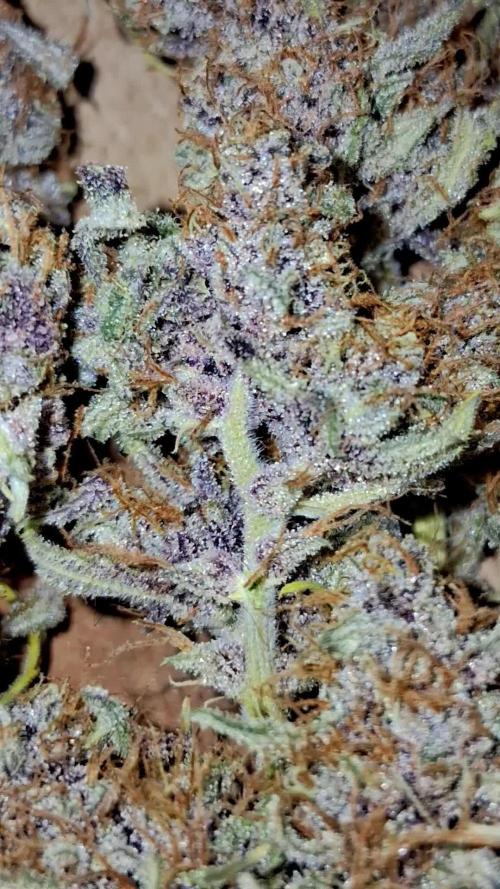
Die Buds zu trimmen war überhaupt keine Arbeit die wenigen Blätter zwischen den Blüten sind Harzig und entferne ich wenn sie trocken sind.
Die Terpene sind zu ende hin extrem gassy geworden das es schon Chemisch Süß riecht !
Freue mich schon soooo aufs verkosten


Likes
2
Share


@SamDo
Follow
Journal de culture - Semaine 3 de croissance
La plante a bien repris sa vigueur cette semaine, développant une belle masse racinaire, ce qui est très encourageant. Elle continue de se développer et je m’efforce de la maintenir la plus basse possible en utilisant des techniques de Low Stress Training. J’ai essayé le pinching, qui consiste à pincer légèrement les extrémités des branches pour les courber. Cela permet de rediriger les hormones de croissance vers les parties inférieures, ce qui maximise le développement des pousses.
J’ai également effectué une légère défoliation en enlevant quelques grandes feuilles superflues. Pour le reste, je surveille principalement le pH. J’essaie de le maintenir autour de 5.8, mais avec les tampons présents dans les produits Terra Aquatica, il remonte régulièrement à 6.2. Je me demande si ce pH légèrement élevé pourrait être à l’origine d’un problème de coloration des feuilles, car la plante semble présenter une légère carence malgré la présence de tous les nutriments nécessaires. Je fais attention à ne pas ajouter trop d’acide afin de ne pas surcharger la solution nutritive.
Globalement, la plante est en bonne santé et continue de bien évoluer. Je pense passer en floraison d’ici une ou deux semaines maximum. Étant donné qu’il s’agit d’une variété Jack Herer, qui a tendance à beaucoup s’étirer en floraison, je préfère la maintenir encore un peu en croissance pour travailler tranquillement avec les techniques de Low Stress Training et la défoliation. On verra son évolution la semaine prochaine !
🇺🇸 Grow Diary - Week 3 of Veg
The plant has regained its vigor this week, developing a strong root mass, which is great. It keeps growing, and I’m trying to keep it as low as possible using Low Stress Training techniques. I’ve been trying pinching, which involves lightly pinching the tips of the branches to bend them. This redirects the growth hormones to the lower parts, maximizing the development of new shoots.
I’ve also done a bit of light defoliation by removing some large, unnecessary leaves. Other than that, I’m mainly monitoring the pH. I’m trying to keep it as close to 5.8 as possible, but the buffers in the Terra Aquatica products keep raising it to 6.2. I’m wondering if this slightly higher pH might be causing some discoloration on the leaves—it feels like a deficiency, even though all the necessary nutrients are present. I’m cautious about adding too much acid to avoid overloading the nutrient solution.
Overall, the plant is healthy and continues to grow well. I’m thinking about switching to flowering in a week or two at most. Since this is a Jack Herer strain, which tends to stretch a lot during flowering, I want to keep it in veg a bit longer while working with Low Stress Training and defoliation. We’ll see how it evolves next week!
🤘😎🤘

Likes
49
Share


@Targona
Follow
Targona 43 days since my little girl sprouted from seeds🌱
Sixth week of growth of my Apple Fritter Automatic 🍎🍏🍎
Nutrients:
I use Advanced Hydroponics Of Holland nutrients - three basic components, still according to the table for vegetative growth 💓 -
- Dutch fertilizer Formula 1 Grow - supplies the plant with substances necessary for the perfect development of roots, stem and leaves; intended for the growth phase 🌾
- Dutch fertilizer Formula 2 Bloom - contains a large amount of nutrients necessary for rapid growth and fruit development, supplies the plant with energy; intended for the flowering phase 🌸🌿
- Dutch fertilizer Formula 3 Micro - increases oxygen intake, improves plant immunity, ensures better absorption of nutrients; intended for the growth and flowering phase 🌴
-------------------------------------------------- -------------------------------------------------- ---------
BioBizz Calmag - The special Calmag supplement was designed for professional and hobby growers who need to supply their plants with calcium and magnesium in organic quality for a long time or immediately. 100% organic 💩💩 and certified BioBizz Calmag is made from calcium carbonate and magnesium sulfate supplemented with humic acid.
-------------------------------------------------- -------------------------------------------------- ------------
BioBizz Bio pH- is an organic pH regulator. An aqueous solution of citric acid, which occurs naturally in citrus fruits 🍋🍋
---------------------------------------------------------------- ----------------
During the flowering period, I add stimulants:
- JUNGLE X Environ is a highly effective complex preparation for stimulating flower formation. 🌸🏵️
- Bud Candy - carbohydrates for my girls 🍭🍭🍭
Anyway, this is the last watering that I mix like this. I will gently switch to mainly organic nutrients, with the addition of very gentle flower stimulants, which are only slightly or partially mineral.
In general:
Apple Fritter Automatic 🍎🍏🍎 - The girl still responds well to nutrients. Actually all the girls in the tent, except for their sister - Melonade Runtz, which I'm sorry about.
However, as I wrote above, I will be switching to a different fertilization system, so we'll see, girls, it shouldn't stress me out, because it will be much lower doses of organic nutrients.
I really like the main "bud", I can already see that it will be a thick and strong flower 💚🌺🌱🌿
Training:
During this period, I decided to try only a slight defoliation. In previous rounds, I did more defoliation every week, now I try to do the opposite and leave more space for flowers and nature. I wonder if this will affect the harvest 💚🌞🌞
Light: Mars Hydro TS1000 The plants respond effectively and the light is technically very well managed - I try to have 50 cm between the light and the plants, so I move it up regularly 💡💡💡
Thanks for the likes
See you soon 😍😍

Likes
29
Share


@JeyGanesha
Follow
Anche questa Ayahuasca purple sta venendo su bene... La piccola talea che ho messo in terra a fianco alla pianta,ha attaccato al primo colpo senza fare nulla di speciale. (Senza radicante ne altro,)😋😂💪✌️....
Da questa settimana ha iniziato a fare un profumo delizioso...i fiori li sento già belli duri,compatti...non ho più trovato nessun nannars,ne fiori maschi completi...bene bene piantine mie belle..seguite così e datemi una buona terapia...🕉️ Om namah shivaya

Likes
6
Share

@The_Kitchen_Raccoon
Follow
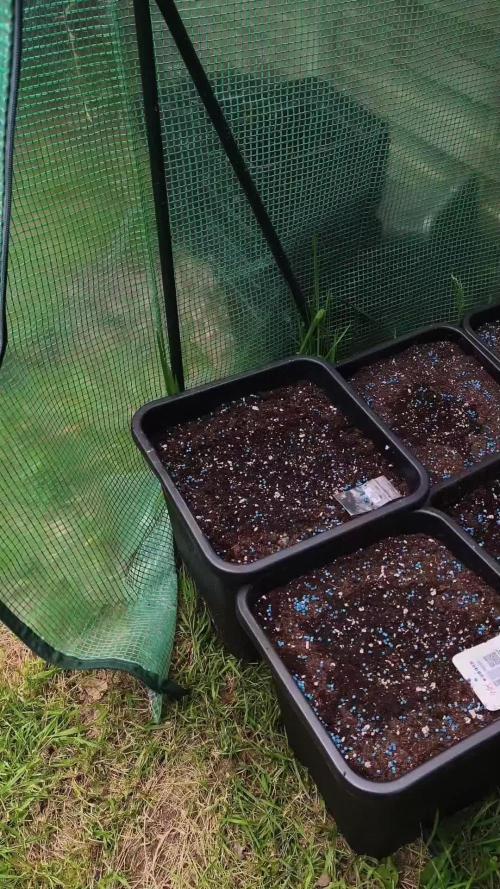
Hi everyone and welcome to week 1 of this outdoor organic Fast Buds competition 🌱
Not much to report just yet, but the seedlings are off to a good start. They’ve now been placed straight into their final 14 litre pots and are currently in the nursery greenhouse. The sun is shining and the journey has officially begun 😎
So why go straight into the final pots?
Autoflowering cannabis plants don’t respond well to transplanting, mainly because of their biology and fixed life cycle.
Autos come from Cannabis ruderalis, which means they start flowering automatically after just a few weeks of growth, regardless of light cycles. Because of that, their vegetative stage is very short, usually around 2 to 4 weeks. Any stress during this early stage, like transplant shock, can slow them down and affect the final size and yield.
Unlike photoperiod plants, they don’t have time to recover. They keep moving forward no matter what, so early setbacks stick with them. Root development is also key at this stage, and transplanting can disturb or limit that, which impacts the plant’s overall potential.
You can transplant autos if it’s done very early and carefully, but it adds risk for very little benefit, especially with such a short cycle.
Hope you all had a great weekend !
Happy gardening 😎💚


Processing
Likes
17
Share


@MissSolasolita
Follow
End of week 4 flower
She is starting to smell a little and is getting stickier
Everything seems good so far

Likes
3
Share

@Smev1337
Follow
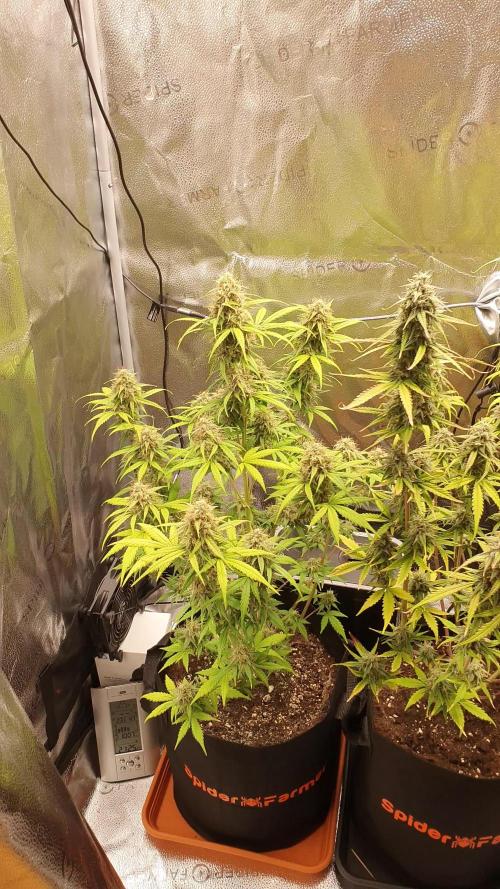
now the buds start to get really fat/thicker, also the terp profile is on point really fruity 😋



Likes
36
Share


@nonick123
Follow
Día 80 (19/08) Riego con 1 litro H2O pH 6,55
Día 81 (20/08) Riego 250 ml H2O pH 6,55
Día 82 (21/08) Riego 500 ml H2O pH 6,55
Día 83 (22/08) 💥Comienza la floración! 💥
No riego. Día nublado y de bajas temperaturas
Día 84 (23/08) Riego 500 ml H2O pH 6,55
Día 85 (24/08) No riego. Día nublado y de bajas temperaturas
Día 86 (25/08) Riego con 1 Litro de Té Floración de Lurpe Solutions. Preparación: 24 horas con bomba de aire (oxigenación) con ingredientes:
Healthy Harvest 8 ml/L + Insect Frass 16 ml/L + Hummus Lombriz 8 ml/L + Melaza 1 ml/L + Kelp Hidrolizado 0,25 g/L
💦Nutrients by Lurpe Solutions - www.lurpenaturalsolutions.com
🌱Substrate PRO-MIX HP BACILLUS + MYCORRHIZAE - www.pthorticulture.com/en/products/pro-mix-hp-biostimulant-plus-mycorrhizae

Likes
18
Share


@Haoss
Follow
I've topped this beautiful girl 16 times, now I'm going to take some time off from the stress to get out, then I'm going to put on the scrOG net and switch the light cycle to 12/12, she feels great💚🌋

Likes
26
Share


@pifflestikkz
Follow
Day 22
22/07/24 Monday
Nothing new to report. Starting to see them beautiful fans appear that's all 😁✌️
Day 23
23/07/24 Tuesday
Feed today, giving them straight all nutes Inc flowering nutes.
I will update the dose as they grow and develop a bigger hunger.
(Not sure what's wrong with Overdose #2, bit mutated, we'll see how she gets on 😅)
Video updates 👌💚
Day 26
26/07/24 Friday
De-chlorinated watering pH 6 with 5ml calmag to 5L water.
Watered each with 250ml and had small run off.
I will continue to feed/water with small run offs to help prevent salt build ups.
Video update.
Likes
25
Share


@XperencdGmanXG
Follow
clones are slowly getting bigger, will be pushing them more with GH nutes in the coming week. Once big enough they will go in 7 gal pots but for now I will not be able to give them organic.
Likes
30
Share


@Roberts
Follow
Runtz auto is found well. She is shifting gears into flowering and showing her first pistils. She is looking good and she should start stretching very soon. Thank you Plagron, Medic Grow, and Zamnesia. 🤜🏻🤛🏻🌱🌱🌱
Thank you grow diaries community for the 👇likes👇, follows, comments, and subscriptions on my YouTube channel👇.
❄️🌱🍻 Happy Growing 🌱🌱🌱
https://youtube.com/channel/UCAhN7yRzWLpcaRHhMIQ7X4g.
Likes
8
Share


@CanadianFillmore
Follow
Start of week 7! Week 6 went really well. This GG#4 lady is looking amazing, with her purple colors and plump buds! This lady is also on an 8 week schedule, removed big bud and added overdrive to the nute lineup.

Likes
2
Share


@DrJekyll_MrKush
Follow
I've moved the two healthiest in new 25L (6 Gal) net pot, it's going to be easier to apply the LST, without damage the plant.
Anyway, LST is working well, main branches are getting "fatter", leaves are big and they show a nice healthy green color.
I start to give some NPK, I still have some Advanced Nutrients to use. Using for now at 1 ml/L , resulting in a EC of 0.8.
I still have nutes inside the soil, I have to go little by little for now.
I will keep you updated folks!
Have a wonderful week!

Likes
5
Share


@CK-OrgGrow
Follow
Woche 9
Blüte Woche 5
Die Money Maker von den Strain Hunters ist in der 5ten Blüte Woche angekommen.
In dieser Woche habe ich an der Money Maker eine Entlaubung durchgeführt und habe viel große Blätter entfernt.
An der Nährlösung habe ich in der Woche nix verändert.
Bei Fragen einfach die Frage stellen, genauso bei Verbesserungen und Tipps für mich.
Danke und viel spaß mit euren Pflanzen.
