


Likes
Comments
Share


@Naujas
Follow
Well, I managed to do something that I really didn't expect :) the yield is small, just like the pot :) it was a wonderful trip ;) but from now on I will only grow it in big pots :) good luck to everyone :) I will add weight when it is ready :)

Likes
50
Share


@Mr_Motalovah
Follow
Hello growers and tokers! 👋 👩🌾 🧑🌾.🔥💨
Great news this week!
Finally got my new lights in the tent and the ladies are in love with them!
They're growing vigorously! In the first week the lights are showing signs of working as advertised. Nice job! 👏 👏 @EasyGrow
Two of these ladies have grown so fast I had a bit of trouble training them and they're a bit taller than all the other ladies which are averaging 25cm.. CC1: 40cm, CC2: 37cm, CC3: 28cm
They're getting to be pretty bushy so next week I'll do a bit of defoliation.
Very happy with this week, the lights, plant growth, also got my temp on lock, humidity as well.. everything is going smoothly, all the good signs for a great harvest.
Hope you al have a great week!
Happy Growing! 😃

Processing
Likes
7
Share


@Kushizlez
Follow
Day 24-31
(Day 25) The smell in here is absolutely ridiculous. My last grow didn’t smell even close to this bad in early flower.
(Day 27) Stretch is finally all done. #6 in the back is very stout and barely stretched compared to everything else. I doubt it will yield much but I’m excited to see the nice tight colas on it. It seems to be still getting adequate light and raising it up is hard to do with a scrog net so I will just leave it. If it wasn’t getting enough light it would be stretching right?
The early frost is really shocking to me. My last indoor round definitely wasn’t this caked and I’ve never had an outdoor plant on this level either. That’s also true in terms of smell too.
(Day 29) I’m still debating whether I should feed anything in flower or just leave it. The only deficiency I’m seeing is purple stems from P def which could actually just be from light intensity rather than a lack of P.
I’ve done some thinking and I’ve decided to only feed my small plant. What I’m most curious about is if a PK boost will actually make any kind of a difference in flower when it comes to bud size and smokability. So to test this theory I will be top dressing a teaspoon of 0-18-0 bat guano, a tablespoon of 1-4-2 Destiny launch and a half strength watering of 0-0-15 kelp extract. I’m trying to avoid N all together as I just toxed my guinea pig plants with another experimental flowering PK boost that had a very small amount of N in it. This plant in particular actually has very early signs of N def and probably will fade harder than the rest.
(Day 31) Shit. Looks like #1 is starting to herm. It’s definitely not environment or light leaks so maybe it’s just genetic or the recent leaching stressed it out too much. Either way, it’s only a single lower branch and I’m prepared to cut her down if I start seeing anymore. I double checked every other budsite but couldn’t find anymore. In my experience true herms usually start pushing bananas out of the main tops and plants like mine can usually be salvaged with little to no seeded bud. But then again it’s day 31, when these things usually start to happen. I’m 50/50 on this one. I will be watching it everyday like a hawk if anymore show up. The breeder I’m using, ‘Jordan of the Island’s’ is notorious for having unstable genetics and this will be the last time I run any of his stuff. The quality is good, certainly better than most European and Dutch genetics I’ve run but I know I could do better where genetics are concerned. I can’t wait to start hunting my archive dosidos x gelato 41 and in house sugarcane.


Likes
29
Share


@GTools
Follow
I've been waiting for at least some trichomes to turn amber. I prefer to harvest when there are at least a few amber. I took the PL2 3 days before the PL1. Flushed them for a week only

Likes
1
Share


@Elguacho420
Follow
Buenas a tod@s... 3ra semana de floración de las red cookie gelato, de momento van bien, algunas hojas oxidadas a esta altura pero creo q es normal, eh podido regular bien la comida( a mí creer) y eh visto mejoras en las variedades, no las noto como antes q estaban como decaídas y se las veia agobiadas, las veo bien y en esta tercera semana se ve claramente la diferencia... Los nutrientes utilizados se ve q son la bomba... 🙌🏻👌🏻 La semana q viene más y mejor, se están poniendo hermosas...❤️ Muchas gracias y buenos humos para todos... 💨💨🇦🇷🤝🏻🇪🇦 🏻♂️
Likes
76
Share


@GrowBeforeHoe
Follow
This week was awesome!
Great weather + little support from Royal Queen Seeds!
The sunshine which the plants got this week was amazing. 3 days without any clouds only blue sky and sun... Lovely!
The ladies enjoyed the great weather and showed some really good growth this week! 💚☀️
I let the new seeds which I hot from RQS germinate right now... The majority of them already showing the first root poking out.
I had found also a new side where I'm going to plant some ladies too ... So stay tuned what's coming next week!
Keep Growing everyone! 💚💚🌱

Quick One · Royal Queen Seeds
Northern Light Automatic · Royal Queen Seeds
Royal Haze Automatic · Royal Queen Seeds
Special Kush #1 · Royal Queen Seeds
Purple Queen · Royal Queen Seeds
Royal Jack Automatic · Royal Queen Seeds
Royal Critical Automatic · Royal Queen Seeds
Royal Cheese Automatic · Royal Queen Seeds
Sherbet Queen · Royal Queen Seeds
Amnesia Mac Ganja · Royal Queen Seeds
Likes
1
Share

@TerpCloudzZz
Follow
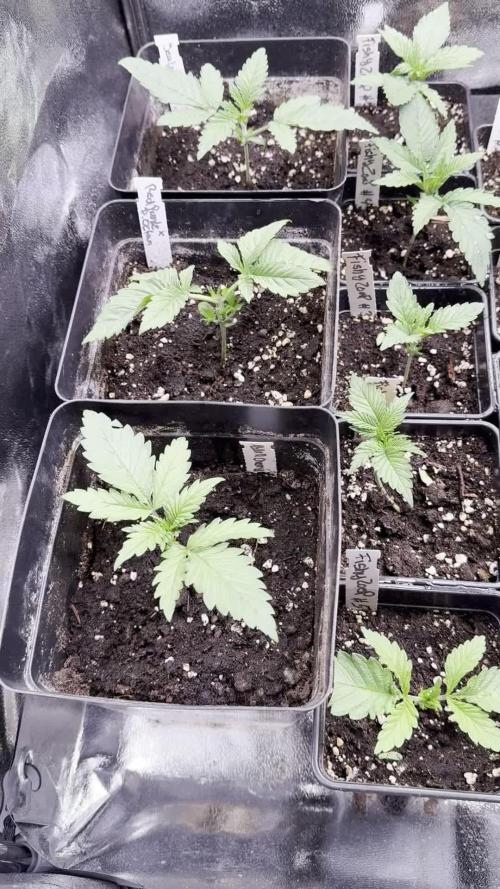
🌿 Grow-Tagebuch – Woche 3: Wachstum & Strukturaufbau
📅 Zeitraum: KW 43 Phase: Etablierte Vegetation 📍 Setup: Indoor-Growtent mit LED-Beleuchtung, reflektierenden Wänden, aktiver Luftzirkulation, 20+ beschriftete Töpfe
🔍 Überblick der Woche
Wachstumsfortschritt: Die Pflanzen befinden sich nun stabil in der vegetativen Phase. Die meisten zeigen 4–6 Blattpaare, einige bereits die ersten Seitentriebe.
Pflege & Klima:
Temperatur: konstant bei 24 °C
Luftfeuchtigkeit: leicht gesenkt auf ~55 %
Lichtzyklus: 18/6, LED mit ~300 PPFD
Luftzirkulation: Umluftventilator + passiver Luftaustausch
Gießverhalten: angepasst auf Bedarf – Pflanzen mit stärkerem Wachstum erhalten punktuell mehr Wasser
Nährstoffe: Erste Gabe von mildem Vegi-Dünger (EC ~1.0) wurde gut aufgenommen. Keine Anzeichen von Überdüngung. Einige Pflanzen erhalten zusätzlich CalMag zur Stabilisierung der Zellstruktur.
📚 Lernimpuls der Woche
„Vegetation ist nicht nur Wachstum – sie ist Architektur.“ Jetzt entscheidet sich, wie die Pflanze später Licht aufnimmt, wie sie trägt und wie sie mit Stress umgeht. Tipp: Wer früh mit LST beginnt, kann die Haupttriebe gezielt lenken und die Lichtverteilung optimieren. Auch das Entfernen der ersten unteren Blätter kann helfen, Energie effizienter zu lenken.


Likes
38
Share


@J_diaz420
Follow
Enamorado totalmente de cada una de estas genéticas, ésta me tiró 4 monstruos de plantas 😍
Likes
Comments
Share


@Growfather1
Follow
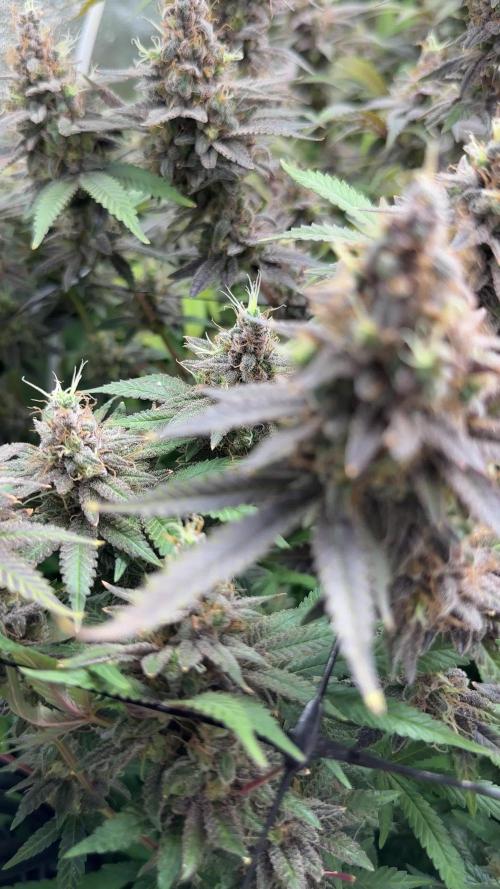
Hello everyone.
Here is the week zero germination update for my new Peyote Critical diary from Barney's Farm.
Strain Information
Peyote Critical is an indica-dominant hybrid created by crossing Peyote Purple with Critical Kush. It is known for being an exceptionally hardy, mold-resistant, and high-yielding strain with an earthy, sweet profile.
Grow Setup & Environment
* Tent Size: 240x120x200 cm
* Pot Size: 21 Liters
* Temperature: 22°C – 26°C
* Humidity: 65%
There is not much else to report just yet as we are just getting started.
Looking at the upcoming weather for the next four months, I figured the best way to keep warm this winter was to start at least 10 new seedlings dedicated entirely to the month of October. Who needs a space heater when you can just turn your tent into a tropical jungle?
Thank you for stopping by and have a nice day.
Best regards,
Growfather



Likes
11
Share


@Budhunter
Follow
Harvest on day 91 of cycle , day 54 of flowering.. I could leave it few days more for sure however my ladt harvest is nearly finishing so I need to dry this plant as soon as possible hehehe..
Purple punch has really frosty buds, it didn’t grow as much as I wish(I had to move the plant to the toilet with my burple light as there was no space for 3 plants in my 2x4 tent) but they are looking insanely good, with a strong flavor of grape, I am impressed with this smell/flavour, all covered in trichomes, I can’t wait to smoke it..
So my way to harvest it is I cut it down on the main branch and hang to dry out.. all the plant .. I prefer dry trim because it’s way easier to trim.. so now I am gonna hang it for 2/3 weeks and then start trimming.. I will update yield and tasty as soon as I finish trimming..
Overall I am happy with the results 🙌🏼.

Likes
11
Share


@Coughy
Follow
Trichs seem to be further along then last grows, I can only assume the extra light and/or higher heat has cause them to finish a bit faster. Right now we are sitting on a majority of 70% cloudy, literally only a couple ambers through out. Wanting to harvest a little earlier this grow, hopefully day 59 or 60. Sooooo, 10-11 more days till chop.
Day 51
Starting a flush, drained and filled with tap water, 2mL/L of flushing agent to help dissolve/bind salts. 3 hour cycle runtime with flushing agent. Drain/fill with high quality ROH2O, pH’d, H202 for disinfection.
Likes
9
Share


@Inganjawetrust
Follow
This was my first time growing a photoperiod and I decided to put her outside along with some autoflowers this past summer.
I started Purple Shot Photoperiod Fem. from Exotic Seeds in a one liter air pot and moved her into a 5 gallon phat sack on day 14 when she was 2.5 inches tall.🌱🌱🌱
By the start of week three she was 6.5 inches tall and looking quite happy in her new five gallon home. A short while later she was moved outside to adjust to her new environment.☀️☀️☀️☀️
By day 35 she was 16.5 inches tall and developing a nice bushy structure.
She started to flower towards the end of week 10
By week thirteen it was evident this girl was going to be making some nice tight lil nuggets 😁
By week fourteen I could hardly take my eyes off of her as she started to show her fall colors.
I harvested her on day 130 18wk 4d She was 43" tall and looking pretty as can be.
Her nuggets are not large but they are hard as rocks and sticky as fuck.
The original plan was to turn all the outside plants into hash but I like this one too much just the way she is 😋
After a nine day dry and month and a half to cure the dry weight for this girl was 78.50g / 2.80 oz
✌️😎💨

Processing
Likes
17
Share


@wheedtobeus420
Follow
So excited to start a Mephisto grow! I will update once they sprout out of the ground. I soaked them in Ph water for 12 -24 hours. I then put a paper towel in a zip lock and pour the ph water and seed in between paper towel. Put it in a dark warm closet on top of a heating pad on low and usually and wait until the babies pop. Once popped they go into the super soil i prep for them in a 5 gall cloth pot

Likes
4
Share

@DogDoctorOfficial
Follow
💙 Project Blue Tent – Week 10
🥒 Pickle Lemon Haze F1 – Pheno B
🌸 The Week Where We Let Her Shine
Hello everyone, and welcome back to another chapter of Project Blue Tent! 💙🌱
And this week...
I'm going to start by saying something that has become increasingly obvious while watching this project develop:
These girls are incredible.
😂💙
Not because they're doing something completely different from each other.
Actually...
quite the opposite.
They're becoming remarkably similar.
Same room.
Same environment.
Same lighting.
Same irrigation.
Same nutrition.
Same training philosophy.
Same major interventions.
And now, as we reach this stage of flowering...
they almost look like copies of each other.
And that is fascinating.
Today we're putting the spotlight back on Pickle Lemon Haze F1 – Pheno B.
And honestly?
She's looking absolutely beautiful.
🌿 WEEK TEN – NOTHING TO FIX
After the amount of work we did during the previous weeks, this week was refreshingly simple.
We didn't perform another major defoliation.
We didn't change the structure.
We didn't move branches around.
We didn't install another SCROG.
We didn't start chasing the canopy.
We didn't try to force anything.
We simply watched.
And that's because there really isn't anything screaming at us for attention.
Pickle Lemon Haze Pheno B is approximately 145 cm tall.
She's healthy.
She's vigorous.
She's flowering.
She's supported.
And she's settling beautifully into the structure we created for her.
Sometimes...
doing nothing is actually doing something.
😂🌱
🌸 LOOKING AT THE RESULTS OF THE PREVIOUS WEEKS
This is the part of the project I find particularly satisfying.
During the previous weeks, we were constantly making decisions.
The girls stretched.
We ran out of vertical space.
The LEDs needed to be raised.
The carbon filter and extractor were moved outside the tent.
The canopy became extremely dense.
We performed a deep defoliation.
We installed the second SCROG.
We added additional airflow underneath the canopy.
We adjusted the nutrition.
There was a lot happening.
But now?
We get to watch those decisions play out.
And Pickle Lemon Haze Pheno B is giving us a very nice answer.
She's standing there with a beautifully organized flowering structure.
The branches are visible.
The canopy is open.
The flowers are developing.
The support system is in place.
The airflow is moving.
And the plant looks comfortable.
That's what we wanted.
🌿 THE DEFOILIATION IS NOW IN THE REAR-VIEW MIRROR
One of the biggest things I'm watching this week is how beautifully the plant has settled after the heavy defoliation.
At the time, the room looked completely different.
We had an enormous amount of vegetative material.
The plants had stretched aggressively.
The interior of the canopy was extremely dense.
So we opened everything up.
Not because leaves are bad.
Quite the opposite.
Leaves are essential.
But the structure had become so crowded that we needed to manage the density and make the flowering architecture more functional.
And now...
we're seeing the result.
The plant has had time to recover.
The remaining foliage is doing its job.
The flowering sites are much easier to see.
Air can move through the structure.
And the entire plant feels more organized.
That's the beautiful part.
The intervention is finished.
Now the plant gets to tell us what it thought about it.
And so far?
I like the answer.
💡 LUMIFLORA – LIGHTING THE LOWER CANOPY
The biggest new addition to the setup is still the LumiFlora under-canopy light.
We're now running the **LumiFlora 150W full-spectrum fixture**, with additional emphasis toward the red portion of the spectrum.
And with these girls becoming this large, it makes perfect sense to explore supplemental lighting underneath the canopy.
The main Phytonaut LEDs continue providing the primary light from above.
But with a plant this tall and this developed, the lower portions naturally receive less direct light.
So instead of constantly removing more foliage to try to expose every single flowering site to the overhead fixtures, we're taking another approach.
We're bringing supplemental light to the lower canopy.
The LumiFlora is there to complement the overhead lighting.
Not replace it.
Not compete with it.
Simply add another layer of light where the structure naturally creates more shade.
And now...
we watch.
🌸
I'm particularly interested in seeing how the lower flowering areas develop over the coming weeks.
That's one of the reasons I love documenting these experiments.
We make a change.
Then we wait for the plant to answer.
🕸️ THE SECOND SCROG IS RIGHT WHERE WE WANT IT
The second SCROG remains in place and, just like the rest of the setup, we're not touching it unnecessarily.
It has already done what we wanted.
The first SCROG helped us organize the vegetative canopy.
The second SCROG is now there to provide additional support as flowering continues.
With Pheno B reaching approximately 145 cm, she's built a substantial framework.
As those flowers continue gaining weight, having that extra support available becomes increasingly useful.
We're not trying to reshape her anymore.
We're not trying to force branches into new positions.
The structure is established.
Now we support it.
And then we let her do her thing.
🥒💙
🌬️ AIRFLOW – KEEPING EVERYTHING MOVING
The airflow system also remains unchanged.
We have airflow working through different levels of the canopy, with the additional Zamnesia clip fan underneath helping move air through the lower portion of the plant.
That becomes particularly interesting now that the LumiFlora has been introduced.
We're adding light underneath the canopy, so naturally we want to make sure the lower portion of the room continues to have good air movement as well.
The goal isn't to create a hurricane.
😂
It's simply to avoid stagnant pockets of air inside a very mature flowering structure.
The canopy is open.
The air is moving.
The extraction system is outside the tent.
And the room feels much more balanced than it did a few weeks ago.
NUTRITION – CONSISTENCY IS KING
The nutrition remains exactly where the plants are telling us they want it.
We're continuing with the PLAGRON Hydro program:
PLAGRON Hydro A — 2.2 ml/L
PLAGRON Hydro B — 2.2 ml/L
🌱 PLAGRON Hydro Roots — 1 ml/L
🌸 PLAGRON Power Buds — 1 ml/L
pH adjusted as required
Current EC is approximately 2.49 mS/cm.
And again...
we aren't changing things just for the sake of changing them.
The plants are happy.
They're consuming.
They're flowering.
They're maintaining beautiful foliage.
So we're staying consistent.
This is something I've always enjoyed about working with plants:
They tell you when they're comfortable.
You just have to pay attention.
Don't feed a number.
Watch the plant.
🌸💙
🥒 PHENO B – LOOKING MORE AND MORE LIKE HER SISTERS
Here's the really fascinating part.
Pickle Lemon Haze Pheno B is beginning to look remarkably similar to the other girls in the tent.
And that's something I find genuinely interesting.
These are individual plants.
They're being documented separately.
We're watching their individual personalities develop.
And yet...
under the exact same environmental conditions...
they're showing an incredible amount of uniformity.
The same general height.
The same aggressive vegetative development.
The same flowering transition.
The same response to the structural work.
The same need for support.
The same beautiful recovery after defoliation.
It's almost like looking at several versions of the same plant.
😂💙
Of course, there will still be phenotype differences.
That's what we're here to discover.
But right now?
The uniformity is impressive.
And that's making me even more curious about what happens as they mature.
🔬 SAME ENVIRONMENT – LETTING GENETICS SPEAK
This is exactly why Project Blue Tent is so interesting to me.
We're keeping so many variables consistent.
Same tent.
Same lighting.
Same irrigation.
Same nutrition.
Same environmental conditions.
Same general training.
And then we watch.
The more consistent the environment remains, the more interesting the individual differences become.
Or, in this case...
the lack of obvious differences.
😂
The Pickle Lemon Haze F1 girls are behaving remarkably similarly.
And that's giving us a very interesting picture of how these genetics are expressing themselves in this particular environment.
But we're not jumping to conclusions yet.
We're still early enough in the flowering development that the final differences may become much more obvious later.
So...
we watch.
🌿 THE PLANT DOESN'T NEED US TO CONSTANTLY TOUCH IT
One of the biggest lessons from this stage of the grow is knowing when to step back.
There is always something a grower can do.
You can remove another leaf.
Move another branch.
Change another setting.
Adjust another number.
Add another product.
But that doesn't mean you should.
😂
At this point, Pheno B looks like she doesn't need another intervention.
She needs stability.
She needs time.
She needs light.
She needs nutrition.
She needs airflow.
And then...
she needs to be left alone to do what plants do.
Grow.
Flower.
Develop.
Finish.
And that's exactly what we're doing.
💡 FROM OVERHEAD LIGHT TO A COMPLETE LIGHTING ENVIRONMENT
The introduction of LumiFlora is also changing how I'm thinking about the lighting inside this tent.
Previously, the main story was always the overhead LEDs.
How high are they?
How far from the canopy?
How much stretch?
How much vertical room?
Now we've added another dimension.
We're thinking about the plant in three dimensions.
Light from above.
Supplemental light underneath.
A canopy occupying the space between.
And that's particularly interesting with plants that have become this large.
The LumiFlora 150W full-spectrum fixture gives us another tool to explore how supplemental lower-canopy lighting can fit into the overall system.
We're not expecting miracles.
We're not claiming it will automatically transform the plants.
We're simply giving the lower canopy another source of light...
and watching.
That's what this whole project is about.
Observation.
Experimentation.
Documentation.
🌸 CURRENT GROW CONDITIONS
🌸 Flowering: Week 10
📏 Height: approximately 145 cm
💡 Light schedule: 12/12
☀️ Day temperature: 27°C
🌙 Night temperature: 27°C
💧 Relative humidity: 61%
⚗️ pH: 6.0
⚡ EC: approximately 2.49 mS/cm
🌡️ Solution temperature: 24°C
🌱 Substrate temperature: 24°C
🌬️ CO₂: approximately 666 ppm
💦 Watering: approximately 1.6 L per plant / 24h
? Pot size: 8 L
💡 LumiFlora Under-Canopy: 150W Full Spectrum
The room is stable.
The plants are stable.
And that's exactly what we want right now.
🔭 WHAT I'M WATCHING NOW
At this point, the questions have changed.
I'm no longer asking:
"How do we control the stretch?"
We've already dealt with that.
I'm no longer asking:
"How do we fit them into the tent?"
We've created the space.
I'm no longer asking:
"How do we open the canopy?"
We've already done that.
Now I'm asking:
How quickly will the flowers develop?
How will the lower canopy respond to the LumiFlora?
How will the second SCROG perform as the flowers gain weight?
Will the Pickle Lemon Haze phenotypes continue looking this similar?
And finally...
what are these girls going to look like when maturity really starts showing?
Those are much more exciting questions.
😂💙
🌸 LET THEM WORK
This week is really about one thing:
Let them work.
We've already spent weeks building these plants.
We've created the structure.
We've managed the canopy.
We've opened the room.
We've improved airflow.
We've raised the lights.
We've added support.
We've adjusted nutrition.
We've now introduced supplemental under-canopy lighting.
There isn't much more I want to manipulate right now.
I want to see what the plants do with everything we've given them.
And Pheno B is making that decision very easy.
She's looking fantastic.
🥒💙
🌸 FINAL THOUGHTS – THE QUIET WEEKS ARE SOMETIMES THE BEST ONES
This week might not have been dramatic.
There was no major training session.
No emergency.
No broken branch.
No big room rearrangement.
No massive intervention.
And honestly?
That's wonderful.
😂
Because sometimes the best grow updates are the ones where you can simply stand back and say:
"Look at her."
And that's exactly how I feel looking at Pickle Lemon Haze Pheno B.
She's standing there at approximately 145 cm.
She's healthy.
She's vigorous.
She's flowering.
The canopy is open.
The branches are supported.
The airflow is moving.
The nutrition is consistent.
The overhead lighting is doing its job.
And now the LumiFlora is giving the lower canopy another source of full-spectrum light.
Everything we've done over the previous weeks is now becoming visible.
This is the payoff phase.
Not the harvest yet.
Not the finish line.
But the point where all those earlier decisions start becoming the plant we're looking at today.
And that's incredibly satisfying.
💙🌸🥒
The most fascinating part?
She looks remarkably similar to her sisters.
Four girls.
One room.
Same environment.
And somehow...
they're developing like they're reading the same instruction manual.
😂
Maybe that's the beauty of these F1 genetics.
Maybe it's simply the environment.
Maybe we'll see more differences later.
That's exactly why we're documenting everything.
We don't need to decide the story today.
The plants will tell us.
And Pickle Lemon Haze Pheno B?
She's telling us she's very happy.
So we're listening.
We're keeping everything stable.
We're giving her the light, nutrition, support and airflow she needs.
And we're stepping back.
Now let's see what the future has waiting for this beautiful girl.
🌸🥒💙
🙏 A HUGE THANK YOU
A huge thank you once again to Zamnesia for making Project Blue Tent possible and for giving us the opportunity to explore these beautiful Pickle Lemon Haze F1 genetics phenotype by phenotype.
Thank you to PLAGRON for the Hydro nutrient line supporting these vigorous girls throughout this incredible flowering journey.
A massive thank you to Zamnesia for the Phytonaut LED lighting, curved scissors and clip fans that have become such important parts of this project.
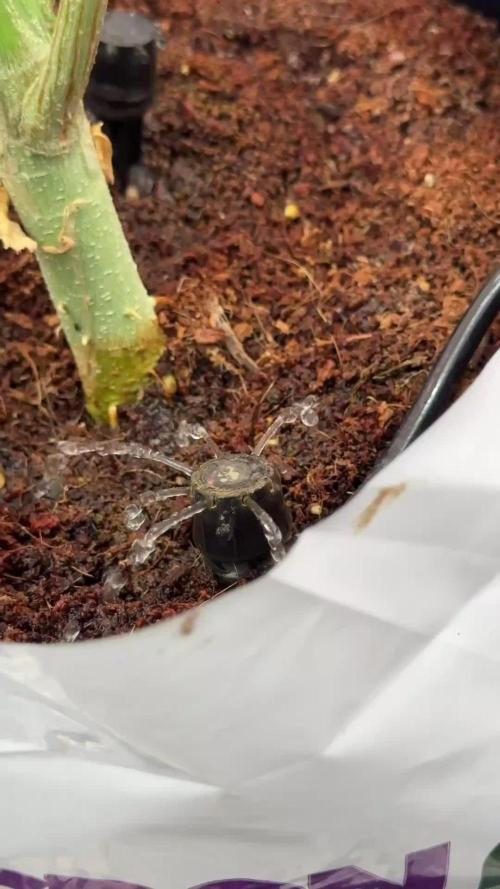
Thank you to Mars Hydro for the automatic drip irrigation and drainage system that keeps these girls consistently supplied throughout their very thirsty journey.
And a special thank you to LumiFlora for the 150W full-spectrum under-canopy light that we're now introducing into the setup to explore supplemental lighting underneath this beautiful flowering canopy.
And of course, thank you to GrowDiaries for giving us the platform to document this entire adventure.
Most importantly...
thank you to everyone following Project Blue Tent. 💙
This week was quiet.
But sometimes quiet is exactly what you want.
The plants are doing beautifully.
The room is stable.
The structure is established.
The support is ready.
The lighting is working from above and below.
The nutrition is consistent.
And now...
we wait.
Four plants.
One environment.
Different phenotypes.
And an increasingly fascinating amount of similarity between them.
😂💙
Let's see what the future has in store.
For now, Pickle Lemon Haze Pheno B is exactly where I want her to be.
Healthy.
Happy.
Supported.
Flowering.
And shining.
🥒🌸💙
Until next week...
Less intervention.
More observation.
More flowers.
And hopefully...
a little more of that beautiful Pickle Lemon Haze F1 magic.
Growers Love, happy growing, and take care everyone! 🌱💙


Likes
8
Share


@BusyBeeFarmer
Follow
Progress Update:
The Blue Dream plant continues to show excellent development and has handled the increased nutrient levels exceptionally well. It seems less sensitive to feeding adjustments than expected, a positive trait for consistent growth.
Watering Schedule:
Skipped watering this week due to high humidity levels, which kept the soil moist since the last watering at the end of the previous week.
Plant Morphology:
Stem Growth: Strong and stable, indicating excellent structural integrity for supporting future buds.
Internodes: Relatively short, leading to a compact structure—a trait uncommon for Blue Dream and suggestive of a strong Indica influence in this phenotype.
Foliage: The leaves exhibit classic Indica characteristics, with broad, dark green blades.
Observations:
The plant’s Indica-dominant appearance is surprising given Blue Dream’s typical Sativa-dominant profile. This could lead to unique results in both growth patterns and flowering characteristics.
Next Steps:
Maintain consistent environmental conditions and monitor for signs of water requirements next week.
Continue full nutrient feeding while observing for any changes in plant response.
Consider early training techniques if needed to balance compact growth.
This plant’s performance remains impressive, and its unexpected traits make it a fascinating grow to observe. 🌿
dein-onlineheadshop.de/
Use my referral code 420Shop at checkout to get a discount on your purchase. By using this code, you also support me, as I receive a small reward for each use. Thank you for your support!

Likes
12
Share


@Gardens_of_Of
Follow
- Humidity has been high in Berlin again but I managed to control it way better with the arrival of dehumidifier but still can not manage to bring it to lower 50%s.
- VPD fluctuated this week between 1,0 and 1.55 kPa, averaging at 1,25 kPa.
- Tent temperature fluctuated around 23 at night and 28 Celsius at day time, averaging at 26.3. Higher than last week…
- Humidity did not fluctuate as it used to but still way higher than ideal range, averaging at 63.4.
- This week, Medium Ph got back to normal of 6.3. I am now giving standard 6.4 Ph Water.
- Both plants keep frosting day on day.
- Stickiness and smell keep getting stronger.
- So far, both seem to like their environment despite the high humidity and temperature.



Likes
9
Share


@treeofsong
Follow
My first soilless grow, i hope everything is gonna be alright
They got out 03/07/2018
I started watering 0,4 l per plant with 167 ppm on the 4th day from seed, i used 0,210 ml/L Floramicro; 0,420/L FLoraBlomm; 0,05 ml/L CAliMAGic
