


Likes
Comments
Share


@masonandjayden
Follow
Week 2 of flower everything has been growing great praying leaves from start till now. Been really healthy four super sour s1 from copy cat genetixx 2 peanutbutter souffle from ilgm and 1 pressure clone from a cultivator in my neighborhood. Excited to see results in about 6-7 weeks

Likes
5
Share


@CaptainKurryKush
Follow
Day 39
Light Cycle 18/06
Air Humidity 52~57%
Temp 20~26ºC
The plants are stretching up very fast and getting bushier. I moved the light cycle back to 18/06 and dimmed the TS 100 to 100%. The plant nº 3 is drinking more water so it was watered with 1 litter today.
Day 41
Light Cycle 18/06
Air Humidity 65 ~70%
Temp 20~28ºC
Yesterday, the plants were top dressed with 10g of EcoThrive Charge mix with soil and watered with 200ml plain water. and today I gave the regular dose of nutrients (1L on each)
The plants were defoliated, and I try to spread the maximum I could on the scrog.
Overall, they are looking very healthy and vigorous. All the secondary branches are stretching up rapidly. I can wait to see the results

Likes
13
Share


@StickyFingah420
Follow
Coseché hace un poco más de 2 semanas y he ido probando inevitablemente, y es bastante bueno lo que se aprecia. Poco a poco los brotes van impregnandose de un agradable olor a crema dulce, el humo es bastante edificante y golpea fuerte, no raspa en la garganta que es lo que agradezco.
Espero poder dejarlas en frasco lo más posible y así poder probar su sabor final y bien curado.
Gracias a quienes han visto y compartido comentarios, estaré subiendo las actualizaciones 👌🏽

Likes
7
Share


@MadeInGermany
Follow
Hey everyone ☺️.
She has developed well this week, but still wants more food.
Although I'm already at 5 ml per liter of water 🙈😃.
topping was also used this week 👍.
Otherwise everything is going great and everyone is on schedule 😃.
Have a nice week, stay healthy 🙏🏻, and let it grow
You can buy this Strain at
https://thecaliconnection.com/original-sour-diesel.html
You can buy this Nutrients at
https://greenbuzzliquids.com/
Type:
Original Sour Diesel ( Clone )
☝️🏼
Genetics:
Fem seeds- Original Sour Diesel to Original Sour Diesel BX3 RVSD Male
Reg seeds- Original Sour Diesel x Original Sour Diesel BX3 Male
👍
Vega lamp:
2 x Todogrow Led
Quantum Board 100 W
💡
Bloom Lamp :
2 x Todogrow Led
Cxb 3590 COB 3500 K 205W
💡💡☝️🏼
Soil :
Canna Coco Professional +
☝️🏼
Fertilizer:
Green Buzz Liquids :
Organic Grow Liquid
Organic Bloom Liquid
Organic more PK
More Roots
Fast Buds
Humic Acid Plus
Growzyme Big Fruits
Clean Fruits
Cal / Mag
Organic Ph - Pulver
☝️🏼🌱
Water:
Osmosis water mixed with normal water (24 hours stale that the chlorine evaporates) to 0.2 - 0.4 EC. Add Cal / Mag 2 ml per l water every 2 waterings . Ph with Organic Ph - Pulver to 5.8 .

Likes
17
Share


@JerryGallow
Follow
Everything is good now. They are healthy and smell very good! Having some troubles with the humidity, but everything looks very good at day 20 since switch.

Likes
25
Share


@Ultraviolet
Follow
ANTHOCYANIN production is primarily controlled by the Cryptochrome (CR1) Photoreceptor ( !! UV and Blue Spectrums are primary drivers in the production of the pigment that replaces chlorophyll, isn't that awesome!
1. Diverse photoreceptors in plants
Many civilizations, including the sun god of ancient Egypt, thought that the blessings of sunlight were the source of life. In fact, the survival of all life, including humans, is supported by the photosynthesis of plants that capture solar energy. Plants that perform photosynthesis have no means of transportation except for some algae. Therefore, it is necessary to monitor various changes in the external environment and respond appropriately to the place to survive. Among various environmental information, light is especially important information for plants that perform photosynthesis.
In the process of evolution, plants acquired phytochrome, which mainly receives light in the red light region, and multiple blue light receptors, including his hytropin and phototropin, in order to sense the light environment. .. In addition to these, an ultraviolet light receptor named UVR8 was recently discovered. The latest image of the molecular structure and function of these various plant photoreceptors (Fig. 1), focusing on phytochrome and phototropin.
Figure 1
Ultraviolet-visible absorption spectra of phytochrome, cryptochrome, phototropin, and UVR8. The dashed line represents each bioactive absorption spectrum.
2. Phytochrome; red-far red photoreversible molecular switch
What is phytochrome?
Phytochrome is a photochromic photoreceptor, and has two absorption types, a red light absorption type Pr (absorption maximum wavelength of about 665 nm) and a far-red light absorption type Pfr (730 nm). Reversible light conversion between the two by red light and far-red light, respectively(Fig. 1A, solid line and broken line). In general, Pfr is the active form that causes a physiological response. With some exceptions, phytochrome can be said to function as a photoreversible molecular switch. The background of the discovery is as follows. There are some types of plants that require light for germination (light seed germination). From that study, it was found that germination was induced by red light, the effect was inhibited by subsequent far-red light irradiation, and this could be repeated, and the existence of photoreceptors that reversibly photoconvert was predicted. In 1959, its existence was confirmed by the absorption spectrum measurement of the yellow sprout tissue, and it was named phytochrome. Why does the plant have a sensor to distinguish between such red light and far-red light? There is no big difference between the red and far-red light regions in the open-field spectrum of sunlight, but the proportion of red light is greatly reduced due to the absorption of chloroplasts in the shade of plants. Similar changes in light quality occur in the evening sunlight. Plants perceive this difference in light quality as the ratio of Pr and Pfr, recognize the light environment, and respond to it.
Subsequent studies have revealed that it is responsible for various photomorphogenic reactions such as photoperiodic flowering induction, shade repellent, and deyellowing (greening). Furthermore, with the introduction of the model plant Arabidopsis thaliana (At) and the development of molecular biological analysis methods, research has progressed dramatically, and his five types of phytochromes (phyA-E) are present in Arabidopsis thaliana. all right. With the progress of the genome project, Fi’s tochrome-like photoreceptors were found in cyanobacteria, a photosynthetic prokaryotes other than plants. Furthermore, in non-photosynthetic bacteria, a homologue molecule called bacteriophytochrome photoreceptor (BphP) was found in Pseudomonas aeruginosa (Pa) and radiation-resistant bacteria (Deinococcus radiodurans, Dr).
Domain structure of phytochrome molecule
Phytochrome molecule can be roughly divided into N-terminal side and C-terminal side region. PAS (Per / Arndt / Sim: blue), GAF (cGMP phosphodiesterase / adenylyl cyclase / FhlA: green), PHY (phyto-chrome: purple) 3 in the N-terminal region of plant phytochrome (Fig. 2A) There are two domains and an N-terminal extension region (NTE: dark blue), and phytochromobilin (PΦB), which is one of the ring-opening tetrapyrroles, is thioether-bonded to the system stored in GAF as a chromophore. ing. PAS is a domain involved in the interaction between signal transduction-related proteins, and PHY is a phytochrome-specific domain. There are two PASs and her histidine kinase-related (HKR) domain (red) in the C-terminal region, but the histidine essential for kinase activity is not conserved.
3. Phototropin; photosynthetic efficiency optimized blue light receptor
What is phototropin?
Charles Darwin, who is famous for his theory of evolution, wrote in his book “The power of move-ment in plants” published in 1882 that plants bend toward blue light. Approximately 100 years later, the protein nph1 (nonphoto-tropic hypocotyl 1) encoded by one of the causative genes of Arabidopsis mutants causing phototropic abnormalities was identified as a blue photoreceptor. Later, another isotype npl1 was found and renamed phototropin 1 (phot1) and 2 (phot2), respectively. In addition to phototropism, phototropin is damaged by chloroplast photolocalization (chloroplasts move through the epidermal cells of the leaves and gather on the cell surface under appropriate light intensity for photosynthesis. As a photoreceptor for reactions such as escaping to the side of cells under dangerous strong light) and stomata (reactions that open stomata to optimize the uptake of carbon dioxide, which is the rate-determining process of photosynthetic reactions). It became clear that it worked. In this way, phototropin can be said to be a blue light receptor responsible for optimizing photosynthetic efficiency.
Domain structure and LOV photoreaction of phototropin molecule
Phototropin molecule has two photoreceptive domains (LOV1 and LOV2) called LOV (Light-Oxygen-Voltage sensing) on the N-terminal side, and serine / on the C-terminal side. It is a protein kinase that forms threonine kinase (STK) (Fig. 4Aa) and whose activity is regulated by light. LOV is one molecule as a chromophore, he binds FMN (flavin mononucleotide) non-covalently. The LOV forms an α/βfold, and the FMN is located on a β-sheet consisting of five antiparallel β-strands (Fig. 4B). The FMN in the ground state LOV shows the absorption spectrum of a typical oxidized flavin protein with a triplet oscillation structure and an absorption maximum wavelength of 450 nm, and is called D450 (Fig. 1C and Fig. 4E). After being excited to the singlet excited state by blue light, the FMN shifts to the triplet excited state (L660t *) due to intersystem crossing, and then the C4 (Fig. 4C) of the isoaroxazine ring of the FMN is conserved in the vicinity. It forms a transient accretionary prism with the tain (red part in Fig. 4B Eα) (S390I). When this cysteine is replaced with alanine (C / A substitution), the addition reaction does not occur. The effect of adduct formation propagates to the protein moiety, causing kinase activation (S390II). After that, the formed cysteine-flavin adduct spontaneously dissociates and returns to the original D450 (Fig. 4E, dark regression reaction).
Phototropin kinase activity control mechanism by LOV2
Why does phototropin have two LOVs? Atphot1 was found as a protein that is rapidly autophosphorylated when irradiated with blue light.
The effect of the above C / A substitution on this self-phosphorylation reaction and phototropism was investigated, and LOV2 is the main photomolecular switch in both self-phosphorylation and phototropism. It turns out that it functions as. After that, from experiments using artificial substrates, STK has a constitutive activity, LOV2 functions as an inhibitory domain of this activity, and the inhibition is eliminated by photoreaction, while LOV1 is kinase light. It was shown to modify the photosensitivity of the activation reaction. In addition to this, LOV1 was found to act as a dimerization site from the crystal structure and his SAXS. What kind of molecular mechanism does LOV2 use to photoregulate kinase activity? The following two modules play important roles in this intramolecular signal transduction.
Figure 4
(A) Domain structure of LOV photoreceptors. a: Phototropin b: Neochrome c: FKF1 family protein d: Aureochrome (B) Crystal structure of auto barley phot1 LOV2. (C) Structure of FMN isoaroxazine ring. (D) Schematic diagram of the functional domain and module of Arabidopsis thaliana phot1. L, A’α, and Jα represent linker, A’α helix, and Jα helix, respectively. (E) LOV photoreaction. (F) Molecular structure model (mesh) of the LOV2-STK sample (black line) containing A’α of phot2 obtained based on SAXS under dark (top) and under bright (bottom). The yellow, red, and green space-filled models represent the crystal structures of LOV2-Jα, protein kinase A N-lobe, and C-robe, respectively, and black represents FMN. See the text for details.
1) Jα. LOV2 C of oat phot1-to α immediately after the terminus
Rix (Jα) is present (Fig. 4D), which interacts with the β-sheet (Fig. 4B) that forms the FMN-bound scaffold of LOV2 in the dark, but unfolds and dissociates from the β-sheet with photoreaction. It was shown by NMR that it does. According to the crystal structure of LOV2-Jα, this Jα is located on the back surface of the β sheet and mainly has a hydrophobic interaction. The formation of S390II causes twisting of the isoaroxazine ring and protonation of N5 (Fig. 4C).
As a result, the glutamine side chain present on his Iβ strand (Fig. 4B) in the β-sheet rotates to form a hydrogen bond with this protonated N5. Jα interacts with this his Iβ strand, and these changes are thought to cause the unfold-ing of Jα and dissociation from the β-sheet described above. Experiments such as amino acid substitution of Iβ strands revealed that kinases exhibit constitutive activity when this interaction is eliminated, and that Jα plays an important role in photoactivation of kinases.
2) A’α / Aβ gap.
Recently, several results have been reported showing the involvement of amino acids near the A’α helix (Fig. 4D) located upstream of the N-terminal of LOV2 in kinase photoactivation. Therefore, he investigated the role of this A’α and its neighboring amino acids in kinase photoactivation, photoreaction, and Jα structural change for Atphot1. The LOV2-STK polypeptide (Fig. 4D, underlined in black) was used as a photocontrollable kinase for kinase activity analysis. As a result, it was found that the photoactivation of the kinase was abolished when amino acid substitution was introduced into the A’α / Aβ gap between A’α and Aβ of the LOV2 core. Interestingly, he had no effect on the structural changes in Jα examined on the peptide map due to the photoreaction of LOV2 or trypsin degradation. Therefore, the A’α / Aβ gap is considered to play an important role in intramolecular signal transduction after Jα.
Structural changes detected by SAXS
Structural changes of Jα have been detected by various biophysical methods other than NMR, but structural information on samples including up to STK is reported only by his results to his SAXS. Not. The SAXS measurement of the Atphot2 LOV2-STK polypeptide showed that the radius of inertia increased from 32.4 Å to 34.8 Å, and the molecular model (Fig. 4F) obtained by the ab initio modeling software GASBOR is that of LOV2 and STK. It was shown that the N lobes and C lobes lined up in tandem, and the relative position of LOV2 with respect to STK shifted by about 13 Å under light irradiation. The difference in the molecular model between the two is considered to reflect the structural changes that occur in the Jα and A’α / Aβ gaps mentioned above.
Two phototropins with different photosensitivity
In the phototropic reaction of Arabidopsis Arabidopsis, Arabidopsis responds to a very wide range of light intensities from 10–4 to 102 μmol photon / sec / m2. At that time, phot1 functions as an optical sensor in a wide range from low light to strong light, while phot2 reacts with light stronger than 1 μmol photon / sec / m2. What is the origin of these differences? As is well known, animal photoreceptors have a high photosensitivity due to the abundance of rhodopsin and the presence of biochemical amplification mechanisms. The exact abundance of phot1 and phot2 in vivo is unknown, but interesting results have been obtained in terms of amplification.
The light intensity dependence of the photoactivation of the LOV2-STK polypeptide used in the above kinase analysis was investigated.
It was found that phot1 was about 10 times more photosensitive than phot2. On the other hand, when the photochemical reactions of both were examined, it was found that the rate of the dark return reaction of phot1 was about 10 times slower than that of phot2. This result indicates that the longer the lifetime of S390II, which is in the kinase-activated state, the higher the photosensitivity of kinase activation. This correlation was further confirmed by extending the lifespan of her S390II with amino acid substitutions. This alone cannot explain the widespread differences in photosensitivity between phot1 and phot2, but it may explain some of them. Furthermore, it is necessary to investigate in detail protein modifications such as phosphorylation and the effects of phot interacting factors on photosensitivity.
Other LOV photoreceptors Among fern plants and green algae, phytochrome ɾphotosensory module (PSM) on the N-terminal side and chimera photoreceptor with full-length phototropin on the C-terminal side, neochrome (Fig. There are types with 4Ab). It has been reported that some neochromes play a role in chloroplast photolocalization as a red light receiver. It is considered that fern plants have such a chimera photoreceptor in order to survive in a habitat such as undergrowth in a jungle where only red light reaches.
In addition to this, plants have only one LOV domain, and three proteins involved in the degradation of photomorphogenesis-related proteins, FKF1 (Flavin-binding, Kelch repeat, F-box 1, ZTL (ZEITLUPE)), LKP2 ( There are LOV Kelch Protein2) (Fig. 4Ac) and aureochrome (Fig. 4Ad), which has a bZip domain on the N-terminal side of LOV and functions as a gene transcription factor.
4. Cryptochrome and UVR8
Cryptochrome is one of the blue photoreceptors and forms a superfamily with the DNA photoreceptor photolyase. It has FAD (flavin adenine dinucle-otide) as a chromophore and tetrahydrofolic acid, which is a condensing pigment. The ground state of FAD is considered to be the oxidized type, and the radical type (broken line in Fig. 1B) generated by blue light irradiation is considered to be the signaling state. The radical type also absorbs in the green to orange light region, and may widen the wavelength region of the plant morphogenesis reaction spectrum. Cryptochrome uses blue light to control physiological functions similar to phytochrome.
It was identified as a photoreceptor from one of the causative genes of UVR8 Arabidopsis thaliana, and the chromophore is absorbed in the UVB region by a Trp triad consisting of three tryptophans (Fig. 1D). It is involved in the biosynthesis of flavonoids and anthocyanins that function as UV scavengers in plants.
Conclusion
It is thought that plants have acquired various photoreceptors necessary for their survival during a long evolutionary process. The photoreceptors that cover the existing far-red light to UVB mentioned here are considered to be some of them. More and more diverse photoreceptor genes are conserved in cyanobacteria and marine plankton. By examining these, it is thought that the understanding of plant photoreceptors will be further deepened.

Processing
Likes
14
Share


@danicrisan
Follow
The week started with 2 hours of music for every day, and I plan to continue with this. Relax for me and the plants. Did anybody tried this before?
The plants finally stopped from growing. The buds are getting bigger and bigger.
Likes
17
Share


@eldruida_lamota
Follow
Venga familia que ya viene la cosecha de estas finta F1 de ZamnesiaSeeds, que ganas que tenia ya de darles machetazo, me estaban dando muchos quebraderos de cabeza.
Las flores no son para nada llamativas, una variedad más cruzada con rudelaris, que para mi gusto es perder el tiempo y el dinero invertido en cultivar cosas así… no merece la pena en interior, el ratio de gramo watio se me quedó en 0.5 , de los no peores resultados que tuve en los últimos 5 años.
a sido una genética con la que no disfruté nada cultivarla, es complicada, es bastante sensible.
Las plantas en sí se quedaron enanas y para nada fue lo que esperaba, me recordaron a las autos que plantaba en el 2012…
Agrobeta:
https://www.agrobeta.com/agrobetatiendaonline/36-abonos-canamo
Mars hydro:
Code discount: EL420
https://www.mars-hydro.com/
Hasta aquí es todo , espero que lo disfrutéis, buenos humos 💨💨.


Likes
27
Share


@adam_pawloski87
Follow
Let’s go day 43!!!! Week went real well , girls started preflower so sometime this week I will be switching up the nutrients for flowering! We are stable and looking super healthy! Can’t wait to see what these ladies do this week! Hope you all enjoy !
Likes
20
Share

@Splashy
Follow
24.04.2026
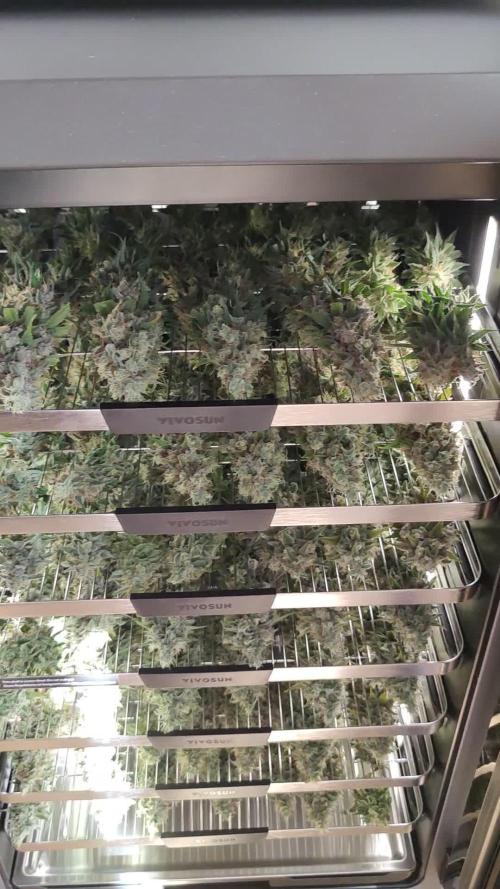
Heute habe ich mich dazu entschlossen die Damen zu ernten. der Hauptpunkt welcher mich jetzt dazu gebracht hat zu ernten waren die trichome, es sind jetzt auf jeder Pflanze Bernstein farben zu erkennen. sie trinken auch nicht mehr all zu viel und ich musste am Ende nur noch alle 3 tage gießen anstatt alle 2 Tagen.
sie sind jetzt grob getrimmt und trocknen und curen jetzt in der vcure von vivosun. ich werde noch mehr Bilder machen, sobald sie fertig sind. freue mich schon auf das Ergebnis. die buds werden jetzt 5 Tage getrocknet und dann 9 Tage gecured, also gibt es in 14 Tagen neue Bilder.
ich wünsche allen die bei dem Contest mit machen viel glück und einen guten grow, am Ende sind wir alle Gewinner eines guten grows.
danke an zamnesia und plagron für das bereitstellen der Samen und des düngers.
es gab mir Mal die Chance einen Strain von zamnesia zu testen und in den dünger von plagron rein zu schnuppern. hat mir beides gefallen und ich werde drauf zurück greifen in Zukunft, ganz sicher.
Likes
10
Share


@1soloflowerlover
Follow
These girls need to be transitioned to my out building in the grow tent but I'm having trouble getting humidity up I haven't warming with a small space heater but I can't get my humidity up so not putting them out there until I fix that hoping I still have a couple weeks
Now in tent out in barn..Spider farmer SE7000 is in place..I set power down to 25% for my seedlings and I have about 18 inches from panel. Anyone who has this exact light please chime in...

Likes
15
Share
@eldruida_lamota
Follow
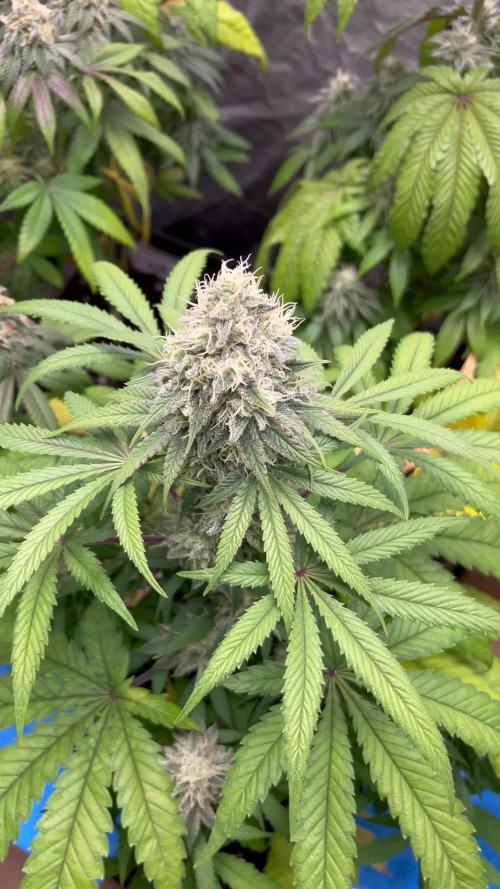
Que pasa familia, vamos con la sexta semana de floración de estas Gomu Gomu Mango feminizadas de HighBreed.
Vamos al lío ,se colocaron en macetas de 7 litros definitivamente.
El ph se controla en 6.0 , la temperatura la tenemos entre 24/20 grados y la humedad ronda el 50%.
El ciclo de Floración puse 12 horas de luz, el foco está al 100% de potencia.
De momento va creciendo, tiene buen color, van progresando y engordando guay
Comentar que superaron el estrés hídrico porque subí par de grados por la noche y va volvió a comer normal .
Gracias a Agrobeta por el kit para la temporada, unos jefes, siempre apoyando 💪.
- os dejo por aquí un CÓDIGO: Eldruida
Descuento para la tienda de MARS HYDRO.
https://www.mars-hydro.com
Hasta aquí todo, Buenos humos 💨💨💨
Likes
3
Share


@Proto420
Follow
Beautiful plants. One was short and stocky, had the largest buds I’ve yet grown/encountered. I’d recommend growing these 👍👌


Likes
8
Share


@MTUZZIO
Follow
Fully into flower. Filling in well, smell coming along nicely (some are like lemon candy, some are a little more skunky).
I had a Mars Hydro TSW2000 sitting around so I added that in between the two lights/beds which really helped to even out the PAR. Dead nuts in the middle of the beds is about 1000, the edges are about 700. Super cropped a few that were just reaching too much.
Put up some trellis, I think I'm going to need the supports, and helped to spread out some of the stacks that were going to be a little too close. Did a little more defoliation. It's really just maintenance at this point (and standing there admiring and smelling over and over)
Been mixing up a little organic nutrient cocktail to supplement with, using BuildASoil BuildABloom (soy protein hydrolysate, rock phosphate, gypsum, magnesium sulfate, potassium sulfate), Fermented Plant Extracts: Liquid Pumpkin Extract (Probiotically Grown Pumpkins, Clean Mountain Water, EM-1, Home Made LABS (Lactobacillus Serum), Super Cera Powder, and Molasses), BuildASoil Aloe and the Quillaja extract. I'll do a foliar spray first thing in the morning and replace the first fertigation of the day with this same mix (at the normal EC and PH level). They seem to love it and respond really well.
I really want to switch over completely to organic living soil, I'm probably going to after this run, so it's fun to experiment with some of the ingredients.

Likes
70
Share


@KilgoreTrout
Follow
So not much change as far as conditions. I added Zeus juice for a bit of a boost on the humic acid front. I’ll be honest I haven’t noticed a change. Otherwise all is going well. I think I’m max a week from flipping. I might even flip on Wednesday. The scrog is about 80% full.
You can see from my pictures I need to defoliate. So I think I’ll plan on doing that on Sunday. Let the rebound a bit and flip no later than next Friday. But more like Wednesday is more likely.

Likes
6
Share


@Saltoa
Follow
My light fell on my plants yesterday. , the pot of my plant in the first corner was broken, I bought it in a different pot. In my other plant, 2 branches were broken, I taped one of its branches, it became crippled.
Likes
72
Share


@Papa_T
Follow
Well here we are finally out of the three week germination/seedling stage and now we’re on to week 1 of vegetation phase of Penelope’s life.
Wednesday Sep 15 Day 22 W/k 4
-No water pot still heavy
-First day of vegetation have celebrate with her first topping
-She’s got to learn this is a harsh world
-Removed janky leaves
-Sink or swim
-Let’s go
Day 23 W/k 4
-No water
-She’s grown significantly since yesterday
-Topped two lower branches
-Very happy with her progression
-She’s adapting to her condition and responding well to training
-Leaf blemishes are just battle scars
-Don’t be making no bitch ass plants up in this garden
Day 24 W/k 4
-No water
-Not much really to say today
-Just grow
Day 25 W/k 4
-Same as yesterday
-Grow
Day 26 W/k 4
-Feeding day with aerated tap water two gallons 62.5 PPM base
-Add 1 tsp Cal/mag - 319 PPM
-Add 1.5 tsp Grow - 708 PPM
-Final - 2 Gallon 6.2 PH - 717 PPM
-Runoff 1.5 L 5.58 PH 3510 PPM
-It’s been an abusive day
-Getting water boarded
-Getting some more topping HST
-Bottom fan leaves will probably curl and get trashed
-She’ll be fine
-Told her I was sorry and I won’t do it again
-That’s a lie haha
Day 27 W/k 4
-No water
-Bottom leaves curled a bit as expected after the waterboarding
-She’s just loving life and exploding
-Get yet knickers on for the ride
-Smacked her around some more with a light defoliation and topping two branches
-This is it for topping I’ve got her set up the way I want now
Day 28 W/k 4
-No water
-Perked up again today after more defoliation and LST
-Taking to LST well
-Not much more to say
Was a pretty abusive week for Penelope. She’s pulled through like a champ though. So she’s all HST’d up and set up for how I want to develop her. Now it’s three weeks of veg! She’s gonna be a brute!!
LET’S GO!!

Likes
11
Share


@DixTheReal
Follow
La crescita é stata proprio lenta e impostando la lampada con il dimmer al 30% e distanza di 50cm le piante si sono allungate troppo. Ho regolato la distanza la settimana successiva. Non ho usato nutrimenti e nemmeno radicanti, solo acqua Geraci di bottiglia a 6,2 ph
Likes
Comments
Share


