


Likes
Comments
Share


@Onlygrow99
Follow
Vale pues hoy empiezo a contar la primera semana de crecimiento, de un total de 4. Estamos a 13/02/23 y llevan 20 días desde la germinación.
Hoy he regado ya con abono de crecimiento, en concreto uso el Boom Crecimiento de Boom nutrients y he añadido también CalMag
Dentro de dos semanas haremos el trasplante, a ver si aguantan por que a este ritmo se van a salir de las macetas en 1 semana jaja.
Os dejo un video también de una visión aérea con mi dron.
Hola. Actualización de semana 19/02/23 Efectivamente como dije hace 7 días. Toca trasplante, han crecido muchísimo y es momento de que las raíces sigan creciendo con fuerza así que... trasplante.
Entre el día 19/02/23 y el día 20/02/23 termino todo el trasplante, por ahora dejo terminadas 5 de 12 plantas.
Especialmente he priorizado las autos ya que no me quiero esperar a trasplantar para que no entren en flora. Por ahora siguen vegetando y trasplantas! ESO ES!

Likes
9
Share


@MassEric
Follow
Another week down and we are definitely off to the races. The stretch is real...... As in holy crap these are racing toward the ceiling. Eleven inches in a week. Looks like I'm going to be adding something to the top area to help keep things stable once the bugs really start filling in. Not my favorite trait in a plant when they run like this. Well, this is why we pheno hunt right? I'll give the clones I took early on to a friend for an outdoor grow.
Darn timelapse had an issue with the camera towards the end so it got a big wonky. All reset for the next week. Thinking of moving it close to a bud to see if we can just watch one of those form.

Likes
7
Share


@CanadianFillmore
Follow
Week 8, the last feed! Defoliated to let more air flow and light penetrate down into the lowers of the plant. Bud's are insanely sticky, plant is covered in frost, the pics don't do it justice.

Likes
29
Share


@TheGourmetWeed
Follow
In general I'm very happy growing this strain. The germination rate was 100%, all 3 sprouted, even though one ended up dying after some weeks. My fault here, she grew upside down and when I moved her she didn't reacted well.
The growing conditions were initially a little unstable as I couldn't find the right balance between temperature and RH, having the latter one constantly too low, making me buy an humidifier to keep the level higher. Well, too high in the lights off period, and when distracted could reach up to 99% RH, which isn't good. Again, lesson learned for the next grow.
Maybe I've defoliated the plant a little too much and that might have also affected the crop a little.
When it comes to feeding, didn't use so much plain water, the feeding were nutrient based all the time. Not sure if this had any negative effects in the plant.
Was fun to train the plant and I could see actually some benefits in doing some LST in her.
After all this, being able to finish with this amount of bud makes me generally happy and positive for the coming grows.
Overall I think I made a few beginner mistakes that affected the plant growth and flower, but again, having no pests, plagues, or any diseases was already a very good accomplishment and I'm really looking forward to start the next grow, and enjoy the smoke from this little one.
As it was the first diary ever, was very fun to do it, and helped a lot controlling crucial parts of the growth. Definitely will keep posting here my future grows.
Thank you all for following this diary, for the likes, all comments and answers to my questions. Without your feedback wouldn't have got this far.
Smoke report will follow when the bud is ready, now is hanging and drying.
Thank you all

Likes
32
Share


@MadeInGermany
Follow
Info:
Unfortunately, I had to find out that my account is used for fake pages in social media.
I am only active here on growdiaries.
I am not on facebook instagram twitter etc All accounts except this one are fake.
Flowering day 22
since time change
to 12/12 h.
Hi everyone .
short update on the mini plant :-)
it is starting to bloom nicely and i leave it as an experiment :-).
There was also 1 g GHSC enhancer per liter.
It was poured 2 times with 1 liter this week.
Have fun and stay healthy 🙏🏻
You can buy this Strain at :
https://www.zamnesia.com/de/5165-zamnesia-seeds-kalini-asia-feminisiert.html
Type:
Kalini Asia
☝️🏼
Genetics:
Black Domina x Purple Kush
👍
Vega lamp:
2 x Todogrow Led
Quantum Board 100 W
💡
Bloom Lamp :
2 x Todogrow Led
Cxb 3590 COB 3500 K 205W
💡💡☝️🏼
Soil :
Canna Coco Professional +
☝️🏼
Fertilizer:
Green House Powder Feeding
☝️🏼🌱
Water:
Osmosis water mixed with normal water (24 hours stale that the chlorine evaporates) to 0.2 EC. Add Cal / Mag to 0.4 Ec Ph with Organic Ph - to 5.5 - 5.8 .

Likes
2
Share

@eldruida_lamota
Follow
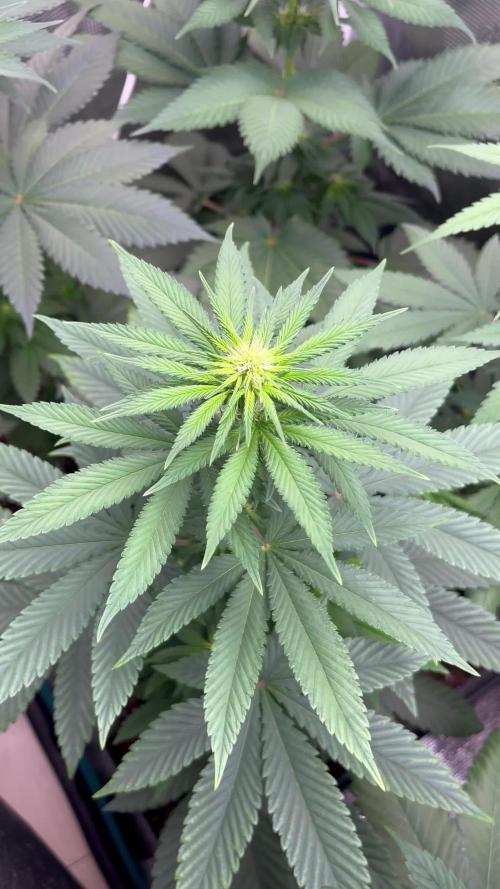
Vamos familia, actualizamos la segunda semana de floración de estas Lemon Mandarin de FastBuds.
La temperatura que estuvo entre los 24-26 grados y humedad dentro de los rangos correctos.
En cuanto a las plantas las veo verde sano, estiraron bien y ensancharon bastante también.
Se nota que los nutrientes de la marca Agrobeta cubre todas las necesidades de cada ejemplar.
Las flores empezaron a formarse, por el momento todo correcto, os dejé también alguna novedad y un cambio en la sala, agradecer al equipo de Mars hydro por el nuevo TSW2000. (los últimos 5 años cultive solo con los leds de esta marca)los cuales probé, TS600, TS1000, TS3000, TSL2000.
Llevaba 10 años trabajando en sodio y fue un salto de gigantes cambiar a los Leds, jamás me arrepentiré de ese cambio.
- os dejo por aquí un CÓDIGO: Eldruida
Descuento para la tienda de MARS HYDRO.
https://www.mars-hydro.com
Hasta aquí todo, Buenos humos 💨💨💨

Likes
6
Share


@field_nigga
Follow
Every week I take leaves off. Only the bigger ones tho
I water twice a week but fertilise once


Likes
2
Share

@fadedgreentaurus
Follow
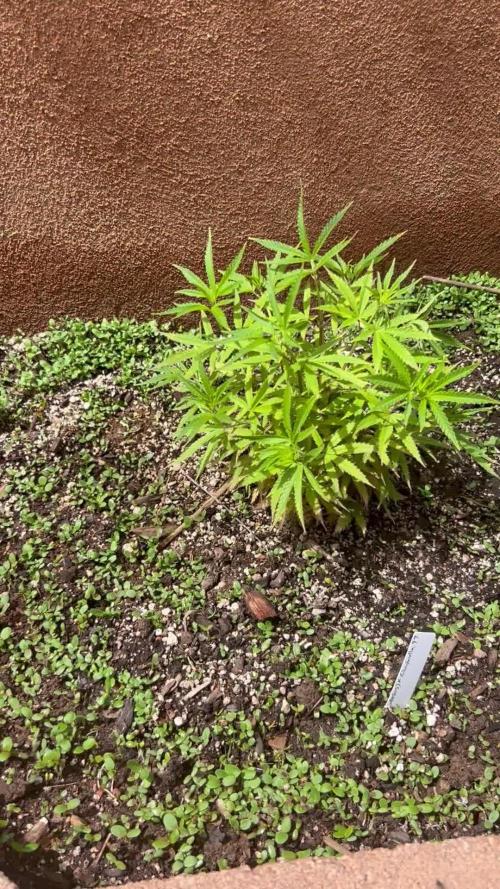
Something to note as the weeks go on is the placement of my grow space due to its east west walls planting late march early april allows me to get 2 pre flowering growths spurts out of 1 outdoor season and has directly contributed to huge success for me in years past. As of now preseason planning this grow is all coming to a nice crescendo. Soils happy cover crop sprouting hoping for scattered shower and the ability to collect rain water. Planning on keeping tea brewing as often as I can and sorta winging it, outdoor grow with an overnight work schedule makes for awkward documentation and work hours. Though this seems to be my most well organized. Grow as opposed to years past. Praying for lots of rain a humid summer and well timed pest management.
Likes
37
Share


@MrJones
Follow
Cream Mandarine XL-Auto #2 / FOOP Nutrients
======WEEKLY GOALS =======
🌞Environment - 80F and 50%Humidity - using Humidfyer as needed.
💧 Feeding - Feeding with FOOP Canna Organic Nutrient Line
🍃Training / Keeping Stems Stable and Strait
🕷️ IPM - Will be using Green Cleaner" 1 OZ per Gallon, and CannControl from Mammoth alternating between product each month for Integrated Pest Management.
🔅 Vegetation & Flower Kingbrite 240W QB288 v3 LM301H 4000k+ 660nm Red x2 - Maintianing 575 PPFD
========Plant Update===========
🌱 Plant - Week 4 is underway changed the light schedule over to 18/6 and these ladies continue to just get huge, extremely fast-growing with FOOP!
===========================
▶️Monday 03.22.21 / Feeding w/ 30 ounces of FOOP Bloom, PH @ 6.2
▶️Tuesday 03.23.21 / Feeding w/ 30 ounces of FOOP Bloom, PH @ 6.2
▶️Wednesday 03.24.21 / Cleaned up plants today and increased the nutrients, Feeding w/ 30 ounces of FOOP Bloom, PH @ 6.2
▶️Thursday 03.25.21 / Using FOOP is too easy, and doing a great job these girls are just blowing up!
▶️Friday 03.26.21 / Feeding w/ 30 ounces of FOOP Bloom, PH @ 6.2
▶️Saturday 03.27.21 / Feeding w/ 30 ounces of FOOP Bloom, PH @ 6.2
▶️Sunday 03.28.21 / Feeding w/ 30 ounces of FOOP Bloom, PH @ 6.2


Likes
6
Share

@Hempcules
Follow
WEEK 5
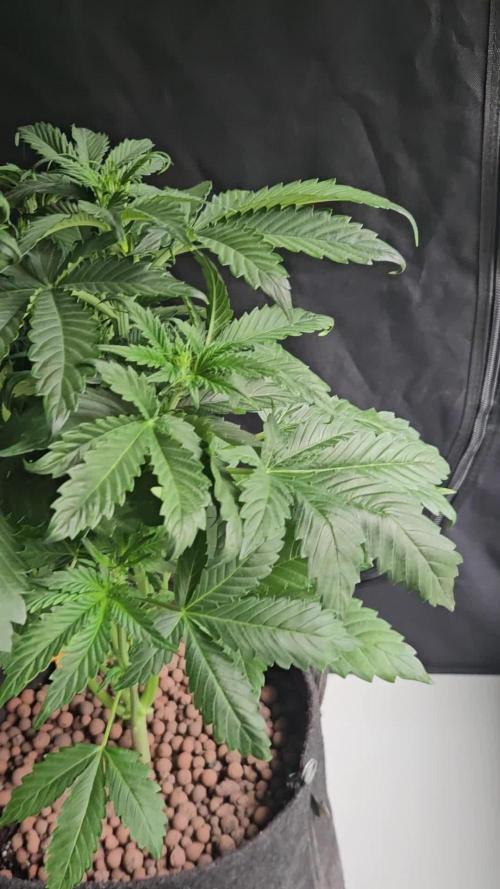
This last week of vegetation went pretty well for my Zoapaya. It didn’t react very well to topping and ended up with a rather unbalanced structure. Still, a few strong shoots managed to establish themselves.
The single feeding this week was probably a bit too early for her, but I think she’ll handle it.
Over the course of the week, I lightly trimmed and defoliated the lower area to keep the focus on the good shoots.
By the end of the week, I was also able to spot the first pistils. I’m now looking forward to the flowering phase and hope the stretch won’t get too wild.
PPFD: 500µmol/m²/s
Water: 2x water 1x nutrient solution
Vpd: 1,2Kpa
Likes
25
Share


@GangbudsGenesgdl
Follow
04/01/21. inicio de semana creo que me pase con el fertilizante note algunas quemaduras que creeo son ecxesos de nutrientes😕
07/01/21.hoy la pase a fotoperiodo12/12 con 120 cm de altura
10/01/21. cierre de semana con 125cm de altura fotoperiodo de 12 12 ya lista para la floracion

Likes
30
Share


@SundancerS
Follow
Nach der Ernte musste die SexBud nur geringfügig für die Trockenphase vorbereitet werden.

Likes
10
Share


@GERGrowDesigns
Follow
Welcome to Flower Week 3 of Sensi Seeds Mandarine Jam
I'm excited to share my grow journey with you from my
Sensi Seeds Project . It's going to be an incredible ride, full of learning, growing, and connecting with fellow growers from all around the world!
For this Project , I’ve chosen the Feminized Photo Strain Mandarine Jam:
Here’s what I’m working with:
• 🌱 Tent: 120x60x80
• 🧑🌾 Breeder Company: Sensi Seeds
• 💧Strain Info : 20-23%
• ⏳ Flowering Time: 7-8weeks

Likes
110
Share


@Green_Man_420
Follow
Day 43, The start of Week 7 the cold weather is here 👎🏻 moved the lights to 20/4 for a couple days until I can get a tube heater.
Happy with how these girls are looking. Moving on in the flower stage. Not a lot to report really. Watered last night with just plain water.
Day 46, Happy with how they are progressing. Buds are starting to form nicely, they have a very sweet smell. Water and feed tomorrow. Tube heater and ink bird all set up and working just fine. ✌️
Day 48, couple bud shots from the girls.
Once again thank you to James @ RQS for supplying these seeds for me to grow. And a huge thank you to everyone who has stopped by and shared the love ✌️
Below is a link to RQS if you feel you would like to grow this strain.
⭐️⭐️⭐️https://www.royalqueenseeds.com/uk/f1-hybrid-cannabis-seeds/621-medusa-f1.html⭐️⭐️⭐️
Have a great week and if you have time pop in to check on the updates ✌️✌️
Processing
Likes
2
Share


@KrudBuddysExotics
Follow
Hey good morning Growers hope all is well with everyone and their family and plants
Well there’s a lot going on over here at the 48219 Krud Buddy’s Grow House I found out when I transplanted my Wedding cake and Sherbertlato I put them into super soil I feed them twice lightly thank god cause I don’t have any burns or anything n their growing good to me everything is growing good to me way better than the auto flowers I started with but I did some cloning of my own and I’m loving how their taking on as well
So here’s what’s going on strain by strain
Gorilla Cookies & Peanutbutter Breath : as of Today April 25th they are on day 60 since I got them and have been sitting in the dark since last night for their 24hrs of darkness before flip to flower starting tomorrow morning thinking a good timing would b from 6/6 or 7/7 also I have them under my 600w budget led hanging 12’ above I can’t wait to see how they out and I have them under an scrog net I made
Wedding Cake & Peanutbutter Breath: on May 5th it’ll be 60 days since I’ve had them I pretty much told everything bout them at the beginning
Grape Pie & Girl Scout Cookies: it’s Been about 3 weeks And I must say they stretched fast their already 15’ tall the grape Pie is spreading faster any of the other clones I got I’m loving it
I recently got Cherry Pie & Guava Cake x Cookie it’s bout week one going on two weeks and I must say when I got them I was kinda skeptical about them because they were so weak looking and the cuts on them were terrible but they look like they might turn out into something amazing idk but the pictures show it all as well as the clones I cut myself in clear plastic cups ands their on their second week of life I noticed roots on the 10th and put into cups on the 11th if I’m not mistaken I’m not around my chart so I’m not for sure but everything is going swell over here to me

Likes
15
Share


@emeraldlabs
Follow
Frosty as hell and starting to stink.
Photos/video taken 77 days after breaking soil, day 35 of flower.

Likes
36
Share


@Roberts
Follow
Gorilla Glue has been growing good. I topped her today. I also turned down the G300W light a little. I removed the 1st, and 2nd nodes on her. Trying something a little different. Everything is looking good to go. Thank you Spider Farmer and Amsterdam Marijuana Seeds. 🤜🤛🌱🌱🌱
Www.amsterdammarijuanaseeds.com
Thank you grow diaries community for the 👇likes👇, follows, comments, and subscriptions on my YouTube channel👇. ❄️🌱🍻
Happy Growing 🌱🌱🌱
https://youtube.com/channel/UCAhN7yRzWLpcaRHhMIQ7X4g
Spider Farmer G300w: https://amzn.to/3S2zvsd
Spider Farmer 10X20 Heat Mat Kit - https://amz.fun/lsa0J
Spider Farmer Amazon Store: https://www.amazon.com/spiderfarmer
Spider Farmer Official Site: https://spider-farmer.com
Discount code: saveurcash

Likes
6
Share


@LX1977
Follow
J29 arrosage avec engrais (1,5 litre/plantes)
La floraison a bien commencée, pas de signe de carence ni d'excès. Tout se passe au mieux 👍
J31 arrosage eau (500ml/plantes)
J32 arrosage avec engrais 1,5 litre/plantes)
J34 arrosage eau (1,5 litre/plantes)
Likes
82
Share

@Tower84
Follow
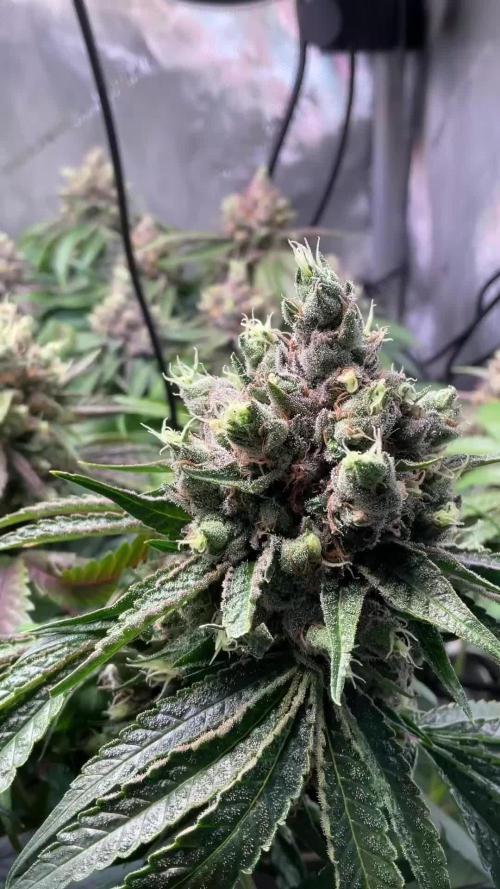
Cherry Limeade von Doja – Wochenupdate 🌱
Bei der Cherry Limeade geht es langsam in die Endphase der Blüte. Die ersten Blätter beginnen bereits, herbstliche Farben zu entwickeln 🍂, während die Buds weiterhin ordentlich Harz produzieren und sehr klebrig sind 🌸. Insgesamt bin ich mit der Entwicklung der Blüten weiterhin zufrieden, allerdings gibt es aktuell einen Punkt, der mich etwas nervt: Die Buds bilden zunehmend Foxtails aus.
Ich vermute, dass die dafür verantwortlichen hohen Temperaturen zumindest teilweise eine Rolle spielen 🌡️. Besonders der Hydrone 5 von AC Infinity entwickelt im Betrieb deutlich Wärme. Der VPD wird zwar durch den KI-Controller und den Hydrone 5 insgesamt sehr gut geregelt, aber genau hier liegt meiner Meinung nach eine Schwäche des Systems.
Bei der Produkteinführung wurde aus meiner Sicht nicht ausreichend kommuniziert, wie viel zusätzliche Wärme der Entfeuchter unter bestimmten Bedingungen in das Zelt einträgt. AC Infinity hat die Produktbeschreibung mittlerweile entsprechend angepasst, als ich das Gerät gekauft habe, war das allerdings noch nicht so kommuniziert. Das ärgert mich ehrlich gesagt etwas.
Wenn die Außenluft eine hohe relative Luftfeuchtigkeit mitbringt, muss der Hydrone 5 entsprechend viel arbeiten. Trotz der Regelung über den Ablüfter können dann im Zelt durchaus Temperaturen von etwa 29 °C entstehen, weil die vom Entfeuchter erzeugte Wärme die Kühlung über die Abluft teilweise wieder zunichtemacht. Als alleinige Entfeuchtungslösung sehe ich den Hydrone 5 deshalb inzwischen eher als Winterlösung. Wenn die Außentemperaturen niedrig sind, sind hohe Temperaturen und hohe RLF normalerweise ohnehin weniger problematisch.
Schimmel muss ich mir unter den aktuellen Bedingungen zwar keine großen Sorgen machen, aber Foxtailing in der Endblüte möchte ich natürlich trotzdem möglichst vermeiden 😅. Deshalb werde ich die Lichtintensität in den nächsten Tagen von 900 auf etwa 800 PPFD reduzieren und beobachten, wie sich die Buds entwickeln 💡. Vielleicht lässt sich damit etwas Druck aus dem System nehmen.
Beim Aroma bin ich inzwischen ebenfalls etwas enttäuscht. Ein echtes Kirscharoma hat sich leider weiterhin nicht entwickelt 🍒. Die Buds sind zwar extrem klebrig, aber verglichen mit meiner Mentha de Croco haut mich das Aroma bisher nicht wirklich um. Aktuell wirkt das Terpenprofil insgesamt etwas schwach. Ob das tatsächlich genetisch bedingt ist oder die hohen Temperaturen einen Teil des Aromas beeinträchtigen, möchte ich noch nicht abschließend beurteilen.
Ich warte deshalb definitiv bis zum Ende der Blüte und nach der Trocknung und Reifung mit meinem endgültigen Fazit 🧐. Vielleicht passiert in den letzten Wochen noch einiges – gerade beim Aroma kann sich bis zum Schluss noch etwas verändern.
📊 Aktuelle Parameter:
💡 Licht: 900 PPFD / DLI 39 → künftig ca. 800 PPFD
🌡️ Temperatur: 25 °C zeitweise bis ca. 29 °C
💧 Luftfeuchtigkeit: 54% durch Hydrone 5 geregelt
📈 VPD: 1,4 kPa durch KI-Controller/Hydrone 5 stabil geregelt
🌿 CO₂: Ø 700 ppm
💦 Wasserverbrauch: ca. 1,92 l/Tag
Cherry Limeade – Weekly Update 🌱
The Cherry Limeade is slowly entering the final stage of flowering. The first leaves are already starting to show some autumn-like colors 🍂, while the buds continue to produce plenty of resin and are extremely sticky 🌸. Overall, I’m still happy with the development of the flowers, but there is one thing that is starting to annoy me a little: the buds are increasingly developing foxtails.
I suspect that the high temperatures are at least partly responsible for this 🌡️. The Hydrone 5 from AC Infinity generates a noticeable amount of heat while running. The VPD itself is actually being controlled very well by the AI controller and the Hydrone 5, but this is also where I see a weakness in the system.
When the product was originally launched, I don’t think AC Infinity communicated clearly enough how much additional heat the dehumidifier can add to the tent under certain conditions. AC Infinity has since updated the product description accordingly, but this was not communicated that way when I purchased the unit. Honestly, that does annoy me a little.
When the outdoor air has a high relative humidity, the Hydrone 5 has to work harder. Even with the exhaust fan being controlled accordingly, I can still see temperatures of around 29 °C inside the tent because the heat generated by the dehumidifier partly offsets the cooling effect of the exhaust 🌡️. For this reason, I now see the Hydrone 5 as more of a winter solution when used as the sole dehumidification method. During winter, lower ambient temperatures make the additional heat much less of an issue.
I’m not particularly worried about mold under the current conditions, but foxtailing during late flower is obviously not something I want to encourage 😅. So over the next few days I’ll reduce the light intensity from 900 to around 800 PPFD and see how the buds respond 💡. Hopefully this will take some stress out of the system.
I’m also a little disappointed with the aroma at this point. Unfortunately, no real cherry aroma has developed so far 🍒. The buds are extremely sticky, but compared with my Mentha de Croco, the aroma isn’t really blowing me away. Overall, the terpene profile currently seems a little weak. Whether this is mainly genetic or whether the high temperatures are suppressing some of the aroma is something I don’t want to judge conclusively yet.
I’ll definitely wait until the end of flowering, and preferably until after drying and curing, before making my final assessment 🧐. There is still some time left, and especially with the aroma, things can still change during the final weeks.
📊 Current parameters:
💡 Light: 900 PPFD / DLI 39 → reducing to approx. 800 PPFD
🌡️ Temperature: 25 °C occasionally up to approx. 29 °C
💧 Humidity: 54% controlled by Hydrone 5
📈 VPD: 1,4 kPa well controlled by the AI controller/Hydrone 5
🌿 CO₂: Avg. 700 ppm
💦 Water consumption: approx. 1.92 L/day
