


Likes
Comments
Share


@Sators
Follow
Regards ladies and gentlemen!💚
🌱Day 78. Keep watering with 3L clear water 150 ppm and 6.6pH. Runoff water 350 ppm and 6.3pH.💚
🌱Day 80. Watering with 3L clear water 150 ppm and 6.6pH. Runoff water 250ppm and 6.7pH.💚
🌱Day 82. Watering with 3L clear water 150 ppm and 6.6pH. Runoff water 250ppm and 6.5pH.💚
🌱Day 84. Watering with 3L clear water 150 ppm and 6.9pH. Runoff water 300ppm and 6.6pH.💚

Likes
7
Share


@Epwood
Follow
The holiday season got away from me a bit and prevented me from getting an update in on Monday but the plants are _really_ taking off. There are now visible bud sites and plenty of them.
*Full Disclosure*: I've significantly upgraded my light in my flower tent from a Spider Farmer SF-2000 to a Spider Farmer SF-4000 and, as such, I'll likely see my yield take off quite a bit this grow. It's certainly having an impact on the heat in the tent and, subsequently, the amount of time the in-line fan is running; that being said, the plants appear to be responding quite well!
The last two grows I've run have fallen off hard (complete and total yellowing/chlorosis and drying out regardless of consistent watering/light/nutes/pH) around week five of flower and, with that in mind, I'm trying to keep this grow as simple as possible. I'm purposely using no advanced grow techniques where I'd usually top, LST, and HST. The only "advanced" technique I'm using is a bit of defoliation but this is mainly just to avoid some of the dense bottom growth that tends to decrease air flow, increase humidity, and take away from more rewarding top-growth.
This week, along with replenishing nutrients, I've fully emptied out and cleaned my reservoir. While doing so, I noticed a fair amount of red-ish algae growth which I'll likely address with more consistent cleaning of the reservoir and some sort of additive (I'd welcome any suggestions and dosage if you've got any suggestions).
All in all, great progress.

Likes
20
Share


@Bongman
Follow
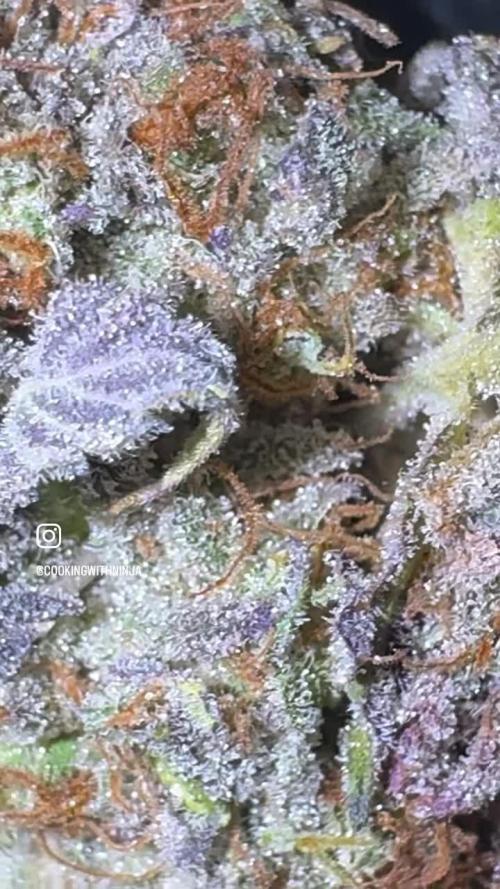
coming soon... Harvest week.....
Cut the girls down week 8 day 5. Did a quick truim and now will hang dry. Will report back on details in a week or so.

Likes
6
Share


@Mannabis
Follow
Time for the stretch! Lots of flowering growth happening now. I can see where the bud spots will be so I’m going to have to stop moving the branching around in the Scrog, also the branches are getting thick and less pliable.

Likes
2
Share


@Bluemels
Follow
Tag 70: Es läuft super mit der Green Gelato, sie ist jede Woche nur um 5cm gewachsen. Der Stetch sollte nun auch fast abgeschlossen sein 😃
Likes
146
Share


@EZgrower
Follow
Well, time to start flowering. the plant occupies almost the entire pot. width is 32cm. yesterday switched the light mode to 12/12.
in 8 weeks we will harvest. Go Go GO 👊
ask any questions 👇
subscribe👍 there are many interesting things ahead
day 38 - everything OK
day 41 - end of first week of flowering. She growing fast, keep bending branches

Likes
27
Share


@ClydeGrows
Follow
Bonus material- my cannabutter pics. No smoke report for a while but I can give you an edibles report in a few hours 😂
Plant #1 suffered gravely and thus was harvested early, dried, and turned into beaaautiful butter/edibles hehe. The rest of it is box drying and I'll be doing the same with that. The top of the plant (first harvest of sorts, after bud rot discovered) was 49g dry, not inc ofc what was binned. I'll let you know the dry weight of the rest but no point giving you a smoke report. She was cut early and suffered a looooot
The purple lemonade began as the underdog and quickly took over as my #1 babe. It was far more resilient to environmental conditions and changes- and let's not forget that they went through a hurricane with me and power out for a few days! I don't find her strong on the nose at all despite how big some of her buds are, and how frosty. Very piney, and that dominates everything else. Very excited to see what terps come out more in the cure though- I hear great things about this strain. She was cut today and is hanging in a dark closet with small fan, RH 65% and temp 22c. I did not take a wet weight, but she's heavy. Super looking forward to smoking this one, after a few more weeks of TLC... Sigh. Always we try to wait haha. I will report back when I have more for you all. Thanks to everyone that answered my questions and supported me through my first grow. I've definitely got the bug now and there'll be no stopping me haha
Will be back with smoke report and dry weights laterrr
🇨🇦
---
Nov 12 - Plant dried for 6 days. It is a lot airier than I thought it was going to be, so most of it ended up as shake for edibles or something. I ended up with 38g of big bud, 33 of smaller, and over 40g of larf and shake. Even the big buds are airy though, not dense at all. A little disappointing for sure, but I made a lot of mistakes so it isn't a surprise. It is now in jars with humidity packs and I'll report back in a couple of weeks or so with a smoke report :)

Likes
111
Share


@Salokin
Follow
Hey Growmies,
she has bounced back phenomenally, so much that she has gotten extremely hungry. The feed shown here is the already the strong feeding suggestion, but I first saw a few leaves with a nitrogen deficiency, when I decided to up the veg nutes to pre flower levels, I now started to see signs of magnesium deficiency. I decided to add 10 ml more if calmag to the mix and will see if that’ll fix the issue.
Other than that, she has started to develop a massive rootball and almost stretched by 12 cm. Will probably veg her for another 2 weeks by the looks of it and then flip her once she has filled the scrog. She is already starting to smell quite strong for her not even being in pre flower.
I also want to point people in the direction of the photone app, a very helpful little helper that’ll help you getting a good guess of the ppms at your canopy.
Big shout out to Patricia at Zamnesia for given me the chance to try this amazing strain.
Here is the code that’ll give you 20% in Zamnesia‘s online store, just input ZAMMIGD2023 at checkout.
Thanks for stepping by and until next week!

Likes
45
Share


@Ultraviolet
Follow
2nd net is up. Early bud formations are promising. holding up to the extremes pretty well, some leaves taking minor damage, but overall, she is holding up, gave her 1 night at 50F see how she would react, stressful. Not advised as it messes with her metabolism, but I want to see if it triggers any anthocyanin response. Love to see her purp up but no signs yet. Remember, For every molecule of glucose produced during photosynthesis, a plant needs to split six molecules of water. This process provides the hydrogen needed for synthesizing glucose and other organic compounds, while oxygen is released as a byproduct.
Homework.
If Rubisco activity is impaired and it cannot properly function or regenerate its substrate, the plant's leaves are likely to turn a pale green or lime green, a condition known as chlorosis. Essentially, Rubisco activity is highly regulated and susceptible to various environmental and metabolic factors that can cause it to become inhibited, leading to an apparent failure in RuBP regeneration due to a lack of consumption.
Rubisco regeneration is intrinsically linked to nitrogen supply because Rubisco is a major sink for nitrogen in plants, typically accounting for 15% to over 25% of total leaf nitrogen. The regeneration phase itself consumes nitrogen through the synthesis of the Rubisco enzyme and associated proteins (like Rubisco activase), and overall nitrogen status heavily influences the efficiency of RuBP regeneration. RuBisCO is a very large enzyme that constitutes a significant proportion (up to 50%) of leaf soluble protein and requires large investments in nitrogen. Insufficient nitrogen supply limits the plant's ability to produce adequate amounts of RuBisCO, thereby limiting the overall capacity for photosynthesis and carbon fixation. Maintaining the optimal, slightly alkaline pH is crucial for the proper function and regeneration of Rubisco. Deviations in either direction (too high or too low) disrupt the enzyme's structure, activation state, and interaction with its substrates, leading to decreased activity and impaired RuBP regeneration. (Lime/yellowing)
Structural Component: Nitrogen is an essential building block for all proteins, and the sheer abundance of the Rubisco protein makes it the single largest storage of nitrogen in the leaf.
Synthesis and Activity: Adequate nitrogen supply is crucial for the synthesis and maintenance of sufficient Rubisco enzyme and Rubisco activase (Rca), the regulatory protein responsible for maintaining Rubisco's active state. Nitrogen deficiency leads to a decrease in the content and activity of both Rubisco and Rca, which in turn limits the maximum carboxylation rate, Vmax, and the rate of RuBP regeneration Jmax, thus reducing overall photosynthetic capacity.
Nitrogen Storage and Remobilization: Rubisco can act as a temporary nitrogen storage protein, which is degraded to remobilize nitrogen to other growing parts of the plant, especially under conditions of nitrogen deficiency or senescence.
Nitrogen Use Efficiency (NUE): The allocation of nitrogen to Rubisco is a key determinant of a plant's photosynthetic nitrogen use efficiency (PNUE). In high-nitrogen conditions, plants may accumulate a surplus of Rubisco, which may not be fully activated, leading to a lower PNUE. Optimizing the amount and activity of Rubisco relative to nitrogen availability is a target for improving crop NUE.
Photorespiration and Nitrogen Metabolism: Nitrogen metabolism is also linked to the photorespiration pathway (which competes with carboxylation at the Rubisco active site), particularly in the reassimilation of ammonia released during the process.
To increase RuBisCO regeneration, which refers to the process of forming the CO2 acceptor molecule Ribulose-1,5-bisphosphate (RuBP) during photosynthesis, the primary methods involve optimizing the levels and activity of Rubisco activase (Rca) and enhancing the performance of other Calvin-Benson-Bassham (CBB) cycle enzymes.
Biochemical and Environmental Approaches:
Optimize Rubisco Activase (Rca) activity: Rca is a crucial chaperone protein that removes inhibitory sugar phosphates, such as CA1P (2-carboxy-D-arabinitol 1-phosphate), from the Rubisco active site, thus maintaining its catalytic competence.
•Ensure optimal light conditions: Rca is light-activated via the chloroplast's redox status. Adequate light intensity ensures Rca can effectively maintain Rubisco in its active, carbamylated state.
•Maintain optimal temperature: Rca is highly temperature-sensitive and can become unstable at moderately high temperatures (e.g., above 35°C/95F° in many C3 plants), which decreases its ability to activate Rubisco. Maintaining temperatures within the optimal range for a specific plant species is important.
•Optimize Mg2+ concentration: Mg2+ is a key cofactor for both Rubisco carbamylation and Rca activity. In the light, Mg2+ concentration in the chloroplast stroma increases, promoting activation.
•Manage ATP/ADP ratio: Rca activity depends on ATP hydrolysis and is inhibited by ADP. Conditions that maintain a high ATP/ADP ratio in the chloroplast stroma favor Rca activity.
Enhance Calvin-Benson-Bassham (CBB) cycle enzyme activity: The overall rate of RuBP regeneration can be limited by other enzymes in the cycle.
•Increase SBPase activity: Sedoheptulose-1,7-bisphosphatase (SBPase) is a key regulatory enzyme in the regeneration pathway, and increasing its activity can enhance RuBP regeneration and overall photosynthesis.
•Optimize other enzymes: Overexpression of other CBB cycle enzymes such as fructose-1,6-bisphosphate aldolase (FBA) and triose phosphate isomerase (TPI) can also help to balance the metabolic flux and improve RuBP regeneration capacity.
Magnesium ions, Mg2+, are specifically required for Rubisco activation because the cation plays a critical structural and chemical role in forming the active site: A specific lysine residue in the active site must be carbamylated by a CO2 molecule to activate the enzyme. The resulting negatively charged carbamyl group then facilitates the binding of the positively charged Mg2+ion. While other divalent metal ions like Mn2+ can bind to Rubisco, they alter the enzyme's substrate specificity and lead to dramatically lower activity or a higher rate of the non-productive oxygenation reaction compared to Mg2+, making them biologically unfavorable in the context of efficient carbon fixation. The concentration of Mg2+ in the chloroplast stroma naturally increases in the light due to ion potential balancing during ATP synthesis, providing a physiological mechanism to ensure the enzyme is activated when photosynthesis is possible. At the center of the porphyrin ring, nestled within its nitrogen atoms, is a Magnesium ion (Mg2+). This magnesium ion is crucial for the function of chlorophyll, and without it, the pigment cannot effectively capture and transfer light energy.
Mg acts as a cofactor: Mg2+ binds to Rubisco after an activator CO2 molecule, forming a catalytically competent complex (Enzyme-CO2-Mg2+). High light + CO2) increases demand: Under high light (60 DLI is a very high intensity, potentially saturating) and high CO2, the plant's capacity for photosynthesis is high, and thus the demand for activated Rubisco and the necessary Mg2+ cofactor increases. Mg deficiency becomes limiting: If Mg2+ is deficient under these conditions, the higher levels of Rubisco and Rubisco activase produced cannot be fully activated, leading to lower photosynthetic rates and potential photo-oxidative damage.
Optimal range: Studies show that adequate Mg2+ application can enhance Rubisco activation and stabilize net photosynthetic rates under stress conditions, but the required concentration is specific to the experimental setup.
Monitoring is key: The most effective approach in a controlled environment is to monitor the plant's physiological responses e.g., leaf Mg2+ concentration, photosynthetic rate, Rubisco activation state, and adjust the nutrient solution/fertilizer to maintain adequate levels, rather than supplementing a fixed "extra" amount.
In practice, this means ensuring that Mg2+ is not a limiting factor in the plant's standard nutrient solution when pushing the limits with high light and CO2.
Applying Mg2+ through foliar spray is beneficial to Rubisco regeneration, particularly in alleviating the negative effects of magnesium (Mg) deficiency and high-temperature stress (HTS). While Mg can be leached from soil, within the plant it is considered a mobile nutrient, particularly in the phloem. Foliar-applied Mg is quickly absorbed by the leaves and can be translocate to other plant parts, including new growth and sink organs.
Foliar application of: NATURES VERY OWN MgSO4 @ 15.0g L-1 in a spray bottle. For those high-intensity workouts when 1 meal a day is just not enough!
Foliar sprays are often recommended as a rapid rescue measure for existing deficiencies or as a supplement during critical growth stages, when demand for Mg is high. Application in the early morning or late evening can improve absorption and prevent leaf burn. The plant was getting a little limey yellow in the centre. Shortly thereafter, she was back in business, green mostly regenerated. The starting point [of creativity] is curiosity: pondering why the default exists in the first place. We’re driven to question defaults when we experience vuja de, the opposite of déjà vu. Déjà vu occurs when we encounter something new, but it feels as if we’ve seen it before. Vuja de is the reverse—we face something familiar, but we see it with a fresh perspective that enables us to gain new insights into old problems.
Confidence is evidence... nothing more. You are confident because you have driven 10,000 times, you are confident because you have spoken 10,000 times. People think confidence is a feeling, but it's not. If you want more confidence, then you need to create evidence, take more shots, collect more data, build more experiences, take more risks; fail, confidence doesn't come first; it is the reward you get for doing the work. no one else wants to do.
Likes
1
Share

@Diaaz
Follow
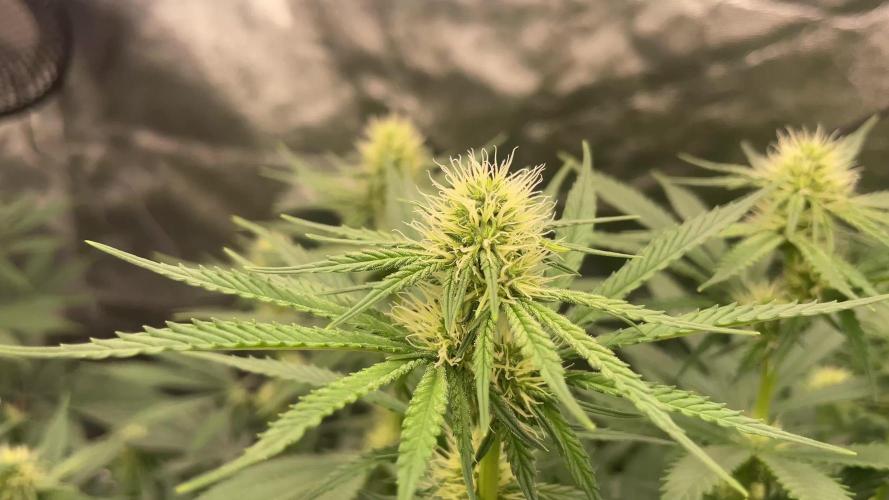
Another week is here, there are little troubles... In the middle of the week my lamp died and it took day than i bought new one... Overall everything looks good :)
Likes
6
Share


@leithsffs
Follow
Some good defoliation down low. And, a whole lot of scrogging this week. Not much to report. Time to sit and wait for the magic to happen now.

Likes
14
Share


@Toughpuff
Follow
Very good plant to grow 8/10 for me 💯💯🔥 very high yielding with a crazy yield of 131grams of 1 plant very tall and skinny but dense buds 🙏🏽


Likes
9
Share


@Kushizlez
Follow
Harvest:
Everything dried up to 347 grams + 96 grams of super high quality trim. Overall I am not too pleased with the smoke of the product. Although the bud size, bag appeal, smell and taste are pretty much all there, the shitty burn is a deal breaker for me and the majority of this weed is quite frankly useless. Another downside is while smoking I’ve found 4 seeds in an ounce from almost every strain. Light leaks? At least I learned a ton, including how to get super good burn for my next crop. I’m hoping that curing for a month or so will improve the burn but I wouldn’t really count on it. I have seen weed dried for 4 days with no cure and no flush smoke clean and not go out once. I have been told that the key to white ashes/clean burn is proper mineral content in the soil and there is tons of scientific studies on cigar ash going back 100 years. Plants grown in a medium with high levels of decomposing organic matter, phosphorus, magnesium, chlorine and heavy metal ratio tend to produce black/grey ash. Whereas plants grown in a medium with a higher ratio of trace minerals like calcium carbonate and potassium in the form of wood ash, rock dusts, oyster shell flour and lower levels of decomposing organic matter will produce a dense, uniform white ash that rarely goes out. But this is still all theory until I test it to confirm for myself a few times. My last few outdoor harvests did not improve with curing at all so I’m hoping this will be the missing link. Plain peat moss and coco clearly lack essential minerals that help burn. If said theory is correct I should find a synthetic nutrient line with more trace minerals. Makes me wonder if growing if rockwool/basalt rock could improve burn in a hydro setup.
I think I did a fairly decent job for my first grow. I went wrong in a million different places but I still stuck it out and got some decent herb. Things went wrong early when I got black spot mold, nitrogen/magnesium deficiencies and powdery mildew. I corrected most of it but things didn’t get really bad until mid veg when I intentionally skipped a few feedings and defoliated quite heavily stunting the plants. I also didn’t even top or start LST until the 6-9th node which was really stupid and hurt my yield. My temperatures were all over the place from the learning curve. I was severely overwatering without realizing it. 100% peat moss is a shitty medium. I also fed way too late in flower (not what caused shitty burn). I also used synthetic nutrients in soil.
Zkittlez bonsai
Yield: 1.9g
Smell: 7/10 - sweet, candy, berry, gassy, piney hints
Bag appeal: 7/10 - slightly leafy/stemy
Crystal coverage: 7.5/10 - very impressed
Ash: 6/10 - flaky, mostly white/grey
Fire holding: 4/10 - stays lit for 10-30 seconds
Smoke: 6/10 - taste is decent, needs curing
High: 6/10 - indica dom
Comment: looks nice, smells nice, tastes nice, burns like shit.
43.5/70 = 62% 👎🗑️
Black Garlic #1
Yield: 53.6
Smell: 8/10 - gassy, piney, earthy, skunky
Bag appeal: 7/10 - slightly leafy/stemy
Crystal coverage: 7.5/10 - very impressed
Ash: 8/10 - thick, uniform white ash
Fire holding: 7.510 - stays lit for 45+ sec
Smoke: 7.5/10 - taste is good until the end
High: 7/10 - sativa dom
Comment: looks nice, smells nice, tastes nice, burns great but quite leafy.
52.5/70 = 75% 👍🔥
Black Garlic #2
Yield: 42.3
Smell: 7/10 - woody, earthy, tea
Bag appeal: 6.5/10 - slightly leafy/stemy
Crystal coverage: 7/10 - impressed
Ash: 6/10 - flaky, mostly white/grey
Fire holding: 4/10 - stays lit for 10-30 seconds
Smoke: 6/10 - taste is decent, needs curing
High: 8/10 - sativa dom
Comment: looks nice, smells nice, tastes nice, burns like shit.
44.5/70 = 63% 👎🗑️
Zkittlez
Yield: 39.4
Smell: 7/10 - sweet, candy, berry, gassy, piney hints
Bag appeal: 6.5/10 - slightly leafy/stemy
Crystal coverage: 7.5/10 - very impressed
Ash: 8/10 - thick, uniform white ashes
Fire holding: 8/10 - stays lit for seconds
Smoke: 7.5/10 - taste is decent, needs curing
High: 7/10 - indica dom
Comment: looks nice, smells nice, tastes nice, burns great but smalls didn’t fill out.
51.5/70 = 73% 👍🔥
Blackberry Breath #1
Yield: 57.5
Smell: 9/10 - sweet, grape, berry, gassy, earthy, hashy
Bag appeal: 8.5/10 - dense, sparkly buds
Crystal coverage: 9/10 - super impressed
Ash: 5/10 - flaky, mostly grey/blackish
Fire holding: 4/10 - stays lit for 10-30 seconds
Smoke: 5/10 - tastes like chalky shit
High: 6/10 - indica dom
Comment: looks amazing, smells amazing, tastes like shit, burns like shit.
46.5/70 = 66% 👎🗑️
Blackberry Breath #2
Yield: 76.1g
Smell: 6/10 - musky, tea, berry, herbal
Bag appeal: 8/10 - slightly leafy/stemy
Crystal coverage: 7.5/10 - very impressed
Ash: 5/10 - flaky, mostly grey/black
Fire holding: 4/10 - stays lit for 10-30 seconds
Smoke: 5/10 - taste is shit
High: 6/10 - indica dom
Comment: looks nice, smells shitty, tastes shitty, burns like shit.
41.5/70 = 59% 👎🗑️
Slurricane #4
Yield: 34.5g
Smell: 8.5/10 - gassy, deep piney, fuel, earthy,
Bag appeal: 8.510 - slightly leafy/stemy
Crystal coverage: 7.510 - impressed
Ash: 6/10 - flaky, mostly white/grey
Fire holding: 4/10 - stays lit for 10-30 seconds
Smoke: 6/10 - taste is decent
High: 6/10 - indica dom
Comment: looks amazing, smells amazing, tastes nice, burns like shit.
46.5/70 = 66% 👎🗑️
Badazz OG Cheese
Yield: 43.5g
Smell: 6.5/10 - musty, woody, cheesy, piney hints
Bag appeal: 6/10 - slightly leafy/stemy
Crystal coverage: 6/10 - very impressed
Ash: 5/10 - flaky, mostly white/grey
Fire holding: 4/10 - stays lit for 10-30 seconds
Smoke: 6/10 - taste is decent
High: 6/10 - sativa dom
Comment: looks like shit, smells decent, tastes decent, burns like shit.
39.5/70 = 56% 👎🗑️

Likes
6
Share

@420DeepGrow
Follow
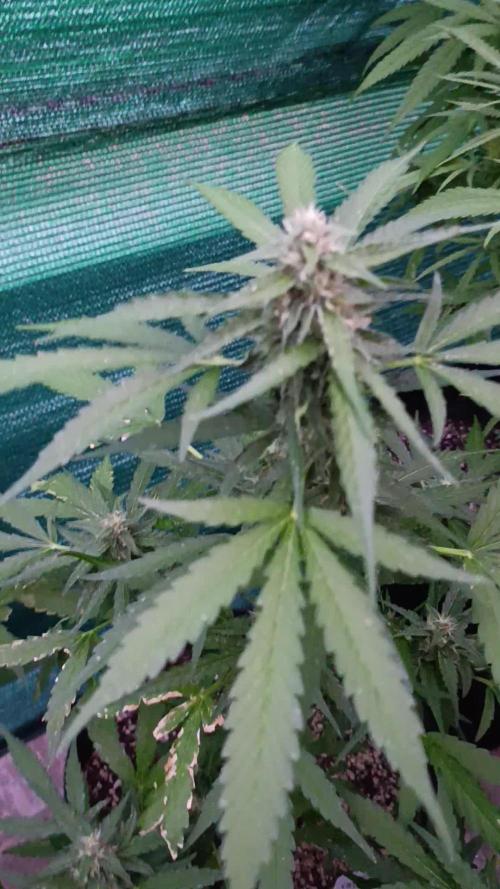
📆 Semana 5
Durante esta quinta semana de floración, la Gaia F1 Auto continúa avanzando con fuerza. Las flores siguen aumentando de tamaño y densidad, mostrando una evolución uniforme y entrando progresivamente en una fase de mayor producción.
La exposición al sol directo continúa aportando una buena intensidad lumínica, mientras la nutrición se ajusta para acompañar el desarrollo floral sin forzar la planta.
⚡ EC de entrada: 1.1
💧 pH: 6.2
🌡️ Agua: 21°C
🌫️ Humedad: 45 - 55%
💡 Intensidad: Luz directa del sol
🌱 Aporte nutricional: Se mantienen Master Root, Master Grow, Silica Force, Sugar Shot, Sticky Finger y aumento Bloom Booster, adaptando la nutrición al aumento de las necesidades durante esta fase de floración.
🔥 Nota de cultivo: La estructura floral continúa ganando volumen y densidad, con una producción cada vez más definida y una evolución muy positiva.
Seguimos creciendo fuerte 💪!
Likes
5
Share


@BlaKX
Follow
Die Entscheidung mit toppen hat sich bis jetzt gelohnt die Buds werden ziemlich gleich Dick !
Auch der Frost und der Geruch nehmen deutlich zu!
Blüten fühlen sich fest an trotz dem hohen Blätter Anteil
Likes
14
Share


@MG2009
Follow
02/14/2022
2 more for flowering room✌️Grape,and Biscotti Skunk
This grape is my favorite one so far tall and lanky it's so much faster bigger I thought it was a male. Tonight I found another Grape Skunk female and Biscotti Skunk male


Likes
14
Share


@AlpAge_Cino
Follow
2024/01/20 : as it survived, shiva skunk got a decent pot (1 gallon smartpot 50% canna coco pro / 50% hydroton) and 3 others are going on LST...
3 days growth :
afghani #1 - 19.0 cm (+3.0)
sensi skunk - 17.5 cm (+4.5)
hindu kush - 16.5 cm (+3.0)
shiva skunk - 11.5 cm (+2.0)
2024/01/23 : shiva skunk looks bad, with leaves going down and yellowing... it didn't like its transplant.
The others are looking OK. I may have seen first pistils...
The heights are :
afghani #1 - 22.0 cm (+3.0)
sensi skunk - 18.5 cm (+1.0)
hindu kush - 18.5 cm (+2.0)
shiva skunk - 11.0 cm (-0.5)
2024/01/24 : spayed with Foliar Spray from B.A.C. last night, don't know if it was OK for shiva skunk, we'll see.
3 others are preflowering without a doubt now.
afghani #1 - 24.0 cm (+2.0)
sensi skunk - 20.0 cm (+1.5)
hindu kush - 21.0 cm (+2.5)
shiva skunk - 11.5 cm (+0.5)
2024/01/25 : shiva skunk is struggling but it's not done yet. And I think stretch began for others.

Likes
31
Share


@TheHighentist
Follow
23/5* Water day 275ML with Biobizz Grow and Fish-Mix
-Temps 24-25 Day / 21-23 Night
-Humidity 70-75% RH
Correction to LST / Letting the bigger restraints go
24/5 Freed them of LST as i want to let them grow higher
-Temps 24-25 Day / 21-23 Night
-Humidity 70-75%RH
25/5 Showing good growth
-Temps 25-27 / night 22-24
-Humidity 70-75%RH
26/5* Water day 275ML with Biobizz Grow and Fish-Mix as usual
-Temps 23-25 / night 22-24
-Humidity 70-75&RH
27/5 - Got my humidity controller
-Temps 23-25 / night 22-24
-Humidity 72% (+-5)
28/5 - Did some super super cropping and a bit of light "Chiropractic" (Kyle Kushman method) and a bit of lst on the branches i wanted to get more light
-Temps 24-26day /22-24 night
-Humidity 72% (+-5)
29/5 Water day*
As a first time, i watered them before they went to bed, as i wanted to give some nutrients to get over the supercropping stress
275ML (+ 2ml/L Fish mix + 2 ml/L grow)
-Temps 24-26day/22-24night
-Humidity 72% (+-5)
***********I will put them into flowering in about a week***************
Light to plant distance:
d.28/4 53 CM to light (kept the same distance rest of the week 1)
d.2/5 50 CM to light
d.3/5 42 CM to light
d.7/5 40 CM to light
d.19/5 38 CM to light
d.22// 34 CM to light
__________
My lights distance and PAR value:
24" / 60 CM = 237 PAR (umol m2s1)
18" / 45.72 CM 412 PAR
12" / 30 cm 811 PAR
6" / 15.24 CM 1816 PAR


