


Likes
Comments
Share


@Xpie77
Follow
Everything goes well. Try to forget the previous growth. Durban!!!
💸💸💸💸💸💸 Buy seeds from Seeds Genetics Co. Copie the link down below!
https://seedsgenetics.nl/product/durban-poison-gefeminiseerd/

Likes
29
Share

@TrickzGrowz
Follow
Servus Moin!
Die Punch Pie geht jetzt in die letzte Woche!. Es gibt nur noch Wasser ohne Dünger. Die Buds sehen phänomenal aus. Sieht so aus als wären alle Fäden braun geworden. Es sind richtig feste Buds geworden und man sieht schön, wie jede einzelne Calyxe schön ausgebildet ist.

Likes
8
Share


@Lushbloomz
Follow
She's done! She took longer to ripen than her tent mates but she was an easy grow and her buds are dense, dank and stank! Flushed her for the last couple weeks then threw her in the dark for a couple days. I don't know if it made a difference, but I didn't want to waste the power. 14.3 wet ounces once she was chopped down.
Stay tuned for the smoke report!


Processing
Likes
2
Share


@Valedor
Follow
semana de crecimiento de tricomas, ademas las flores presentan un crecimiento muy bueno, ya están madurando de verdad, el próximo cultivo lo documentaré con fotos mas claras, he aprendido mucho de tenerlas en hidroponia, me gusta y lo voy a seguir usando y explotando


Likes
55
Share


@Max1973
Follow
Day 37 - Everything looks good.... they are drinking so much.... i built a bit more stable light setup, and i'll need to buy afew more plugs and stuff, to fill it out ...... i organised all the 2700k globes, ready to swap in..... still waiting on the exhaust fan, so i'll keep em in "grow" mode another week or 2 .... i'm vaping a leaf or 2, and drinking "green tea hot chocolates" .... it is so delicious in hot chocolate .... my health has picked up since starting the vape/drinks... the 21 thc/19 cbd is supa healthy ...
Day 38 - Getting them ready for Flower, noticed they are lacking in nutrients, so i started em on the heavier dutch master gold flower nutrients.
Day 40 - Added some pics. (they look droopy because they in night mode, just turned on lights for pic) - Started them on 12/12 flower, still working on getting all the lights, gear, and globes, for the right spectrum and amount of light.... atm got - 7x 2700k (click) , 2x 6400k (osram), + 60w light panel .... i'll go get some more gear today and hope to expand it to 10x 2700k , 2x 6400k ...... I put the exhaust filter fan on seperate power, so it doesn't go on/off with the timer, but stays on all the time.... it totally fixed up any odour problems, haha ....... Added some different pics for my light spectrum ... etc.....
the outside winter temp is now at 40-60oF (5-15oC) so with the 12/12h, the temp inside the tent is dropping to 60-80oF (18-22oC), abit low, but flowering is supposed to be in winter, so idk, see how it goes.....
I'm new to growing, so idk how this will work out....... just working it as i go.... i noticed afew spots on a leaf, so i upped the neuts abit more, they are still drinking like fish, huge amounts....
Day 40 late - new vids - Got the extra gear and installed it all... redesigned the initial setup, refined it with proper measurements, had to get my steel rule out, lol.......
got the 12 leds in and running, 10x 2700k clicks, and 2x 6400k osrams, with the panel..... it's lookin beautiful and got the exhaust on 24 hrs now, all working perfect with 12/12 timer.... they are forming a few spots on leaves, so hammering the nute water into them now... they are drinkin 1-2 litre of nute water a day each.... (nute water = Dutch mater gold one grow/flower, 800-1000 ppm 6 PH)
😎
Some details about lights.... i did some maths on it, and included some handy pics..... because i'm using cheap leds, i'm keeping the distance at 25cm, they are leds so they won't burn, and it massively increases the lumens/lux/Par, and with my home built light setup, the leds are spread out enough to keep it lower.... worked out good..... something of note is that all the led globes are built/made in china... however different marketing/selling companies from around the world... and the german osrams are 1w leds ... by far the most superior, but anyone can design and send the requirements to china to build em, haha) it's not a contest, we all work together.... haha.... the person with the best led light globes gets my business, because i want the best for my babies.... :)
(let me explain- 1w led vs 0.5 w led, the watt of the led projects the light, lumens, LX/PAR etc much further the higher the watt of the led....my 600w panel has 0.5w leds, the philips has 0.75, the osrams have 1w leds..... )
each globe
philips (dutch)- 10.5w
internal - 14 leds 0.75w
1055 lumens
each globe
osram (german)- 10.5w
internal - 10 leds 1w
1080 lumens
each globe
click (cheap)- 9w
internal - 16 leds 0.56w
800 lumens
light panel - 70w - 600w
30 red - 8 red
12 blue - 8 white 7500k
1 ir - 1 uv
= 20x blue 6400k - 38x red 2700k
internal - 60 double leds - 120x0.5w
6000 lm
Likes
2
Share


@dopeasstitties
Follow
Flower looking nice. Using GREASE foliar. These are on about day 65 on the Jan. 20th video. Everything is looking good and I'll most likely start the CAKE in a week and finish in 2.

Likes
4
Share


@Purplekushkat
Follow
This week we dropped 4 testers in a mix of Posidesine(Oregon's Only) and water for 24hr. All 4 seeds went into paper towel that was placed in clkne dome with a temp of 86.5 and humidity of 99%.
Pot prep as follows for all 4 seeds
3gal using Fox Farms Light Warrior Natural Seed Starter× Roots Organic Formula 707 by Aurora Innovations×Wiggleworm Soil Builder(wormcastings 3cups)
DOWN TO EARTH dry amendments as follows
BIOLIVE 9TBSPS
AZOMITE 3TBSPS
KELP MEAL 3 TBSPS
ALFALFA MEAL 5TBSPS
OYSTERSHELL 5TBSPS
HUMIC ACID 1TBSPS
All 4 seeds germinated and where potted on 11-3-19
All 4 broke soil on 11-5-19 and were watered with Recharge and Athenas Aminas
Day 1 was recorded on 11-6-19
Day 2 was recorded on 11-7-19 and all plants were watered with Cytoplus, Azos, Mykos, and Mammoth P
Day 4 was recorded on 11-9-19 and this strain #09 Pheno #1 was watered with Athenas Aminas

Likes
229
Share


@OrganicNature420
Follow
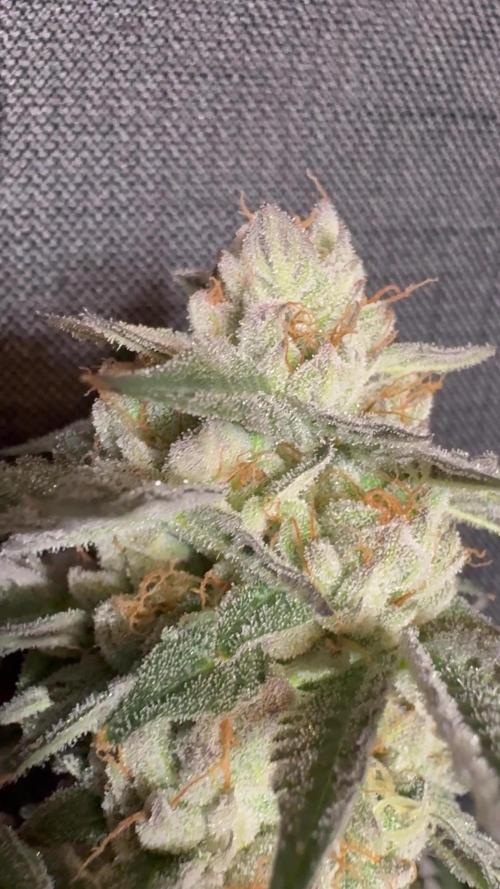
Germination date 🌱 12/07/2021
Day 50 02/09/2021
Strain 🍁 SinCity seeds Frosted Biscotti
(Biscotti Sundae x Whitenightmare)
THC% • Unknown
💡 Mars Hydro FC4800
• Power draw 480W + 5%
• Max coverage 5 x 5
• LED 2070pcsSamsungLM30B1&Osram660nm
• Max Yield 2.5g / watt
• Noise level 0 DB
• Removable Driver +2m cable
• Daisy chain (multiple lights)
https://marshydroled.co.uk/products/mars-hydro-fc-4800-led-grow-light-samsunglm301b-commercial-greenhouse-medical-indoor-kit 🇬🇧
https://www.mars-hydro.com/buy-fc-4800-480w-4x4-energy-saving-full-spectrum-commercial-led-grow-light-mars-hydro-for-sale 🇺🇸
PROMO CODE • (ORG420) DISCOUNT 👍🏻 marshydroled.com
⛺ Mars Hydro 120 x 120 x 200cm
📤📥 AC infinity 6inch
💧 10lt dehumidifier
❄️ 3.1kw air con system
💉 Nutrients GreenBuzzLiquids
Organic Grow Liquid • 1-4ml until 2wk flower
Organic Bloom Liquid • 2-4ml flower stage
Organic More PK • 2-4ml +wk3 of flower
Organic Calmag • 1-2ml/lt whole grow
Fast Plants Spray • first 3days at night lights off
More Roots • 2-5ml veg +2wks flower
Fast Buds • 5ml +wk2 of veg until 1wk flower
Humic Acid Plus • 2-5ml whole grow
Growzyme • 2-5ml whole grow
Big Fruits • 2-5ml flower stage
Clean Fruits • 5ml flush 1wk
Ph powder
Root Gel
Living Organics
https://greenbuzzliquids.com/
PROMO CODE • organicnature420 15% off ✌️🏼
🥥 Growing Media • Coco Coir
Notes 📝
Plants have had a trim up. Not done a full job but all the undergrowth has gone. Given them a top feed of wormcastings as they are now on flower. Look forward to results with both Mars Hydro and GreenBuzzLiquids 💡💚 really can't fault these company's 🙌🏻
Happy growing fam ❤️🌱🍁👍🏻
Discount codes in bio for Mars and GreenBuzzLiquids 👍🏻

Likes
7
Share


@StickyFingah420
Follow
Se acerca el fin para esta hermosa LCC, los tricomas están casi en el punto justo y la cenecencia se logró con éxito, ahora solo esperar un poco más y estaremos cosechando con casi 76 días desde que salió a la superficie 🤓


Likes
31
Share


@THCpapa
Follow
Week 13 in the garden, and it's been a week of contemplation and admiration. Despite my initial plan to flip the plants, I decided to give them another week in vegetation. It's like I'm sculpting a masterpiece, carefully grooming the plants into a perfect botanical sculpture.
Working with my plants feels like art – it requires skill, love, dedication, and a sense of playing God. As I look at the tent, I can't help but feel a sense of pride and joy. These green beauties are turning out amazing, and I'm filled with overwhelming happiness whenever I get the chance to speak to people about them and show them off.
But the time has come to take the next step in their journey. They're being flipped this week for sure, ready to embark on the next chapter of their growth. It's bittersweet, but I know it's all part of the magical process of growing these wonderful plants. Here's to Week 13 – a week of artistry, joy, and the promise of new beginnings. 🌿🎨

Likes
20
Share


@AsNoriu
Follow
Added first time molasses during feeding will be doing it for last 3 weeks before flush.
For couple plants with redish leaves stems gave epsom salt. Thinking to give it to all of them.
To me they look too skinny, but its aftermath of strech i quess ...
Would love to have one more hlg 240 ...

Likes
6
Share


@Floryx
Follow
-Gorilla Zkittlez is turning purple :)
-its getting a little cold in my room :(
-bought a magnifying lense to check for trichomes but i think they still need a while

Processing
Likes
8
Share


@Buck5050
Follow
Tent on cruise control this week with one pheno showng fading. Pheno #3 has started to finish before the others so I started flush on 2 of the girls this week. I will continue to feed the other 3 on the 70 day schedule unless something changes. Not overly impressed with bud development of this cross. I think terps and frost is there though. I do have some cuts of pheno #3 and #1 that I plan on running one more time before letting go.
Likes
Comments
Share


Likes
14
Share


@Terpyboyz
Follow
So this grow came to a finshed but I had a. Few issues that’s held me up from finishing up the diary, but in due time I will reupload it all in order soon. But over all I will also update with a final weigh in of each strain produced so stay tuned 🤙🏻🔥


Likes
38
Share


@FrulaFrulaki
Follow
I've been flushing my 2 big plants for about a week now. They've grown denser buds and the trichomes are becoming milky and I expect them to be fully grown in a couple of days (I want about 80% of trichomes to be milky). The other one is flowering nicely and I feed her everyday. The smell also shifted to a very pleasant lemon/citrus aroma and the test bud I took off last week also has really good taste when smoking.

Likes
51
Share


@kansasscott725
Follow
Well, this is it. Wish I had bigger buds. Everything was moving in the right direction until the end. I switched the Mars Hydro 3000 out with two HLG 300s, so I could maintain the PAR just under 1000, but perhaps it wasn't enough.
G13 is definitely not ready, and could benefit for a couple more weeks, but like a store liquidation, THEY ALL MUST GO NOW
All in all, Learned a lot. No seeds, reveg, or signs of mold, so hopefully I'll make up for quantity with quality.
Only Dry Time will Tell...


