Likes
Comments
Share
@deFharo
Follow
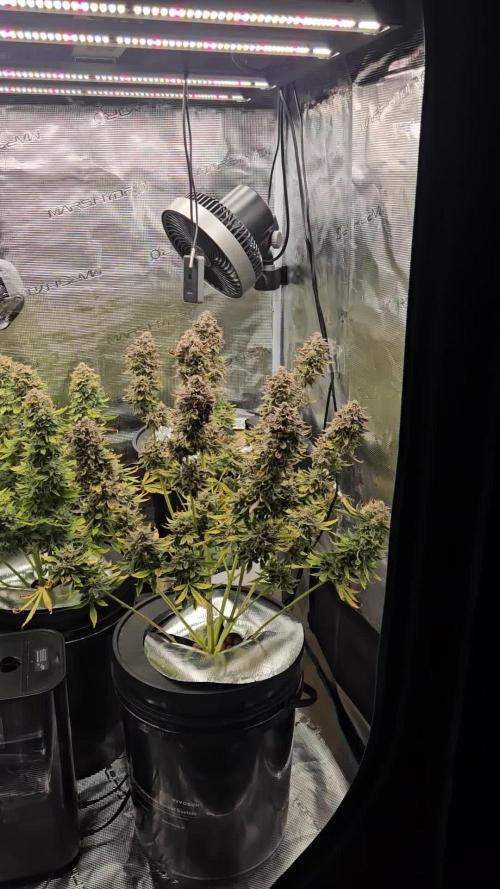
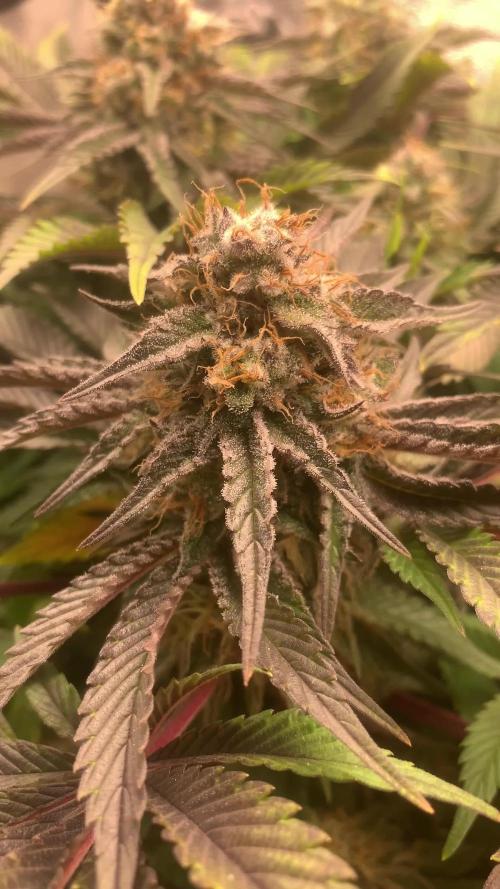
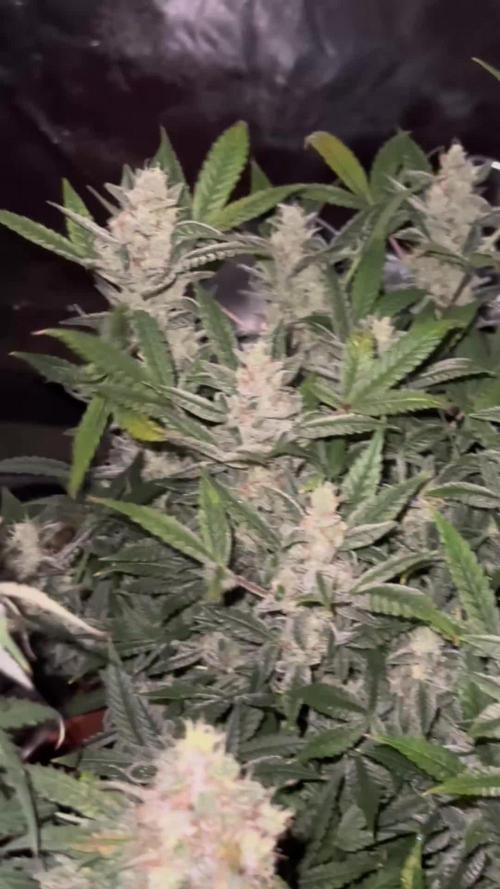
Bienvenidos cultivadores de marihuana clandestinos, y también, a los que tienen la fortuna de no serlo!🖐️👨‍🌾 Novena semana de floración para la reina de mi jardín de la alegría, creciendo en tierra sagrada, bendecida con Microorganismos y Minerales, regada con agua pura de montaña, alimentada con pasión y cuidada con fervor... aleluya! La planta se está deshaciendo de las hojas más viejas, absorbe sus minerales, humedad y nutrientes y luego caen agotadas en el sustrato, las colas se ven con energía, pistilos blancos las coronan, días de engorde se avecinan! Los cogollos, son largos, densos, pegajosos y olorosos, la proporción hoja/flor es fantástica, la fortaleza del cultivo me hace pensar que todavía puede engordar unos 10-14 días más, quiero sacar la máxima producción, lo que me está pasando también es que el color oscuro de las hojas me confunden al valorar el estado vital del cultivo... pero las colas piden guerra! 🌲🌲🌲🌲 Hasta pronto... 🖐️👨‍🌾 SALUDOS A TODOS!! ================================= Info de la cepa Mendo T: https://www.thehighchameleon.com/es/shop/mendo-t-6#attr=202 - 85% Indica, 15% Sativa. THC: 18%. Floración: 8 Semanas. Terpenos: Lavanda picante. - Genotipo inverso masculino: limon t Cruce: Lemon Tree x Cookies & Cream F2. 2019 - The High Chameleon - EUR - Genotipo femenino: Mendocino Purps Reg Selección de THC 1996 - Piratas de CSI Humboldt, California - EE.UU. ==============
Likes
5
Share
Seconda settimana di fioritura anche questa Bruce banner cresce bene....una di loro è venuta piccolissima..non la conto nemmeno quella😂😂😂😂😂
Likes
41
Share
Sehr schlechtes Wetter. Viel Regen, kalte Nächte, kaum Sonne. Es ist voll Herbst. Hoffe, das bessert sich nochmal und frost kommt nicht so schnell...3 fat banana sind geerntet. Eine steht noch. Die mit wasserschaden wachsen kaum noch. Mehr als ein paar gramm werden das nicht mehr..noch läuft es. Bis nächste Woche ✌️
Likes
5
Share
Привет садоводы мой цветок потихоньку растет цвет листьев хороший завтра я буду пересаживать ее в горшок побольше 17 день и растение уже показало пол но странно , кажется немного рано ?!
Likes
12
Share
White Widow looks realy good. I expect that I can harvest her in august. Northern Lights looks good too, but seems to be flowering much slower then White Widow. Blueberry Ghost OG (it is HUGE already) and Kali AK still won't start flowering and I don't know why.
Likes
152
Share
VIDEO ADDED: DEC 29 2020! -- PHOTOS ADDED: DEC 27 2020! MORE COMING VIDEO?! -- Smell is starting to come down from the fresh cut, definitely has a great look to the bud as the cure goes on, have two 8 gram boveda packs in there after a few days with one that was WAY too big for it 😂 Brought down my Chocolate Mint OG in my other diary right now as well, way more weight to that last plant... probably more than both these Chem Bombs combined, great genetics over @Humboldt_seed_organization 😎 -- PHOTOS ADDED: DEC 23 2020! MORE COMING! -- DEC 19 2020 - Harvest Day Chem-Bomb Auto .. DONE. Step-Brothers ... CHOPPED. Buds.. TRIMMED. Giving them my first bud wash tomorrow! Already juiced the lemon, have the spring water, and off-brand baking soda because COVID has every place sold out of Arm&Hammer 😂 Dale: 50 Grams Wet Buds/Stem 15 Grams Trim/Larf = Total 65 Grams Wet Brennan: 55 Grams Wet Buds/Stem 12 Grams Trim/Larf = 67 Grams Wet Total Wet: 132 Grams (Buds/Stems/Trim) Looks like I'm getting in and around the "1 Ounce per Auto Plant" range with my basic soil/hand feed system. The CMOG from my other diary looks like it will be my first 1OZ plant when it dries. With my past experience of wet buds drying out to about half of bud weight, I'm hoping that they both come in JUST under an Oz a piece. Going to update with more pictures, going to take a couple days to dry and get a good weight and hopefully get somewhere close to the 64 grams of the ONLY sized Boveda packs I have right now 😇 -- UPDATE - Dec 20 2020 - Cure Day 😵😭 i once again got my hopes up by pulling the classic male "over-exaggerating" and all the wet weight came from the main stems. After 3 days or so of drying both plants together came in just under an ounce. The smell is great and I have no doubt it's quality bud but I need to up my density game somehow for sure. New nutrients or better set up, still very low-end with all my equipment as I've just slowly been finding affordable pieces to add as I go. Maybe more light? Feel free to hit me up below with ideas short of switching to a Hydro set up 😹 I can hardly afford my bags of soil so I definitely couldnt keep up with the financial costs of a Hydro set up yet 😓 Have had a few bowls of the dried/uncured bud and it's very nice, clean, and crazy good for being uncured at this point. Just the classic flower taste from the chlorophyll but the pineapple/tropical taste is coming through nice already. Final Stats: 26g Dried Bud 26g Trim -- Thanks for checking in! Will be updating soon and posting more pictures! Throw down a like and/or follow so I can return the favour 🙌 -- IG: @GlazedGrow (DM and let me know you're from Grow Diaries so i can follow back!)
Likes
11
Share
*Week 5 Flower 09/24* Thus far both both plants are flowering and budding nicely, Trichomes are setting in accordingly, Increase in Phosphate and Potassium nute feeds. Both plants have appeared to stop growing in height settling in at 48Inches. Top COLAS are pretty dense and the aroma coming off both of them is bright and vibrant White Hairs are starting to turn bright orange. *Week 5 Flower Mid week update - 09/28* Both plants have reached max height (48 Inches) Bud sites are filling up and have become more dense with trichomes cover through the flowered bud. 60% orange hair coverage - Nearing harvest *Week 5 Flower End week recap 09/30* Both Apple Fritter and Critical+2.0 nearing harvest Cutting back on nute feeds starting tomorrow and will increase clean water feeds Flushing will begin in a week - both will be harvested in 2 weeks.
Likes
239
Share
@K9689
Follow
Okay so greedy finally decided to show me she’s a girl - I’m beyond chuffed ngl. She’s ready for the flip soon but I still have two others playing catch up so she’s gonna be stuck vegging for another couple weeks. I feel pretty lucky I don’t know wether these are just super bag seeds but I’ve had no issues with them considering they’re in my closet and I’ve been pretty much just doing everything by eye without the proper equipment. Happy days✌️
Likes
2
Share
@BemaGwaai
Follow
My grow room is a mixture between a SOG and SGROG; they are packed in tightly and any branches that reach up to the light are being bent over and held in place by wire. Today I've added tomorite (half strength) to all the plants. they are still not flowering but there are loads of preflower wispy antenna at every node. The first plants are Amnesia Haze and the photo is of the two plants, the furthest one away has the broken main stem
Processing
Likes
6
Share
@Ferenc
Follow
Day 61: I left them in darkness for 3 days and just switched on the lamp for 12/12 with today the foirst day of the 9th week. Fertilization goes on the same days with the nutrients above and water intake approx 250 ml per plant per day. Nice green color comes they always look nice after darkness :) Lets' go. Day 66: Growing growing growing...
Likes
9
Share
@RadDad
Follow
Welcome to week 6 y'all. Things continue to progress nicely, this little lady has started to grow flowers and at present I count about 11 bud sites on the canopy. The flowers are developing nicely and it looks like they have some dark purple colouring around the flower... neat. In addition to the LST I've been doing some light defoliation. Nothing major just a leaf here or there to expose flowers to light. She's really low but really flat not the prettiest plant but strong. Looking ahead to this week I ordered a new grow light from Mars Hydro which should get those buds to fatten up nicely. I might increase the water a bit and continue to feed with Dutch Science Nutrients' Bloom Baby Bloom and adjust LST not much more defoliation should be required until later on like week 8 I think.
Likes
7
Share
@Pechu420
Follow
No problems throughout the entire grow, a very easy plant, literally automatic. It produced a lot of resin and smelled delicious, very good. Low production due to the small 3L pot, cold, and only 12 hours of light. But the quality is outstanding.
Likes
35
Share
Hello! By the end of the third week everything is fine. My room has high humidity, but the ventilation seems to cope. But i can water less often 😏 Thank you for stopping by, and be healthy! 🙏 To be continued... 😶
Likes
19
Share
@Little_E
Follow
Day- 57 Man. These girls are really getting big! Did more LST yesterday and watered 2 days ago. Did half the recommended nutes again. Playing it safe. Been pretty smooth sailing so far! Day- 58 Did a lot of defoliation. Hopefully it allows for some more growth! Day- 60 Watered today. Still sticking to half the recommended amount of nutes. Been watering about once every 6 days. Still using blackstrap molasses on every watering. Day- 62 It's a jungle!
Likes
43
Share
@Sabac
Follow
Última semana de mis plantitas Hoy corto 12 de 16 Fue un cultivo sin problemas. Y creo que viene buena producción Recomiendo 100% los fertilizantes hesi buenísimos. 5 cultivos con ellos y 0 problemas. El sustrato Biobizz light mix excelente Las semillas de barneys farm uff pura crema. Eva seeds recomendables y las sweed seeds buenisimas semillas para seguir cultivando. Los Led yxo para ser de un perfil bajo qué no a toda la gente les gusta cumplen la. Función 480w de pura potencia en un espacio de 120x120 los recomiendo para gente que tenga un presupuesto bajo. Ahora voy por unos sobre 600w aunque los reforzaría estos con unos led de 100w . Bueno feliz con los resultados. Esta semana mostraré los resultados de las plantas cortadas. Se vienen más cultivos Salu2
Likes
190
Share
@Ju_Bps
Follow
Hello growmies 👩‍🌾👨‍🌾🌲🌲, 👋 More and more frosty but I don't like how buds are turning, look a bit heat stress and turning too much foxtail, I don't like.. But ok, don't want said will be bad stuff. Temperature are hot summer is there, sometimes I've peak to 32*C in box... 💧Give water each 2 or 3 days 1,5l Water + Nutri NPK Bloom 1,5l Water + Nutri NPK Bloom + Sugar Royal PH @6 - Nutri NPK Bloom 1/2 tsp for 1 gal. 💡Mars Hydro - SP 3000 100% 38 cm. 🔥 Thanks community for follow, likes, comments, always a pleasure 👩‍🌾👨‍🌾💚🌲. Mars Hydro - SP 3000 💡💡 https://www.mars-hydro.com/sp-3000-samsung-lm301b-greenhouse-led-grow-light NUTRI NPK 💥🔥 https://www.nutrinpk.com/product/npk-mix-pak-for-4-to-5-plants-cannabis-fertilizer/ Sweet Seeds - Mimosa Bruce Banner XL Auto 🌲🌲 https://sweetseeds.es/en/autoflowering-seeds/3232-mimosa-bruce-banner-xl-auto.html
Likes
13
Share
Got super busy and failed to take many photos or videos, also there hasn't been much going on this week in the garden!
Likes
25
Share
ANTHOCYANIN production is primarily controlled by the Cryptochrome (CR1) Photoreceptor ( !! UV and Blue Spectrums are primary drivers in the production of the pigment that replaces chlorophyll, isn't that awesome! 1. Diverse photoreceptors in plants Many civilizations, including the sun god of ancient Egypt, thought that the blessings of sunlight were the source of life. In fact, the survival of all life, including humans, is supported by the photosynthesis of plants that capture solar energy. Plants that perform photosynthesis have no means of transportation except for some algae. Therefore, it is necessary to monitor various changes in the external environment and respond appropriately to the place to survive. Among various environmental information, light is especially important information for plants that perform photosynthesis. In the process of evolution, plants acquired phytochrome, which mainly receives light in the red light region, and multiple blue light receptors, including his hytropin and phototropin, in order to sense the light environment. .. In addition to these, an ultraviolet light receptor named UVR8 was recently discovered. The latest image of the molecular structure and function of these various plant photoreceptors (Fig. 1), focusing on phytochrome and phototropin. Figure 1 Ultraviolet-visible absorption spectra of phytochrome, cryptochrome, phototropin, and UVR8. The dashed line represents each bioactive absorption spectrum. 2. Phytochrome; red-far red photoreversible molecular switch What is phytochrome? Phytochrome is a photochromic photoreceptor, and has two absorption types, a red light absorption type Pr (absorption maximum wavelength of about 665 nm) and a far-red light absorption type Pfr (730 nm). Reversible light conversion between the two by red light and far-red light, respectively(Fig. 1A, solid line and broken line). In general, Pfr is the active form that causes a physiological response. With some exceptions, phytochrome can be said to function as a photoreversible molecular switch. The background of the discovery is as follows. There are some types of plants that require light for germination (light seed germination). From that study, it was found that germination was induced by red light, the effect was inhibited by subsequent far-red light irradiation, and this could be repeated, and the existence of photoreceptors that reversibly photoconvert was predicted. In 1959, its existence was confirmed by the absorption spectrum measurement of the yellow sprout tissue, and it was named phytochrome. Why does the plant have a sensor to distinguish between such red light and far-red light? There is no big difference between the red and far-red light regions in the open-field spectrum of sunlight, but the proportion of red light is greatly reduced due to the absorption of chloroplasts in the shade of plants. Similar changes in light quality occur in the evening sunlight. Plants perceive this difference in light quality as the ratio of Pr and Pfr, recognize the light environment, and respond to it. Subsequent studies have revealed that it is responsible for various photomorphogenic reactions such as photoperiodic flowering induction, shade repellent, and deyellowing (greening). Furthermore, with the introduction of the model plant Arabidopsis thaliana (At) and the development of molecular biological analysis methods, research has progressed dramatically, and his five types of phytochromes (phyA-E) are present in Arabidopsis thaliana. all right. With the progress of the genome project, Fi’s tochrome-like photoreceptors were found in cyanobacteria, a photosynthetic prokaryotes other than plants. Furthermore, in non-photosynthetic bacteria, a homologue molecule called bacteriophytochrome photoreceptor (BphP) was found in Pseudomonas aeruginosa (Pa) and radiation-resistant bacteria (Deinococcus radiodurans, Dr). Domain structure of phytochrome molecule Phytochrome molecule can be roughly divided into N-terminal side and C-terminal side region. PAS (Per / Arndt / Sim: blue), GAF (cGMP phosphodiesterase / adenylyl cyclase / FhlA: green), PHY (phyto-chrome: purple) 3 in the N-terminal region of plant phytochrome (Fig. 2A) There are two domains and an N-terminal extension region (NTE: dark blue), and phytochromobilin (PΦB), which is one of the ring-opening tetrapyrroles, is thioether-bonded to the system stored in GAF as a chromophore. ing. PAS is a domain involved in the interaction between signal transduction-related proteins, and PHY is a phytochrome-specific domain. There are two PASs and her histidine kinase-related (HKR) domain (red) in the C-terminal region, but the histidine essential for kinase activity is not conserved. 3. Phototropin; photosynthetic efficiency optimized blue light receptor What is phototropin? Charles Darwin, who is famous for his theory of evolution, wrote in his book “The power of move-ment in plants” published in 1882 that plants bend toward blue light. Approximately 100 years later, the protein nph1 (nonphoto-tropic hypocotyl 1) encoded by one of the causative genes of Arabidopsis mutants causing phototropic abnormalities was identified as a blue photoreceptor. Later, another isotype npl1 was found and renamed phototropin 1 (phot1) and 2 (phot2), respectively. In addition to phototropism, phototropin is damaged by chloroplast photolocalization (chloroplasts move through the epidermal cells of the leaves and gather on the cell surface under appropriate light intensity for photosynthesis. As a photoreceptor for reactions such as escaping to the side of cells under dangerous strong light) and stomata (reactions that open stomata to optimize the uptake of carbon dioxide, which is the rate-determining process of photosynthetic reactions). It became clear that it worked. In this way, phototropin can be said to be a blue light receptor responsible for optimizing photosynthetic efficiency. Domain structure and LOV photoreaction of phototropin molecule Phototropin molecule has two photoreceptive domains (LOV1 and LOV2) called LOV (Light-Oxygen-Voltage sensing) on the N-terminal side, and serine / on the C-terminal side. It is a protein kinase that forms threonine kinase (STK) (Fig. 4Aa) and whose activity is regulated by light. LOV is one molecule as a chromophore, he binds FMN (flavin mononucleotide) non-covalently. The LOV forms an α/βfold, and the FMN is located on a β-sheet consisting of five antiparallel β-strands (Fig. 4B). The FMN in the ground state LOV shows the absorption spectrum of a typical oxidized flavin protein with a triplet oscillation structure and an absorption maximum wavelength of 450 nm, and is called D450 (Fig. 1C and Fig. 4E). After being excited to the singlet excited state by blue light, the FMN shifts to the triplet excited state (L660t *) due to intersystem crossing, and then the C4 (Fig. 4C) of the isoaroxazine ring of the FMN is conserved in the vicinity. It forms a transient accretionary prism with the tain (red part in Fig. 4B Eα) (S390I). When this cysteine is replaced with alanine (C / A substitution), the addition reaction does not occur. The effect of adduct formation propagates to the protein moiety, causing kinase activation (S390II). After that, the formed cysteine-flavin adduct spontaneously dissociates and returns to the original D450 (Fig. 4E, dark regression reaction). Phototropin kinase activity control mechanism by LOV2 Why does phototropin have two LOVs? Atphot1 was found as a protein that is rapidly autophosphorylated when irradiated with blue light. The effect of the above C / A substitution on this self-phosphorylation reaction and phototropism was investigated, and LOV2 is the main photomolecular switch in both self-phosphorylation and phototropism. It turns out that it functions as. After that, from experiments using artificial substrates, STK has a constitutive activity, LOV2 functions as an inhibitory domain of this activity, and the inhibition is eliminated by photoreaction, while LOV1 is kinase light. It was shown to modify the photosensitivity of the activation reaction. In addition to this, LOV1 was found to act as a dimerization site from the crystal structure and his SAXS. What kind of molecular mechanism does LOV2 use to photoregulate kinase activity? The following two modules play important roles in this intramolecular signal transduction. Figure 4 (A) Domain structure of LOV photoreceptors. a: Phototropin b: Neochrome c: FKF1 family protein d: Aureochrome (B) Crystal structure of auto barley phot1 LOV2. (C) Structure of FMN isoaroxazine ring. (D) Schematic diagram of the functional domain and module of Arabidopsis thaliana phot1. L, A’α, and Jα represent linker, A’α helix, and Jα helix, respectively. (E) LOV photoreaction. (F) Molecular structure model (mesh) of the LOV2-STK sample (black line) containing A’α of phot2 obtained based on SAXS under dark (top) and under bright (bottom). The yellow, red, and green space-filled models represent the crystal structures of LOV2-Jα, protein kinase A N-lobe, and C-robe, respectively, and black represents FMN. See the text for details. 1) Jα. LOV2 C of oat phot1-to α immediately after the terminus Rix (Jα) is present (Fig. 4D), which interacts with the β-sheet (Fig. 4B) that forms the FMN-bound scaffold of LOV2 in the dark, but unfolds and dissociates from the β-sheet with photoreaction. It was shown by NMR that it does. According to the crystal structure of LOV2-Jα, this Jα is located on the back surface of the β sheet and mainly has a hydrophobic interaction. The formation of S390II causes twisting of the isoaroxazine ring and protonation of N5 (Fig. 4C). As a result, the glutamine side chain present on his Iβ strand (Fig. 4B) in the β-sheet rotates to form a hydrogen bond with this protonated N5. Jα interacts with this his Iβ strand, and these changes are thought to cause the unfold-ing of Jα and dissociation from the β-sheet described above. Experiments such as amino acid substitution of Iβ strands revealed that kinases exhibit constitutive activity when this interaction is eliminated, and that Jα plays an important role in photoactivation of kinases. 2) A’α / Aβ gap. Recently, several results have been reported showing the involvement of amino acids near the A’α helix (Fig. 4D) located upstream of the N-terminal of LOV2 in kinase photoactivation. Therefore, he investigated the role of this A’α and its neighboring amino acids in kinase photoactivation, photoreaction, and Jα structural change for Atphot1. The LOV2-STK polypeptide (Fig. 4D, underlined in black) was used as a photocontrollable kinase for kinase activity analysis. As a result, it was found that the photoactivation of the kinase was abolished when amino acid substitution was introduced into the A’α / Aβ gap between A’α and Aβ of the LOV2 core. Interestingly, he had no effect on the structural changes in Jα examined on the peptide map due to the photoreaction of LOV2 or trypsin degradation. Therefore, the A’α / Aβ gap is considered to play an important role in intramolecular signal transduction after Jα. Structural changes detected by SAXS Structural changes of Jα have been detected by various biophysical methods other than NMR, but structural information on samples including up to STK is reported only by his results to his SAXS. Not. The SAXS measurement of the Atphot2 LOV2-STK polypeptide showed that the radius of inertia increased from 32.4 Å to 34.8 Å, and the molecular model (Fig. 4F) obtained by the ab initio modeling software GASBOR is that of LOV2 and STK. It was shown that the N lobes and C lobes lined up in tandem, and the relative position of LOV2 with respect to STK shifted by about 13 Å under light irradiation. The difference in the molecular model between the two is considered to reflect the structural changes that occur in the Jα and A’α / Aβ gaps mentioned above. Two phototropins with different photosensitivity In the phototropic reaction of Arabidopsis Arabidopsis, Arabidopsis responds to a very wide range of light intensities from 10–4 to 102 μmol photon / sec / m2. At that time, phot1 functions as an optical sensor in a wide range from low light to strong light, while phot2 reacts with light stronger than 1 μmol photon / sec / m2. What is the origin of these differences? As is well known, animal photoreceptors have a high photosensitivity due to the abundance of rhodopsin and the presence of biochemical amplification mechanisms. The exact abundance of phot1 and phot2 in vivo is unknown, but interesting results have been obtained in terms of amplification. The light intensity dependence of the photoactivation of the LOV2-STK polypeptide used in the above kinase analysis was investigated. It was found that phot1 was about 10 times more photosensitive than phot2. On the other hand, when the photochemical reactions of both were examined, it was found that the rate of the dark return reaction of phot1 was about 10 times slower than that of phot2. This result indicates that the longer the lifetime of S390II, which is in the kinase-activated state, the higher the photosensitivity of kinase activation. This correlation was further confirmed by extending the lifespan of her S390II with amino acid substitutions. This alone cannot explain the widespread differences in photosensitivity between phot1 and phot2, but it may explain some of them. Furthermore, it is necessary to investigate in detail protein modifications such as phosphorylation and the effects of phot interacting factors on photosensitivity. Other LOV photoreceptors Among fern plants and green algae, phytochrome ɾphotosensory module (PSM) on the N-terminal side and chimera photoreceptor with full-length phototropin on the C-terminal side, neochrome (Fig. There are types with 4Ab). It has been reported that some neochromes play a role in chloroplast photolocalization as a red light receiver. It is considered that fern plants have such a chimera photoreceptor in order to survive in a habitat such as undergrowth in a jungle where only red light reaches. In addition to this, plants have only one LOV domain, and three proteins involved in the degradation of photomorphogenesis-related proteins, FKF1 (Flavin-binding, Kelch repeat, F-box 1, ZTL (ZEITLUPE)), LKP2 ( There are LOV Kelch Protein2) (Fig. 4Ac) and aureochrome (Fig. 4Ad), which has a bZip domain on the N-terminal side of LOV and functions as a gene transcription factor. 4. Cryptochrome and UVR8 Cryptochrome is one of the blue photoreceptors and forms a superfamily with the DNA photoreceptor photolyase. It has FAD (flavin adenine dinucle-otide) as a chromophore and tetrahydrofolic acid, which is a condensing pigment. The ground state of FAD is considered to be the oxidized type, and the radical type (broken line in Fig. 1B) generated by blue light irradiation is considered to be the signaling state. The radical type also absorbs in the green to orange light region, and may widen the wavelength region of the plant morphogenesis reaction spectrum. Cryptochrome uses blue light to control physiological functions similar to phytochrome. It was identified as a photoreceptor from one of the causative genes of UVR8 Arabidopsis thaliana, and the chromophore is absorbed in the UVB region by a Trp triad consisting of three tryptophans (Fig. 1D). It is involved in the biosynthesis of flavonoids and anthocyanins that function as UV scavengers in plants. Conclusion It is thought that plants have acquired various photoreceptors necessary for their survival during a long evolutionary process. The photoreceptors that cover the existing far-red light to UVB mentioned here are considered to be some of them. More and more diverse photoreceptor genes are conserved in cyanobacteria and marine plankton. By examining these, it is thought that the understanding of plant photoreceptors will be further deepened.