


Likes
Comments
Share


@Mazgoth
Follow
Little airy buds,not as fast flowering but really good colors,she needed one or two weeks for sure but i didn’t have time,I will grow it again for sure.

Likes
116
Share


@bioaccessory
Follow
Однажды я услышал замечательную фразу: "Если ты думаешь, что уже пора срезать растение - подожди еще неделю, и срезай!" 😁 А если серьезно, мы с моей девочкой никуда не спешили, и теперь полностью готовы, об этом говорит и внешний вид растения, и осмотр трихом в микроскоп - больше половины мутные, слегка переходящие в янтарь.
Промыл субстрат я очень тщательно (последний дренаж <200 ррм), сегодня 28.05 оставляю растение на двое суток темноты и засухи, и буду собирать урожай - всё это в следующем репортаже👆
Спасибо, что заглянули, и будьте здоровы! 🙏
Продолжение следует ...😶

Likes
14
Share


@MG2009
Follow
02/23/2022
Lots of stretching this week,not much to say so I let the pics and videos talk for them selves🙏🏻
Enjoy
Grape Skunk tall and lanky one I'm loving! I will number her for future reference.
Biscotti Skunk has some droopy leaves, it's watering day.


Likes
205
Share

@yan402
Follow
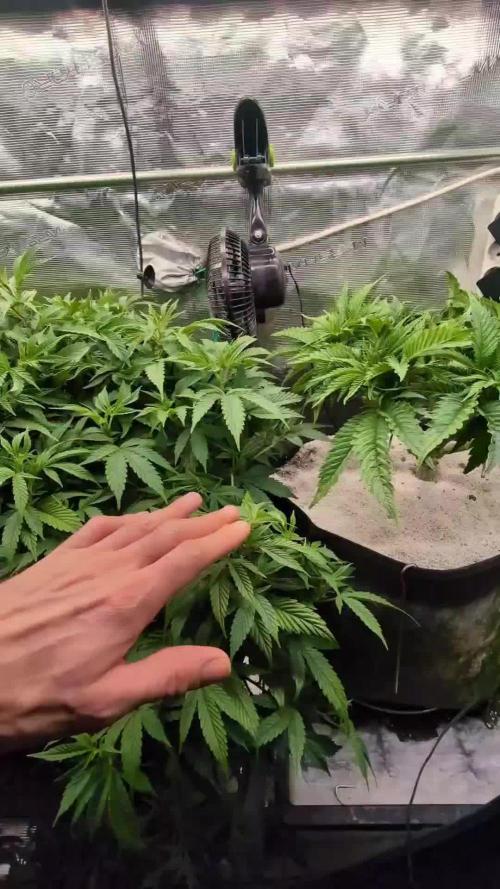
This two were part of another diary and got moved out due to space reasons at VW8 and moved back indoors at VW20
https://growdiaries.com/diaries/218151-auto-god-s-glue-grow-journal-by-yan402
13.09.25 VW21 Both are looking good and are developing tighter nodes than when they were outside, I'm going to have to keep cutting them back every once and a while I also applied nematodes against thrips and fungus gnats.
20.09.25 VW22 some spots and some yellow leafs, I think it's a root problem, probably root bound, but both seem healthy and are getting thicker so maybe just top up with Coco coir and give a slight different nutrient schedule less Tri Part Bloom could do the trick MAYBE lol.
27.09.25 VW23 Topped up the pots with extra coco coir and trimmed the side roots a bit, both plants were root bound 📹
03.10.25 VW23 did a HST/LST session 📹
12.10.25 VW25 Done a major HST session to try and keep them in line with the Sunset Sherbet GF I have going in the same tent, rest in the video 📹
17.10.25 VW25 ffj/fpj/fish 30 → 60 ml
🌱💦🌱💦🌱💦🌱💦🌱💦🌱
Day to day tasks & actions 🌿
🌱💦🌱💦🌱💦🌱💦🌱💦🌱
11.10.25 VW24 – Fed 3l of #1 → 2l runoff
12.10.25 VW25 – Fed 3l of #1 → 2l runoff
13.10.25 VW25 – no water no feed
14.10.25 VW25 – no water no feed
15.10.25 VW25 – Fed 3 plain pHed water → 2l runoff
16.10.25 VW25 – Fed 3 plain pHed water → 2l runoff
17.10.25 VW25 – no water no feed
18.10.25 VW25 – Fed 3l of #1 → 2l runoff
(*RUNOFF reused for tomato plants)
🍶💧🍶💧🍶💧🍶💧🍶
💧 Nutrients in 30L #1
🍶💧🍶💧🍶💧🍶💧🍶
💧 TriPart Micro: 10 → 30 → 40 ml
= 0.33 → 1.00 → 1.33 ml/L
🍶 TriPart Grow: 0 ml
= 0.00 ml/L
💧 TriPart Bloom: 10 → 30 → 20 ml
= 0.33 → 1.00 → 0.67 ml/L
💧 Cal-Mag: 60 ml
= 2.00 ml/L
🍶 Home-made FFJ/FPJ (new fish batch): 30→ 60ml
= 1.00 → 2.00 ml/L
💧 pH Down:
Citric acid (BuxXtrade) — adjust to ~pH 6.0
📦 TOTAL : = 180 ml per 30L = 6.00 ml/L
🍶💧🍶💧🍶💧🍶💧🍶
⚙️✂️⚙️✂️⚙️✂️⚙️✂️⚙️
✂️ Tools & equipment ✂️
⚙️✂️⚙️✂️⚙️✂️⚙️✂️⚙️
✂️ 2× MarsHydro SP3000
⚙️ MarsHydro 150mm ACF Ventilator
✂️ Trotec dehumidifier (big unit)
⚙️ Mini no-name dehumidifier
✂️ Kebab skewers (LST – stainless)
⚙️ Wire + roast skewers (LST assist)
✂️ Scissors (HST)
⚙️ Vacuum (for spills & cleanup)
✂️⚙️✂️⚙️✂️⚙️⚙️✂️⚙️✂️⚙️✂️⚙️
🍒🍭🍬🌈🍒🍭🍬🌈🍒🍭🍬🌈🍒
🦄Fantasy Feast ( Seeds)🦄
🌈🍒🍭🍬🌈🍒🍭🍬🌈🍒🍭🍬🌈🍒
Species: Hybrid (Regular)
Genetics: The mother is Unicorn Whip by Dirty Bird Genetics. The father is Charcuterie by Cannarado Genetics.
Effect: Unknown Mixed effect body and head high
Flavor: Some phenos are Skunky gassy fruity, some are fruity sour citrus with a chemical touch and a touch of skunk
Flowering: Estimated 8–10 weeks
Resistance: Strong — Testing phase done
Likes
10
Share


@Skinnytalls420
Follow
Day 33-13/01/22 they look really well I’m just trying to make space in my other tent so I can move half of them out and be more organised but I think this is the last week of veg!!!

Likes
6
Share


@lOlympusl
Follow
I added a second light yesterday. I’m not sure if it’s overkill and if it’ll work well with the other one. They are both VIVOSUN 300w LEDs, the one I already had has a veg and bloom switch, but the new one doesn’t. But hey it was cheap on Black Friday for $63. But having the new one in there quickly increased the heat in there from 75 to 85. I’m waiting for an oscillating fan to throw in there also which will help. Any advice on the light situation? More light spectrum the better?
Update: did my first LsT on all three girls on 12/1. Within 3 hours all the leaves were facing the lights again I was impressed

Likes
6
Share


@GoldenWeedGrower
Follow
Legend
Timestamp: 📅
EC - pH: ⚗️
Temp - Hum: 🌡️
Water: 🌊
Food: 🍗
pH Correction: 💧
Actions: 💼
Thoughts: 🧠
Events: 🚀
Media: 🎬
D: DAY, G: GERMINATION, V: VEGETATIVE, B: BLOOMING, R: RIPENING, D: DRYING, C: CURING
______________
📅 D71/B34 - 25/06/24
⚗️ EC: 1.2 pH: 6.6
🌡️ T: 26°C H: 70%
🌊 10L
🍗 Calmag - Bloom A-B
💧pH-
💼 CO2 Dispenser added
🧠
🚀
🎬 4 nice pics and 1 TL video
______________
📅 D72/B35 - 26/06/24
⚗️ EC: 1.2 pH: 5.7
🌡️ T: 26°C H: 70%
🌊
🍗
💧
💼
🧠
🚀
🎬 1 TL video
______________
📅 D73/R01 - 27/06/24
⚗️ EC: 1.2 pH: 5.7
🌡️ T: 26°C H: 70%
🌊 12L
🍗 CalMag - Bloom A-B - B52 - Bud Candy - Overdrive
💧
💼
🧠
🚀
🎬 1 TL video trunked
______________
📅 D74/R02- 28/06/24
⚗️ EC: 1.2 pH: 6.0
🌡️ T: 26°C H: 70%
🌊
🍗
💧
💼
🧠 Last Timelapse videos are pretty useless. I'm thinking to don't them anymore..
🚀
🎬 1 TL video
______________
📅 D75/R03 - 29/06/24
⚗️ EC: 1.3 pH: 5.4
🌡️ T: 26°C H: 70%
🌊
🍗
💧
💼
🧠
🚀
🎬 1 TL video
______________
📅 D76/R04 - 30/06/24
⚗️ EC: 1.3 pH: 5.4
🌡️ T: 26°C H: 70%
🌊
🍗
💧
💼
🧠
🚀
🎬 1 TL video
______________
📅 D77/R05 - 01/07/24
⚗️ EC: 1.3 pH: 5.0
🌡️ T: 26°C H: 70%
🌊
🍗
💧
💼
🧠
🚀
🎬


Likes
16
Share


Likes
6
Share

@PapaTerps
Follow
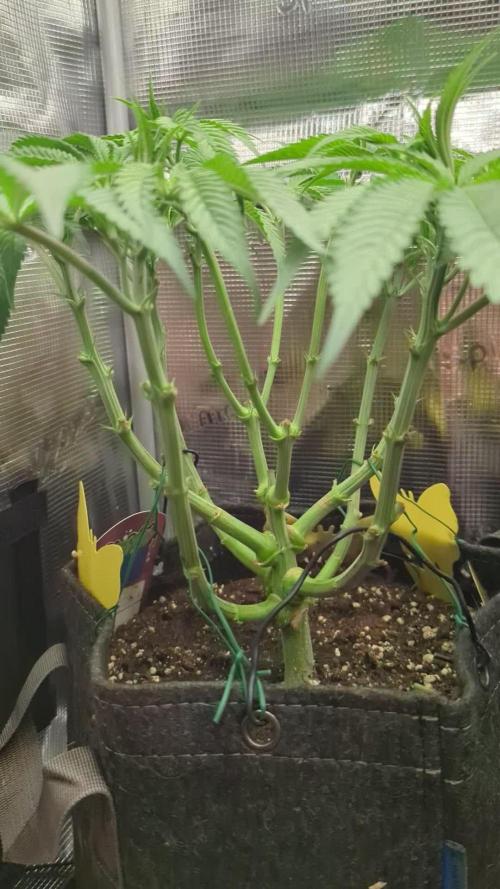
Holy Snow - Greenhouse Seed Co.
Day 60
🚿 watered twice this week, with 2L of RO tap water, mixed with the defined nutrients, individually, in order and pH'd to 6.3. I've upped her nutrients again, increasing the bloom nutrients as she is now on a 12 hour light schedule 🙏🏻
✂️ No work performed on her this week, as she has just switched to a 12 hour light schedule and will enter the stretch phase soon; so I don't want to stress her too much in this phase 👍🏻 She has a nice level canopy, so hopefully she stretches evenly now too 🤞🏻
🌸 I gradually reduced the light hours from 18 to 12 over the last few days! She will now remain on the 12 hours of light for the rest of her life cycle 👌🏻

Processing
Likes
39
Share


@DjDaveAtHome
Follow
Started LSTing. We'll see what a few weeks does to them! Growth is vigorous in DWC.
Noticed that the DinaMed's PH was dropping drastically over 24 hours. PPMs were way up at 1100. Diluted the solution by two thirds and re PHed her.


Likes
42
Share


@rhodes68
Follow
Four plants in all eventually
1/31 First of the Bond harvests, Pussy Galore first of the FFT-7s, two more follow.
Pussy Dry weight 312 grams
3/5 Holly 665 grams wet into dry - dry 98 grams
Two more F7s to go
3/25
Pussy-1 clone yields 1107 grams wet in dry --- dry yield 181 grams
One FFT-7 Remains Pussy-2 buds look a bit larger
3/28 Pussy-2 wet weight 1295 grams in dry. 242 grams dry. This concludes the FFT-7 harvests


Likes
27
Share


@RDWCGrowing
Follow
6/13/2023
Week 10- Day 1 of Flower (Day 131 overall) (Day 70 of Flower)
Auto Pilot Day 6.. Checked the Trichomes and the bud density and both are looking good.. Definitely needs a little more time for the Trichomes to be where I like, so based on my check I think we are still looking right around the end of the competition 22June to be done and ready for harvest. I do like that the fade is coming in the leaves nicely, so my chart I think is dropping off the Nitrogen exactly like it is supposed to.
6/14/2023
Week 10- Day 2 of Flower (Day 132 overall)
Auto Pilot Day 7.. Decided I would take some contrasting pics today with my light up to 100 and my light all the way on Dim. I hope you enjoy the pics.
6/15/2023
Week 10- Day 3 of Flower (Day 133 overall)
Auto Pilot Day 8.. Decided to take a look at the Trichome's today and Check to see where they are at and honestly if I might ho ahead and start my flush tomorrow and harvest on Sunday.
6/16/2023
Week 10- Day 4 of Flower (Day 134 overall) (Day 74 of Flower)
Today I pulled an Armageddon however instead of darkness they are going to get 48 hours of light. The reason why they are going to get light instead of dark is when I was taking out the netting a lot of the buds were so heavy they fell over and exposed some areas I really want to get some light to... so 48 hours of light at 40% while I watch what should be a beautiful final fade as the plant eats up the last Nutes. If anything goes wrong I can abort take the photos and cut so will pay really close attention to how it is looking over the next 48 hours.
Added 30 Gallons of PH only Water.
Reduced Lighting to 40% removed program time off. 48 hours of light.
6/17/2023
Week 10- Day 5 of Flower (Day 135 overall) (Day 75 of Flower)
I had someone tell me that a few growers had done as I did and Gone Armageddon on the plants. Filling it with PH only and said the plants did not respond well and they were taken out of the comp at the very end because they felt like the pictures just wouldn't come out right. Even though I did go Armageddon, The PPM is at 353PPM with the residue of what was left in the buckets after draining as well as what I am getting from the TAP so I think they are doing good but I am checking them every few hours to see how they seem to be doing and I think they are doing good still and are on track.
I also started prepping the area for the pics tomorrow
T-24 Hours until Chop
6/18/2023
Week 10- Day 6 of Flower (Day 136 overall) (Day 76 of Flower) (Harvest Day)
What a day.. what a day.. what a day.. as I was setting up and trying to figure out how I was going to get my pics #3 stems started breaking, it fell over and other stems broke.. So no really stunning competition photo for her, she had such a nice purple fade.. #2 stayed up in the Tent so that is the one I had to go with to submit for the contest. I wet trimmed them as they went into the tent and they took up three rows hanging in tent. I also decided I wanted to try some so I put a little in the freeze dryer for a 48 hour smoke test.. I will weigh it and add that to my total weight for the plants when it is all done.

Likes
9
Share


@Arcadios
Follow
This week, I'm going to keep closer tabs on daily activities. All plants are showing signs of deficiencies.
Monday 1/18 - "Flushed" all plants with Clearex. I did about 2.5 gallons per plant and I normally water about 1. I think in general, I'm going to up my watering from here on out if they survive.
Tues 1/19 - No watering. Still got a good bit of moisture in the pots. All three plants look a bit healthier.
Wed 1/20 - All plants healed by Biden lol. Just in case that fails, I top amended with FFOF mixed with like 2 tbs of Dr Earth, spread across soil for all 3 pots. I watered 3, 3gallon plants with 5 gallons total. Apx 1.5 gallons per plant and they all ran off. Plants looking healthier than they did pre-flush, but I think i'll need to go ahead feed the full amount of Dr Earth at the start of week 9.
Thurs 1/21 - Plants are looking pretty good. Critical Kush leaves are turning a bit purple, could be phosphorus def.
Friday 1/22 - Normally I would have watered, but the top 2 inches felt damp and the moisture meter shows 2-3 towards the bottom. Gonna give it another day
Sat 1/23 - Feed and watering time! I went ahead and did 4 Tablespoons of Dr Earth Life in each 3 gallon pot. The most I've fed to date.
This week seems to have been recovering fairly well. Check out the video for a decent tour. In the video I said I fed 4 teaspoons, but it was tablespoons. 😵


Likes
9
Share


@Green_Friends_Inc
Follow
Commencing Week 8: day 50 on January 19th
Update is late my sincerest apologies. I will make it up by giving a very thorough smoke report when all is done.
Otherwise all is going very well 😁😁👏👏
On day 50 I took the head off of bloody skunk.
I checked trichome colors under USB microscope. At least 90% fully milky-white with maybe 5 or 6% Amber and the remainder clear. 😁
On day 55 I gave all of the plants a fan leaf trim including the remaining bottom half of bloody skunk. as I sit here and think about it I believe this will help with ensuring the entire plant ripens and matures at the same time - versus the tops being ready before the bottoms.
I still plan on letting the bottoms of all these plants go way beyond the recommended time to see if I can initiate the process of rodelization. Either way I am glad to report that Bloody skunks pollenization looks like it is resulting in some seeds. (See photo). In hindsight my only concern is that because the plant finished a bit earlier than I expected the seeds may not make it to full maturity but I believe it should be okay we'll just have to wait and find out.
That being said besides the bloody skunk being done just a few days early everything else seems to be right on time as described in plant profiles on company websites.👍
That's all for now thank you for your patience and attention and support and as usual feel free to leave any suggestions comments or questions and I'll do my best to get back sooner rather than later 😁
Likes
5
Share


@CzAlmighty
Follow
Hello growers,💚
beautiful and strong plant .No problematic flower.🦍🦍🦍 Hnojení jednou týdně . Občasné pro oddělení půdy .

Likes
13
Share


@Regulator3000
Follow
Overall this was a wild grow. Had some ups and downs, trial and error, but at the end of the day I learned a lot and I’m going to keep on trying new things. Wish the solo cup challenge was still going on I totally would have won.