


Likes
Comments
Share


@Goldenbags
Follow
29/3 the grapefruit is coming along nicely, buds actually smell like grapefruit! Lsd is so impressive! it’s on fire! The west coast ogs are still quite a bit behind..looking online, a lot of people seem to get these buds growing huge! Hopefully they get there.. BCN critical xxl popped 1 day after the LSD but has been the slowest to flower..It's just going into flower now.
Light has been at 75% for the last week or so and is at around 23inches above. Have been feeding all plants alternating water/feed/water/feed 1 litre every 2-3 days. So far so good!
4/4 bcn critical xxl isn’t looking very happy at all..she’s fully flowering now but all of her new growth has been loooking droopy for the last week…not too sure what’s up there..


Processing
Likes
7
Share


@gablmo
Follow
Another week with a lot of studing in order to understand what's going on, to then take the proper action. It hasn't been easy, most of the time I have no clue of what the plants are doing. I tried some fimming last week to help even the canopy but it didn't seem to work. Two of them are smaller than the others, I took the smaller one out of the center of the light to give the chance to the others to get more light since it wasn't growing at all due light burn, and one of them was too far from the light, so now is very stretchy. They have been growing fast, any suggestions on how to train them? I think is time to get a new light. I'm thinking about getting a HPS 600 watts, what do you think?

Likes
27
Share


@MrJones
Follow
OSS Cheese XXL
🔹⊱╮🔹╰⊰🔹 GROW Started 03.10.24 INFORMATION 🔹╰⊰´🔹⊱╮🔹
🌞Environment - Maintaining 80F and 65%Humidity
🌾Training - These ladies are Pruned and Defoliated and ready for flower.
⚱️2-Gallon 📊6.2 PH
💧 Feeding - Using Horti Grow 8-11-21, Bloom 5-15-26, Late Bloom 0-24-26, Cal 12-0-0
🌞Medic Grow Smart 8 760 Watts
🕷️ IPM - CannControl from Mammoth and Mosquito Bits as needed
🔹⊱╮🔹╰⊰🔹 GROW Started 03.10.24 INFORMATION 🔹╰⊰´🔹⊱╮🔹
🌞Environment - Maintaining 80F and 65%Humidity
🌾Training - The girls are recovering from last week's Pruning and Defoliation,
⚱️2-Gallon 📊6.2 PH
💧 Feeding - Using Horti Bloom and Horti Cal 12-0-0
🌞Medic Grow Smart 8 760 Watts
🕷️ IPM - CannControl from Mammoth and Mosquito Bits as needed
🔹⊱╮🔹╰⊰🔹 PLANT UPDATES 🔹╰⊰´🔹⊱╮🔹
📝 Notes - I am still not getting the vertical growth that I want before I flip, so I changed my light cycle to 18/6 and will be doing another defoliation and pruning of a few side branching - remember I am looking for tall plants with little horizontal growth.
📝Fertigation injects fertilizers into an irrigation system to supply dissolved nutrients to crops.
🗓️04.20.24 Today, I flipped the ladies into flower. I Have let them veg out as much as I feel the grow space can handle. I am sure there will be a bit of pruning and super cropping in the near future. These girls will grow untouched other than the 2x daily fertilization, but I am switching out the Horti-Grow with the Horti-Bloom, feeding at Hort-Bloom @ 2.7 GRMS Per Gal and Horti-Cal @ 2.5 GRMS Per Gal.
🗓️04.21.24 Today fed with Hort-Bloom @ 2.7 GRMS Per Gal, and Horti-Cal @ 2.5 GRMS Per Gal.
🗓️04.22.24 Today fed with Hort-Bloom @ 2.7 GRMS Per Gal, and Horti-Cal @ 2.5 GRMS Per Gal.
🗓️04.23.24 Today fed with Hort-Bloom @ 2.7 GRMS Per Gal, and Horti-Cal @ 2.5 GRMS Per Gal.
🗓️04.24.24 Today fed with Hort-Bloom @ 2.7 GRMS Per Gal, and Horti-Cal @ 2.5 GRMS Per Gal.
🗓️04.25.24 Today fed with Hort-Bloom @ 2.7 GRMS Per Gal, and Horti-Cal @ 2.5 GRMS Per Gal.
🗓️04.26.24 Today fed with Hort-Bloom @ 2.7 GRMS Per Gal, and Horti-Cal @ 2.5 GRMS Per Gal.
╰⊰🔹╰⊰´🔹⊱╮🔹╰⊰🔹╰⊰🔹STRAIN INFORMATION🔹⊱╮🔹╰⊰🔹╰⊰🔹╰⊰🔹⊱╮
Cheese XXL cannabis seeds are a special blend of Afghan Kush x Super Skunk producing the most pungent dank weed. Cheese XXL is the third commercially available edition released by Original Sensible using and developing these Afghan and Skunk genetics. The first release of these genetics was their Skunk Afghani. The second improved version was Stinkin' Bishop which had an improved and more potent THC content and was more pungent in terms of smell. Now the third and improved release on a similar theme is this Cheese XXL which has a similar THC content but with an improved heavier yield. The smoke is incredible with an outstanding flavour of pungent skunk and spicy, extra strong mature cheese created by the dominant terpene myrcene with its strong earthy scent accompanied by caryophyllene and pinene which combine to create a peppery acrid cheesy odour. THC levels are exceptionally high in this Cheese strain and the effect is well-balanced creating mental and body relaxation with a remarkable alleviation of stress and depression.
The strong pungent aroma starts early in the flowering period, if you're growing Cheese XXL indoors you'll need plenty of ventilation to disperse the stinky "road kill" aroma of these babies! Cheese XXL is a Cheese strain particularly suited to indoor setups but also thriving well outdoors these feminised marijuana seeds are incredibly resistant to mould and disease and produce a substantial harvest that both the professional and amateur growers alike can easily achieve. These Cheese weed seeds are outstanding, break open the buds ready for use and you'll see why, the stench will make your eyes water!
Cheese XXL from Original Sensible Seeds is a great choice to break into the commercial market of growing cannabis so if you're looking to buy something special with extreme yield, potency and flavour then Cheese XXL cannabis seeds are simply the best choice

Likes
24
Share


@Jays_Not_Here_Man
Follow
The Apple Betty babies are doing great 😊 I’m very pleased with the results so far, I just wished I would have known they would have such a large stretch, they D almost doubled in size in 14 days.
At day 8 I stopped tucking the branches and allowed them to grow up. In hindsight, I probably should have kept going for another couple of days. They continued to stretch rapidly all the way up to date 12 or so, much more than my other strain that I have going as well.
At day 10 I cleaned up some of the small bud sites and leaves that were below the 1st trellis. These sites do not get enough light to make anything good, and take away energy from the main tops as they grow and compete. A quick snip here and there will really help the end result.
At day 13 I decided to add a second trellis net to provide support to the tops that came up so fast. They seem to have stopped their main stretch faze, and are looking happy and healthy now. I’ve continued my water, water, feed schedule and have not seen any cause for concern. The girls are taking a little over a gallon of water every 72 hours at this point.
Humidity is being controlled automatically with my in-line fan and humidifier. RH is set to 57% and temps hover between 77-80 degrees with lights on, and about 70-72 with light off thanks to my furnace being back on for the cooler temps.
The 2x4 5 gallon girl is doing great as well. 😊During the stretch, she flourished just as the girls in my big tent did as well. She is going to have some great bud, the branch structure is nicely developed with tight node spacing and large tops.
I’ve been plucking off all the lower growth, and tucking leaves as they block bud sites. I will be doing a defoliation next week. Happy Gardening 🇨🇦👊❤️

Likes
9
Share


@newenglandgrowers
Follow
Another successful week plants aren't dead. Did some more defoliation this week to allow light to penetrate the smaller colas at the bottom of the canopy, still haven't found a feeding schedule that works for me, going to cut my feedings in half next week because I'm starting to see some minor nute burn on the leaf tips. Good week though I'm pleased with it onto week 10/week 5 of flower!


Processing
Likes
5
Share


@PETEROG
Follow
Hey everyone at week 4 know and wow have these girls grown early this week I applied some LST and all took really well to say it was my first time trying this
Likes
25
Share


@DrGanj
Follow
This plant was a dream to grow, wish I'd taken cuts. Halfway through dry at 7 days. Drying at 55 - 60 % RH and 17 - 19 degrees C. I anticipate she'll be done between 10 - 14 days total dry time and I'll then trim and update weights on this Harvest.
133.75g total after trim. She's a nice smoke, very happy.
Likes
23
Share


@adam_pawloski87
Follow
Today is day 71 for these ladies and they are doing just amazing! Stacking up densely with a Very sweet smell , I still get hints of vanilla ! Not to much longer to go these girls few more weeks an they should be done! Stay tuned for next week ! ✌️
Likes
15
Share


@MrRaid
Follow
She grows with ease she doesn't need extra attention all she needs is feed and light
Likes
25
Share


Likes
3
Share

@Bobaloo
Follow
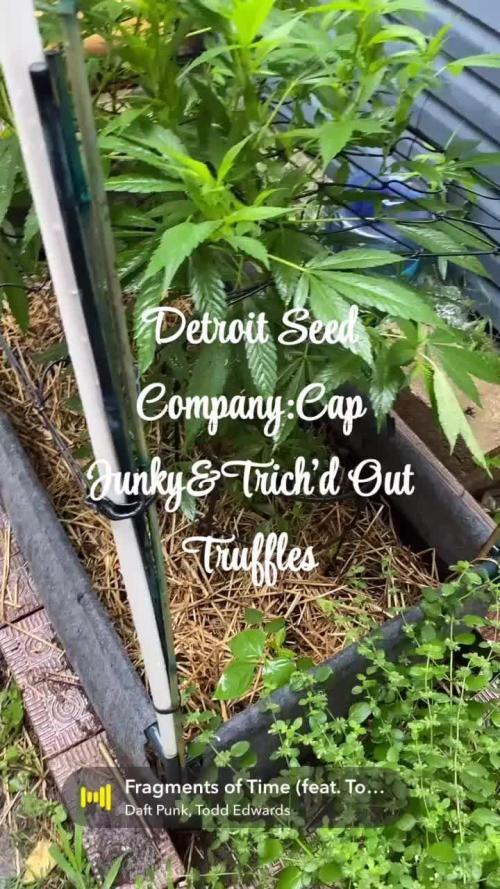
Hoping these do well all my seedlings went downhill fast
Took 15 clones today at 6:30 am
🕰️ Best Time to Start Your Cloning & Defoliation Ritual
🌄 Ideal Window:
Start between 6:30 AM and 10:30 AM ET
This time aligns with:
• Pisces Moon energy still strong
• Cooler temps and higher plant hydration (better clone success)
• Rising sun = energetic ascension (matches your “ascending leaf” flow)
• Moon still waning = perfect for rooting

Likes
27
Share


@RDWCGrowing
Follow
3/4/2023
Week 3- Day 1 of Veg (Day 31 overall)
Water Change out Day
36 Gallons in
CalMag = .5Mil/Gal = 18Mil
FloraMicro = 4.2Mil/Gal = 151Mil
FloraGrow = 3.8Mil/Gal = 137Mil
FloraBloom = 3.0Mil/Gal = 108Mil
PH DOWN = 1.72Mil/Gal = 62Mil
PPM = 546
PH = 5.88
This Grow has definitely been an interesting grow I have been playing with Over or Under since the beginning and it all started with me drowning the plants by adding too much water. I will have to make sure I watch that on all my future grows. I prayerful that this week will get me fully back on track, in my previous grows using my chart, I haven't had any issues during this week, so again prayerful that this is the week I am back on point.
3/5/2023
Week 3- Day 2 of Veg (Day 32 overall)
ROOT ROT!!!
I guess from when I drowned it I caused a lurking issue that really showed it's head today. The roots were looking not slightly bleached but looking black. I cut out what looked dead and I had to run to the local Hydro shop to pick up some items to see if I can fix it and strengthen the plants.
I picked up Mammoth Silica, ORCA, and ROOT Drip.
I completely drained the system and started it over today as well.
38 Gallons In
Mammoth Silica = .5Mil/Gal = 19Mil
CalMag= .5Mil/Gal = 19Mil
Root Drip = 1Mil/Gal = 38Mil
FloraMicro = 4.2Mil/Gal = 160Mil
FloraGro = 3.8Mil/Gal = 144Mil
FloraBloom = 3.0Mil/Gal = 114Mil
Orca = .5Mil/Gal = 19Mil
PH Down 60 Mil = PH 5.83
I also had to run by Staples I realized the paper I was using wasn't the right brightness and Lbs for the Photon App. What I needed to have 22Lbs 98 Bright. I recently saw a comparison of the different weight papers against a several hundred dollar Apage PPFD detector and with the right paper it was almost exact readings. With that my PPFD 355.
3/6/2023
Week 3- Day 3 of Veg (Day 33 overall)
Still alive!! #2 and #3 are still alive and it looks like no further damage to any of the leaves.
#2 needed 1 node topped. I will keep monitoring day to day.
3/7/2023
Week 3- Day 3 of Veg (Day 34 overall)
Well Both appear to be doing all right. I cut off the offensive leaves from #3 nothing new on shown on the leaves. I actually needed to top 1 node on #2. PH is stable, Temps are stable.. I will be changing out the water and Nutes on Saturday not waiting the 2 weeks.
3/8/2023
Week 3- Day 4 of Veg (Day 35 overall)
Well Both appear to be doing all right. I actually needed to top 1 node on #3 and 2 on #2. PH is stable, Temps are stable.. I will be changing out the water and Nutes on Saturday not waiting the 2 weeks. I think the additives are truly making a difference I think I will be adding them to all my grows from here on out.
3/9/2023
Week 3- Day 5 of Veg (Day 36 overall)
Both still appear to be on the mend Still some dark brown on a small part of the roots and I don't know if those are just dead but it doesn't look like it is spreading and I see a bunch of new roots forming. Nothing new on the leaves at all. So I think the trio that I added is helping. The plants also seem to be in raised happy position going towards the light. I still plan to change the water on Saturday and go from there.
3/10/2023
Week 3- Day 6 of Veg (Day 37 overall)
Moved the light up to 41 1/2" so 3' 4 1/2" away from the top of the Plants.
PPFD= 363
Power on my Light =62.5
Water Temp is holding steady=70.3
PPM= 534
PH= 5.92
Tent Temp= 72.5
Humidity= 50-60% I have 2 humidifiers running on INK Bird controllers monitoring it 24/7.
I will be changing out the water tomorrow even though I could let it go an extra week but I am still concerned that the Root Rot is clearing up and I don't want to risk it coming back. I want fresh Nutes/ water in the tanks.
I topped 2 nodes on #3
I topped 3 Nodes on #2
I also cleaned out some of the bottom third portion that isn't getting much light and not much growth at all.
#2: 8 1/2" tall, 18" Wide
#3: 7 1/2" Tall, 15" Wide

Likes
7
Share


@StonedandSteady
Follow
Happy Easter Everyone!!! Everything is Great and Growing Up Extraordinarily Nice and Divinely Outstanding!
#PabloEscobar and #Opium *Fem* #SalamiLegF3P's1&2 and #FireAlienRomulan Trained Out and Looking Super Tight, it was a Breeze and Super Easy to using those Pipecleaners to Train them with #TheGrowBags from Broski #www.as420.ca
#PabloEscobar *Fem* breed by #DivineSeeds #DivineSeedsSquad #DivineSeedsBreedingCompany Topped and Looks Spectacularly Gorgeous!!!
Origin:Canada/Columbia
Type:Indica/Sativa
Flowering:71 Days
THC:>25%
Harvest:700 g/m2
Height:180-200 cm
She's Awesomely Trained, Topped and Strengthening out while spreading her Wings to fill her 10 gallon Grow Bag from Broski #www.as420.ca in 8 Weeks of Veg!
#Opium *Fem* breed by #DivineSeeds #DivineSeedsSquad #DivineSeedsBreedingCompany
Origin:Afghanistan
Type:Indica/Sativa
Flowering:63 Days
THC:29%
Harvest:1000 g/m2
Height:150-205 cm
Getting Trained out into her 7th Week of Veg and Looking Mighty Fine!!! She's getting Humongous and Hearty in her 10 gallon!!!
Yo!!!
#SalamiLegF3
Romberry×GarlicBreath-
Romberry: Indica Dominant Hybrid70% Indica / 30% Sativa
THC: 19% - 21%
Romberry is a rare indica dominant hybrid strain (70% indica/30% sativa) created through crossing the classic Romulan X Blueberry strains!
GarlicBreath: Indica Dominant Hybrid70% Indica / 30% Sativa
THC: 16% - 18%
Garlic Breath is a super rare indica dominant hybrid strain created through crossing the powerful Hogsbreath X Chemdog D BX2 strains!
Check it Out my fellow Growmies and Growmets! That's what I'm talking about #thehumancannabinoid Broski!!! Great Genetics that popped out in under 36 hours! Your #DankFlowGenetics are The Real Deal and some Kill! Lol I Totally love them and Can't wait to see these in Action! Your a Fantastic Friend and my Brother Indeed!!! It's a Pleasure working with you! I Hope that Everyone will Go over and Spread That Love to you on your #EastCoastSeedBank Website and Instagram! I'll most definitely have his Links posted down Below⬇️! I'm starting the Training process on my Cannabis plants and thier Loving it and Enjoying Life! These Cannabis plants are Camping out in the Closet for a week or so! Lol
This is my 2nd run using the Osree.Light QB1000w and Everything is Mesmerizing!!!
My Opium and Pablo Escobar *Fems* from #DivineSeeds Regs: SalamiLegF3's×2 and FireAlienRomulan look$ Outstandingly Awesome and Growing Up Phenomenally Fine into thier 8th week of Veg in our 2- 10 gallon The Grow Bags from Broski #www.as420.ca and also 2- 5 gallons as Well! I 1st started with my FireAlienRomulan breed by Broski #AlienBloodGenetix and on my Opium breed by #DivineSeeds which are Growing into thier 8th Week of Veg and also Defoliated the lower leaves from every Cannabis plant! I threw in a few #ProGrowerTipz throughout as Well! I'm always sharing and hoping to Help everyone else with what I've learned along the way on my Journey! Teacher teaching with his Teaching Techniques!!! These Sunflowers×5 and The 5 Brand New and Fresh Starts are Wonderful with a Huge Hint of Fantastical Fire is my #SalamiLegF3×2 by Broski #thehumancannabiniod #DankFlowGenetics #EastCoastSeedBank #FireAlienRomulan by Broski #AlienBloodGenetix my #PabloEscobar and #Opium by Team #DivineSeeds #DivineSeedsBreedingCompany Growing under our #Osree QB1000w and #GrowStarStore Kokokala QB1000w with #TNBNaturals The Enhancer Co2 Despersal canister and ph'd them w/ Declorinated watering w/ TNB ph Up and Down! Totally Top Quality Topz all Around! I had to Throw two of my Broski's some Shout Outs for sharing, showing and explaining the Benefits of Growing Lavender×3 and other Companion plants with our Cannabis Treez! Thanks Again! #DaHomieGnomie #MOJOGREENGROW #thehumancannabiniod #AlienBloodGenetix #divineseeds #divineseedssquad #divineseedsbreedingcompany #HarleyGrower #GallowGlas420 #TNBNaturals #XtremeGardening®️ #ThrivingDesign Family's and Teams!!! Your Genetics are Merry Magnificent, Mega Marvelous and Mighty Medical! Love um!!! I really Can't stress enough how Thankful and Grateful I am of All of you and what you've Shared with Us! Means the World!!! It's definitely a Pleasure being able to Grow with these Phenomenal Grow Lights! Please Enjoy! BudBrothers4-Life! Cheers Famz!!! Much Props and Much Topz!💯🔥 #Osree #GrowStarStore #Growatt #TNBNaturals #TNBTeam #GrowYourOwn #Bliss
https://instagram.com/osree.light?igshid=1cftlnsvta4w2
https://instagram.com/thehumancannabinoid?igshid=17k159pumklkq
EastCoastSeedBank Website Link: https://ecseedbank.com/
https://www.instagram.com/alienblood_genetix_official/
https://instagram.com/tnbnaturals?igshid=1brotdb4385sz
https://instagram.com/divine.seeds?igshid=osxe2v7en33v
https://instagram.com/as420.ca?igshid=1t8j7pcf3aw2p
The Grow Bags: https://www.as420.ca/en
DaHomieGnomie YouTube channel Link: https://youtube.com/channel/UCIJIuuCRm84DXjHYw4j4_CA
https://instagram.com/dahomiegnomie4562?igshid=1cfhekzfa56tu
MOJOGREENGROW YouTube channel Link: https://youtube.com/c/MOJOGREENGROW
https://instagram.com/mojogreengrow1?igshid=1p7pgxh779om
https://instagram.com/gallowglas420?igshid=qzzp2y5llzuj
https://instagram.com/harleygrower?igshid=ndy7zh8y0k5g
https://instagram.com/beardedbudbrothers?igshid=dpow775jzr5j
https://instagram.com/xtremegardening?igshid=1w077ypflhb3t
https://instagram.com/thrivingdesign?igshid=vqhwa4k8ts9g

Likes
7
Share

@Samsationalseeds
Follow
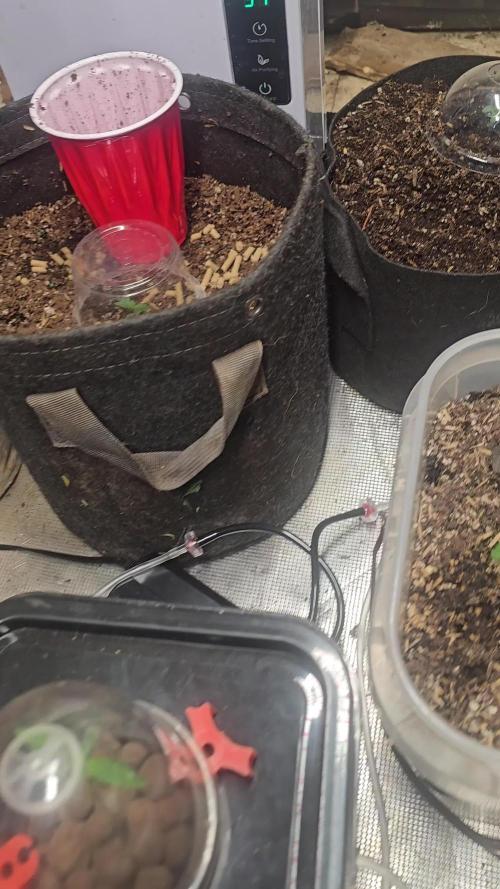
Week 3 most of the photos are in the plastic containers to grow in before being transferred outside
Likes
21
Share


@Growin_it
Follow
Probably sleep one of the plants in darkness for a couple of days and harvest midweek. The other plant can wait another week.
Both plants smell lovely.


Likes
6
Share

@DogDoctorOfficial
Follow
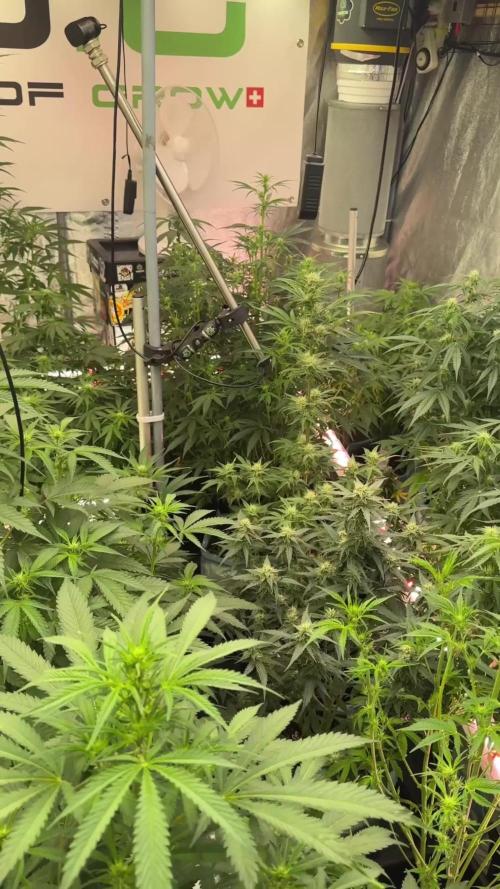
🌿 Amnesia Skunk Automatic
Week 8 From Seed
≈ Week 4 Flower (12/12 From Seed Run)
She may be 8 weeks old, but biologically she’s in her fourth week of active flowering — and she’s behaving exactly like a plant that has found her rhythm.
After defoliation?
She bounced back like nothing happened.
No stall.
No stress signals.
Just structure, stacking, and deep healthy green.
That’s not luck. That’s environment + balance.
And she’s beautiful.
⸻
Environment — Playing on the Edge (But Controlled)
Room Conditions
• Canopy Temp: ~28°C
• RH: ~70%
• CO₂: 1000+ ppm
• PPFD: 800 → 1300 µmol/m²/s
On paper, 28°C + 70% RH sounds high.
But numbers without airflow mean nothing.
Massive Airflow
We’re running:
• Strong horizontal movement
• Vertical air displacement
• Active air exchange
• Under-canopy circulation
Airflow changes everything.
Stagnant 70% RH is dangerous.
Moving 70% RH behaves very differently.
⸻
🍃 Leaf VPD vs Room VPD
Room VPD says one thing.
Leaf VPD tells the real story.
Under strong light, leaf surface temperature runs slightly above ambient.
That increases transpiration.
Add 1000+ ppm CO₂:
• Stomata don’t need to open as wide
• Photosynthesis rate increases
• Plants tolerate higher humidity
• Metabolism stays high
That’s why they’re not just surviving.
They’re pushing.
⸻
💡 Lighting Strategy — Scaled to Structure
We are not blasting everything equally.
• Larger tops: up to 1300 µmol
• Smaller plants: ~800 µmol
Light intensity is matched to plant size and leaf mass.
No ego lighting.
Only usable photons.
⸻
🔦 Under-Canopy Lighting — Why?
This isn’t a gimmick.
Purpose:
• Illuminate lower bud sites
• Reduce larf
• Stimulate lower-zone photosynthesis
• Improve uniformity
• Keep lower canopy metabolically active
We’re not replacing top light.
We’re filling in where dense canopy blocks energy.
Active lower buds stay healthier.
Healthier lowers improve airflow.
Better airflow stabilizes microclimate.
Everything connects.
⸻
🔴 End-of-Day Red (15 Minutes After Lights Off)
We run a 15-minute red pulse at lights-off.
This is phytochrome management.
Plants operate with two main phytochrome states:
• Pr (red-absorbing)
• Pfr (far-red absorbing)
Red light pushes phytochrome into the active Pfr state.
In darkness, Pfr slowly converts back to Pr.
By giving a short red signal:
• We influence phytochrome equilibrium
• Support flowering signaling
• Encourage structural consistency
• Potentially stabilize transition timing
It does not extend photoperiod.
It manipulates light signaling — not day length.
And as always:
We experiment.
We observe.
We document.
No magic claims.
⸻
🌱 Feeding & EC — They’re Hungry
• Soil EC: 0.9
• Feed EC: 2.4
This tells us something important.
They’re eating aggressively.
As long as runoff EC stays stable and does not climb:
We maintain strength.
High metabolic demand requires high input.
If soil EC rises?
We adapt immediately.
No rigid formulas.
Only feedback-based decisions.
⸻
📸 Visual Observations
From the traditional full-plant shots to the macro work:
• Tight stacking beginning
• Strong pistil development
• Leaves praying under high PPFD
• No signs of stress after defoliation
• Structure clean and symmetrical
She is balanced.
And balance is power.
Oh that topping was an accident wen moving her 🙏
📡 DELETED @ 1K Please stay tuned.we never quit https://www.youtube.com/@DOGDOGTHEDOCTOR NEW
🙏 Thank you for your patience and continued support.
FOR DISCOUNT CODES AND MORE JUST FOLLOW THE LINK https://website.beacons.ai/dogdoctorofficial
📲 Don’t forget to Subscribe and follow me on Instagram and YouTube @DogDoctorOfficial for exclusive content, real-time updates, and behind-the-scenes magic. We’ve got so much more coming, including transplanting and all the amazing techniques that go along with it. You won’t want to miss it.
GrowDiaries Journal: https://growdiaries.com/grower/dogdoctorofficial
Instagram: https://www.instagram.com/dogdoctorofficial/
YouTube: https://www.youtube.com/@dogdoctorofficial Deleted by Youtube
Vimeo : https://vimeo.com/dogdoctorofficial Under construction stay tuned ⸻
Explore the Gear that Powers My Grow
If you’re curious about the tech I’m using, check out these links:
🔆 Lighting & Environmental Control
• Future of Grow — Advanced LED lighting technology
https://www.futureofgrow.com/
DISCOUNT CODE: DOG20
• Lumiflora — Under-canopy LED lighting
https://lumiflorade.com/
• TrollMaster — Environmental controllers and automation gear (past collaboration)
⸻
Genetics
• Zamnesia Seeds — Genetics used in this project
https://www.zamnesia.com/
⸻
🌱 Soil, Substrates, Boosters & Root Support
• Plagron — Substrates, bio mixes, and supportive products
https://plagron.com/en/
⸻
🎒 Storage, Curing & Preservation
• Grove Bags — Curing and storage solutions
https://grovebags.com/
⸻
📸 Photography Equipment & Tools
(Not sponsors, but part of my creative toolkit)
• Sony A6700
• Sony full-frame macro lens + few more
• Stacking photography workflow - learning
• iPhone (for behind-the-scenes shots)
We’ve got much more coming as we move through the grow cycles. Trust me, you won’t want to miss the next steps, let’s push the boundaries of indoor horticulture together!
As always, this is shared for educational purposes, aiming to spread understanding and appreciation for this plant. Let’s celebrate it responsibly and continue to learn and grow together.
With true love comes happiness. Always believe in yourself, and always do things expecting nothing and with an open heart. Be a giver, and the universe will give back in ways you could never imagine.
💚 Growers love to all 💚
📸 P.S. – The Eye Behind the Lens
All photos in this diary (for now — except for the ones showing the camera, which I took with an iPhone) are taken with a Sony A6700 paired with a Sony full-frame macro lens and a few more.
Photography is part of the story — it’s how we share the fine textures, the glow, and the quiet details that words can’t always capture.
I’ve also started experimenting with photo stacking — a technique where multiple images, each taken at a slightly different focus point, are layered together to create one perfectly sharp image from front to back.
It’s not digital enhancement or AI; it’s pure photography — a way to reveal the plant’s beauty in microscopic depth, from trichome to petal.
You’ll even see a few shots of "ghost me" capturing the shots — camera, lens, setup — because every grow deserves not just to be cultivated, but documented like art.
FOR DISCOUNT CODES AND MORE JUST FOLLOW THE LINK https://website.beacons.ai/dogdoctorofficial
NEW DISCORD - Official Server Invite Link : https://discord.gg/ksjAkA5T74

Likes
14
Share


@ConspiracyFly
Follow
Week 10 Amnesia
Amnesia 1 (Seedstockers)
With LST
6 weeks of flowering (66 days)
It has 55 centimeters
14L
LED 25 cm
LUX 59.000
This week through carelessness I broke a branch
Amnesia 2 (Seedstockers)
Without LST
4 weeks of flowering (62 days)
It has 60 centimeters
14L
LED 20 cm
LUX 70.000
Gorilla Cookies Auto (Fast Buds)
5 Week (38 days)
It has 11 centimeters
16L
LED 56 cm
LUX 25.000
This Week - Defoliation and LST - Pre-flowering
Godzilla Cookies (Herbies)
4 Week (28 days)
It has 9 centimeters
15L
LED 60 cm
LUX 24.000
This Week - Defoliation and LST
Gorilla Glue Auto (Herbies)
1 Week (5 days)