


Likes
Comments
Share


Processing
Likes
4
Share


@Andres
Follow
she grows outdoor ... without any relevant information ... only her vegetation is slow ... it's autumn ... and the sun is not very strong ...

Likes
11
Share


@ganjaman24
Follow
It’s bern roughly two months these guys have been growing! Lst’d Both but untied the gg because I wasn’t sure she was benefiting from it so I’m going to do it over. These ladies (I hope) will start their flower journey next week when I revive my new flower tent 😎..stay tuned for some epic buds..I hope!!

Likes
13
Share


@Yiyis_Grow
Follow
Bestva Quantum Board LM301B / Mr Hide seeds
Semana de agua reposada únicamente. Están casi totalmente amarillas, lo que indica que se han lavado bien.
Flores compactas, sanas, olorosas y pegajosas.
Semana de cosecha 🤙🔥

Likes
2
Share


@Glizzy420
Follow
Last auto i'll grow , autos are actualy good for fast and not so heavy stoners , my yield is good but not the way i want it , so i'll keep improving my shit , starting with femenised seeds next run also a blueberry , first femenised im going to use , so lets hope it will have a better harvest. Overall this autoflower blueberry yielded the most of all my autoflowers , dense buds , good quality and very fruity smoke!

Likes
12
Share


@2Stones1Bird
Follow
Checkout my Instagram @smallbudz to see the Small budget grow setup for indoor use, low watt, low heat, low noise, step by step.
27/02/2020 - Gave her 1.5l of RO water.


Likes
50
Share


@DogDoctorOfficial
Follow
Eternity Grow Cup - Week 7 Veg Report
Another week down, and what a week it has been! Our Runtz ladies are thriving, pushing forward in their vegetative stage with strength, beauty, and some seriously impressive root development. This week, we officially transplanted them into the Autopots, and let me tell you—the roots are stunning.
Root Health & Mycorrhizal Magic
The mycorrhizal fungi have been doing their thing, and it's truly a sight to see. When transplanting, I could clearly see how beautifully the roots had colonized the medium, forming a healthy, snow-white network that fully surrounded the pot. The Aptus Holland Mycormix is once again proving itself as an absolute game-changer in root development. Strong, well-established roots mean better nutrient uptake, stronger resistance to stress, and overall improved plant health. If you’re serious about growing, this is something you don’t want to overlook.
Aesthetic Update – Pink Vibes!
Yes, I know, I know—the pink background is still here, and I’m absolutely loving it! It’s giving the photos that extra pop, bringing out the vibrancy of the plants, and making every shot feel unique. Hope you all are enjoying these visuals as much as I am!
New Home - TrolMaster Ecosystem
This week also marked another major move—the plants officially transitioned into the TrolMaster Ecosystem. And guess what? They are absolutely loving it! With optimized climate control, precision automation, and a perfectly dialed-in environment, these plants are thriving under their new conditions.
Current Environmental Conditions:
Room Temperature: ~20°C
Relative Humidity: ~67%
CO2 Levels: ~1400 ppm
Light Intensity (PPFD): ~300
A balanced combination of temperature, humidity, CO2, and light intensity ensures that the plants continue to grow at their full potential. The high CO2 levels combined with the moderate PPFD allow the plants to photosynthesize efficiently, maximizing growth while keeping stress minimal.
Nutrient & Watering Program
Right now, I’m sticking with the Aptus Holland Clean Program, which consists of:
Regulator
System Clean
RO Water Conditioner
All-in-One Liquid
The water parameters are as follows:
EC: 0.55
pH: 5.86
Water Temperature: 15°C (a bit cold, but still manageable)
Ensuring clean, well-balanced water with optimal nutrient availability is essential for healthy root development and vigorous vegetative growth. With this setup, they are getting everything they need to flourish!
Shoutouts & Thank Yous!
Huge shoutout and thank you to all the amazing sponsors who help make this grow possible:
Aptus Holland – Premium plant nutrition
TrolMaster – Intelligent environmental control
Cannakan – Precision germination & planting tools
Grove Bags – Advanced curing & storage solutions
Ziggi Papers – Innovation in rolling technology
And of course, a massive thank you to Zamnesia, Plagron, and GrowDiaries for putting together this incredible Eternity Grow Cup!
Final Thoughts
Week 7 has been phenomenal—our girls are thriving, adapting beautifully to their new environment, and setting the stage for what’s to come. The next phase is going to be exciting, and I can’t wait to share every step of the journey with you all!
A big thank you to the community—whether you’re watching, supporting, learning, or even just stopping by out of curiosity. Lovers or haters, you all have a place in my heart!
Stay tuned for the next update and don’t forget to check out the exclusive content on Instagram and YouTube—let’s grow together!
Until next week—happy growing, and good luck to all competitors! 🌱🔥
Genetics - Runtz https://www.zamnesia.com/6000-zamnesia-seeds-runtz-feminized.html
Nutrients - Plagron https://plagron.com/en/hobby
- Aptus Holland https://aptus-holland.com/
Controls - Trol MAster https://www.trolmaster.eu/
LED - https://www.futureofgrow.com/en
LED - https://www.thinkgrowled.com
Soil - https://www.promixgardening.com/en
Germination - Cannakan https://cannakan.com/?srsltid=AfmBOopXr-inLXajXu3QFgKXCXXos4F1oEvScjMKIB5MR5dk8-GJ-F49
DOGDOCTOR 15% off
Smoking Papers - https://ziggioriginal.com/
Terpene saver - https://grovebags.com/
As always thank you all for stopping by, for the love and for it all , this journey of mine wold just not be the same without you guys, the love and support is very much appreciloved and i fell honored with you all in my life
With true love comes happiness Always believe in your self and always do things expecting nothing and with an open heart , be a giver and the universe will give back to you in ways you could not even imagine so
As always, this is shared for educational purposes, aiming to spread understanding and appreciation for this plant. The journey with nature is one of discovery, creativity, and respect. Let’s celebrate it responsibly and continue to learn and grow together!
Growers Love To you All 💚
#EternityGrowCup #RuntzHunt #GrowersLove #CannabisCommunity #AptusHolland #ProMixSoil #TrolMaster #Zamnesia #Plagron #ZiggiPapers #Grovebags
Eternity Grow Cup episode 08 uploaded at 720P ,4K will came out on youtube


Likes
3
Share


@MayJorGrowers
Follow
The baby girls were put in a bowl lined with a moist paper towel and a second paper towel was placed on top. The bowl was left on top of a fridge that had a window giving it a moderate amount of light and warmth. The seeds grew very fast and after just 48 hours they were ready to be placed in pots for vegetation!!

Likes
36
Share


@Roberts
Follow
Gorilla glue has been growing really well. She is doing good under the G300W Spider Farmer light. Just did some training today. Waiting for her to spread out good, and reach maturity before I flower. So a few more weeks for sure in vegging. Nothing else to report. Thank you Spider Farmer, and Amsterdam Marijuana Seeds. 💪❄️🌱🤜🤛
Www.amsterdammarijuanaseeds.com
Thank you grow diaries community for the 👇likes👇, follows, comments, and subscriptions on my YouTube channel👇. ❄️🌱🍻
Happy Growing 🌱🌱🌱
https://youtube.com/channel/UCAhN7yRzWLpcaRHhMIQ7X4g
Spider Farmer G300w: https://amzn.to/3S2zvsd
Spider Farmer 10X20 Heat Mat Kit - https://amz.fun/lsa0J
Spider Farmer Amazon Store: https://www.amazon.com/spiderfarmer
Spider Farmer Official Site: https://spider-farmer.com
Discount code: saveurcash

Likes
2
Share


@Xpie77
Follow
🌱 Kweekverslag – American Patriot (Weedseedsexpress)
📅 Week 5 – Laatste week vegetatieve fase (groei)
Licht: Mars Hydro 450W LED (18/6 schema)
Potten: 11 liter
Medium: Potgrond
Temperatuur: 24–27°C (dag), 19–21°C (nacht)
Luchtvochtigheid: 50–55%
Afstand lamp – planten: ±35–40 cm
---
🔍 Algemene Observaties:
Hoogte: 35–45 cm
Structuur: Compact maar breed door training
Gezondheid: Planten zijn sterk, donkergroen blad, stevige hoofdstam
Training:
LST voortgezet op alle planten
Laatste toppen uitgevoerd begin week
---
💧 Water & Voeding:
Watergift: ±1–1.2 L per plant om de 2–3 dagen
pH: 6.3
Voeding:
Bio-Grow: verhoogd naar 1.5 ml/L
Root Stimulator: 0.5 ml/L
Drainage gecontroleerd, geen tekenen van overvoeding
---
🌿 Groei & Ontwikkeling:
Nieuwe toppen ontwikkelen zich symmetrisch
Zijtakken zijn krachtig → veel toekomstige bloeiplaatsen
Bladoppervlak goed gevuld, maar luchtcirculatie blijft optimaal
---
🔄 Acties deze week:
Laatste LST doorgevoerd voor begin bloei
Diepere controle op ongedierte (alles schoon)
Voorbereiding om over te schakelen naar 12/12 lichtschema eind van week 5
---
🔮 Vooruitblik op Week 6 (start bloei):
Lichtcyclus veranderen naar 12/12
Overschakelen op bloeivoeding (bijv. Bio-Bloom of vergelijkbaar)
Eventueel defoliëren van onderste schaduwbladeren
Nauwkeurig monitoren op stretch en bladkleur

Likes
28
Share


@AutoCrazy
Follow
Another week and not much has changed. This lady is very picky with feedings. Been having trouble keeping her happy the last week now.
She has started to frost up a bit which is nice to see. I have to say I am a little confused as to how this is a Fast Version. She is the slowest flowering plant I have and she was billed as being the quickest?? 🤔
She is starting to smell a little now and the smell is quite sweet 😁
Hopefully I can dial his lady in in the coming week.
I’m thinking I want to retry this girl indoor and see if I can control her better inside. I think my main issue was pot size this time and a late transplant.
But 🤞 I can still get it to the finish line.
😎🍿
I am considering trying to move her out of the greenhouse this weekend. We will see if I can wiggle her out the small door lol.

Likes
154
Share


@CBD_Sweden
Follow
@FAST_BUDS,
Hi all the happy people here in GrowDiaries.
This is my second cultivation ever and it will be fun to try a bigger space than my closet grow.
First, I'm just going to say I'm done with the construction of my new growroom.
I put some pictures on the construction here in week one.
The room is 2.14 meters by 1.7 meters and has a ceiling height of 2 meters.
It provides a floor area of 3.6 square meters.
I use a 54 Watt Lightwawe T5 for germination and 2 Pcs 400 Watt HPS lamps.
I have a channel fan that replaces the room air about 40 times an hour to get a comfortable environment in the room, the air enters a fresh air intake from the outside.
The air is purified through a carbon filter to then leave the room to the rest of the basement.
Then I use that heat to heat the rest of the basement.
I will use 8 pcs 15 liter Autopots to grow with and a 100 liter water tank that supplies the pots of water and nutrition.
I will grow completely organically in soil and will watercure my buds to get the best possible medicine for me.
But there are no cultivation rooms to be displayed here, so I continue with what is most important.
Today I have put my seeds in my moisture dome and hope the seeds have germinated within a few days.
I am very excited to see how the new growroom will work and how this new secret CBD plant from @FAST_BUDS, will turn out.
..............................................................................................................................................................................................................................................................................................................................................
Update 2017-08-15. Both seeds have germinated and planted in small pots inside the humidity dome.
I'm so glad it worked so well and now it's just hoping they'll start growing and become 2 big healthy girls :)
...............................................................................................................................................................................................................................................................................................................................................
Update 2017-08-16. I have mixed my own soil today. Its 40% sieved peat harrow H2-H4 0-30 mm, 45% sieved peat harrow H4-H6 0-30 mm. 5% sand and 10% of compost soil. And i use 15% of perlite and mix it all together.
....................................................................................................................................................................................................................................................................................................................................................
2017-08-21 The 2 sisters are doing great, Nr2 is a bit after Nr1 . Some new pics.
............................................................................................................................................................................................................................................................................................................................................................................
2017-08-23. Transplanted from humidity dome and the small germinating pots to 15 liter autopots.
................................................................................................................................................................................................................................................................................................................................................................................
2017-08-27. The girls have settled in to there new home of the 15 liters autopot after a little transplant chock. Now the real week 1 starts for me and the girls. 4 new pics.
---------------------------------------------------------------------------------------------------------------------------------------------------------------------------------------------------------
2017-08-29. New movie of the girls. Its no water for 3 days now so the roots develop more and match the plant above the soil. The temp controlled fan is awesome, its easy to set what temp you like to have in the room. Right now its 28 celcius. And humidity is 56%.
--------------------------------------------------------------------------------------------------------------------------------------------------------------------------------------------------------------------------------------------------
2017-08-29.
Hello to you who read my diary, I just want to say that I am pleased that you have chosen to check in with me and in my diary.
I just want to say that I do this for myself and for a steady flow of my medicine.
Everything you read and see in my diary is 100% honest and I will never distort or beautify anything here.
I document my crops so that I can learn from my mistakes and also to look back at those different crops.
I try to update with pictures every day and with text if something special has happened in the garden.
This is my strainhunt for the best medicine and the beginning of my journey with cannabis and the cultivation of it.
-----------------------------------------------------------------------------------------------------------------------------------------------------------------------
2017-08-30. Cleaned the room this morning, just vacuuming and cleaning with chlorine solution. Im testing the fan to control temp and humidity, it works great.
Added some pics with measurements and a movie. Everything is looking great right now.
-----------------------------------------------------------------------------------------------------------------------------------------------------------------------------
2017-08-31. New video of the girls.
-------------------------------------------------------------------------------------------------------------------------------------------------------------------------------
2017-09-01. New pics and videos. Gave each of the girls with 2 ml Alg-A-Mic, 4ml Bio-Grow, 4ml Bio-Heaven and 10 ml Formulex mixed in 2 liters of water.
I hope they like it :)
-------------------------------------------------------------------------------------------------------------------------------------------------------------------------------------------------------------------------------------------
2017-09-02. New pics and the girls liked the water and nutrients yesterday.
-----------------------------------------------------------------------------------------
2017-09-03. Video of the girls this morning.
Kl 16.00. Did some defoliation on the girls. Videos added.
KL. 23.00. New video.
Likes
13
Share

@NewMan
Follow
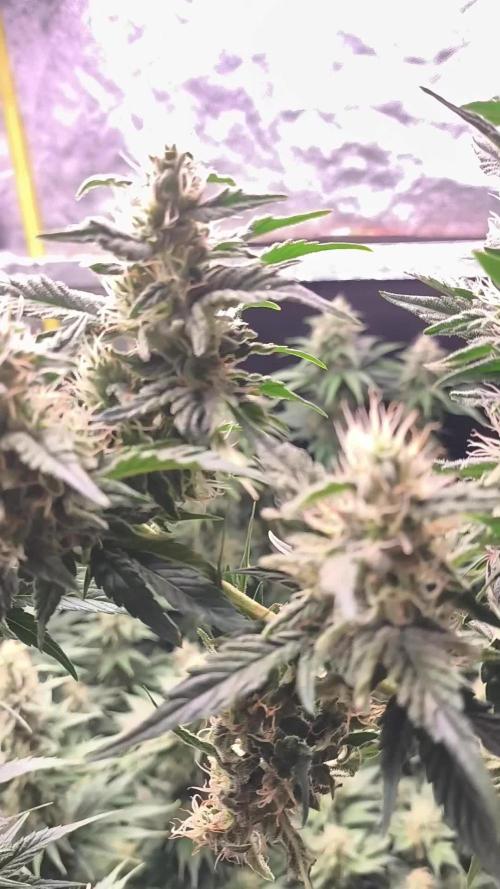
Holky vypadají zdravě, zálivka stále 4.5l každý třetí den, ph 6.2 ,ec 2.6.Dnes dostaly poslední "velkou" zálivku, teď už budu jen snižovat , Athena půjde na půlku, calmag vyřadím úplně a Green Sensation nechám 1ml/l . Tenhle týden je chci trochu prostříhat a už se asi jen kochat a čekat , tak ať se daří 🖖
Likes
13
Share


@Broffel
Follow
Its going amazing, start this week with flawless finish.
Day 52 and it going amazing, buds getting bigger and bigger.
I also made a clone of the purple lemonade and she is doing also amazing in my small grow tent
Likes
74
Share


@Mr_Maes
Follow
This week we should really see these colas blow up and start stacking really strong. The mixer of 7 hours of sun and 17 hours under my LEDs has really helped my girls grow strong. Nothing compares to good old Mother Nature.


Likes
7
Share


@Waisgrower
Follow
4ta semana de floración, muy buenos resultados hasta el momento obtenidos! Espero que les guste!


Likes
16
Share


@Lickey
Follow
So far so good. Scrog installed at 5 days into flower. Blueberry OG taking off. What a fantastic phenotype and plant. Grows excellent in my environment
Likes
1
Share

@Danger_Mouse
Follow
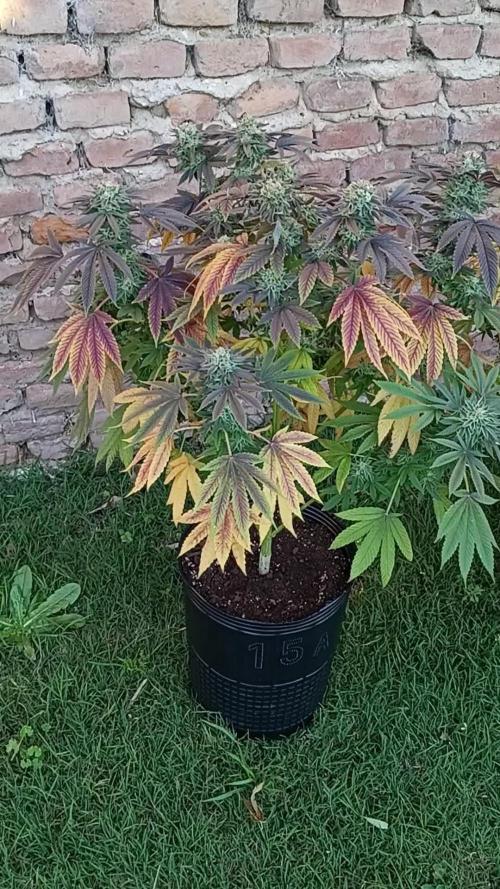
Hermosa plantas que no me han dado ningun problema. Cogollos grandes y super conpactos que huelen a quimico. Ya les daremos una nota definitiva cuando esten curadas.
