


@HIAZ_urbanbudfarmer
Follow
Hi gromies Ive missed updates over the last few weeks phone problem! But the girls are going great!👍 I'm at the end of week 5 of flower. I'm pretty happy with it for my first scrog grow, could have been better, was in rush to get something into flower, started flowering as soon as they started to grow through net. Should have veged them & trained through the net longer to completely fill net. Pheno 3 was half the size of the other 2. Have started some clones from flowering cuttings, Monster cropping , it works great for increasing yield & saves me from having to keep motherplants. Amazing progress, the roots you see were developed in 8 days! Will start to veg them in the 2nd tent & start the perpetual harvest process. Have continued to grow this strain as I don't have any other seeds at the moment, though it is a nice strain! Definitely time for a change, hint, hint original sensible seeds! Or any other seed companies 👍


@SamDo
Follow
🇺🇸Week 3🇺🇸 – Growth Explosion & First Training
Back again for this week’s update! The Mother Gorilla is going crazy—she’s growing at an insane pace, and honestly, I couldn’t be happier. The plant is super strong, and the leaves are just massive. Some are reaching up to 21 cm long, which is wild. I don’t think I’ve ever seen that before.
And honestly, I have to say—I’m seriously impressed by Formulex from Growth Technology. I’ve been using the same nutrient solution since the start, and the results are just insane. It’s such a simple product, but what it’s delivering so far is absolutely incredible. I’ll be switching to growth fertilizers soon (they’re on the way), but for now, I’m sticking with Formulex, and it’s honestly blowing my mind.
Environmental Conditions
Not much has changed on that front. The environment is still dialed in:
• Temperature: ~22-23°C during the day, 18°C at night.
• Nutrient solution temp: Holding steady at 17-18°C.
• pH levels: Hovering around 5.8-6.0—had to adjust it slightly during the week, but nothing major. It’s stable overall.
• VPD (Vapor Pressure Deficit): Still around 0.6, which seems to be working well. As long as it stays below 0.8, I think we’re in the sweet spot.
• Humidity: Holding at 70%.
Everything’s been pretty stable, and it looks like the plant is loving it.
Major Work This Week – Defoliation & Topping
This week was huge in terms of plant training. The foliage was getting super dense, so I went in for a heavy defoliation, removing all the big fan leaves. On top of that, I topped the plant—cut the main shoot to redirect energy towards the secondary branches. The goal is to push those side branches so they can take full advantage of the SCROG I just set up!
Now, it’s all about recovery. Hopefully, she bounces back strong, and we can really start working that SCROG.
Alright, that’s it for this week! Let’s keep an eye on things and see how she responds. Super excited to check in next week and see how she evolves.
🇫🇷Semaine 3🇫🇷 – Explosion de croissance & Premier palissage
De retour pour l’update de la semaine ! La Mother Gorilla part en vrille, elle pousse à une vitesse folle et franchement, je suis super content. La plante est ultra vigoureuse, et les feuilles sont juste énormes. Certaines atteignent 21 cm de longueur, c’est complètement dingue. Je crois que je n’ai jamais vu ça avant.
Et franchement, je dois le dire—je suis vraiment impressionné par le Formulex de chez Growth Technology. J’utilise exactement la même solution nutritive depuis le début, et les résultats sont juste dingues. C’est un produit hyper simple, mais ce que ça donne pour l’instant, c’est vraiment incroyable. Je vais bientôt passer sur les engrais de croissance (ils sont en commande), mais en attendant, je continue avec Formulex, et ça me bluffe complètement.
Conditions Environnementales
Pas de gros changements de ce côté-là, tout est toujours bien calé :
• Température : ~22-23°C en journée, 18°C la nuit.
• Température de la solution nutritive : Toujours 17-18°C.
• pH : Entre 5.8 et 6.0—j’ai dû l’ajuster un peu dans la semaine, mais rien de bien méchant. Globalement, c’est stable.
• VPD (Déficit de Pression de Vapeur) : Toujours aux alentours de 0.6, ce qui a l’air de bien convenir. Tant qu’on ne dépasse pas 0.8, on est bien.
• Humidité : 70% constants.
Tout est super stable et visiblement, la plante kiffe ça.
Travaux de la semaine – Défoliation & Topping
Cette semaine, grosse session d’entretien. La canopée devenait hyper dense, donc j’ai fait une bonne défoliation, en enlevant toutes les grosses feuilles. J’ai aussi topé la plante—j’ai coupé l’apex principal pour rediriger l’énergie vers les branches secondaires. L’idée, c’est de booster les secondaires pour qu’elles profitent à fond du SCROG que je viens d’installer !
Maintenant, elle doit récupérer. J’espère qu’elle va repartir de plus belle et qu’on va vraiment pouvoir bosser ce SCROG.
Voilà pour cette semaine ! On garde un œil sur tout ça et on voit comment elle évolue. Hâte de voir ce que ça va donner la semaine prochaine !
🤘😎


@Sadom
Follow
15.08.: Die zweite Blütewoche hat begonnen und beide Pflanzen haben sich seit der Umstellung gut entwickelt. Da ich vermute, dass die G41 noch weiter wachsen wird, habe ich ein zweites Netz zur späteren Stabilisierung installiert. Das zweite Netz hängt jetzt auf einer Höhe von 1,30m, sodass die oberen Spitzen der G41 bereits durchgucken. Damit die Pflanzen ihre Energie auf die wichtigen Bereiche konzentriert, habe ich bei beiden Pflanzen ein Lollipopping durchgeführt. Dabei hab ich alle Blätter, Seitentriebe und Blütenansätze unterhalb des ersten Netzes entfernt. Diese Blütenansätze liegen so weit unten, dass hier kaum Licht ankommt und sie am Ende stark unterentwickelt sein werden. Idealerweise hätte ich damit noch ein wenig gewartet, aber da ich die kommenden 9 Tage im Urlaub bin wollte ich es vorher noch erledigt haben, das gleiche gilt für das Netz. Updates werden in der Zeit auch eher schwierig, aber vielleicht bekomme ich ein paar Fotos zugeschickt.
18.08.: Ich habe Fotos zugeschickt bekommen. Anscheinend steckt die G41 immer noch in ihrer Stretchphase, da sie das 2. Netz auch schon ein gutes Stück überwachsen hat.
20.08.: Heute kamen nochmal ein kleines Video und ein Foto von der G41. Der Wachstum wird langsam weniger und man sieht, dass sich der Stretch dem Ende neigt. Am Ende der 2. Blütewoche hat die G41 die PBB in Sachen Höhe komplett abgehängt. So wie ich vermutet hab, war der Stretch von der PBB nicht mehr allzu dolle, sodass sie wesentlich kleiner als die G41 geblieben ist. Das ist eins der Probleme, wenn man kein Monocrop anbaut. Außerdem ist der Wasserbedarf der Pflanzen gesunken, sodass die Bewässerung aktuell 10min läuft, wenn das Licht angeht. Nächste Woche bin ich wieder zuhause, dann überlege ich mir, wie ich das Problem löse, entweder mit einer Zusatzbeleuchtung, einem 3. Netz mit dem ich die G41 noch etwas runterbiege oder beides. Da mein Mitbewohner heute vor Beginn von Blütewoche 3 ebenfalls wegfährt, hat er mir gestern noch die aktuellen Daten der Pflanzen zugeschickt. Daher passt es nicht ganz mit dem Diary, ich denke aber, dass es der beste Kompromiss ist.


@Appoldro420
Follow
10-05-2021: I am counting today as day One for Veg. Planning to hold them on 18/6 till the 20th of may (ten days) and then switch. Not sure if I will stress them a bit or not, time will tell. Yesterday was hot (26˚C) here so all values have shifted a bit. Won't be a problem as soon as they are on 12/12. Do you notice the lines (air/water) changing position on heat :) Didn't even notice that at first. Also pretty sure I need a more powerful chiller at the moment but will first make an attempt to replace the gas.
13-05-2021: Today I will be replacing my chiller. It doesn't keep up and the temperature of 28˚C is a bit too much. For the rest.. All great
15-05-2021: Added some paper sheets to reduce heat. Seem to work so today I'll go to hardware store and buy something to make a more permanent solution.... I have added some reflective foil to cover the boxes


shorts_status_processing


@420cfm
Follow
Serious increase in frostiness, smell in the tent, size of the buds. Amazing fresh, fruity smell. Continuing to throw out new pistals and old ones are turning orange. I fucked up my nutrients this week by using my k blaster instead of my monster flower but seems to be ok. Will get this fixed next week and run proper nutes for next two weeks before flipping back to my k blaster. Still learning so much but feel it's getting dialed in now.


@The_Doctor_Green
Follow
Hola a todos ,ya desde la semana pasada que vengo regando solo con agua porque no falta mucho para el corte aproximadamente 10 días. Los cogollos no han engordado como lo que esperaba, en comparación a la misma "genética " del año pasado.Tambien he notado que el tamaño de los cogollos es menor, pero si son más compactos y más densos.
Esta semana empezaron a tornarse la mayoria de los cogollos en un tono purpura, como así también algunas hojas, también indicadores de que el final ya se aproxima, a todo esto hay que sumarle el descenso de la temperatura también es un factor para que los cogollos y hojas se pongan de ese color.
Así que de aquí a que llegue el día del corte solo regare con agua.


@Travislynn21
Follow
Very satisfied so far. This is the second week if you don't count the first week from seed to poping up! Only watered it twice in two weeks. My mix drains well but holds the right moisture for growth. Next week will be the real proof of genetic quality!


@MG2009
Follow
02/18/2020
Look at those fat leaves, definitely does well in cool temps,
ruderalis / indica genes. I can't wait to see her sativa wild side.🙏 turned bloom channel to 100% so blue and red spectrum at 100% full spectrum ir and uv included. Will do more pics latter this week.
02/19/2020
Day #21 and I think that she likes the red spectrum she just looks bigger than yesterday I think she got 2weeks of veg cycle, hope to top midweek,and LST.(if she got her 4th node,that is)
Ps.
Sorry about the red looking pics, I will get some in natural light soon as I can.🙏could not get in natural light but mh light looks good.


@DeepSouthDank
Follow
Dam we got some frosty ladies developing here!
Crazy sweet, jelly berry candy aromas busting out the tent.
Had to lower the one light because of issue with power setting.
The canopy is a bit of mess, but its expected when growing 7 different phenos. The plants also couldve gone into flower about week earlier.
We just installed UVB bulbs for the last weeks, cannot wait to see what that does!
Happy days, check yall next week.


@JamieKnolliver
Follow
Umgetopft in Woche 5, alle drei Tage gegossen, davon bei jedem zweiten gießvorgang gedüngt.
Haupttrieb in Woche 6 das zweite mal getoppt.


@DogDoctorOfficial
Follow
# 💙 Project Blue Tent – Week 12 💙
## Blue Waffle F1 – Pheno B
### 🌸 466 Photos. 600 Photos. One Ridiculously Frosty Girl! ❄️😂
Hello everyone, and welcome back to another chapter inside Project Blue Tent! 💙🌱
And my friends...
I REALLY DON'T KNOW WHAT TO SAY ANYMORE! 😂❄️
Well, actually, I do. I have plenty to say, because this beautiful girl deserves her own report!
Last week, we talked about the incredible uniformity we're seeing throughout this tent. Four plants, two different cultivars, the same environment, the same irrigation system, and the same nutritional program.
And this week?
Her sister is looking ridiculously beautiful too!
But today, we're giving the spotlight to Blue Waffle F1 – Pheno B, because even when plants share the same room and the same conditions, each one deserves to have her own story documented.
And honestly, what a story she's giving us.
The flowers are stacking. The buds are developing. The frost is becoming increasingly impressive, and the whole plant is showing us why I love documenting every stage of a grow.
We've made a few small adjustments to the environment, increased the power of the overhead LEDs, and left the nutrient recipe unchanged.
No unnecessary interventions.
Just a beautiful ecosystem, some seriously frosty flowers, and a grower who's spending far too much time staring at them.
😂💙🌸
Let's get into it!
## 🌿 PHENO B – SAME ROOM, SAME ENVIRONMENT, SAME BEAUTIFUL STORY
If you've been following Project Blue Tent, you'll already know how much work went into getting these girls to this point.
The long vegetative period gave us the structure. The topping and training helped organize the growth. The SCROG supported the canopy, and the second layer of support helped us manage the flowering structure after the stretch.
We also improved the available space inside the tent by moving the extraction equipment outside and raising the main lights.
All those decisions helped us establish the environment we're working with today.
And now?
We're watching the flowers develop within that structure.
Blue Waffle F1 Pheno B is approximately 145 cm tall, and the overall framework is already established. We're not looking to reshape the plant every week or make changes just to have something to report.
At this stage, I'm much more interested in observing the flowers, following their development, and seeing how the plant responds to the environment.
And she's giving us plenty to look at!
## 🌸 THE FLOWERS ARE STACKING BEAUTIFULLY
One of the things that really catches my attention this week is the flower development.
Look at those close-ups!
The flowering sites are becoming increasingly defined, the buds are developing along the branches, and the amount of visible resin in the photographs is absolutely beautiful.
The white pistils are still prominent, and the flowers are continuing to develop.
This is such an interesting stage because the plant is gradually shifting our attention away from the structure and toward the flowers themselves.
Earlier in the project, we were talking about stretch, canopy management, training, defoliation, and support.
All of that work established the framework.
Now we're looking at what that framework is carrying.
And Pheno B is certainly giving us a reason to keep the camera ready.
She's stacking. She's budding. She's developing.
And she's looking ridiculously frosty!
😂❄️💙
## ❄️ THE FROST IS REAL, MY FRIENDS!
I know I keep saying it.
And I know I'm probably going to keep saying it next week too.
But LOOK AT HER!
😂😂😂
The close-up photographs show an incredible amount of detail across the developing flowers and surrounding sugar leaves.
And that's precisely why I enjoy taking the time to photograph these plants properly.
From a distance, you can appreciate the overall structure and the way the flowering sites are distributed.
Get closer, though, and there's an entirely different world waiting to be discovered.
The trichomes. The pistils. The tiny details across the flowers.
It's beautiful to see, and it's even more satisfying when we can document those details and compare them with the previous weeks.
And the best part?
Her sisters are looking just as impressive.
This isn't a story about one plant doing all the work while the others watch.
The entire tent is giving us something to appreciate.
But today, Pheno B gets the spotlight.
And she's absolutely shining! 💙🌸❄️
## 📸 PHOTO STACKING – 466 PHOTOS AND 600 PHOTOS COMBINED!
Now, let's talk about something a little different in this week's report.
The photography!
For this girl, we managed to create two separate photo stacks.
One combines 466 photographs, while the other combines 600 photographs.
And yes, my friends, that's a lot of photographs!
😂📸
We weren't able to take this plant out of the tent and move her into the studio setup, so we had to work with the conditions available to us inside the grow room.
It's not the same as stacking photographs in the studio, where we have much more control over the environment and the shooting conditions.
But we made it work!
And honestly, I'm happy with the results.
The two stacks give us a closer look at the flowers and allow us to appreciate details that can be difficult to capture in a single photograph.
More importantly, they give everyone following this diary a better view of what's happening throughout the flowering structure, including the lower portions of the buds.
Because the top of the plant isn't the whole story.
There's plenty happening further down, too, and I want to document as much of that development as possible.
These photographs are another way of bringing the community closer to the plants.
We can't all stand inside the tent together, so let's bring the tent to the community!
😂💙
And if you're interested in photography, this is also a nice opportunity to see what can be achieved through stacking hundreds of images, even when we're not working in a dedicated studio.
Are the results identical to studio stacking? No.
Am I happy with what we managed to achieve under the circumstances?
Absolutely!
Two stacks. Hundreds of photographs. One very frosty Pheno B.
I'll take that!
📸❄️🌸
## 🔬 WHY PHOTOGRAPH THE LOWER FLOWERS?
This is something I particularly wanted to highlight this week.
When we photograph a flowering plant, it's very easy to concentrate on the most accessible tops.
They're usually easier to reach, easier to frame, and often the first places our eyes are drawn to.
But the plant is a three-dimensional structure.
There are flowers at different heights, branches extending in different directions, and flowering sites that don't all sit in the same position relative to the main lights.
That's why I wanted to make these stacks available.
They help us look more closely at the flowers beyond the most obvious parts of the canopy.
And that matters for documentation.
We're trying to record the plant as a whole, not simply collect a few attractive photographs of the uppermost flowers.
The more detail we can preserve, the better we can appreciate the development we're documenting.
The stacks aren't a substitute for observing the whole plant, of course, but they're a fantastic addition to the diary.
And personally, I love having the opportunity to show everyone a little more of what's happening inside this beautiful ecosystem.
## 💡 MORE LIGHT FROM ABOVE – A SMALL BUT INTERESTING CHANGE
This week, we increased the power of the overhead LEDs.
We're now running the main lighting at the highest level we've decided to use in this 1 × 1 metre tent.
Notice the wording!
We're not necessarily running the equipment at its absolute maximum output. We're using the maximum level we've currently planned for this particular setup.
I honestly don't think we need to push everything to 100% just because we can.
The goal is to give the plants an appropriate amount of light while maintaining a balanced environment.
Light intensity is an important factor in plant development and flower production, but more light doesn't automatically mean more weight.
The response depends on how much light actually reaches the canopy, how the plants tolerate it, and whether the surrounding conditions remain suitable.
So we're increasing the available light without treating maximum output as the objective in itself.
And now we observe.
How will the flowers continue developing?
How will the plant respond to the additional light?
How will the environmental adjustments work alongside the lighting?
Those are the questions we're interested in answering as the project progresses.
We're not making promises about the outcome.
We're documenting the experiment.
And that's what makes this interesting!
💡🌿
## 🌡️ SLIGHTLY LOWER TEMPERATURES AND HUMIDITY
Alongside the lighting adjustment, we've also reduced the temperature by approximately one degree and lowered the relative humidity slightly.
We're making small adjustments rather than changing the entire environment.
The structure is established, the equipment is working, and we're happy with the overall direction of the grow.
So there is no reason to introduce unnecessary changes everywhere at once.
We want to maintain a comfortable environment while observing the plants as flowering progresses.
The increase in lighting power makes it particularly important to keep paying attention to the relationship between light intensity, temperature, humidity, and the plants' overall condition.
It's all connected.
And this is where I think a well-organized ecosystem really makes a difference.
You can adjust one part of the system while keeping the rest as consistent as possible.
That gives you a much clearer picture of what you're observing.
The temperature has come down a little. The humidity has come down a little. The lights have gone up a little.
And the nutrition?
Exactly where it was.
No need to change everything just because we've adjusted a few settings.
## 🌱 NUTRITION – KEEPING THE RECIPE CONSISTENT
The nutrient recipe remains unchanged this week.
We're continuing with the PLAGRON Hydro line, and we're keeping the same mixture in the reservoir.
Our current recorded recipe is:
- PLAGRON Hydro A — 2.2 ml/L
- PLAGRON Hydro B — 2.2 ml/L
- PLAGRON Power Buds — 1 ml/L
- PLAGRON pH Plus — 0.03 ml/L, recorded quantity
- PLAGRON pH Minus — 0.03 ml/L, recorded quantity
Hydro Roots is not part of the current recipe.
We're keeping the nutrition consistent while making the environmental adjustments, which means we're not introducing another variable into the picture.
The current recorded pH is 6.01, and the last recorded EC is 2.24 mS/cm.
Those readings give us a reference point, but we shouldn't automatically assume they're unchanged without taking fresh measurements.
For now, the important point is that the recipe itself remains the same.
We're observing the plants, maintaining the system, and recording what happens.
Consistency is part of the experiment too!
## 💧 IRRIGATION AND DRAINAGE – STILL PART OF THE BIG PICTURE
The automatic irrigation and drainage system continues to play an important role in this setup.
All four plants share the same reservoir, and the system allows us to maintain a consistent approach across the tent.
That's particularly useful for this project because we're documenting the individual plants while keeping the shared inputs as consistent as possible.
The irrigation system doesn't need to be the star of every report.
When everything is working as expected, that's already a positive result.
Our job is to keep an eye on the system, monitor the plants, and make adjustments when there's a reason to do so.
And that's the philosophy we're following this week.
Keep things running smoothly, avoid unnecessary changes, and let the plants continue developing.
💧🌿
## 🕸️ THE STRUCTURE IS READY – NOW THE FLOWERS TAKE CENTRE STAGE
Remember how much work went into creating this structure?
The topping and training.
The original SCROG.
The management of the flowering stretch.
The defoliation.
The second SCROG for additional support.
The changes to the extraction system and the available vertical space.
All those steps helped us reach the stage we're at now.
The plant has an established framework, and the support system remains in place.
We're not trying to redesign her this week.
Instead, we're observing how the flowers develop throughout the existing structure.
And this is one of the most satisfying parts of a long grow.
You make decisions weeks earlier, sometimes without knowing exactly how everything will look when the plant reaches flowering.
Then time passes.
The plant develops.
And eventually, you can stand back and appreciate the result of all that work.
That's what I'm enjoying right now.
The structure has done its job.
Now the flowers are telling their story.
## 💡 TWO LUMIFLORA FIXTURES – THE LOWER CANOPY MATTERS TOO
Our two LumiFlora 150W full-spectrum under-canopy fixtures remain part of the setup.
The main LEDs provide the primary lighting from above, while the LumiFlora fixtures supplement the lower portions of the canopy.
This is an interesting experiment because the plants have substantial vertical structure, and the light reaching different parts of the plant naturally varies with position.
We're interested in observing how the lower flowering sites develop as the plants progress through flowering.
We're not assuming that supplemental lighting will automatically produce a particular result.
We're watching, documenting, and learning.
And this week's photo stacks complement that experiment beautifully.
They allow us to inspect the flowers more closely and give the community a better view of the details we're observing.
The lights are one part of the experiment.
The photographs are another part of the documentation.
Together, they help us tell a more complete story of what's happening inside Project Blue Tent.
## F1 UNIFORMITY – THESE SISTERS ARE INCREDIBLE
And now we come back to something that continues to amaze me.
The similarity between these plants!
We have four individual plants sharing the same tent, with two different cultivars represented.
Blue Waffle F1 and Pickle Lemon Haze F1.
They're sharing the environment, irrigation, reservoir, and general cultivation approach.
And when I look across the room, the similarities in their development are genuinely impressive.
Similar overall structure.
Similar flowering progression.
And now, increasingly impressive flowers across the tent.
Of course, we're still keeping individual diaries because each plant deserves to be documented separately.
Even when two plants look remarkably similar, we shouldn't assume they'll remain identical throughout the entire flowering cycle.
The subtle differences are part of what makes these comparisons interesting.
But right now?
I'm extremely happy with what we're seeing.
And I have to say, Blue Waffle F1 Pheno B is absolutely holding her own.
Her sister looks incredible too, and so do the other girls.
Four plants. Two cultivars. One beautiful ecosystem.
What a pleasure it is to document this!
💙🌸
## 🌿 SOMETIMES THE BEST DECISION IS TO LEAVE THINGS ALONE
One of the biggest lessons from this stage of the project is that not every week requires a major intervention.
There was a time when we were constantly managing the structure, training branches, opening the canopy, and making room for the stretch.
Now, the main structure is established.
The support is in place.
The irrigation is running.
The nutrition remains consistent.
And the flowers are developing.
So we're making a few deliberate adjustments to the environment, but otherwise, we're allowing the plant to do what she needs to do.
There's always a temptation to change something simply because another week has passed.
But that isn't a good reason by itself.
If the system is working, sometimes consistency is the most valuable thing we can provide.
We observe.
We record.
We learn.
And we intervene when there's a genuine reason.
That's how I want to approach the rest of this journey.
## 🌸 CURRENT GROW CONDITIONS
- Cultivar: Blue Waffle F1
- Phenotype: Pheno B
- Flowering: Week 12
- Height: Approximately 145 cm
- Light schedule: 12/12
- Day temperature: 27°C, last recorded
- Night temperature: 27°C, last recorded
- Relative humidity: 59%, last recorded
- pH: 6.01, last recorded
- EC: 2.24 mS/cm, last recorded
- Solution temperature: 25°C, last recorded
- Substrate temperature: 24°C, last recorded
- CO₂: Approximately 666 ppm, last recorded
- Pot size: 8 L
- Watering volume: Approximately 1.6 L per plant per 24 hours, recorded value
- Main lighting: Increased this week to the maximum planned level for this tent
- Under-canopy lighting: 2 × LumiFlora 150W full-spectrum fixtures
- Nutrient program: PLAGRON Hydro
- Nutrient recipe: Unchanged this week
The environmental readings above are the last recorded values shown in the diary. This week's temperature and humidity were reduced slightly, but the new readings have not yet been provided.
## 🔭 WHAT I'M WATCHING NEXT
At this stage, my attention is on the details.
I'm watching the flowers continue developing.
I'm watching the pistils and the way the buds are forming.
I'm watching the overall appearance of the plant and the visible resin across the flowers and sugar leaves.
I'm interested in how the plants respond to the increased overhead light intensity and the slightly cooler, less humid environment.
And I'm particularly interested in continuing to document the lower flowering sites.
The two photo stacks have already given us a fantastic opportunity to look more closely at Pheno B.
I want to keep building that photographic record as the plant progresses.
Because every week adds another piece to the story.
And we're not finished yet!
## 💙 FINAL THOUGHTS – SHE'S FROSTY, AND HER SISTERS ARE TOO!
My friends, if I had to describe this week in a few words, I'd say:
Same room. Same environment. Same beautiful cultivar sisters. And a whole lot of frost!
😂💙❄️
Blue Waffle F1 Pheno B is looking fantastic.
The flowers are stacking.
The buds are developing.
The frost is beautiful.
The structure is established.
The nutrient recipe remains unchanged.
We've slightly reduced the temperature and humidity, increased the overhead LED power, and continued observing the plants without making unnecessary changes.
And we also managed to create two photo stacks, combining 466 and 600 photographs, giving us a closer look at the flowers and the lower parts of the buds.
I'm genuinely happy with the results.
It's not the same as taking the plant into the studio, but it gives us another way to appreciate and document the incredible details we're seeing.
And honestly, I think that's what matters.
We're working with the conditions available to us, finding ways to improve our documentation, and sharing the results with everyone following the project.
I also have to say how much I'm enjoying this entire ecosystem.
Four plants. Two cultivars. Shared conditions. Individual diaries.
The similarities between these girls are fascinating, and the flowers are becoming more impressive every week.
But today, Pheno B gets her moment.
And she deserves it.
We've done the structural work.
We've established the system.
We've made a few small environmental adjustments.
Now we're watching these beautiful flowers develop.
Let's see what the next week brings!
More flowers. More photographs. More observations. And hopefully, even more reasons to stand in front of the tent and say...
"MAN, SHE'S FROSTY!"
😂💙🌸❄️
## 🙏 A HUGE THANK YOU
A huge thank you to Zamnesia for making Project Blue Tent possible and giving us the opportunity to document these beautiful Blue Waffle F1 and Pickle Lemon Haze F1 plants individually.
Thank you to PLAGRON for the Hydro nutrient line supporting this project.
A massive thank you to Mars Hydro for the irrigation and drainage system helping us maintain consistency throughout the tent.
Thank you to Zamnesia for the Phytonaut LED lighting, curved scissors, and clip fans that have become important parts of this ecosystem.
And a special thank you to LumiFlora for the 150W full-spectrum under-canopy fixtures that we're using to explore supplemental lighting beneath the canopy.
Thank you to GrowDiaries for providing the platform where we can document the entire journey, including the experiments, the photographs, the unexpected moments, and the lessons we learn along the way.
And, of course, thank you to everyone following Project Blue Tent!
Your support makes sharing these individual diaries even more enjoyable.
We're continuing to learn, observe, photograph, and appreciate every stage of the journey.
Four plants. Two cultivars. One beautiful ecosystem.
And four girls giving us plenty of reasons to smile.
Growers Love, happy growing, and take care everyone! 🌱💙🌸


@BruceBlack
Follow
Hi all! So I started adding PK 13/14 this week , only 0.5ml/lt, I haven't notice such crazy growth or more sugary flowers so far,
anyway they look nice.
One of them is showing some light brown spots which I think it's a K overfeeding due to the 13/14, what do you think?
I'm watering every 2 days but humidity levels went higher so I need to use a de-humidifier and I'm obtaining 7lt water every 2 days from the tank.
They look very well, I'm waiting now for my magnifier to arrive so I can check em cuz I think 2 of them are almost ready to cut.
I think I gonna start adding only ph'ed water from now on, soil has bat guano as well so I think they will have enough nutrients to keep growing so far.
Thanks a lot everyone ,this community is amazing, cyA next week!


@Canna96
Follow
Hey now, hope you all are having a great weekend. Good week for the Green Crack 2.0, not much to report but she is still growing and getting ready to be transplanted into her 3.4 gallon final home which will be an airpot. I am hoping to transplant her in 48 hours and then top her by the end of the week around day 20. I am planning to build a mainline out of her and then flip to flower around week 6 or 7 at the latest.
I am a huge Sativa fan so very excited to see how this lady turns out, as i have had some very pschyoactive green crack in the past. I hope everyone has a great rest of your weekend, thanks for stopping by, Stay Safe and Blaze On!!! 💪
Website: https://medicgrow.com/
https://growdiaries.com/grower/medicgrowled


@Creme_De_La_Creme
Follow
Last week before turning on the utopot system !!
She is loving the high EC, everything looking perfect around here !!


@Smoking_Joe_Frasier
Follow
Week 9: Late Flowering and Ripening
Signs of Maturity
As we enter week 9, the plants are well into the late flowering stage, with the buds ripening beautifully. The trichomes are becoming more prominent, and there's a noticeable increase in resin production. The aromas are intensifying, making the garden a fragrant delight. The plants are showing clear signs of maturity, indicating that harvest time is approaching.
Nutrient and Watering Adjustments
To accelerate the ripening process and boost bud production, I'm using FinalPart by Terra Aquatica for Banana Purple Punch and Blue Dream. As from T.A recommended I use it alone with no other nutrients combined. I use it at full dosage but I hope I don't burn them in the end. No risk no fun.
However, for Tangie and Gorilla Cookies, I have not changed the nutrient composition, as these plants will likely need another three /four weeks to fully mature. The watering schedule remains consistent, ensuring the plants are hydrated but not overwatered, which is crucial during this delicate phase.
Pest Management and Plant Health
To combat thrips, I've placed yellow and blue sticky traps around the plants. Fortunately, there have been no further signs of aphid infestation. The plants appear healthy and vigorous, showing no additional pest issues.
Individual Plant Observations
Blue Dream:
Some pistils are starting to change color, and the main bud is becoming denser. The fan leaves are also transitioning from green to yellow, indicating that the plant is drawing nutrients from them. The trichomes are becoming more cloudy.
Banana Purple Punch:
The plant is experiencing slower growth, with minimal bud expansion. The pistils are changing color, and the buds are developing a beautiful purple hue. The fan leaves are turning yellow as the plant draws nitrogen from them. I’m hoping FinalPart will stimulate a final boost in bud production.
Gorilla Cookies:
Bud development is also progressing slowly. However, all the large leaves are still green, so I’ll hold off on FinalPart until at least next week. My goal here is to maximize yield. The resin production and aroma are intensifying daily.
Tangie:
Still in a growth phase, Tangie is a real eye-catcher. While the bud production is underway, the plant may need at least three, possibly even four more weeks to reach full maturity. The resin production and aroma are not yet as advanced as with the other plants, but Tangie looks very vibrant and healthy.
Seeking Final Tips and Harvest Advice
As we approach the final stages, any tips or advice on maximizing flavor, potency, or overall plant health would be greatly appreciated. I'm looking forward to gear up for the most exciting part of the grow cycle—harvest!
Update 27.07:
Today, I decided to switch my Gorilla Cookies plant to FinalPart as well. This should give her a boost in trichome production and aroma, and hopefully enhance the flavor too.
Tangie is the only plant still on regular bloom nutrients, as she clearly needs another three, maybe even four weeks to fully ripen. Judging by her current growth, she seems poised to yield the most by far.


@nonick123
Follow
Día 35 (26/05) Velocidad de crucero ON! Pequeñas pero preciosas! 😍
Día 36 (27/05) Riego con 500 ml H2O RO
Las señoritas siguen teniendo un color vibrante!
Día 37 (28/05) Se empieza a extender el color morado por las incipientes flores y las hojas 😍
Día 38 (29/05) Riego con 500 ml H2O RO
Empezamos a regar cada 2 días. Hace bastante calor por aquí! 30 - 32 ºC en la horas centrales del día
Día 39 (30/05) N/A
Día 40 (31/05) Riego con 500 ml H2O RO
Día 41 (01/06) Riego con 750 ml H2O RO solo la planta grande!
Hace muchísimo calor!
🚀 FastBuds 15% DISCOUNT code "NONICK" 2fast4buds.com @fastbuds.official
💦 BioTabs 15% DISCOUNT code "GDBT420" biotabs.nl/en/shop/ @biotabs_official
🌱Substrate PRO-MIX HP BACILLUS + MYCORRHIZAE @promixmitch @promixgrowers_unfiltered


@Cauli
Follow
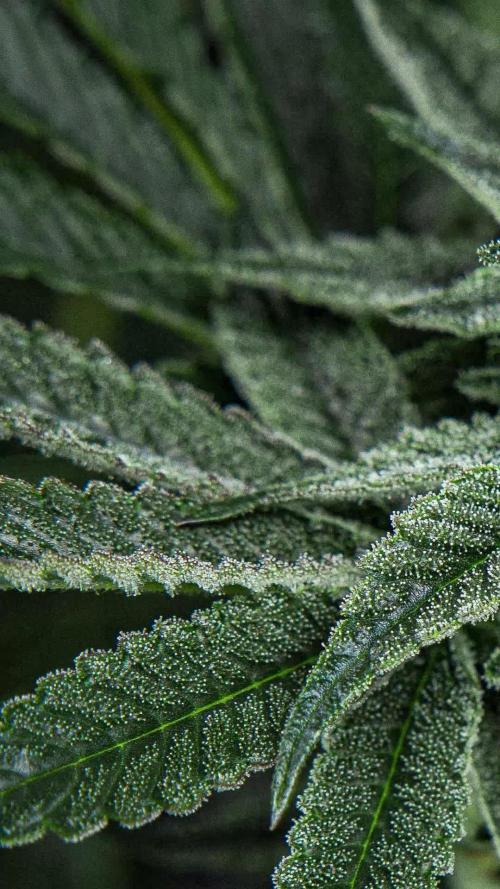
Week thirteen for Candy House.
Day 39 of 12/12.
She's just doing her thing and despite some watching and watering there wasn't much to do this week :)
She looks like she's getting some rock solid nuggets and is so damn frosty! Looks like all that beating and torture thankfully did not stop her ^^
Really love this phase of a plants life, when all the work is showing in a steady progress and the most needed thing is patience.


@crimsonecho
Follow
well everything is going alright.
nothing to complain about.
destroyers are getting a lighter shade in the new growth but still pretty much healthy, just a more natural sativa color.
maybe around this time i could have thought about topdressing but i’m more inclined to let them go on with straight water just to see how this mix runs till finish with just water and no extra inputs. though who knows i may just decide to topdress tomorrow haha
others seem happy and healthy as well. watered the dinachem pot yesterday with about 4l of distilled water and destroyers got 4l each 2 days before that. caribe and cannalope pot is still pretty heavy.
see y’all next week
edit; yesterday we had a blackout so timers were set back an hour so i guess when i opened the tent today light had just turned on because they were holding a less intense praying pose so just checked back 3 hrs later now and looks fine now. added those photos as well.


