


@p2patc
Follow
All I can smell is Garlic and onions when I enter the vicinity of these plants…. After a few weeks fighting a systemic infection in the hydro system and res the plants have stabilized and are PUNGENT… loudly pungent!!!



@Basementganja
Follow
Plucked a few leaves that were looking at me funny ;) Not much to do!
Smells of sweet berries, after a fresh rainfall.. Smells amazing!
Watered with 2.5 gallons of the above listed nutrients, every 5-6 days. (when the soil becomes 95% dry)
10% of the solution watered runs out the bottom of the pot, and is removed with a wet-vacuum.


@100Trillion
Follow
Week 4 and we're watching the grass grow. As Trichomes start to develop upon touch I smell a strong lemony limey smell, best way to describe it is a strong lemon Cleaner scent, it is a Very pleasant scent actually. The foliage is starting to fill back in a bit after the Defoliation. The free seed Pheno is doing amazing and handled and has recovered from the Defoliation quite well as well as the other phenos. The second larger Pheno #2 I've noticed in the past week some purpling of the stem and it's doesn't seem to have as fast growth as Pheno 4. I don't know if the purple is being caused by the Defoliation or if it due to the temp drop when lights are off which would be an average of about 68 degrees. I will continue to monitor to see how it has effected the plant of if it causing and color changes in the buds.



@discopriest379
Follow
The final week for three flowers. They ripened perfectly. I watered them with pure water only. The leaves were already very yellow and falling off.
last two foto/video : Unfortunately, I had the chance to try this fan only during the last week, and I must say it's an absolutely amazing fan.



@Sadhus
Follow
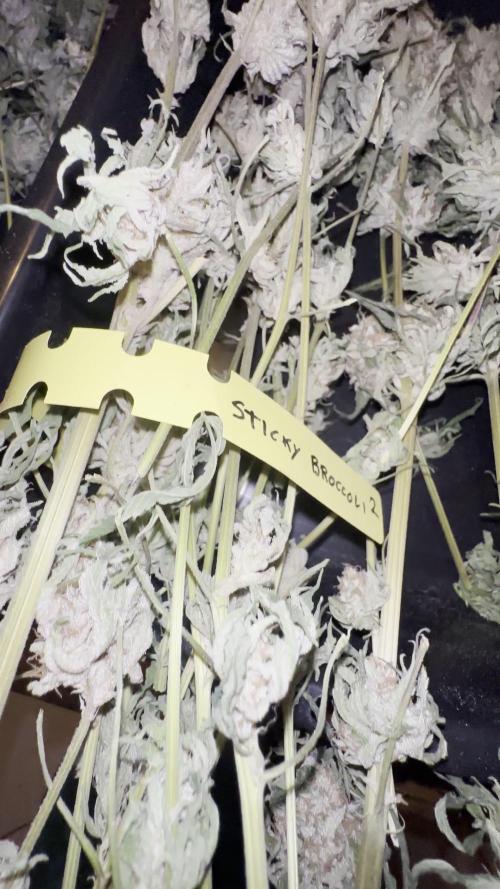
**Semaine Harvest : Récolte Finale – Sticky Broccoli (28 avril 2026)**
**Note :** Fin du cycle Eternity Grow Cup 2. Récolte effectuée en semaine 10 de floraison (légèrement anticipée). Tout le journal de culture est maintenant complet.
### Contexte et Bilan du Cycle
Après 10 semaines de floraison (semaine 14 globale), la récolte a été déclenchée suite à un départ de botrytis sur une autre plante du même espace. J’aurais pu laisser encore quelques jours pour laisser mûrir un peu plus les trichomes ambrés, mais la sécurité prime.
La plante dominante (150 cm) a donné un beau rendement qualitatif, avec des buds denses, extrêmement frosty et résineux.
**Poids frais : environ 780 grammes** (poids humide total des buds trimés, sans les grosses tiges).
Mise à jour prévue dans 2 semaines pour le **poids sec final** après un bon curing.
### Observations à la Récolte
- **Buds** : Denses et compacts, très collants. Couverture trichomale exceptionnelle (majoritairement laiteux avec quelques têtes ambrées). L’aspect sugar est magnifique, les buds brillent littéralement.
- **Odeur** : Très agréable, sucrée, épicée et florale, typique de Sticky Broccoli. Puissante même après le flush.
- **Résine** : Extrêmement résineuse au toucher – parfait pour du dry sift ou un petit Ice-o-Lator.
- **Structure** : Belle densité globale, même si la taille individuelle des buds reste dans la moyenne haute pour la variété (pas les plus gros que j’ai vus, mais la qualité trichomale compense largement).
- **Santé** : Plantes propres jusqu’à la fin, pas de carence visible. Le flush des 3 derniers jours (EC 0,7) a bien aidé à nettoyer les sels.
**Clones** : Quelques clones prélevés plusieurs semaines auparavant ont été repiqués avec succès dans leur nouveau système. Ils sont bien enracinés et prêts à repartir pour un prochain cycle de végétation/floraison. La génétique est conservée !
### Paramètres en Fin de Cycle (semaine 10)
- Température jour/nuit : 19-21 °C / 14-15 °C
- Humidité : 48-58 % jour / 29-39 % nuit
- VPD : 0.9-1.3 kPa
- PPFD : 550 (DLI 24)
- UV : 90 min/jour
- EC final : 1.0 puis flush à 0.7 (Terra Aquatica seul)
- pH : 5.8-6.0
- Steering : génératif jusqu’à la fin
- 48h de blackout avant récolte : appliqué pour booster la résine et améliorer la qualité des trichomes.
### Plans Post-Récolte
- **Séchage** : 7-10 jours à 18-20 °C et 55-60 % d’humidité dans un espace sombre et ventilé.
- **Curing** : Minimum 2-3 semaines en bocaux (burping régulier) pour affiner les terpènes et la douceur. Mise à jour dans 2 semaines avec le poids sec final.
- **Utilisation** : Une partie en fleurs séchées/cure, et un petit batch pour **dry sift** + **Ice-o-Lator** (bubble hash) histoire de se régaler avec la résine exceptionnelle de cette Sticky Broccoli.
**Tips éducatif final : Le flush et le blackout en fin de cycle**
- **Flush** (3 derniers jours à EC très bas) : Permet d’éliminer les sels accumulés et améliore nettement le goût final (moins de chimie, plus de terpènes purs).
- **48h de blackout** : Technique simple mais efficace qui stress légèrement la plante de manière positive, augmentant la production de résine et la clarté des trichomes juste avant la coupe.
Ce fut un très beau cycle, propre et instructif malgré l’interruption due au botrytis. La qualité résineuse et l’odeur compensent largement. Merci à Zamnesia et Plagron pour le matos !
**#GrowLegendary #Zamnesia #Plagron #EternityGrowCup2 #StickyBroccoli**
Dans 2 semaines je mettrai à jour avec le poids sec et les premières impressions après curing.
**Estimation du poids sec final**
Avec **780 grammes de poids frais** (buds humides, après trim initial mais avant séchage complet), voici une estimation réaliste pour cette Sticky Broccoli :
### Estimation raisonnable
- **Poids sec attendu** : **180 à 230 grammes** (environ **23-30 %** du poids frais).
**Pourquoi cette fourchette ?**
- Les buds frais contiennent typiquement 70-80 % d’eau.
- Après un bon séchage (jusqu’à 10-12 % d’humidité résiduelle) + curing, il reste généralement **20-30 %** du poids humide initial.
- 20 % → **156 g** (estimation basse, si buds très denses ou séchage poussé)
- 25 % → **195 g** (estimation moyenne, la plus courante pour des buds compacts comme les tiens)
- 30 % → **234 g** (estimation haute, si les buds retiennent un peu plus d’humidité ou sont particulièrement résineux)
Tes buds étant décrits comme **denses, très collants et frosty**, je pencherais plutôt vers le **milieu/haut de la fourchette** : **190-220 grammes** une fois bien secs et cured.
### Facteurs qui influenceront le résultat final
- **Qualité du séchage** : Température 18-20 °C, humidité 50-60 %, bonne circulation d’air sans vent direct → perte d’eau progressive et uniforme.
- **Trim** : Si tu as fait un wet trim assez serré, le poids sec sera un peu plus bas que si tu as laissé plus de sugar leaves.
- **Densité des buds** : Plus ils sont compacts et résineux, moins ils perdent de poids relatif (mais ils sèchent parfois un peu plus lentement).
- **Curing** : Pendant les 2-4 semaines en bocaux, tu perdras encore un peu d’humidité, mais le poids se stabilisera.
### Prochaines étapes
1. **Séchage** : 7-10 jours jusqu’à ce que les tiges cassent net (pas pliables).
2. **Curing** : Minimum 2 semaines (idéalement 4+) avec burping quotidien au début.
3. **Pesée finale** : Une fois le poids stabilisé (après 2 semaines de curing),



@Crazy_Doofus
Follow
Gonna ripe her for a full More week, cut her half way. Leave the bottom for another week. Gonna leave the clones too, still full bloom ❤️❤️❤️ trichomes not ready yet
The top of the clones are the same size as the mother plant ♥️♥️♥️ very succesfull!!
05/01 not ready yet


@CalGonJim
Follow
7/28 1220AM MONDAY.... Bubbles are looking ok, I need to trim them back to 4 colas, I am really stressing them with small space limitations, and temps at 80 to 81
7/29 Tuesday 5:45 AM💦💦 6:15 AM water with methylene blue two pills of nitric boost amino acid, five drops of Quick Sorb and I added bud factor X today and a quarter mL per liter of rhino silica💦💦💦.
1030 AM I don’t know what I’m gonna do. It turns out the bubbles plants are terrible. The stems are all very weak and they’re growing bushy at the top. I didn’t get them separated so all of the side branches grew up really long it’s completely useless. It is absolute this plant. It will be thrown in the garbage. Can you fucking believe I have to throw another entire plant in the fucking garbage😡😡😡😡. TREVOR plant cut down to 2 colas only, very top heavy not liking my grow space, had 2 more than I wanted so it's all fucked.... will remove shitty small colas and get maybe 2 good colas per plant, not expecting much. 1219pm....HOLY SHIT I FUCKED THESE.....TOOK OFF SOME COLAS.....NOT ENOUGH SPACE AND I PUSHED THEM TOO FAR.....I CAN FIX IT
7/30 1215am found a GREAT science link::: ""https://www.frontiersin.org/research-topics/8125/cannabis-genomics-breeding-and-production/magazine"".
345am PROLINE WILL BE HERE TODAY.ALL RESEARCH INDICATES PROLINE WILL PROTECT FROM HEAT STRESS!!!! 11:30 AM they are good again they are recovering from heavy defoliation half of the plant was taken off of one of them. I pushed it a little far but today they are recovering from heat and lack of air and lack of space the leaves are reaching up and they are not folding under heat stress. They look good today. Fast recovery heavy amino yesterday.👍👍👍👍🚨🚨🚨🚨
🚨🚨🚨🚨🚨🚨🚨🚨 GOT THE AMINOS AND HERE IS THE GROK RESULT OF MY MIX.......🚨🚨🚨🚨🚨🚨🚨🚨
The effects of applying essential amino acids (EAAs), proline, trimethylglycine (TMG), and glutamine to cannabis plants can be significant, as these compounds act as biostimulants, influencing growth, stress resilience, and secondary metabolite production. The available research, primarily from studies on amino acids in plants, including cannabis, provides insights into their roles, though specific data on this exact combination is limited. Below, I summarize the effects of each compound on cannabis plants, drawing from relevant studies, and infer potential synergistic effects based on their known roles in plant physiology. Note that TMG (betaine) has less direct research in cannabis, so some effects are extrapolated from other plants.
### 1. Essential Amino Acids (EAAs)
EAAs (e.g., leucine, lysine, methionine, etc.) are critical building blocks for proteins and play roles in plant metabolism and stress response. In cannabis:
- **Growth and Development**: EAAs enhance protein synthesis, supporting shoot and root growth. Foliar or soil application of EAAs (e.g., 150–300 mg/L) increases leaf chlorophyll, shoot biomass, and root development in various plants, likely applicable to cannabis.[](https://www.nature.com/articles/s41598-022-21273-6)
- **Nutrient Uptake**: EAAs like methionine and lysine improve nutrient absorption (e.g., nitrogen, iron) by acting as chelators, potentially enhancing cannabis nutrient efficiency in hydroponic or soil systems.[](https://cannabisindustryinstitute.com/news/amino-acids-what-they-mean-to-your-cannabis-grow/)[](https://mycsainc.com/newsletter/en/2023/03/03/amino-acids-and-their-function-in-plants/)
- **Stress Mitigation**: EAAs, particularly methionine, support antioxidant production (e.g., glutathione), reducing oxidative stress from drought, salinity, or high light, common in cannabis cultivation.[](https://www.frontiersin.org/journals/plant-science/articles/10.3389/fpls.2020.00928/full)[](https://www.ncbi.nlm.nih.gov/pmc/articles/PMC9008891/)
- **Cannabinoid/Terpene Production**: Limited evidence suggests EAAs may influence secondary metabolism. For example, methionine could enhance sulfur-containing compounds, potentially affecting terpene profiles in cannabis.[](https://www.ncbi.nlm.nih.gov/pmc/articles/PMC9008891/)
**Application Notes**: EAAs are often applied via foliar spray (150–300 mg/L) or soil drench. Overuse may lead to nitrogen imbalance, so moderation is key.[](https://cannabisindustryinstitute.com/news/amino-acids-what-they-mean-to-your-cannabis-grow/)
### 2. Proline
Proline is a non-essential amino acid that accumulates in plants under stress and serves multiple functions:
- **Stress Tolerance**: Proline acts as an osmolyte, stabilizing cell membranes and scavenging reactive oxygen species (ROS) during drought, salinity, or temperature stress. In cannabis, exogenous proline (e.g., 50–100 mM) may enhance tolerance to environmental stressors, improving resilience in outdoor or controlled environments.[](https://www.researchgate.net/publication/349966775_THE_ROLE_AND_IMPORTANCE_OF_AMINO_ACIDS_WITHIN_PLANTS_A_REVIEW)[](https://pmc.ncbi.nlm.nih.gov/articles/PMC3548871/)
- **Limited Growth Effect**: Proline alone is a poor nitrogen source for growth. Studies on Arabidopsis show it has a neutral or inhibitory effect on growth when used as the sole nitrogen source, suggesting it’s better for stress response than biomass accumulation.[](https://www.frontiersin.org/journals/plant-science/articles/10.3389/fpls.2023.1281495/full)
- **Cannabis-Specific**: Proline helps cannabis maintain water balance, potentially improving resistance to extreme temperatures, which is critical for outdoor grows.[](https://cannabisindustryinstitute.com/news/amino-acids-what-they-mean-to-your-cannabis-grow/)
**Application Notes**: Foliar or root application (50–100 mg/L) is effective for stress mitigation. High doses may inhibit growth if not balanced with other nutrients.[](https://www.frontiersin.org/journals/plant-science/articles/10.3389/fpls.2023.1281495/full)[](https://www.researchgate.net/publication/349966775_THE_ROLE_AND_IMPORTANCE_OF_AMINO_ACIDS_WITHIN_PLANTS_A_REVIEW)
### 3. Trimethylglycine (TMG, Betaine)
TMG is less studied in cannabis but known as an osmoprotectant and methyl donor in other plants:
- **Stress Protection**: TMG stabilizes proteins and membranes under salinity, drought, or temperature stress, similar to proline. It may protect cannabis plants in harsh conditions, maintaining photosynthetic efficiency.[](https://www.mdpi.com/2311-7524/9/7/807)
- **Methylation Support**: TMG donates methyl groups, potentially enhancing secondary metabolite synthesis (e.g., cannabinoids, terpenes), though direct evidence in cannabis is lacking. Its role in methylation could support metabolic pathways linked to EAAs and glutamine.
- **Growth Effects**: Limited data suggest TMG may improve chlorophyll content and photosynthesis, indirectly supporting biomass in cannabis.
**Application Notes**: TMG is typically applied at 0.5–2 g/L via foliar spray. Its effects in cannabis are inferred from other crops, so careful experimentation is needed.
### 4. Glutamine
Glutamine is a conditionally essential amino acid central to nitrogen metabolism:
- **Growth Promotion**: Glutamine (10–1000 mg/L) significantly enhances shoot elongation, root growth, and chlorophyll content in plants like lettuce and hibiscus, likely benefiting cannabis vegetative growth. In cannabis, it may support lush foliage and robust rooting in hydroponics.[](https://www.scielo.br/j/oh/a/GZxMgqXb9wm7bsCTv4WwPdc/?lang=en)[](https://www.degruyterbrill.com/document/doi/10.1515/opag-2019-0016/html)[](https://www.degruyterbrill.com/document/doi/10.1515/opag-2019-0016/html?lang=en)
- **Nitrogen Assimilation**: As a primary nitrogen acceptor, glutamine improves nitrogen use efficiency via the glutamine synthetase/glutamate synthase cycle, enhancing nutrient uptake in cannabis.[](https://academic.oup.com/jxb/article/58/9/2339/544408)[](https://www.frontiersin.org/journals/plant-science/articles/10.3389/fpls.2019.01743/full)
- **Stress Response**: Glutamine supports proline synthesis, boosting stress tolerance. It also contributes to chlorophyll and protein synthesis, improving photosynthesis and yield potential in cannabis.[](https://www.mdpi.com/2311-7524/8/12/1110)[](https://www.frontiersin.org/journals/plant-science/articles/10.3389/fpls.2019.01743/full)
- **Secondary Metabolism**: Glutamine is a precursor to glutamate, which influences GABA, arginine, and proline synthesis, potentially affecting cannabinoid or terpene production indirectly.[](https://www.frontiersin.org/journals/plant-science/articles/10.3389/fpls.2019.01743/full)
**Application Notes**: Foliar sprays (250–1000 mg/L) or root application twice weekly are effective. Glutamine at 250 mg/L combined with other amino acids (e.g., glycine) shows synergistic growth effects.[](https://www.degruyterbrill.com/document/doi/10.1515/opag-2019-0016/html)
### Synergistic Effects on Cannabis
- **Growth and Yield**: The combination of EAAs, glutamine, and proline may enhance vegetative growth and biomass. Glutamine and EAAs drive protein synthesis and nitrogen uptake, while proline supports tissue integrity under stress. TMG likely amplifies these effects by improving cellular hydration and methylation, potentially increasing leaf area and bud quality.[](https://www.mdpi.com/2311-7524/8/12/1110)[](https://www.nature.com/articles/s41598-022-21273-6)
- **Stress Resilience**: Proline and TMG act as osmoprotectants, while EAAs and glutamine bolster antioxidant systems, collectively improving cannabis resilience to drought, salinity, or temperature extremes common in cultivation.[](https://www.mdpi.com/2311-7524/9/7/807)
- **Secondary Metabolites**: Glutamine and TMG may enhance cannabinoid and terpene production by supporting metabolic pathways (e.g., methylation, nitrogen metabolism). EAAs like methionine could influence sulfur-based terpenes. However, direct evidence for cannabinoid enhancement is sparse.[](https://www.ncbi.nlm.nih.gov/pmc/articles/PMC9008891/)
- **Nutrient Efficiency**: Glutamine and EAAs improve nitrogen and micronutrient uptake, while TMG may enhance nutrient transport, optimizing cannabis growth in nutrient-limited systems like hydroponics.[](https://mycsainc.com/newsletter/en/2023/03/03/amino-acids-and-their-function-in-plants/)
### Potential Risks and Considerations
- **Inhibition at High Doses**: High concentrations of proline or certain EAAs (e.g., lysine, valine) can inhibit growth if used as sole nitrogen sources. Balanced mixtures mitigate this, as glutamine can antagonize inhibitory effects of proline or other amino acids.[](https://www.frontiersin.org/journals/plant-science/articles/10.3389/fpls.2023.1281495/full)
- **Nitrogen Overload**: Excessive EAAs or glutamine may lead to nitrogen toxicity, causing leaf burn or stunted growth in cannabis. Monitor plant response and maintain balanced nutrient solutions.[](https://cannabisindustryinstitute.com/news/amino-acids-what-they-mean-to-your-cannabis-grow/)
- **TMG Metabolism**: TMG may increase trimethylamine production in the soil microbiome, potentially affecting cannabis root health if not managed. Healthy soil microflora can mitigate this.[](https://cannabisindustryinstitute.com/news/amino-acids-what-they-mean-to-your-cannabis-grow/)
- **Application Timing**: Foliar sprays (150–500 mg/L for EAAs, glutamine, proline; 0.5–2 g/L for TMG) during vegetative growth or early flowering maximize benefits. Avoid overuse during late flowering to prevent nutrient imbalances affecting bud quality.
### Cannabis-Specific Insights
- **Hydroponics and Soil**: In hydroponic systems, EAAs and glutamine ensure efficient nitrogen delivery, while proline and TMG support stress resistance in fluctuating pH or nutrient conditions. In soil, maintaining microflora is crucial, as it naturally supplies amino acids; supplementation should be moderate.[](https://cannabisindustryinstitute.com/news/amino-acids-what-they-mean-to-your-cannabis-grow/)[](https://www.ncbi.nlm.nih.gov/pmc/articles/PMC9008891/)
- **Cultivar Variability**: Cannabis cultivars differ in nutrient demands and stress responses. Sativa-dominant strains may benefit more from proline and TMG for stress tolerance, while indica strains may respond better to EAAs and glutamine for dense bud growth. Testing is needed.
- **Secondary Metabolites**: While amino acids influence secondary metabolism, direct effects on THC or CBD levels are unconfirmed. Glutamine and TMG may indirectly enhance terpene diversity via improved photosynthesis and methylation.[](https://www.ncbi.nlm.nih.gov/pmc/articles/PMC9008891/)
### Practical Recommendations
"🚨🚨🚨🚨"🚨🚨🚨🚨"🚨🚨🚨🚨
- **Dosing**: Apply EAAs (150–300 mg/L), glutamine (250–500 mg/L), proline (50–100 mg/L), and TMG (0.5–1 g/L) via foliar spray or root drench twice weekly during vegetative growth and early flowering.
- **Combination**: Use a balanced mix (e.g., 250 mg/L EAAs + 250 mg/L glutamine + 50 mg/L proline + 500 mg/L TMG) to avoid inhibition. Test on a small batch first.[](https://www.frontiersin.org/journals/plant-science/articles/10.3389/fpls.2023.1281495/full)
- **Monitoring**: Check for signs of nitrogen toxicity (dark green leaves, clawing) or stress relief (improved vigor, greener leaves). Adjust doses based on plant response. "🚨🚨🚨🚨"🚨🚨🚨🚨"🚨🚨🚨🚨.
- **Synergy with Nutrients**: Pair with balanced NPK fertilizers and micronutrients (e.g., iron, calcium) to enhance uptake.[](https://www.degruyterbrill.com/document/doi/10.1515/opag-2019-0016/html)
- **Cultivation Context**: In hydroponics, use lower doses to avoid nutrient lockout. In soil, ensure healthy microbial activity to complement amino acid supplementation.[](https://cannabisindustryinstitute.com/news/amino-acids-what-they-mean-to-your-cannabis-grow/)
### Evidence Gaps
- **Specific Combination**: No studies directly address EAAs, proline, TMG, and glutamine together in cannabis. Effects are inferred from individual amino acid studies and general plant research.
- **Cannabinoid Impact**: Limited data on how these compounds affect THC/CBD levels. More research is needed on secondary metabolite pathways.[](https://www.ncbi.nlm.nih.gov/pmc/articles/PMC9008891/)
- **TMG in Cannabis**: TMG’s effects are extrapolated from other crops. Cannabis-specific trials are needed to confirm benefits.
### Conclusion
Applying EAAs, proline, TMG, and glutamine to cannabis plants can enhance growth, stress tolerance, and nutrient uptake, with potential benefits for yield and secondary metabolite production. EAAs and glutamine drive biomass and nitrogen efficiency, proline and TMG bolster stress resilience, and their combination may optimize cannabis health in challenging environments. However, careful dosing and monitoring are crucial to avoid inhibition or toxicity. For best results, test small-scale applications and consult with a horticulturist familiar with cannabis cultivation.
If you want more details on application methods, specific cultivars, or further searches for cannabis-related studies, let me know!""🚨🚨🚨🚨
🚨🚨 7/31 125am!!!!!
Adding L-glycine to the combination of essential amino acids (EAAs), proline, trimethylglycine (TMG), and glutamine can further influence the effects on cannabis plants, as glycine is a non-essential amino acid with unique roles in plant physiology. Below, I outline the potential effects of L-glycine alone and in combination with the previously mentioned compounds, focusing on their impact on cannabis growth, stress response, and secondary metabolite production. Since specific studies on this exact combination in cannabis are lacking, I’ll integrate findings from plant science and infer synergistic effects based on known mechanisms. I’ll keep it concise and tailored to cannabis cultivation.
### Effects of L-Glycine on Cannabis Plants
L-Glycine is a simple amino acid involved in protein synthesis, stress response, and metabolic pathways:
- **Growth Promotion**: Glycine (50–500 mg/L) enhances shoot elongation, root growth, and chlorophyll content in plants like lettuce and rice, likely benefiting cannabis vegetative growth. It serves as a nitrogen source and supports protein synthesis, complementing EAAs and glutamine.
- **Stress Tolerance**: Glycine acts as a precursor to glutathione, a key antioxidant, reducing oxidative stress from drought, salinity, or high light. In cannabis, it may improve resilience in challenging environments (e.g., outdoor grows or high-intensity indoor setups).
- **Secondary Metabolism**: Glycine is a precursor to purines and chlorophyll, potentially enhancing photosynthesis and energy metabolism. It may indirectly influence cannabinoid and terpene production by supporting metabolic pathways, though direct evidence in cannabis is limited.
- **Nutrient Uptake**: Glycine chelates micronutrients (e.g., iron, zinc), improving their availability, which is critical for cannabis in hydroponic or nutrient-poor soil systems.
**Application Notes**: Foliar sprays or root drenches (100–500 mg/L) are effective, often applied twice weekly during vegetative growth or early flowering.
### Synergistic Effects with EAAs, Proline, TMG, and Glutamine
Adding L-glycine to the mix may enhance the effects on cannabis plants in the following ways:
1. **Enhanced Growth and Biomass**:
- **Glycine + EAAs/Glutamine**: Glycine complements EAAs and glutamine in protein synthesis and nitrogen metabolism. Studies show glycine (250 mg/L) combined with glutamine enhances shoot and root growth in plants, likely amplifying cannabis vegetative vigor and bud development.
- **Synergy**: Glycine’s role in chlorophyll synthesis boosts photosynthesis, supporting the energy demands of EAA-driven protein synthesis and glutamine’s nitrogen assimilation, potentially increasing leaf area and yield.
2. **Improved Stress Resilience**:
- **Glycine + Proline/TMG**: Glycine and proline both contribute to glutathione production, enhancing antioxidant defenses. TMG’s osmoprotectant properties further stabilize cells under stress. Together, they may improve cannabis tolerance to drought, heat, or salinity, maintaining growth in adverse conditions.
- **Cannabis-Specific**: This combination could be particularly beneficial for outdoor cannabis or indoor setups with inconsistent temperature/humidity, reducing leaf wilting or nutrient stress.
3. **Secondary Metabolite Production**:
- **Glycine + Glutamine/TMG**: Glycine and glutamine are precursors to metabolic pathways (e.g., GABA, purines) that may influence cannabinoid and terpene synthesis. TMG’s methyl donation could enhance these pathways by supporting enzyme activity. While direct evidence is sparse, this stack may increase terpene diversity or cannabinoid yield in cannabis buds.
- **EAAs Contribution**: Methionine (an EAA) and glycine may support sulfur-containing compounds, potentially enriching terpene profiles.
4. **Nutrient Efficiency**:
- **Glycine + EAAs/Glutamine**: Glycine’s chelating properties enhance micronutrient uptake, complementing EAAs and glutamine’s role in nitrogen assimilation. This could optimize nutrient use in hydroponic cannabis systems, reducing nutrient lockout.
- **TMG Synergy**: TMG’s role in cellular hydration may improve nutrient transport, amplifying glycine’s effects on micronutrient availability.
### Potential Risks and Considerations
- **Inhibition at High Doses**: High glycine doses (1000 mg/L) may inhibit growth by disrupting nitrogen balance, especially if combined with EAAs or glutamine. Studies on Arabidopsis show glycine can be toxic as a sole nitrogen source, so balanced mixtures are crucial.
- **Nitrogen Overload**: Adding glycine to EAAs and glutamine increases nitrogen input, risking toxicity (e.g., leaf burn, stunted growth) in cannabis. Monitor for dark green leaves or clawing and adjust doses.
- **Competition for Absorption**: Glycine, EAAs, and glutamine may compete for root or foliar uptake, reducing efficacy. Split applications (e.g., glycine in the morning, EAAs/glutamine post-light cycle) can help.
- **TMG Interaction**: Glycine and TMG both influence methylation pathways, but excessive methyl donors could disrupt metabolic balance in sensitive plants. Stick to moderate doses (e.g., 100–500 mg/L glycine, 0.5–1 g/L TMG).
- **Cultivar Variability**: Cannabis strains (e.g., sativa vs. indica) differ in nutrient and stress responses. Glycine’s benefits may be more pronounced in stress-prone sativas or nutrient-sensitive hybrids.
### Practical Recommendations
- **Dosing**: Combine glycine (100–500 mg/L), EAAs (150–300 mg/L), glutamine (250–500 mg/L), proline (50–100 mg/L), and TMG (0.5–1 g/L) in a balanced foliar spray or root drench. Apply twice weekly during vegetative growth and early flowering.
- **Application**: Use foliar sprays for rapid uptake during vegetative stages or stress events. Root drenches suit hydroponic systems. Test on a small batch to assess plant response.
- **Monitoring**: Watch for nitrogen toxicity (dark, curled leaves) or stress relief (greener, more vigorous plants). Adjust concentrations based on cultivar and growth stage.
- **Synergy with Nutrients**: Pair with balanced NPK fertilizers and micronutrients (e.g., iron, calcium) to maximize glycine’s chelating benefits. Ensure adequate magnesium for chlorophyll synthesis.
- **Cultivation Context**: In hydroponics, use lower doses to avoid nutrient imbalances. In soil, maintain healthy microbial activity, as microbes naturally produce glycine and other amino acids.
### Evidence Gaps
- **Specific Combination**: No studies address glycine combined with EAAs, proline, TMG, and glutamine in cannabis. Effects are inferred from individual amino acid studies and general plant research.
- **Cannabinoid/Terpene Impact**: While glycine may support secondary metabolism, direct effects on THC/CBD or terpene levels are unconfirmed. Cannabis-specific trials are needed.
- **TMG and Glycine**: Their combined effects on methylation in cannabis are speculative, as most TMG research focuses on other crops.
### Conclusion
Adding L-glycine to EAAs, proline, TMG, and glutamine likely enhances cannabis growth, stress tolerance, and nutrient efficiency by supporting protein synthesis, antioxidant production, and micronutrient uptake. The combination may improve vegetative vigor, bud quality, and resilience to environmental stressors, with potential (but unconfirmed) benefits for cannabinoid and terpene production. Careful dosing and monitoring are essential to avoid nitrogen toxicity or absorption competition. Start with low doses, test on a small scale, and consult a cannabis cultivation expert for tailored advice.
If you want me to search for more studies, focus on a specific aspect (e.g., glycine’s role in terpene synthesis), or provide application protocols for a particular cannabis strain, let me know!"""


@MadeInGermany
Follow
Hey guys :-)
First of all I have to say that all 5 strains I have in the tent from Amsterdam Genetic are beautiful genetics 👍 .
This week they were repotted into 8L fabric pots.
When repotting, 2 g of Green House Powder Feeding Bio line were added per liter of substrate :-) .
That's enough until the first flowers start 👍.
Watering was done twice this week with 0.8 l each.
Otherwise everything was cleaned and checked and fresh osmosis water was mixed.
Stay healthy 🙏🏻💚
👇🏼👇🏼👇🏼👇🏼👇🏼👇🏼👇🏼👇🏼👇🏼👇🏼👇🏼👇🏼
‘Powered by GreenHouse Feeding’
Copy the link for 10% off all Nutrients 👇🏼
https://shop.greenhousefeeding.com/affiliate/MadeInGermany_PassionGrower
👇🏼👇🏼👇🏼👇🏼👇🏼👇🏼👇🏼👇🏼👇🏼👇🏼👇🏼👇🏼
You can buy this strain at :
https://www.amsterdamgenetics.com/product/choco-cheesecake/
👇🏼👇🏼👇🏼
Use the coupon code: madeingermany
for 10% on all Amsterdam Genetics seeds
Water 💧 💧💧
Osmosis water mixed with Cal/Mag (24 hours stale that the chlorine evaporates) to 290 ppm and Ph with Ph- to 5.8 - 6.4
MadeInGermany


@JamesfaithCLW
Follow
Overall healthy plants would recommend microbe brew for anyone who needs a microbe feed
Keeping a consistent airflow on them


@pifflestikkz
Follow
Day 15
18/07/24 Thursday
De-chlorinated tap water pH 6 with calmag 5ml -5L.
I have scratched back surface soil, and topped up with canna terra pro and DyNoMyCo ✌️💚
Day 16
19/07/24 Friday
Lite Feed today, 250ml each pot small run off.
Seeing excellent start to these babies. Let's get it 👌💚
Day 18
21/07/24 Sunday
De-chlorinated tap water pH 6 with calmag 5ml to 5L.
Watering in 1L each day from now.
Updated video
Day 19
22/07/24 Monday
Nothing new to report. Starting to see them beautiful fans appear that's all 😁✌️
Day 20
23/07/24 Tuesday
Feed today, giving them straight all nutes Inc flowering nutes.
I will update the dose as they grow and develop a bigger hunger.
Video updates 👌💚
Day 21
25/07/24 Wednesday
END OF WEEK
Still no water or feed since Tuesday, it has been overcast last two days though so not a lot of energy been used.
Still happy and healthy 💪💚


@Young_agronomist
Follow
23.09.23- 85 день жизни .
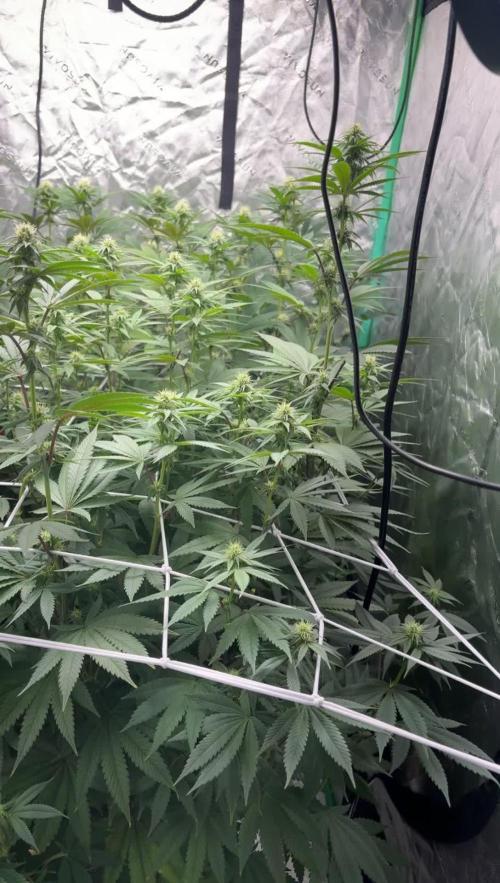
Глобальных изменений не происходит , шишки продолжают толстеть и оплакать глаз . Это самое большое растение из тех , которые мне доводилось растить !
На данном этапе ее рост около 180-185.
Сегодня я подвязал и распределил все толстые ветки под лампы , из-за своих размеров они прогибаются под своим весом .
Теперь она получает все 300 w
28.09.23- 90 дней от прорастания !
Изменения идут медленно , цветы растут а листья желтеют . Думаю еще 2 недели и финишь !
Сейчас она очень огромная , а ее цветы размером с бутылку ✨🍁




@MadeInGermany
Follow
Hi everyone 🤗
This week it looked more and more astonishing after opening the box a wonderful sweet smell wafts through the room 👍.
A few days ago the Blue Cheese Phenotype 1 was harvested and placed in the dark room :-).
This week both Kosher Tangie Kush phenotypes will be harvested 👍.
Next week the Blue Cheese phenotypes 1 and 2 will be harvested ;-) everyone else needs a while 😀.
I wish you all a nice week, stay healthy 🙏🏻 and let it grow 🌱👍


@Zmtftd
Follow
Leaves are changing, and doing out. Trichomes are starting to get cloudy, as well as the hairs turning orange and curling.


@GrowShock
Follow
Хороший сорт, приятно пахнет с приятным мягким эффектом. В выращивании очень не любит перепады температур. На тренировки типа LST и Supercropping реагирует положительно!

shorts_status_processing


@Hampoop35
Follow
This week it seems like they are starting to flower or getting ready to. Day 42 and they are smelling great. I’m super excited to see the difference in plant A and plant B. The runt seems to be bouncing back. After I did some LST it really started to take off.