


Likes
Comments
Share


@ScouseCityLX
Follow
Week 6 for grape glaze we see some colour starting to come through real nicely. Trichomes popping out of the buds, they will really stand out when all trimmed up. Will be running this again 100% have 6 more seeds to pheno hunt.

Likes
10
Share


@SmokieMcPot
Follow
Haven't really been updating much as traction is low and I keep hella notes upstairs and on paper.
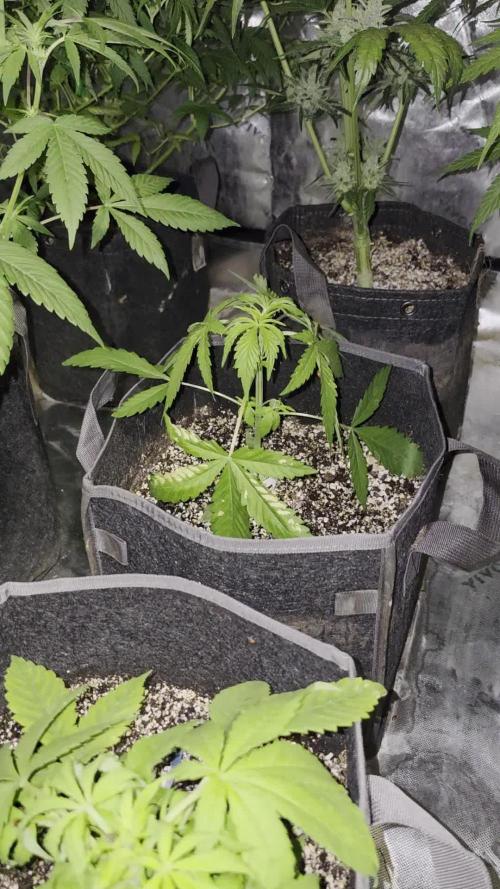
Flowers forming, slight stretch began days ago. Looking and smelling good. May need to hook up the external RES with how massive the root system has gotten. Main stem is over an inch thick. She's drinking ALLOT and eating well.
F Day19 - RES clean/change. Mixed 3gal
M-4.6ml/g
G-4.6ml/g
B-6.6ml/g
PH'd to 6.2 since it's been dropping last few days on its own and needing adjustment.
F Day23- stripping day... added a goodmorning vid of the Booshberry prior to stripping it. Will update post pics/vid this afternoon.

Likes
5
Share


@alafmalaf
Follow
This week I basically gave the certs, fixed the light intensity and got my humidity control system all dialed in. The plants have seen more growth than ever! The seedlings are definitely growing way better than the older plants so I'm not sure what to do now I'm regards to flowering all of them or focusing my energy on a few
Likes
6
Share

@CanarianGrow92
Follow
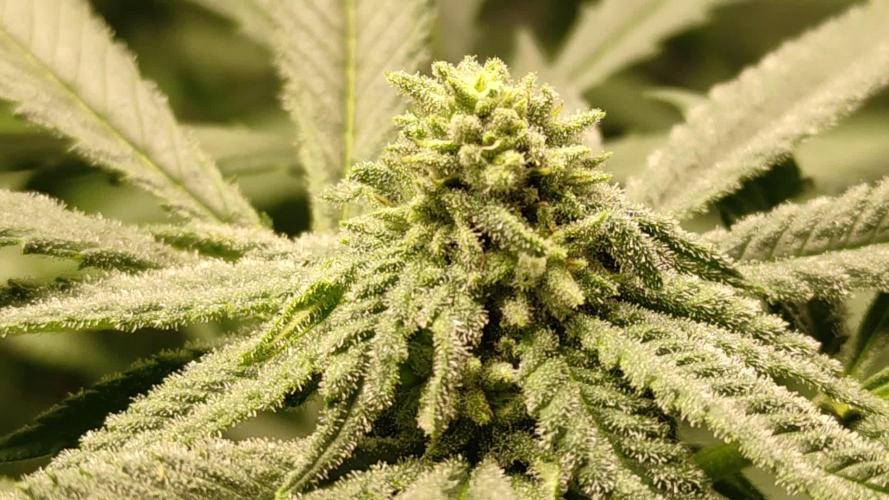
Week 3 flowering for the Green Papaya from the super sativa seeds club.
All looking good at the moment, the buds are showing a nice layer of snow on the buds, very sweet and fruity, we love the Green Papaya.
We did a complete defoliation already and will do some maintenance here and there.


Likes
20
Share


@Dunk_Junk
Follow
Wow look at her this week!!!!!! Quite a change!!!
She's almost done. Harvest in 7 days I'm thinking.

Likes
49
Share


@masterofsmeagol
Follow
6/23 Due To The Two 8 Day weeks this week will only consist of five days to get me back on track. SEE LAST WEEK FOR DETAILS. I DID ANOTHER EIGHT DAY WEEK. I'LL DO THIS WEEK AS SIX DAYS. THAT WAY IM BACK ON SCHEDULE. WATERED 6/22. WENT BACK AT NIGHTCAND WATERED ANOTHER GALLON WITH 1/3 TSP Armor Si. I mixed the solution with kelp you kelp me but I dumped it out. I've mixed silica with other nutes before but I had read something earlier about bioavailability issues and I didn't want to risk it. My plants are the healthiest I've ever grown. I'm considering transplanting the large 10th planet that I'm light depping. I also need to develop my ipm and my nute schedule. Still gonna have to keep an eye onvthe water situation. Luckily I have a buddy in my corner that's co tinualkt Bern a great help.
WENT BACK OVER AROUND NOON. BEAUTIFUL OUTSIDE AND THE PLANTS WERE LOVING THIS SUN. I DEFOLIATED SOME BURNED LEAVES AND MIXED A SOLUTION IF KELP ME KELP YOU THAT I PLAN TO FEED TO THE GARDEN TODAY. IM HAPPY WITH HOW THINGS ARE GOING. WE HAVE SOME RAIN AND THINDERSTORMS COMING. I NEED TO GET MY IPM UP AND RUNNING AND THE NUTES ONLINE. I ALSO NEED TO DECIDE IF IM GOING TO TRANSPLANT THE LIGHT DEP 10th PLANET. Went back over to put the girls to bed at six and if was still 90 degrees. The water from yesterday had dissipated. The tops were dust dry. I mixed two gallons of kelp you kelp me and fed it to the garden. Afterwards I pointed qbd found a couple plants that were more open to the wind were a little lighter. I know tomorrow will be very hot. Maybe quarter inch of rain. However after that it will rain (showers) off and on for days. I wanted to make sure the girls had what the needed to make it through tjis heat wave until they get that rain. I had another gallon mixed up and I'm thinking I should've given it to them. Oh well. I'd rather underwater than overwater any day. I did notice a burnt top on the plant furthest from the tarp that the sun JUST BARELY TOUCHES when the rest are in shade. I'll just raise the tarp a little. These are tiny problems. Can't upload video until tomorrow.
6/24 Good thing u gave the plants that water. I know it wasn't much but we didn't get any rain. Suppised to get a qtr in today and another qtr in tomorrow. Then rain a couple more days. It's working our really good for my watering schedule lol. Yesterday the girls got there first dose of a bottled nute. They got two gallons of kelp me kelp you (1/3 tsp per gallon) and another gallon of just phed water. I was going to do another gallon but held off due to the threat of syring rain. Didn't get it bur it looks like the plants loved the kelp. It had reached 90 yesterday. They look better today. It's 70 at 9 today. I LST the 10th planet in the 3 gallon. It's getting huge. I should start a separate diary for those three light dep plants. Its cool as hell watching this. One of the purple punches is flowering pretty good. I probably should start another diary for them. I'll be starting to feed my plants soon. Wondering if I should pinch plants again. TUCKED THE LITTLE GIRLS IN AT SIX AND SHOT A VIDEO AND TOOK SOME PUCTURES. PLANTS LOOKED PHENOMINAL! GOT HOME AND AROUND SEVEN IT JUST STARTED RORREBTIAL DOWNPOURS! THE TYPE OF RAIN THAT BREAKS STEMS. I SHOULDVE PUT MY OTHET TARP UP BUT I DIDNT. I WISH I HAD. IM A LITTLE NERVOUS. I KNOW THESE GIRLS ARE STRONG THOUGH! TOMORROW. ILL ROLL THE RARP UP AND SECURE THE BOTTOM FOR FAST ACCESS. IM ALSO GOING TO KOOK INTO FINDING A TOP FOR MY CAGE I CAN USE IN INCLIMENT WEATHER.
6/25 That little qtr in of rain we were supposed to get turned into torrential downpours and high winds. Luckily no REAL damage. If you watch the video you'll see what I mean. I'm going to havecto be cognizant moving forward. Noticed a few chunks from leaves butvplants are still healthy. I'm surprised how well these girls withstood this storm. They are certainly resilient. The 2 purple punch 1 10th planet that I'm light depping are flowering nicely now. They missed all the commotion from the storm as they were inside. It's smelling good. I'm happy.
6/26 It's what a friend would say is "maineing") out. That mistcthe plants love. I'm surprised the plants are doing as good as they have been considering the wind. Will be adding nutes soon. Need to add extra supports too. Light dep
6/27 Brief periods or torrential downpours. Light depped 3 gallon 0lants are under an overhanfcwhete the hatsxrain can't hurt them but they still get sun. They are really starting to flower now! I'm going to begin feeding with a base nute and a flower nute I think. I'm thinking about giving the light dep some open sesame or something similar. I need to set up a nute program soon but the plants ALL look so healthy! And it's been raining! I've only watered like once or twice since they've been in the big pots. I've seen zero pests aside from a chunk missing from a grasshopper. Usually by now I'd have battled half a dozen things and be battling another half dozen. However I was posing from clones. These are seeds and boy don't I see the difference!

Likes
16
Share


@MrPotHeadCol
Follow
Hola a todos los visitantes del jardín, hoy las nenas cumplen 15 días , el plantón que está deforme desde el principio continúa sin cambios , he aplicado vía foliar SAFER MIX que es una combinación de hongos benéficos , con esto me voy preparando para la flora , veo las plantas un poco amarillas asi que también se aplicó vía foliar green explosion de top crop para aportar nitrógeno , espero valla muy bien el aporte para empezar con fuerza el crecimiento , gracias por sus aportes al jardín

Likes
14
Share


@Chucky324
Follow
Hello. This is the end of week 8 and the beginning of week 9 of flowering.
One more week of flowering for these plants and then harvest after 9 weeks of flowering..
Things are good here. I got 1 big flush in. Should be able to get 2 more flushes in this week. And I like a couple of days of dark before harvest.
I'll show some pictures of, before the harvest, next week.
I see some of the buds are heavy enough to start heading for the floor. I though I tied them up tight. 😏
Ok. Be Great.
Chuck.

Likes
17
Share


@VovaFarms
Follow
I'm very happy whit this strain. The plant didnt get very tall, i have 8 nice colas which yielded almost 80 g's of dry bud. The smell is very intense. I did tasted some of the buds and high is very good - euphoric and creative. I cant wait to see what happens after some curing in jars.

Likes
Comments
Share


@KannaGrowing
Follow
Esta semana, nuestras plantas empiezan a mostrar las primeras flores.
Ya tenemos la sala con las cuatro luminarias funcionando al 75% de su potencia y las he separado un poco más, ya que veo que con led, el espacio internodal es muy reducido.
Añadimos a la mezcla de fertilizantes CALMAG de BioBizz, que aportará un extra de calcio y magnesio.
Regamos cada tres días aproximadamente, una vez con fertilizantes y otra vez con agua.
Comenzamos a reducir la humedad relativa en la sala y desconectamos la calefacción en fase nocturna, para que empiecen a pasar un poco de frío.
Likes
12
Share


@GizaWRZ
Follow
Girls start getting bigger :)
One of them it looks like will be finish soon 🤨 this week i will get microscope then i will check on her what trichomes are 🧐✌️

Likes
15
Share


@PiusWaxis
Follow
Here we are at the end of my plant's wonderful eleventh week of flowering, another week full of exciting developments and new discoveries.
The constant and unstoppable growth of the plant has come to an end, showing a beauty and vitality that are a true spectacle for the eyes. 😎
The abundant layer of resin that has formed is a clear sign of the health and well-being of the plant, once again confirming the benefits of the premium nutrients used throughout the entire growth cycle.
TrollMaster's "TENT-X" environmental control system continues to prove its worth, precisely maintaining optimal temperature and humidity levels to promote vigorous plant growth.
The combination of advanced and precision technologies ensures that plants can thrive in a controlled and conducive environment😎
I am thrilled to share with you the latest video showing the temperature, humidity and VPD trends of this last week of flowering, providing further demonstration of the extraordinary performance of the TrollMaster control system and its synergy with the other elements of the grow room.
With each week that passes, the anticipation for the new discoveries and challenges that await us continues to grow.
With the constant support of Plagron nutrients, trust in the TrollMaster control system and the excellence of MEDIC GROW LED lighting, I am sure that I am always ready to face any challenge!
Thank you again for being by my side in this extraordinary adventure, dedicated to exploring the wonders of plant cultivation. Together we continue to look to the future with confidence and enthusiastically anticipate the successes that each new week holds for us. 💪👽🌱✨
REVIEW TENT-X:
I was pleasantly surprised by the effectiveness and functionality of the TROL MASTER!
This device is simply amazing, as it has allowed me to monitor the environments I use it in accurately and efficiently.
One of the most impressive features of this device is its ability to operate LED lights easily and intuitively. Thanks to its user-friendly interface, I could easily customize the lighting of my rooms according to my tastes and different situations. I particularly appreciated the possibility of programming the sunrise/sunset simulation, thus creating a more natural situation.
But that's not all: the device goes further and manages to keep me constantly informed about the humidity and temperature of the surrounding environment. This feature has proven to be very useful, especially in times when I am not present.
I was able to set humidity limits, so that the device would immediately alert me if the levels exceeded the desired threshold. This allowed me to intervene promptly and avoid excessive oscillations.
The accuracy of the temperature measurements was another welcome surprise. The device is equipped with a high precision sensor that allows me to constantly monitor the temperature of the rooms. Here too I was able to set temperature limits, allowing me to be notified immediately if they were exceeded.
Overall, I was really satisfied.
The TENT-X exceeded all my expectations. Its ease of use, precision of measurements and possibility of customization make it an indispensable tool for those seeking to monitor and optimize environmental conditions.




Processing
Likes
20
Share


@Mr_nugs_lover_David
Follow
This lady has ended up with a very big size, she's such a nice bush full of sweet stinky colas, tje nuggets are very hard and the resin production is top, very terpy, the aroma is starting to become more and more like cherry 🍒 but with some floral notes. Definitely would love to run her again for sure! 🔝 Very stable strain. All of my 5 black cherry punch have the exact same aroma. 💎💯 She's in a super living soil full of beneficial bacteria and 100% organic nutrients. I'm using Silicium flash by biotabs which contains a lot of beneficial fungus and bug shit. And FLO which is the super food full of aminoacids, a lot of diferent strains of endomycorryzhae and mycorrizae. It's like 100% natural steroids for organic plants, the aroma are so pure and clean. GUYS TRY TO ALWAYS GO THE ORGANIC WAY! YOU'LL NOTICE THE DIFFERENCE 💚🤞💎🌱 pd she's algo got kalong powder and seaweed powder by guanokalong.

Likes
120
Share


@OrganicNature420
Follow
Germination date 🌱 02/12/2021
Day 22 27/12/2021
Strain 🍁 Barneys Farm Biscotti Mintz
(Biscotti x Mintz)
THC% • 30% 🤤
💡 Mars Hydro FC-E6500
• Power draw 650W + 5%
• Max coverage 5 x 5
• LED 3978 pcs high quality chips
• Max Yield 2.5g / watt
• Noise level 0 DB
• Removable Driver & Light bars
• Daisy chain
• Fast cool system
https://marshydroled.co.uk/ 🇬🇧
PROMO CODE • (organicnature420) DISCOUNT
https://www.mars-hydro.com/ 🇺🇲
PROMO CODE • (ORG420) DISCOUNT 👍🏻
⛺ Mars Hydro 150 x 150 x 200cm
📤📥 AC infinity 6inch
💧 10lt dehumidifier
❄️ 3.1kw air con system
💉 Nutrients GreenBuzzLiquids 🇩🇪
⭐⭐⭐⭐⭐
Organic Grow Liquid • 1-4ml until 2wk flower
Organic Bloom Liquid • 2-4ml flower stage
Organic More PK • 2-4ml +wk3 of flower
Organic Calmag • 1-2ml/lt whole grow
Fast Plants Spray • first 2wks at night lights off
More Roots • 2-5ml veg +2wks flower
Fast Buds • 5ml 12days before flower until wk1
Humic Acid Plus • 2-5ml whole grow
Growzyme • 2-5ml whole grow
Big Fruits • 2-5ml flower stage
Clean Fruits • 5ml flush 1wk
Ph powder
Root Gel
Living Organics
https://greenbuzzliquids.com/
PROMO CODE • organicnature420 15% off ✌️🏼
🥥 Growing Media • Coco Coir
Notes 📝
Coming along nicely no problems. Onto a new week and the lot will get topped. Need to buy a net and I'm sorted. Deciding how long to veg for. Need to give them a proper flush this week as I've held off as of Christmas. Hope you all had a lovely holiday, I'm back to work but not really bothered. Happy holidays everyone 💚
Discount codes in bio for Mars and GreenBuzzLiquids 👍🏻
Likes
11
Share


@CrushedCana
Follow
La planta le encantó la nueva luz y empezó estirarse demasiado tanto que para controlar su altura apliqué una poda apical la cual respondió muy bien y empezo a sacar 2 puntas principales
Likes
30
Share


@Togoutouseg
Follow
Variété parfaite pour les débutants. Les plantes sont très résistantes aux chocs de température et d'humidité. Elles donnent des rendements satisfaisants et un goût agréable. La runtz a une odeur très sucrée, presque comme un gâteau, je n'avais jamais senti une plante avec une odeur pareille, c'est très agréable. Les plants étaient tous petit, 50 centimètres environ, et n'avaient pas beaucoup d'odeur pendant la floraison, c'est parfait si vous voulez être discret. Concernant les effets, on voit bien que c'est une souche 50% sativa 50% indica. Au début les effets sont euphorisants, elle provoque des rires, mais par la suite et donne un bon effet analgésique, parfait pour aller dormir, je n'ai pas trop de flow de pensé avec et c'est très agréable pour se détendre. J'ai obtenu 34g et 45g sachant que j'ai eu pas mal de problèmes.