


Likes
Comments
Share


@Naujas
Follow
everything is going quite well, there were problems with lack of potassium, but that error has already been fixed :) the girl has already started sugar leaves :)

Likes
3
Share

@biglittlebird
Follow
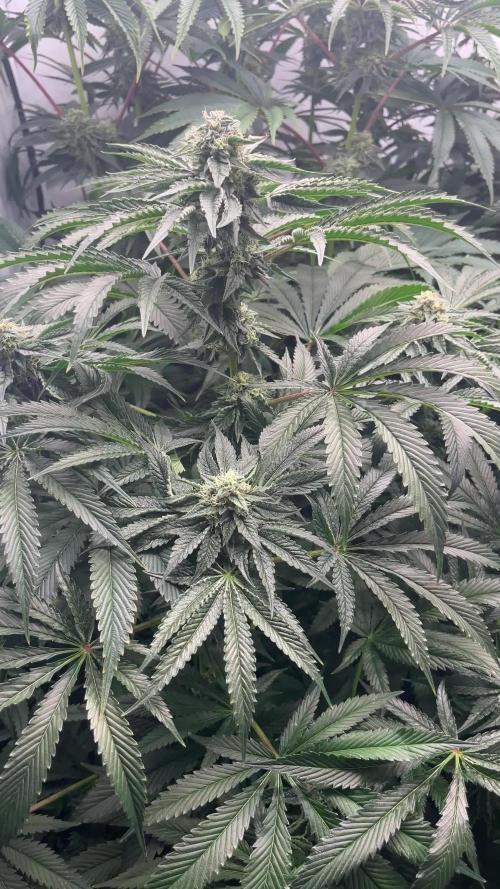
Holky začínají svůj předposlední týden , ted už se pojede jen základ hnojiv v polovičních dávkách , s úrodou budu asi spokojeny .
Jedna devčice tam vyčnívá z řady s nejvíc cukrem, ale každá tam má něco do sebe .
Za mě dobrý 👍 problémy žádné velice nebyly a snad už ani nebudou, jen jedna špatně pobrala to zvýšení hnojiv v tom 6.tydnu (trošku listy popálené ).
Likes
3
Share

@Wastent91
Follow
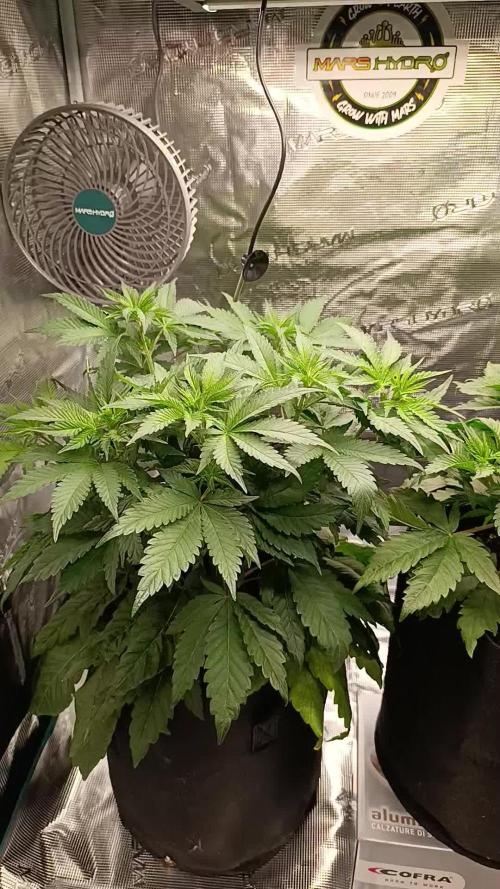
Eccoci qua alle prime due settimane di roe fioritura, è più piccolina ma ho dovuta per forza mandarla in fioritura altrimenti la sorella sarebbe diventata troppo alta per una box così bassa, quindi verrà un attimo più piccola della sorella, ma ha lo stesso vigore, la stessa voglia di crescere e mostrare tutte le sue potenzialità di questa genetica CBD davvero impressionante! Merito soprattutto dei nutrienti di Terra Aquatica, che stanno facendo la differenza, una crescita veloce senza carenze e un stelo davvero grosso e resistente, mi aspetto delle belle cime piene di resina di CBD di questa erba cosiddetta cannabis "light" che nel mio paese l Italia, è appena diventata illegale pure lei! Che tristezza, ma io me ne sbatto e continuo per la mia strada, questa è la mia passione e nessuno mi fermerà, anche se sono considerato come un criminale, in realtà è lo stesso stato che tenendo questa pianta miracolosa illegale è collusa con la mafia e con le case farmaceutiche, quindi è lo stesso stato criminale, non io di sicuro xke cerco di curarmi con un prodotto naturale! Garzie a tutti voi che mi seguite spero di continuare su questa strada senza avere problemi e spero che nonostante nn sono molto presente, vi piacciano i miei diari e le mie foto! Un buon 420 a tutti! 💪😸👌🌱🌿🧑🌾😽💨🔥🔥❤️❤️


Likes
7
Share


@Onlygrow99
Follow
Bien pues ya tenemos en marcha el 2º seguimiento del perfil...
Son 6 white truffles, 6 Apple&Bazzokies de GBSTRAINS y 5 GG4 de GBSEEDS que se empezaron a germinar el 15 de mayo por la tarde sobre las 19:00
Todas nutridas con BOOM nutrients jejeje
Todas las semanas iremos viendo los cambios y la evolución, los riegos y las flores que vendrán :)
El 16 de mayo del 23 sobre las 07:00 de la mañana pase las semillas del vaso con agua, a los tapers con servilleta. Ahí estuvieron 24 horas mas haciendo un total de 36 horas germinando para después,
pasarlas a las macetas de 1 litro.
22/05/23 actualizado, meto unas fotos mas de como van las semillas después de 7 días desde que se empezaron a germinar en el vaso de agua.
A día 22/05/23 llevamos 7 días desde que se empezaron a germinar.
ACTUALIZACION DE ESTADO:
30/05/23 Subo unas fotos después de 8 días.
Llevamos 15 días desde que se empezó a germinar las semillas en vaso de agua.
A partir de aquí, empiezo a contar semanas de crecimiento.
Trasplantaremos a maceta definitivas de 7L dentro de una semana o 2.


Likes
14
Share


@exclusiveX420
Follow
Another really good week. We officially have flower sites as of Monday 3/27 first day of flower!!!!
She is such a monster now! I am really excited to move into flower. I have the plant opened up some more and hoping I can penetrate beneath the surface without side lighting this round. We will see !
The other sour clone I had running, same skunktek is doing well and just got setup with blumat Tropf drip Irrigation!
Stay tuned


Likes
7
Share


@Meksi2790
Follow
first week in flower will defoliate week after all plants look real good lolipopped and cleaned

Likes
17
Share


@Gorrilla420
Follow
Did abit of chopping this week still abit to go, been looking at expanding this spot to try get few more plants down. Both plants looking healthy, the ny diesel is getting big now, as the cheese has got more closer node spacing. May do abit of lst this week coming as shouldn’t be long before pre flower.
That’s all this week, happy growing 🌱

Likes
54
Share


@TheCannaProphet
Follow
~ AirCube Active Oxygen Ebb/Flow System sponsored by GrowAce, featuring Strawberry Gorilla Auto by FastBuds ~
Well guy's and gal's here we go again on another exciting Autoflower run together! This time will be different as I will be doing a 'Hydroponic' run utilizing the AirCube Active Oxygen Ebb/Flow System by GrowAce, who were kind enough to sponsor me for this run, so it should be interesting to see what results I get and have some fun along the way!
•Let me first tell you about this 6 Pot Ebb/Flow system from GrowAce:
"The AirCube system is the one and only Ebb & Flow grow system on the market that combines the benefits of air pruning with a fully automated Ebb+Flow system! With the AirCube's proprietary fabric pot in bucket design, this system is guaranteed to outgrow any other Ebb + Flow system on the market. The results speak for themselves- grow MASSIVE roots that result in MASSIVE fruits!
Air Pruning- Air Pruning only happens with fabric pots. As the roots reach the fabric walls of the pot, they penetrate and grow into the breathable fabric. Once penetrated, the roots are exposed to air, which causes the tips of the root to dehydrate and naturally prune themselves. This natural pruning process forces the roots to grow tons of lateral fibrous feeder roots. This results in a plant that utilizes the entire root zone and fills the entire pot with tons of roots. These fibrous feeder roots are incredibly effective in uptaking water and nutrients, resulting in a plant that grows healthier and more vigorously!
Oxygen Benefits- Without oxygen, nutrient absorption cannot occur. On a molecular level, oxygen is needed to transmit nutrients across the cell walls and into the roots of a plant. With the AirCube's proprietary bottom lifted draining design, the system actively draws all of the water out of the bucket pulls vital oxygen into the root zone.
Maximum Versatility with Any Grow Medium: The AirCube System is the only system on the market that allows you to use any growing medium you like. Use coco coir, soil, peat moss, perlite, vermiculite, hydroton, rockwool or any other medium you wish! This system is the most versatile Ebb and Flow bucket system in today's hydroponics industry.
Temperature Control- with the fabric pots constructed with highly porous polypropylene fabric, heat dissipates easily and effectively. Unlike standard plastic pots, heat isn't trapped in the root zone. Heat in standard plastic containers can reach temperatures of up to 125 degrees. When this type of heat is trapped and unable to escape, it can damage your plant's health and limit the potential of your harvest. Growing in the AirCube System, plant roots grow cooler, healthier, and more vigorous.
Largest Pots in its Class- this system features 5 Gallon grow buckets, the largest pot size of any other ebb and flow hydroponic system in the market.
Modular and Expandable- start with 6 grow buckets and expand up to 36 grow buckets with the optional 105 gallons PopTank reservoir!"
For my medium and nutrients I decided to also switch things up from my regular Organic runs, going with Plagron Nutrients and Root Royale 70/30 Coco/Perlite. When filling the fabric pots with medium, I first added just under a gallon of horticulture perlite from Nor-Cal as a base layer to ensure good drainage and then filled the remainder with the Root Royale.
•Now for one of my favorites, and award winning strain from my friends at FastBuds... Strawberry Gorilla Auto:
I'll be running Strawberry Gorilla Autoflower which is a 55/45 Sativa/Indica Hybrid. "ATTENTION ALL! Due to our continuous efforts in evolving our breeding process, we are proud to confirm that our Strawberry Gorilla Auto has now become one of the most potent autoflowers in the world! Paving the way to our recent success where she ranked on top & brought home the gold at the very first American Autoflower Cup in California. Moreover, she proved that not only modern autoflowers can compete with photoperiods, but they can even beat them in their field. At the most recent edition of the Farmer’s Cup and competing against various photoperiodic strains, Strawberry Gorilla Auto took home the title of 'Highest Combined Terpenes' in the highly sought-after 'Home Grow Hash' category, with an impressive 97.163 mg/g total terpene content! Our exceptional genetic selection's crowning Strawberry Gorilla Auto strain is a spectacular hybrid known for producing yields of up to 600 gr/m2 in 70 days. This is a very manageable grow that can reach heights of up to 150 cm - due to its magnitude we recommend it for more experienced growers, as a huge plant may be a little overwhelming for first-timers. This show stopping sativa heavy hybrid is perfect as an all day smoke, producing a taste bud tingling, pungent berry and diesel terpene-rich flavor combo that leaves you with a grin from ear to ear, a perfect choice for those looking for a day-and-night autoflower! "*
*References: GrowAce.com, 2fast4buds.com
______________________________________________________________________________________________________________________________________________________________________________________________________________________________________________________________________________________________________________________________________________________________________________________________________________________
The Setup:
• AC Infinity 4x4 tent
•AC Infinity Cloudline T6 Exhaust Fan w/ Controller 67
•HLG 650R w/UVA Bar *** For some reason GD does NOT have a listing for the USA version of the 650R so I selected the closest match to it.
•AirCube Active Oxygen Ebb/Flow 6 pot System
•TrolMaster Hydro-X Controller for light
•AutoPilot APC8200 co2 controller fed by a 50# tank
•16" Hurricane oscillating fan and 8" floor fan
•Tent cooling via filtered outside air delivered by AC Infinity Cloudline T6 fan
•BlueLab instruments: PH Pen and Truncheon Nutrient Meter
______________________________________________________________________________________________________________________________________________________________________________________________________________________________________________________________________________________________________________________________________________________________________________________________________________________
Weekly Updates:
11/1- Here we go into the fourth week for the FastBuds Strawberry Gorilla Auto's and they are all looking great, and are very healthy!
I'm continuing the feed schedule of six, 15 minute feeds daily and am leaving the nutrient level at 900ppm. The HLG 650R is now at 100% output, and is hung 28" from the canopy.
I'm keeping a close eye on all of them, looking for the first signs of flower. I also am diligently tucking shade leaves away daily trying to get some light down into the plants.
11/3- Yesterday I decided to do a little bit of defoliation, removing the largest shade leaves on all three which really helped with light penetration. Today all of the plants looked none worse for the wear, and as spunky as ever!
11/5- All three plants are now in flower, I have done LST on all three, tying down branches with horticulture wire. I've also done some defoliation on each plant as they got extremely bushy and were getting zero light down into the lower sections of them. All have responded extremely well to the training and are looking great!
Tomorrow I will empty and clean the reservoir along with the 'brain bucket' as the water has really gotten funky and has an odor that I don't like. Going forward, I'm going to be doing weekly changes on the reservoir where I'll empty/clean/refill and add fresh nutrients. In between changes I'll just be topping off the reservoir with straight water and only checking the PH.
11/7- There goes the first week of flower for the FastBuds Strawberry Gorilla's and they're all looking pretty darn good, all things considered. I can't wait for next week to see these girls really start to get going! Thanks for stopping by!😎❤️
💚 Thank you for checking out my passion in life! Please visit as often as you wish and I hope you enjoy this journey as much as I know I will! Grow what you love, Love what you grow!💚


Likes
6
Share


@Dazednhazedlynn
Follow
This crazy tight babynisnhard to train plenty of sites to be exposed I manged vet careful to work around her! I have to adjust ties every few days

Likes
26
Share


@pifflestikkz
Follow
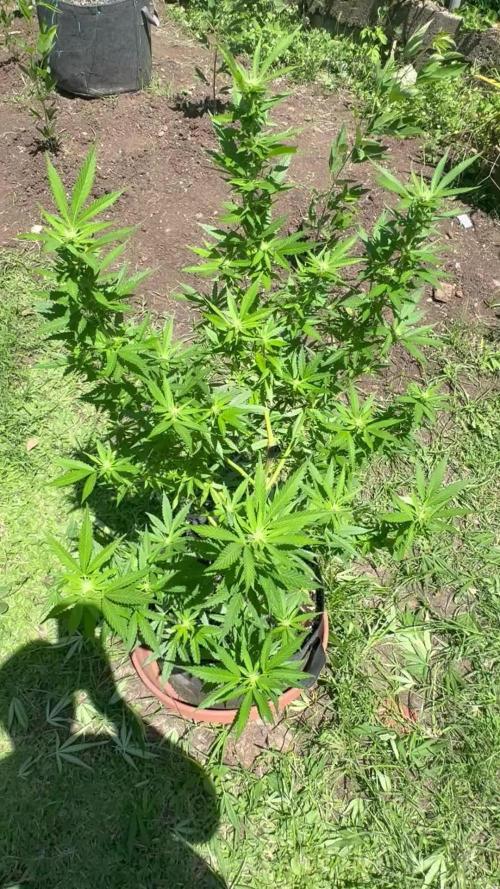
Day 106
14/10/24 Monday
Their colours are really coming through now 🤩
Nearing their end now, possibly another week after this ✌️💚
Picture and video update 📸💚
Day 108
16/10/24 Wednesday
Another run through of de-chlorinated tap water and flawless finish all to pH 6.3.
Giving 0.3L again daily as there not drinking half as much now.
Picture and video update 📸💚
Day 110
18/10/24 Friday
Divine Seeds Overdose has been Harvested. Check her own diary on my page for full results.
I moved the others into my now cleaned down 1.2m x 80cm under 660w hps to finish off.
Day 111
19/10/24 Saturday
De-chlorinated tap water and flawless finish at pH 6 today.300ml
Day 112
20/10/24 Sunday
De-chlorinated tap water and flawless finish at pH 6 again 300ml.
I have had an extremely busy week. I'll upload videos and pictures tomorrow on a fresh week... Wait and see the colours 😋💚




Likes
2
Share

@DmbTexasRanger
Follow
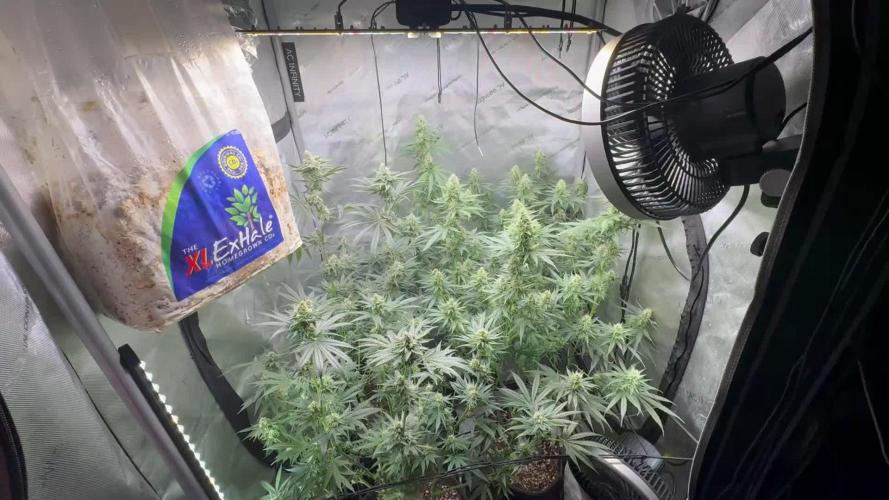
I’ve been training this canopy since it was in a tent this spring!
Indoor tent has great flowers. I’m hoping to get a half pound of good smoke. I look to be on my way !


Likes
89
Share


@BioBuds
Follow
Wow wow wow... Apollo what have you guys made at SweetSeeds... My dear this strain is a monster and a keeper. Do you want regular-sized plants and buds in 8 weeks? No problem!
Do you want plants that can handle any condition even as a noob? Check! This beast of a strain is out of this world and I'm over the moon with the results.
I can't believe it. Normally I've seen auto's do 30 cms and some buds on top... This is simply alien tech...
I think I have never seen any plant grow that fast... This is something to try if you haven't already...
Completely amazed... And this is while making all sorts of mistakes: too hot, soil also too hot in nutes and temp, hotspots in tent by lacking fans, less PH buffer.
Stuff I learned:
- In my climate: at least 20 liter grow pots, maybe bigger.
- Add hydro corn, I forgot this
- Less bloodmeal and bonemeal
- More perma tea since mine is now too old to use, it will rot the earth.
- More often more water, in smaller pots
- Better ventilation and routing of fresh air.
- Light a little higher also during flower.
- No training is needed, a little defoliation is enough.
Thanks again for visiting and don't forget, these results wouldn't have been possible without my trusty SP-3000, consider to try it and see what this light does!
Hug bud
-

Likes
1
Share


@RKGENETX
Follow
overall was great to grow and for it being my second grow I'm so glad how well it turned out some of the frostiest buds I've seen or smoked.

Likes
16
Share


Likes
44
Share


@Cogollo_eu
Follow
**Encontrarás la traducción a español al final de la descripción**
From/Desde: 12/04/19 || To/Hasta: 18/04/19
From day/Desde día: 50 || To day/Hasta día: 56
You can find the Money Maker Diary here:
** Podéis encontrar el diario de las Money Maker aquí:**
https://growdiaries.com/diaries/25667-gorillamakingmoney-gorilla-vs-money-m
-----IMAGES & VIDEOS-----
I'm sorry for not having a tlapse video this week, i slaved the cam onto my 60x60 tent to record the first growing week of another plants, next week i will return with more tlapse videos.
-----WEEK SUMMARY-----
To have a visual size of the plants take into consideration that the SCROG net it's fixed 24 cm abobe the top part of the soil.
There's something i want to correct and remark this week. About the question i asked some weeks ago on growers help, about the plant with decoloring problems (Photos 7 & 13), where i've choose the defoliation answer as the correct one. Watching the plant today, I would say that it can be an excess of co2 in the roots caused by a co2 tablet that I used during the first days of growth. You can notice how the part of the plant in the back does not present de decoloration it have in the front.
Also remarking what i've told last week, i must say the SCROG is not a true SCROG, as some colas begin below others, and also colas are of different heights among all plants. Anyway i'm very happy on how everything is going. And insisting again, I have very very few experience growing cannabis, this is my 3rd grow, 2nd indoor, and first time with photo-period at indoors, and of course is the first time too i'm trying to apply growing technics on a serious way. I really don't know if i'm doing things right or wrong.
-----WATERING CALENDAR-----
13/04/19 - 1.250 ml with all week nutrients -(Sensizym, bloom stimulator, bloom nutrition & amino complex) @ PH6.4 & 1.3 E.C.
17/04/19 - 1.250 ml with Silica Power, Pro Active, Bloom Stimulator, Bloom Nutrition, Sensizym & 5 drops of Amino Complex @ PH6.5 & 1.3 E.C.
*****ESPAÑOL*****
-----IMÁGENES Y VÍDEOS-----
Siento no tener vídeos timelapse esta semana, he esclavizado la cámara en el armario de 60x60 para grabar la primera semana de crecimiento con otras plantas que tengo en el.
-----SUMARIO SEMANAL-----
Hay una cosa que quiero corregir y remarcar esta semana. En sobre la pregunta que realicé hace unas semanas sobre la planta que tenía una decoloración (Fotos 7 y 13), en la que escogí la respuesta de la variegación. Viendo la planta a día de hoy, yo diría que es un exceso de CO2 en las raíces causado por una pastilla de CO2 que usé durante los primeros días de crecimiento. Al fijarse bien se ve como la parte trasera de la planta no presenta las decoloraciones y sin embargo la frontal si.
Para tener una idea más o menos certera del tamaño de las partes de las plantas, tened en cuenta que la red está fija a 24 cm de la parte superior de la tierra de los tiestos.
También remarcando lo que dije durante la última semana, he de decir que el SCROG no es un SCROG real, ya que las colas no empiezan desde la misma altura ni son de la misma altura, ni las plantas son de la misma altura. Pero yo estoy muy contento con como va la cosa, vuelvo a insistir que es mi primera vez con foto-dependientes indoor, mi segundo armario indoor y el tercer cultivo de mi vida, y por supuesto la primera vez que aplico o intento aplicar las técnicas de cultivo. Lo estoy intentando realizar bien y de manera eficaz, pero realmente no se si lo estoy haciendo bien o mal, yo simplemente me lio y veo como responden las plantas.
-----CALENDARIO DE RIEGO-----
13/04/19 - 1.250 ml con todos los nutrientes semanales -(Sensizym, bloom stimulator, bloom nutrition & amino complex) @ PH6.4 & 1.3 E.C.
17/04/19 - 1.250 ml con Silica Power, Pro Active, Bloom Stimulator, Bloom Nutrition, Sensizym & 5 gotas de Amino Complex @ PH6.5 & 1.3 E.C.
