


Likes
Comments
Share


@Hou_Stone
Follow
my 2 Allienz seem to be hermaphrodites :/ I had to stress them in different ways. The first weeks I sprayed the leaves leaving drops under a 400w light maybe this caused the hermaphroditism?
Anyway I'll be careful and I'll be cleaner for my next future culture.
---------------------------------------------------------
Grow Room: trafika urban hydroponics 100x100x200 cm
Lamp: kit trafika urban hydroponics ballast & lampe HPS : 250-600w
Extractor & carbon filter : Mars hydro 6 inch 402 CFM ( power 3/10 )
Soil : 20% perlite, 20% vermiculite, 60% universal soil
Average daily temperature & humidity : 20-29°C 35-60%
Average nigth temperature & humidity : 12-18°C & 50-70 %

Likes
29
Share


@BioGrowKing
Follow
Die dritte Woche war okay sie bekommt jetzt langsam rechts und links die zwei großen arme die ersten zwei Blätter sind auch voll ausgebildet sie streckt sich ein wenig aber ich denke das ist nicht schön heute am 24. September habe ich in Wieder enhancer benutzt allerdings hab ich es diesmal als eine Art Oberflächendüngen benutzt 0,5g pro Liter Erde sind vorgegeben ich habe etwa 0,2g auf die Oberfläche gestreut und einmassiert vor dem giesen
Likes
28
Share


@SooSan
Follow
Dans l'ordre :
Blueberry
Dutch Passion
Blueberry
00 Seed
Blueberry
PEV Seed
Blueberry
Bulk Seed
Animal Cookies x Blue Monkey
Exotic Seed
Red Hot Cookies
Sweet Seed
DoSiDos x Purple Punch
PEV Seed
Purple Shot
Exotic Seed


Likes
34
Share


@Grow420pice
Follow
Woche 9 Tag 63
Letzten Wochen sind im gange...
Purple Lemonade wird ab heute eine Woche gespült bzw geb ihnen nur noch ph Wasser. Ernte bei Tag 70
Blue Dream bekommt noch eine weitere Woche. Wird immer noch fetter! Es wird denke ich mein bisher bestes Ergebnis, mit dieser Box sein. In Bezug auf Quantität. Schätze so mit 400g trocken.
12.06.2021
Der Duft ist fantastisch!
Purple Lemonade ist so gut wie fertig! Trichome werden Bernsteinfarben, beginnend an den Sugarleaves. 80/20
Blue Dream wird immer noch fetter und beginnt zu Reifen. Trichome noch klare und milchige.
Mittwoch 16.06. werd ich die Lila Limonade hacken.
Blue Dream geb ich noch eine zusätzliche Woche... Die benötigt sie auch um einigermaßen bereit zu sein. Evt auch 2 Wochen.
🌱🙏😎

Likes
9
Share


@PrairieFrostGrow
Follow
***** Week 6 December 27/20 to Jan 2/21 - Days 36 to 42 from germination *****
Week 6 is hear already, it feels like........or maybe I just wish it was start of week 4 still😂......she is looking like she has all the makings of coming through her early flower and going hard now and growing harder👍👍 All we can do is be patient and give them the time they want. This girls top nodes are pulling up harder at the start of the week and getting lighter in colour at new growth sites. Given what she has done the last two days she appears as though the next week will be a good week for growth.
She is getting Terpinator at the start of the week but I would probably have normally waited another week for her had all the girls been on the same day. To try and balance the feed I gave them CalMag with Terpinator to even out the NPK a bit more, plus the microbes or other supplementals.
Bumping up the ml of moisture the pot is getting this week..........noticed the last two watering's that even though the pot feels like there is some weight to it, when she is watered she takes 2L or more to get runoff. Won’t start changing it too much as she is starting to look healthier. Just is getting bigger so will naturally start consuming more in the same period. Rather than increasing the amount of liquid😜 😜 😜 Pulled her out early week and her leaf colour is good......she is not lacking anything based on leaf colour so will also keep up the plain watering's cycle as is.
Little more detail.....
Dec 27/20, Day 36
- pots are light again in the afternoon.
- 2L watering with Magnifical and Microbes @ 2ml. Terpinator @ 3ml = 400ppm and 5.8pH
- She is feeding well and again, after 5 min still no run off from 1.5L so graver her 2L.
- she is looking really good in the afternoon and her tops are really pushing hard.......hairs popping everywhere 👍
Dec 28/20, Day 37
- Top of the girl looks really good in the morning. She had a good night of growth and the lower side branches have gotten longer and getting closer to the top.
- she is coming out of the "ball" phase and moving into the "flat top" phase before we see our "bush" forming😂😂😂
- 2L watering today with full line of Remo, all 6 parts plus silica again @ 2ml = 1150ppm and 5.9pH
- This is a little stronger feed than I would first chose for this girl as her leaf colour is a nice green already and new growth showing some small signs of tip burn. Should have probably portioned off part of the feed for her and added some more water to reduce ppm.......ran with it though😳
Dec 29/20, Day 38
- another feeding in the morning today. Pot was really light.
- 2L in the morning giving with same feed of 1150ppm and 5.9pH.
- the other autos were fed again in the evening but not this girl.......she is feeding well but her pot was still heavy in the evening.
- she is really looking good!!! She is shooting hairs like crazy and tip are up on the leaves.
- would love to strip the fan leaves blocking bud sites but I am resisting temptation.......she is too small.......take them when she has grown a little healthier and larger 😀
Dec 30/20, Day 39
- she is still looking like she is trying hard to grow bigger and pushing her tops higher😀
- leaf colour is very good and noticing that even though she is being pushed with ppm that she is not showing tip burn like the other girls in the tent😕
- 11:00am she had 2L watering with Magnifical @ 1ml, Enzymes Komplete and Microbial Mass @ 2ml = 175ppm and 5.7pH
- since she is looking good for colour, I will follow along with the other girls and give her a couple of lighter water feedings and help flush out some of the salts from her root zone. Good hit with Enzymes today to help with just that.
Dec 31/20, Day 40
- pots are really light this morning.
- 2.5L feeding with Terpinator @ 3ml, MagNifiCal and Rezin and Microbial Mass @ 2ml Natures Candy @ 1ml = 600ppm and 5.9pH
- pulled her out and trimmed off a fair bit of lower branching. Did it now before she gets too far into flower.
- she has a lot of lower leaves.......she is super bushy still so I felt is was time to take the lower 1/3 from her.........Sorry, Apolo couldn't help it.....so many leaves blocking light😂
- It was actually fairly aggressive stripping so will keep an eye on her and see how she reacts......should have added some kelp and vitamin B to the feed but didn't😶
Jan 1/21, Day 41
- watering in the morning.
- 2L watering with CalMag, VeloKelp and Vitathrive @ 1.5ml = 400ppm and 6.0pH (Had to add Terpinator for 1ml/L to bring down the pH......missed it so added something, too much pH up was added.)
- they have been given a lot of ppm this week so backing off a bit and just giving some basics as using RO water.
- she is not as happy this morning. I am trusting that she is just sleeping this morning.......switched to a 24 hour cycle 3 days ago and trying it out to see how the girls react.......been very good until today.....keep an eye on her. She may need to be lowered from the box she is on as the other autos need the intensity still.
Jan 2/21, Day 42
- pots are dry and time for moisture again.
- plain water only!!!!! She is showing signs of some excess from pushing them harder this week.
- backing off and let her use some of the nutes she already has in her.
- 2.5L water with Enzymes @ 1ml = 15ppm and 5.7pH
- droopy in the morning........see how they look in a couple of hours.
- closed the door to the room last night and temps in the tent were 87 degrees this morning.......they will bounce back but it definitely impacted them last night.
- J47 was really impacted and appears to be a sleep with the leaves looking the same as at night.
Processing
Likes
17
Share


@greennug
Follow
grow room adjustments this week. plants are now more spread out under a total of 5 600w HPS lights. 3 fastbuds plants have an additional 45w LED light. by week 3/4 they will occupy my whole grow space and an additional 3 600w HPS lights will be added.
Plants are looking healthy and 10 or so have been topped for the first time on day 8. dinafem cookies are looking very good in structure. will upload pics every day until harvest! thanks for looking. UPDATE day 12 veg, they are looking beautiful better than i expected. there are 36 in 15litre pots now and i cant wait to make my final grow room upgrage next week and for my room to be looking like a forest! im hoping for 2-3kg off these girls and only time will tell. i will keep doing daily updates until harvest

Likes
2
Share


@705project
Follow
Since Day 56, I moved her into the new tent sizing 150*150*200 cm and 450W Grow light
Processing
Likes
16
Share


@Mrg7667
Follow
Day 14, the last week was an Amazing week! I am loving the roots 707 so far just for the pure fact that i don't have to water as much as coco based medium and the babies look so happy! All stretch has stopped and they are now working on leaf production! All are growing at the same pace with a few outliers on both ends but i have a feeling all will catch up with LST. Definitely got some interesting growth i know i have a couple two leaflet strains wich is interesting!


Processing
Likes
6
Share


@StickyFruits
Follow
24.02.2020-installed the 5th lamp, carbon filters, washed with clean water of 5 liters per plant and set it to 12/12
29.02.2020-I water 1 time in 2 days, according to the fertilizer-fertilizer-water scheme, gradually increase the ppm from 600 to 900, before going to bed, having a spray shower ;)

Likes
3
Share


@Menzee420
Follow
Been 10-14 days since I fixed the lighting issue & she's flowering very nicely now. Tho the top of the plant is still a bit behind. There's a street light outside my balcony which still shines a bit of light over the wall that catches the top branches & I wondered if this could be slowing down the uppermost branches. I found some extra sun netting & have hung it on my pergola to block out the street light some more too. Not sure this will make much difference but it has the added benefit of giving her some more privacy as she is getting huge!
Have seen some evidence of thrips & mealyworms, which seem to be kept under control by the bio insecticide I have been using.
I thought I might have to prolong the grow til late October but the rate she's bulking up now I don't think she'll need to be out there for that long. Time will tell!

Likes
4
Share

@Gratak
Follow
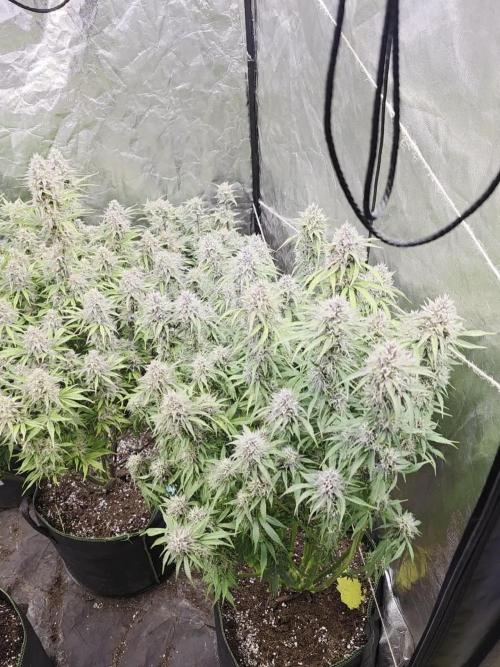
Die Hauptaufgabe bestand im Entlauben und entfernen der Blätter die Feuchtigkeit erzeugen, damit die Buds nicht schimmeln. Bis jetzt sieht alles gut aus und läuft nach Plan


Likes
2
Share

@GreenHobbit
Follow
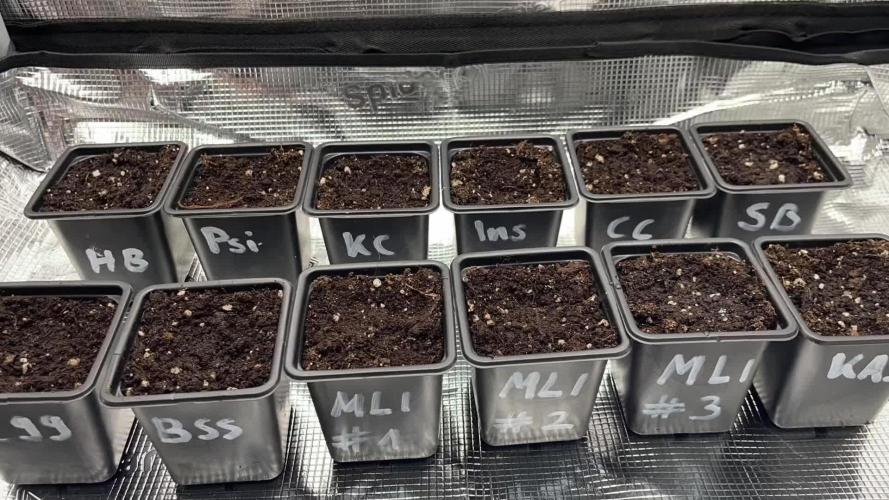
Cinderella 99
Cinderella has entered the castle. 👠🌱
Die Cinderella 99 hat die Keimungsphase mit einem kleinen Suizid Versuch auch hinter sich gebracht und ist inzwischen oberhalb der Erde angekommen. Die samenschale hat sich in der Erde verkeilt und sie verlor ein gutes Stück ihrer Krone. Hab jetzt noch einen Samen ins Glas gehauen falls sie es nicht schafft. Die paar Tage sollten bis zur Blüte keinen großen Unterschied mehr machen..
Damit beginnt für mich ein besonders interessanter Run, denn C99 gehört zu den Sorten, auf deren Entwicklung ich wirklich gespannt bin.
Jetzt darf Cinderella erstmal in Ruhe ihre ersten richtigen Blätter bauen. Falls nicht wird sie durch ihre jüngere Schwester ersetzt🤣 Der Ball beginnt später. 😏💚


Likes
5
Share


Likes
19
Share


@buddhi_coop
Follow
This week I just let them do their thing. They seem to be bouncing back after the transplant I did last week. My OCD is getting to me though with the uneven canopy. They seem to be happier tho so I’m happy.
Likes
27
Share


@ohserp
Follow
Everything is looking good so far, gonna do start some LST this week and continue feeding 1 time per week at .5 tsp to a gallon. Gonna take pictures when I can but will be doing weekly for sure.
