


Likes
Comments
Share


@Green_Friends_Inc
Follow
This is a super strain no hesitation go get this one you won't regret



Likes
12
Share


@Lazuli
Follow
Shes putting on some serious weight
The smell is insane its one of my favorites
Very candy like, almost rainbow candy not a single whif of earthyness or lemons just pure candy
I water her now twice ever 12 hours because of the 25celcius now, and soon 33. The EC goes up a lot in summer always, so more waterings or even just pure rainwater to drop it lower


Processing
Likes
12
Share


@w33dhawk
Follow
Diese Woche war eine Qual es sind 2 Äste abgebrochen beim ein weben Sowas von scheisse! ich und meine wurst finger aber sonnst bin ich zufrieden mit der Sache läuft........


Likes
2
Share


Likes
8
Share


@STAYINGONMYMAINCBATORUNTWO
Follow
Was a bit worried in the first weeks of flower as the buds formed early but... i was left with the most densest of buds literally hard like arnie in his terminator days lol! I didn’t quite get the amount I expected but defiantly enough! Will defo grow again!
After time went on she developed so much frost literally like diamonds 💎
Resistance was very strong on this one too and drank so much more than the rest had to be smart with watering! I’m the end the result was as intended can’t wait for the next couple of weeks for the flavour to really come out but as of now really reminds me of skittles as you can taste the sweetness but also that cake 🍰 comes right through too and this is before a full cure. Happy growing buddies I say this one is a top one to grow!
Added a few photos since cure! These buds are dense and colorful and fruity! Tastes like it smells until you get a lovely bit of cake come through! Heaven!
High is full body literally one point I felt it in my feet rose to my chest!
Likes
11
Share


@Ninjabuds
Follow
The blackberry moonrocks is still doing great they are the biggest plants in the tent I have a feeling they are going to be super stars I'm hoping they stack nicely and not branch out to much the main stems have a dark color starting so maybe we will get black leaves
The day has come and it's time to flip these ladies to flower. I was planning on letting them go untill Friday and let the smaller ones grow just a bit more but they will be fine. I have the eternity cup contest in mind and I'm thinking timing so I need to get these lady done and out my tent lol. This past week I turned the light up alot getting them ready to flower they have grown a bunch inhavendone lst maybe 5 it 6 times on the branchs and they arw nit bendy anymore that will help durring flower.

Likes
7
Share


@StonedandSteady
Follow
It's Harvesting Time and it's about that Time! Lol Very Divine!!! Total Dry Weight is Great and Huge!!! My Grow Tank Grow closet looked Phenomenally Bright and Totally Tight under these Magnificent Grow Lights! I Flushed her out 10 days before the Crop with 2 gallons a day with some Cold Declorinated Tap Water and let to dry for 7 days! I also Applied the Ancient Art of Stem Splitting 7 days before Harvesting to help finish her Up already with Extra Terpy Frosted Budz, then going into 48 hours of Darkness before chopping her down! Then, I Bud sprayed her with Milk Water and Bud washed!
This Awesome and Outstanding #Opium Grew the Distance and Got those Leaners Supported into her 14th W/Flower: No 14th Feed of #HumboldtCountysOwn this Week! I picked Up a pack of 32" bamboo skewers and staked her Up to help prevent her Bodacious Budz from breaking off! She's Packed, Stacked Up and Lights Upgraded!!! Cloned with my Steady's Saliva!!! We'll definitely Grow back to everything here soon! #Pre-Sexed 4/9/21 #Opium/#PabloEscobar *Fems* breed by Team #DivineSeeds #DivineSeedsSquad #DivineSeedsBreedingCompany I'm Very Excited and Extremely Gracious!!! These Cannabis plants are Camping out in the Closet for a week or so! Lol
My #PabloEscobar and #Opium *Fems* from #DivineSeeds Regs: SalamiLegF3's×2 and FireAlienRomulan look$ Outstandingly Awesome and Finished Up Phenomenally Fine into thier 9th week of Flower! Thanks Again for All the Love and Support my fellow Growmies and Growmets!!! These Magnificent and Magical Ladies were Growing in our 48×24×60 ViparSpectra Official Club 🌿 ®️ Grow Tent and under our #Osree QB1000w and #GrowStarQB1000w but Finished out in Flower under our #BloomPlus BP1500w! #TNBNaturals The Enhancer Co2 Despersal canister and ph'd them w/ Declorinated watering w/ TNB ph Up and Down! Totally Top Quality Topz all Around! Thanks Again #GallowGlas420 #HarleyGrower #thehumancannabiniod #AlienBloodGenetix #TNBNATURALS #www.as420.ca #divineseeds #divineseedssquad #divineseedsbreedingcompany #HumboldtCountysOwn #ThrivingDesign Family's and Teams!!! Your Genetics are Merry Magnificent, Mega Marvelous and Mighty Medical! Love um!!! I really Can't stress enough how Thankful and Grateful I am of All of you and what you've Shared with Us! Means the World!!! It's definitely a Pleasure being able to Grow with these Phenomenal Grow Lights! Please Enjoy! BudBrothers4-Life! Cheers Famz!!! Much Props and Much Topz!💯🔥#BloomPlus #GrowStar #Growatt #Osree #TNBNaturals #TNBTeam #HumboldtCountysOwn #GrowYourOwn #Bliss
Bloom Plus BP-4000
CA:https://www.amazon.ca/dp/B08DTDP5FF/ref=cm_sw_r_cp_awdb_imm_86Q7H2D5BGFYB9B6PR9K
US:https://www.amazon.com/dp/B08DTN3B84/ref=cm_sw_r_cp_awdb_imm_4B7XWCAS09M4V3W0AFJH
Bloom Plus BP-2500
CA:https://www.amazon.ca/dp/B08DTCYV9Y/ref=cm_sw_r_cp_awdb_imm_YDNA8G16PH3TB002VKGE
US:https://www.amazon.com/dp/B08DS53THM/ref=cm_sw_r_cp_awdb_imm_SX3AEDKRVAYQECF32BE4
Bloom Plus BP-1500
CA:https://www.amazon.ca/dp/B082XYLHRJ/ref=cm_sw_r_cp_awdb_imm_XEBFV7790EHT53B2J9B5
US:https://www.amazon.com/dp/B082XYLHRJ/ref=cm_sw_r_cp_awdb_imm_MB3PYZEVSQRZY096AB79
BloomPlus Instagram Link: https://instagram.com/bloom.plus?utm_medium=copy_link
Thanks Again Broski #SmokinPlantaz for Hosting your Bright and Tight Amazon Prime Day #BloomPlus-1500w Giveaway! I'm still Blinded by the Light!!! Lol (Song Pun) it's Ultimately Lit, Extremely Powerful and Brilliantly Bright! I also Love and Appreciate Everyone out here! Please! Go Over and Spread That Love to my Bro's YouTube Channel and Team #BloomPlus on their Instagram! I'll have thier Links posted ⬆️⬇️! BudBrothers4-L!!! Cheers Famz!!! Much Props and Much Pars!💯
SmokinPlantaz YouTube Channel Link: https://youtube.com/channel/UCDKJthWoS6-miAhq_lLb_-w
HumboldtCounty'sOwn:
Email: [email protected]
Phone: (707) 725-4119
Toll free: (866) 872-9434
Humboldt Bottling
Po Box 429 · Fortuna, CA 95540
HumboldtCounty'sOwn Website Link: https://humboldtcountysown.com/
HumboldtCounty'sOwn Instagram Link: https://instagram.com/humboldtcountysown?igshid=1qj809qkkwych
https://instagram.com/bloom.plus?utm_medium=copy_link
https://instagram.com/osree.light?igshid=1vrsbdyhzg2h8
https://instagram.com/growstarstore?igshid=2yjn0r00r6ru
https://instagram.com/divine.seeds?igshid=1r90iwe9xiwz8
https://instagram.com/thehumancannabinoid?igshid=17k159pumklkq
https://www.instagram.com/alienblood_genetix_official/
https://instagram.com/thrivingdesign?utm_medium=copy_link
https://instagram.com/as420.ca?igshid=1f116alw054wp
The Grow Bags: https://www.as420

Likes
13
Share


@WeedMan2020
Follow
Right so now I flushed the hell out of this lady and the runoff now is the exact same as what's going pretty much. Also I'm super happy to see the purples coming through and also the smell has changed drastically and started smelling more like Mimosa than it did pre-flush. Going to do one last flush now and leave it 2 or 3 days then leave her in the dark for 48 hours then cut her down!

Likes
4
Share


@NordicClosetGrower
Follow
Topped one of them but it's still to small to bend in any way, at least for this week. Looks like the nutrients in the All Mix soil might not be enough for this stage. I will be dropping ActiVera and BioHeaven and will start introducing BioGrow, BioBloom and TopMax. CalMag I use pretty almost every single watering other than in flushing as the water is very soft.
Temperature a bit hot this week. The light is working at about 70% right now but I can probably lower it if it gets too hot.
As this is not an auto, and might be quite branchy, I wanted to try and make a nicely organized structure so I can go crazy with topping and try and get a new record output for this space. Let's see how that works out :P

Likes
9
Share


@bigolebuds
Follow
Week 16: *whewww* well technically this is the first full week of Flower... I followed the directions and went to 18/6 for "Early Flower".. but in the future I will refer to this as pre-flower and will start this about a month before going into Flower... I think this helps make the flip more pronounced and will help with a more consistent flower in my tent. Who knows tho?
We do see pistils - so that's exciting... and tbh I was saying we vegged for too long.. but who knows, maybe we will have an extensive root system and will be able to support larger buds! Nothing is really a loss at this point, and I will say I'm even learning more about myself. I'm a thinker I like to process things, I like doing it with people.. and I don't mind making mistakes... but I rather them be calculated.. So I know what to do or not to do in the future... I'm realizing my partner is more of a tinkerer.. he always has big ideas and likes to use his energy to move toward them.... I think we complement each other because my thoughts would've led me toward stopping the growth of this project a long time ago.. but I'm happy it's still going!
Likes
11
Share

@dwcgrowguy
Follow
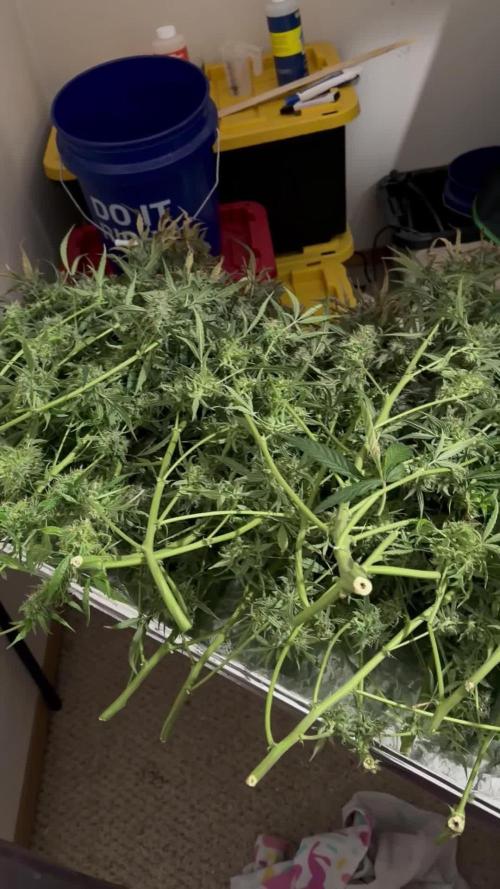
Day 74. Harvest day! Cut down both plants, hung the plant that was on the left as a complete plant. Hung the bigger bud producing plant that was on the right by the branches. If I don’t get 2 lbs out if the bigger bud plant, I will be shocked
Likes
321
Share


@Tropicannibis_Todd
Follow
🤔🤔🤔🤔🤔 HAPPY GROWING 🤔🤔🤔🤔🤔
Looks like I've can upload short videos 👉 so I will do what I can my friends
We are now 28 Days in and everything is going great 👍 👈
Update Today DAY 32 and everything is going great 👍 decided to showcase the Mini BigBand , was a extra seed that germed so I kept it as a Mini Me 😊
Except for some watering it's been pretty smooth I've done a little maintenance and manipulation of the canopy 👈
Might do a slight defolation later in the week 🤔
👉Soil Medium Provided by ProMix.ca
👉Nutrients Provided by Agrogardens
👉Lighting Provided by MarsHydro.ca
I would like to thank the many growmies for support throughout the years 🙏 So Let's Do This 👊👊👊 Happy Growing


Likes
70
Share


@Roberts
Follow
Big Fat Wedding Cake is growing great under the Spider Farmer G5000/UVR40 lights, in the Athena blended line nutrition. She got lollipopped today, and a defoliation. She is also showing her first pistils. Thank you Spider Farmer, Athena, and DutchFem Seeds. 🤜🏻🤛🏻🌱🌱🌱
Thank you grow diaries community for the 👇likes👇, follows, comments, and subscriptions on my YouTube channel👇. ❄️🌱🍻
Happy Growing 🌱🌱🌱
https://youtube.com/channel/UCAhN7yRzWLpcaRHhMIQ7X4g
Spider Farmer Official Website Links:
US&Worldwide: https://www.spider-farmer.com
CA: https://spiderfarmer.ca
UK: https://spiderfarmer.co.uk
EU: https://spiderfarmer.eu
AU: https://spiderfarmer.com.au
G5000 Light Amazon Link:
amzn.to/4643esa
UVR 40:
https://www.amazon.com/dp/B0BR7SGTHS
Discount code: saveurcash (Stackable)

Likes
17
Share


@DoctorCannas
Follow
Two out of five seeds continue the adventure.
I think they will be forced to share the Grow room with the other sisters.
unfortunately the northern Continental European summer does not seem to be coming.

Likes
7
Share

@DogDoctorOfficial
Follow
💙 Project Blue Tent – Week 6
Blue Waffle F1 – Pheno A (Folder 13A)
Welcome back everyone to another week inside Project Blue Tent!
If this is your first visit, welcome aboard. This project is all about exploring the incredible Blue Waffle F1 genetics from Zamnesia while putting the complete Zamnesia ecosystem through its paces. Rather than documenting four plants as one diary, each phenotype receives its own weekly report, allowing us to appreciate how identical F1 genetics can still express their own individual personalities despite growing under exactly the same conditions.
Every week we observe how each plant responds to training, nutrition and the environment, slowly building a complete picture of who they are becoming.
As I always like to say...
We're not just growing plants.
We're getting to know them.
────────────────────────
🌱 Week Six – Filling Every Corner
This week has been all about patience, consistency and allowing the canopy to slowly take over the tent.
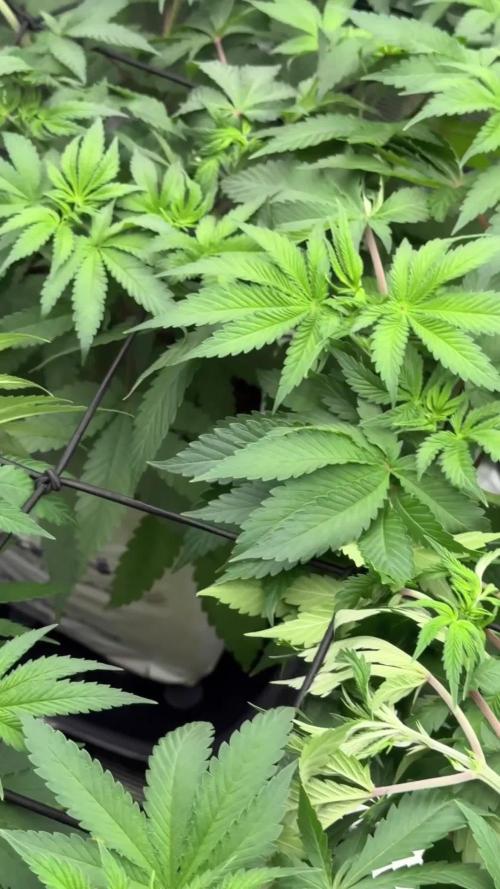
Plant A now stands at approximately 60 cm tall and has spent the entire week doing exactly what I hoped she would do after installing the SCROG net.
Rather than stretching vertically, she's investing her energy into filling her own corner of the screen with healthy new shoots. Every day I spend a few minutes gently guiding the tallest branches back underneath the net, encouraging them to grow horizontally instead of racing upward.
For anyone unfamiliar with the technique, SCROG (Screen of Green) is designed to create one large, even canopy instead of allowing a few dominant branches to tower above the rest. By weaving each branch beneath the screen, every future flowering site receives similar light intensity, producing a much more uniform canopy once flowering begins.
It's not something you do once.
It's something you do a little every single day.
Little by little the branches spread, new shoots appear, and before long the entire screen begins filling itself.
Plant A has embraced the process beautifully.
She isn't fighting the training.
She's working with it.
────────────────────────
🌿 Plant Development
Opening the tent each morning has become incredibly rewarding.
The lighter green colour we observed a couple of weeks ago has completely disappeared, replaced by rich, healthy foliage from top to bottom. The adjustment we made to the feeding schedule has clearly been exactly what these ladies were asking for.
Plant A now looks vigorous, balanced and full of energy.
Her leaves are broad, healthy and beautifully coloured, while the new growth remains vibrant without showing any signs of nutrient stress despite running an EC that some growers might initially consider relatively high.
One thing I've learned over many years is that nutrient strength isn't about following someone else's numbers.
It's about listening to what your own plants are telling you.
Right now these girls are telling me they're happy.
So nothing changes.
────────────────────────
🌡️ Environment
Despite the middle of summer bringing consistently warm weather outside, the environment inside the Blue Tent continues to remain remarkably stable.
This week's average conditions were:
• Day Temperature: 30°C
• Night Temperature: 27°C
• Relative Humidity: 58%
• pH: 5.8
• EC: 1.92 mS/cm
• CO₂: approximately 450 ppm
• Light Schedule: 18/6
• PPFD: approximately 350
The small difference between day and night temperatures is something I'll be paying attention to once flowering begins, as warmer nights can encourage additional stretch during the early weeks of bloom.
For now though, while we're still focused entirely on vegetative growth and filling the SCROG, these conditions continue producing exactly the results I'm looking for.
One challenge at a time.
────────────────────────
🥥 Feeding Program
The feeding schedule remains unchanged because the plants have shown absolutely no reason for me to adjust it.
This week's nutrient solution consisted of:
• Hydro A – 1.9 ml/L
• Hydro B – 1.9 ml/L
• Hydro Roots – 1 ml/L
With only minor pH adjustments where required.
Although an EC of 1.92 may appear relatively high to some growers, the plants couldn't be giving me clearer feedback.
Rich green foliage.
Strong stems.
Rapid vegetative growth.
Healthy root development.
Plants don't read feeding charts.
They simply tell us whether they're happy.
And these girls certainly are.
────────────────────────
🕸️ The SCROG Continues
This week the screen has really started showing its purpose.
Every day I continue tucking the tallest branches back beneath the net, encouraging lateral growth while allowing slower branches to catch up.
The objective isn't simply to keep the plants short.
The objective is to create dozens of future flowering tops all sitting at roughly the same height.
Once the screen is almost completely filled, we'll perform one final defoliation to improve airflow and light penetration before flipping the tent into flower.
We're getting closer every single day.
Nature is building the canopy.
I'm simply guiding it.
────────────────────────
🐛 An Unexpected Visitor
This week also reminded me that no matter how careful we are, nature always finds ways to surprise us.
While inspecting the plants I discovered a single caterpillar happily enjoying one of the leaves.
Considering how strict I am with hygiene before entering the grow room, it genuinely caught me by surprise. I always shower, change into clean clothes and do everything possible to avoid bringing unwanted guests inside.
Yet somehow...
One tiny traveller still managed to find its way from the vegetable garden into the tent.
Thankfully, regular inspections meant the problem was caught immediately.
The caterpillar was removed by hand, the damaged leaves were cleaned up, and an IPM (Integrated Pest Management) inspection was carried out across the entire grow.
IPM isn't simply reacting when problems appear.
It's creating regular routines that help prevent small issues from ever becoming large ones.
Observation is always the first line of defence.
────────────────────────
🛡️ A Little Extra Protection
To finish the inspection, I also used the Future of Grow UVC LED bar as an additional preventative measure.
UVC light can help reduce unwanted spores and microorganisms that may have found their way into the grow room, making it another useful tool within an overall IPM strategy.
It's important to mention that UVC must always be used responsibly.
Direct exposure can damage both plants and skin, so proper precautions and eye protection are essential whenever working with this type of equipment.
Used correctly, however, it becomes another valuable layer of prevention rather than waiting for problems to appear.
As always...
Prevention is easier than treatment.
────────────────────────
💙 Plant A's Personality
Every phenotype has its own way of growing.
Plant A continues proving herself to be one of the most balanced girls inside the Blue Tent.
She isn't trying to dominate the canopy.
She isn't rushing toward flower.
Instead she's quietly filling her own space with healthy branches, beautiful leaf colour and excellent structure.
Every week she seems more comfortable with the training, and every week her corner of the tent becomes a little fuller.
She's exactly the kind of plant that rewards patience.
────────────────────────
👀 Looking Ahead
If everything continues at this pace, I expect the SCROG screen to be almost completely filled over the coming week.
Once that happens, the next major milestone will be a final clean-up and defoliation before flipping the tent into flower.
Until then, the daily routine remains wonderfully simple.
Tuck the branches.
Observe the plants.
Keep the environment stable.
Let nature do the heavy lifting.
Sometimes growing isn't about doing more.
It's about knowing when to simply stay out of the plant's way.
────────────────────────
💙 Thank You
A huge thank you to Zamnesia for making Project Blue Tent possible, from these outstanding Blue Waffle F1 genetics to the complete ecosystem surrounding this grow.
A massive thank you to Plagron for providing the Premium Growbags together with the Hydro nutrient line, which continues delivering beautiful, healthy growth week after week.
A special thank you to Mars Hydro for the drip irrigation and automatic drainage system that keeps watering both simple and reliable.
Thank you as well to Future of Grow for the excellent UVC LED bar, which has now become another valuable tool within my Integrated Pest Management routine.
And finally, thank you to GrowDiaries and to every single person following this journey.
Whether you're here to learn, share your own experience, ask questions or simply enjoy watching these phenotypes develop, I genuinely appreciate every visit, every comment and every conversation.
Hopefully next week we'll have a completely filled SCROG, perform our final defoliation, and prepare these beautiful ladies for the moment we've all been waiting for...
Flowering.
Until next week...
Growers Love and happy growing! 🌱💙
Likes
3
Share

@GERGrowDesigns
Follow
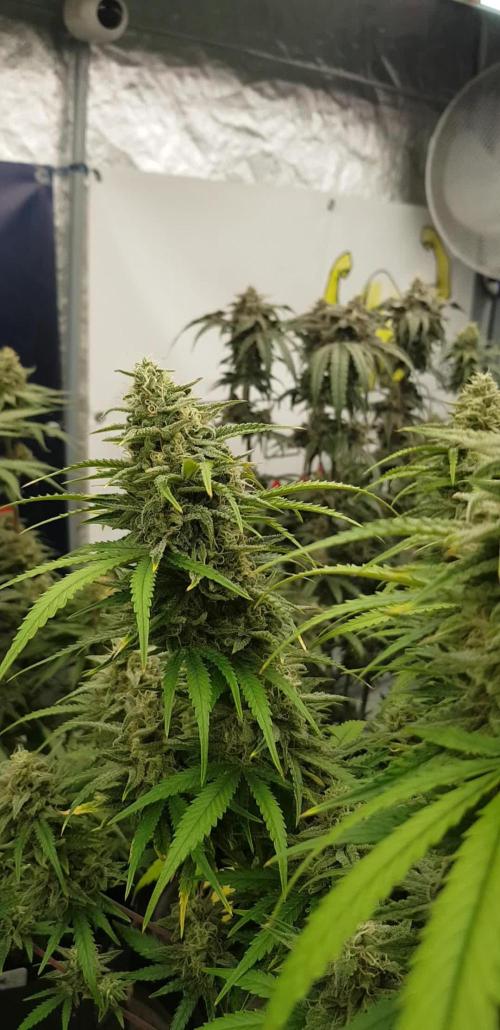
Welcome to Flower Week 9 of Divine Seeds Auto Black Opium
I'm excited to share my grow journey with you all as part of the Divine Seeds Autoflowering Competition 2025. It's going to be an incredible ride, full of learning, growing, and connecting with fellow growers from all around the world!
For this competition, I’ve chosen the Feminized Automatic strain: Auto Black Opium
Here’s what I’m working with:
• 🌱 Tent: 120x60x80
• 🧑🌾 Breeder Company: Divine Seeds
• 💧 Humidity Range: 50
• ⏳ Flowering Time: 60-63 Days
• Strain Info: 25%THC
• 🌡️ Temperature: 26
• 🍵 Pot Size: 3
• Nutrient Brand: Narcos
• ⚡ Lights : 200W x 2
A huge thank you to Divine Seeds for allowing me to be a part of this amazing competition and Sponsoring the Strains. Big thanks for supporting the grower community worldwide! Your genetics and passion speak for themselves!
I would truly appreciate every bit of feedback, help, questions, or discussions – and of course, your likes and interactions mean the world to me as I try to stand out in this exciting competition!
Let’s grow together – and don’t forget to stop by again to see the latest updates!
Happy growing!
Stay lifted and stay curious!
Peace & Buds!
Processing
Likes
21
Share


@RIZZY
Follow
Everything was fine, until I split the main stem persay, trying to lst. Advice would be appreciated"


Likes
8
Share


@Max1973
Follow
Day 14 - Clay balls arrived, all looks good.... 😎
**the rust and damage on the first leaves is nothing to worry about,
the ice cream container water level dropped below the root level, fixed it,
but was cool to learn how fast hyrdo dmg can occur.... 👍
Day 17 - Lookin good... vid....
👍😎👊
