


Likes
Comments
Share


@Omisan
Follow
time to go fat, for my shining buds! 😍
Growing really good, harvest is near and i can't wait of course.
smell is a bit strong that i remember, but i'm really proud for those buds 🙏
Hope for next, last weeks!
Have green life, my friends!
Omisan

Likes
16
Share

@Thedibber
Follow
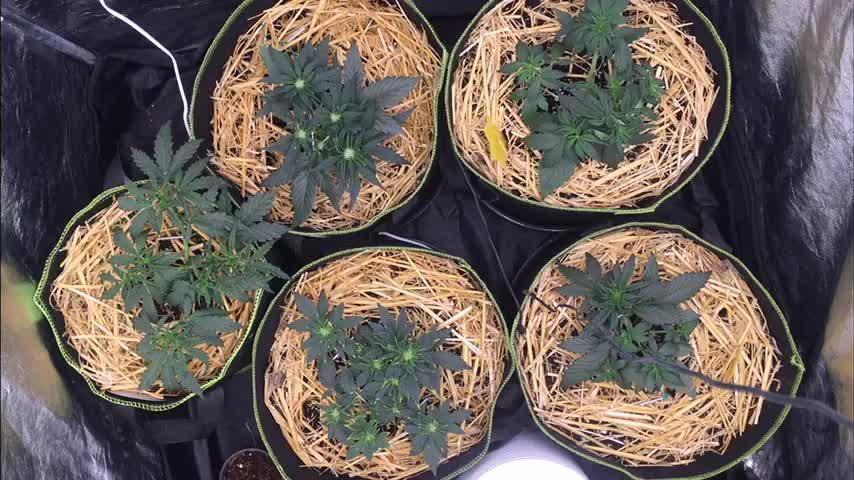
Week 3 starts Poundcake #1 is on Day 15 as of 25/07 the rest are between day 11 and 14
Poundcake #1 suffering slight light burn from me putting the se3000 power up to 75%. Its back down to 65% now 😅
The two smaller pots on the right are in coco not living soil. Just keeping them indoors for now why not 👌
Added a organic seedless straw mulch for more microbe friendly activity and help prevent the fast drybacks I'm getting with the current heat 😰


Processing
Likes
17
Share


@Trueorganics84
Follow
Just starting , This is my soil mix!
Only took two days to break soil pretty sweet!!
Likes
5
Share


@JamaweedOPO
Follow
The plant can finally enter the ideal environment, it has adapted very well. It remains strong and vigorous.


Likes
105
Share


@Coopmc
Follow
7 week first 5 were 12 on 6 off seamed stuck in week 2 flower for 4 weeks
Gave her week 4 feed modeled after fox farm feed rate

Likes
17
Share


@SkunkyDog
Follow
Hallo zusammen 🤙.
Habe auf der Cannafair ein paar Samen zum Testen bekommen.
Wir hatten ein schönes Gespräch gehabt über Gras haben viele Infos bekommen.
Freue mich die Sorte hier zu zeigen 🤙
Ich benutze die Bio Hanferde von Sonnenerde aber zum 2 mal habe sie mit 2 Liter frische Erde nachgefüllt und dann die Bio Taps Sachen drunter gemischt .

Likes
1
Share


@NorthStarCannabis
Follow
She was flipped to flower this week. Its only been three days of 12/12, but we are starting to see more pistols and tiny signs of bloom.
In addition, I transitioned the feeding to the AC Infinity auto-feeding base. Right know I'm still using the Sesni Grow vegetation nutrients and will for probably another week before I start to add in Sensi bloom. She still needs a ton of N, so vegetation nutrients are just fine.
10/3/2024 - fed her another gallon of water and I’m slowly introducing sensi bloom at 5ml/gal.


Likes
3
Share


@HerrnLubitz98
Follow
Week of fade 😎
Entering the last couple weeks of their lifecycle they’re fading, getting colorful and fat! Smell is insane, keeping temps low now to preserve terpenes and reduce salt build up due to high vpd. Checking trichomes every 2-3 days, aiming for 10-20% amber for my harvest. Stay tuned!


Likes
5
Share

@lasonda
Follow
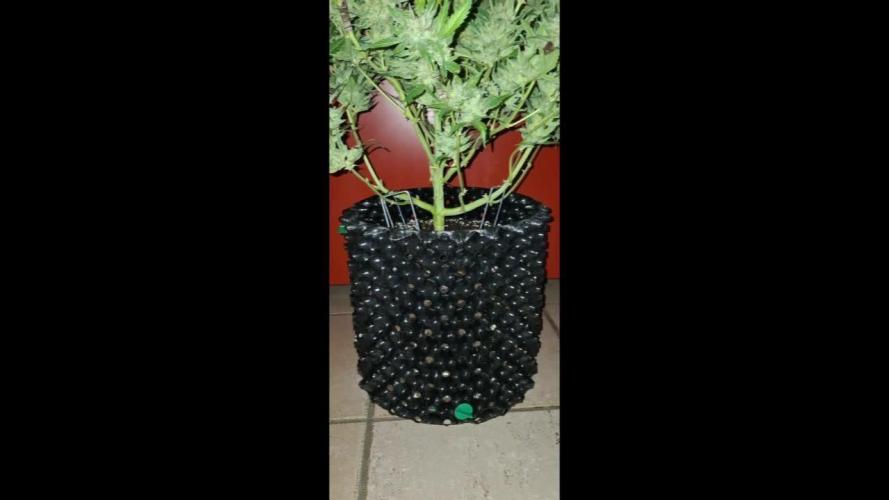
We're almost ready to harvest. I delayed the process a bit because the trichomes weren't as ripe as I'd hoped. After flushing, I watered only with pure water, and the ppm is now 538. I plan to harvest soon, but I'll wait a few more days so the soil is thoroughly dry. 😍😍💪💪😎

Likes
16
Share


@PoshGrow
Follow
Welcome to Ultimate Auto Grow by PoshGrow!
🍀 Week #4 2020 September 21st. - 28th.
General Info:
When planted: 2020 September 1st.
Week: 4
Days: 21 - 28
Last Update Day: 2020 September 26th.
Plants:
4 x OG Kush Auto
3 x Amnesia Auto
5 xAlaskan Purple Auto
2 x Blueberry Auto
1 x Northern Lights Auto
Total: 15 girls.
NOTICE: Check week 1 for full equipment list!
UPDATE: I got 8 ltr. Or 2 gallon Spear&Jackson Pressure Sprayer to help me with watering.
Comment:
Welcome boys and girls to Season #2 by PoshGrow! So alongside my 1sq. meter tent I got my new 2nd tent and setup. So at this time i will be running 2 tents.
Ohh, this week and the end of week 3 was rought... I ran into a gnats problem in week 3, read more there. The way I "solved" my problem was a huge mistake, creating bigger problems. Gravel I put on top of soil kept moisture inside the pots, so I manage to over water my plants. NEVER PUT GRAVEL ON TOP OF YOUR SOIL! 🤦♂️ NEVER 😂 Big shoutout to guys who answered my question in week 3! Thanks for your help and support!
So I remove all gravel and let all pots to dry completly before next watering. They bounced back very fast. Also I did LST training on them and manage to break up that one girl which had biggest over watering issues. Shit happens I guess... Btw its one of Amnesia strains.
I will update more info how girls responded to training next week.
Stay tuned and happy growing! ✌️

Processing
Likes
54
Share


@Mimi420
Follow
Hello grower family!
FD 41,and looking awsome to me!Nice fat and dense buds on both.And the colours are amazing again!I'am sure that the reason for that is bat guano from Plagron.Eating like crazy,abaut 9l of solution for both,every 3 days.One more feeding with nutrient,and then start to flush them.
Stay green!🌱


Likes
12
Share


@Just_Weed
Follow
Seems Strawberry will stretch a bit and C-Vibez ) started producing budsites.
Trying to lighty defoliate this week and focus on reducing nutrients cause ppm runoff is 1000.
I realized this week as I am using RO water I need to supplement more calcium/ magnesium and as all plants were transplanted from BioBizz Lightmix to BioBizz Allmix they all have lot of nutrients in soil.
I will just sprinkle a little bit of epsom salt , add low amount of calmag to water with very low amount of REMO nutrients, pH to 6.2 and that is it.
Usually I used much lower REMO or BioBizz dosages based on my feeling but then my last diary ( 4 Dutch passion) I had very bad grow. Those 4 plants were transplanted to soil from previous grow ( BioBizz Lightmix + Allmix) to big pots as seedlings so it was hard to measure runoff and ppm of soil spec earlier in the veg. So for this grow my mindset was to follow the charts as much as possible so after 4 weeks of seedling phase in BioBizz Lightmix I transplanted into 18 L AllMix and also started feeding remo in lower dosage but proceeded to increase dosage to remo schedule dosage in a month of veg. I will try to water till runoff and measure to not make same stupid mistakes.
Also soon I will be trying Dogma Organic SuperSoil and I will try to compare same genetics in soil with nutrients, dwc and supersoil.
My understanding is that using straight RO water in living soil can be problematic so I will keep in mind that factor. My RO filter on the tap has mineralization it comes out 50 ppm.
Clones will soon be ready for transplant, I am planning to keep only few alive as I will not have space for all of them, both tents will be available for flower of these clones in around 2 months so plan is to veg few of them in soil and two of them in my DWC setup until Flower tents are ready.
HEIGHT
Strawberry Cough (80 cm after SCROG)
C-Vibez (55 cm after SCROG
#2 Strawberry Cough (50 cm after SCROG)
First watering 2. day of the week:
C-Vibez 6 L 600 pm 6.2 ph RUNOFF: 6.5 ph 1000 ppm
Strawberry Cough 5 L 470 ppm 6.4 ph RUNOFF: 6.6 ph 1000 ppm
Strawberry Cough #2 in 40L pot is still heavy and I will just water around the plant a little with very light dose of nutrients and sprinkled little epsom salts
Second watering 5. day of the week:
C-Vibez 6 L 400 pm 6 ph RUNOFF: 6.5 ph 1000 ppm measured runoff only in this one
Strawberry Cough 5 L 400 ppm 6.2 ph
Strawberry Cough #2 mixed 7 L 330 ppm 6.5 ph that i will likely water till end of the week.

Likes
56
Share


@Ledbelieve
Follow
Just finished week 8 of flower 🤕. Plants are not finishing up when I thought they would. Taking longer than I wanted...😤...seems like a couple may have a week or more left. Back right plant is getting close 3 to 4 more days. Will update when that one is harvested. Trying to stay patient. Hopefully they go into over drive this has been a long Grow... happy growing all!!!

Likes
1
Share


@Sleestacker
Follow
Oh man, she’s begun the stretch…
And I scared! Thankfully I just got a new 1 foot taller tent, gonna need to get that up soon as this AVT is trying to take over the world! She’s badass though, accidentally gave her a couple ounces of the flowering tea I made for the forum stomper, she’ll be ok though, got a little nitrogen toxicity I need to address first… but thanks 👽!
Likes
2
Share


@Strangelet
Follow
Harvest day 74. 10g dried after 4 days.
Little plant and little yeald.
Didn't respond well to topping, problems with over feeding in late flowering. Also began to foxtail in last week, probably due to 40°C at daytime.
Will update the smoke test curing.
Likes
31
Share


@MxGrow
Follow
Hasta hoy todo perfecto, tuve un problema con el generador de CO2 pero al parecer por el momento no es tan indispensable
💧1 Ene 2022 - Se aplico una cucharada de Radig diluido en medio litro de agua y se inyecto al sustrato
💧4 Ene 2022 - Se aplico riego con 3ml de Kaly&Magy y 3ml de Gigagrow diluido en 1 litro de agua, 250 ml aprox por planta

Likes
36
Share


@TaterheadJohnson
Follow
8/2: Started new batch of nutes. a repeat of last weeks nutes but with more CaliMag this time. Wednesday we will be bumping Rez to 6 gallons this week. Depending on how she is looking throughout the week we may start transitioning to Bloom nutes. Mixed as usual nutes in gallon jug of water. Transferred half to half gallon jug. Topped of Rez with half gallon jug of treated water.
8/3: Fed her today. Gave her the rest of the mixed nutes from yesterday’s feeding and also a full gallon of plain water. Filled rez to 3rd line today due to roots coming from bottom of bag into rez. Now that’s 6 gallons in the rez now.
8/4: Topped off Rez before bed with the half gallon of plain water.
Started transition nutes this evening. Mixed nutes in gallon jug as usual. Poured half into half gallon jug. Filled rez to 3rd line using half gallon jug of nutes. Still some left over in jug.
8/5: Topped off the Rez with the rest of the nutes from half gallon jug. Split gallon jug of plain water into half gallon of water. Poured some of the half gallon of plain water into Rez until it was a little over the 3rd line.
Bumped light intensity to 70%
This evening topped of Rez again with the rest of the plain water from half gallon jug from earlier today. Then poured in SOME of the rest of the transition nutes left from mixing.
8/7: Mixed another round of transition nutes and fed from half gallon jug split.
8/8: Topped off rez with remaining half gallon full of mixed nutes for the week. Will need to water another half gallon of plain water before starting new nute batch tomorrow.
Topped of rez to 3rd line with some of the plain water in half gallon jug.
Topped of Rez again late tonight with the rest of water from half gallon.
I can now start new batch of nutes tomorrow.
Likes
8
Share


@BluntlyTHC
Follow
Transplanted into a 2 gallon fabric pot today this will be the final pot seeing what happens with it.

Likes
4
Share


@MoneyMorris
Follow
The plants have been flushing for almost a week now. Really starting to change colors. I can't wait to see how much I get from them.