


Likes
Comments
Share


@Madman2020
Follow
28APR 4May
5day flush
Started Trim 1day before Chop
Didnt add co2 because i think it was to late to care
Trichimes were mostly amber at start of week. I started harvest to late
Week8

Likes
459
Share


@Ju_Bps
Follow
Hello my friends 👨🌾👩🌾,
This week was good,
I've started the training for the #1 and #2, and topped the #3
They are looking really happy and healthy 🌲💚
I've founded one thrips this week, I'll treat after banana will be harvested.
💦 I give water each 2 or 3 days
300/350 ml/plant
Water + rhizo + tera vega
Water + rhizo
Water + Rhizo + canazym
PH@6
Lamp is 100%
Thanks community for follow, likes, comments, always a pleasure 👩🌾👨🌾❤️🌲
Mars Hydro - TS 1000
https://www.mars-hydro.com/ts-1000-led-grow-light
Mars Hydro - FC3000
https://www.mars-hydro.com/fc-3000-samsung-lm301b-led-grow-light
Mars Hydro - SP3000
https://www.mars-hydro.com/sp-3000-samsung-lm301b-greenhouse-led-grow-light
The High Chameleon - Vannila T
https://www.thehighchameleon.com/shop/vanilla-t-5

Likes
3
Share


@BandoBoyJimmy
Follow
Week 5 the girls are packing on size day by day
The feeding has definitely picked up they are dinking about 18 gals of water every day to two days
The gorilla cookies and 2 of orange cookies are nice and tall at the 51.5 inch mark
The wedding cheesecakes are short, squat, and loaded with some sweet creamy cake smelling buds they are about 33-38 inches tall
The smelling it the room is truly amazing fruits and pies is what it hits my nose like lol

Likes
27
Share

@Z420Organics
Follow
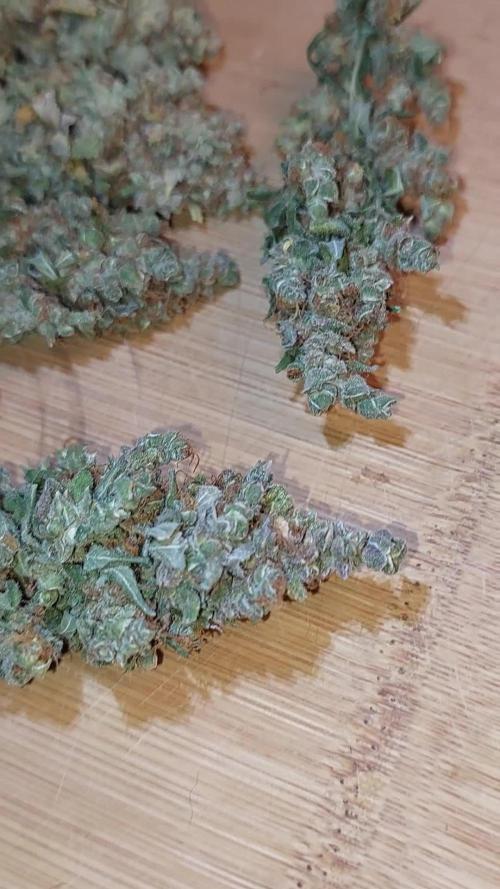
🦍 Monkey Grease — Harvest Report! 🦍
The first strain harvested from the grow was Monkey Grease, with one pheno coming down at 63 days.
Flavor & Aroma:
The first pheno gives dry nutty notes with a really unique chocolate milk vibe 🍫🥛 — such a distinctive taste!
The other pheno leans more toward a chamomile-like aroma, though I’m still not entirely sure 🌼. Very interesting!
Effect:
I’d classify it as indica-dominant vibes. Very clean, pleasant relaxation!
The aroma is super strong and fills the room.!



Likes
31
Share


@THCpapa
Follow
Welcome, plant enthusiasts and accidental garden comedians, to the whimsical tale of Week 9 in my botanical circus! This week was a leafy spectacular, with more drama than a soap opera and more twists than a contortionist at a leafy circus.
First in the spotlight is the topping extravaganza – imagine my plants auditioning for a leafy talent show, and voila! One of the ladies went above and beyond, not with one or two, but three tops! It's like my garden is hosting its own version of "America's Got Leafs," and the contestants are aiming for a standing ovation from the tiny plant audience.
Now, onto the nutrient boost – it's like my plants discovered a secret stash of leafy steroids. They're devouring those nutrients like they stumbled upon an all-you-can-eat salad bar. If my garden had a Yelp page, it would probably say, "Five stars for the gourmet buffet – would photosynthesize again!"
But with great growth comes great thirst, or so my diva plants declare. I can practically hear them demanding water with the urgency of a plant water-seeking missile. "Hydrate us, human! We're not just thirsty; we're in a botanical drought crisis!"
And now, the grand revelation – last week's leafy fashion faux pas was all thanks to a faulty pH pen. The plants probably threw a mini leaf party when I introduced the new pH pen, complete with tiny leaf confetti. They're like, "Finally, accurate pH readings – no more plant tie-dye nightmares!"
In a twist of fate, I had to embark on a plant-less journey for a few days. So, like a responsible plant parent on a comedy tour, I decided to water a bit earlier and a bit more before my departure. And lo and behold, the plants loved it! It's like they threw me a farewell bash, chanting "Water, water, party, party!" in their own leafy language.
The early topping and Leafy Synchronized Training (LST) maneuvers have clearly paid off. My plants are now strutting their stuff like runway models in a botanical fashion show. I picture them doing the leafy version of the cha-cha.
So, Week 9 has been a laugh-out-loud masterpiece – from topping triumphs to nutrient raves, from hydration demands to pH pen dramas. As I return to my green kingdom, I can't help but feel like a plant ringmaster who has navigated the garden circus with flair. Stay tuned for the next episode of "The Green Carnival" – where every leaf has its own act, and every week is a new leafy adventure under the big, green tent! 🌿🎪🌟


Likes
16
Share


@Chubbs
Follow
420Fastbuds
FBT2310/Week 3
What up grow fam. Weekly update for these stunning girls. Up to this point they've been growing picture perfect . Not really doing anything special besides still feeding nutes every other watering 500ml. I'll double the feed this week taking it to 1000ml/1 liter per every other day. Not seeing any burn signs from introducing nutes so will keep that the same strength. All in all Happy Growing


Likes
3
Share

@Dingle_Dangle
Follow
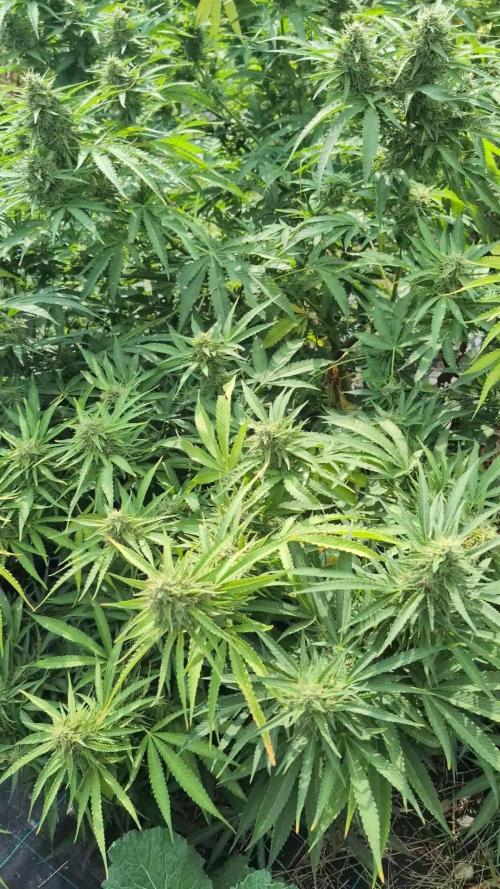
11/09/2025 - Day 131
Removing a lot a buds with mold.
If it keep getting worse I just end it here.
Smell is really strong, this scares me a little.
Stems are bending under the weight of the buds, they will break for sure in case of strong rain.
The small third one died for reasons, not a big deal.

Likes
14
Share


@BoboLacetti
Follow
After I repotted the plants, they grew really well and healthily for 12 days. Now they are showing iron deficiency again... I already had the problem before repotting. The pH value of the earth has fallen again to 4.8 to 5.7. This time I used biodegradable braids to germinate. I believe that this is the reason for the PH fluctuations in the soil. Every time I water I measure the PH and adjust it to 6 - 6.5. Nevertheless, the PH value drops back to 4 to 5. I'm trying to correct the problem.
I also work with neemoil because I can't get rid of the trips

Likes
37
Share


@DogDoctorOfficial
Follow
🌱 Week 1 Update: Terpyz Mutant Mentha de Croco Journey 🌱
Hey Grow Fam! The Mentha de Croco sprouts are officially a week in, and they’re already showing off their unique personality, each one growing at its own pace. They’re rocking some funky vibes and loving life inside the dome! Here’s a full update on their progress, care, and setup for Week 1.
Living Environment: The Humidity Dome Setup
The seedlings are living in a humidity dome, where we’re keeping the relative humidity (RH) close to 100%. This level of RH mimics a tropical environment, creating the ideal conditions for delicate young plants that need extra hydration support as they begin to develop roots and leaves.
Why High Humidity?
• Encourages Strong Root Development: At nearly 100% RH, plants focus on root growth while pulling in moisture directly from the air, helping them establish themselves early on.
• Protects from Stress: The high humidity reduces transpiration (water loss through leaves), which prevents drying and keeps seedlings hydrated.
• Promotes Healthy Leaf Growth: With constant access to moisture, the leaves expand smoothly, giving each plant a strong start in the vegetative phase.
Growth Status & Observations 🌱
These little mutants are showing some funky characteristics and growing at their own unique pace—a perfect reminder that no two plants are the same! Each seedling has sprouted its initial set of leaves, and I’m seeing great promise in their vigor and resilience.
Key Observations:
• Color: The seedlings are a healthy green, with some displaying slight variances in shade—typical of unique genetics like Mentha de Croco.
• Structure: Leaves are developing steadily, with short internodes (the space between sets of leaves) that hint at nice, compact growth patterns as they continue.
• Energy: Each plant seems to be finding its rhythm, which is a beautiful thing to watch! Some are taking their time, while others are diving right into rapid growth.
Nutrients & Supplements 💧
For this first week, I’m keeping it light on nutrients, letting the seedlings draw what they need from the Root Riots and the remaining seed stores. However, I’ve continued using Aptus Holland’s Regulator and Startbooster, both at 1ml/L, to support foundational growth.
Why These Nutrients?
• Aptus Regulator: Adds silicon to fortify cell walls, giving the seedlings extra strength to handle environmental changes. Even under the dome, this helps build resilience.
• Aptus Startbooster: Supplies essential microbes and root stimulators, setting up these little ones for explosive root growth once they’re ready to venture outside the dome.
Lighting: FOG LED & Environmental Control 💡
I’ve kept the Future of Grow (FOG) 600W LED dimmed to around 200 PPFD to avoid overwhelming these tender seedlings with too much light. They’re getting just enough energy to support healthy photosynthesis without stressing them in their early stages.
Lighting Benefits at Low Intensity:
• Prevents Stretching: With the lower PPFD, plants stay compact and focused on root and leaf development rather than reaching for the light.
• Supports Early Photosynthesis: The FOG LED’s balanced spectrum provides all the wavelengths these seedlings need to kick off photosynthesis and grow with vitality.
Controlled through the TrolMaster Tent X, the lighting schedule is consistent and stable. With this controller, I can manage humidity, lighting, and temperature settings all from one place, ensuring the environment stays perfect for these little ones.
Reflection & Tips for Fellow Growers 💡
Week 1 is about creating a stress-free environment for seedlings to adjust and establish themselves. Here’s a bit of wisdom for anyone embarking on a similar grow:
💧 Humidity & Hydration: High humidity is a seedling’s best friend. Keep your dome or grow area humid for strong, happy plants.
💡 Light Management: Keep lighting low to encourage compact growth and let those roots dig in. Adjust lighting gradually as they grow to avoid any shock.
🌱 Patience with Genetics: Each plant has its own rhythm, especially with unique genetics like these. Let them show you what they’re made of without pushing too fast.
Shout Outs & Community Love 💚
Much love to Terpyz Genetics for these incredible seeds, Aptus Holland for the nutrients, Future of Grow for the stellar LED, and TrolMaster for the environmental control. Big shout out to everyone following this journey—it’s always a blast sharing with you all. Let’s keep the positive energy flowing and watch these seedlings turn into something amazing together!
Stay tuned for Week 2 updates—more growth, more funk, and more growers’ love!
Genetics - Mentha De Croco
https://terpyz.eu/products/menta-de-croco-fern-type?_pos=1&_sid=e9237cbcb&_ss=r
DogDoctorOfficial Discount Codes @ terpyz.eu - DOCTOR 15% off
Nutrition - @aptusholland
https://aptus-holland.com/
Led Power @ F.O.G. Future Of Grow
https://www.thefuturofgrow.com/en/online-store/BLACK-SERIES-600-p489093171
Controls @ TrolMaster
https://www.trolmaster.eu/tent-x
As always thank you all for stopping by, for the love and for it all , this journey of mine wold just not be the same without you guys, the love and support is very much appreciloved and i fell honored with you all in my life
With true love comes happiness Always believe in your self and always do things expecting nothing and with an open heart , be a giver and the universe will give back to you in ways you could not even imagine so
Growers Love To you All 💚

Processing
Likes
2
Share


@Vet4weed
Follow
With the new netting up, I switched on the red lights along with the blues to help the plants stretch a bit to reach through the screen. It looks like it is taking effect, so late in the week (Friday) I trimmed some of the lower branches.
Last week I FIMmed Zoe and Grace to give River a chance to catch up, and I expected 1 of 2 results: 1) FiMming will encourage growth in the cut plants causing them to grow taler than River, or 2) Things will stabilize and River will be on par with her siblings. But instead, I discovered a 3rd result: River is continuing to grow bigger and thicker each day and is even taller and fuller than her sisters. In addition though, the trimmed plants are developing nice, strong, sizable leaves, and most of the new growth is coming from down below, rather than near the top.
Oh, and this week I added a new camera (Wyze) to the time lapses so I can take my pro camera out.

Processing
Likes
5
Share


@Mr_nugs_lover_David
Follow
She looks as healthy as her sister,she's happy,no issues at all,and starting to show the first pistils on August 24th.let's see how this wonderful strain performs. 😊💚🌱
Likes
9
Share


@TheGreenGroomer
Follow
Hello fellow growers,
I harvested my plant on Day 68 of the flowering stage. The buds are now hung up and drying in an environment with a relative humidity (RH) of 55-60% and temperatures ranging from 18°C to 21°C, I've set up two fans to keep the air moving gently around the drying space. Today marks Day 6 of drying, and I'm aiming for a nice, slow dry to preserve the quality of the buds, followed by a dry trim.
Reflecting on this grow, I can see areas where I could have improved, but considering it's my first time, I believe I've done a commendable job. There are quite a few larfy buds underneath, but the top buds, which were closest to the light, turned out great. I initially thought I had nailed the training techniques, but as soon as I flipped her into the flowering stage, she got out of control. This experience has taught me the importance of being even more disciplined with my training methods in future grows.
Overall, I'm thrilled with the outcome and have learned valuable lessons for my next run. Can't wait to see how these buds turn out after curing!
Wish me luck as I move into the final stages of this journey. Let's Grow!

Likes
Comments
Share


@Barzenegger
Follow
Quite happy with how most of it turned out, even canopy and all, despite the issues. In this week I decided to flush the center plant (A) and switched nutes to Canna, but it was too late already and I was planning to harvest in 2 weeks regardless.
Likes
7
Share

@Suemchen
Follow
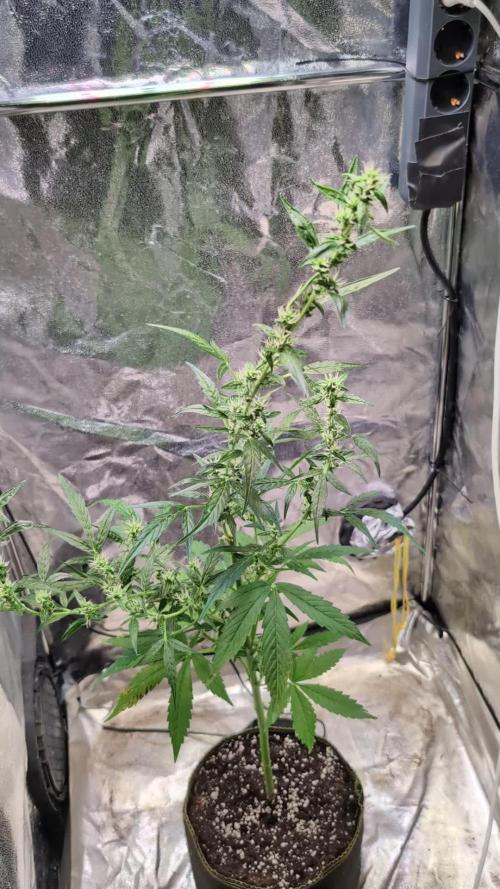
Sanlight EVO 3-60 at 80%
Day 57: looking good and watered again🌊. Watered with rain water, 1 ml/l Cal Mag, and 1 ml/l Green Sensation
Day 59: Watered with rain water, 1 ml/l Cal Mag, and 1 ml/l Green Sensation
Day 63: Fan fell on her and snapped the Main branch? watered with out supplements 👌🏻 Just rain water 👍🏻


Likes
Comments
Share


@ykscotttyk25
Follow
A new version of the classic. The old classic strain now improved and in auto version!
Just like the name suggests. Expect up to 500gr/m2 of super big buds.
Ideal for beginners. Top-quality buds without much maintenance or extra effort.
Indica-dominant hybrid. A relaxing high that comes hand-in-hand with a pleasant head buzz.
Likes
22
Share

@KnightRider
Follow
Hey Cannafam Happy Tuesday,
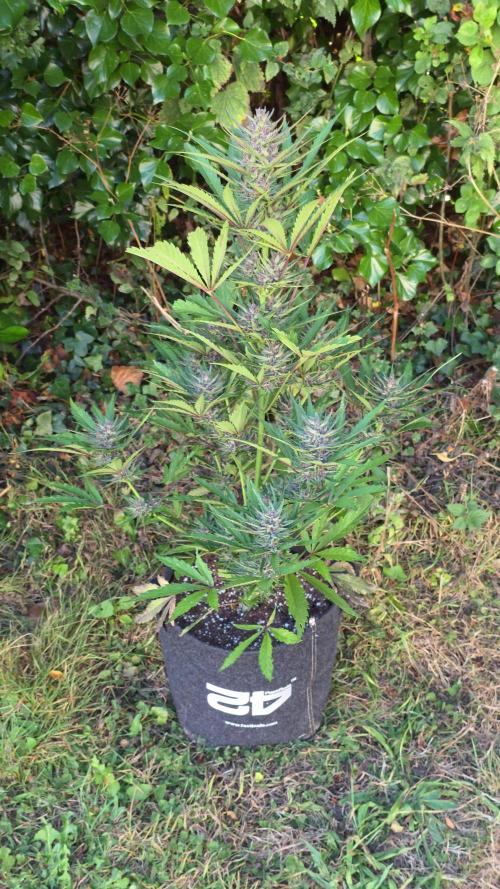
This gal has had another good week 😊
We've had another dry week with not a sniff of rain and shes still really happy. Tuesday - Friday were all around 22c daytime 14 night so a bit cooler with cloudier days, the weekend heated up again with clear skies 25c in the day 15c night with 25c again yesterday and today.
The Humidity has come down to average of 64% which has been welcome and daylight hours are at 14 hrs 44 minutes
Growth wise shes had another solid week, her buds are continuing to develop well especially along her central column and are stacking up nicely, with more of that beautiful pinky purple coming through. Shes had some very light defoliation and ive just taken out some of the large fan leaves as they were shading a couple of the lower branches. Her smell is still delicate with a sweet candy aroma.
Feed wise ive slowly been increasing the PK, at the beginning of the week she had half strength with the green sensation. I was adding this in every other watering, but shes not been showing any burn so last watering ive doubled this and will continue too feed every watering, unless shes starts showing any excess.
Overall another stella week and shes standing proud and strong 😁
Thanks for stopping by and hope you have a nice chilled week ✌️💚
Likes
10
Share


@Beancultiv8r
Follow
I’m starting to see both the dosi & bride cakes nodes reaching taller everyday, more & more pistils are forming! No signs of deficiencies or pests. I will be keeping these ladies on the Jacks/ Autopot feed but the seedlings shown in the update video are going to be receiving the Athena program via hand watering which I’m very excited about!
