


Likes
Comments
Share


@Ryno1990
Follow
Purple Goat Cheese fast flowering photo from Goat Genetics comming in nice on her first week of veg from seedling stage
Comming up on the end of week 1 of veg they are now planted into 1 gallon pots were they will stay for a little wile

Processing
Likes
12
Share


@Silverback_Guerilla
Follow
2/10:
I watered today with about 3/4 gallon each, plus cal-mag, signal, bembe, armor si, a little open sesame, and their final dose of endoboost.
The shorter one is budding up quickly now.
2/11:
Wife home sick today....postponing construction project to raise the lights.
2/12:
Today, I tackled the project to raise my ceiling another foot. In addition to that project, I installed and hooked up my new AC Infinity 6" intake fan. It's pulling in fresh air from the soffit vent on the eave of the attic, and currently feeding the garden with 46f fresh air. I'm able to easily maintain daytime temps in the lower 70f's now. I am able to drive the nighttime temps as low as I want. The only issue is that the outdoor RH varies quite a bit, so I ordered a 30-pint dehumidifier to put in the top of the closet.
I sprayed everybody with boomboom spray to try and mitigate the light burn damage that is likely to ensue.
2/13:
The taller one is still stretching a little bit, but the 2-footer is just budding up.
2/14:
I fed them today with about 3/4 gallon each including grow big, big bloom, tiger bloom, cal-mag, signal, bembe, humic acid, and I switched over from Open Sesame to Beastie Bloomz. Raised the lights another couple of inches. I did some training on them and defo'd a little bit.
2/15:
Installed the new dehumidifier and rigged the continuous drain on it...works great.
2/16:
I rotated the edge plants and removed some old leaves. I added another 22w 3000k 4' bar light under the canopy.
2/17:
I rearranged the garden and defoliated a little bit. That's it for week 8-

Likes
40
Share


@Bread_n_Buds
Follow
Here we are, ready, after a week of truly fruitful germination we have 20 beautiful plants all marked with the Z of Zamnesia.
We have moved on to autoflowering, unlike many growers I have no prejudice against this type of plant, it is true that they are the easiest to make but it is also true that they have improved a lot in terms of flower quality and if once ease meant lower quality now even the most presumptuous old school flower children growers struggle to understand if a flower is from an autoflowering or a normal photoperiodic plant. There are people who claim to recognize it from the flavor but then never succeed, it's funny. I enjoy making them strip their heads with these magnificent new autoflowering. She is the Blue Cheese, a second generation Dutch strain let's say, traditional but this time in f1 Hybrid version. I loved it so much in the past, let's see.
---- New Home - The ladies have almost all been transplanted into 11-liter pots, which is my favorite size to get the best ratio of plants in the grow box / yield. Especially if you don't have to do excessive topping or you have to grow the plants straight with main cola like I do for catalog needs like I do, 11 liters guarantees you to make excellent plants. Topping with 11-liter pots is recommended up to a maximum of 16 buds (4 main crops) - The pots are square plastic and canvas branded Zamnesia - The soil used is Plagron Promix with peat and worm castings but not fertilized -
--- Start feeding program - A very serious feeding program branded Plagron has begun. We made our own custom table based on the chosen soil (Plagron Promix 100% organic) that you can all do at the link https://plagron.com/en/tools/grow-schedule-calculator and I started giving:
- Power Roots - 1ml/l
- Alga Grow - 2 ml/l
- Pure Zym - 1 ml/l
- Sugar Royal - 1ml/l
- Vita Race - 1 ml/l
- The 100% Organic pack by Plagron can be found on Zamnesia at the link:
https://www.zamnesia.io/it/11457-plagron-easy-pack-natural.html
We are giving a lot of humidity with a humidifier and we oscillate between 65% and 70%.
// Strain Description // If you were looking for a reliable, versatile and accessible strain, here it is. Blue Cheese F1 Automatic by Zamnesia Seeds uses F1 genetics to produce uniform, rewarding and easy-to-grow plants. This strain stays small, so you will have no problem finding a place to grow it. After just 10 weeks from seed, you can enjoy tasty buds with relaxing effects.
- Strain — Get a seed of this fantastic strain - https://www.zamnesia.io/it/10673-zamnesia-seeds-blue-cheese-f1-automatic.html
- Growbox and air sistem --- https://www.secretjardin.com/
- Light — P2000 - https://www.viparspectra.com
- Music and sound --- I made my girls listen to 432hz frequencies and music from www.radionula.com
- Z --- You can find these seeds, much more from the world of cannabis, mushrooms and an incredible series of accessories and gadgets on the reference site not only mine but of many growers ---- https://www.zamnesia.io

Likes
46
Share


@LittleBigTrees
Follow
Pulling the top fan leaves to allow the side branches to catch up.

Likes
3
Share


@High_Grade_Dadli
Follow
Girls are coming along well transplanted set 1&2... seem to be loving it....we getting there

Likes
29
Share

@BettyFlores
Follow
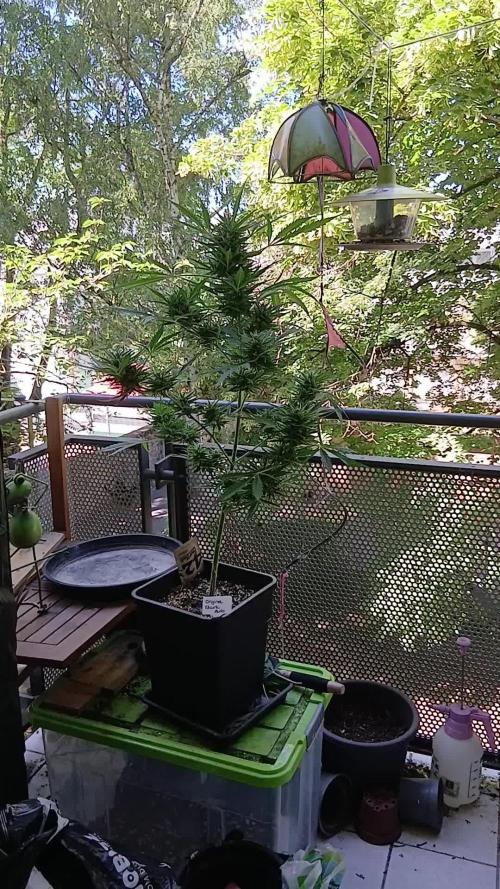
28.05.2026 Tja, Partypeople, es ist soweit. Heute ist ihr letzter Tag an der Sonne und ich glaub, die Nachbarn freut es. Sie riecht nämlich gewaltig und der ganze Block darf daran teilhaben 😅. Ich bin wahrlich zufrieden mit dieser Sorte, aber das war von einer Skunk ja auch nicht anders zu erwarten. Habe eben die Trichome kontrolliert und ja, heute Abend wird sie gefällt werden. Und jedes Mal das gleiche Theater, dass mir doch so schwer ums Herz wird 😔.
Happy growing 🌸 💜

Likes
17
Share

@EllysGrow
Follow
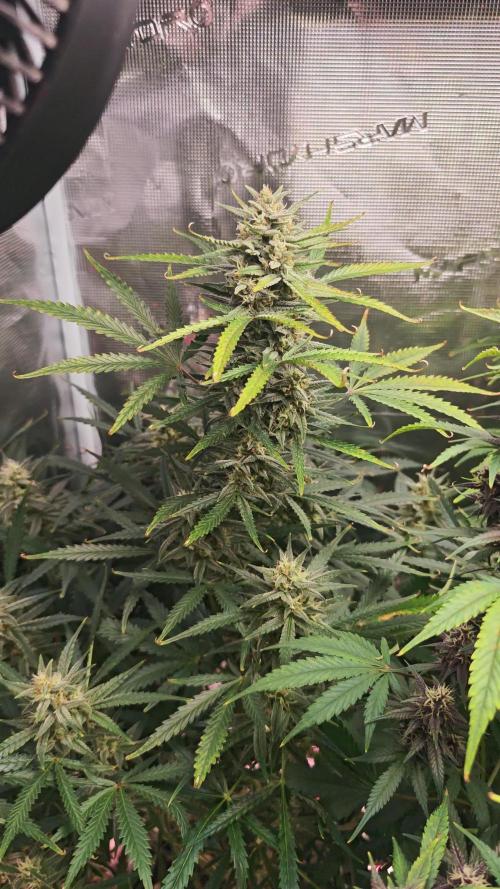
Anfang Woche 9 und es duftet.....die Tropicana Cookies versprüht wirklich einen mega tropischen Duft. Der Hammer!!!! Danke für so viele tolle Genetiken @Fast_Buds 😊


Likes
12
Share


@ktkoi
Follow
Day 73: Early/mid flower for G. Crack & Mexican.. nearing late for CBD crack. These girls are thirsty, so much watering is happening, but the smell isn't nearly as strong as the first round is even though they are all bigger. This is a test post for videos, next one will be for the contest.
Day 75:
G-crack 58cm
CBD Crack 30cm
Mexican Airlines 20cm
CBD is closest to maturity. Her leggy stature gives ample opportunity for the different buds to get light. Mex is starting to get fuller buds, but she's short and stout and her leaves are in the way. G is way too large for me to get the right amount of light on her, wish I had defoliated her more, will probably harvest in parts.
None of these girls smell as strongly as the previous grow. CBD is a bit diesely but fresh. G is smokey but light right now. Mexican is spicey and woodsy. I can't really place the scents just yet.


Likes
31
Share


@Crybabypete
Follow
The buds are beginning to put on some weight and thicken and she is still growing upwards.
I’ve been having to re-tie her every 2-3 days.
Still got a ways to go but I’m really proud of her so far!

Likes
6
Share


@IamCy
Follow
Here we are. Week 2. On the Day 8 video, I give my method on how I produce nearly zero larf and huge buds. It's easier than most think 😉


Likes
17
Share


@Elmobud
Follow
So this week they have definitely stopped growing in height and now time to fill out they have definitely got heavier as I have had to tie a few more colas up good signs and they have started to smell really sweet 😋 Happy Times Happy Growing 😁 🌿
Keep Safe 😁
Likes
43
Share


@TheCannaProphet
Follow
~ FastBuds PAPAYA SHERBET Photoperiod~
Well here we go on another journey together through 'Canna-land' and this one's kinda special... forget that, it's VERY special because this is FastBuds newest surprise for the community, a FEMINIZED PHOTOPERIOD STRAIN!🤯
I was fortunate enough to score these seeds, of which only 1000 were available and can't wait to see what this strain can do! This Papaya Sherbet, according to FastBuds, is a hybrid with a 9-10 weeks flowering period. For a more detailed and accurate description of this strain the following from FastBuds says it best:
"Combining the massive stature of Papaya (Oni Selection) with the strength and resilience of one of our best keeper cuts (Sunset Sherbet), this strain develops into a big, expansive bush adorned with numerous bud sites that later transform into a generous harvest of medium-sized buds. Papaya Sherbet flowers deliver a signature flavor of premium cannabis with subtle citrus undertones that emerge upon inhaling. During growth, her aroma makes for a sweet yet pleasantly bitter fragrance, giving you an idea of what the smoke will taste like. Notably stress-resistant, Papaya Sherbet is a great choice for growers working in challenging environments. She is very forgiving and rebounds quickly from any adversity, allowing growers the freedom to experiment with confidence that she will take everything like a champion she is. This strain embodies resilience, flavor, and abundant yields in every grow cycle."
Sounds like an epic strain and I personally cannot wait for this lady to strut her stuff!😍
________________________________________________________________________________________________________________________________________________________________________________________________________________________________________________________________________________________________________________________
The Setup:
This is going to be an outdoor grow, but I have started the Papaya Sherbet photoperiod indoors as our weather is still a bit too chilly to put a newly sprouted seedling outside (nighttime temp's dipping regularly into the 40's℉).
The plan is simple... let her grow inside under a 19/5 light schedule until the nighttime temperatures are in the mid 50's℉, which shouldn't be long. After which, she'll be moved outside and transplanted into the soil which I have already setup and inoculated with beneficial microbes from BioTabs and slow release dry amendments from Gaia Green. Once she's established herself outside she'll be given periodic top dressings of Gaia Green 4-4-4 and 2-8-4 along with worm castings and Compost Tea's. Her grow area is approx. 5'x5' and I have posts and a trellis net set up already for when she gets bigger to aid in training her. Let the fun begin!🤪💚
________________________________________________________________________________________________________________________________________________________________________________________________________________________________________________________________________________________________________________________
Weekly Updates:
9/4- The 4th week of flower is here and the FastBuds Papaya Sherbet photoperiod is looking fantastic! She's loaded with flowers that are all beginning to get frosty!
9/6- My daily watering campaign continues with me giving the Papaya Sherbet approximately 5 gallons of well water from the garden hose.
The flowers on the Papaya Sherbet are stacking away and the frost continues to accumulate!
9/8- Today, before watering the Papaya Sherbet, I did some needed plant maintenance, removing a bunch of old dead leaves, along with a handful of shade leaves that were yellow.
9/10- Well with four weeks of flower behind her now, the Papaya Sherbet photo is almost halfway through with another 5-6 weeks to go. I only hope and pray🙏 that the weather cooperates and stays cool and dry!
Thank you for checking out my diary, your positive comments and support make it all worthwhile! 💚Growers Love!💚😎🙏
Likes
53
Share


@DogDoctorOfficial
Follow
Greetings, fellow green enthusiasts! Week 3 unfolds like a crescendo in the cultivation symphony, and my Blackberry Auto is not merely growing – she's flourishing into a botanical masterpiece. Join me in this chapter of lush greenery, where every leaf tells a story of meticulous care and bountiful growth.
A monumental shift occurred this week as I sensed the roots had embraced their space, and with that confidence, the AutoPot Aquavalve was turned on. It's a momentous occasion; from now on, my Blackberry Auto dictates her own hydration destiny. The Aquavalve ensures a precise, gravity-fed watering system, allowing the plant to drink at her leisure. It's a botanical utopia where hydration meets autonomy.
As a gesture of extra love, I treated my thriving Blackberry Auto to a Nutrispray shower. While not a necessity, it's my way of pampering her with a nutrient-rich mist – a spa day for the botanical queen. Every droplet whispers, "You're cherished, and your journey is celebrated."
The dance of low-stress training persists, a ballet where leaves are gently coaxed into the perfect formation. Blackberry Auto, the prima donna of this green theater, responds with unparalleled elegance. Each bend not only shapes her structure but also encourages a bushier, more productive plant. It's a dialogue of symbiosis, where I guide her growth, and she graciously accepts the choreography.
Blackberry Auto's aesthetic prowess is on full display – her color is a vibrant tapestry, and her structure an architectural marvel. It's not merely a prediction; it's a prophecy of a beautiful, robust plant reaching towards the zenith of its potential. Each leaf is a stroke of nature's brush, creating a masterpiece before our very eyes.
As I share this journey, I extend my heartfelt gratitude to the creators of the genetics – thank you, Fast Buds, for gifting us Blackberry Auto. To my sponsors who make this journey possible, your support is the fertilizer for this green endeavor. A tip of the hat to Grow Diaries for providing a platform to document and share the magic. And to the community, your camaraderie adds depth to this horticultural narrative. Together, we cultivate not just plants but a shared passion for the botanical world.
Stay tuned, green comrades, for the forthcoming chapters of Blackberry Auto's odyssey. The journey continues, and each leaf unfurls a new verse in the poetic saga of cultivation.
Genetics Blackberry Auto @Fast_Buds
Food - @aptusholland @aptus_world
As always thank you all for stopping by, for the love and for it all , this journey of mine wold just not be the same without you guys, the love and support is very much appreciated and i fell honored and blessed with you all in my life
Likes
58
Share


@Wastent91
Follow
So are you guys okay? You know so much to me! My situation as a grower is growing and many possibilities are opening up for me for new fantastic projects, to which the first thing for me is the mega-passion that I have for these girls, who at the same time give me fun, well-being, social life, introspection, meditation, high if necessary, I would really do everything for her if I lived in a country where this is legal, but unfortunately I can't and you don't know how much I envy people in America who can freely grow and show their results on Instagram and many other social networks that I hate but in So if people follow you you can even survive this, this can't be done in Italy, I can only live on the sidelines and I'll be happy in my only experience of myself producing the best possible weed on the planet where I am! Apart from this rant, I wanted to say that the new grow box is the intelligent ventilation system that regulates the air in relation to the humidity and temperature in the box, I must say that for me it is a huge leap in quality that I am sure will also be reflected on my girls! Thanks for everything Mars Hydro you are my source of pride and happiness for trusting me that I can have the same professional home tools as anyone else on this planet who wants good and natural weeda! Mars hydro = excellent quality in everything! For now, the light is set to 50 x one hundred, we'll see later how the girls develop and we'll make some adjustments, thanks to Barney 's farm for the opportunity to test yuor seeds! I love yuo GD i love yuo all! Buon 420 a tutti! 😼😋😽😻💖🧑🌾🌱🌿🌲💨😝
Likes
6
Share


@Mr_nugs_lover_David
Follow
It was such a nice experience for me with this strain, first time ever growing her, she had a little bit of long internodes and thought she wasn't gonna be very productive, however the nuggets are so so hard and compact and the quality is just brutal, doesn't even look like she's s been outdoor grown, I love this strain for the rare strong smell like very sweet and floral with that strange diesel notes mix the sweet tones, I would love be growing her my whole life, I definitely will keep growing this lady FOR SURE!. thank you so much and hope you guys enjoy! 💎🙏🔝💚

Likes
36
Share


@Ganjagrandaddy
Follow
Day 8: All of thesenladies are nice and settled now.
They all have 3rd nodes visible and are close to letting the 4th nodes out too. besides the damage from germination and seed husk , they are looking OK so far. I am attempting to get the rootbball wide by watering more towards the pots edges. hopefully this will make them spread out above the soil similarly. A quiet and steady week Growmies. They will bendirectly under light in a few days time so should have grown a good amount for the next update.
Be safe

Likes
6
Share


@BigDripFelgo
Follow
Yellow Zushi is growing very well and uniform, looks like she is training herself to stretch lower branches up. Looking healthy and growing fast. Thinking of topping main branch but not sure yet since I also want to start taking clones soon!


