


Likes
Comments
Share


@Cannabeast40
Follow
Welcome back to yet another short update☺️
Transplanted and filled with tender care and love 🤗 A bit colder temperatures then inside the veg tent , but I’m not worried at all🤩
Videos show the process, hope you enjoy 💯💚
See you next week🤩
------------------------------------------------------------------------------------------
Light source:
Medicgrow SpectrumX
880W LED
Build in PPFD
4 controllable spectrums V1, F1, VS, FS
Visit https://medicgrow.com/ for more informaton.
Light measurement:
Apogee MQ-610 & Apogee DLI-600.
Fertiliser:
Organics Nutrients
https://www.organicsnutrients.com/en/
Green Buzz Nutrients
Discount Code: GD42025
Grants 25% with a minimum Order value at 75 Euro.
https://greenbuzzliquids.com/en/shop/

Likes
422
Share


@Crashoverite
Follow
Hi all 😁
Hope everyone keeping well and having a wonderful week!
Thank you all for such amazing support on this bananas journey 💚💚💚
Will be updating this week journal daily so please remember to revisit to see full week content.
So far this grow it's going great. Girls are stretching by hour. Great health, nice green colours, more and more squares taken on the netting, flowering nicely progressing, I'm very happy 😁
Planning to apply more selective defoliation, especially to Xena. No changes to nutes except few extra drops of calmag just in case and will try to fill the net entirely.
Week 7
Nov 27- Dec 3
Nov 27
Selective defoliation applied on Xena. 8-10 mainly small fan leaves. She is still a bit shy to open as much as her sister. No rush my girl. You still doing great!
Nov 28
First watering for this week.
7ltr beetwen them both with 4h spread. Runoffs. Xena 300ml PH 6.1 Athena 250ml PH 6.4 😁. So far the largest amount of my magic mixture consumed by my 🍌💜👊 girls. Well done👏
Nov 29-30
Leaves tucking and joyful observation🤓
Dec 1
Selective defoliation and first stage of lolipopping on both girls. Decided to go a bit heavier as tomorrow heading for trip and wont see my girls until Tuesday! They will be all alone without any supervision so hopefully they will behave and I will be nicely surprised of their development on my return. Watered with 2tr mixture and sprayed with water and fish mix solution right after defoliation. Planning to feed them tomorrow as much possible 6-7ltr before heading off to our voyage to Amsterdam 😎 do anyone know ls if any of coffeeshops have Fastbuds strains available? Would love to try 🍌💜👊🤤😋
Dec 2
Girls watered as above and both PH 6.4 on runoffs.
Dec 3
Girls are unsupervised until December 5th.
Thank you all for such amazing support on this journey 😊 love you all!!, 💚💚💚
Stay tuned for upcoming week update right after my return.
Peace and love brothers and sisters ✌️💚


Likes
51
Share


@Dunk_Junk
Follow
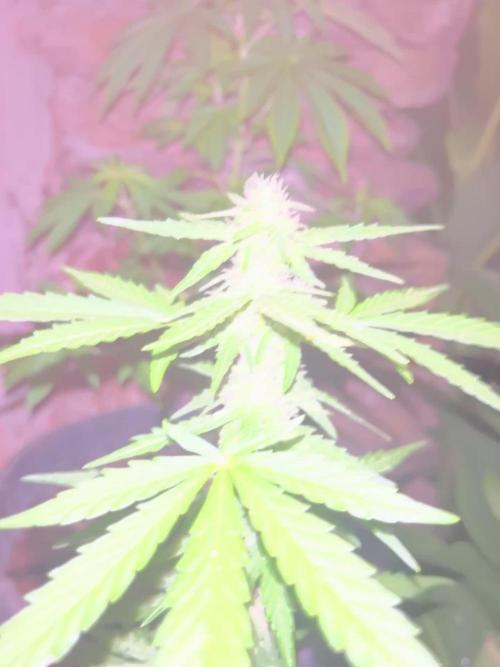
Well she grew another 13cm this week!!!!!!! She is above the lights now 😏
Her flowers are developing nicely! So are the trichomes! So is the smell 😁
Likes
27
Share


@leafy
Follow
starting week 4 of flowering . day 21 of flower . all is good she is starting to fatten up .. had some trouble with her , leafs started to turn yellow very fast but i kinda fixed it i gave her more N and more nutrients overall

Likes
4
Share


@DaisyNabis
Follow
preventivo de la semana al dia, desintale humificador para preparar a mis bellas para su trasplante a maceta definitiva, esta oportunidad no hare podas bajas solo algunas defoliacion

Likes
15
Share


@SweetheartOG
Follow
Started the girls with some LST to see how they all coped and they bounced back well.
Likes
80
Share


@Roberts
Follow
Clone 1is growing normal now. Lots of branching. Plus she pit on st least a inch a day in height. So she is growing great. I am not sure what I will do with her. I may move it to a bigger potter then flower it in the tent it was in. It is now just vegging in my autoflower room in a corner under the Medic Grow Mini Sun-2. Thank you Pure Instinto Seeds. 🤜🏻🤛🏻🌱🌱🌱
Thank you grow diaries community for the 👇likes👇, follows, comments, and subscriptions on my YouTube channel👇. ❄️🌱🍻
Happy Growing 🌱🌱🌱
https://youtube.com/channel/UCAhN7yRzWLpcaRHhMIQ7X4g


Likes
72
Share


@MiyaguiOkPolilla
Follow
💐Hola de nuevo amigo! 💐
Una semana especial,⛈️☔🌫️🌧️ con días de lluvia constante y alta humedad, donde siempre pongo mis plantas su última semana estaba fresco y ventilado, con luz de media sombra de sol. Así creo realzar los terpenos ya que no hay dirección de luz azotando los tricomas, a ellas les basta para seguir trabajando bien.
Los últimos días usé dos tubos UV durante 15 minutos por la mañana y antes de la oscuridad para evitar problemas con los hongos debido a los días nublados y húmedos. De repente el clima se despejó y vinieron días muy secos con humedad relativa cerca de 35%. Ideal para hacer el corte final!
Ahora ellas cuelgan en mi pequeña caja donde seco mis cogollos al 60% de humedad y 18 grados.
Un saludo grande para todos y éxitos, que siempre haya un momento para aprender algo nuevo y un brillo de creatividad en sus proyectos.
IRIE

Likes
6
Share
@Chrisandweed
Follow
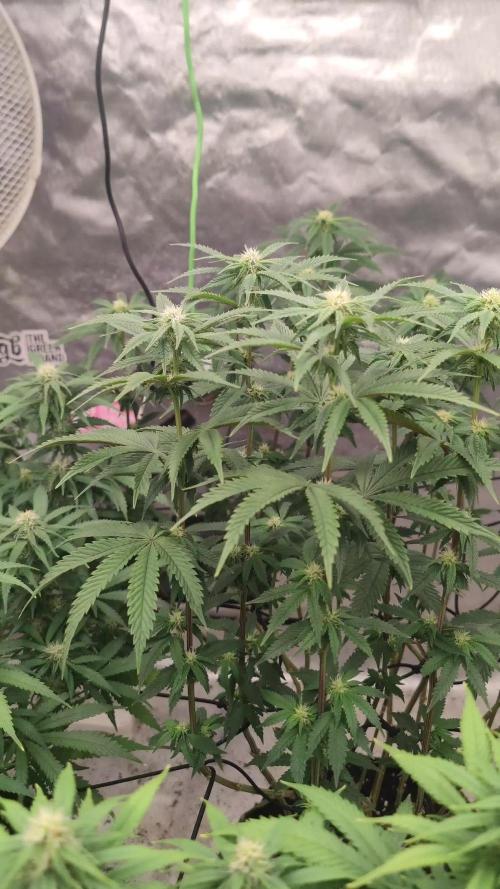
Bueno, ya empiezan a tocar las fotos guapas jajajajaja
Les metí el corte este domingo pasado a todas para dejarlas listas para el engorde. Vamos a ver que tal.
Quizás esta al menos de momento es la que tiene los pompones mas gordetes, la que aspira a mayor tamaño de cogollos.
Likes
39
Share


@Silverback_Guerilla
Follow
11/9:
The first Blackberry (Halle Berry) is dry now and beginning to cure....will probably sample it tomorrow.😋
The next 5 that I harvested are drying in a dark room at 75f with 60% RH and minimal airflow.👍
The colas of the remaining 11 plants are now within 9 inches of the QB's....MAXIMUM PAR!
I've increased UVB exposure by an additional hour a day. I've got the portable AC on high and blowing across their tops, which is keeping the temp just below 80f on them...they should be just fine..👌
11/13:
I harvested the purple Wedding Cheesecake and all three Lemon Pies today.
11/15:
I flushed the last two orange sherbets for the second time, but with only a few gallons each...I flushed the last two wedding cheesecakes, and the 3 x gorilla cookies with 8 gallons each.
Likes
1
Share

@Fabroking
Follow
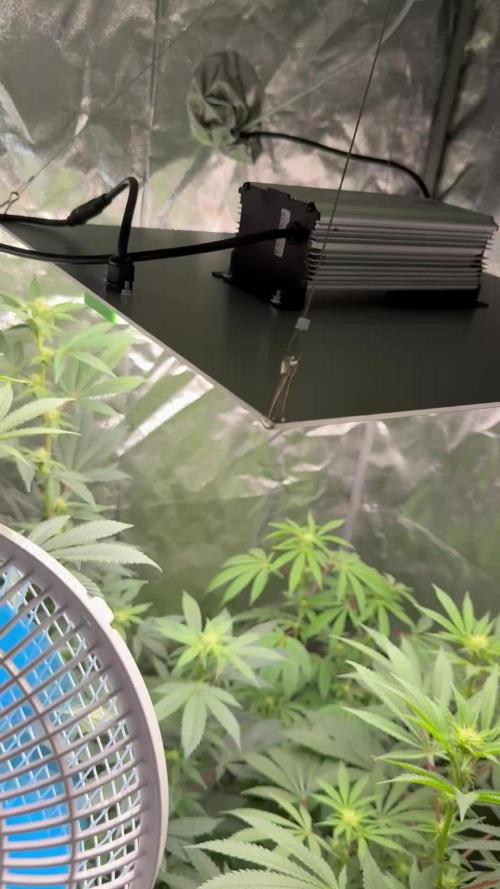
The plants are responding well, we are starting the most beautiful part of flowering...the buds are coming!!🌳💚

Likes
197
Share

@Tower84
Follow
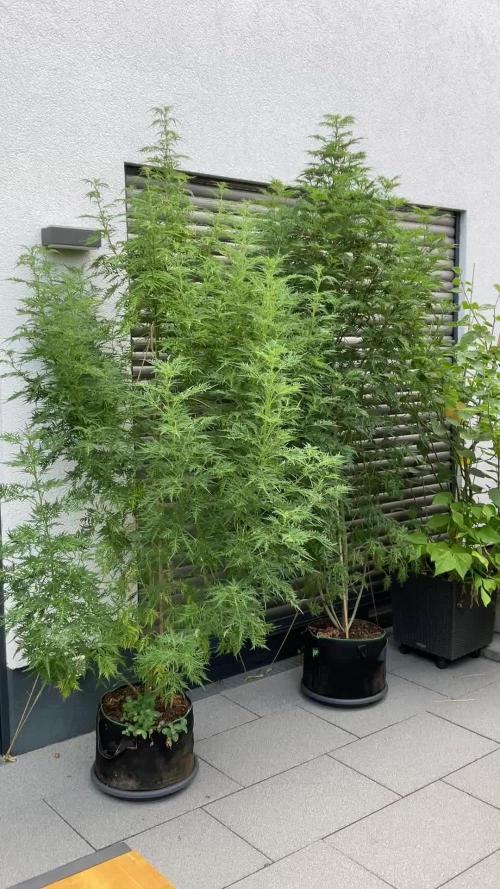
🌿 Woche 21 – Mentha de Croco von Terpyz 🇩🇪
Die beiden Mentha de Croco werden immer beeindruckender 😍🌿. Die rechte Pflanze ist inzwischen ca. 2,25 m, die linke etwa 2,10 m hoch 📏🚀.
Der große Stretch ist bisher allerdings ausgeblieben und wird aufgrund des begrenzten 30-Liter-Topfvolumens wahrscheinlich auch relativ gering bleiben. Dafür haben sich die Pflanzen deutlich stärker in die Breite entwickelt als in die Höhe 🌿🌲. Mittlerweile sind es richtige Büsche, die unglaublich viel Masse aufgebaut haben 💚.
Auch der Blütenaufbau beginnt jetzt langsam sichtbar zu werden 🌸. Die ersten Blüten entwickeln sich und auch der typische Geruch wird allmählich wahrnehmbar 👃🌿. Noch ist das Aroma allerdings sehr moderat und bei weitem nicht so intensiv, wie ich es später in der Blüte erwarte 😊.
Das Wetter hat sich diese Woche deutlich abgekühlt 🌤️ und zwischendurch gab es auch ein paar Regenschauer 🌧️. Nach der Hitze der vergangenen Wochen ist diese Abkühlung für uns ein Segen, aber den Pflanzen hat der viele Sonnenschein der letzten Wochen gefallen. Jetzt beginnt langsam der deutsche Herbst - mit kühlen und regnerischen Phasen…
Heute bekommen beide Pflanzen jeweils 5 Liter Almicanna Flower Komposttee 🍵. Der Tee wurde zuvor 48 Stunden unter Belüftung gebraut, sodass das Bodenleben wieder ordentlich unterstützt wird 🌱💚.
Jetzt bin ich gespannt, wie sich die Blüten in den nächsten Wochen entwickeln werden 🌸🚀. Die Pflanzen haben jedenfalls schon eine beeindruckende Größe und Masse erreicht und ich freue mich darauf, ihnen beim weiteren Übergang in die Blüte zuzusehen 😍🌿.
🌿 Week 21 – Mentha de Croco by Terpyz 🇬🇧
The two Mentha de Croco plants are becoming more impressive every week 😍🌿. The right plant has now reached approximately 2.25 m, while the left one is around 2.10 m tall 📏🚀.
The big flowering stretch has not really happened so far, and due to the limited 30-liter pot volume, I don’t expect much additional vertical growth. Instead, the plants have expanded much more outwards than upwards 🌿🌲. They have already turned into real bushes, with an incredible amount of biomass 💚.
The first signs of bud development are now becoming visible 🌸. The flowers are starting to build, and the characteristic aroma is slowly becoming noticeable 👃🌿. For now, however, the smell is still very moderate and nowhere near as intense as I expect it to become later in flowering 😊.
The weather has cooled down significantly this week 🌤️, with several periods of rain 🌧️. After the heat of the past few weeks, this cooler weather is a blessing for us, but the plants definitely enjoyed all the sunshine they got over the last few weeks. Now the German autumn is slowly beginning — with cooler and rainy periods ahead… 🌧️🍂
Today, each plant will receive 5 liters of Almicanna Flower Compost Tea 🍵. The tea was brewed for 48 hours with continuous aeration, giving the soil biology another boost 🌱💚.
Now I’m very curious to see how the flowers develop over the coming weeks 🌸🚀. The plants have already built an impressive amount of size and biomass, and I’m really looking forward to watching them transition further into full flowering 😍🌿.


Likes
14
Share


@eldruida_lamota
Follow
Vamos familia cuarta semana de vida de estás Tropical Zmoothie de SeedStockers.
Que ganas tengo de ver el progreso de esta variedad, las plantulas están sanas, se ven con buen color.
La cantidad de agua cada 48h entre riegos.
Esta primera semana ya añadimos nutrientes de la gama Agrobeta.
Tuve problemas de trips en un indoor y tengo todas plagadas pero ya las e tratado con aceite de neem y un insecticida genérico, además añadí varias tiras de color azul, trataré esta semana y la siguiente.( pronto llega aceite de neem y jabón potásico para terminar con ella)
También realicé el trasplante a maceta definitiva, 7 litros.
Estas próximas semanas veremos cómo avanzan.
Mars hydro:
Code discount: EL420
https://www.mars-hydro.com/
Agrobeta:
https://www.agrobeta.com/agrobetatiendaonline/36-abonos-canamo
Hasta aquí todo, Buenos humos 💨💨.

Likes
1
Share

@Olduffybastard88
Follow
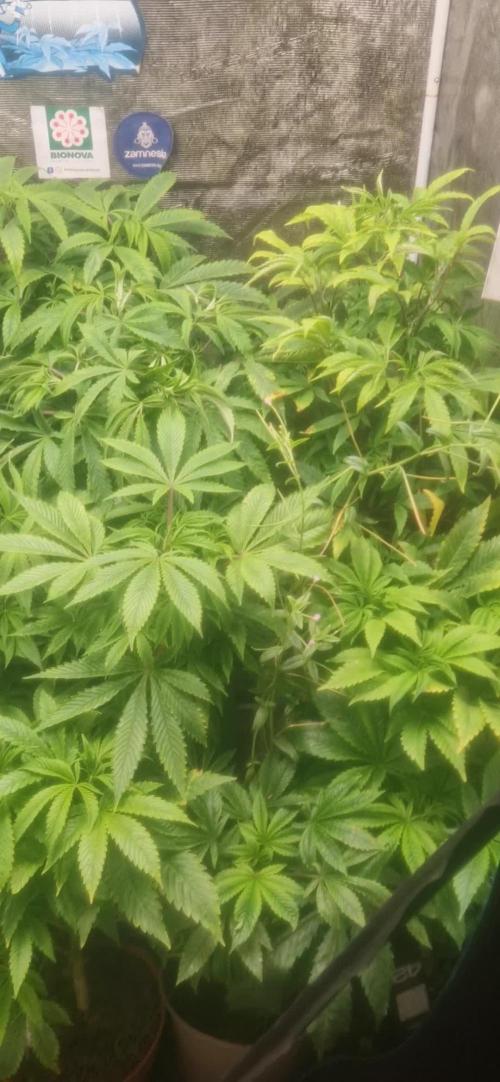
What a difference a few weeks makes with better weather and better temperatures inside the plants have really taking off could be flipping this tent in a few more weeks will need to plan ahead and get the lot of plants going so I have a constant flow of flowering and vegging tents

Likes
62
Share


@SimpleGrow
Follow
Hello and welcome to start of week 10!
The buds are getting really big now. I asume they will stop growing after this week and then we‘ll be entering the maturing phase. I didn‘t like how Nr.3 was growing in the middle. It had too many leaves and too few buds. So I‘m trying something new and defoliated her one last time today so the buds could get a little bigger. Let‘s hope it didn‘t cause any harm.
Nr.1 and especially Nr. 2 are doing amazing. They smell sweet and fruity and look gorgeous. No purple colour yet.
I will only be posting once a week since there isn‘t much happening in terms of groth. Just bud developement. Happy sunday to all 👍🏻🍀

Likes
306
Share


@Sparkles
Follow
Brought to you by a pair of Mars Hydro SP3000s. Grow on Earth. Grow on Mars.
69 😉 days from seed soak. Veg is done. Sending off to Mars to flower cuz I installed 2 SP3000s in my 2x4 (60x120) tent.
Introduced Nectar and have been feeding full strength now. Seems like I have to water every day...1 gallon each of full feed per plant, 18 hours later seems like they are thirsty again..leaves drooping down and perk up after water. I’ll start doing 1.5 gallons and up the nutes....maybe it’s the new lights.
Photone says: ~90000 lux in middle, ~70000 on the edges/sides.
I think I’m pushing it but it seems my plants are loving it.
That’s it for now and thanks for stopping by. Happy growing 🌱🌱🌱


Likes
21
Share


@ClosetKing33
Follow
Held off on feeding for 2 waterings, as I over fed slightly and notices a slight yellowing in the leaf margins signifying a nutrient lockout/toxicity.
I flushed Media with Ph'd water and problem was successfully resolved ..
Then yesterday 11/5/2021 I watered in some "Instant Compost tea" lol... a.k.a (Real Growers) 'RECHARGE' 💦🌱🚀.
Before watering, I Top Dressed my media with 1 Tbsp./Per 3 Gallon container with 'AZOMITE'

Processing
Likes
21
Share


@LittleBigTrees
Follow
Switched from 24/0 to 12/12 at the end of day 14, also switched the 730nm Led's on. Its been 7 days the plants have started growing a lot faster but there's still no pistils showing.
I started feeding biobizz grow @ 2ml/l
At the moment there getting watered every 3-4 days.
The light is showing 25000lux on a lux meter app.