Likes
Comments
Share


@PabloTheGrower
Follow
This week beacause of the difficulty in controling the water temperatures and tent humidity we had early signs of pythium in the auto flower. So i treated it with one hour of 8ml per liter of H2O2 and changed the reservoir for new nutes and 0.5ml/L of H2O2, instead of great white.
Besides that, everything's ok and the other 2 plants are starting to root. If the others start to show signs of root rot as well, ill change the whole grow from great white to H2O2.
The Apple&Bazookiez showed signs from the beginning of a mutation. Have one strange looking leaf and 3/4 branch of shoots on the top, without any damaging, fimming or topping.
Good week, good grows


Likes
2
Share


@cafer
Follow
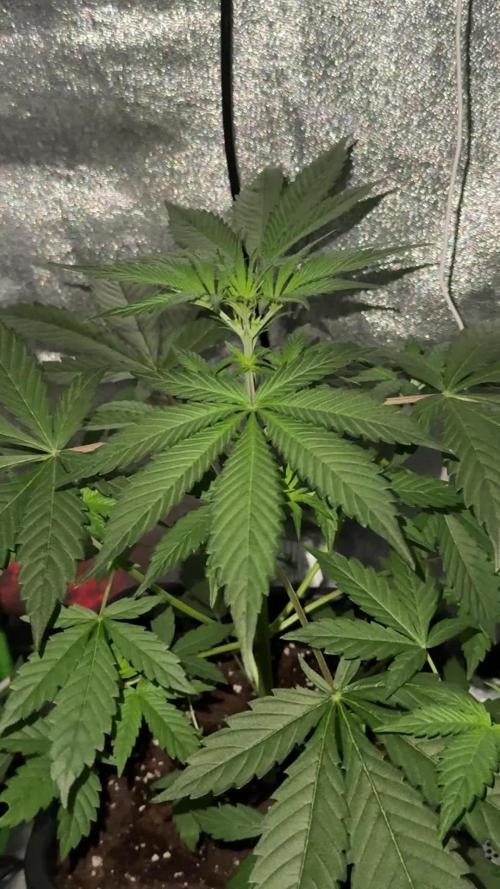
My plants are growing healthily and have already entered the flowering period.



Likes
20
Share


@DaddyPrime2
Follow
8/14 been chopping them. i got a clone a couple months back and she had spider mites. luckily, these autos werent overly affected. i do think that may have been the cause of some of the airy buds.

Likes
22
Share


@DankeyeBeaverjuice
Follow
Moved everything over to the big room, installed 2 trellis nets to assist the smaller pots from falling over as the flowers develop. I set the lights on a lower umol setting to let the plants adjust to the new light, then gradually increased as they got used to it and flower progressed.
Likes
3
Share


@Ogbangbang2981
Follow
well my girl is in her final days. My scope is broken so I need some insight, her flowers look so ripe, this update had to be for tomorrow but she looks so good don't want to get an over ripe bud need her to be perfect✂️✂️✂️✂️✂️✂️✂️✂️✂️✂️🔍🔍🔍
Likes
2
Share


@Boomdrawfyah
Follow
78 dias de vida hace dos semanas que empezaron la floración la 1051 esta mucho mas avanzada que sus hermanas han sacado un lado genetico más sativo y van a tardar mucho mas en cogollar en general esta todo bien, ha sido temporada de lluvias, tormentas y hay una humedad constante el clima no ayuda, en el mediterraneo siempre en final de temporada vienen lluvias y hay que pelear con el tiempo para poder sacar buenos resultados y evitar plagas

Likes
278
Share


@Metatronix
Follow
A big hello to all the cannabis growing gardeners...and all the other visitors that came across my grow journal.
This week i need to change the reservoir again, the plants drink solution just as I add fresh water the EC stays at 2.7 and i need to add PK and Calmag so that's why.
The weather outside is very cold this whole week around -18 degree Celsius at night...this made my reservoir water go under 15 degree Celsius.
Since i ran the Spider Farmer UV lights i noticed some purples on my cannabis plants i think it's their doing....i run it now for two weeks the UVs
----------------------------------------------------------------------------------
The SE 7000 is hanged at 28 cm. over the canopy and runs at 520W.
This whole grow's main sponsor is Spider Farmer. You can easily obtain all the great grow equipment we use at: spider-farmer.com
A big thank you to Jessie and the whole Spider Farmer crew for supporting me with the newest technological advancements in horticulture. Thanks to them what i do here is possible.
Thank you Seeds Mafia for giving me the opportunity to try out your stock.
seedsmafia.com/en/feminized-cannabis-seeds/moby-dick-feminized.html
Plagron did send us their Contest package for the Power Buds competition .
Thank you for your visit, please leave a like and hope to see you beck here in about a week.

Likes
73
Share


@Roberts
Follow
Lilly x White Widow is doing good under the Spider Farmer G5000/UVR40 lights. She got her usual weekly training. Nothing much else is going on. Just letting her veg. Thank you Spider Farmer, Athena, and Ripper Seeds. 🤜🏻🤛🏻🌱🌱🌱
Thank you grow diaries community for the 👇likes👇, follows, comments, and subscriptions on my YouTube channel👇. ❄️🌱🍻
Happy Growing 🌱🌱🌱
https://youtube.com/channel/UCAhN7yRzWLpcaRHhMIQ7X4g
Spider Farmer Official Website Links:
US&Worldwide: https://www.spider-farmer.com
CA: https://spiderfarmer.ca
UK: https://spiderfarmer.co.uk
EU: https://spiderfarmer.eu
AU: https://spiderfarmer.com.au
G5000 Light Amazon Link:
amzn.to/4643esa
UVR 40:
https://www.amazon.com/dp/B0BR7SGTHS
Discount code: saveurcash (Stackable)

Likes
3
Share

@Ninjabuds
Follow
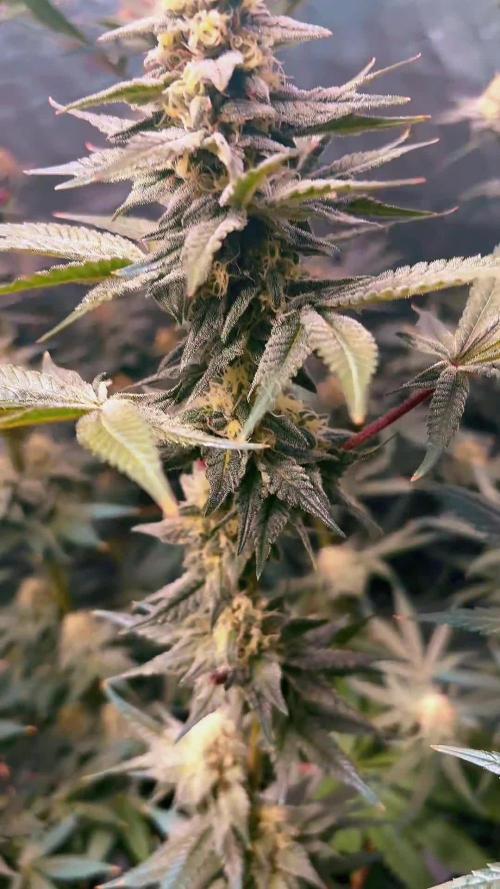
It’s day 43 of flower! All of the plants look great! I’m going to start dialing back the light intensity slowly over the next couple weeks. Harvest time is getting close

Likes
25
Share


@PrairieFrostGrow
Follow
**** Week 13 growth - February 27 to March 5, 2021 - Week 4 Flower *****
These girls are looking a little more different as we get further in flower. Pheno 1 is starting to swell more this week and here leaves are a nice rich green colour. Pheno 2 on the other hand has lighter leaf colour but is reacting less favourable to the amount of nitrogen and clawing down at the end of the week. It could be that she is also reacting worse to the increased light intensity this week. The frost production on Pheno 1 is also coming out more now. These two girls seems a little more reactionary to nutrient levels.
Light intensity increased this week. Pushed up to 525 watts and then to 550 watts at the end of the week. This got the a little hot by the end of the week though. Working with a new light and finding the sweet spots takes a run or two. Learning how the girls grow anyway so the whole run is a lot of learning......its all good😀
Nutrients were pushed a little at the end of last week and the start of this week so backing off a bit more again. Given that they were pushed with light intensity they started showing some signs of nutrient issues. It’s good though as there is reaction time and back off to plain water feed for a couple of days at the end of the week and into week 5. Week 5 is going to be the start of the last stage of flower feed and work with that for two weeks, then stop feeding at the end of week 6........the plan so far anyway.
Little more detail.......
Feb 27/21 - Day 22
- big feed day
- all IPP line plus silica @ 1ml, CalMag @ 1ml, Rezin @ 1.5ml, enzymes @ 1.5ml
- 1650ppm and 6.1pH - 4L
Feb 28/21 - Day23
- Microbe day but also added some CalMag
- Natures Candy @ 1.5ml, Recharge @ 1/2 tsp/gal, Magnifical @ 1.5ml, Micro @ 1ml, Bloom 1.5ml, Terpinator @ 2ml
- 950 ppm and 6.0pH - 3L
- leaf colour almost looks light today.
Mar 1/21 - Day 24
- dry out day.
Mar 2/21 - Day 25
- plain water
- 300ppm and 6.1 ph - 4L
- light power pushed up to 550 watts today.
- (too much from 16” to 20”........note!!)
Mar 3/21 - Day 26
- plain water with two suppliiments
- Terpinator @ 3ml, Rezin @ 2ml.
- 525ppm & 6.0pH - 4L
- stripped some leaves today......sticky in the middle😃😃👍👍
Mar 4/21 - Day 27
- no water added today
- light power reduced today 450 watts.
- been going too hard with intensity. Seeing leaf curl on other girls in the tent.
- joys of diagnosing cannabis😂
- starting with backing off light and reduce ppm going in but not the ml👍
Mar 5/21 - Day 28
- hit with microbes again to help with stresses.
- recharge @ 1 tsp/gal, Nature’s Candy @ 1.5ml
- 375ppm and 6.0pH - 3L
Moving right along we are through 4 weeks now and moving past the middle of flower.

Likes
20
Share


@Hawkbo
Follow
They got moved into the 4x4 with the jimmy rigged 180w quantum board light built from ceiling tile grid. The tnb co2 is newish but I gotta get the heat up and bring in a more powerful light to take full advantage.


Likes
16
Share


@DreamIT
Follow
Sponsored by:
💫PARADISE SEEDS💫-💡VIPARSPECTRA💡-💐GREEN BUZZ LIQUIDS💐-🛠️WEDRYER🛠️
29/9 it was a tough month for me but I'm back in charge. We are almost at the end of the cycle and the flowers begin to be large and the pistils begin to color.
__________________________________________
Personal advertising (contains affiliate links)
__________________________________________
🦄 winners and holders of the most prestigious awards, since 1994 they offer genetics of the highest quality! Anonymous shipping!
✅https: //bit.ly/Paradiseseeds_
__________________________________________
Did you know that Green Buzz Liquids fertilizers are 100% vegan? A complete line of products ready to give the best to each of your plants!
__________________________________________
Personal advertising (contains affiliate links)
__________________________________________
🦄 winners and holders of the most prestigious awards, since 1994 they offer genetics of the highest quality! Anonymous shipping!
✅https: //bit.ly/Paradiseseeds_
__________________________________________
Did you know that Green Buzz Liquids fertilizers are 100% vegan? A complete line of products ready to give the best to each of your plants! Visit the site and see my journals to see how they work 🦄
🤯 And with the code "dreami t" you will immediately receive a 15% discount on your purchases
✅https: //bit.ly/GreenBuzzLiquidsPro
__________________________________________
👀 Are you looking for a good lamp to start with? 👀
🌞Viparspectra has something more than the others, take a look at their site.
⏩ Use "GDVIP" for an extra discount or "DREMIT3" for an extra 5 %% discount
👀 Search for it on Amazon
✅Amazon USA: https://amzn.to/30xSTVq
✅Amazon Canada: https://amzn.to/38udUVe
✅Viparspectra UE: bit.ly/ViparspectraUE
✅Viparspectra USA: bit.ly/ViparspectraUS
______________________________________________
🌈 Tired of blowing on your weed hoping it dries quickly? Check out the Wedryer website! You will find a well-made accessory that will help your weed dry in just 8-10 days without the annoying risk of finding mold or other annoyances! (no affiliate links)
✅https: //bit.ly/Wedryer_
______________________________________________
📷🥇Follow the best photos on Instagram 🥇📷
https://www.instagram.com/dreamit420/
Backup
https://www.instagram.com/dreamit4200/
🔻🔻Leave a comment with your opinion if you pass by here🔻🔻
🤟🦄💚 Thank you and good growth 💚🦄🤟

Likes
Comments
Share


@hassehujasse
Follow
First Harvest-Crazy Day.
I had no choice, only to cut it early, but at that moment I thought it was time. I had to leave for 2 weeks and GPT told me it posile to cut now. So I cut my plant, by colas and left them for 2 weeks in fresh frosen to make hash later.
2 weeks later i got some 5 gramm of hash , dry rest of weed ,smoke it in one week. I have got high, but not stoned. at least I got something😂 watch the pictures and lough on me ,I totaly deserved. Enjoy and Peace 4 Everybody
Primer dia de coshecha- el dia mas tonto del año
Me corte esta plant 5 horas antes de volar fuera de pais por 2 semanas y me puso todo en las bolsas cerrado en frigorifico para hacer luego el hash. en el momento de corte me pense que todo mas o menos bien,hasta GPT me dicia eso. Al final me salio 5 gr de hashish y toda una mierda de hierba mojada. me sece como podido y fume todo en una semana. si, me ponia arriba, pero a mi ,me gusta tumbarme y eso no habia. Entonces soy tonto y me corte mi primera planta como minimo 2 semanas antes.
Que vas hacer? sentarte y mas crecer😎 un Abrazo a todo el mundo. Chao Sprritzer
Likes
12
Share


@PedroAndHisPlants
Follow
Day 64: Second Grow
We’re now in the fifth week of the flowering stage, and the buds are getting thicker by the day. We’ve decided to order a microscope to keep a closer eye on the trichome development. Additionally, we’re considering ordering CANNAZYM, a nutrient that could help our buds grow even bigger and healthier.
Here’s to another week of growth and progress!!
Likes
11
Share


@4F1M6
Follow
These 2 have really made a terrific canopy. Just rows of colas that are stacking right up. Buds are getting much more structre and character to them. Trichome and resin production is really kicking in. Earthy skunky aroma kicking from em so far. The tops are getting nice and solid... gunna have some great density here.
I reduced the nitrogen dose again. I also stopped giving them vigorous. Its a pure bloom mix now as these ladies are booming with flowers. Until next update. Happy growing and stay lit fam.

Likes
15
Share


@grow_ur_own
Follow
Weather was pretty good this week! A lot of sunshine and tenperature was fine too. See you next week ;)


Likes
5
Share


@Acid_joker
Follow
Новая. Неделя. Пошла майя красотка !!!!) Кто. Што. Пасаветует. Мужики? буду рад за. Помашь
Likes
9
Share


@Smokey_J26
Follow
Bounced back from the repot and defoliation (to get the light penetrating the lower flower sites).
Started giving sugar royal ready to flick to flower.
Really happy with the internodal spacing on this strain. Hoping for a decent yield.
Will be flipped to 12 hours this week.
Excited about the next 10 weeks!
30/11/23 UPDATE
Added 2ft tube heater to try and bring the temps up abit.
Tied down the girls, training should've started earlier but ive struggled for time.
Last day of Veg - tomorrow will be 12/12
Gave a good feed including Power Bud and brought pH up to 6.4 (tell tale signs of deficiency due to possible low pH at the roots)