


Likes
Comments
Share


@eldruida_lamota
Follow
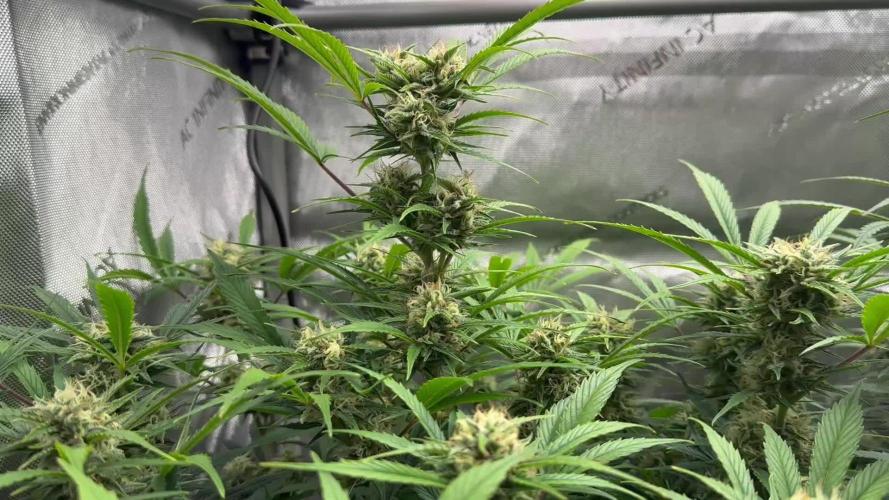
Vamos familia actualizamos la cosecha de las Purple OG KUSH de Dutchfem .
La verdad que el secado muy bien 7 días en Malla y a los botes, 40% humedad y 24 grados es la temperatura ambiental que han tenido en el secado.
Por lo demás de miedo os la recomiendo.
Gracias a DutchFem, Agrobeta y Mars hydro , sin ellos este proyecto no sería igual 🙏.
Agrobeta:
https://www.agrobeta.com/agrobetatiendaonline/36-abonos-canamo
Mars hydro:
Code discount: EL420
https://www.mars-hydro.com/
Buenos humos.


Likes
8
Share


@Xabii
Follow
Added some Universol Yellow to counterpart the KMPS which has high K.
ORP dropped a lot, countered it with KMPS and POLY(DIMETHYLAMINE-CO-EPICHLOROHYDRIN).
Discovered some Bananas on Christmas, the plant looked due anyway so no worries, wanted to chop her anyway, guess I was right with the timing and the plant showed me it is done and did a last attempt to pollinate itself, normal behaviour in my opinion, also the Bananas were blanks, didn't see any pollen.
Chopped her on day 83 from sprout that's why this week only has 6 days.
Values are average of the day.
DATE - °C - RH% (Tent Temp/RH)
20241223 23.0 60.6
20241224 22.7 61.5
20241225 22.8 61.7
20241226 23.2 62.2
20241227 22.4 61.7
20241228 21.9 60.6
DATE - PH
20241223 5.83
20241224 5.81
20241225 5.76
20241226 5.74
20241227 5.65
20241228 5.78
DATE - ORP (mV)
20241223 80
20241224 30
20241225 -12
20241226 19
20241227 128
20241228 104
DATE - EC(us/cm)
20241223 1664
20241224 1617
20241225 1604
20241226 1551
20241227 1558
20241228 1597
DATE - CF
20241223 16.64
20241224 16.17
20241225 16.04
20241226 15.51
20241227 15.58
20241228 15.97
DATE - °C (Reservoir)
20241223 21.6
20241224 21.6
20241225 21.8
20241226 21.7
20241227 21.5
20241228 21.5

Likes
16
Share


@Ultraviolet
Follow
Seedling managing 93F 30%RH, around 20 DLI. Vpd is in the 3's. No I don't recommend.
Signum Magnum.
"A great sign appeared in the sky
a woman clothed with the sun
with the moon under her feet
and on her head a crown of twelve stars.
Sing ye to the Lord a new canticle:
because He has done wonderful things.
Glory to the Father, and to the Son, and to the Holy Spirit
As it was in the beginning, and now, and ever shall be, world without end."
The plant nutrient nitrogen exists in forms with both positive and negative charges. Ammonium (NH4+)(immobile in soil)(Cation) has a positive charge, while nitrate (NO3-) (highly mobile in soil)(Anion)has a negative charge. Nitrogen is unique among plant nutrients in that it can exist in both positively charged (ammonium, NH₄⁺) and negatively charged (nitrate, NO₃⁻) forms in the soil. This makes it a special nutrient. In that it is responsible for providing balance for reactionary trade offs when it comes to ph. Because ph itself in the medium will always slowly drift towards acidicity, such is nature. 80% of nitrogen should be nitrate and no more than 20% ammoniacal nitrogen.
Ca, mg, and K are the big 3 cations related to soil composition, pH & base saturation.
When nitrogen is in the form of ammonium, it can compete with calcium, magnesium, and potassium for absorption sites in the plant root. This competition can lead to a reduction in the uptake of these other essential nutrients. Nitrogen, particularly in its nitrate form (NO3-), can increase soil acidity, which can also affect the availability of calcium, magnesium, and potassium. The form of nitrogen applied (ammonium vs. nitrate) can influence its interactions with other nutrients. Ammonium nitrogen can have a more pronounced negative effect on the uptake of calcium, magnesium, and potassium compared to nitrate nitrogen.
Common forms of ammonium nitrogen include ammonium ion (NH4+), urea, and ammonium compounds like ammonium nitrate, ammonium sulfate, and ammonium phosphate.
Common forms of nitrate nitrogen include potassium nitrate (KNO3), sodium nitrate (NaNO3), calcium nitrate (Ca(NO3)2), and ammonium nitrate (NH4NO3).
Phosphorus is an essential plant nutrient, and its availability in the soil is strongly linked to the presence of oxygen. Plants primarily absorb phosphorus as phosphate (PO4), and oxygen is a key component of this molecule. Furthermore, the availability of phosphorus in the soil can be impacted by factors like soil aeration and temperature, which in turn affect the oxygen supply to the roots.
Phosphorus uptake in plants is most critical during the early stages of growth, particularly within the first few weeks of plant development.
Young plants actively growing tissues have a high demand for phosphorus. They may absorb up to 75% of their total phosphorus requirements within the first few weeks of vegetative growth, with up to 51% of uptake happening overnight, primarily in the first few hours or early nightfall.
⑨Anaerobic root respiration, or respiration without oxygen, is detrimental to plants because it's less efficient and produces toxic byproducts, leading to reduced energy production, nutrient uptake issues, and ultimately, root damage and plant stress.
⑨Anaerobic respiration, unlike aerobic respiration, doesn't utilize oxygen as the final electron acceptor in the electron transport chain. This results in a significant drop in the amount of energy (ATP) produced, which is necessary for various plant functions, including growth, nutrient uptake, and maintenance of cellular processes.
⑨In the absence of oxygen, plants produce byproducts like ethanol and lactic acid during anaerobic fermentation. These byproducts can be toxic to the roots and inhibit their function,
⑨When oxygen is depleted in a medium, the pH tends to decrease (become more acidic) due to the production of metabolic byproducts. This is particularly relevant in biological systems where aerobic respiration relies on oxygen as the final electron acceptor.
⑨When oxygen is scarce, plants may switch to anaerobic respiration. This process produces carbon dioxide (CO2) as a byproduct.
⑨CO2 dissolves in water to form carbonic acid (H2CO3). This acid lowers the pH of the medium, making it more acidic.
⑨Anaerobic conditions can impair a plant's ability to regulate its internal pH, leading to a drop in cytoplasmic pH and potentially cellular acidosis.
⑨The change in pH can also affect the availability of certain nutrients to the plant, as pH influences the solubility of micronutrients like iron, manganese, zinc, copper, and boron.
⑨The lack of oxygen in the plant medium leads to a decrease in pH due to the production of carbon dioxide during anaerobic respiration and impaired pH regulation within the plant.
In plant cells, cellular acidosis, a drop in the internal pH of the cytosol, is a significant stress response, particularly during conditions like flooding or hypoxia. This acidification can be triggered by a decrease in oxygen levels, leading to the production of metabolic byproducts like lactic acid and CO2. The plant's ability to tolerate and recover from these conditions depends on its cellular mechanisms to regulate pH and mitigate the effects of acidosis. When plants are subjected to low oxygen environments, such as those experienced during flooding, anaerobic metabolism, which produces lactic acid and ethanol, becomes the primary source of energy. This can lead to a build-up of these acidic metabolites in the cytosol, causing a drop in pH.
OXYGEN
Atomic oxygen (single oxygen atom, O) is the lightest form of oxygen, as it has the lowest mass of the oxygen molecules. Oxygen also exists as a diatomic molecule (O2) and an allotrope called ozone (O3), which have higher masses due to the number of oxygen atoms combined.
Atomic Oxygen (O):
This refers to a single oxygen atom, which is the most fundamental form of oxygen.
Molecular Oxygen (O2):
This is the common form of oxygen we breathe, consisting of two oxygen atoms bonded together.
Ozone (O3):
This is an allotrope of oxygen, meaning it's a different form of the same element, consisting of three oxygen atoms bonded together.
Since atomic oxygen has the fewest oxygen atoms, it naturally has the lowest mass compared to O2 or O3.
Ozone (O3) Lifespan:
Ozone has a relatively long lifespan in the stratosphere, particularly at lower altitudes. For example, at 32 km in the middle latitudes during spring, ozone has a lifetime of about 2 months.
Oxygen (O) Lifespan:
Atomic oxygen, on the other hand, has a much shorter lifespan. At the same altitude, its lifetime is about 4/100ths of a second.
Ozone-Oxygen Cycle:
The ozone-oxygen cycle involves the rapid exchange between atomic oxygen (O) and ozone (O3). UV radiation can split molecular oxygen (O2) into atomic oxygen (O), which then reacts with O2 to form ozone (O3). Ozone can also be photolyzed by UV radiation, creating atomic oxygen again, which can then react with O3 to reform O2.
Dominant Form:
The partitioning of odd oxygen (Ox) between ozone and atomic oxygen favors ozone in the lower stratosphere. This means that a much larger proportion of odd oxygen exists as ozone than as atomic oxygen, especially in the lower stratosphere.
Recombination:
Atomic oxygen has a high energy and reactivity. When it encounters another oxygen atom, they can combine to form O2. This process releases energy, contributing to the heating of the atmosphere.
Ozone Formation:
Atomic oxygen can also react with molecular oxygen (O2) to form ozone (O3). Ozone plays a significant role in absorbing harmful UV radiation.
Other Reactions:
Atomic oxygen can react with various other molecules in the atmosphere, like nitrogen (N2), water (H2O), and carbon dioxide (CO2), forming different compounds.
UV light below 240nm (peak 185nm) creates ozone (O₃) through a process called photolysis, where UV light breaks down dioxygen molecules (O₂) into single atomic oxygen atoms (O). These single oxygen atoms then react with other oxygen molecules to form ozone (O₃). Specifically, UV-C light with wavelengths shorter than 240 nm can cause this photolysis.
UV light with wavelengths between 240-280 nm, (peak 254 nm) breaks down ozone (O₃) into dioxygen molecules (O₂) and atomic oxygen atoms (O). 280nm does not have the energy potential to break apart the stable bond of (O₂) into enough (O) to make (O₃)
At ground level, atomic oxygen (single oxygen atoms) has a very short lifespan. This is because it's highly reactive and quickly combines with other molecules to form stable diatomic oxygen (O2) or other compounds. While the exact timeframe varies depending on the specific circumstances, its lifespan is typically measured in nanoseconds or picoseconds.
Likes
10
Share


@EVERYTHINGFRIEDISGOOD
Follow
Day22 both early flowering with healthy with big eater (1000ml per day) . accident broke big branch on strain#2 . Now I push nutrients to 600ppm on same nutrient ratio


Likes
36
Share


@TheGreenLeopard
Follow
The flush week! Seemed ok - def had nitrogen toxicity in one purple berry kush - maybe too much ripener before. But we’re here - will give them the 24 now and chop. We’re out of time on this run. 90^% of the crop are where I want them to be however I thought I would have more droopy leaves. Will do the harvests on Monday anyways. Have a great week. Tried to edit best j could to do them justice. We were taking pics for the v1 so I brought them all out for a dance. Aroma strong 😂. Take care everyone. Just keep going and keep on bloomin


Likes
2
Share

@GrowdadGage
Follow
These girls are coming in nicely. I was impressed with how well the one plant I chose to top responded at first but now seeing the buds growing and coming in it’s lacking in comparison to the two plants that were just given low stress training.
Maybe it’ll catch up by the end but either way still very impressed with the Bruce Banner #3 Auto especially with the frost it’s starting to develop now 😁👌


Likes
8
Share


@Leafy420
Follow
Day 14
After a week from the bottom feed
The pots feels light again
My finger was dry
So i think its time for they first halve dose feed
23c, Ppm 700, ph 6,25
Gave each a dose of 100ml water
Day 16
Last night I saw roots so today I transplanted
Wich didn't really went as plant because something (Hopefully only soil) dropped right before I placed "Jane" into her new home :(
Besides that it went okay
Gave them a good dose of water
Now wait till it dries and then they get their first full feed dose
Day 20
This night they got they first full feed
500ml each
4ml grow A&B
4ml b52, bud candy and voodoo
With a low ph to bring down the ph in soil
Wich is a lil high I qeuss
22,7c 1000ppm 5,8 ph
Day 21
Today we did some LST
Now they lay, next up is sit and then we roll
So far they are cooperating
Day 22
All are now bend and secured and doing well :D
Day 23
Soil was dry gave them some calmag 1ml/l each 700ml 6.10ph
Likes
14
Share


@Momgrowsthechronic
Follow
So here’s Week 2 of the Sweet Seeds Gorilla Girl XL Auto’s grow. All in all an easy week but there has been time spent reinforcing a couple of the seedlings because they are so top heavy. I check in on my seedlings at least once a day (oftentimes 2-3 times daily) just to make sure that all equipment is functioning well and temps are stable. Upon looking into the windows of the tent I discovered that the smallest seedling (the one that lost one of it’s cotyledon leaves) was tipped right over. I gently supported her with a homemade splint (a tent peg/pipe cleaner combo- pictured above) and she’s currently standing on her own again. She’s still smaller than the others but surviving, not thriving for now. I used some fresh additional soil to fill in any gaps and pack down around the bases of the other three plants’ stems. Speaking of stems/stalks- the three healthy seedlings have peeling/stretching stalks and are starting to push out their first sets of branches. Other than that, same routine as always- watering every fourth day at 1.4 litres per watering or 0.35 of a litre per plant per day. I will be increasing the water sometime over week three. That’s it for now.
Mom’s Tip for Week #2- Don’t Over Water! (when growing in soil of course)… When learning to read your plant’s needs, water is a very important factor to consider. I often notice other growers with tiny seedlings sitting in completely saturated pots of soil. Or read that many other growers don’t believe in placing newly sprouted seedlings into their final containers/pots. Both issues being easily resolved by simply paying close attention to your plant’s body language, it’s grow environment and sticking to a schedule. Cannabis truly thrives and benefits from a wet to almost fully dry watering cycle. From my own personal experience with photosensitive strains grown outside in the summer to growing autoflowers indoors through the fall, winter and spring- all of my Cannabis seems to do best when watered every 4th day like clockwork! This schedule is somewhat subjective of course depending on the environment that you are growing in. Here in Canada, much of our year is cool to cold and the humidity is relatively low. Because of this my plants are not always able to take in moisture from the air through their stomas so they suck up more water from what’s readily available in their pots. In other environments (ex. tropical), you may be able to stretch out this cycle- watering every 5-7 days because your plants are pulling so much water directly from the humidity in the air. And how you water your plants matters too. When starting out with newly sprouted seedlings placed into their final containers- less is more. There is no need to completely soak all of the soil in a 5-7 gallon pot. Simply start with a small amount (0.5-1 litre) directing the water to the base of the plant, working your way outwards in a circular pattern. As you increase the amount of water, I try to work my water outwards- making my circle slightly bigger each time I water until eventually I am soaking the soil surface all the way out to the edges of the pot. This process is gradual, stretched over a period of 4-6 weeks. It will encourage the roots to reach for water and allow your plants the time needed to grow into a heavy dose of H2O. Finally, learning to read your plant’s body language will help you to understand when they need and don’t need water as well as food, more/less light, temperature changes, etc. Healthy, well watered plants are generally light green with leaves slightly turned up towards the light/sun. They will be growing/thickening every day and able to support their own weight even in a very breezy environment. Leaves are soft and supple, not dry and brittle and there are usually no marks or discolouration of any kind on the foliage throughout your grow. Water quality is important too but that’s any entirely different tutorial for another time. Bountiful harvests are very possible by simply tweaking your watering schedule to suit your plants’ ultimate needs.
Likes
2
Share


@ShivaShanti
Follow
Surprise haha
Jack's Dream woke up today and said,
I am ready for harvest.
Over the last 3-4 days we had light drizzle rains for a few hours each day with breaks for sunshine in between. Jack's Dream has powered through these late flower rains with ease. Not a single fear of butritis, mold, or mildew with this strain.
If anything the rains have rinsed and cleansed the flowers of foreign pollen, flying dust particulates, and other wind blown contaminants that may or may not have been present on the flowers.
Even though the resin is greasy on the fingers it will still collect wind driven contaminants.
A nice cleansing rain is very helpful as long as the plants genetics don't force it into a meltdown like some modern polyhybrid strains (not pointing fingers) haha
Jack's stems have begun to yellow very fast and they are getting wiggly. The bracts at the internodes are yellowing. She is ready.
These signs are telling me that is time to chop. There are still some white pistils on the undersides of the flowers here and there. But over the last 24 hours Jack's Dream has surprisingly ripened rapidly.
I have been using just Rainwater or Reverse Osmosis Water the last two weeks. Im not a proponent of flushing. The plant has shown me that it was sensitive to fertilizers over the last two weeks. Leaves started to show burn spots and such so I stopped all feeding.
The sunlight will dry the flowers out throughly and I have staked the plant to provide support because of the weakening stems.
I will begin the harvesting process tomorrow morning. At that time I will then give an in depth review for the cultivation of Jack's Dream.

Likes
9
Share


@HomeToGrow
Follow
Moin,
Die 6. Blütewoche ist seit Dienstag vorbei und wir befinden uns im Endspurt der Blüte. Das Terpenprofil ist am explodieren und ich bin wirklich begeistert nach und nach kristallisiert sich der Grapefruit Candy Geruch mehr und mehr raus, abgerundet von einer erdigen Note, ich schon wirklich gespannt wie es nach dem Trocknen und curen aussieht. Die kleinen steinharten von Trichomen überzogenen Blüten machen bock auf mehr auch wenn es kein Ertragsmonster sein wird bin ich mehr als zu Frieden und ich überlegen ob ich direkt im nächsten Grow den Steckling von meiner Fensterbank nehme oder ob ich doch lieber eine bzw 2 neue Sorten ins Zelt stelle, denn eigentlich waren die Lemon Z zusammen mit einem Strain von Dope Seeds an der Reihe.
Bisher war dieser Grow tatsächlich einer der entspanntesten die ich bisher hatte, das darf auch gerne so bleiben.
Hey,
The 6th week of flowering ended on Tuesday, and we’re now in the final stretch of flowering. The terpene profile is exploding, and I’m really excited about the Grapefruit Candy scent which is gradually becoming more and more pronounced, rounded out by an earthy note. I’m really curious to see how it turns out after drying and curing. The small, rock-hard buds covered in trichomes make me want to grow more of it even if this won’t be a high-yielding monster. I’m more than satisfied, and I’m considering whether to use the cutting from my windowsill for my next grow or if I’d rather put one or two new strains in the tent, since it was actually supposed to be the Lemon Z’s turn along with a strain from Dope Seeds.
So far, this grow has actually been one of the most relaxed ones I’ve had—and I’d be happy if it stays that way.

Likes
25
Share


@Sators
Follow
Day 36. topping for seven branches.
Day 38. Water with 2L nutrients mix.
Day 39. does super cropping for four brunches.
Day 40. Switch to 12/12h
Likes
15
Share


@GrimbolTheDruid
Follow
Grow Specs:
Breeder: Mephisto Genetics
Strain: Skywalker F5
Genetic heritage: Skywalker Kush Cut (selected from DNA seeds) x Triangle F3
Indica/Sativa: 35/65
Est. cycle time: 65-70 days from sprout
Medium: Soil, Mephisto Genetics Super Soil, Worm Castings
Light: 1/2 - 132W actual LED
Update schedule: I will try to send out the updates every Saturday or Sunday.
For more frequent updates, add me on Instagram @grimbolthedruid
Grow Schedule to Date:
Sprout: 3/1/17 (Full moon)
Age: Day 25 as of 3/25/18
Updates/Observations:
- Water only for last week and next because the soil is plenty hot. No need to cycle down lots of nutrients right now.
- I water about every 2-3 days.
- Trying to keep the soil always slightly moist and never let it dry completely to keep microbes (and by extension the soil) at optimum health.
- She has a very symmetrical structure and appears very healthy, though she is showing some leaf curl.
- Growing very vigorously.
Cheers!
-G


Likes
26
Share


@Leonweed10
Follow
Ya alimentandose mejor cada una de las plantas,de ahora en adelante tendran que crecer mas rápidamente para luego pasar a floracion en un par de semanas lo mas probable.
Likes
23
Share


@nonick123
Follow
Día 20 (13/05) Todas las plantas muestran las preflores!
Día 21 (14/05) Baño de sol de 2 horas!
Día 22 (15/05) NYC Sour D Auto empieza a mostrar algo de clorosis intervenal...
El gran @Thecannalife420 me diagnostica deficiencia de Mg
Aplico foliarmente Sales de Epson
Día 23 (16/05) Las plantas han reaccionado muy bien a las sales de Epson!
Riego 750 ml H2O + Regulator 0,15 ml/l + CaMg-Boost 0,25 ml/l + Startbooster 0,25 ml/l - pH 6.2
Día 24 (17/05) Las plantas salen al exterior! 😍 Les aplico heno como mulch (acolchado)
Día 25 (18/05) Riego 250 ml solo agua todas las plantas
Día 26 (19/05) Riego 250 ml H2O + Regulator 0,15 ml/l + CaMg-Boost 0,25 ml/l + Startbooster 0,25 ml/l + TopBooster 0,2 ml/l- pH 6.2
💦Nutrients by Aptus Holland - www.aptus-holland.com
🌱Substrate PRO-MIX HP BACILLUS + MYCORRHIZAE - www.pthorticulture.com/en/products/pro-mix-hp-biostimulant-plus-mycorrhizae
Likes
207
Share

@nonick123
Follow
Bienvenidos a la semana #9 😀 😬 🙏
Día 59 (16/07)
Descubro unas pequeñas arañas rojas
Aplico jabón potásico 5ml/l + aceite neem 2 ml/l
Riego 5 litros con H2O reposada + Melaza 1 ml/l + Té Hummus 30 ml/l - pH = 6.5 EC = 0.81
Día 60 (17/07)
El neem se ha cargado las arañas rojas 😬
Sigue crece que te crece 😀
Voy a tener un bonito monstruo en floración 😬
Día 61 (18/07)
¡A su ritmo de no parar! 😀
Día 62 (19/07)
Las fuc*ng arañas rojas van dando por saco. Las elimino manualmente
He perdido al alien entre tanta rama 😂
Día 63 (20/07)
Riego 4 litros con H2O reposada + Melaza 1 ml/l + Té Hummus 30 ml/l + Guanato 10 ml/l - pH = 6.5 EC = 1.01
Esparzo 100 gramos de Hummus de lombriz en la capa superior del sustrato antes de regar
Día 64 (21/07)
Las ramas principales son espectaculares. Y todas las que han crecido de las ramas superiores con el supercropping también.
¡Es impresionante como crece! 😀
Día 65 (22/07)
No sé si repetir el supercropping
El crecimiento es bestial!
Esta semana no he podido estar muy encima (como habitualmente) porque he estado enfermo del 19 al 21 de julio, pero he sacado algo de fuerzas para regarlas y echarles un vistazo...
Día 66 (23/07)
Ella ha mostrado el sexo!
Voy a tener un problema con la altura 😂

Likes
6
Share


@starke
Follow
UPDATE - 24th of February 2020 - DRY WEIGHT & LOVE
56g total dry weight, after I gave them a very nice trim. They started curing in glass jars on 19/2/2020 and are currently between 63-68%RH inside. Burping every other hour for couple of minutes.
While trimming some dried buds yesterday, I came across a seed, I couldn't believe it, between 😕and 😆, first time experiencing this, interesting, hopefully she didn't lose a lot of her potency and it only happened late. Learning from this: don't change light cycle. I changed from 18 to 21 hours, thought that was a good idea...
All this aside, I am sooooooo in LOVE WITH HER 😍I have never grown such a beautiful plant, excuse the photo spam, she deserves a stage, at least for me 😉I can't wait to try her properly cured and get to learn her whole taste spectrum with the low and slow dried buds. Some of them will be processed to oil and edibles. If I find time, I might document some more. Until then, happy growing everyone, peace 🙏
Tried 2 different drying methods:
1. Regular hang dry: For 7 days in small grow tent, darkness at 50% humidity & 20°C/68F - she was almost too dry after 7 days.
2. Low & Slow dry: after washing & hang-drying for 4 hours, she went into the fridge for 7 days in a paper bag, followed by several jar tests until she was at a steady 68% outside; She dried like this in the fridge for 8 days. I didn't trim her too much, since I want to preserve everything for oils.
More details:
16. Nov. 2019 - 13. Feb. 2020 - 88 Days - Grown from Seed
Smell of Berries; Pink & Yellow tips; Lots of long curly brown hair; Pink tiny leaf tips on top of buds. I’m in love whooooooooooaaaaaaa.
Chop on 13. Feb 2020 - 461g
Put in vase with PH water for 2 days in Dry Tent
darkness at 50% humidity & 20°C/68F
14. Feb. 2020 Darkness Day 1 - 469g
15. Feb. 2020 Darkness Day 2 - 452g
Total wet - no trim - 452g
Total wet - slight trim - 386g
//Regular dry in tent - 50% humidity & 20°C/68F // 281g with trim went in
Total dry - no trim - 43g
Total dry - trim - 40g
//Low and slow dry in fridge // 96g went in
Total dry - trim - 16g
Check 420magazine for “Low and Slow”-Dry. They are lovely.
Happy day to you all
