The Grow Awards 2026 🏆 









Likes
Comments
Share
@I_Identify_As_A_Dan
Follow
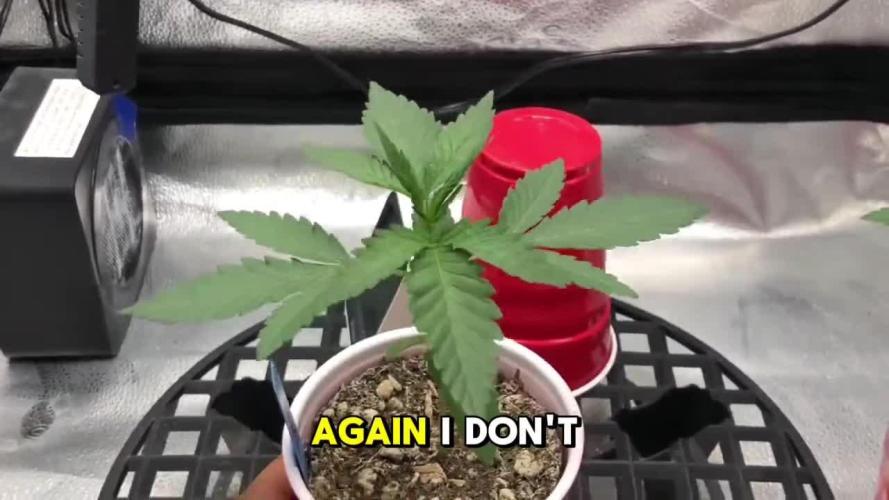
Week 6 for Black Lebanon by SSSC,
Like i mentioned on the previous Sunday update, she was transplanted a day after the post. I was planning on not giving water for the first week to let the roots do some growing.... the rain gods had a different plan 😂 Its been storming rain ever since day after transplant now 5 days i think 😂😂 So that didn't go to plan but hoping no rain next week fingers crossed.
I also think i topped her again some point last week. Cant wait for her roots to get moving in the new home.

Likes
60
Share
@Natrona
Follow
FBA2502
Week 3 April 13-19 Veg 2
This week I introduced nutrients to the watering schedule. My planned feed schedule will be to feed, feed, water each week until the time to flush. , adjusting nutrients per the growth cycle. Hopefully this will keep from overfeeding and reduce salt build up in the soil.
Nutrients: I will be using General Hydroponics Flora line at ½ feed rate and Cal mag throughout this grow.
My tap water measures 8.3-8.5 so even after adding nutrients, I have to PH down my feed solution. Regarding nutrients, I’ve tried Fox Farm, TPS1, Plagron and now General Hydroponics. What I am looking for is organic, ease of use, minimal individual bottles that will yield large, dense sticky buds that hit hard in effect.
Plants range in height from 5-7” except #1 which has been pinned to the soil. I will try wrapping her around the perimeter of the pot. Since she leaned over, I pinned her down and have been anchoring along the rim, twisting the stem so the node is on the side or top rather than underneath. I don’t think she likes training since the stems are a bit floppy. They are all still in veg, bushy with large indica leaves. I’ve been tucking the large leaves under the bud sites to give more light under the canopy. I’m tempted to top one of the bigger plants to have a comparison on resistance and final yield.
This week I made a short video for each 2502 tester and a pic or 2.
GH Flora
Micro ½ tsp /gal
Gro ½ tsp /gal
Bloom ½ tsp /gal
Fox CalMag ½ tsp /gal
PPM 573 & 715 when I added Plagrons Royal Rush 4ml.
PH 6.7
Temp 65
Your likes and comments are appreciated. Thanks for stopping by.
Growers love 💚🌿
💫Natrona💫
Processing
Likes
1
Share
@MG2009
Follow
09/02/2019
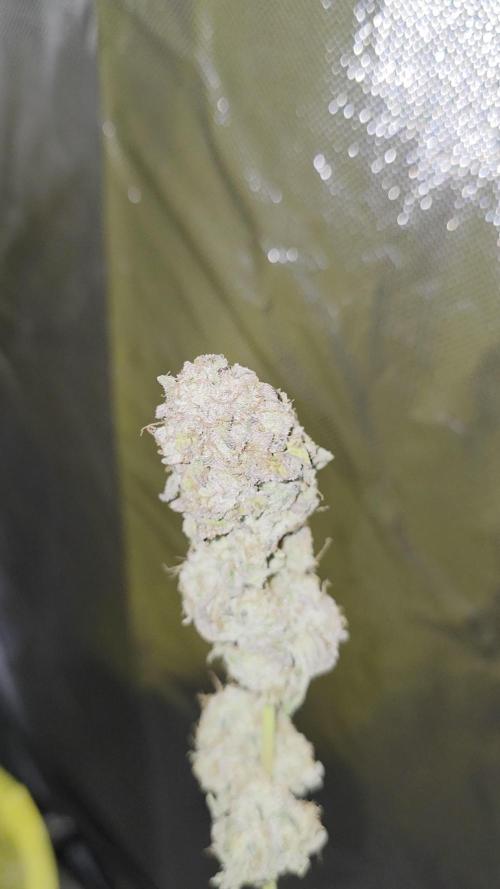
Week 5 of flowering, got really sweet candy like smell,almost floral.
Looks like she getting fatter fingers crossed!
Likes
8
Share
@Ieiogrow94
Follow
Eccoci qui...
Tutto va per il meglio, questa settimana non ho applicato stress alla piccola, ma ho guardato l'evoluzione che ha avuto dando i nutrienti.
Ora ha un odore davvero intenso ed uno strato di resina pauroso, vediamo come si riprende dalla defogliazione che ho fatto settimana scorsa.
Seguiranno aggiornamenti, grazie a tutti per il supporto🔥🌲❤️

Likes
3
Share
@MicroHidroGrow
Follow
Día 02.
Tuve que empezar la floración. Las raices estaban empezando a salir por el caño de descarga. Además estoy notando que al quedar mucha agua atrapada entre las raíces, la toman más rápido y los 20 litros que puse no sé si van a alcanzar. Ya había tenido este problema hace bastante y me había olvidado. Pero igual no me preocupa tanto. Sé que puedo manejarlo tranquilo.
Así que al final, la semana anterior fueron sólo 3 días. Ahora voy a ir planificando bien, dado que la diferencia de altura en una de las Polaris, me va a obligar a ir llevando un LST riguroso. También estoy empezando a pensar en formas para evitar las tapadas de raíces. Creo que algo se me va a ocurrir para implementar en algún momento.
Voy a hacer un corte de hojas muy grande cuando haya terminado el estiramiento de pre flora. Porque quiero probar cuanto afecta a una rama el quitarle la hoja principal. Algunas he cortado y otras cuantas no.
Apliqué Feeding Enhancer de Greenhouse, en forma foliar la noche que pasé a floración. Voy a hacer una nueva aplicación en una semana seguramente.
Tuve que bajar la frecuencia de reigo de 30/30 a 15/45 por hora, porque creo que eso hizo que se hagan tan grandes rápido. Igual es un dato que voy a tomar en cuenta para el futuro.
Día 04
Me preocupa la velocidad a la que se toman la solución nutritiva. Les puse 20 litros hace 4 días y quedan solamente 12 litros. A este ritmo voy a tener que empezar a poner mucho más de los esperado. Aunque igual, creo que cuando haga un trim fuerte de hojas, ahí van a empezar a regular más el consumo de agua. Además al haber crecido tanto las raíces, es mayor la cantidad de solución que queda estancada en las raíces y es consumida. Así que eso también será un tema a mejorar. Me gusta que las plantas estén así, pero siento que no las voy a poder controlar.
Likes
19
Share
@blady1989sqn
Follow
Hi all, I chopped some leafs, watered with plain water. Lamp lowered by 5cm. That's all for today. Njoy weekend.


Likes
18
Share
@Grower_Of_Persia
Follow
week intel:
everything is perfect!
stresses :
just a little E.C stress around 1.7 once a week
feeding:
i feed them 3 times this week with this order :
day 1 : i feed them heavy with silicate +base nutrients(calcium & micros + Bloom) about 818 ppm - 1.7 e.c to cause a little stress.
day 3 : i feed them low dose of Feeding Booster + Karbo Boost around 382 ppm - 0.7 e.c to let them recover a little but not fully recover still a little stress will caused.
day 5 : i feed them with low dose of Top-Max + B-52 around 250 ppm - 0.5 e.c to let them recover the stresses to get ready for another stress next week.
guide of the week :
know your plant tolerance limit of E.C stress once you saw the very very little yellowing on tips of leaves , that's the sign to don't go further , never reach that limit if you want a high quality buds, in my case tolerance is 1.8 and i'll reach to that level only once a week to cause precision stress , love your plants and have a happy growing!

Likes
2
Share
@MOBettaBudz
Follow
Now in what I consider VEG. 1st 10 days are really just watching them grow in the Solos. Transplanting soon
Likes
13
Share
@TheMightyHermit
Follow
Honey Cream is starting to smell wonderfully, a Sweet almost candy/bubblegum smell, incredible !
Likes
40
Share
@Chubbs
Follow
420Fastbuds
FBT2314
Germination Week
Time has come yet to start another amazing Tester strain from 420Fastbuds FBT2314. Started germination on 2/7 by soaking the seeds in just water for 48hrs then planting it directly in the soil (Roots Organic 707) in a 3gal fabric pot. I spray the top soil with my gallon sprayer keeping it moist for the next week. After 48hrs in the soil we have sprouts that emerged that appear to be healthy and happy. All in all Happy Growing
Likes
179
Share
@Tropicannibis_Todd
Follow
💩Holy Crap We Are Back At It And Loving It💩
Growmies we are at DAY 35 and she's just killing💀it👌
👉We are in the Preflower stretch 👈 Everything is looking good even the Tiny Cup 🥤
So Shit , I gave them just a tad to much nutes on the last feeding 👈 But I have since fixed it
So I'm starting to pull her over and do some low stress training 🙃 and some defolation 😳
Lights being readjusted and chart updated .........👍rain water to be used entire growth👈
👉I used NutriNPK for nutrients for my grows and welcome anyone to give them a try .👈
👉 www.nutrinpk.com 👈
NutriNPK Cal MAG 14-0-14
NutriNPK Grow 28-14-14
NutriNPK Bloom 8-20-30
NutriNPK Bloom Booster 0-52-34
I GOT MULTIPLE DIARIES ON THE GO 😱 please check them out 😎
👉THANKS FOR TAKING THE TIME TO GO OVER MY DIARIES 👈
Likes
4
Share
@IndianaGrow
Follow
The girls start rippen now the smell from sky walker og gelato and zkittlz are amazing, i have been cut Nitrogen off the end of week 8 going to week 9 using PK and then I’m going to finish it off with Finale from Vitalink and flush for 4 day with flora kleen

Likes
6
Share
@DeepRootsGrowTrees
Follow
Week #10 Gnomo Auto By Kannabia
Week#10 Dec.30th-Jan.6th
Gnomo Auto had stayed true to the indica genetics she has she's a shorter plant that's stocky with tight dense buds that are covered in trichomes. She's been a easy grow due to her genetics No real issues. I highly recommend if you like to grow indica or have limited space!

Likes
67
Share
@Canna96
Follow
Hey now, so this week went very well, I started feeding her ripening nutes today....So I am going with silica, cal mag, maxi bloom, and then dry bloom, ph, then a little hydrogen peroxide. So far they are happy. Plan is to build a little manifold out of her if she cooperates. Thanks for stopping by, I hope your grows are Strong and fast! Be safe and Blaze On!!!

Likes
10
Share
@CheeRz
Follow
After 13 weeks of flowering, Lemon Cherry Gelato is finally ready. I haven't watered her for the last three days. Her buds are extremely sticky and shiny. 🍋🍒🍦

Likes
19
Share
@Naturalist
Follow
Cleared the tent of all my remaining vegetable starts on day 61, cleaned up some of the bottom growth.


Likes
30
Share
@The_Apprentice
Follow
It’s been a strange week this week, few ups and downs, happy with the leaf development and general health of the girls but i think they might be lacking a bit of height and length between the nodes so I’ve been advised to not increase my wattage just yet and to increase the distance from light. I’ve also in the last couple of days moved them to the outer side of the tent, not like I’m lacking the space lol, in hope that this will encourage them to stretch up and out in search for more light; fingers crossed its a winning combo.
Still only feeding water when soils dried up.
Will deffo put a couple more plants in next time.
Likes
16
Share
@osmrducks
Follow
Day 36: Girls looking pretty happy. Still some discoloration going on. Doesn't look to be spreading though.
Day 37: Ok, the girls obviously were not happy this morning. I watered with quite a good amount of runoff and measure the PPM at 3200!!!!!!!!!!!!!!!!!!!!! I'm surprised they are still alive! Had to make a quick run to get some water for a flush as I only have 5 gallons worth. Ran 2 gallons through each of them at a ph of 6.4 around 9:30 this morning. It's now 5pm and they have pulled through great. These OG Kush are extremely resilient.
Day 38: The girls look way better today after flushing yesterday. Two of the pots were almost completely dry already. Went ahead and fed at 500ppm with runoff.
Day 39: I think it's dialed in now. They are looking amazing and still stretching pretty good. Went ahead and pulled off a handful of leaves between the 5 of em.
Day 40: Did a little more defoliation and opened them up a bit. I am super worried about getting any type of mold or any issues in particular for this first round. One of the girls needs a touch more but ran out of time. Girls are looking super healthy! 💪
Day 41: They are looking super awesome. Got the runoff dialed in. 750 going in and roughly 800 coming out. May up it in a week or so.
Day 42: Nothing new to update. Girls still looking amazing. I think the stretch may be slowing just a tad.

Likes
3
Share
@Cannagardenflow420
Follow
Es mejor cultivarlas en invierno con muy poco tiempo en crecimiento por el estirón que se pegan si no controlas la altura. Sabor regular pero buen humo y según el curado te da buenos momentos de risa o más bien un viaje cerebral.


Processing
Likes
7
Share
@Diddo50
Follow
My First Real Grow - x2 Purple Lemonade
- x2 Pineapple Express
- x2 Mexican Airlines