The Grow Awards 2026 🏆
Likes
5
Share
@Lazuli
Follow
Theres so much frost on the flowers that they dont look purple because the camera flash on the trichomes reflect
Likes
15
Share
@Kurow
Follow
Sooo frosty 👏🏾 I’m going to hopefully see some amber trichomes this week to justify harvesting on Christmas! Most definitely harvesting one plant on Christmas and one on new year’s due to the maturity rate on one plant.
Likes
3
Share
Likes
7
Share
I'm happy with progress this week. The plants have handled the transplant well. I didn't need to water last week and plan to give them 1.3 litres over two waterings this week. Started training Plant 2 this week and it has responded very well. I'll give Plant 1 another couple of days for its secondary branches to catch up then start training it too. Removed old dry leaves from Plant 1. I've decided not to do any topping this grow because I'm so far behind.
Likes
2
Share
So I'm starting to think it's a male. But..... I do know it a photo and not a auto. So it may take a little longer to actually flower since it growing out side I can't control the light so I have to wait and see🤞🏾🤷‍♂️🏿
Likes
8
Share
Welcome to Flower Week 4-5 of Divine Seeds Auto Black Opium I'm excited to share my grow journey with you all as part of the Divine Seeds Autoflowering Competition 2025. It's going to be an incredible ride, full of learning, growing, and connecting with fellow growers from all around the world! For this competition, I’ve chosen the Feminized Automatic strain: Auto Black Opium Here’s what I’m working with: • 🌱 Tent: 120x60x80 • 🧑‍🌾 Breeder Company: Divine Seeds • 💧 Humidity Range: 50 • ⏳ Flowering Time: 60-63 Days • Strain Info: 25%THC • 🌡️ Temperature: 26 • 🍵 Pot Size: 3 • Nutrient Brand: Narcos • ⚡ Lights : 200W x 2 A huge thank you to Divine Seeds for allowing me to be a part of this amazing competition and Sponsoring the Strains. Big thanks for supporting the grower community worldwide! Your genetics and passion speak for themselves! I would truly appreciate every bit of feedback, help, questions, or discussions – and of course, your likes and interactions mean the world to me as I try to stand out in this exciting competition! Let’s grow together – and don’t forget to stop by again to see the latest updates! Happy growing! Stay lifted and stay curious! Peace & Buds!
Likes
9
Share
Environmental Adjustments: Due to cool temperatures, a root heater was installed this week. The heater also helps maintain higher nighttime temperatures, improving overall conditions. Final Selection: The last selection was made, removing a smaller plant with slight leaf deformities. Although the differences were minor, only one plant was retained. Growth Observations: The selected plant shows symmetrical and robust growth. No abnormalities or issues have been observed, and it continues to thrive under the improved conditions. Summary: Week 2 marks steady progress with optimized conditions, setting the stage for continued strong development. dein-onlineheadshop.de/ Use my referral code 420Shop at checkout to get a discount on your purchase. By using this code, you also support me, as I receive a small reward for each use. Thank you for your support!
Likes
52
Share
Lacewings seemed to have mostly killed themselves by flying into hot light fixtures. I may have left the UV on which was smart of me :) Done very little to combat if anything but make a sea of carcasses, on the bright side its good nutrition for the soil. Made a concoction of ethanol 70%, equal parts water, and cayenne pepper with a couple of squirts of dish soap. Took around an hour of good scrubbing the entire canopy. Worked a lot more effectively and way cheaper. Scorched earth right now, but it seems to have wiped them out almost entirely very pleased. Attempted a "Fudge I Missed" for the topping. So just time to wait and see how it goes. Question? If I attached a plant to two separate pots but it was connected by rootzone, one has a pH of 7.5 ish the other has 4.5. Would the Intelligence of the plant able to dictate each pot separately to uptake the nutrients best suited to pH or would it still try to draw nitrogen from a pot with a pH where nitrogen struggles to uptake? Food for stoner thought experiments! Another was on my mind. What happens when a plant gets too much light? Well, it burns and curls up leaves. That's the heat radiation, let's remove excess heat, now what? I've always read it's just bad, or not good, but when I look for an explanation on a deeper level it's just bad and you shouldn't do it. So I did. How much can a cannabis plant absorb, 40 moles in a day, ok I'll give it 60 moles. 80 nothing bad ever happened. The answer, finally. Oh great........more questions........ Reactive oxygen species (ROS) are molecules capable of independent existence, containing at least one oxygen atom and one or more unpaired electrons. "Sunlight is the essential source of energy for most photosynthetic organisms, yet sunlight in excess of the organism’s photosynthetic capacity can generate reactive oxygen species (ROS) that lead to cellular damage. To avoid damage, plants respond to high light (HL) by activating photophysical pathways that safely convert excess energy to heat, which is known as nonphotochemical quenching (NPQ) (Rochaix, 2014). While NPQ allows for healthy growth, it also limits the overall photosynthetic efficiency under many conditions. If NPQ were optimized for biomass, yields would improve dramatically, potentially by up to 30% (Kromdijk et al., 2016; Zhu et al., 2010). However, critical information to guide optimization is still lacking, including the molecular origin of NPQ and the mechanism of regulation." What I found most interesting was research pointing out that pH is linked to this defense mechanism. The organism can better facilitate "quenching" when oversaturated with light in a low pH. Now I Know during photosynthesis plants naturally produce exudates (chemicals that are secreted through their roots). Do they have the ability to alter pH themselves using these excretions? Or is that done by the beneficial bacteria? If I can prevent reactive oxygen species from causing damage by "too much light". The extra water needed to keep this level of burn cooled though, I must learn to crawl before I can run. Reactive oxygen species (ROS) are key signaling molecules that enable cells to rapidly respond to different stimuli. In plants, ROS plays a crucial role in abiotic and biotic stress sensing, integration of different environmental signals, and activation of stress-response networks, thus contributing to the establishment of defense mechanisms and plant resilience. Recent advances in the study of ROS signaling in plants include the identification of ROS receptors and key regulatory hubs that connect ROS signaling with other important stress-response signal transduction pathways and hormones, as well as new roles for ROS in organelle-to-organelle and cell-to-cell signaling. Our understanding of how ROS are regulated in cells by balancing production, scavenging, and transport has also increased. In this Review, we discuss these promising developments and how they might be used to increase plant resilience to environmental stress. Temperature stress is one of the major abiotic stresses that adversely affect agricultural productivity worldwide. Temperatures beyond a plant's physiological optimum can trigger significant physiological and biochemical perturbations, reducing plant growth and tolerance to stress. Improving a plant's tolerance to these temperature fluctuations requires a deep understanding of its responses to environmental change. To adapt to temperature fluctuations, plants tailor their acclimatory signal transduction events, specifically, cellular redox state, that are governed by plant hormones, reactive oxygen species (ROS) regulatory systems, and other molecular components. The role of ROS in plants as important signaling molecules during stress acclimation has recently been established. Here, hormone-triggered ROS produced by NADPH oxidases, feedback regulation, and integrated signaling events during temperature stress activate stress-response pathways and induce acclimation or defense mechanisms. At the other extreme, excess ROS accumulation, following temperature-induced oxidative stress, can have negative consequences on plant growth and stress acclimation. The excessive ROS is regulated by the ROS scavenging system, which subsequently promotes plant tolerance. All these signaling events, including crosstalk between hormones and ROS, modify the plant's transcriptomic, metabolomic, and biochemical states and promote plant acclimation, tolerance, and survival. Here, we provide a comprehensive review of the ROS, hormones, and their joint role in shaping a plant's responses to high and low temperatures, and we conclude by outlining hormone/ROS-regulated plant-responsive strategies for developing stress-tolerant crops to combat temperature changes. Onward upward for now. Next! Adenosine triphosphate (ATP) is an energy-carrying molecule known as "the energy currency of life" or "the fuel of life," because it's the universal energy source for all living cells.1 Every living organism consists of cells that rely on ATP for their energy needs. ATP is made by converting the food we eat into energy. It's an essential building block for all life forms. Without ATP, cells wouldn't have the fuel or power to perform functions necessary to stay alive, and they would eventually die. All forms of life rely on ATP to do the things they must do to survive.2 ATP is made of a nitrogen base (adenine) and a sugar molecule (ribose), which create adenosine, plus three phosphate molecules. If adenosine only has one phosphate molecule, it’s called adenosine monophosphate (AMP). If it has two phosphates, it’s called adenosine diphosphate (ADP). Although adenosine is a fundamental part of ATP, when it comes to providing energy to a cell and fueling cellular processes, the phosphate molecules are what really matter. The most energy-loaded composition for adenosine is ATP, which has three phosphates.3 ATP was first discovered in the 1920s. In 1929, Karl Lohmann—a German chemist studying muscle contractions—isolated what we now call adenosine triphosphate in a laboratory. At the time, Lohmann called ATP by a different name. It wasn't until a decade later, in 1939, that Nobel Prize–-winner Fritz Lipmann established that ATP is the universal carrier of energy in all living cells and coined the term "energy-rich phosphate bonds."45 Lipmann focused on phosphate bonds as the key to ATP being the universal energy source for all living cells, because adenosine triphosphate releases energy when one of its three phosphate bonds breaks off to form ADP. ATP is a high-energy molecule with three phosphate bonds; ADP is low-energy with only two phosphate bonds. The Twos and Threes of ATP and ADP Adenosine triphosphate (ATP) becomes adenosine diphosphate (ADP) when one of its three phosphate molecules breaks free and releases energy (“tri” means “three,” while “di” means “two”). Conversely, ADP becomes ATP when a phosphate molecule is added. As part of an ongoing energy cycle, ADP is constantly recycled back into ATP.3 Much like a rechargeable battery with a fluctuating state of charge, ATP represents a fully charged battery, and ADP represents a "low-power mode." Every time a fully charged ATP molecule loses a phosphate bond, it becomes ADP; energy is released via the process of ATP becoming ADP. On the flip side, when a phosphate bond is added, ADP becomes ATP. When ADP becomes ATP, what was previously a low-charged energy adenosine molecule (ADP) becomes fully charged ATP. This energy-creation and energy-depletion cycle happens time and time again, much like your smartphone battery can be recharged countless times during its lifespan. The human body uses molecules held in the fats, proteins, and carbohydrates we eat or drink as sources of energy to make ATP. This happens through a process called hydrolysis . After food is digested, it's synthesized into glucose, which is a form of sugar. Glucose is the main source of fuel that our cells' mitochondria use to convert caloric energy from food into ATP, which is an energy form that can be used by cells. ATP is made via a process called cellular respiration that occurs in the mitochondria of a cell. Mitochondria are tiny subunits within a cell that specialize in extracting energy from the foods we eat and converting it into ATP. Mitochondria can convert glucose into ATP via two different types of cellular respiration: Aerobic (with oxygen) Anaerobic (without oxygen) Aerobic cellular respiration transforms glucose into ATP in a three-step process, as follows: Step 1: Glycolysis Step 2: The Krebs cycle (also called the citric acid cycle) Step 3: Electron transport chain During glycolysis, glucose (i.e., sugar) from food sources is broken down into pyruvate molecules. This is followed by the Krebs cycle, which is an aerobic process that uses oxygen to finish breaking down sugar and harnesses energy into electron carriers that fuel the synthesis of ATP. Lastly, the electron transport chain (ETC) pumps positively charged protons that drive ATP production throughout the mitochondria’s inner membrane.2 ATP can also be produced without oxygen (i.e., anaerobic), which is something plants, algae, and some bacteria do by converting the energy held in sunlight into energy that can be used by a cell via photosynthesis. Anaerobic exercise means that your body is working out "without oxygen." Anaerobic glycolysis occurs in human cells when there isn't enough oxygen available during an anaerobic workout. If no oxygen is present during cellular respiration, pyruvate can't enter the Krebs cycle and is oxidized into lactic acid. In the absence of oxygen, lactic acid fermentation makes ATP anaerobically. The burning sensation you feel in your muscles when you're huffing and puffing during anaerobic high-intensity interval training (HIIT) that maxes out your aerobic capacity or during a strenuous weight-lifting workout is lactic acid, which is used to make ATP via anaerobic glycolysis. During aerobic exercise, mitochondria have enough oxygen to make ATP aerobically. However, when you're out of breath and your cells don’t have enough oxygen to perform cellular respiration aerobically, the process can still happen anaerobically, but it creates a temporary burning sensation in your skeletal muscles. Why ATP Is So Important? ATP is essential for life and makes it possible for us to do the things we do. Without ATP, cells wouldn't be able to use the energy held in food to fuel cellular processes, and an organism couldn't stay alive. As a real-world example, when a car runs out of gas and is parked on the side of the road, the only thing that will make the car drivable again is putting some gasoline back in the tank. For all living cells, ATP is like the gas in a car's fuel tank. Without ATP, cells wouldn't have a source of usable energy, and the organism would die. Eating a well-balanced diet and staying hydrated should give your body all the resources it needs to produce plenty of ATP. Although some athletes may slightly improve their performance by taking supplements or ergonomic aids designed to increase ATP production, it's debatable that oral adenosine triphosphate supplementation actually increases energy. An average cell in the human body uses about 10 million ATP molecules per second and can recycle all of its ATP in less than a minute. Over 24 hours, the human body turns over its weight in ATP. You can last weeks without food. You can last days without water. You can last minutes without oxygen. You can last 16 seconds at most without ATP. Food amounts to one-third of ATP production within the human body.
Likes
16
Share
Veg week 2 Day 36 from seed Topped 11/17/23 LST coming up Microbial tea end of week
Likes
4
Share
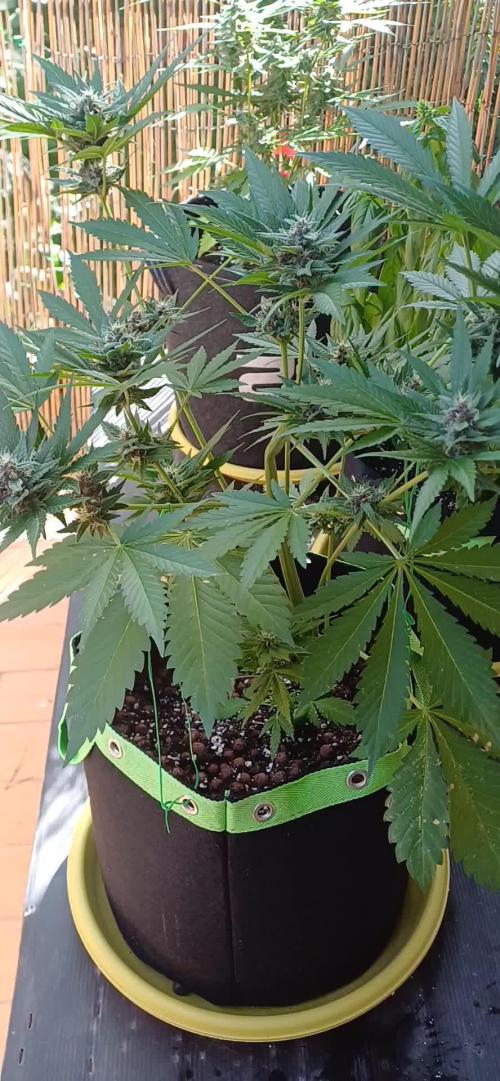
Hey Y'all! I Hope the season is treating you well! My plants are getting big!! Hindu Kush is the tallest at about 2 feet and 4 inches from the soil. Skywalker Ghost Kush is the second tallest, and it's still growing. Hindu Kush is stretching too as she flowers! The GSC is stretching but not as much, I can see her sativa qualities a lot more now that she's beginning to show her flowers more. I'm still having issues with Nitrogen Toxicity specifically with this plant as well. She's got burnt tips, but after getting some advice on reddit I was told the nutrient issues aren't that bad. Will be ordering the pH tester, and jewelers trope, and some dedicated flowering nutrients for the plants this week. I am hoping to harvest GSC and Hindu Kush are the same time before the baby hindu kush and the Skywalker Ghost Kush. I'm anticipating the Skywalker Ghost Kush to be ready by October, same with the second Hindu Kush. The first two plants I'm expecting to be finished within a month to 6 weeks! I started feeding them more water, about 2 cups of water each feeding. The big Hindu Kush and Skywalker Ghost Kush need fed twice a day now, they're so big they take up their food so quick! If you have any questions please ask! Impatiently waiting for more buds to grow lol. EDIT: So this is at the end of the week. There's been a heat wave this week and my Skywalker Ghost Kush has not been happy with it. Her fan leaves have been wilting down a bit from the heat, it's hard to keep the heat down in my tent it's been up to 85 degrees F. So I got an air conditioner and had that running with the tent open for a bit and that helped. Just bought some General Hydroponics Bloom Nutrients to help with some of the Nitrogen burn, hopefully that can balance out the nutrients. I just got a carbon filter as will that I will be installing next week! I will do my next update after I install it!
Likes
149
Share
Hi all the happy people here in GrowDiaries. This is my second cultivation ever and it will be fun to try a bigger space than my closet grow. First, I'm just going to say I'm done with the construction of my new growroom. I put some pictures on the construction here in week one. The room is 2.14 meters by 1.7 meters and has a ceiling height of 2 meters. It provides a floor area of ​​3.6 square meters. I use a 54 Watt Lightwawe T5 for germination and 2 Pcs 400 Watt HPS lamps. I have a channel fan that replaces the room air about 40 times an hour to get a comfortable theme in the room, the air enters a fresh air intake from the outside. The air is purified through a carbon filter to then leave the room to the rest of the basement. Then I use that heat to heat the rest of the basement. I will use 8 pcs 15 liter Autopots to grow with and a 100 liter water tank that supplies the pots of water and nutrition. I will grow completely organically in soil and will watercure my buds to get the best possible medicine for me. But there are no cultivation rooms to be displayed here, so I continue with what is most important. Today I have put my seeds in my moisture dome and hope the seeds have germinated within a few days. I am very excited to see how the new growroom will work and how this Blue cheese Auto from Royal queen seeds will turn out. Blue Cheese automatic cannabis seeds are a cross of Blueberry Automatic and Cheese Automatic that has been perfected over five years of breeding and careful selection. The result is a feminized, autoflowering strain with superior yield, flavor, and effects to either of its distinguished parent strains. THC: 16% CBD: Low Yield Indoor : 325 - 375 gr/m2 Yield Outdoor: 60 - 110 gr/plant Height Indoor: 40 - 70 cm Height Outdoor: 60 - 110 cm Flowering: 7 - 8 weeks Harvest month: 9-10 weeks after planting Genetic Background: Blueberry x Cheese x Ruderalis Type: Sa 35% In 40% Ru 25% Effect: Cerebral and uplifting Climate: Mild .............................................................................................................................................................................................................................................................................................................................................. Update 2017-08-15. All 4 seeds have germinated and planted in small pots inside the humidity dome. I'm so glad it worked so well and now it's just hoping they'll start growing and become 4 big healthy girls :) ............................................................................................................................................................................................................................................................................................................................................... Update 2017-08-16. I have mixed my own soil today. Its 40% sieved peat harrow H2-H4 0-30 mm, 45% sieved peat harrow H4-H6 0-30 mm. 5% sand and 10% of compost soil. And i use 15% of perilite and mix it all together. ................................................................................................................................................................................................................................................................................................................................................ Update 2017-08.20. Nr1 and 2 grow and thrive. Number 3 just got rid of the seedpod and is folding out the sheets. Number 4 is a bit shy and can only be seen if you look carefully into the soil. ......................................................................................................................................................................................................................................................................................................................................... Update 2017-08-21. Nr 1 and 2 is doing well. Nr3 is trying to catch up and Nr4 is still shy. -------------------------------------------------------------------------------------------------------------------------------------------------------------------------------------------------------- 2017-08-23. Transplanted 2 girls from humidity dome and the small germinating pots to 15 liter autopots. The other 2 girls have to wait a little more before transplant to the autopots. ................................................................................................................................................................................................................................................................................................................................................................................ 2017-08-27. The girls have settled in to there new home of the 15 liters autopot after a little transplant chock. Now the real week 1 starts for me and the girls. -------------------------------------------------------------------------------------------------------------------------------------------------------------------------------------------------------- 2017-08-28. New pic and movies. --------------------------------------------------------------------------------------------------------------------------------------------------------------------------------------- 2017-08-28. Nr3 is transplanted in 15 liter autopot. ------------------------------------------------------------------------------------------------------------------------------------------------------------------------------- 2017-08-29. New movie of the girls. Its no water for 3 days now for Nr1 and 2 so the roots develop more and match the plant above the soil. The temp controlled fan is awesome, its easy to set what temp you like to have in the room. Right now its 28 celcius. And humidity is 56%. ------------------------------------------------------------------------------------------------------------------------------------------------------------------------------------------ 2017-08-29. Hello to you who read my diary, I just want to say that I am pleased that you have chosen to check in with me and in my diary. I just want to say that I do this for myself and for a steady flow of my medicine. Everything you read and see in my diary is 100% honest and I will never distort or beautify anything here. I document my crops so that I can learn from my mistakes and also to look back at those different crops. I try to update with pictures every day and with text if something special has happened in the garden. This is my strainhunt for the best medicine and the beginning of my journey with cannabis and the cultivation of it. ----------------------------------------------------------------------------------------------------------------------------------------------------------------------- 2017-08-30. Cleaned the room this morning, just vacuuming and cleaning with chlorine solution. Im testing the fan to control temp and humidity, it works great. Added some pics with measurements and movie. Everything is looking great right now. --------------------------------------------------------------------------------------------------------------------------------------------------------------------------- 2017-08-31. New pics and videos. --------------------------------------------------------------------------------------------------------------------------------------------------------------------------------- 2017-09-01. New pics and videos. Gave each of the girls with 2 ml Alg-A-Mic, 4ml Bio-Grow, 4ml Bio-Heaven and 10 ml Formulex mixed in 2 liters of water. I hope they like it :) ------------------------------------------------------------------------------------------------------------------------------------------------------------------------------------------------------------------------------------------- 2017-09-02. New pics and the girls liked the water and nutrients yesterday. ------------------------------------------------------------------------------------------------------------- 2017-09-03. New videos of the girls this morning. Nr1 and 3 looks great and nr 2 is looking a little funny, maby a little stressed. Kl. 16.00. Did some defoliation on the girls. Added video. Kl.. 23.00. New videos, defoliation and leaftucking. -----------------------------------------------------------------------------------------------------------------
Likes
20
Share
Poussé sous les mars hydro 45 jour ensuite changé les lumiere par une sun system rs1850 de 720 watt . Les foxtail on apparue lors de-là flush il y a 14 jour . 30% ambré
Likes
2
Share
8. Woche So langsam wird es was mit Titan F1 von RQS. Denke 2-3 Wochen noch, dann ist sie rdy to Harvest 😍
Likes
127
Share
Weekly Update on the Runtz 🌱 Hey everyone! Just wanted to share how the Runtz is coming along. She's thriving under the care of the Plagron nutrients 🌿, reacting beautifully to every feed. Since my last update, she’s sprouted several new nodes and is showing incredible growth! https://plagron.com/en/tools/grow-schedule-calculator She’s definitely growing like a sativa 🌳, with those long, stretchy branches. To manage that, I’m planning to enforce some solid training techniques to keep her short and wide, just the way I like it 💪✨. I’m loving the whole experience so far, it’s been such a rewarding journey 💚. I’ve attached plenty of pictures for you all to check out 📸. Please drop a like, leave a comment, and share any feedback or tips you’ve got! 🌟🙌
Likes
142
Share
Hi everyone 🤗. Everything is going great 👍. There are no defects or anything unusual :-). Today the Blue Cheese Pheno 1 became the first time rinsed, and now only gets 0.4 Ec water for the next 10 days ca :-). Everyone else needs a while. otherwise there is not much to report this week. I wish you all a nice week, stay healthy 🙏🏻 and let it grow 🌱
Likes
96
Share
Week 4 Report: Big Cheese Auto Flourishing in Autopilot Mode! Hey there, fellow cultivators! It's that time again – Week 4, and our Big Cheese Auto is stepping into a new phase of autonomy. This week, I introduced the Autopot system, letting our green friend decide when and how much to drink. It's like giving her the keys to the watering kingdom, and she's embracing the freedom beautifully. First and foremost, a hearty shoutout to Seeds Mafia for gifting us with genetics that keep on giving. The resilience and vigor displayed by our Big Cheese Auto are a testament to the quality seeds we started with. Now, let's dissect the nutrient symphony that's been playing in the background: Regulator (0.15ml/L): Our humidity maestro continues to dance with the elements, ensuring a stress-free environment for our plant. The monoclinic acid is working its magic, and our Big Cheese Auto is sipping contentedly in her newfound freedom. Calmag (0.25ml/L): Calmag, our nutrient bodyguard, remains on duty. This week, it's all about maintaining that structural integrity as our plant starts gearing up for more vigorous growth. Strong stems, sturdy leaves – the foundations of greatness. All-in-One Liquid (1ml/L): The NPK trio in the All-in-One Liquidstoped as the pellets on the soil s are now available and are the backbone of our nutrient regimen. Nitrogen, phosphorus, potassium – it's a growth party, and our Big Cheese Auto is the VIP. This all-in-one soil simplifies our feeding routine, letting us focus on the art of cultivation. Start Boost (0.25ml/L): Start Boost, the architect behind our root cathedral, is still in play. Those micronutrients are like construction workers building a solid foundation for our plant's future. The roots are thriving, and our Big Cheese Auto is standing tall. Aptus Mycor Mix: The underground alliance of mycorrhizal fungi and roots is establishing a symbiotic relationship that's pure magic. It's like having a secret society beneath the soil, enhancing nutrient uptake and fortifying our plant's foundation. NutriSpray by Aptus Holland: Introducing a new player to the nutrient team – NutriSpray. Packed with organic surfactants and a microelement cocktail (Mn, S, Zn, Fe), this foliar spray is like a spa treatment for our leaves. The horse chestnut extract binds with microelements, creating a protective shield that stays on leaves for up to two weeks. It's like a force field against nutrient deficiencies. How NutriSpray Works: The horse chestnut extract binds to microelements, creating a protective shield. This shield ensures the nutrients stay on leaves, allowing for a slow release over two weeks. Additionally, it thins vascular fluid, facilitating faster nutrient transport within the plant. How to Use NutriSpray: Dilute with water (2ml per 1L), and spray the entire leaf surface. For our indoor oasis, I sprayed during weeks 1, 3, and 5 of bloom for general nutrition. Our training efforts continue to pay off. Low Stress Training (LST) by bending leaves is shaping our plant into a work of art. The canopy is becoming more even, optimizing light exposure for future buds. The transplant into the spacious 15 L pot is proving to be a smart move. The roots are spreading their wings, exploring the nutrient-rich soil, and our Big Cheese Auto is reaping the benefits with each passing day. As we move into the next week, the excitement is palpable. The Autopot system is in full swing, and I can't wait to see how our Big Cheese Auto takes the reins of her own hydration destiny. Once again, a huge thanks to Seeds Mafia, Aptus Holland, Grow Diaries, and our amazing community. This journey is a collective effort, and your support is the fuel that keeps us growing. Let's continue to cultivate greatness together! Genetics -Seeds Mafia Big Cheese Automatic Light - LUMATEK ZEUS 465 COMPACT PRO 
Food - APTUS HOLLAND 
 
All info and full product details can be find in can find @ https://seedsmafia.com 

https://aptus-holland.com/
 

https://lumatek-lighting.com/ As always, thank you all for joining me on this journey, for your love, and for it all. My horticultural odyssey would never be the same without you. Your love and support are cherished, and I feel both honored and blessed to have you in my life <3 <3 <3 With true love comes happiness. Always believe in yourself and always do things expecting nothing in return, with an open heart. Be a giver, and the universe will respond in ways you can't even dream off. Friendly reminder: all you see here is pure research and for educational purposes only <3 <3 <3 Growers love to you all <3 <3 <3 P.S- I must extend my sincerest apologies for the missing video reports. Regrettably, Grow Diaries is still facing some technical issues that are preventing me from uploading them. Rest assured, as soon as the situation is resolved, I'll share those videos to give you an even closer look at this fascinating journey.
Likes
2
Share
@TTerpz
Follow
Buds starting to form!!!! Day 2 of week 8 4/3/25 UPDATE: Flushed with Fox farm sledgehammer ph’d at 6.8 Soils were low at 5.8 4/5/25 update: fed with nutes 4/7/25: watered with plain water ph’d at 6.5 4/8/25: did a slight heavy defoliation to get ready for week 9!
Likes
4
Share
11/19 start of a new week.ngot watered/fed yesterday. 11/22 watered with saps and inoculatednwith BB
Likes
32
Share
It was another two beautiful, sunny weeks that have now come to an end. To be on the safe side, I examined Durban Poison, Shaman and Frisian Dew more closely and found that all the ladies, with the exception of Frisia n Dew, which are in the garden, had initially developed mould in the flowers. In addition, some green caterpillars fell out of the Durban Poison when the plant was shaken. Durban Poison had also completely stopped flowering, which I found unusual. I therefore decided to harvest all the ladies, except for Frisian Dew in the garden. This Frisian Dew is only now entering its main bloom and is not yet so susceptible. Durban Poison has developed very thick and heavy colas, followed by Shaman and Frisian Dew. See the picture with the scale. I was able to weigh a part of the harvest after the raw trimming, then at the weekend the batteries of the digital scale were empty. It will take a few more days until everything is dried and stored in jars for maturing but one thing is for sure, it's quite a lot. The plants are still standing with remaining flowers to see how they will handle the coming bad weather.
Likes
55
Share
@nonick123
Follow
Día 78 (31/03) Riego con 400 ml H2O EC 0,45 Día 79 (01/04) Riego con 750 ml H2O EC 0,45 Día 80 (02/04) Riego con 750 ml H2O EC 0,45 Día 81 (03/04) Riego con 750 ml H2O EC 0,45 Día 82 (04/04) Riego con 750 ml H2O EC 0,45 Día 83 (05/04) Riego con 750 ml H2O EC 0,45 Día 84 (06/04) Riego con 750 ml H2O EC 0,45 Reviso los tricomas y hay algunos ámbar, pero muchos trasparentes. En una semana más o menos debería estar lista! 😍💥💨😁 🚀 Khalifa Genetics - https://khalifagenetics.com/product/lemon-blanco-v3/ @khalifa.genetics 💦 BioTabs 15% DISCOUNT code "GDBT420" biotabs.nl/en/shop/ @biotabs_official 🌱Substrate PRO-MIX HP BACILLUS + MYCORRHIZAE @promixmitch @promixgrowers_unfiltered 💡2 x Mars Hydro FC1500 EVO Led Grow Light (2024 NEW FC 1500-EVO Samsung LM301H 150W LED) - https://marshydro.eu/products/fc1500-evo-led-grow-lights/ - https://www.amazon.de/dp/B0CSSGN5D8?ref=myi_title_dp