


Likes
Comments
Share


@I_Identify_As_A_Dan
Follow
Week 14 for Gelato 41 by seedstockers
This girl has absolutely loved the rain😇 It was very heavy rain too so the pot is easily saturated... honestly don't remember the last time i had to water her😂 was maybe 3/4 weeks ago & don't plan on doing so any time soon either.
I tried to defoliate a little because she's getting overly bushy but found to be harder to do than i expected need her to gain some height so i can easily spot what to remove.
Even though she looks sad after being sprayed down with water it will benefit her in the long run toughening up her branches from the weight when it comes to flower time.
Need to measure her but she's not too far from the 2meters wide mark i was aiming for. No pest issues think the predator spiders are taking care of that for me😎

Likes
19
Share


@HeavyHead
Follow
Started some LST this week. Keeping it pretty simple did a simple runoff test and everything came in range so going to keep nutes the same, drink rate has almost doubled since last week, fully saturating pots everything 12 hours or so. Probably going to do a deep clean of tent before get heavy into flowering and I’ll add some more pictures as I go with LST.

Likes
4
Share


@SuperGluedGrow
Follow
Did LST and topped Pheno 1 & 2, 3 is too funky to mess with. I think PH was just my issue and possible too high intensity light as I lowered to 60%, but also brought my PH to 6.5 so I'm guessing that helped too.
Likes
30
Share


@Ganjagrandaddy
Follow
Hi all
A great week for flower production this week.
Temps have been on the high side but within a copable range for growing these ladies.
Bruce Banner continues to show the many bud sites getting fatter and her mains are forming together well too. She is a smaller overall height to the other strains so I have boosted her a little higher to get the best light positioning for her. She has a lot of secondary growth that looks promising too. No issues with any deficiencies or leaf colours
Candy rain is still catching up with her node distancing but with at least 4 weeks left , there is time.
Jealousy #1 and #2 are fattening up nicely on their long thick stems and look amazing already. They have not skipped a beat the entire grow so far.
I am more than happy with progress so far and can see a potentially beautiful harvest of summer fruit strains to sit amd ponder in the sunshine with. There are signs on a couple of buds that they are starting to mature the initial pistil sets with a nice golden appearance. Not to a point of being close at all bit will lead to a pistil flush which should help them to start packing weight on for the final leg. So there it is for this week's update. all good and smelling so sweet in the room now. Until.next time. Be healthy and well


Likes
8
Share


@DutchFarmer
Follow
Here she is the super. fast flowering pheno 1 smells like strawberry milkshake
Pheno 2 abit smaller Sweet strawberries
Pheno 3 Bigger denser buds ( Sweet Strawberries smell


Likes
33
Share


@Professor_Chaos
Follow
Shes such a happy girl... I removed the top 2 fan leaves. They were blocking the bottom 2 branches from getting any light.. Now every branches is getting plenty. I've noticed the cup feels extra light every day now. She's drinking alot.. Probably gonna have to water 2 times a day in flower. Oh well! More time with my babies!... So I removed the top 2 branches (or topped her 1 node down) because the leaves were coming out a bit deformed.. And I just realized it would be easier to just have 4 colas.. Instead of 6 while growing in a cup. Pretty sure that day 24 she has pushed out her first calyx!!! My baby girl is growing up so fast! 😭 ... Anyways.. Yeah, I'm regretting all the abuse.. I need to learn not to abuse my girls like I do... Especially the autos.. My other auto took it fine, though.. No more abuse to this one.. Just LST from here on out.. And minimal defoliations when needed.. She should be flowering soon... According to other Bloody Skunk grows I've seen...
So I forgot I had this little COB LED that I was gonna use for a project.. But this should work fine.. She's still getting plenty of Sunraise light but now shes getting more from this little thing lol.. She's so happy and healthy.. Besides the abuse I put on her and the bite marks from my dog smh.. I've been feeding them leaves that I remove so anytime they see a ganja leaf they think its theirs lol
I need to stop pulling off leaves already.. She may be a little in shock right now.. No more for a week or 2.. so she can recover some.. She's still got a little more growin in her and then of course the stretch.. She'll be OK I think

Likes
11
Share


@m0use
Follow
Memes for the fastbuds meme contest
Memes for the fastbuds meme contest
Memes for the fastbuds meme contest
Memes for the fastbuds meme contest
Likes
7
Share


@sensistar9
Follow
The strain is not the biggest yielder but its quite promissimg,the smell is top and the effects are a very mellow creative smoke,tastes like sweets,will grow it again ✌️✌️
Likes
53
Share


@DogDoctorOfficial
Follow
Salutations, fellow cultivators! Week 2 unfolds with the grace of a symphony, and the tale of my Blackberry Auto continues to captivate. The journey is both an art and a science, and every green leaf is a brushstroke on the canvas of cultivation.
Our heroine has found her throne – a final 16L AutoPot. What makes AutoPots the crown jewel of cultivation, you ask? These self-watering wonders provide a dynamic, gravity-fed watering system, ensuring the plant receives precisely what it needs when it needs it. It's the epitome of hands-off perfection, allowing the plant to dictate its own hydration destiny.
Transplant day is a ritual, a moment where roots meet Mycor Mix magic. This mix, a blend of mycorrhizae species, becomes the plant's ally, expanding the root system and fostering nutrient uptake. It's like giving my Blackberry Auto a superhero sidekick, enhancing her abilities and resilience.
The transplantation dance continues with the application of Aptus Holland Mycor Mix on the roots and surroundings. This isn't just a transplant; it's a ritual of care. Mycor Mix establishes a symbiotic relationship, unlocking nutrients and fortifying the soil with beneficial microorganisms. It's a small act with profound effects, ensuring my plant's journey is supported at its very foundation.
As the pot receives its royal guest, the soil is adorned with 75g of Aptus All-in-One pellets (NPK). This powerhouse blend provides a balanced nutrient feast, a banquet for optimal growth. The soil is further enriched with Aptus Micro Mix, a harmonious supplement that fine-tunes the nutrient symphony, ensuring every note is in perfect balance.
Post-transplant, the ritual concludes with a nourishing bath – my Veg Aptus Recipe. This elixir, carefully concocted, ensures a smooth transition for Blackberry Auto. It's not just water; it's a potion that whispers the promise of health, strength, and vitality.
The week embraces low-stress training, a dance where leaves are gently bent to shape the plant's architecture. Blackberry Auto, the prima ballerina, responds with joy. This technique not only encourages lateral growth but also maximizes light exposure, orchestrating a symphony of photosynthesis.
As I witness this botanical ballet, I'm reminded that cultivation is a dialogue between caretaker and plant. Together, we embark on a journey where each element, from AutoPot elegance to Mycor Mix finesse, plays a vital role. Stay tuned for the continued saga of Blackberry Auto – a story told leaf by leaf, in every graceful twist and turn.
Genetics Blackberry Auto @Fast_Buds
Food - @aptusholland @aptus_world
As always thank you all for stopping by, for the love and for it all , this journey of mine wold just not be the same without you guys, the love and support is very much appreciated and i fell honored and blessed with you all in my life
Likes
43
Share


@HerbalEdu
Follow
week 7 day 1:
- Started harvesting some pollen. (check the video, res. approx 720p, best viewed full screen for pollen dust)
Likes
15
Share

@masterofsmeagol
Follow
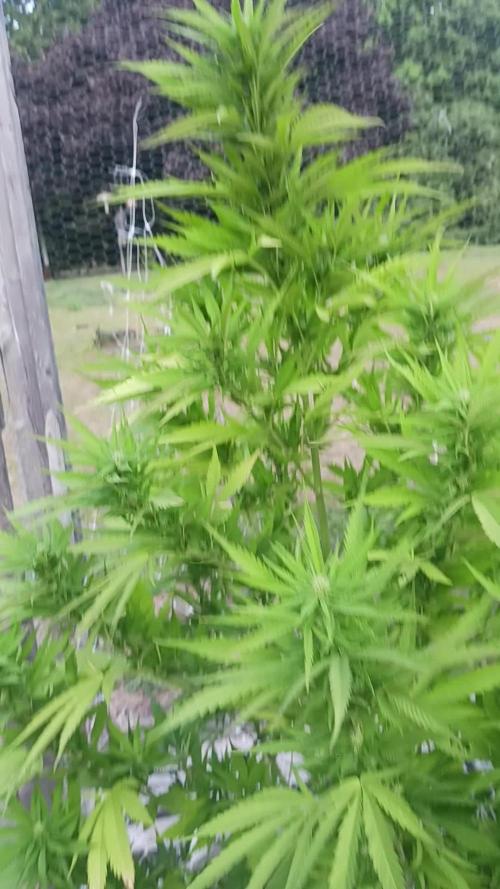
8/3 Went over to treat the 10th planet that needed water with plant doctor around 10:30. I was in the garden at 6 but didn't have much time. That plant seems to be curled up or "droopy". It DID need water. I defoliated a few sep leaves off it but I didn't see any today. I guess I don't ever really see the leaves "up" or praying like I do with the rest of tge plants. It's starting to flower like the rest though. Today is the day everything is supposed to get its second or third plant doctor dose but I decided to wait until they need the water. I don't think 24hrs will mean much. I've been staying on top of defoliation but I'm seeing some pillar damage. I'd like to spray bt but what my buddy said about spraying with septoria is still in my head. Maybe I can use citric acid. That way it won't "wash away" spores it will just eat them. At least I think. And I hope lol. Birds get most of the pillars but I hand pick some too. I need to pick up nutes. Wondering if I should just get grow big again. I don't use much but plants are switching to flower and leaves are fading. I have big bloom and kool bloom bit neither have nitrogen. I still need some sort of nitrogen. Especially since that could be a deficiency. Not sure if it's the transition or a condition with the sep. I see some interior small leaves bleeding out and some dying. I'm wondering if what I thought was earwig damage years prior was really a combo of sep and they just ate the evidence. I'm super grateful though. I've got some resilient girls and they're doing well. The special kush in flower is gorgeous as well. Looks like I'll have an early plant. Short flowering time on this strain. Smells pungent.
8/4 Treated everything in the garden with plant doctor except the 10th planet I got yesterday. I need to take a closer look at that plant. It rarely looks "happy" like my others. I'll check it again later. 3tsp per gallon and 1gal a plant. The 10s got a half gallon. This seems to be working great. I have some defoliation to do on the tenth planet I was talking about earlier. Everything is in some form of flower. The flowers on that early special kush are getting bigger. I'll update this later.
UPDATE: WENT BACK OVER AT NOON TO TAKE A LOOK AT THAT OTHER 10TH PLANET TO SEE IF IT PICKED UP AT ALL. IT DID. IM GLAD I CAME OVER TO CHECK THOUGH. MAKES ME FEEL BETTER. THE OTHER 10TH PLANET LOOKS HORRIBLE O. FILM FROM ONE ANGLE LOL BUT ITS REALLY A GREAT LOOKING PLANT AND IM USUALLY FILMING AT LIKE 6AM. JIST WANTED TO STICK UP FORCMY GIRL AND HER BAD HAIR DAY. ITS BEEN HIT AND A FEW OF HER LEAVES ARE TACOED. SHE GOT HER FIRST "PREVENTATIVE" DOSE OF PLANT DOCTOR WHICH WAS HALF A TSP/GALLON. IT REALLY SEEMS TO BE DOING SUBSTANTIALLY BETTER. EVERYTHING IS. IM HAVING TO LOOK HARDER AND AM HAVING TROUBLE FINDING LEAVES EFFECTED BY SEPTORIA. KNOCK ON WOOD. IM EXCITED. THIS IS GOING BETTER THAN I THOUGHT. IM STILL GOING TO BE MONITERING LIKE I USUALLY DO.
8/5 Watered the 10th planet I dodnt get yesterday. Looked and didn't see any sep leaves. Phone was dead so I vouldnt do a video. Went back over at like 130pm and did a quick video and checked out the girls. Everything is looking good and transitioning well. I WANT to use a diy Dr. Zymes with citric acid as I've noticed a few pillars. Only reason I've hesitated is because my buddy said not to spray it. But if what I spray it with "eats" it I would think it's ok. But what do I know. Birds get a great deal of them. I watch them on the camera sit on the cage and wait for one to stick it's head up before snatching it up. Still need to get either more grow big or a bloom product with nitrogen. I was able to defoliate that other 10th planet of anything suspect. It's hard work but it's worth it in the end.
8/6 It's like 81 at 4pm. I didn't have time to video this morning but i went back over. WATERED EVERYTHING THIS BUT THE 50 AND THE 10TH PLANET I GOT YESTERDAY. Temps are supposed to pick up soon and it will be in the 90's again. We've had like NO rain. I searched for leaves that had signs of sep to defoliate. I may find one or two but for the most part things are doing great. Overall I'm happy.
8/7 Bought a new bottle of grow big. Wanted to switch to the roots organic teas but I cant do that invthe middle of an already complicated grow. I'll switch nutes next season. I'm noticing some pillar damage. Not much amd I've been hand picking them. I've found a few in curled up leaves. I watered the 10th planet in the front corner that didn't get it yesterday. I hope the watering yesterday will hold them until the morning. I'm still thinking about doing an application of diy Dr. Zymes to clear up any random pests. I'll ask a question and see what other growers on here have to say.
EDIT: MY SPIDEY SENSES STARTED TINGLING SO I WENT OVER TO CHECK ON THE GIRLS THIS AFTERNOON. THE MK ULTRA THAT I LEFT NATURAL WAS STARTING TO DROOP. THE REST OF THE GIRLS COULD WAIT. I MIXED WATER FOR ONE OF THE TENS BUT DECIDED AGAINST IT. I DONT WANT TO OVERWATER AND I THINK IT CAN MAKE IT. I GAVE THE MK ULTRA A FULL WATERING CAN WHICH IS ALMOST TWO GALLONS. IT WAS PUCKING UP BYVTHE TIME I LEFT AND WASNT EVEN ALL THE WAY DOWN. IM GLAD I CHECKED.
The ONLINE cannabis community can be such a joke. There ARE good groups but this places sucks. I put a question up as PART of the research I was doing and ive received some dumb answers but this was aggressive too. I had it figured out prior to reading the answer but it caught me off guard. I decided that since Im able to keep it suppressed with what im doing (leaf septoria on a couple of plants) than don'tchange it. I've dealt with it before and kept it suppressed but not nearly as well. It was a yes or no question really. Stated for outdoor experienced growers as I was looking to avoid the copy paste/ look how smart I am bullshit. I just have an anxiety disorder and like to hear numerous responses before I act. I figure it out and log on and I get some smart ass response from an INDOOR grower. When I SPECIFICALLY asked for EXPERIENCED OUTDOOR growers (as the question is unique to the outdoor environment and indoor growers seem snobby and seem to get jealous when they see my massive plants a quote what they just searched on the internet). I can read shit on the internet as well and had prior to posting. I'm sorry if my success with a product (that you are unaware of "but can't see how it could work" (despite not knowing the active ingredients by your own admission) and lots of hard work have prevailed. When I have to ditch a plant it's 1/4 to a full elbow. Not an 1/8th. So I won't be burning shit. I hate when people say that. There are cases for it but many new growers have been led astray with stupid advice like this. ESPECIALLY if everything is going GOOD! If a plant was less than perfect I'd put it in my concentrates bag. Not much fits through a 25 micron screen. But by all means burn your plants. I have no idea how I have ZERO wpm this year but I would hear shit like this for a couple leaves "with gravel on them" on a 10ft tall plant that yielded like a pound. So I don't know why I listen or why I even responded. Even if it WAS wpm I would've kept it and washed it. It must be nice to be able to work 20 weeks on something numerous times a day put a bunch of money in it and when you hit flower burn it because you don't want to do the extra work. You can easily tell the people that don't grow outdoors. It's a completely different game. But since I've already written it I'm leaving it. One more thing. You didn't even know what the active ingredients in my product were. How can you make ANY statements about the efficacy of ANYTHING without knowing what it is? You said "unless it's a bunch of silica" that provokes an immune response. It's not silica hun. I've been hunting for years for something that works. Go back to your closet.
8/8 The Lion's Gate Portal. Watered everything but the mk ultra and 10th planet upfront I got yesterday. I was going to feed but I ran out of time. I may still feed today I'm not sure. I found a couple septoria leaves on that pink kush that has "some" soil from last year in it. That is a mistake I won't make again. I'm checking a few times a day and defoliating anything suspect. The girls are looking good. I'm proud of them. Very resilient. They've withstood pretty much everything nature can throw at them. HAIL, torrential downpours, 30mph winds, disease and still they are thriving. There's really no way to explain the feeling that I get when I come to the garden in the morning and see everything looking good and smell that familiar odor. Serenity I guess. Pure serenity. I'll update if I feed or do anything else.
EDIT: WENT BACK OVER AT LIKE 5:30 since it was over 90°. Everything was fine waterwise though. Caught a HUGE grasshopper and found a pillar the likes I've never seen. It was a scary looking bastard! Looked like one of the worms from tremors and it almost seemed like it had some silk around it. It opened its mouth when I went to grab it. It was brown but neon green when I squished it. I need to find a good mulch. They say that helps with septoria. I defoliated a few leaves while I was there. It's close to the time for app of plant doctor. I decided to not feed. I saw a couple leaves that had SLIGHT nute burn on the tips. I'll observe and treat accordingly.
8/9 I decided to not feed this week. All new growth looks great and I noticed SLIGHT burns on tje tips of a few leaves so I figured I'd back off this week. Boy that early special Kush keeps getting bigger. It's going to be nice to have one plant ready long before the others. I'm wondering about my other 10th planet. The one that's had all the plant doctor treatment is doimg fantastic! The other not as much. It's droopy more often than not and doesn't really have many leaves effected by sep. What it LOOKS like is that beat curly top virus. The plant was one of the largest but it's much smaller sister has surpassed her (by far) and looks extremely healthy. I think I may move the plant out of the enclosure. It's a big plant and maybe after it's gotten treatment it will improve but I'm not sure it's worth the risk. It's spaced pretty far from everything else but still. Has me worried. I was reading that like 90 something percent of cannabis coming from California is infected with a virus. Don't remember where I read it but it wad a reputable source that was cited. Looks like I'm not doing ethos outdoors again. I may do some indoor this winter if external things come


Likes
10
Share


@SAC87
Follow
Hey Growers.
With the Gaia Green all I have to do is water for the first 3-4 weeks, then top dress. So I’m already on auto pilot. Love it!! When I introduced the fan one did slump over. I propped her up out of the mud on a bambo X and she found her way back free standing.
Just watering with cal pow water and watching for light stress. This XS2000 is a powerful unit and I’m sure would rock a 3x3 perfectly.
Happy Growing 🌱
Likes
64
Share


@Prof_Weed
Follow
Die Sour Jealousy von FastBuds wurde entlaubt damit für die restlichen Tage auch an die unteren Regionen Licht kommt.
Zudem habe ich ein Scrog Netz drüber da die Pflanze nun alleine im Zelt steht.
Ab heute 2 Tage Flash Clean von Terra Aquatica, dann 8 - 10 Tage Final Part und dann wieder 2 Tage Flash Clean.
Mein Cannatrol wartet schon sehnsüchtig auf die Buds.
Die Wurzeln riechen ein wenig,liegt aber daran dass ich das Peroxid nun seit 2 Wochen weggelassen habe.
Es interessiert die Pflanze aber nicht, sie sieht aus wie aus dem Bilderbuch.
Ich schätze mal 150 g Trocken sind das..
Likes
10
Share


@420DeepGrow
Follow
Gracias al equipo de Zamnesia, Marshydro, XpertNutrients y Trolmaster sin ellos esto no sería posible.
💐🍁MAC 1:
La MAC 1 es una variedad muy solicitada, creada originalmente por Capulator y distribuida solamente a determinados criadores y cultivadores. ¡Pero ahora ya puedes cultivar este tesoro en casa y disfrutar de sus cogollos densos, jugosos y potentes!
Gracias a su densa copa y vigor, la MAC 1 es una opción ideal para LST, poda apical y otras técnicas de entrenamiento (incluido el lollipopping). Cuando entra en floración, las plantas de la MAC 1 se estiran bastante y una vez maduras pueden alcanzar una altura de 160cm en interior y más de 180cm en exterior. De media, las plantas feminizadas de la MAC 1 necesitan un total de 9-10 semanas para terminar la floración, momento en el que estarán repletas de cogollos índica pequeños y compactos.
🌻🚀 Consigue aqui tus semillas:
https://www.zamnesia.es/10906-zamnesia-seeds-mac-1.html
Código Descuento 20%: ZAMMIGD2023
💡TS-3000 + TS-1000: se usaran dos de las lámparas de la serie TS de Marshydro, para cubrir todas las necesidades de las plantas durante el ciclo de cultivo, uso las dos lámparas en floracion para llegar a toda la carpa de 1.50 x 1.50 x 1.80.
https://marshydro.eu/products/mars-hydro-ts-3000-led-grow-light/
🏠 : Marshydro 1.50 x 1.50 x 1.80, carpa 100% estanca con ventanas laterales para llegar a todos los lugares durante el grow
https://marshydro.eu/products/diy-150x150x200cm-grow-tent-kit
🌬️💨 Marshydro 6inch + filtro carbon para evitar olores indeseables.
https://marshydro.eu/products/ifresh-smart-6inch-filter-kits/
💻 Trolmaster Tent-X TCS-1 como controlador de luz, optimiza tu cultivo con la última tecnología del mercado, desde donde puedes controlar todos los parametros.
https://www.trolmaster.com/Products/Details/TCS-1
🍣🍦🌴 Xpert Nutrients es una empresa especializada en la producción y comercialización de fertilizantes líquidos y tierras, que garantizan excelentes cosechas y un crecimiento activo para sus plantas durante todas las fases de cultivo.
Consigue aqui tus Nutrientes:
https://xpertnutrients.com/es/shop/
📆 Semana 4:
Aparecieron un monton de erizos esta semana, el temporal ha hecho algo de mella en la carpa al bajar las temperaturas aunque todo sigue correcto.
Continuamos con las dosis de nutrientes recomendadas por el fabricante.
Likes
30
Share


@pifflestikkz
Follow
Day 133
21/02/25 Friday
This morning she was plucked from the tent. To now spend 24hrs in dark. She has a circulation fan and heat mat only to help dry out the soil from bottom.
She will be chopped tomorrow

Likes
13
Share

@Rhah420
Follow
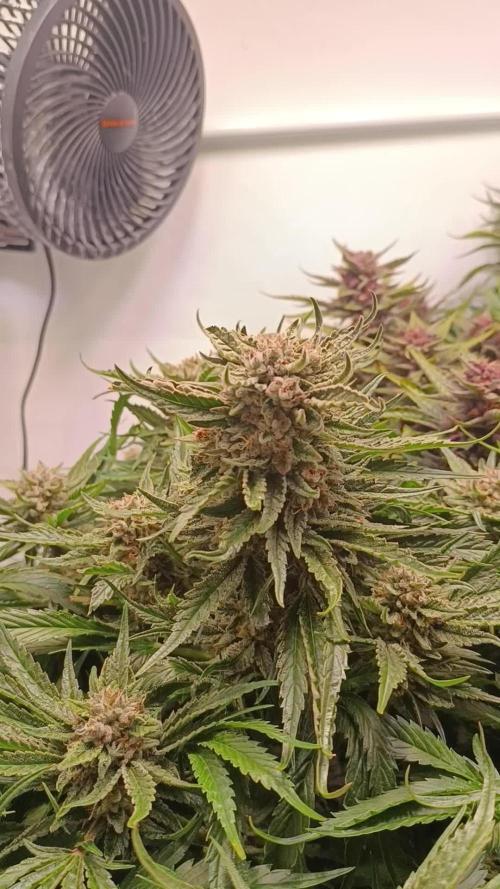
Den Ladys geht es soweit gut und es geht nun deutlich Richtung Herbst. Die Ladys wurden nun 1 Woche mit einer schwächeren Nährstoff Lösung gegossen. Bis zur Ernte werde ich nun nur noch mit pH angepassten Wasser gießen. Stand heute (07.06) habe ich ca. 30% milchige trichome, der Rest ist noch klar. Da ich eher auf Sedierung stehe, werde ich sie noch ca. 10 Tage stehen lassen denke ich, mal sehen.
Likes
2
Share


@samuraifroggig
Follow
Whorled Phyllotaxy is the arrangement of leaves on a plant stem, three in this case. I never noted it until the buds started to form in threes on the stem instead of twos on just opposite sides. Plant also has 11 finger leafs that are ginormous I hack them off every other day. bud sides are forming well faster than I expected HPS in veg was a good option to keep the plant short and bushy.

Likes
47
Share


@UKauto
Follow
Final push for this now. Gave her a nigh flush with 30 litres and started her in the dragons force with some sumo boost. Gonna try get another feed into her then start final flush.
Plenty ambers now so should be loolimg goodbye by end of next week for the final round.
Smells amazing. Still that bubblegum type smell but it's getting more pungent. Buds are a bit light and fluffly they might sense up a bit over the last stretch but I'm no thanks too sure Yano. Will see how it goes. All good though 👌🏻

Likes
5
Share


@Godsgrace
Follow
💫The week went great. After the first stress, growth seemed to slow down, but it worked out, the plant began to expand.
I water it every 3 days.
I continue to bend the stem along the axis of the pot.
I bend the branch that will pass through the fastest.
💚I started giving supplements late. Only on the 33rd day I gave him fish and everything else.
🍀 Week showed good growth, but it could have been better, let's see what happens with the additives. I continue to twist the stem in a circle (I don't know where to twist it). And I also cut off the leaves a little bit, about once a week, as they block the light (a friend says not to overdo it with defoliation, let's see what happens).🍀
