


Likes
Comments
Share


@GanjaDjarin
Follow
For the Grow section on my page: Throughout the germination stage, I explored three distinct seed germination techniques: the direct soil implantation, immersion in a hydroponic medium, and the classic paper towel method. My tests involved the Gods Gift autoflower from Premium Cultivators, Northern Lights from Royal Queen Seed Bank, and the F1 Epsilon strain, also from Royal.
My primary focus, however, has been on the F1 Epsilon strain. As part of my shift towards commercial operations, I'm currently pushing the potential of these seeds to achieve maximum efficiency and productivity. I'm in the midst of identifying the optimal strains for my commercial venture.
My objective, quite simply, is to strike an optimal balance between quality and yield for my future cannabis crops. With astute business planning and leveraging emerging laws, I plan to provide these products at a significantly lower price than my competitors. End of Germination Stage - Staring Vegetation Stage
Day 9 - I inadvertently oversaturated my plants with nutrients, which led to the immediate demise of two plants. A key lesson learned was that utilizing old woolite medium is not advisable. Instead, using dirt plugs proves to be a more effective method. Moreover, it's crucial to ensure that nutrients are introduced directly into the water supply to avoid any potential harm to the plants.
Additional Note: For enhanced root stability and quicker access to the water supply, it's important to situate the dirt plugs deeply within the pebbles.
Also ensure germination process as follows: 12 hour soak, drop into soil plug deep into hydroponics pebble medium.


Likes
61
Share


@Grey_Wolf
Follow
Sensi seeds Jack herer
7 Weeks of flowering completed
31st March 2020
Mission Jack herer is getting closer and closer to completion with every day that passes.
Luckily there has been no more mold on any of the buds and maybe that is because I have drastically changed my watering schedule to only once a week
this is to keep the moisture at a mininum so that mold isn't likely to grow.
The one feed I do give her is a 10 litre mix of water containing Ozi tonic @10mls Litre , because the weather has been quite wet and much cooler she doesnt seem to be needing any extra
watering anyway which is a bonus.
Other than that I don't have anything else to report this week
Take care everybody and thanks for reading my diary update . 👍

Likes
45
Share


@masterofsmeagol
Follow
9/3 Shook the plants off this morning and took a few pics and did a video. Let's see if it uploads. Plants are doing good. Toasted toffy is due for another plant doctor application tonight. It seems like I'm losing lots of leaves. Looking back on my other diaries I guess it's normal. BUT I could've had pest/pathogen problems then. I'm over thinking it. Toasted toffy only needs a few more weeks. It will definitely outvrun the disease. The nugs are super dense too. The plant in the 50 is loosing leaves faster than I'd like. It is also one of the furthest along. The big leaves that turn yellow look like it's a calcium/magnesium issue. The stalk and branches are all bright green and healthy looking. So are the flowers. It could be something below the soil. I couldve been overwatering but last time I waited until it drooped. It will be fine though. I'm happy with my results so far. Not my best or biggest year but I'm going to put in the work and Mae these plants produce the best quality cannabis that im able too. Also I think plant doctor may kill insects. K bicarb with dawn does too. I've found a few dead bugs like flies and pillars. Pillars actually seem to be gone. Not many moths either. Unless I see them I'm not going to treat them for it. This is that magical time where you get to watch the plant produce those beautiful flowers. Despite some small problems I'm very grateful for what I have. I've worked hard for it.
9/4 Watered everything but the sherb pie which was still heavy with leaves yellowing. It's tied for the furthest behind in flower with the seed in the 10. I treated the toasted toffy with 1/4 gallon (4tsp/gallon) of plant doctor. I avoided flowers as much as possible and tried to just get a few leaves. I used the rest on the soil. I just wanted it to absorb a little faster. That's why I sprayed the foliage. It's not 4 days it's 14 days when tje plant doctor just leaves behind a bunch of potassium and phosphorus after it's done its job. Can't be used in a 14 day interval with copper and I think that's what treats septoria best. I dontvknow if I can use that in flower. Doesn't really matter. Things are looking good. Plant Doctor and the K bicarb seem to be doing there job effectively as long as i stick to the application times. I made a short video but didn't upload. I'll try again but I may have some medical emergencies that need to be dealt with. If not I should defoliate and tie down some event horizon branches. I thought about treating the other event horizon as well. I'm not positive it has septoria but it wouldn't hurt anything to be practice. It AT LEAST has a couple suspucuous spots. I smelled a skunk as soon as I got out of my car. It can't get in my grow but I might put out traps to catch it. We'll see how it goes. Video seems to be uploading. It's at 31% so I'll wait for it. I think I've got like four or five weeks on my toasted toffy and one event horizon and the one in the 50 that I THINK is red runtz. That's good that I'll have different plants to harvest at different times. It's seeds from here on out though. It was hard to find info on some of the strains I'm growing but they all have ONE thing in common. They are EXOTIC and they are at least MODERATELY DIFFICULT to grow. AT LEAST lol. Last year I picked the right seefs and strains and it greatly helped. Still, if these are difficult strains to grow, then I'm doing a good job.
EDIT: I WAS STONED BUT IM PRETTY SURE I TREATED THE PLANT IN THE 50 WITH PLANT DOCTOR. DIDNT SPRAY BUDS. TRIED TO GET THE LEAVES THEN USED THE REST ON THE SOIL. I REMEMBER BECAUSE A STREAM ACCIDENTLY HIT A COUPLE LEAVES ON THE HUGE PLANT IN THE 10.
9/5 Sherb Pie was light and drooping. It's not to far in flower and still seemed moist yesterday with a little bit of weight. I watered it a gallon. I defoliated a little but I need to go through that plant. I have a bunch of plants that need a little work. The 50 gal seed is losing lots of leaves. I must not be feeding it enough, overwatering or maybe theres some sort of lock out. The plant looks nice and healthy. Leaves just turn yellow and die. Looked like a calcium or magnesium deficiency but i saw a septoria spot. I wouldn't think I've over feed or locked out using the small amounts of nutes I've used. It will be time to feed again soon. It's in the middle of flowering and still has leaves. I'm hoping things work out. I just have an anxiety disorder and worry too much. I'm GOING To have a great harve! I just need to keep moving forward and putting in the work.
9/6 What a fucking shitty morning. I did research on how to keep skunks out of your garden. Because I smelled it and the neighbors shot a few. Dad put traps out and it caught one. It wasn't a no spray trap so I approached it with him. Both had tarps. I kept telling him to throw it while I was distracting it bur he got a cramp and only got it over half. The half away from my garden. It's pretty far and down in a field but still. We had talked all morning about how to release it. I offered to drive their dog to take it for a walk so his alcoholic girlfriend wouldn't spiteful put the dog on its run. It wouldn't be sprayed but I made it out like it would ruin my plants. Picked dad up and got him to the bathroom. In that 30 seconds the stupid bitch grabbed the dog and brought it outside despite me YELLING "Can't you wait 5 minutes!? We've been dealing with this all morning. I heard fuck you in my head and she did it anyway. Dog ran at the skunk barking and it sprayed. Not a lot but I was fucking pissed. She's a full blown alcoholic and doesn't like me around early or the fact that my old man's 80 and house is mine. Anyway I got back and there was NO SKUNK SMELL. AT ALL! I WATERED EVERYTHING BUT SHERB PIE AND FED EVERYTHING BUT SHERB PIE. ILL FEED AND WATER THAT TOMORROW. WATERED A GALLON WITH A QUART OF FEED. Researched my strains found out they were all "difficult" to grow. One year ago to the Day I cut my first tenth planet. I got a couple close to a few weeks but the others will be later. If I can pull this off though I'll have some crazy quality! Grateful for what I have that's for sure! I doubled beastie bloom this time. We'll see how it goes.nothings uploading. I did some vids a pictures but I'll have to upload today.
9/7 I think it rained last night. I forgot to water and feed the sherb pie but I'll do it when I get back. I shook off the plants the best I could. I need to get the leaf blower out now and put it to use. Buds are swelling like crazy. GMOs are very tight flowers. Same with the event horizon. Rock hard nugs. With the gmo's I'm not worried. The were monster cropped so they have enough leaves even if some do die off. The toasted toffy only has like four weeks left. Same with the event horizon. The plant in the ten is the furthest behind but it's extremely healthy. I removed some leaves from the bottom and large fan leaves. The plant in the 50 I hope finishes before it loses all its leaves. I treated it with plant doctor and SOME people strip their plants but I don't. I'm grateful for what I've got. Won't be the biggest harvest but WHEN I make it to the finish line I will have some incredibly potent strains. I'm proud of myself to even get these to finish seeingvthe level of difficulty on cultivation. I'm trying to upload some stuff. We'll see.
9/8 Apparently it rained pretty hard last night. Took forever to go through and shake everything off and defoliate what needs it. Sherb pie is praying to the sky and almost totally purple. It's flowering so much more in the last couple days. Everything has. Even the one in the ten is stacking up! I defoliated most of what needed it and I was soaked. I noticed a branch on the middle gmo that was getting heavy and starting to break away from the trunk. It wad wobbly but I don't think there was a break un the Cambrian. I made a sling with rope (couldn't find zip ties) and I pulled it tight amd secured that branch to the tomato cage. GMO buds are hard as rocks. Everything is in overdrive. They liked that beastie bloom. I have cha ching but nothings ready for that yet I don't think. We'll the event horizon and toasted toffy might be I'll have to check. It's been beautiful today but not too hot. Lots of wind which is good. I'll upgrade supports as needed. Flowers are progressing at an amazing rate. Weather is supposed to be great the next few days. I'll keep this updated.
9/9 Had to shake the plants off. WATERED EVERYTHING BUT THE SHERB PIE WHICH WAS REALLY HEAVY. It's also lost a lot of leaves and the majority of leaves have turned purple. Toasted toffy and event horizon and red runts are pretty far into flower. I tried to take some pictures. Even the ten is blowing up! That looks like I'm going to switch to cha ching when flower gets further. Trichs are developing nicely on the ones further in flower. This year it's going to be quality over quantity. All these strains are ranked HARD to grow but have insane cannabinoid profiles and high THC %'s. So if I can keep it together for another month I'll be golden. Looking forward to it. This is the fun part. It's also the anxiety provoking part. I've learned a lot just since joining grow diaries.

Likes
20
Share


@DrGanj
Follow
Still swelling nice. Nice even spread between buds which is allowing all bud sites to grow nicely.

Likes
39
Share


@J_diaz420
Follow
Realmente muy feliz con lo obtenido, 307g en 0.8me me parece genial, estas flores tienen un aroma genial entre el típico haze mezclado con cacao, un efecto muy agradable y confortable, rica al fumar y muy poco picante gracias al lavado de raíces con flawles finish 👌👨🌾🏻
Totalmente recomendable esta genética de royalqueenseeds muy agradecido por la oportunidad 👍👌👨🌾🏻
Likes
75
Share


@PurpleWorship
Follow
Week update : I'm adding Bio-Grow to the feeding. I will slowly switch from fish-mix to bio-grow during the flowering. I'll probably stop Fishmix in one or two weeks.
I also switched from 19 of light to 18. I saw her leaves going down before the end of her day, meaning she had enough. I must say that there is no cloud to hide the sun, the weather is verry hot and dry...
Most of my garden plants are suffering. She's doing better now, and it's almost the end of the hot days. Last of week of heavy temp. i believe.
Day 30 : Reajusting the LST. I'm going slow on this, not asking too much, since she is a bit small, wanted to avoid stoning her.

Likes
17
Share


@eldruida_lamota
Follow
Que hay familia, actualizo la sexta semana de floración y última de estas Runtz F1 automáticas de Zamnesia.
Vaya liada de floración, la luz… los nutrientes… la tierra…desperdiciada, no me gustó mucho este proyecto, la verdad es una variedad poco resistente y además se quedan enanas, las flores también son enanas y no son nada prietas ni gustosas.
La temperatura está 25 grados y la humedad anda entorno al 40%. Riego cada 48 horas.
Hasta aqui todo, en unas semanas actualizaré ya la cosecha y la smoke review.
Agrobeta:
https://www.agrobeta.com/agrobetatiendaonline/36-abonos-canamo
Mars hydro:
Code discount: EL420
https://www.mars-hydro.com/
Os comento que tengo un descuento y para que compréis en la web de Zamnesia de un 20%, el código es ZAMMIGD2023
The discount 20% and the code is ZAMMIGD2023
https://www.zamnesia.com/
Hasta aquí es todo, buenos humos 💨💨💨.



Processing
Likes
27
Share


@AbroCadabro
Follow
The plants have reached a stage where they have enough foliage and growth on them to begin training and defoliation. I cut most of the side growth and major fan leaves off. Using safety pins and twine, I started their LST.

Likes
5
Share

@PhinolaGreen
Follow
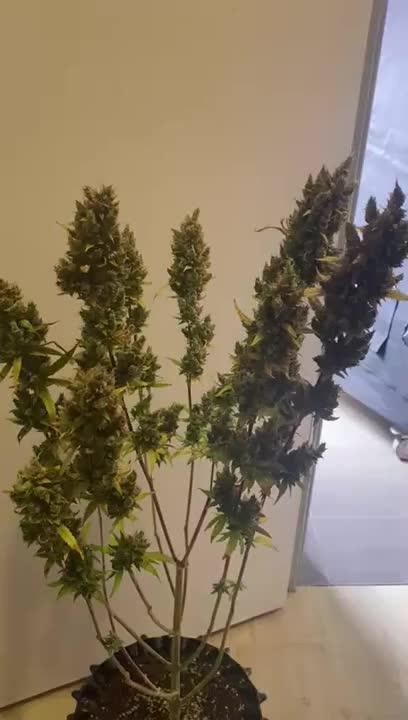
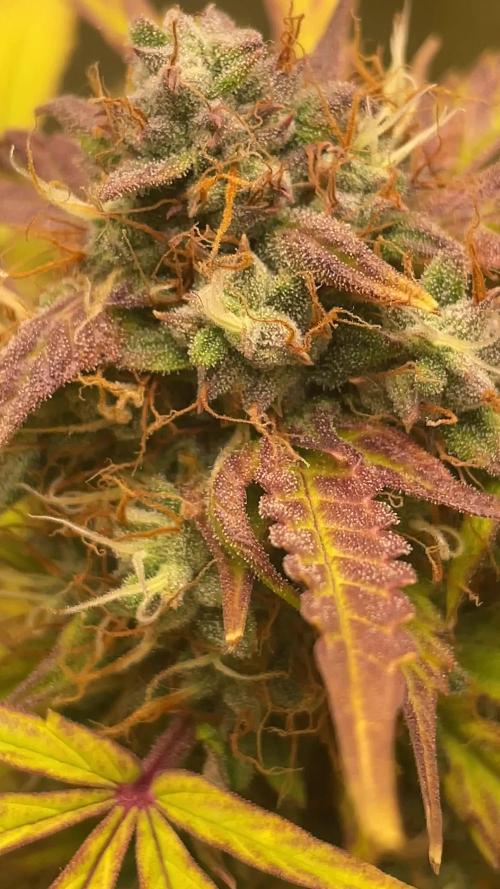
Nähere Informationen und Bilder folgen im Laufe des Prozesses. Die Ladys hängen jetzt zum Trocknen.



Likes
7
Share


@UrbanBoer
Follow
Greenhouse growing is strange and exciting, well from what I have observed and experiencing, I see extremes, next week I will post readings from my thermometers, yes I have two, a coil, and a red mercury one, placed in a shaded area and the other in direct sunlight where the ladies are tanning. It’s getting hotter as the days go by, I need a humidity reader. It will help me better catalogue.
Likes
3
Share


@mquintero7
Follow
No purple yet, maybe never. But still beautiful and smelling very good. Very good harvest coming. Buds getting fat.
Given that the soil is organic with a wide variety of amendments I decided not to keep fertilizing with liquid fertilizer.

Likes
290
Share


@Ferenc
Follow
Wao.... weather is shit but she grew a lot. Not flowering yet it was because of the rainy days. It is just wind and rain now. Very bad....
Well, she is okay 💪


Likes
8
Share

@OnlyBuds
Follow
Week 5 – All calm before the swell 🌊🌿
The Lemon OG girls are moving into mid-flower and staying true to their name: calm, consistent, and frosty. The structure is set, stretch is over, and now it’s all about stacking. Buds are forming nicely and trichomes are coming in stronger each day. No major issues, just some fine-tuning and observation.
This week’s feeding:
💧 15L water
🌸 60ml Biobizz Bloom
🌿 20ml Topmax
30ml CalMag
⚖️ 1.6g Epsom salts
🍯 50ml molasses
30ml EM (effective microbes)
Everything looks on track. The girls are doing what they’re supposed to – building fat, sticky flowers. Nothing more to wish for at this point.
Stay lifted,
OnlyBuds

Processing
Likes
10
Share


@DonPablo_
Follow
buds are very visible and getting some mass (still really small though) and really satisfied with the number of bud sites. REALLY REALLY can't wait to harvest these ladies.
P.S. the plant at the end of the last video is an autoflower we planted a few weeks ago.


Likes
6
Share


@SelfmadeRu
Follow
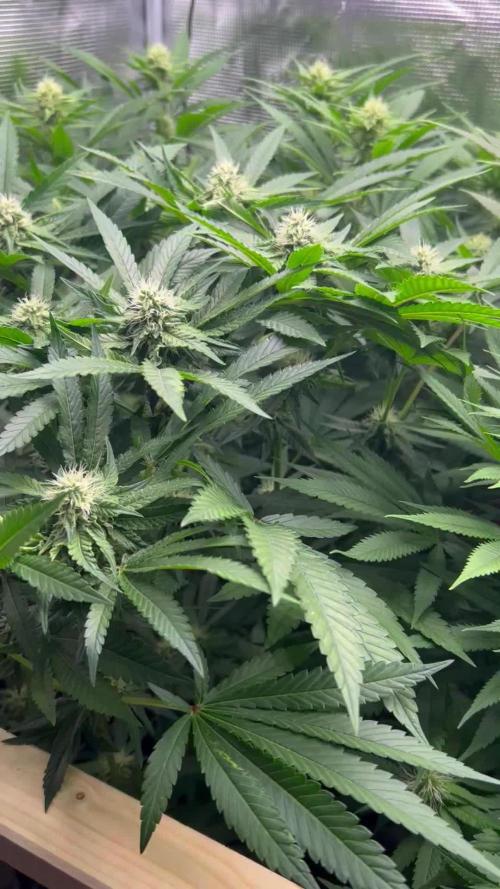
We are almost at operational capacity .... last week of veg under this massive light for batch 001... included pic of veg tent which is technically batch 001.... Need help sexing the middle plant! it came from bagseed (black ice gelato) and I need to avoid crosspollination. over feeding but I'm glad i'm learning now ahead of next batches.. dialing in things nicely... happy with growth and health of the plants.... just a matter of time.... love the support so far ... please help me with identifying males if you can! :)


Likes
17
Share


@ganzigunnu
Follow
runoff ec measured 2.0 this week. they went to bathroom and now they are around 1.5