


Likes
Comments
Share


@GanjaDjarin
Follow
Things are now advancing smoothly, having effectively weathered the majority of the challenges encountered. It's a truly uplifting experience to watch the process unfold, seeing how the plants are developing and thriving. Each day brings new progress, and I am continually enthusiastic about maximizing the sunlight that each plant receives as they continue on their growth journey.
In addition to the hands-on cultivation aspect, I'm also diligently working on expanding my clones collection. The plan for the next week or so is to cultivate and ready these clones for transplantation. It's an exciting aspect of the process that helps me stay committed to my ultimate goal.
That goal, of course, is to maximize my supply chain and provide high-quality cannabis. This involves more than just horticultural efforts. I am also persistently studying and researching the relevant laws to familiarize myself with the legal process. Navigating the licensing phase is a vital part of this journey, and I am committed to understanding and adhering to all legal requirements to ensure success in this venture.
Diary Entry for Growth Project: Day 24 - Today, a slower-growing plant was effectively moved from its soil environment into an idle hydroponic system. With this transition, the count of prospering plants stands at eight, with a couple more still being monitored due to uncertain growth. Significant discoveries include the paramount importance of light distance to the plants, which was underestimated initially. Further, it has been found that genetically modified seeds hold no superiority over the prevalent autoflower seed market. Additionally, the positioning of the plant and the volume of medium placed between the plants and the water source have been recognized as key determinants in accelerating early stage growth.
Welcome to the Day 25 update of our grow journal. I must apologize for the slight confusion - although the video says it’s day 23, today indeed marks the 25th day of our journey. I’m thrilled to announce that we’ve had a successful transplant. The plants are now settling nicely into their new environments. The question now at hand is, should we introduce stress training?
As we move into days 26 and 27, I have been pondering on this. High-stress training can sometimes stimulate growth, but in our current situation, it might not be the most prudent course of action. This time around, we are expecting all our plants in the grow tent to blossom concurrently.
In light of this, I’m leaning towards letting nature take its course rather than intervening with stress training. By doing so, we will allow our plants to focus their energy solely on flowering. The goal here is to encourage the production of dense and frosty buds, the hallmark of a successful growth cycle.
Rest assured, we’ll continue to provide the plants with the care and nutrients they need. Remember, every cycle is a learning experience, and we’re on this botanical journey together. Keep checking back for more updates on our garden’s progress.


Likes
11
Share


@AUTOBUDDHA
Follow
Fantastic week. Lots has changed. Plants are stacking something fierce!
I cut out the nitrogen completely this week, qnd that's how it will stay for the duration of the rest of the grow. I have found with autos, i have had the best luck when I push them hard with nitrogen up until this stage in growth. I then cut out the nitrogen completely and up the bloom nutes quite dramatically.
For the rest of the grow I will feed every watering. Water at a 6.4 ph.
Gro- 0ml per gal
Micro- 10ml per gal
Bloom- 15ml per gal
Bug bud- 5ml per gal
Very much looking forward to watching this batch swell!!
These Hubbabubbasmellascope are a strange run!
3 plants look one way, the other 3 look totally different. But stacked with bud sites nevertheless. Next week I will add photos of them side by side.
This strain is coming along nicely, with a strong smell of double bubble!

Processing
Likes
9
Share


Likes
36
Share


@MadeInGermany
Follow
Flowering day 56
since time change
to 12/12 h.
Hey everyone :-).
We are now close to the harvest 😍
This strain is really extremely fast 👍.
Both phenotypes now remain there for 3 or 4 days before they are put in the darkroom for 48 hours 😁.
The trichomes are now 70% milky and 30% amber ☺️.
They were watered one last time today with 1.2 l per plant so that they can dry again until the darkroom :-).
Before the last update, there will be an interim update of the harvest 👍.
Until then, I wish you lots of fun with the update.
Stay healthy 🙏🏻 and let it grow 🍀
You can buy this Strain at :
https://sweetseeds.es/de/sweet-skunk-f1-fast-version/
Type:
Sweet Skunk F1 Fast Version
☝️🏼
Genetics:
Sweet Skunk Auto (SWS34)
X
Early Skunk
👍
Vega lamp:
2 x Todogrow Led
Quantum Board 100 W
💡
Bloom Lamp :
2 x Todogrow Led
Cxb 3590 COB 3500 K 205W
💡💡☝️🏼
Soil :
Canna Coco Professional +
☝️🏼
Fertilizer:
Green House Powder Feeding
☝️🏼🌱
Water:
Osmosis water mixed with normal water (24 hours stale that the chlorine evaporates) to 0.2 EC. Add Cal / Mag to 0.4 Ec Ph with Organic Ph - to 5.5 - 5.8 .

Likes
8
Share


@Rfulton1
Follow
Started flowering these from seed 1-1/2 weeks after germination. Buds are kind of airy but it is nice quality. Gonna move in a month and start a new grow with purple urkle and walking dead!
Likes
19
Share


@GoodTimesOrganics
Follow
Liebe Community🌱💚🍀, die Ice Cream Haze hat ihr Ziel mit einer immensen Geschwindigkeit erreicht!
Ein unfassbar atemberaubender Strain. Schnell, kompakt und extrem aromatisch, mega Harzig und unfassbar schnell!
Das Aroma überzeugt definitiv wieder mit Süßen und fruchtigen Noten, abgerundet von einer starken karamell Note.
Bei der regulären Version stellte sich nach dem Curing eine eher stärkere Karamell Haze Note ein, was definitiv auch gut war. Allerdings erhofe ich mir dieses Mal auch eher einen fruchtigen, süßen Touch zu erhaschen.
Das gesamte Haus richt nun nach süßem fruchtigen Cannabisduft 🍨🎉
Die Performance ist unfassbar schnell, seit dem Umstellen auf 12/12 sind gerade einmal 48 Tage bis zur Ernte vergangen.
Und für die gezüchtet Pflanzengröße scheint der Ertrag durch aus im XL Bereich zu liegen.
Nach dem Trimmen sind die Scheren super klebrig und mit viel Harz bedeckt.
Top Strain! Top Performance.
Stay Tuned💚

Likes
4
Share

@AKGorillaGrow
Follow
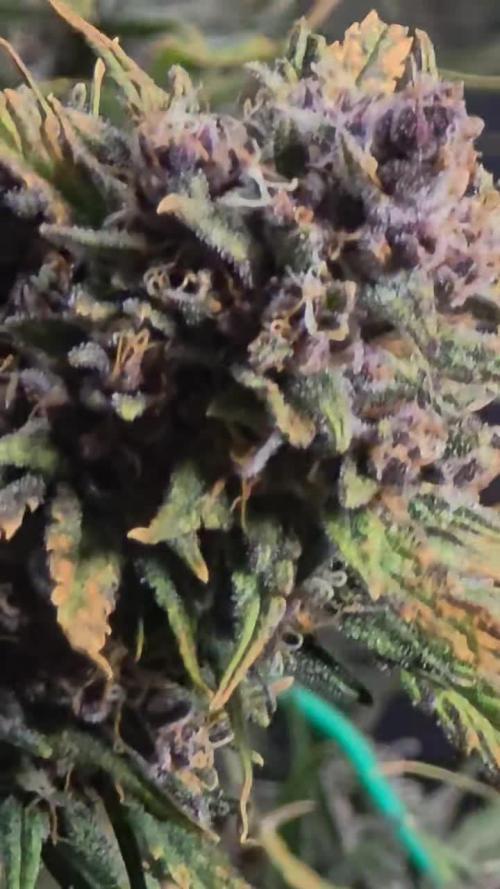
Well I'm sad and excited at the same time. Sad they got chopped but happy to see what all my work and dedication was for that sweet sweet marijuana. I know I'm just a beginner but damn with these genetics and love it is truly shocking what they can do in such a short time frame.

Likes
7
Share


@Jays_Not_Here_Man
Follow
Love using Grow Diaries and the community of people I have met and chatted with along the way ❤️🇨🇦👊 I’ve “grown” so much over the past year from the advice and journals posted! Thanks Growmie’s! 👊❤️


Likes
6
Share


@GorkedOut
Follow
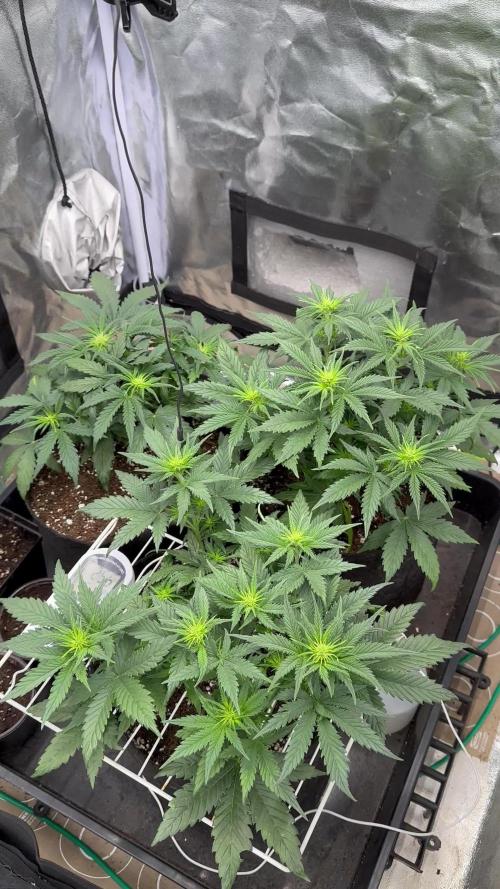
Chopped on day 77; and dried for 7 days.
Plant 1: 34.8 grams dry
Plant 2: 40.8 grams dry
Total dry weight: 75.6 grams (2.70 Ounces)
The plant is super frosty and smells very sweet. It's now in a grove bag and curing. Can't wait to do a smoke report in about a month.
Hope you enjoy two song variations I made with a slideshow of the grow


Likes
Comments
Share


@DaddyPrime2
Follow
10/16
day 2 of drying. i trimmed a couple buds wet but theyre so dang sticky. will update as things progress. drying conditions have been 60-62
10/20/24 jarred for curing. jars have been 62-65% burping multiple times a day.
11/07/24 she has a really nice high. intense mental high with quite a bit of physical relaxation. laughing non stop. watching movies that felt super intense but not paranoid or any discomfort. couldn't/didnt want to move my legs. a very well balanced and comfortable

Likes
4
Share

@Black_Widow
Follow
Привет садоводы и огородники !
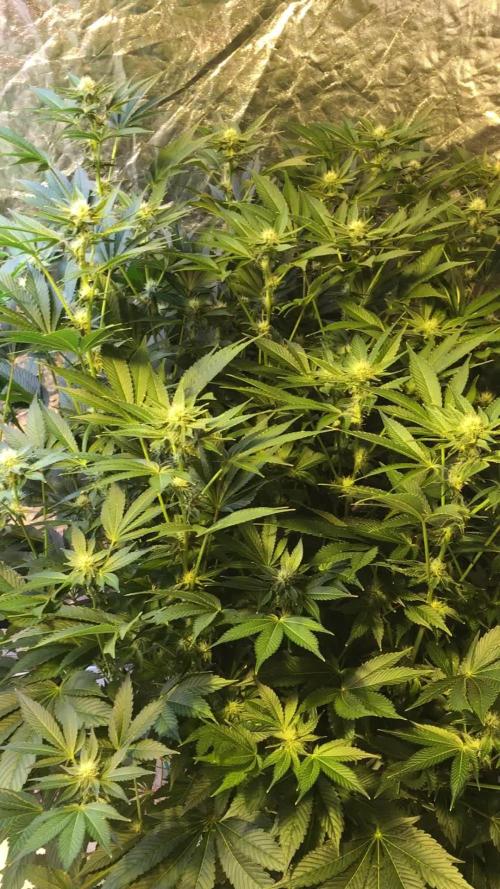
началась новая неделя , а все та же старая проблема -мало места в палатке
на днях я приобрел светильник coolmaster и выиграл пару градусов цельсия в пользу цветов
рачтения чувствуют себя хорошо ,правда тот цветок , что в земле, у него начали немного желтеть листья
а подруга гидропоника вытянулась до 100 сантиметров и было бы очень хорошо растянуть ей стебли в разные стороны ,чтобы дать больше света цветам ,которые ниже
а в общем все вроде нормально растет потихоньку
Привет садоводы
сегодня я полил цветок ,тот что в земле , Ripen и думаю ,что еще пару недель и финиш


Likes
21
Share


@Big0zGrower420
Follow
The plants are doing great so far and seem to be enjoying everything. The smaller CBD plant has caught up and the colorado cookies continues to be the largest so far.

Likes
10
Share


@RFarm21
Follow
Semana 7 julho - 13 julho
9 julho - feed day - bloombastic 0.5ml/l - causou uma ligeira queima de nutrientes aparentemente.
12 julho - feed day (2L)

Likes
20
Share


@ChitownCannaChica
Follow
So this little lady was grown outdoors in natural light, in ground, and had crazy heat, cold, humidity, rain, drought, etx—- all things considered, she’s a skunky little beauty! ✌️🏻💚🌿💨
Likes
14
Share


@555ABKY555
Follow
hello to all growers this week with a big surprise even though the weather was very cloudy i managed to consider myself surprised! finally they proved to be VERY STRONG even after the double decanting and the windy and cold wet days are growing I doubled the fertilizer in a dizzying way! TOP AUTO great buy! later the plants in the 15 liter black containers dried immediately, today in this regard for my new arrival, I bought 50 liter clay-colored fabric pots, to be able to add four fem, I added 3 specimens that had been given to me left as a gift from the lemon fast bud stand and the girls have real vigor on them unfortunately I had to vary the volume of earth. I hope it can be made to grow. I'm filling the 50 liter pots with lots of water and fertilizers, the temperature has finally stabilized. Have a good week everyone!👽
SMELLS OF FORBIDDEN CHERRY
I don't know yet whether to pump too much bloom booster this rare beauty I'm in love it's easy to get lost in its dark plus it smells fresh unimaginable terpins not comparable with most plants seen in my entire life. the freshness envelops you and you wonder only if this is a dream. trust me it's all true🙌😍

Likes
41
Share


@HollowSource
Follow
This lovely lady is going from strength to strength. She is stacking up still and looks set to produce some insanely large tops. The smell is starting to come through. A real distinctive haze odour already. Can't wait to see her fatten up!
Likes
82
Share


@DreamIT
Follow
💜🤜 Purple Punch OG by Sweet Seed 🤛💜
🤜19.9
🤜20.9
🤜21.9
🤜22.9
🤜23.9
🤜24.9
🤜25.9 I haven't been motivated this week, but I'm ready to go again. New updates tomorrow for now these 😀
__________________________________________
❓ Are you new to the world of the cultivation and don't know where to safely buy your seeds?
😮From SweetSeeds you can find award-winning, sweet, fast, fragrant, beautiful, and delicious genetics !!!
✅http: //bit.ly/SweetSeeds_
__________________________________________
🌱Did you know that Green Buzz Liquids fertilizers are 100% vegan? A complete line of products ready to give the best to each of your plants! Visit the site and see my journals to see how they work 🦄
🤯And with the code "dreamit" you will immediately receive a 15% discount on your purchases
✅https://bit.ly/GreenBuzzLiquidsPro
__________________________________________
👀 Are you looking for a good lamp to start with? 👀
🌞Viparspectra has something more than the others, take a look at their site.
⏩ Use "GDVIP" for an extra discount or "ViparDreamIT" for an extra 5 %% discount
👀 Search for it on Amazon
✅Amazon US: https://amzn.to/30xSTVq
✅Amazon Canada: https://amzn.to/38udUVe
✅Viparspectra UE: bit.ly/ViparspectraUE
✅Viparspectra USA: bit.ly/ViparspectraUS
______________________________________________
📷🥇 Follow the best photos on Instagram 🥇📷
https://www.instagram.com/dreamit420/
https://www.instagram.com/dreamit4200/
🔻🔻Leave a comment with your opinion if you pass by here🔻🔻
🤟🦄💚 Thank you and enjoy the growth 💚🦄🤟