


Processing
Likes
Comments
Share


@Majormolasses
Follow
Decided to turn on my bloom lights on my Optic 2 Gen 3 LED which incrediblely increased the temp so lucky 🍀 I have a carbon filter from ac infinity “4 and a inline fan from Vivosun which really work great to suck the stagnant hot air out of my 32”x32”x72” tent. Other then that have been feeding these girl Urb& liquid seaweed and they seem to be loving it. Would love to make a compost tea soon.

Likes
34
Share


@rhodes68
Follow
11/15 Week 2 and very happy
For now feedings remain :
In two cups PH 5.9 - .6ml each of CocoTek A&B and Fish Sh!t (for the metabolics) to generous runoff.
No reason to change until transplant when I add the root juice
Feeding daily may increase to twice daily when the EC meter gets in Monday as I have found some insight on coco from this:
https://www.amazon.com/Coco-Cannabis-Growers-Dr-M-J-ebook/dp/B07G9LR4W2/ref=sr_1_1?keywords=coco+for+Cannabis%3A+A+Grower%E2%80%99s+Guide&qid=1573956241&s=digital-text&sr=1-1
Free Kindle book if you have Kindle Unlimited.
11/16 New Pic and Vid
11/18 Moved to veg tent and transplanted into 1 gal intermediate fabric pots. Looking good
Almost forgot -
Fed cocotek and kangaroots when transplanted at 5ml/gal and 10ml/gal respectively. Going to start increasing the concentration of the cocotek upwards and keeping an eye out for def
11/19 Feedings will be twice a day in these pots
5ml Cocotek A&B (well 10 total) 4ml Fish Sh!t (seem to like the stuff) / gal at 6.0 ish not going to get anal about it just careful
Possibly add 3ml of CalMag should I see a wisp of reason to do so.
Like what I am seeing so far
Getting more Fastberry those were my last two seeds.
Meter got in - TDS of the above feed is 575 with tap water being 210 giving a nuet level of 365 well within seedling and early veg limits, so plenty of room down the road.
Will be working it up as I feel right but I am getting a water filter, not RO perhaps but it needs to come down.
Heh wont be needing Si that's for sure

Likes
32
Share


@Mrs_Larimar
Follow
January,
I discovered that it is soo much fun to grow in fancy vessels and minimum Medium,
That i had to pop 3 more Beans
This Time i took 3 autoflower Seeds.
All The Others in the Egghunt are Photoperiods
They were fast Germinating, so i planted all 3 today
Thank you @Silky_smooth for the Inspiration
2 of 3 already showing up


Likes
14
Share


@eldruida_lamota
Follow
Vamos familia primera semana de floración de estás Tropical Zmoothie de SeedStockers.
Que ganas tengo de ver el progreso de esta variedad, las plantas están sanas, se ven con buen color.
La cantidad de agua cada 48h entre riegos.
Esta semana añadimos nutrientes de la gama Agrobeta.
Ya puedo confirmar que elimine la plaga de tripa con aceite de nene jabón potásico e insecticida para ácaros.
Las plantas están bastante bien ya llevan una semana en 12 horas de luz 12 oscuridad.
Estas próximas semanas veremos como avanzan.
Mars hydro:
Code discount: EL420
https://www.mars-hydro.com/
Agrobeta:
https://www.agrobeta.com/agrobetatiendaonline/36-abonos-canamo
Hasta aquí todo, Buenos humos 💨💨.

Processing
Likes
20
Share


@PureMedicin
Follow
Im very happy with the progress so far. One of my better vegetative periods thats for sure. I removed my scrog as it was annoying to work with
I did only water 1 time this week. Gave them around 1,2 liters each. Some a little less. PH 6, nutrients solution strenght is at 100% and they seem to be loving it. No signs of defficiencies to my knowledge.
My grow tent is a little hot peaking at 30 celcius with a average around 29 at day and 18-22 celcius at night.
Humidity is around 35 as well. My humidifier broke. I have fixed it and using it for my lemon tree and my vegetables that i got growing as well
The smell is heaven like when i open the tent and some of them have the smell i am looking for so im really excited.

Likes
13
Share


@Eldorado_ed
Follow
Well after splitting the Girls up due to space it’s looking like the HPS Ladies are almost ready looking we’ll ahead of LED ones also buds are fatter with HPS but would say the LED ones look healthier looking if that makes sense

Likes
22
Share


@High_And_Hydro
Follow
Die letzte Woche ist angebrochen und sie bekommen ab jetzt nur noch reines Leitungswasser ohne Nährstoffe und das auch nur abends.
Morgens lasse ich das Wasser ab und lasse sie mit der Pfütze zurecht kommen, die noch drin bleibt, um etwas Trockenstress zu erzeugen.
Die Wasserpumpen mit den Aeroponik-Düsen sind bereits aus, aber die Airpumps laufen noch.
Ich warte noch ein wenig auf die Trichome, aber es wird vermutlich nicht mehr all zu lange dauern, bis ich sie ernte 😁👍
An Tag 78 habe ich angefangen zu ernten, wird wohl etwas dauern 😇
...
Tag 82... selbst die Schere hat zwischendurch versagt, aber davon lässt man sich ja nicht aufhalten. Es wird wohl noch ein paar Tage dauert, bis ich fertig bin.
Likes
16
Share


@AutoCrazy
Follow
Week 5 of flower:
Well I had held out hope that this plant was just a late bloomer and she would really burst into flowering but that hope has faded. I think there is a combo of things at play here. One is just genetics. It’s always a role of the dice when it comes to starting from seed. Also, I had set up my air stones in a different orientation and unbeknownst to me it had created a bit of a whirlpool within the cooler and the roots wrapped up on themselves. This stunted grow a bit as well I am sure.
The smell of this plant is out of this world though!! It’s a sweet orange scent that is just intoxicating so I will have to run this again next run and try to get a better flowering phenotype.
Onward 😎🍻
Likes
18
Share

@eldruida_lamota
Follow
Que pasa familia, vamos con la quinta semana de floración de estas Tropicana Cookies Fast Flowering, de FastBuds.
Los ejemplares tienen muy buen color han cedido muy uniformes y las flores están progresando a muy buen ritmo.
El ph se controla en 6.2 , la temperatura la tenemos entre 21/24 grados y la humedad ronda el 50%.
Van llenándose las flores de resina y van hinchando las flores, veremos estas próximas semanas como avanzan.
Mars hydro:
Code discount: EL420
https://www.mars-hydro.com/
Agrobeta:
https://www.agrobeta.com/agrobetatiendaonline/36-abonos-canamo
Hasta aquí todo, Buenos humos 💨💨💨
Likes
28
Share

@Comfrey
Follow
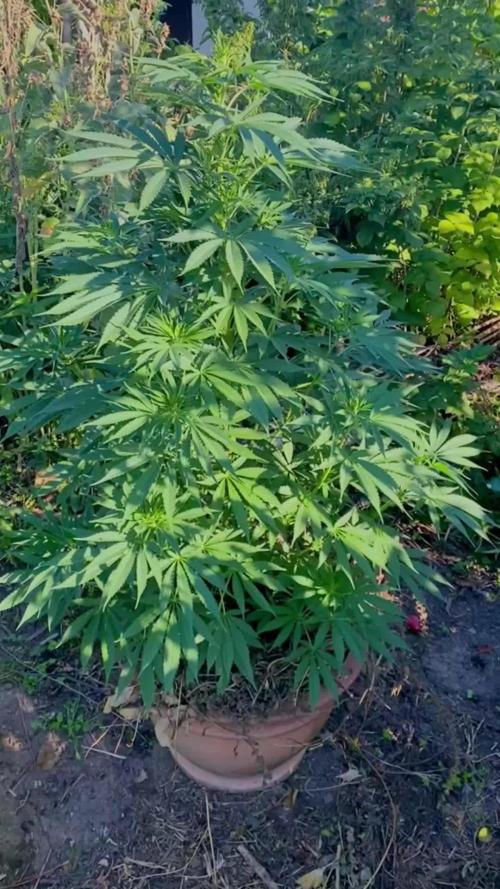
Dutch Passions Shaman
Sieben Tage ohne gießen:
Shamanin No. 2 sah ziemlich welk aus. Mega Trockenstress aber zwei Stunden nach einem ausgiebigen Tauchbad sieht sie aus, als wäre nichts gewesen.
Shamanin No. 1 im 30 Liter Topf hat es Problemlos überstanden. Auf einem der Fotos hat sich eine kleine Spinne perfekt getarnt, die Beine sehen aus wie Stigmen. Shamanin No. 2 braucht auch mehr Wurzelraum, oder eine Tropfbewässerung.

Likes
6
Share


@Organic473
Follow
This was her last week of extra light for an extended veg…she should flower by the end of week 10 just around full moon “Flower Moon” May 12th 2025.

Likes
Comments
Share


@BeggarsBelief
Follow
So everything took off in flower, I was super harsh with the defoliating which initially I regretted, but was surprised with how they packed out during the following weeks. In general it's impressive how hardy these plants are. Even the outdoor grows yielded some quality. Add some more nuets (overdrive and carbo load), before flushing about 14 days before harvest, next time I'll do this earlier and really the Runtz could have gone another week but my drying needs to happen in the same space as my growing for now. Apologies for the quality of image, I'm just using my phone and some bits I have to document, I collect records too, so expect weird noises lol. Build a rotating plat from a lazt susan I found, has been the best piece of kit added this season.
Likes
19
Share


@Fire_Farmer
Follow
Seems I told a lie last week, I'm late one day and I've done videos again cos again 🤥
Its been a good week for bud production regardless of a hiccup this week which shows as cal/mag and nitrogen deficiencies throughout each plant🤒
My ph pen malfunctioned and I ended up feeding them all 4.5 and didn't notice till the leaves told me 🍂
The ph pen has been replaced, amendments made to buffer the root zone and fingers are crossed 💉🤞
Super stinky grow this, going to replace my carbon filter before starting a new one because I caught wiffs of them when I entered my home today. If the flavours match the smells in this tent I'm in for a treat come smoke time.👃⛽🍋🍇
Its that magic time in the tent now where each girls really showing their own characteristics, both the purple punches and the zkittlez are different phenos to their siblings so I'm excited to see what they finish up like🏁
So far mostly good 👍
Thanks for reading 📖
One Love💚
Fire Farmer🔥👨🌾
Likes
14
Share

@420DeepGrow
Follow
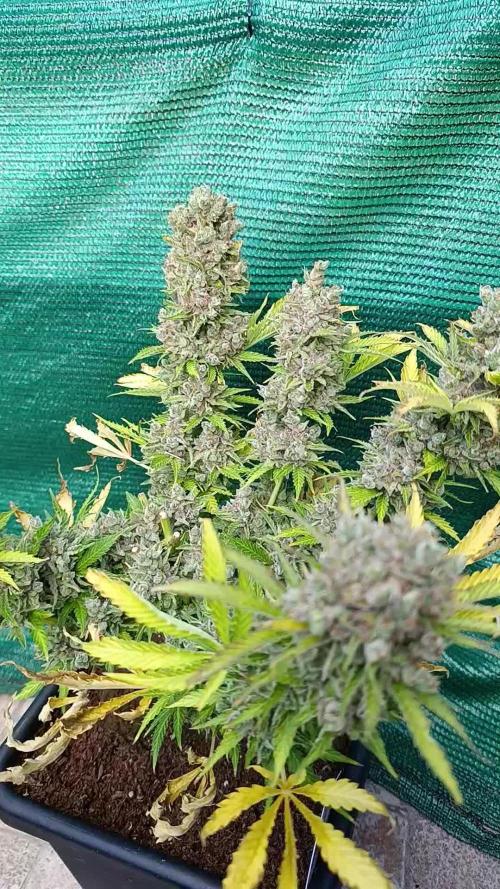
📆 Semana 12
Cierre del ciclo con las plantas en su punto óptimo de cosecha. Cogollos duros, compactos y con el peso totalmente definido, sin cambios estructurales.
Tricomas mayoritariamente lechosos con buen porcentaje de ámbar, y aroma en su máxima expresión.
La planta consume sus últimas reservas, acentuando el fade y afinando la limpieza final.
Seguimos creciendo fuerte 💪!

Likes
10
Share


Likes
72
Share


@JUNGLE_B4RNS
Follow
Week 9, switching to 12/12, canopy is leveled, plants looks ok, I have 2 monsters turning light green , I will put them on a Feed Water Feed W F... schedule, feeding them more often than the others until they kick back ! I don’t really like this, I might run into a serious Nitrogen deficiency in 3 weeks if I don’t take particular care with these 2 .... they will probably get a lil foliar spray with some N if it doesn’t go well !
[Day 57]
Water 💦
BBG TH,SS
Tangerine
Acapulco
Bad Azz
Cookies
Ams L
JH
(P.S: I’m looking for a job in the Cannabis industry as, Master Grower, Mineralogist, Quality Control 🐞)
This diary is updated daily ☝️
Likes
13
Share


@KingSalomonsWeed
Follow
Und weiter gehts.
Hat ein paar Blattläuse.
Habe den Ventilator umgestellt und noch einen bestellt!
Blattläuse bãh.
Da. Blattlåuse, ich machs euch unbequem... 😛
Ok, nur noch 2 Ventilatoren.
Fragt nicht.
Ich sage nur Mitbewohnerin.
War ja eh ihrs. SEUFZ
Ok neuer Monkey fan und der alte. Zusammen bringen die was.
Keine Blattläuse zu sehen, nach 4 tagen Wind.
Yes! Am 001.009.021
ist sie seit 5 Wochen in der Blüte.
HALBZEIT.
Und weil ich ja DER CHAOSGROWER!!
schlechthin bin. Wird mein geliebtes Pflänzchen in ca 4 Wochen für eine Woche ausziehen.
Grund ist ne völlig ausser rand und band geratene andere photo period Pflanze, die sich da irgendwie reingeschlichen hat.
Und die muss! Mit aktiv Kohle filter Trocknen .
Deswegen gibts n kleines technikupgrade, denn das ausweich quartier braucht ja auch Licht.
Too optimistic. Aphids re still there.
But
I think they re getting fewer.
..


Likes
Comments
Share


Likes
2
Share


@smokeycropping
Follow
- LAS PLANTAS SIGUEN CON EL MISMO PLAN NUTRICIONAL
- NO SE VEN CARENCIAS NI EXCESOS
- el hps de 600 MANTIENE MI AMBIENTE SIN MAYORES INCONVENIENTES
-NO SE VEN PLAGAS NI MAYORES PROBLEMAS