


Likes
Comments
Share


@youdan
Follow
Ancora rimango pietrificato dalla struttura di questo gioiellino di Green House seed....sta diventando veramente alta con internodi relativamente corti. Ha iniziato anche a mettere germogli veramente ovunque! Questa è la seconda volta che coltivo questa genetica e ricordo che anche la prima volta fú un successo, anche se questa volta penso lo sia ancora di più! Anche grazie ai fertilizzati di CANNABOOM ( stavo utilizzando plagron per queste fanciulle ma poi ho deciso di cambiare la loro dieta) che sinceramente hanno fatto il loro grandissimo lavoro ! Già alla seconda applicazione ho potuto notare tutto il loro potenziale! Il CALMAGSI e veramente eccellente un prodotto con calcio magnesio ferro e SILICIO! Veramente questa azienda offre prodotti di qualità elevatissime a prezzi veramente modici! È il bello è che sono anche super concentrati, ce ne sono parecchi che ne basta 0.1 o alcuni addirittura 0.02 quindi parliamo che puoi fare veramente molti litri! Ma adesso tornando alla nostra carissima KING'S JUICE AUTO, penso che questa coltivazione sia veramente un grande successo...(almeno lo spero)
Ringrazio veramente tanto i ragazzi di CANNABOOM per avermi consigliato al meglio ogni piccolezza, e ringrazio anche GREEN HOUSE SEED per la loro scrupolosità nel consigliarmi che seme coltivare! Spero di fare ancora tanti diari per queste due aziende a mio parere LEADER NEL SETTORE!
Miraccomando restate sintonizzati! Alla prossima settimana!!!! Grazie mille a tutti voi che mi supportate sempre anche con un semplice mi piace!

Likes
10
Share


@Eauderay
Follow
The end is in sight, likely in 2 weeks, they are producing compact and sticky buds, looks like it is going to be easy to trim, so little leaves in those buds!
They smell fruity, earthy, fuel and a very strong kush base with lemon on one of my pheno, the second one is a little smaller and she smells more like carame&peaches in a kush sauce lol absolute beauties!

Likes
17
Share


@Drtomb
Follow
Over all i am extremely impressed with the Alibaba lights i ordered. These 800w draw from the wall have beat a previous record of mine that i had with 1000w HPS ran at a boost setting of 1100w draw from the wall. The outcome dry was actually 1.87p

Processing
Likes
80
Share


@RickJames_Mcdank
Follow
Well she is grwoing nice and sweet. The smell is just so amazing. it smells like mixed berries and citrus.
The Plagron nutes are doing so well and she really likes it.
And as you can see its now fall and the fan leafs are turning yellow nicely.
The younger leafs are still green so its a good sign.
I am guessing its not a problem this supossed to happend during flower stage.
I don't take them off I just wait till they fall on its own. Its important because the leafs still contain sugar reserves.
Trichomes are being porduced allot and nice.
I am still trying to get the purple color but let see and wait.
So far so good.😀

Processing
Likes
18
Share


@UKauto
Follow
Still steady away with her, no growth to get exited about really.
Finished with all the topping and just keeping a level canopy while the growth on the second set of branches catches up. Especially the top branch on the pictures.
Seems to be really held back compared to the opposite branch.
I've defoliated quite a bit, just to clear some space and get light through to all the new growth.
Just waiting it out now and gonna flip lights when everything is caught up.
Collected plenty of pollen from the Mi5 to dust her with, going to try get one half pollinated and leave the other, probably get a few stray seeds on the other half but I don't mind really.

Likes
12
Share


@Mr_Haze_Chile
Follow
Esta semana estuve de cumpleaños por lo que no le tomé muchas fotos a los 4 días anteriores del seguimiento


Likes
13
Share


@Pierrougarou21
Follow
Salut les Growmies,
Quelle superbe aventure cette génétique de chez Exotic Seeds.
Cette Zkittalicious depuis le debut m'étonne , de part sa grande vitalité .Malgré l attaque du caht , elle a reprise le dessus , elle a réagi merveilleusement bien a l entrainement que je lui ai fait subir ,LST ,Topping.....
Et maintenant comme vous pouvez le voir elle développe de nombreux sites floraux et elle devient de jour en jour de plus en plus frosty.
Donc en gros vous pouvez vous tourner vers Exotic Seed les yeux fermés et je lui donne une note de 9/10 pour sa vigueur, beauté, odeur pour la production on verra plus tard. Mais au vue des resultats mors de la phase croissance et debut de flo . Je m attend a de tres bons resultats 👍👍👍👍👍🤜🤛Merci Exotic Seeds.

Likes
31
Share


@The_Doctor_Green
Follow
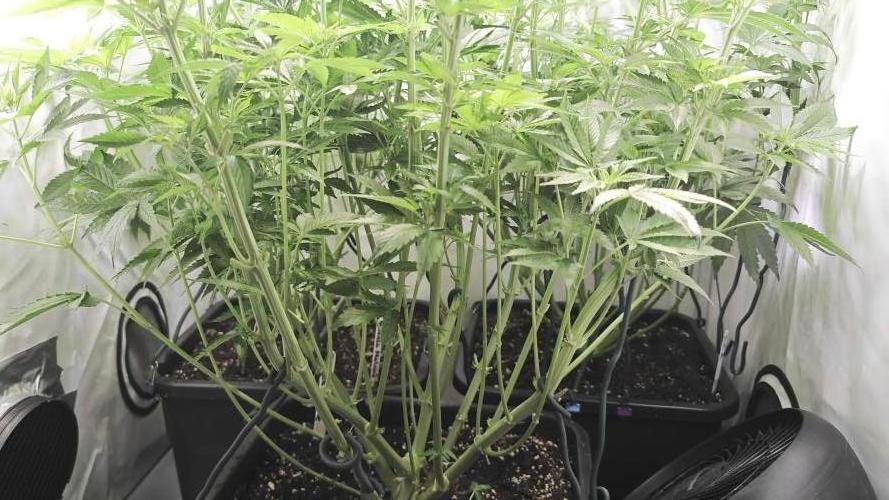
Esta semana ha llovido mucho(desde lunes a jueves) mucha humedad mucha agua, tengo miedo que aparezcan hongos, asique solo la regue con tricodermas para intentar combatir esos futuros hongos.
La próxima semana subiré fotos de las otras macetas también, ya que no hice tiempo para hacerlo hoy.


Likes
50
Share


@BarrieGrower
Follow
Last week of flower amd flushed for the week. Buds are all cloudy and trady to go. Put them in darkness and will leave them there for five days. I have another plant drying and trying to stagger trimming.
First plant dryed for 14 days and was about right. Trimmed it up and it is now and curing. Been in the jar for two days and humidity is 57%, good for me.
Waiting for the cure now. It was kinda nice to do a stagged harvest so all the trimming did not have to be done at once. I think I will try to do it this way again.
The final weight for the first plant was 102.78. The quality of the buds is the best so far. Not sure if that is attributed to luck, strain or growing is getting better. Time will tell.
Next post the harvest.
Cheers

Likes
22
Share


@MaxGrowCanada
Follow
Everything is going well.
Not much time to look after these ladies, new grow room is nearly complete. Look out for a new diary coming soon!

Likes
18
Share


@JohnnyBlaz3
Follow
woot woot the flowers are stating to come in and wow what a differnce the new ACCURATE ph meter made, was something I wanted for a while but didnt make the purchase. My old $50 meter was off by .27 even right after calibration!!!!! I can only imagine how much it drifted after a week or two, very happy with the $120 tester, I reads almost instantly and is very precise. I started co2 this week and switched to flower nutes.


Likes
Comments
Share

@SolitudeCorners
Follow
📓 Cultivation Diary: The 12/12 Flip & Transition Week
📅 June 5, 2026 (Veg Day 17)
Irrigation/Reservoir: Prepared a full 100L reservoir refresh.
Nutrients: Kept the feeding aggressive with a double dose of vegetative nutrition (x2 Nutrient formula) to ensure the root zones and plant tissues are fully stocked with elements before the transition.
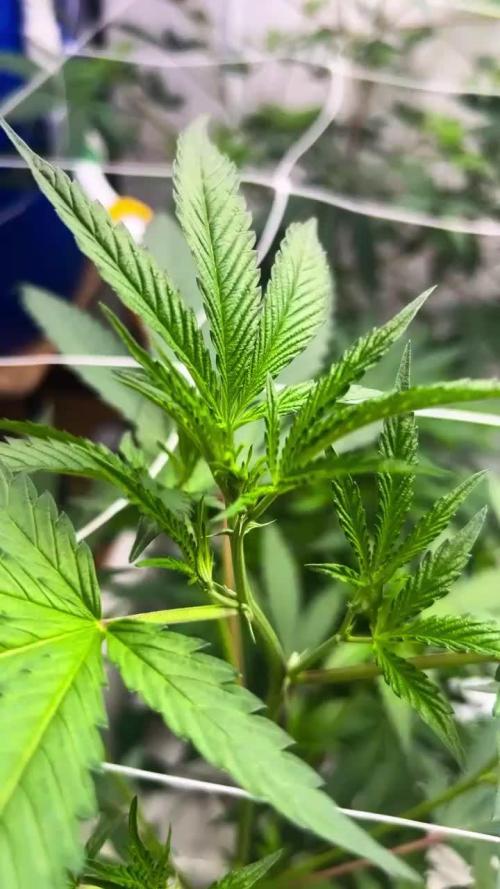
Canopy Observation: the canopy is thick, uniform, and fully occupying the table space. The trellis net is officially filled out, and the lower branches are strong and rigid.
📅 June 6, 2026 (Day 1 of Flower / Bloom Week 1)
The Flip: Officially switched the timers to a 12/12 photoperiod (Lights ON at 6:00 PM / Lights OFF at 6:00 AM).
Schedule: First irrigation shot triggers exactly 1 hour after lights on (7:00 PM), followed by a shot every 1.5 hours.
Volume: Configured the drip stakes to run for 1 minute per shot, delivering 5 shots total per day. This provides roughly 450ml per plant per day, creating excellent target dry-backs overnight to force vigorous root searching.
📅 June 11, 2026 (Day 6 of Flower / Bloom Week 1)
Irrigation/Reservoir: Bumped reservoir capacity up to 110–120L to keep up with increased transpiration as the plants begin their post-flip stretch.
Nutrient Recipe (TargetingpH 6.0 EC 2.5
Water: 110–120L
Athena Cleanse: 120ml
Silica: 220ml (Essential for stem strength during the stretch)
CalMag: 10ml
Athena Bloom: 600ml (Adjusting base to target 1.2–1.3 EC from Bloom component)
Athena Core: 400ml
Irrigation Adjustments: Increased the shot duration slightly to 1 minute and 15 seconds to match the accelerating growth pace.
The early flowering stretch has officially begun. The tops are noticeably pushing past the trellis net layers, and the node spacing remains tight and stacked. Leaf color is an excellent dark green with healthy, bright yellow-green shoots driving upward at the growth tips. No signs of stress or stalling from the schedule shift.
Likes
19
Share


@A_Rolling_Stoner
Follow
Now all plants are fully blooming and producing buds.
The two plants on the back are really difficult for me to reach, so they'll have more leaves as I can't trim em. Especially the rigt back corner one, it's way bushier.

Likes
24
Share


@Basementganja
Follow
Week6 of bloom, feeding Cal-mag+Floranova Bloom, both at 1tsp/gal. Each plant receives a glug or two from a 1gallon mixture. Runoff is removed.
New Clones of different phenos have entered the arena!
Happy growing!
Likes
12
Share


@magicgarden
Follow
first week of flowering with this very pretty and very good strain from KANNABIASEED the GORILLA KING auto from which she prepares very pretty buds for me by being in a small 3 liter pot because I am not used to making autos and therefore I test myself with a small pot and if all goes well I think that my next session in my boxing will only be auto 4 or 5 phenos in 7 liter pots I will see if it really saves time compared to femenised ,when do you think ? if you have any advice to give me regarding car culture or things to know, I'm interested, don't hesitate to let me know, thank you in advance


Processing
Likes
2
Share


@eldruida_lamota
Follow
Esa familia, nuevo LST con misty gorilla autofloreciente, empezaremos de momento con 2/3 misty gorillas con este método de cultivo. Uno de los ejemplares me parece algo pequeño aun como para andar atando nada.
Añadi BETA SHARK , quite el producto de crecimiento, y aporte el producto de floración de la gama BLACK LINE de AgroBeta.
También quite el enraizante, ya que fácilmente consigo buenos cepellón es y con varias semanas de dosis son suficientes.
Ph controlado en 5.8 humedad entorno al 45%, la temperatura no sube nunca a los 27 grados , se queda siempre en 26 poco.
Se las ve con buen color , un tallo bastante manejable, fueron atados entre 2 y 3 nudos por planta con alambre forrado.
Espero que os gusten las fotos e imágenes ya que gracias a Zambezaseeds, marshydro y AgroBeta es posible este cultivo, un saludo fumetillas 💨💨💨💨.

Likes
18
Share


@Pokan187
Follow
This week went by well, I will start checking the trichomes on the Runtz at the end of this week. It should be ready for harvest in the next 2 to 3 weeks
The G13 is still smelling like magic, looking majestic.
The GDP buds are starting to put on weight


