


Likes
Comments
Share


@Farmerbry71
Follow
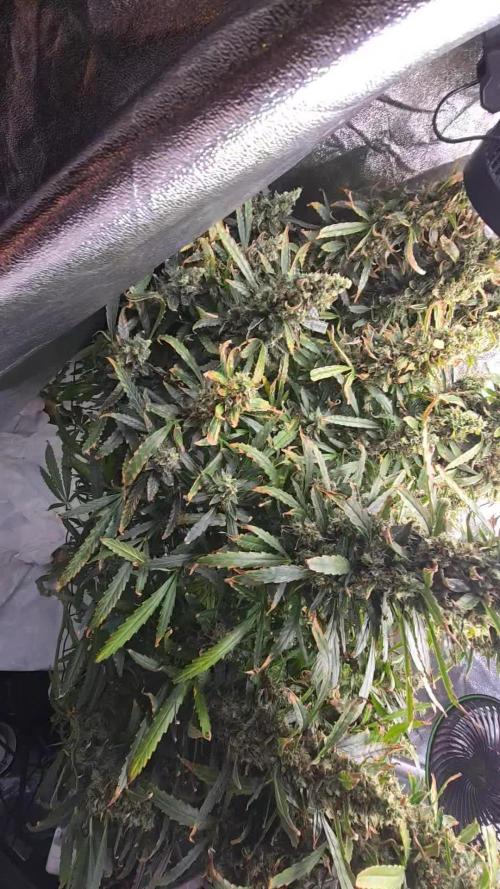
She is in full flower now and she will have some large tops as she is not a bushy plant.it has been a rainy last week here in my province in Canada but it's calling for lots of heat and sun for next week
Keeping my finger cross



Likes
67
Share


Likes
65
Share


@Dendegrow
Follow
Week 4 update! 🌱 Week 3 is done, and the ladies are now three weeks into their flowering phase. So far, everything has gone really well. However, one bud and the plants in the front showed slight signs of potassium overfertilization, which likely caused a calcium uptake issue and led to minor necrosis.
No worries, though – today I completely flushed the entire system and replaced it with a fresh solution. With this reset, everything should be back on track 💪💧.
On top of that, I decided to bring out an old Cree& Osram LED lamp as a booster. This will provide the two smaller front plants with more light intensity so they can metabolize the higher nutrient levels more effectively 💡🌿.
Everything is looking great so far! Stay tuned, follow along, and let’s see how this journey continues 🌺📸.
Woche 4-Update! 🌱 Woche 3 ist geschafft, und die Ladies sind jetzt drei Wochen in der Blütephase. Bis jetzt lief alles super. Eine Bud und die Pflanzen vorne zeigten jedoch leichte Anzeichen von Kalium-Überdüngung, was wahrscheinlich zu einer Kalzium-Aufnahmehemmung geführt und leichte Nekrosen verursacht hat.
Kein Grund zur Sorge – heute habe ich das komplette System gründlich durchgespült und die Lösung durch eine frische ersetzt. Mit diesem Reset sollte jetzt wieder alles reibungslos laufen 💪💧.
Außerdem habe ich beschlossen, eine alte Cree& Osram LED-Lampe als Booster herauszuholen. Damit bekommen die beiden kleineren Pflanzen vorne eine stärkere Lichtintensität, damit sie die höheren Nährstoffwerte besser verstoffwechseln können 💡🌿.
Es sieht alles richtig gut aus! Bleibt dran, folgt mir, und lasst uns schauen, wie sich die Reise weiterentwickelt 🌺📸.

Likes
4
Share


@Kardo
Follow
Hat einen leichten Training bekommen ich bin gespannt wie du Buds aussehen werden 🤩


Likes
18
Share


@Staffedition
Follow
Привет друзья!
И так сегодня 13 день моей малышке.
Выглядит здоровой и счастливой
За 13 дней ни каких сбоев в росте и развитии, генетика хорошая
Всем добра и мира!
#Smail_Seeds
Likes
44
Share


@Chedderbob112
Follow
El living la Vida chedda mother Fukin Bob 112 here wee fuking go usual rite troops need tae go see a man aboot a dug


Likes
14
Share


@HELLFIRE424
Follow
So far it looks like I have control of the nute burn looking at the fan leave not burning/changing anymore. Started finish but started at 5pm and my led goes off at 6pm. I kept flushing till 6:20om but stopped due to the fear of the ladies herming, revegging, or anything that would cause my ladies to start off week 7 on a slow/bad start. Defoiling a little but mostly real bad burned fan leave because I believe your ladies will continue to try and repair them which pulls energy from bud developement. Flushed on 6/1/22 and ended on 6/2/22 all 3 ladies ppm is under 200 so I can make sure they have enough to ripen and fatten up. On week 8, I will do a ice flush and then 2-3 days of darkness while they freeze. Checked trichomes on 6-5-22 and some show maybe 10-20% on some colas. Will harvest all 3 on 6-12-22 probably in the morning which I seen and heard it is better because at a certain time in the day marijuana plants let out moisture and you want to keep as much of that as possible.n


Processing
Likes
3
Share


@Reaper
Follow
these are 6 clones from the critical HUGE PHENO in the rdwc, i want to keep 1 clone as an motherplant with my autoflowers.
april 11:
all rooted / transplanted and show color and healthy growth. feed em around 400ppm




Likes
10
Share

@Dendegrow
Follow
Blue Sunset Sherbert ❤️ – What a beauty this one turned out to be!
The buds have absolutely exploded in size and density! 💣💜 The terpene profile is something truly special – rich, unique, and completely unforgettable. The plants have taken on stunning dark hues, with anthocyanins beautifully developed, giving them that deep, almost mystical color.
Frosty, dense, and shining like gems – they’re almost ready to meet the scissors ✂️✨ I think by the end of this week it’s time for harvest, and I honestly can’t wait to taste the final result. Stay tuned – this one is a masterpiece in the making!
---
Blue Sunset Sherbert ❤️ – was für eine Schönheit diese Lady geworden ist!
Die Blüten sind regelrecht explodiert! 💣💜 Und das Terpenprofil? Etwas ganz Besonderes – so einzigartig, so intensiv, einfach unvergesslich. Die Pflanzen haben sich wunderschön dunkel verfärbt, das Anthocyan hat sich super gebildet und überzieht alles mit einem frostigen Look.
Hart, dicht und einfach nur beeindruckend – ich denke, Ende der Woche ist Erntezeit ✂️✨ Ich bin unglaublich gespannt, wie sie schmecken wird. Bleibt dran – das hier ist echtes Headstash-Material!
Likes
10
Share

@DogDoctorOfficial
Follow
🌸 Week 6 Flower – The Weight of Beauty
The Mango Kush sisters have stepped fully into their bloom rhythm. By this stage, the playful stretch is over — it’s all about bud building, resin production, and flower density.
Both phenos are expressing themselves in unique ways, but they share one truth: they’re thriving, heavy, and ready to impress.
⸻
🌱 The State of the Sisters
• Pheno #1
The leader of the pack. Her buds are stacking densely, pistils still vibrant but starting to settle, and trichomes glisten under every angle of light. She’s asking for support now — her flowers are getting heavy and starting to bend the branches.
• Pheno #2
She may have started later, but she’s catching up beautifully. Her colas are filling in, and resin production is kicking in strong. She’s a little more delicate, but her structure is holding steady.
Educational takeaway: By Week 6, flower weight starts to increase dramatically. Support (stakes, nets, or ties) becomes essential to prevent branches from snapping under the load.
⸻
💧 Feeding & Nutrition
This week we continued with the bloom-focused recipe, keeping the balance tight and letting the boosters do their work. We also reintroduced Aptus All-in-One Liquid to provide a stable NPK boost after noticing slight deficiencies earlier.
Recipe Highlights:
• Aptus Regulator – 0.15 ml/L → Stress resistance & nutrient flow
• Aptus CalMag Boost – 0.25 ml/L → Calcium & magnesium support for heavy flowers
• Aptus All-in-One Liquid – 1 ml/L → Balanced NPK for mid-flower demand
• Plagron Power Buds – 1 ml/L → Pushing flower set further
• Plagron Sugar Royal – 1 ml/L → Enhancing aroma, resin, and resilience
• Plagron Green Sensation – 1 ml/L → Density and trichome support
Educational takeaway: Mid-flower is the peak of nutrient demand. The plant is working harder than ever — pushing energy into flower mass and resin production. Balanced feeding here prevents deficiencies while avoiding overfeeding.
⸻
🌡️ Environment Update
• Temps: Still running warm at times, peaking above comfort, but airflow and circulation are holding the canopy safe.
• Humidity: Fluctuating but managed, keeping VPD in a range where plants can still transpire efficiently.
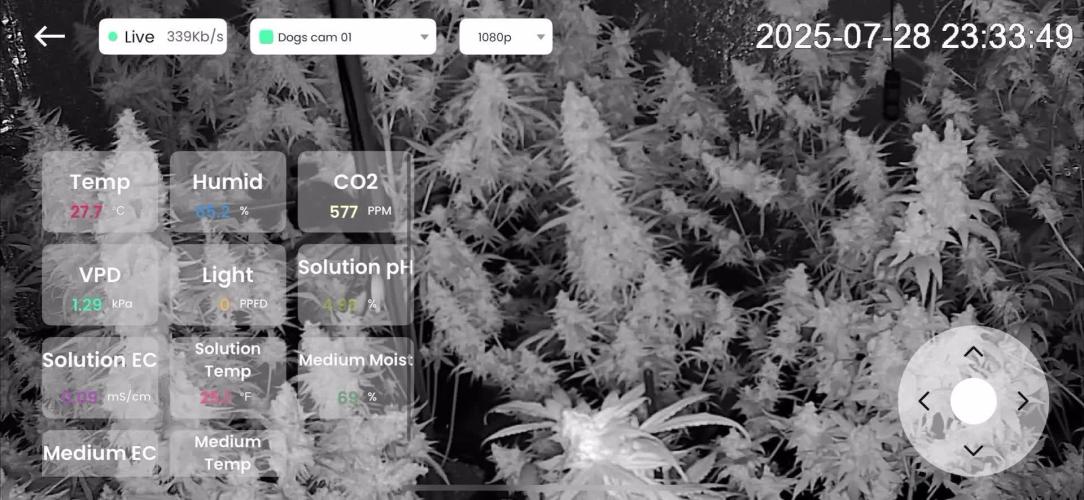
• CO₂: Sitting steady, helping the plants maximize photosynthesis despite the slightly higher heat.
Observation: The girls are drinking daily now. With big flowers forming, water demand skyrockets. We water once soil moisture drops around ~20% to keep a steady rhythm.
⸻
💡 Light Orchestra
The Mango Kush beauties continue under their four-light ensemble:
• ThinkGrow Model One → canopy penetration
• ThinkGrow ICL-300s → filling mid-canopy shadows
• Future of Grow Black Series 600W → strong balanced spectrum
• Lumatek Zeus 465W Compact Pro → evening the footprint
The synergy here ensures every bud site, top to bottom, is touched by clean, even light. This is why we’re seeing full, consistent flower formation across the plants.
⸻
🔮 What to Expect (and What Not)
✅ Expect in Week 6–7:
• Buds gaining weight daily
• Trichome density increasing fast — the “frosty” look appearing
• Aroma starting to thicken noticeably in the grow room
• Support systems becoming necessary to hold the branches
❌ Don’t Expect Yet:
• Full aroma profile (still maturing)
• Final color changes (anthocyanins & fade come later)
• Harvest cues (pistils and trichomes are still developing)
Educational takeaway: Week 6 is “mid-bloom maturity” — the girls are past stretch, fully in flower, but not yet in their finishing stage. It’s a moment of steady building.
⸻
🌿 Closing Notes
The Mango Kush sisters are showing their genetics proudly. The Hindu Kush backbone gives strong structure and resilience, while the Mango side whispers hints of fruitiness when brushing past the canopy.
This week, their beauty is in their weight and glow — heavy flowers, sticky resin, and the quiet promise of what’s still to come.
⸻
💚 Grower’s Reflection
“This is the week where you realize the reward is real — the buds are heavy, the resin sparkles, and the plants begin to feel like they’re carrying little treasures. Support them, feed them, and above all, enjoy the process. Week 6 Flower is the calm before the storm of ripening.”
⸻
👉 Thank you for reading, friends. As always, join us on YouTube & Instagram to follow along with the Mango Kush journey, see the video updates, and catch all the behind-the-scenes content.
📌 P.S. Troubleshooting Leaf Spots – CalMag & Mid-Flower
This week we noticed some spotting on leaves, a classic mid-flower signal that calcium and magnesium demand is peaking. Why now?
• Bigger buds = higher demand. As flowers bulk up, the plant moves Ca/Mg rapidly into developing cells.
• Warm temps increase transpiration. High heat makes the plant drink more, sometimes pulling nutrients unevenly.
• Solution: We adjusted by reintroducing Aptus All-in-One Liquid for extra NPK support and kept CalMag Boost steady to buffer deficiencies.
🌱 Educational takeaway: In mid-flower, even healthy plants can show light spotting. The key is to respond early with balanced feeding rather than panic or heavy overdoses.
🔮 Looking Ahead – Week 7 Preview
As we move into Week 7 Flower, here’s what to keep an eye on:
✅ Trichome explosion – expect resin glands to multiply, giving that first real frost on sugar leaves.
✅ Aroma awakening – terpenes will become more noticeable; brushing past the canopy will release fruity, kushy hints.
✅ Bud hardening – calyxes swell and flowers get denser; staking/support becomes more urgent.
❌ Don’t expect maturity yet – pistils will still be white, and trichomes mostly clear/cloudy. Harvest signs come later.
Educational takeaway: Week 7 is the “icing phase” — the weight is already there, but the sparkle, smell, and stickiness take center stage.
📲 Don’t forget to Subscribe and follow me on Instagram and YouTube @DogDoctorOfficial for exclusive content, real-time updates, and behind-the-scenes magic. We’ve got so much more coming, including transplanting and all the amazing techniques that go along with it. You won’t want to miss it.
• GrowDiaries Journal: https://growdiaries.com/grower/dogdoctorofficial
• Instagram: https://www.instagram.com/dogdoctorofficial/
• YouTube: https://www.youtube.com/@dogdoctorofficial
There’s a new series blooming and it’s more than just plants. It’s about process, patience, and paying attention.
⸻
Explore the Gear that Powers My Grow
If you’re curious about the tech I’m using, check out these links:
• Genetics, gear, nutrients, and more – Zamnesia: https://www.zamnesia.com/
• Environmental control & automation – TrolMaster: https://www.trolmaster.eu/
• Advanced LED lighting – Future of Grow: https://www.futureofgrow.com/
• Root and growth nutrition – Aptus Holland: https://aptus-holland.com/
• Nutrient systems & boosters – Plagron: https://plagron.com/en/
• Soil & substrate excellence – PRO-MIX BX: https://www.pthorticulture.com/en-us/products/pro-mix-bx-mycorrhizae
• Curing and storage – Grove Bags: https://grovebags.com/
⸻
We’ve got much more coming as we move through the grow cycles. Trust me, you won’t want to miss the next steps, let’s push the boundaries of indoor horticulture together!
As always, this is shared for educational purposes, aiming to spread understanding and appreciation for this plant. Let’s celebrate it responsibly and continue to learn and grow together.
With true love comes happiness. Always believe in yourself, and always do things expecting nothing and with an open heart. Be a giver, and the universe will give back in ways you could never imagine.
💚 Growers love to all 💚


Likes
21
Share

@GERGrowDesigns
Follow
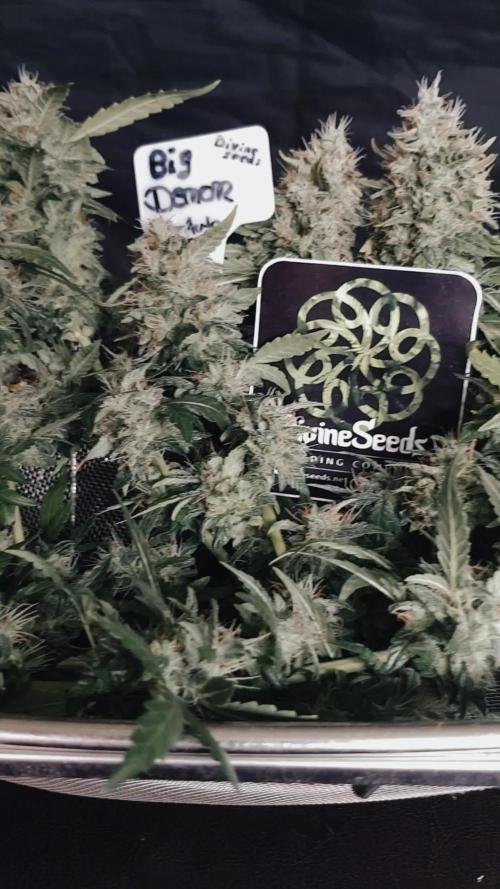
Welcome to Flower Week 7-8 and Harvest
of Divine Seeds Auto Big Demon
I'm excited to share my grow journey with you all as part of the Divine Seeds Autoflowering Competition 2025. It's going to be an incredible ride, full of learning, growing, and connecting with fellow growers from all around the world!
For this competition, I’ve chosen the Feminized Automatic strain: Big Demon
Here’s what I’m working with:
• 🌱 Tent: 120x60x80
• 🧑🌾 Breeder Company: Divine Seeds
• 💧 Humidity Range: 50
• ⏳ Flowering Time: 8W-10W
• Strain Info: 21-23%THC
• 🌡️ Temperature: 26
• 🍵 Pot Size: 0.5l
• Nutrient Brand: Narcos
• ⚡ Lights : 200W x 2
A huge thank you to Divine Seeds for allowing me to be a part of this amazing competition and Sponsoring the Strains. Big thanks for supporting the grower community worldwide! Your genetics and passion speak for themselves!
I would truly appreciate every bit of feedback, help, questions, or discussions – and of course, your likes and interactions mean the world to me as I try to stand out in this exciting competition!
Let’s grow together – and don’t forget to stop by again to see the latest updates!
Happy growing!
Stay lifted and stay curious!
Peace & Buds!

Likes
8
Share


@DisTentAint4Campin
Follow
Everything chugging along even the kiwi bounced back a little prolly gna chop in a week trichs are where they need to be but now I jus invested in a whole separate setup for perpetual when I go back to photos but for now playing with the autos wich brings me too let me shout out to ganja farmer seeds for letting me do a partnership and them hooking me up with some beans to try so I am currently germanting 3 different cultivars (AUTOS) from ganja farmer seed Co. And I will be doing a diary on each of they're strains in my new system can't wait !!!!
Likes
Comments
Share

@MyLittleGarden
Follow
Blütewoche 2 - 22.06. – 29.06.2026
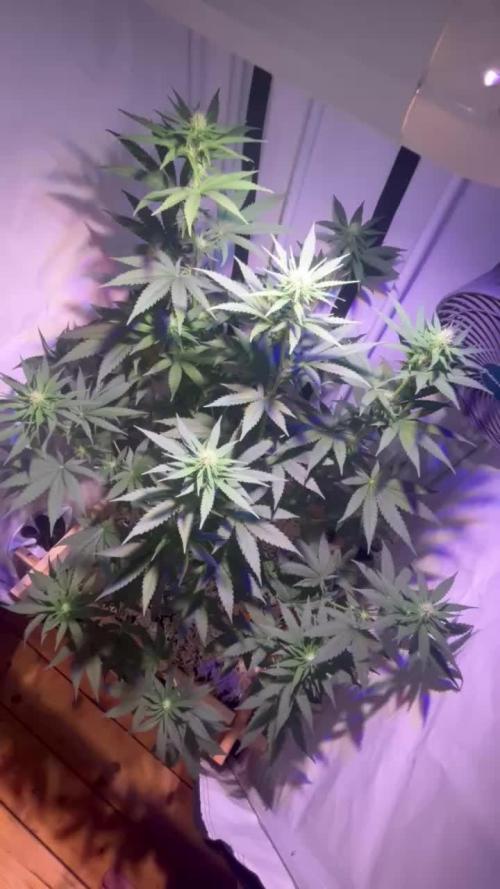
Auch in der zweiten Blütewoche setzte die Blue Sunset Sherbert ihren starken Stretch fort. Innerhalb von nur sieben Tagen wuchs sie von 48 cm auf 80 cm und legte damit beeindruckende 32 cm an Höhe zu.
In dieser Woche wurde die Pflanze zweimal mit jeweils vier Litern Wasser gegossen. Außerdem wurde sie großzügig entlaubt und einige untere, schwach belichtete Triebe entfernt, um die Lichtverteilung und Luftzirkulation zu verbessern.
Die Pflanze präsentiert sich weiterhin in einem hervorragenden Zustand. Sie ist kräftig, vital, zeigt keinerlei Mangelerscheinungen und entwickelt zahlreiche schöne Blütenansätze. Mittlerweile füllt sie die gesamte Beetfläche aus. Bis zur LED sind nun nur noch etwa zehn Zentimeter Platz, sodass die Lampe bei weiterem Stretch eventuell nochmals höher gehängt werden muss.

Likes
18
Share


@PakkaFarm
Follow
Start rinsing day 71 💧🚿
Light 35 cm day 72 💡
Trichomes pics last day for my girl 🍊🤩😭
Processing
Likes
2
Share


@Ay_ef_see
Follow
Veg box is starting to flourish. Both lemon and sativa clone are very bushy and healthy. All others are healthy as well, and will be topping these soon. Once they start shooting again they’ll be transplanted once more and thrown into flower to start my first “sog” grow.
Two ladies in flower are well. One still showing burnt and curled tips and I think flower growth is slowing down. The other is happy and well. There were two babies out in flower last week, one turned male. The other is happy and healthy. Until next week...
Likes
8
Share


@RFarm21
Follow
11 março - 17 março
12 março - nutrientes misturados em 1l de água
16 março feeding:
bio heaven 1.5ml; sílica 0.1ml; bio grow 1ml