


Likes
Comments
Share


Likes
33
Share

@Hashy
Follow
********************************************
📋 Comments
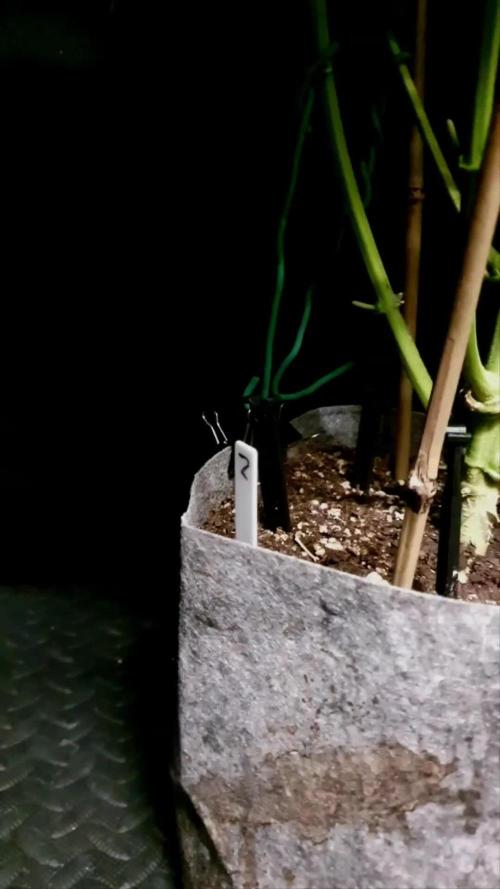
I really like the structure of this plant, and I'm tempted to do another just because she looks awesome.
📋 Data
Seed to havest=114 days.
Veg time=28 days.
Flower time=86 days.
Wet weight=805g
Dry weight=86g
📋 Smoke report
This smoke is nice, slight skunk taste with a bit of a sour lemon after taste. Strength wise I'd guess she'd be around the 25% THC mark.
📋Grow stats for GDG 23
#1 Runtz=50g
#2 Fat Bastard=86g
Total=136g
Lights on.
20hrs×7days=140hrs
18hrs×21days=378hrs
12hrs×86days=1032hrs
Total hours=1550hrs
Light power=159.09Kw
Rad power=105.69Kw
Extractor=39.93Kw
4 gang=50.91Kw
Top fan=21.36Kw
Total electricity=376 98KW
Electricity cost @£0.25/Kw=£94.25
Average light power a day=1.4Kw
Average watt per hour=102w
g/watt=(136÷102)=1.33g/w
£/g=£0.73/g
📋Final word.
Trimed on the 14/6/25. Trimming was quite easy, not to long in trim jail. 86g of solid nugs and 7g of nugs I couldn't be bothered trying to trim, they can go with the trim for hash. I would highly recommend growing this strain.
Back soon.
Take it easy.
********************************************

Likes
36
Share


@Kief_Richards
Follow
Not a bad week at all. Something unexpected caused me to transplant this auto earlier than I normally would have. Her roots were not as long as I would have liked but, what can you do?

Likes
23
Share


@GrowGuy97
Follow
Wish the buds would have got a little bigger but feel like that’s particularly my fault for a short Veg but overall I am blow away by the outcome for all the seeds to just be random bag seeds! 2 of the plants are drying now 3rd one will be cut tomorrow & the other 2 got probably 2 more weeks! Will do a taste & smoke report and also give a weight as soon as they dry & cure a little bit but honestly couldn’t be happier with my first grow! Thanks for all the support & help along the way & happy growing friends!🤙🏼✌️🏼🌱
Update on 1st plant - dry weight 42g, still smelled pretty Earthy when I put it in the jar but the smell is definitely coming out now, extremely sticky & frosty buds❄️: 1:🏼🙏🏼
Update - plant 2 Dry weight was 40 grams! Extremely happy with the out come this is honestly some of the best bud I have ever smoked! Amazing to me this came from a random bag seed, it has a very citrusy flavor, smells & smokes amazing! Honestly a 10/10 in my book, wish I could knew what strain this was so I could grow it again!😫❄️✌️🏼🌱
Update - plant 3 Dry weight 34g, smells & look phenomenal, the buds are much smaller & had the smallest yield so far but this is by far the best smelling so far! Will have a smoke update on this one soon, stay tuned friends & happy growing!✌️🏼🌱
Update - plant 5 dry weight was 52g it dried a little faster than plant 4 which I will probably jar tomorrow! Will update again with a smoke report soon, this plant brought my total so far up to 168 off 4 plants👍🏼 Thanks for following friends & happy growing! Also the butter I made from the trim was 🔥🔥
Likes
13
Share


@Andres
Follow
she has 103 days and I'm going to leave 120 days to knock her out. she still enjoys the sun and the outdoors and she s feeding every 10 days with red bird guano... 80%ambar

Likes
2
Share


@Bluemels
Follow
Tag 31: Ich fange mit LST der Pflanze an. Noch etwas entlaubt und das scrog Netzteil eingebaut. Doch die Cookies Gelato wächst doch sehr sehr langsam in Vergleich zu meiner gleich alten Green Gelato die ja gleich alt ist 😕

Likes
62
Share


@Santica_Garden
Follow
So this is how things are looking for the Exodus Cheese & GH Cheese. I lost some of the other footage that I had throughout week 4,sorry guys, but didn't do much to these ladies anyway, they started out too short to do much training.

Likes
2
Share


@Eaegifts
Follow
Can’t wait to try this cultivar, I loved both her moms obviously or I wouldn’t have made her so I’ll be back with a smoke report soon and in a few weeks another for her sisters


Likes
90
Share


@AsNoriu
Follow
Day 127. Chop day !!!!
Zkittalicious #6 is my first plant without any airy or small bud !!!! Plus he will be like others in 100g range ...
#2 should beat all single plant records ;)))
Happy Growing !!!

Likes
3
Share

@GoodTimesOrganics
Follow
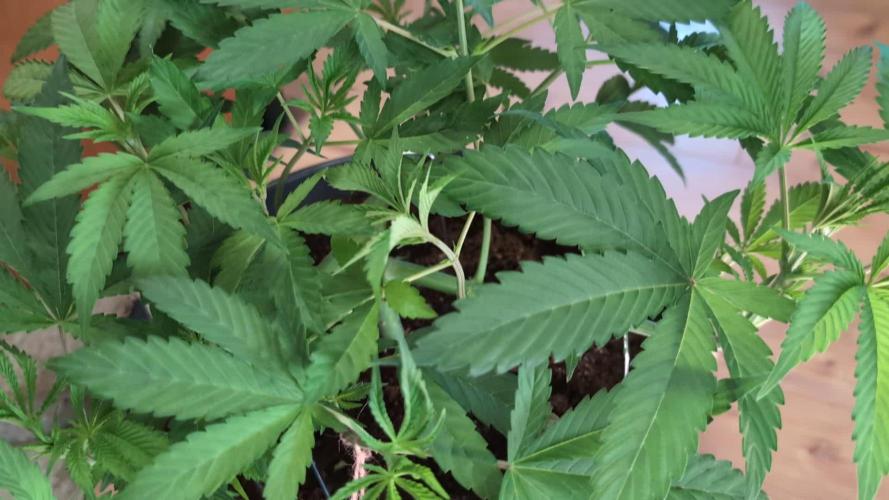
Hi liebe Community! 💚 Nach der ersten Woche des Trainings gab es ein paar Feinheiten zum nachjustieren.
Der Wuchs der Pflanze ist sehr kräftig und nun war es an der Zeit, einige der unteren Triebe noch zu entfernen.
So dass die oberen Triebe sich jetzt besser entwickeln können.
Außerdem habe ich nun einige Sonnensegel zurückgeschnitten, damit die Pflanze ihre kompaktere Wuchsform beibehält.
Auch war es an der Zeit den Green House Feeding Bioenhancer wieder zuzugeben.
Die Wachstumsbedingungen im Growschrank sind optimal:
———————
🌞 Temp: 26°C
🌚 Temp: 20 °C
💨 RH: 66%
VPD: 0,77 kPa
———————

Likes
8
Share


@AcidBurn_41
Follow
13.11.24
BT# 18
Servus Leute ✌️🙂
Die Strawberry Cola Sherbet macht sich gut habe sie heute mal wieder ein bißchen entlaubt und etwas Lollipoping angewendet somit ist unter rum was die Luft Zirkulation angeht alles Tipi topi.
Sie hat gestern PH angeglichenes Wasser bekommen , beim nächsten Mal gibt es wieder was mit Zusätze 🙂.
Aber so bin ich ganz zufrieden mit der Gentik von Sweetseeds was heut zu Tage sehr schwer ist da es so viele angeglich gute Breeder gibt.
Aber dem ist definitiv nicht so deswegen lege ich euch Sweetseeds zu Herzen da seit ihr definitiv gut aufgehoben.
Bleibt alle fit und Gesund habt ein schönen Tag and Stay High ✌️👌
Mögen all eure Ladys Gesund und prächtig wachsen und euch mit schmackhaften Stuff versorgen 🍀😋
■■■■■■■■■■■■■■■■■■■■■■■■■
13.11.24 BT# 18
Hi guys ✌️🙂
The Strawberry Cola Sherbet is doing well, I defoliated it a bit today and applied some lollipopping so everything is tipi topi underneath as far as air circulation is concerned.
Yesterday she got PH adjusted water, next time there will be something with additives 🙂.
But I'm quite happy with the genetics of Sweetseeds, which is very difficult these days as there are so many apparently good breeders.
But that's definitely not the case, so I recommend Sweetseeds to you, you're definitely in good hands.
Stay fit and healthy, have a great day and stay high ✌️👌
May all your ladies grow healthy and splendid and provide you with tasty stuff 🍀😋.


Likes
1
Share


@ganjermaster
Follow
I'm enjoying a lot this genetic, the root system is super healthy and that's giving strong plants with desire to grow and produce frosty flowers :)

Likes
27
Share


@420DeepGrow
Follow
Gracias al equipo de Zamnesia Marshydro XpertNutrients y Trolmaster sin ellos esto no sería posible.
💐🍜 Cosmic Noodles:
Orgullosa descendiente de Alien OG y Rollercoaster Haze, la Cosmic Noodles ofrece cosechas excelentes y una experiencia de fumar fragante. Esta variedad es muy potente, tiene un 25% de THC y produce efectos intensos y duraderos. Edificante y relajante, fumar Cosmic Noodles catalizará un colocón cerebral energizante que luego disminuirá hasta convertirse en un relajante colocón corporal.
Aquí se pueden detectar las influencias de ambas cepas parentales y las flores son notablemente cítricas, con la lima en primer plano. También disfrutarás de notas especiadas y terrosas con delicados matices florales.
🌻🚀 Consigue aqui tus semillas:
https://www.zamnesia.com/10777-zamnesia-seeds-cosmic-noodles.html
Código Descuento 20%: ZAMMIGD2023
💡TS-3000 + TS-1000: se usaran dos de las lámparas de la serie TS de Marshydro, para cubrir todas las necesidades de las plantas durante el ciclo de cultivo, uso las dos lámparas en floracion para llegar a toda la carpa de 1.50 x 1.50 x 1.80.
https://marshydro.eu/products/mars-hydro-ts-3000-led-grow-light/
🏠 : Marshydro 1.50 x 1.50 x 1.80, carpa 100% estanca con ventanas laterales para llegar a todos los lugares durante el grow
https://marshydro.eu/products/diy-150x150x200cm-grow-tent-kit
🌬️💨 Marshydro 6inch + filtro carbon para evitar olores indeseables.
https://marshydro.eu/products/ifresh-smart-6inch-filter-kits/
💻 Trolmaster Tent-X TCS-1 como controlador de luz, optimiza tu cultivo con la última tecnología del mercado, desde donde puedes controlar todos los parametros.
https://www.trolmaster.com/Products/Details/TCS-1
🍣🍦🌴 Xpert Nutrients es una empresa especializada en la producción y comercialización de fertilizantes líquidos y tierras, que garantizan excelentes cosechas y un crecimiento activo para sus plantas durante todas las fases de cultivo.
Consigue aqui tus Nutrientes:
https://xpertnutrients.com/es/shop/
📆 Semana 2:
Gran primera semana, ella ha dado un gran estiron estos días, si sigue así será una gran cosecha.
Esta semana se practica defoliacion, poda de ramas bajas y se le agrega Sticky Fingers .
La carpa está ocupada al 100%, sigue una floracion explosiva gracias a @Marshydro y @Xpertnutrients y @Trolmaster con esta gran genética 💪.
Potencia de la lámpara: 70%

Likes
5
Share


Likes
15
Share


@emeraldlabs
Follow
Last update for this gal; harvest this week!
Heavy colas with a great smell!
Photos/video taken 119 days after breaking soil, day 56 of flower.
Update: Harvest on day 121, day 58 of flower

Likes
67
Share


@Tubington9
Follow
Week 12 Day 1 humidity has climbed a little higher than I would like due to a big storm we had 2 days ago but will come down over the next few days. The flowering seems to be coming along nicely, no signs of any mishaps yet.
Week 12 Day 3 the trichomes are really starting to present themselves already. Only issue I’m dealing with currently is high humidity in the tent (68%) due to the very rainy weather we’ve had over the past few weeks
Week 12 Day 7 and the frost continues to come in. Looking very healthy and ready to continue her journey through flower
Processing
Likes
3
Share


@ZJRDUDEZ
Follow
Today is day 32 of bud for these ladies. They are are swelling up good and put on a lot of resin. I’m very excited for this harvest. That’s because these ladies each have there own person Tropic smell to them. The OG is kinda orange cream soda terps. The melato almost has a coconut terp profile to it. And the Trainwreck smells like some kind of wild berry. So I’m definitely glad I got clones form each of these so I can run them again next round. Except for the OG. I have them their last feeding in week 4 on around day 29. I just did a top dress of bio live and rose and flower by down to earth. Anyways thanks for checking out the garden. Make sure to go to my page and check out my other grow journals.🤙
Likes
9
Share


@pzwags420
Follow
On day 1 I adjusted the PH of the rez up to 6.2. I increased average ppfd to 972, with the highest ppfd on a top at 1500 ppfd lets see how she reacts and if she likes the intensity I will keep it steady till the end if not back to lower ppfd again.
On day 6 I changed out the rez and ph to 6.2. Buds are growing and putting on weight very compact buds.
