Likes
14
Share
@Svansson
Follow
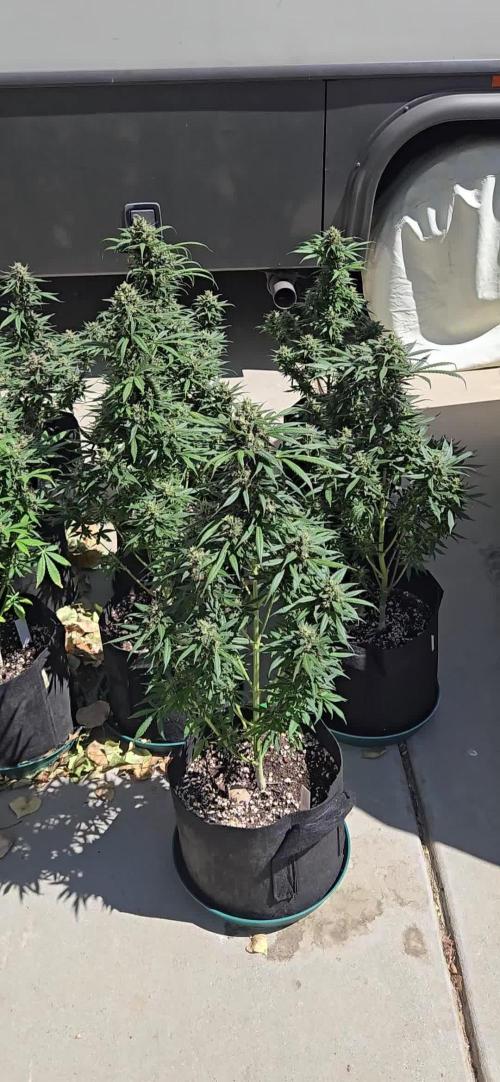
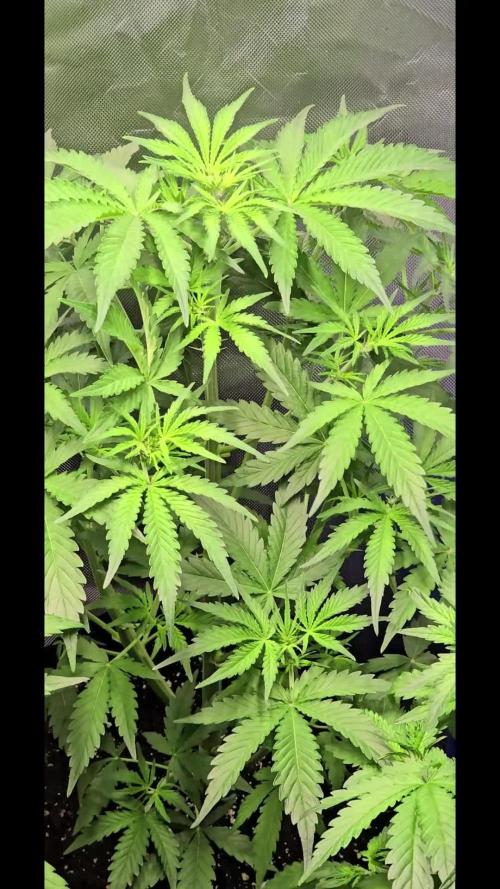
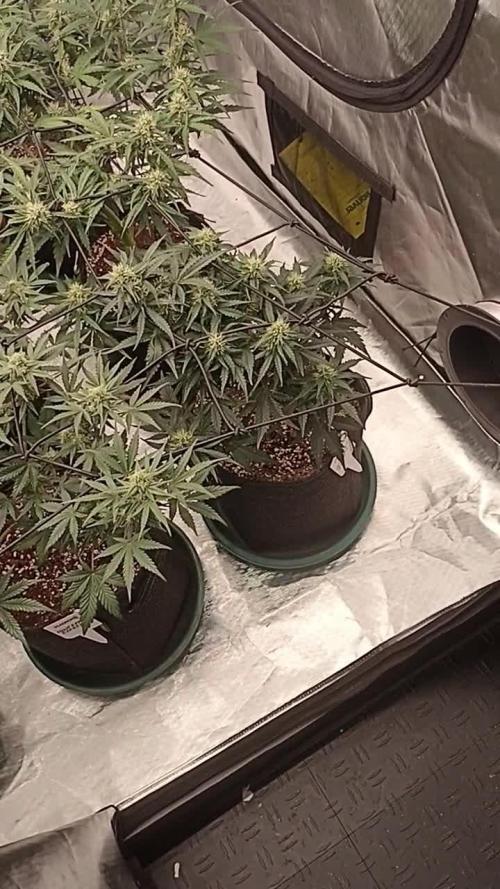
Wie es in diesem Stadium so ist, keine besonderen Vorkommnisse also hat man weiter nur stundenlang vorm Zelt gesessen und die schöne Lady betrachtet 😁😅
Likes
4
Share
Likes
20
Share
This was a real fun strain !! Definitely do it over and over again ! Thank you Fastbuds!! I’m not sure of the weight yet ,I have them hanging low an slow for 12- 14 days to try then will be trim , cure , the fun stuff!✌️Peace, love, and Positive Vibes to y’all cheers 🔥😤💨💨💨💨🤙 I will be letting know the final weight soon as it’s done drying!
Likes
35
Share
All 18 CANNALOPE HAZE plants from DNA-GENETICS continued thru week 6 to develop their BEAUTIFUL flower crowns. The plants on the right under the Q6W-Gen. 2 LED-Lamps from SANlight are in general a little more uniform (all have almost the same height). The plants on the left side under the Lumatek PRO 600W are developing well, but some are smaller and some are taller. The production of flower seems to be on PAR now between the two sides, but thats hard to judge only by looking at them. In the end the weight will tell, who produced more flower. 😃 I still give only PURE tab-water, without any PH correction, since the BIOTABS nutrients are adjusting the ph-value and work for the FULL-CYCLE, its unbelievably easy and convenient, I LOVE IT! 😎 The Ambient Q240+ from HOMEBOX is now nicely filled by the plants and they continue to grow well. 😁 The Lumatek is still running at 100% at a distance of 50 cm from the top of the plants. The two SANlights at 60 cm distance were so strong (first signs of light bleaching) that I decreased the power by dimming them to 80% during week 6. I am curious to see how the test goes on further...
Likes
14
Share
Semana 5 y ya en prefloracion, he usado una enmienda orgánica que contiene muchos minerales y también apliqué lactobacillos, los que ayudan a soludibilizar el fósforo en el sustrato.
Likes
11
Share
6/30 I messed up and put 8 days last week so I'll have tp do a six day week to get back on schedule. Pounded rain last night I guess. Very intense but very brief. As you can see in the video the plants are found great. A few have revegged so I'll need to defoliate the middle. I could make a TON of clones but it's pretty late for that. I might clone a couple outstanding plants to keep the genetics. Still seeing some pillar damage. Might do bt tonight. I'll keep this updated. 7/1 Super hot yesterday. Reached 90°. We are getting SOME rain today and thunder showers day after tomorrow. Bags still had some heft and everything looked good. I went back aroundcand found about half were at the point of needing water. He'll, they probably all did. My watering can is 2 gallons not 1.5 as advertised. So that means I used 5 gallons on the garden (not watering the 50) focusing the more water on the lightest bags. That tenth planet I'm seeing more septoria like leaves. This makes enough for me to be fairly positive ill need to treat it. I have plant doctor but I think copper works better. I also see more pillar damage so I've gotta apply something. I also need to lst more and I keep to clean put the interior of the plants so they don't get pm. EDIT: IT WAS 80° and no rain at 6:30. Humidity close to 100% bit plants look AMAZING! I'm hoping this may be my best year yet! I won't grow a bigger plant than tjat blue cheese in the 50 but so far everything is looking good. I may add some nutes to the pink kush in the 50 due to tje slightly less green color. I assume it's just because the other soil is all New amd this was a mix. I defoliated lightly to prevent pm but I have more to do. I just wanted to get a video of the girls looking good. 7/2 82° at 9am. Glad I decided to water even thoughvi watered yesterday. I need to up my volume. Thirty degree temp swings don't help much either. I said I used 4 gals but I used 5. I had one phed already. I'm hoping this will be one of my best years. IT looks like it! I won't have that MONSTER blue cheese in the 50. It was the smallest plant anyway and shows the difference between using NEW soil and mixing old soil WITH new soil. It's a much lighter green. Still need to apply bt and do a little more defoliation. EDIT: IT'S 90° WITH LIKE 100% RH. PLANTS LOOK A LITTLE HEAT STRESSED BUT OTHERWISE PRETTY DAMN GOOD. EVEN MY FATHER MENTIONED (KNOCK ON WOOD) "THAT I DONT HAVE ANY SHOT ON THEM THIS YEAR." LOL. I UPLOADED A VIDEO TO SHARE. HOPE YOU GUYS ARE HAVING AS MUCH FUN AS I AM! 7/3 83° at 9:40a.m. I need to increase my watering volume so I don't need to water every day. I used 5 gallons to water everything but the 50. I think I'm underwatering. However it was supposed to be severe thunder storms with torrential rain, high winds and hail. I'll gratefully take this hot sunny day instead. However in the future I think I'm not goingvto add in the predicted rainfall in my schedule. Unless it's a torrential down pour obviously. Everything g is still looking good and I've still got some work to do.
Likes
74
Share
@JieGrow
Follow
These girls have been thriving and growing at a fast rate🐎😬 we started the girls on canna a&b on a feed - break - feed ratio using nutes with every feeding 😬 The girls got 5 nodes and I was going to wait till the 6th node appeared but decided to top just now, as you can see in the photo, this is where I cut making sure to leave some stalk in between the nodes just to make sure the new growth sites do not get damaged👌🏻 The reason we top is because by damaging the main stem, topping encourages the plant to spread energy growing many colas instead of just one ☝️... and you can never have enough colas😎 That’s all i can report this week guys! Hope you all had a wonderful week, I’ll see yous next time😎 Welcome to JIEGROW 😄
Likes
6
Share
@godido
Follow
This time I got bunch of photos for you. As I’ve wrote before, I do some LST with NYC. It’s slow process but I see progress. I tried to ties with garden canopy lane without harming my baby’s little colas. This my first time growing. I assume that you know this nice feeling of caring about your first grow. That new experience is very uplifting, don’t you think? If you want, and If you are in the mood for share your thoughts about growing philosophy I would like to see you point of view. I think it will be nice to see what community awe are here. Does anyone grow NYC or White Widow autoflower seed? :) High and Hey🤪😙
Likes
3
Share
Seems to be doing well. I still can't place the smell. I think it will be tasty and potent.
Likes
24
Share
6.02 Growth has picked up since raising the PH of my nutrient solution to 6.25-6.5. I also began foliar feeding at lights off with 5 ml/g of Cal-Mag Plus. I added .25 tsp/gallon of recharge when feeding today. It raised the PH of the solution to 7.0 and will monitor over the next 48 hours for results. 6.04 When I tied down the big plant I split the stems where they were topped the 2nd time. Taped them up and cinced with plant ties. 6.06 End of week 9. Installed my automatic watering manifold with hydro halos. I've been feeding 3 times/day for the past week, and I won't have time to hand water 5 or 6 times a day during flower. Will probably need 1 more full week of veg before I flip to 12-12.
Likes
16
Share
Seedling managing 93F 30%RH, around 20 DLI. Vpd is in the 3's. No I don't recommend. Signum Magnum. "A great sign appeared in the sky a woman clothed with the sun with the moon under her feet and on her head a crown of twelve stars. Sing ye to the Lord a new canticle: because He has done wonderful things. Glory to the Father, and to the Son, and to the Holy Spirit As it was in the beginning, and now, and ever shall be, world without end." The plant nutrient nitrogen exists in forms with both positive and negative charges. Ammonium (NH4+)(immobile in soil)(Cation) has a positive charge, while nitrate (NO3-) (highly mobile in soil)(Anion)has a negative charge. Nitrogen is unique among plant nutrients in that it can exist in both positively charged (ammonium, NH₄⁺) and negatively charged (nitrate, NO₃⁻) forms in the soil. This makes it a special nutrient. In that it is responsible for providing balance for reactionary trade offs when it comes to ph. Because ph itself in the medium will always slowly drift towards acidicity, such is nature. 80% of nitrogen should be nitrate and no more than 20% ammoniacal nitrogen. Ca, mg, and K are the big 3 cations related to soil composition, pH & base saturation. When nitrogen is in the form of ammonium, it can compete with calcium, magnesium, and potassium for absorption sites in the plant root. This competition can lead to a reduction in the uptake of these other essential nutrients. Nitrogen, particularly in its nitrate form (NO3-), can increase soil acidity, which can also affect the availability of calcium, magnesium, and potassium. The form of nitrogen applied (ammonium vs. nitrate) can influence its interactions with other nutrients. Ammonium nitrogen can have a more pronounced negative effect on the uptake of calcium, magnesium, and potassium compared to nitrate nitrogen. Common forms of ammonium nitrogen include ammonium ion (NH4+), urea, and ammonium compounds like ammonium nitrate, ammonium sulfate, and ammonium phosphate. Common forms of nitrate nitrogen include potassium nitrate (KNO3), sodium nitrate (NaNO3), calcium nitrate (Ca(NO3)2), and ammonium nitrate (NH4NO3). Phosphorus is an essential plant nutrient, and its availability in the soil is strongly linked to the presence of oxygen. Plants primarily absorb phosphorus as phosphate (PO4), and oxygen is a key component of this molecule. Furthermore, the availability of phosphorus in the soil can be impacted by factors like soil aeration and temperature, which in turn affect the oxygen supply to the roots. Phosphorus uptake in plants is most critical during the early stages of growth, particularly within the first few weeks of plant development. Young plants actively growing tissues have a high demand for phosphorus. They may absorb up to 75% of their total phosphorus requirements within the first few weeks of vegetative growth, with up to 51% of uptake happening overnight, primarily in the first few hours or early nightfall. ⑨Anaerobic root respiration, or respiration without oxygen, is detrimental to plants because it's less efficient and produces toxic byproducts, leading to reduced energy production, nutrient uptake issues, and ultimately, root damage and plant stress. ⑨Anaerobic respiration, unlike aerobic respiration, doesn't utilize oxygen as the final electron acceptor in the electron transport chain. This results in a significant drop in the amount of energy (ATP) produced, which is necessary for various plant functions, including growth, nutrient uptake, and maintenance of cellular processes. ⑨In the absence of oxygen, plants produce byproducts like ethanol and lactic acid during anaerobic fermentation. These byproducts can be toxic to the roots and inhibit their function, ⑨When oxygen is depleted in a medium, the pH tends to decrease (become more acidic) due to the production of metabolic byproducts. This is particularly relevant in biological systems where aerobic respiration relies on oxygen as the final electron acceptor. ⑨When oxygen is scarce, plants may switch to anaerobic respiration. This process produces carbon dioxide (CO2) as a byproduct. ⑨CO2 dissolves in water to form carbonic acid (H2CO3). This acid lowers the pH of the medium, making it more acidic. ⑨Anaerobic conditions can impair a plant's ability to regulate its internal pH, leading to a drop in cytoplasmic pH and potentially cellular acidosis. ⑨The change in pH can also affect the availability of certain nutrients to the plant, as pH influences the solubility of micronutrients like iron, manganese, zinc, copper, and boron. ⑨The lack of oxygen in the plant medium leads to a decrease in pH due to the production of carbon dioxide during anaerobic respiration and impaired pH regulation within the plant. In plant cells, cellular acidosis, a drop in the internal pH of the cytosol, is a significant stress response, particularly during conditions like flooding or hypoxia. This acidification can be triggered by a decrease in oxygen levels, leading to the production of metabolic byproducts like lactic acid and CO2. The plant's ability to tolerate and recover from these conditions depends on its cellular mechanisms to regulate pH and mitigate the effects of acidosis. When plants are subjected to low oxygen environments, such as those experienced during flooding, anaerobic metabolism, which produces lactic acid and ethanol, becomes the primary source of energy. This can lead to a build-up of these acidic metabolites in the cytosol, causing a drop in pH. OXYGEN Atomic oxygen (single oxygen atom, O) is the lightest form of oxygen, as it has the lowest mass of the oxygen molecules. Oxygen also exists as a diatomic molecule (O2) and an allotrope called ozone (O3), which have higher masses due to the number of oxygen atoms combined. Atomic Oxygen (O): This refers to a single oxygen atom, which is the most fundamental form of oxygen. Molecular Oxygen (O2): This is the common form of oxygen we breathe, consisting of two oxygen atoms bonded together. Ozone (O3): This is an allotrope of oxygen, meaning it's a different form of the same element, consisting of three oxygen atoms bonded together. Since atomic oxygen has the fewest oxygen atoms, it naturally has the lowest mass compared to O2 or O3. Ozone (O3) Lifespan: Ozone has a relatively long lifespan in the stratosphere, particularly at lower altitudes. For example, at 32 km in the middle latitudes during spring, ozone has a lifetime of about 2 months. Oxygen (O) Lifespan: Atomic oxygen, on the other hand, has a much shorter lifespan. At the same altitude, its lifetime is about 4/100ths of a second. Ozone-Oxygen Cycle: The ozone-oxygen cycle involves the rapid exchange between atomic oxygen (O) and ozone (O3). UV radiation can split molecular oxygen (O2) into atomic oxygen (O), which then reacts with O2 to form ozone (O3). Ozone can also be photolyzed by UV radiation, creating atomic oxygen again, which can then react with O3 to reform O2. Dominant Form: The partitioning of odd oxygen (Ox) between ozone and atomic oxygen favors ozone in the lower stratosphere. This means that a much larger proportion of odd oxygen exists as ozone than as atomic oxygen, especially in the lower stratosphere. Recombination: Atomic oxygen has a high energy and reactivity. When it encounters another oxygen atom, they can combine to form O2. This process releases energy, contributing to the heating of the atmosphere. Ozone Formation: Atomic oxygen can also react with molecular oxygen (O2) to form ozone (O3). Ozone plays a significant role in absorbing harmful UV radiation. Other Reactions: Atomic oxygen can react with various other molecules in the atmosphere, like nitrogen (N2), water (H2O), and carbon dioxide (CO2), forming different compounds. UV light below 240nm (peak 185nm) creates ozone (O₃) through a process called photolysis, where UV light breaks down dioxygen molecules (O₂) into single atomic oxygen atoms (O). These single oxygen atoms then react with other oxygen molecules to form ozone (O₃). Specifically, UV-C light with wavelengths shorter than 240 nm can cause this photolysis. UV light with wavelengths between 240-280 nm, (peak 254 nm) breaks down ozone (O₃) into dioxygen molecules (O₂) and atomic oxygen atoms (O). 280nm does not have the energy potential to break apart the stable bond of (O₂) into enough (O) to make (O₃) At ground level, atomic oxygen (single oxygen atoms) has a very short lifespan. This is because it's highly reactive and quickly combines with other molecules to form stable diatomic oxygen (O2) or other compounds. While the exact timeframe varies depending on the specific circumstances, its lifespan is typically measured in nanoseconds or picoseconds.
Likes
4
Share
Creciendo fuerte, buenos resultados
Processing
Likes
54
Share
@Ch33cH
Follow
Pretty happy with her setup now shes reached the edges of pot. I plan to just try keep her tied down while the middle catches up. I'll let her get some vertical growth after that and flip when im happy shes good to go. She is now just on full feed Lucas forula (GHE Micro/Bloom) with some calmag. Took all her nutes well showing no signs of deficiencies and caused no grief whatsoever.
Likes
376
Share
Good day to all my friends and visitors here on GD. At the end of this week EC is at 3.0 so first thing to do next week there will be reservoir change. All goes well looks like the big Tropicanna plant is maturing so probably about two more weeks for her....better photographs will come next week. I spray them every second day with CannaCure or a hydrogen peroxide solution to be safe from the moldy buds. The SE7000 runs at 550 Watt and about 35cm from the canopy and is doing an astounding job. For anyone who is interested in obtaining this efficient and affordable light fixture here's the link: https://spider-farmer.com/products/spider-farmer-upgraded-se7000-730w-commercial-led-grow-light/ Also i included a unpacking recording of one of the packages Spider Farmer send me for the next grow, If you are interested in buying this 6" exhaust fan with filter here's the link: https://cutt.ly/gwjZIk9r Thank you a lot Spider Farmer you guys rock 💚 That's it friends, I hope to see y'all next week.
Likes
8
Share
Week 6-Day 42 ❤️🇨🇦🌱😎💨 Ladies have been coasting along, haven’t had to do much other than water every 3rd day. I’ve decreased most of N ratio, there is still some in the Cal Mag and Big Bud, and upped the P and K along with the Big Bud. PH has been bang on, I’ve been varying the PH at feeds, and testing the runoff and slurry mix, been a very healthy 6.1-6.4 on the higher end ! Things are getting thicker and hairier in the garden, and with slightly higher RH this week, I’ve been giving them a lot of air flow, seems like the frost on all of them have kicked it up a notch! They’ve got some incredible terps coming off them, I clearly need a secondary carbon filter when growing these types of potent strains, cause my whole house stinks! It seems that whenever the fan is not running, the wafts of skunk and pine are escaping 🤤 it will be another 2-3 weeks, but I’m getting excited 🤗🌲💥 Happy Growing 🇨🇦❤️👊
Likes
9
Share
Time sure goes by quick, It is already week 6. I sure hope they chunk up near the end :P Plant "2" has a really strong creamy/doughy smell, plant "1" has like no smell so far. Moved a clip on fan to blow on the ballast of the LED, and have a oscillating fan down below, which got the temps down a few degrees, and the plants seem to be enjoying it. Gave it a top dressing of nutrients last week, so I should not need to add any more, and just keep watering as normal, with a little bit of epsom salt like every 3rd watering.
Likes
15
Share
Creo que vamos bien... veo flor saliendo, bien formada de ambos ejemplares... espero sea una buena primer cosecha... Seguimos buscando y aprendiendo en esto que ya se hizo una adicción... Un hobbie hermoso...