Likes
Comments
Share
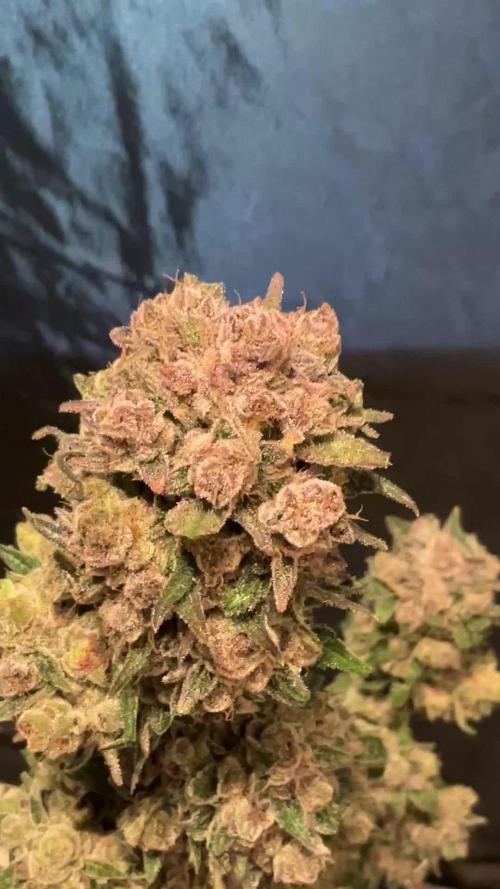
We cut her early due to a block off in the autopot system.. but she was frosty as a mofo for being cut way to early and the taste was surprisingly very sweet with a piney/spicy kind off aroma and taste
Likes
8
Share
so it's a first for me this week I try to fim the top instead of topping it and I have video and pics if anyone can let me know I got it right but beside that I trimmed up the leafs a lil and let it grow it's on like it 6th node jus waiting for it to get tall agine any tips is helpful
Likes
17
Share
----------------------------------------------------- ~SWEET SEEDS JACK 47 STRAIN DESCRIPTION~ ----------------------------------------------------- A 3rd generation Autoflowering strain, this hybrid is the result of a cross between an Autoflowering Jack Herer from the Sweet Seeds®️ R&D Department and our elite clone of AK 47. Probably the most potent Autoflowering strain available in the market. This is a very productive Autoflowering plant with abundant, compact and very resinous buds. The aromas and tastes of this strain are sweet, fresh, lemony and with hints of incense. Variety: Sweet Seeds Jack 47 Auto #SWS31 Indica: 20% Sativa: 76.9% Ruderalis: 3.1% THC: 18-21% CBD: 1.1% Indoor Yield: 450-600 g/m² Outdoor Yield: 50-200 g/plant Harvest Indoor / Outdoor: 9 weeks from germination Height: 50-120 cm Effects: Creativity, Psychoactive, Stimulating Taste: Citrus, Lemon, Incense, Cool, Sweet __________________________________________________________________________________________________________________________________________________________________________________________________________________________________________________________________________________________________________________________________________________________________________________________________________________________________________________ MY SETUP: ~Planted into Jiffy Peat Pellets that were hydrated with de-chlorinated water with SuperThrive added then ph'd to 6.0 @ 80℉ ~Grown 100% organic in 10g fabric pots with Mother Earth 70/30 Coco/Perlite medium amended with 2tbs/g of Down To Earth 4-4-4 / 2 cups/g of Earthworm Castings / 1tbs/g of Dr. Earth Flower Girl 3-9-4, 1tbs/g of Dr. Earth Bat Guano, 3/4 cup of Down To Earth Azomite and 1 tsp/g Down To Earth Fish Bone Meal. ~24hr light cycle during Germination / 19/5 light cycle for Vegetation and 12/12 for Flower ~Straight water ph'd @ 6.2-6.8 when needed and weekly Compost Tea's. ____________________________________________________________________________________________________________________________________________________________________________________________________________________________________________________________________________________________________________________________________________________________________________________________________________________________________________________ This was my first time cultivating this strain, also my first introduction to Sweet Seeds and let me tell you I was quite impressed with my first attempt! The Jack47XL Auto was germinated in a Peat Pellet which took seven days for her to break ground. Within two days there were roots popping out of the bottom of the Peat Pellet. After she sprouted it was ON! By week two she had three set of leaves and she went into a 5g fabric pot to live out the remainder of her life. She started out short with tight node spacing and I was thinking she would be a fairly squat plant. But once she started to flower at around Day 30 +/- she absolutely took off on the stretch from hell! As she stretched her node spacing widened allowing plenty of light penetration through her canopy and her foliage never got super bushy requiring removing leaves. All in all she was a growers dream! I let her run for 10 full weeks and after her last Top Dressing at Week Seven she received only straight water that was ph'd to 6.7-6.8. After checking her trichomes daily during Week Ten and determining that she was where I wanted her, I placed her in the dark for 60 hours @ 64℉ and a RH of 45%. When I removed her from the dark I cur her off at her base and hung her whole in my Drying Room where she spent nine days drying @ 64-66℉ with the RH running at 50% for the first 24 hours, then raised to 60% for the remainder of the drying time. Being predominately sativa in her lineage, she grew fairly tall and maxed at 32". In addition to her height her really wide node spacing, which made defoliation or leaf tucking completely unnecessary, was so nice to deal with (or actually to NOT have to deal with!) and because of her structure and the way she grew, I decided not to do any LST other than gently bending a couple of her branches during Week Four when she was still short and bushy. After she was dried I trimmed her up and placed the flowers in two large Mason jars to cure. The flower is currently at 68% RH and I'm 'burping' the jars three times a day until it drops to around 62%. I did do a 'Test Press' with 7g of the flower and saw almost a 28% return of super light colored, almost clear, rosin that is some of the best I've pressed lately! 🔥 When you crack the jars your hit in the face with the sweetest aroma you've ever had the pleasure to smell...smell nothing like cannabis, more like a jar full of sugary sweet candy! 😍 Needless to say, I'm hooked on Sweet Seeds and head over heels for their Jack47XL autoflower and can't wait to run her again soon! Go get some of this strain and see if you don't agree! Thank you so very much for following along on my journey, it's all a labor of love for the plant, and I can't express my gratitude enough for all the positive feedback I receive. Stay Blessed and lifted! 😎🙏
Likes
16
Share
@Rinna
Follow
I’ll update ya’ll on the smells and tastes after drying and curing! So far both are packed with ice and smell very potent, a little overpowering still, so I want to give it some time before they’re cures and can show their true terpene profile!
Likes
1
Share
Likes
6
Share
Foi uma grande experiência para mim!so.no.outdoor que tinha plantas antes !elas poderiam render mais, errei em algumas coisas !poderia ter luzes melhores e o ph!ate a 6 semana estava tudo certo com elas!dai vi um amarelo em algumas folhas logo depoia que incluir o magnifical da remo!resolvi fazer uma.lavagem das raizes mais acho que lavei demais e com um ph desregulado dai ela perdeu todos os nutri da terra ou nao conseguiu absorver o que tinha por ter ph alto!nao fiz uma poda boa e por isso rendeu muitas pipocas e os galhos ja estava ficando fragil e quebradiço bem facil!no momento da maior engorda!na minha humilde opinião!lavar as raizes somente quando ela atigir seu potencial maximo antes nunca mais!valeu a todos que acompanhou meu diário!aprendi muita coisa nesse cultivo e espero nao erra no próximo!ou errar para aprender!
Likes
36
Share
Que dire mise à part que se strain est tous simplement magnifique ? Il porte bien son nom, il commence à être bien Frosty! Et la couleur violet commence à apparaître de plus en plus! Les bud sont beau et dégagent une belle odeur fruité, le plant a une sacré couverture résineuse, je pense qu’elle pourrais être parfaite pour faire des extraction! Cette semaine je lui ai donné un thé de compost oxygéné, on va voir comment elle va réagir. Recette du tco pour 20 litres. (Grammes : gr) 50gr biochar 250gr zéolite 3gr granulé Micro-Organisme IT45 10gr pollen d’abeilles 10gr levure de bière 3gr endomychorize 10gr consoude 20gr vers de farine 10gr cendre coque de ricin 12gr ortie microniser 15gr Kelp 10gr spiruline 10gr de cbd living soil 20ml de miel liquide 30ml de mélasse 20ml d’acide humiques et fluvic Mettre tous les ingrédients (sauf la mélasse ,l’acide h/f et le miel) dans un filtre 400micron, le placer dans un seau avec de l’eau (10litres). Rajoutez le miel et 10ml de mélasse Y mettre un micro bulleur alimenter sur une pompe à air et faire oxygéné le mélange pendant 24h. Rajout de 10ml de mélasse après 12h le début de la mise en route de la pompe. A la fin des 24h rajoutez le restant de mélasse et d’acide h/f, mettez y en plus 10litres d’eau au mélange. Reste plus qu’à arroser! Pour la Frosty j’y ai incorporé 7litre de mélange La veille j’ai préparé le pot à l’arrosage avec 500ml d’eau et 2gr de Bacillus IT35 Amyloliquefaciens X5 Bacillus Amyloliquefaciens : rhyzosphère, probiotiques. Aspersion et arrosage. Utilisable pour toutes cultures. La bactérie Bacillus Amyloliquefaciens se fixe dans la rhizosphère en se nourrissant des exsudats racinaires. En contrepartie, elle stimule la croissance racinaire en sécrétant des métabolites de croissance et solubilise le phosphore en sécrétant des phytases (enzymes). Effet probiotique consistant en l’utilisation de micro-organismes bénéfiques pour la nutrition et la santé des plantes. La spiruline, le plus riche et le plus complet des amendements organiques La Spiruline est une algue aquatique connue comme complément alimentaire, la Spiruline est aussi un amendement organique et écologique très complet. D'une grande qualité nutritive, elle apporte à vos plantes une quantité de nutriments, dont l'azote, phosphore, potassium, minéraux, acides aminés, vitamines, chlorophylle et protéine. Le charbon végétal actif est capable d’absorber jusqu’à cinq fois son poids propre en eau ainsi que les éléments nutritifs qui s’y trouvent. Il joue ainsi le rôle de catalyseur et d'amplificateur pour les fertilisants traditionnels, qu'ils soient d'origine organique ou minérale. Ce pourquoi il est idéal pour activer un sol et pour les thés de compost oxygénés. Le charbon végétal améliore la diffusion et la disponibilité des éléments nutritifs dans le sol et offre des conditions propices au développement des micro-organismes. Le Biochar peut être introduit dans une grande variété de sols. Il est particulièrement efficace dans les sols pauvres, difficiles et acides. Pour faire agir rapidement et efficacement sa capacité d’amendement, le charbon végétal est enrichi et biologiquement activé avec des micro-organismes. Le Biochar se comporte ainsi comme un structurateur et un activateur dans le but de valoriser les sols. Composition : • Charbon végétal actif 31%
• Matière organique 33%
• Matière sèche 75%
• C/N : 17
• PH : 7,2
• Azote (N) : 2,1 % dont 1,2 % azote organique
• Phosphore (P205) : 0,74%
• Potassium (K20) : 1,18%
• Calcium (Ca) : 6,8%
• Magnésium (MgO) : 0,65% Le pollen est l'ingrédient de base de la fabrication du miel par les abeilles. Riche en vitamines et minéraux, il est qualifié « d'aliment parfait », y compris pour les plantes ! Les zéolithes sont des roches cristallines, présentant des capacités d'adsorption particulièrement importantes vis à vis des polluants que l'on rencontre dans l'eau et dans certains liquides, ainsi que dans l'air et les gaz. Elles sont extrêmement poreuses comme les charbons activés et elles peuvent être chargées électriquement pour opérer comme des échangeurs d'ions. La zéolithe est un produit naturel qui respecte notre environnement. Utilisé dans le milieu industriel depuis de longues années déjà, ce minerai aux propriétés filtrantes particulières commence à se vulgariser dans le domaine de la piscine privée, de l'aquariophilie, des bassins d'agrément, de la récupération des eaux de pluie, ou encore de la culture des bonsaïs et autres plantations diverses par exemple... 4 points techniques majeurs : - Grâce à leur propriété hydrophile, les zéolithes peuvent adsorber l'eau jusqu'à 30% de leur poids total et sans aucune variation de volume : pas de gonflement en présence d'eau ni de craquement en cas de déshydratation comme certaines argiles. Les zéolithes sont d'ailleurs de puissants agents anti-mottant (anti-agglomérant). Cette propriété est très appréciée dans le cas des terrains de golf et autres aires de jeux. - Les zéolithes ne captent pas l'eau de façon irréversible, elles se comportent comme une réserve au voisinage des racines. Celles-ci peuvent capter l'eau en fonction de leur besoin. Les zéolithes permettent ainsi de réduire les besoins d'arrosage jusqu'à 35 %. - Une zéolithe se comporte comme une "Zone de Stockage" qui retient l'azote et les éléments minéraux nutritifs au voisinage des racines et les relâche lentement en fonction des besoins de la plante. Cela se traduit par une croissance harmonieuse mais rapide du végétal. - La capacité d'adsorption et l'énorme rapport surface/volume des zéolithes, vont permettre à la fois la rétention de la solution du sol et une bonne oxygénation au voisinage du système racinaire. Les zéolithes favorisent donc l'organisation biologique des sols en contribuant au développement de la micropopulation. L'apport en nutriments (N, P, K) est réduit de 20 à 25 %. Ces derniers, adsorbés par la zéolithe, sont beaucoup moins sensibles au lessivage et à l'évaporation. Composition minéralogique : * Chabasite 70 % * Phillipsite 2 % * Feldspath 5 % * Augite 3 % * Illite - Mica 2% Analyse atomique: * Sio2 52 % * AL2o3 17 % * CaO 5,7 % * K2O 6,1 % * MgO 2 %, * Na2O 0,6 % * Fe2O3 3,6 % Amendement calcaire, dolomie et gypse avec préparation microbienne à base de Bacillus Amyloliquefaciens IT45 et Saccharomyces cerevisiae LYCC6420 Formulation : micro granulés (1 – 1,6 mm) à base de rhizobactéries favorisant la croissance des plantes qui se multiplient et colonisent rapidement la zone des racines, et de levures Saccharomyces cerevisiae souche LYCC ayant un effet probiotique. Les PGPR produisent des enzymes qui solubilisent le phosphore à partir de complexes inorganiques et organiques dans le sol et stimulent la croissance des racines efficaces augmentant ainsi la zone d'interception des éléments nutritifs. Les levures LYCC permettent une occupation de la rhizosphère par une flore bénéfique. Composition :
• Matière sèche : 96,8%
• Matière organique : 91,5%
• N total : 6,6% dont N soluble dans l'eau 0,17%
• P total : 2%
• K total : 1,7% Micro-granulés : 
• Oxyde de calcium (CaO) total : 30%
• Oxyde de magnesium (MgO) total : 7%
• Anhydride sulfurique (SO3) : 13% La levure de bière est une matière vivante qui permet un meilleur fermentation pour les thés de compost oxygénés notamment conseillé pour accompagner les croissances ou apporter un gros coup de pousse pendant la floraisons.  La levure stimule la vie des sols également à l'arrosage direct en apportant tout aussi bien que dans le TCO sa population l'espèce micro-bactérienne positive pour votre sols ainsi que des oligo-éléments et diverse vitamines.   Composition : • 2,8% (N) total dont 1% (Norg), • 2,3% (P205) • 1,6% (K20) • 35% de MO • C/N : 8. PH : 8,4. Sous forme de poudre mouillable. Il contient des spores du champignon mycorhizien Rhizophagus Irregularis MUCL57891 avec des levures inactivées spécifiques. 2000 spores/gramme d’endomycorhize Rhizophagus Irregularis MUCL57891 et Saccharomyces Cerevisiae LYC6420 inactivée. Se connecte efficacement au système racinaire et forme un vaste réseau souterrain de filaments, qui agissent comme des extensions pour atteindre les nutriments et l’eau au-delà de la rhizosphère Composition : • Poudre contenant 2000 spores/g. d’endomycorhizes Rhizophagus irregularis  La Consoude (Symphytum Officinale) est une plante présentant de nombreuses propriétés. Particulièrement riche en Potassium (K) organique, la consoude est une alliée idéale pour les périodes de floraison. La consoude a tout pour plaire : riche en vitamine B12, elle agira également comme stimulateur racinaire, mais aussi comme biostimulant cellulaire, grâce aux alcaloïdes, aux allantoïnes et jusqu'à 30% de protéine ! 100% déjection de vers de ténébrions.
Très riche en microorganismes, le guano de vers de farine est une matière directement composté par les vers. En effet, c'est bien la digestion de matières végétales par des larves, insectes ou autres arthropodes qui valident le processus de compostage, que ce soit en zone de production de cultures d'insectes, pour le compost maison ou la dégradation de litière forestière. Les bactéries et autres champignons obtenus grâce au système digestif de nos vers, permettent la dégradation accélérée des éléments nutritifs dans vos supersoils, et les symbioses permettant l'assimilation des éléments nutritifs. Cette bio-activation intense mettra dans vos sols, à la disposition de vos plantes, un panel tellement varié de nutriments frais qu'il nous est aujourd'hui technologiquement impossible de pouvoir tous les nommer et de les compter.  Le guano de vers de farine fournit une grande polyvalence. Très équilibré, il s'utilise en entretien ou en apport ciblé seul ou en complément de d'autres amendements ou fertilisants organiques. Il agit comme un puissant activateur de sol et/ou de substrat. Cendre coque de ricin NPK 0,1-18,6-16,5. 0,1% (N-Azote), 18,6% (P205-Phosphore), 16,5% (K2O-Potasse), 11,7%(Ca0), 9,1 (Mg0) - Origine : Inde ACTION SOL • rend rapidement accessible au sol Phosphore, Potasse, Magnésium et Calcium. ACTION PLANTE • Apport aux stades agronomiques propices. • Produit riche en éléments fertilisants : combinaison NPK 35%. • Régularité de l’apport, milieu et fin de floraison. . Favorise la sénescence. Analyse chimique : • NPK 0,1-18,6-16,5 • N-Azote 0.1% • P205-Phosphore 18,6% • K2O-Potasse 16,5% • CaO-Calcium 11,7% • MgO-Magnésium 9,1% Ortie bio micronisée Stimule la vie du sol et la végétation. Composition : • 2,8% (N) total dont 1% (Norg), • 2,3% (P205) • 1,6% (K20) • 35% de MO • C/N : 8. PH : 8,4 KELP poudre
ascophyllum nodosum
- amendement sol Croissance et floraison - Meilleure germination - Meilleur développement racinaire Meilleure assimilation - Résistance aux stress osmotiques - Augmente la production de chlorophylle = plantes plus vertes = lumière mieux captée - Lutte contre le stress osmotique - Développement des Micro-Organismes dans le sol – Riche en vitamines, fer, iode, oligo-éléments, hormones de croissance auxines et cytokinines - Idéal en épandage et pour les thés de compost oxygénés. Important : notre Kelp est un goémon noir mais il n'est pas le varech bien moins fertile de la même famille qui est l'algue qui pullule et pollue la Bretagne, notre algue pousse uniquement à plus de 50 mètres de fond dans les grands courants froids au large de la Norvège.
Likes
25
Share
this should be the last week of vegetation. Flowering should be starting soon. Seems like no end to this drought we are suffering from in Southern Ontario.
Likes
14
Share
@Nillenium
Follow
Woche 8: Sie drückt jetzt all ihre Kraft in die Ausbildung ihrer Blüten.
Likes
51
Share
@Corwinism
Follow
Jelly Bananen was the strain I was looking forward to the most. There wasn't much information on it when I initially ordered the seeds, but I was intrigued by the breeder's description nonetheless and decided to give it a shot. In flowering, there were two incidents where the light schedule was interrupted unexpectedly. In response, the plant started to produce "nanners". Ironically, Jelly Bananen was the only plant in the garden to do this. I produced 88g of dry weight, not knowing what to expect on the scales. I'm sure that 88g on one plant is probably pretty bad, but it should only get better from harvest to harvest, am I right? Will be coming back to this strain again in the future, once I have a few harvests in the books. 🙌
Likes
4
Share
Flower Week 7 is over, and we’re officially entering the final 1–2 weeks of this journey! This week has been a little challenging due to the stormy Berlin weather, but despite that, the girl keeps doing her thing. She continues changing colors while the flowers slowly transition toward full maturity. The colors are becoming even more impressive. The parts of the fan leaves that previously showed pink tones are now turning reddish, giving the whole plant an almost fiery appearance around the bud sites. 🔥💜 The smell has also stepped up considerably this week. It now completely fills the tent overnight, and every morning when I open it to move her back to her daytime spot, the aroma hits me straight in the face. She has developed these beautiful earthy and lavender tones that really remind me of some of the Cali weed I’ve smoked in the past. At this point, I’m mostly just waiting for the lady to finish her flowering phase so I can finally and happily say that this balcony experiment worked! It’s incredibly satisfying to watch the flowers mature after all these weeks, although I have to admit that counting down these final days is getting harder and harder. 😄 Next week, I’ll start checking the trichomes more closely. Most of the pistils have already turned brown, which is another sign that this lady is slowly approaching the end. The finish line is finally in sight! 🔥
Likes
Comments
Share
It begins!, excited to try out some new genetics! I have no clue whats in store im going in blind 😅👌
Likes
3
Share
@Fergie
Follow
Hey guys so here is my blue cheese mutant starting to beef right out ww . some pure dank smells coming from her am super phyced to taste this girl .
Likes
39
Share
Time to clean up this 2309, she still is my fav hope she enjoys her haircut hihihi Man she love it , next day she was back on to her praying mode <3<3<3 Tester 2309 is by far my favorite from day one, not only because i like the number but because from a early age she spoke to me like non of the others did, and now, man i mean now she is by far the one showing bigger trichomes production and her smell, i mean is so strong for the time being, she is an herbal mix with flowers and some spicy notes, this for now she is evolving day by day, just amazing, she took the defoliation like a big girl and with the week coming to an end her resin production levels and it all i mean ... <3 <3 <3 added defoliation edited video , hope you guys have fun <3 <3 <3 As always thank you all for stopping by, for the love and time you guys spend on my stuff, i fell blessed and humble, many thanks to you all <3<3<3 Genetics - Fast Buds Tester 2309 Ligth - LUMATEK ZEUS 465 COMPACT PRO 
Food - APTUS HOLLAND #aptus #aptusplanttech #aptusgang #aptusfamily #aptustrueplantscience #inbalancewithnature #trueplantscience #fastbuds #dogdoctorofficial #growerslove With true love comes happiness <3 <3 <3 Always believe in your self and always do things expecting nothing and with an open heart , be a giver and the universe will give back to you in ways you could not even imagine so <3 <3 <3 
All info and full product details can be find in can find @ https://2fast4buds.com/ wen released 

https://aptus-holland.com/
 
https://autopot.co.uk/ 

https://lumatek-lighting.com/ Have a bunch more diaries going on, fell free to drop by and say hi dont be shy <3 <3 <3 <3 <3 <3 Growers love to you all <3 <3 <3
Likes
19
Share
@GrowMo
Follow
I mean where do I even start this is such a beautiful plant and everyday this thing gets bigger I mean how could you not love that! Fed B1 B2 Floraflex Only Ec-2.6 Ph-6.2 No Cal-Mag
Likes
47
Share
@BloodBath
Follow
Extremely frustrated with bugs that got taken care of with some neem oil and ladybugs. Now this Northern Lights went from a front runner to completely sick and dying. Idk how it happened to just one plant and in a short period of time. All in all though, everything else growing is fine besides the Northern Lights.
Likes
17
Share
Going well, have trained her horizontally! Now she has the desired shape & I will let her grow upwards to create some nice Cola's.
Likes
16
Share
She is coming to the end now. Big fat juicy buds and a crazy sweet smell. I alreadt know this will be a good one. I will chop her this week and then update with a harvest and smoke report in a few weeks.
Likes
Comments
Share
Son 2 plantas de esta genetica. Una es mas vigorosa que ptra, pero son muy similares en cuanto a su fenotipo. En esta semana ya notamos el engorde que se viene propiciando luego del overdrive. Tratamos de a poco ir bajando la EC para llegar 0.0 en el corte. La luz sigue baja procurando mantener una buena seleccion de terpenos y resina.