


Likes
Comments
Share


@Josh9260
Follow
Had the seed capsule stick to the seedling, making it bend but it fixed itself and had no issues afterwards.

Likes
9
Share


@Krissci
Follow
Day 3
1st bit of training this week.
Looking healthy.
My aim is to allow lowest bud sites to keep up with the main heads..
LST LST LST LST LST
During this stage is most important to train Ur plant into the shape u want.

Likes
76
Share


@BB_UK
Follow
Took a while to get there but OMG little note quick! So I started her in a 1 litre pot and stuck her on top of a 1.5L Pepsi bottle with the top chopped off! And she yielded heavily for that amount of soil a whopping! 224.63 wet weight so can’t wait to see what she holds dry because them buds were like boulders! So dense! I will be back to document her dry weight and then a couple of weeks later with the update on the smoke report! But I know it’s going to be so loud! She has deep pungent aromas like gassy and sweet! She’s going to be a powerhouse! She was a little over as today a banana developed but that just tells me “well done” timing just right! She’s a little long for my taste of auto but I do suggest anyone grow her she’s amazing! In the end!


Likes
4
Share


@WuTangVibez
Follow
This Week i let them just continue to grow out of the LST. Last Day of the Week i cut down all the lower branches and defuliated the leaves.
First Week of Flower and the Plant shows some nice female Flower-pistols.
This Week i started with the Flower Feeding, i gave her about 4 tsp Seabird Guano as Topdress Feeding, it got a NPK of 7-4-5 so not idial for Flower but i guess Perfect for Streching-phase.
Please Let me Know if you do Lollipop your Autoflowers ?? i was pretty unsure if i should do it but i was afraid that if i didn't do it it would cause problems cause of the ventilation.
Hope you like the Grow so far !


Likes
30
Share


@WeWantItToGrow
Follow
Simply put I am so very pleased with the way this plant has performed my only worry is how to properly dry and cure this magnificent specimen

Likes
14
Share


@suchydog5
Follow
2-3 buds were moldy so i had to cut them hope it doesnt spread further😳
to be honest i havent seen more beautiful flower than this purple one❤️
Likes
52
Share


@Ultraviolet
Follow
Lacewings seemed to have mostly killed themselves by flying into hot light fixtures. I may have left the UV on which was smart of me :) Done very little to combat if anything but make a sea of carcasses, on the bright side its good nutrition for the soil.
Made a concoction of ethanol 70%, equal parts water, and cayenne pepper with a couple of squirts of dish soap.
Took around an hour of good scrubbing the entire canopy.
Worked a lot more effectively and way cheaper.
Scorched earth right now, but it seems to have wiped them out almost entirely very pleased.
Attempted a "Fudge I Missed" for the topping. So just time to wait and see how it goes.
Question?
If I attached a plant to two separate pots but it was connected by rootzone, one has a pH of 7.5 ish the other has 4.5. Would the Intelligence of the plant able to dictate each pot separately to uptake the nutrients best suited to pH or would it still try to draw nitrogen from a pot with a pH where nitrogen struggles to uptake?
Food for stoner thought experiments!
Another was on my mind.
What happens when a plant gets too much light?
Well, it burns and curls up leaves.
That's the heat radiation, let's remove excess heat, now what?
I've always read it's just bad, or not good, but when I look for an explanation on a deeper level it's just bad and you shouldn't do it.
So I did.
How much can a cannabis plant absorb, 40 moles in a day, ok I'll give it 60 moles. 80 nothing bad ever happened.
The answer, finally. Oh great........more questions........
Reactive oxygen species (ROS) are molecules capable of independent existence, containing at least one oxygen atom and one or more unpaired electrons.
"Sunlight is the essential source of energy for most photosynthetic organisms, yet sunlight in excess of the organism’s photosynthetic capacity can generate reactive oxygen species (ROS) that lead to cellular damage. To avoid damage, plants respond to high light (HL) by activating photophysical pathways that safely convert excess energy to heat, which is known as nonphotochemical quenching (NPQ) (Rochaix, 2014). While NPQ allows for healthy growth, it also limits the overall photosynthetic efficiency under many conditions. If NPQ were optimized for biomass, yields would improve dramatically, potentially by up to 30% (Kromdijk et al., 2016; Zhu et al., 2010). However, critical information to guide optimization is still lacking, including the molecular origin of NPQ and the mechanism of regulation."
What I found most interesting was research pointing out that pH is linked to this defense mechanism. The organism can better facilitate "quenching" when oversaturated with light in a low pH. Now I Know during photosynthesis plants naturally produce exudates (chemicals that are secreted through their roots). Do they have the ability to alter pH themselves using these excretions? Or is that done by the beneficial bacteria?
If I can prevent reactive oxygen species from causing damage by "too much light".
The extra water needed to keep this level of burn cooled though, I must learn to crawl before I can run.
Reactive oxygen species (ROS) are key signaling molecules that enable cells to rapidly respond to different stimuli. In plants, ROS plays a crucial role in abiotic and biotic stress sensing, integration of different environmental signals, and activation of stress-response networks, thus contributing to the establishment of defense mechanisms and plant resilience. Recent advances in the study of ROS signaling in plants include the identification of ROS receptors and key regulatory hubs that connect ROS signaling with other important stress-response signal transduction pathways and hormones, as well as new roles for ROS in organelle-to-organelle and cell-to-cell signaling. Our understanding of how ROS are regulated in cells by balancing production, scavenging, and transport has also increased. In this Review, we discuss these promising developments and how they might be used to increase plant resilience to environmental stress.
Temperature stress is one of the major abiotic stresses that adversely affect agricultural productivity worldwide. Temperatures beyond a plant's physiological optimum can trigger significant physiological and biochemical perturbations, reducing plant growth and tolerance to stress. Improving a plant's tolerance to these temperature fluctuations requires a deep understanding of its responses to environmental change. To adapt to temperature fluctuations, plants tailor their acclimatory signal transduction events, specifically, cellular redox state, that are governed by plant hormones, reactive oxygen species (ROS) regulatory systems, and other molecular components. The role of ROS in plants as important signaling molecules during stress acclimation has recently been established. Here, hormone-triggered ROS produced by NADPH oxidases, feedback regulation, and integrated signaling events during temperature stress activate stress-response pathways and induce acclimation or defense mechanisms. At the other extreme, excess ROS accumulation, following temperature-induced oxidative stress, can have negative consequences on plant growth and stress acclimation. The excessive ROS is regulated by the ROS scavenging system, which subsequently promotes plant tolerance. All these signaling events, including crosstalk between hormones and ROS, modify the plant's transcriptomic, metabolomic, and biochemical states and promote plant acclimation, tolerance, and survival. Here, we provide a comprehensive review of the ROS, hormones, and their joint role in shaping a plant's responses to high and low temperatures, and we conclude by outlining hormone/ROS-regulated plant-responsive strategies for developing stress-tolerant crops to combat temperature changes.
Onward upward for now.
Next!
Adenosine triphosphate
(ATP) is an energy-carrying molecule known as "the energy currency of life" or "the fuel of life," because it's the universal energy source for all living cells.1
Every living organism consists of cells that rely on ATP for their energy needs. ATP is made by converting the food we eat into energy. It's an essential building block for all life forms. Without ATP, cells wouldn't have the fuel or power to perform functions necessary to stay alive, and they would eventually die. All forms of life rely on ATP to do the things they must do to survive.2
ATP is made of a nitrogen base (adenine) and a sugar molecule (ribose), which create adenosine, plus three phosphate molecules. If adenosine only has one phosphate molecule, it’s called adenosine monophosphate (AMP). If it has two phosphates, it’s called adenosine diphosphate (ADP).
Although adenosine is a fundamental part of ATP, when it comes to providing energy to a cell and fueling cellular processes, the phosphate molecules are what really matter. The most energy-loaded composition for adenosine is ATP, which has three phosphates.3
ATP was first discovered in the 1920s. In 1929, Karl Lohmann—a German chemist studying muscle contractions—isolated what we now call adenosine triphosphate in a laboratory. At the time, Lohmann called ATP by a different name. It wasn't until a decade later, in 1939, that Nobel Prize–-winner Fritz Lipmann established that ATP is the universal carrier of energy in all living cells and coined the term "energy-rich phosphate bonds."45
Lipmann focused on phosphate bonds as the key to ATP being the universal energy source for all living cells, because adenosine triphosphate releases energy when one of its three phosphate bonds breaks off to form ADP. ATP is a high-energy molecule with three phosphate bonds; ADP is low-energy with only two phosphate bonds.
The Twos and Threes of ATP and ADP
Adenosine triphosphate (ATP) becomes adenosine diphosphate (ADP) when one of its three phosphate molecules breaks free and releases energy (“tri” means “three,” while “di” means “two”). Conversely, ADP becomes ATP when a phosphate molecule is added. As part of an ongoing energy cycle, ADP is constantly recycled back into ATP.3
Much like a rechargeable battery with a fluctuating state of charge, ATP represents a fully charged battery, and ADP represents a "low-power mode." Every time a fully charged ATP molecule loses a phosphate bond, it becomes ADP; energy is released via the process of ATP becoming ADP.
On the flip side, when a phosphate bond is added, ADP becomes ATP. When ADP becomes ATP, what was previously a low-charged energy adenosine molecule (ADP) becomes fully charged ATP. This energy-creation and energy-depletion cycle happens time and time again, much like your smartphone battery can be recharged countless times during its lifespan.
The human body uses molecules held in the fats, proteins, and carbohydrates we eat or drink as sources of energy to make ATP. This happens through a process called hydrolysis
.
After food is digested, it's synthesized into glucose, which is a form of sugar. Glucose is the main source of fuel that our cells' mitochondria
use to convert caloric energy from food into ATP, which is an energy form that can be used by cells.
ATP is made via a process called cellular respiration that occurs in the mitochondria of a cell. Mitochondria are tiny subunits within a cell that specialize in extracting energy from the foods we eat and converting it into ATP.
Mitochondria can convert glucose into ATP via two different types of cellular respiration:
Aerobic (with oxygen)
Anaerobic (without oxygen)
Aerobic cellular respiration transforms glucose into ATP in a three-step process, as follows:
Step 1: Glycolysis
Step 2: The Krebs cycle (also called the citric acid cycle)
Step 3: Electron transport chain
During glycolysis, glucose (i.e., sugar) from food sources is broken down into pyruvate
molecules. This is followed by the Krebs cycle, which is an aerobic process that uses oxygen to finish breaking down sugar and harnesses energy into electron carriers that fuel the synthesis of ATP. Lastly, the electron transport chain (ETC) pumps positively charged protons that drive ATP production throughout the mitochondria’s inner membrane.2
ATP can also be produced without oxygen (i.e., anaerobic), which is something plants, algae, and some bacteria do by converting the energy held in sunlight into energy that can be used by a cell via photosynthesis.
Anaerobic exercise means that your body is working out "without oxygen." Anaerobic glycolysis occurs in human cells when there isn't enough oxygen available during an anaerobic workout. If no oxygen is present during cellular respiration, pyruvate can't enter the Krebs cycle and is oxidized into lactic acid. In the absence of oxygen, lactic acid fermentation makes ATP anaerobically.
The burning sensation you feel in your muscles when you're huffing and puffing during anaerobic high-intensity interval training (HIIT) that maxes out your aerobic capacity or during a strenuous weight-lifting workout is lactic acid, which is used to make ATP via anaerobic glycolysis.
During aerobic exercise, mitochondria have enough oxygen to make ATP aerobically. However, when you're out of breath and your cells don’t have enough oxygen to perform cellular respiration aerobically, the process can still happen anaerobically, but it creates a temporary burning sensation in your skeletal muscles.
Why ATP Is So Important?
ATP is essential for life and makes it possible for us to do the things we do. Without ATP, cells wouldn't be able to use the energy held in food to fuel cellular processes, and an organism couldn't stay alive.
As a real-world example, when a car runs out of gas and is parked on the side of the road, the only thing that will make the car drivable again is putting some gasoline back in the tank. For all living cells, ATP is like the gas in a car's fuel tank. Without ATP, cells wouldn't have a source of usable energy, and the organism would die.
Eating a well-balanced diet and staying hydrated should give your body all the resources it needs to produce plenty of ATP. Although some athletes may slightly improve their performance by taking supplements or ergonomic aids designed to increase ATP production, it's debatable that oral adenosine triphosphate supplementation actually increases energy.
An average cell in the human body uses about 10 million ATP molecules per second and can recycle all of its ATP in less than a minute. Over 24 hours, the human body turns over its weight in ATP.
You can last weeks without food.
You can last days without water.
You can last minutes without oxygen.
You can last 16 seconds at most without ATP.
Food amounts to one-third of ATP production within the human body.


Likes
9
Share


@Cogollo_eu
Follow
**Encontrarás la traducción a español al final de la descripción**
From/Desde: 30/09/19 || To/Hasta: 06/10/19
From day/Desde día: 29 || To day/Hasta día: 35
Ocean Grown Cookies Diary / Diario de las Ocean Grown Cookies:
https://growdiaries.com/diaries/38831-oceangrown-cookies-blues-sisters
If you like this week, please hit a like, it costs you nothing! 👊. Thanks in advance 😉!
-----IMAGES & VIDEOS-----
V1: TimeLapse week video, at second 24 I changed the lights to full operation (notice the color change), so since mid week I'm using the full 180W instead the 90W for growing. Also today (Week 11), I purchased the Platinum P450 model to replace the P300 I have. I still don't know if I'm going to place both lights together to end this grow, or if just replace the P300 and use it to grow another plant in my 60x60 tent.
P6: al the plants are bending a bit, I just placed a tutor over the BlueBerry B because is the one that is bending itself more. Just a 3D printed base with a chinese chopstick.
-----WEEK SUMMARY-----
This week I changed the lights to full flora mode as is recommended by the manufacturer for late vegetative grow.
They are still growing at a very good speed more than a cm per day, soon I will perform a full LST on one of them and also I will place the SCROG mesh to try to match the height of the colas. At time the 4 plants (All the cookies) are +/- the same height, but soon the BlueBerries will be bigger than the Oceans.
I see a bit overfeeding in the leaves aspect, it must be due to the guano and volcanic soil I added to Soil mix. In a couple of weeks they will look very beauty and healthy.
-----WATERING CALENDAR-----
05/10/19 DAY 34 - 1 l with all week nutrients @ (1.3 EC | PH 6.2 | 24.9ºc)
*****ESPAÑOL*****
Por favor, si te gusta esta semana dale un like, no te cuesta nada 👊. ¡Gracias por adelantado 😉!
-----IMÁGENES & VÍDEOS-----
V1: Video TimeLapse semanal, en el segundo 24 cambio las luces a full flora (se nota en el cambio de color de la imagen), así que a partir de mitad de semana empezaré a usar los 180W de mi luminaria en vez de los 90W que venía consumiendo en crecimiento. Esta semana (Semana 11) he comprado una mejora de luces, he comprado el modelo P450 de Platinum que reemplazará al P300 que estoy usando. Aún no se si voy a dejar ambas luces juntas para acabar este cultivo, o si simplemente reemplazaré el P300, y este lo usaré para crecer otra cosa en mi armario de 60x60.
P6: Las plantas se están doblando un poco, sólo he colocado un tutor en la BlueBerry B pues es la que más se está doblando de todas. Simplemente he impreso una base en 3D y le he puesto un palillo chino.
-----SUMARIO SEMANAL-----
Esta semana cambio el modo de la luminaria a flora, pues es lo recomendado por el fabricante para la última etapa de crecimiento.
Siguen creciendo a una velocidad excelente, más de 1 cm por día, pronto pondré la malla de SCROG para intentar ajustar la altura de las cola. Por el momento las 4 plantas (todas las cookies) son más o menos d la misma altura, pero pronto las BlueBerry pasarán en altura a las Ocean.
Puedo ver un poco de sobrealimentación por el aspecto de las hojas, debe ser debido a la tierra volcánica y el guano que le añadí al sustrato. En un par de semanas se verán super sanas y bonitas.
-----CALENDARIO DE RIEGO-----
05/10/19 DÍA 34 - 1 l con todos los nutrientes semanales @ (1,3 EC | PH 6,2 | 24,9ºc)
Likes
40
Share


@FreshCoastOrganics
Follow
😈👹😈👹 DARK DEVIL AUTO®️!!! 😈👹😈👹
Finally getting around to a strain I’ve been dying to grow! I’m hoping for a successful germination rate, keeping my fingers crossed!🤞
For these girls I’ll be growing in two different mediums with a variety of nutrients and amendments from various brands. Of course as always, all inputs are 100% organic. No synthetics allowed in my garden!
Two Dark Devils will be grown in Nectar For the Gods #4 Soil Mix and the other who will be grown in Malibu’s Baby Bu’s Potting Soil.
Both of these mediums are considered premium and only have the best quality inputs. Both soils also contain coco coir. In my experience I have found that autoflowers grow so much better in soil mixed with coco. Anytime that I’ve grown in heavier based peat soils I get much smaller root balls and root mass in general compared to coco/peat mixed mediums.
The NFG #4 is a much lighter substrate than the Bu’s because it’s filled with a ton of perlite and pumice. One benefit is that it also has basalt so it’s considered “paramagnetic”. The one thing I added to the NFG mix was organic Bio-Char blend made from Build A Soils bio char and locally sourced organic bio char.
The Baby Bu’s medium is 100% Coco Coir based, mixed with their biodynamic compost, worm castings, bio char, and tons of other beneficial ingredients. This medium is slightly heavier than the NFG even though the NFG is peat and coco based. It really comes down to there being less aeration material in the Bu’s blend compared to the NFG. But hopefully the coco will make up for the lack of aeration compared to the Nectar #4. A benefit claimed by both companies is that their products are properly mixed and stored so the customer does not receive “HOT” soil.
The mediums come lightly pre-amended but believe that the Baby Bu’s will have more nutrients than the NFG #4 mix as they claim their soil is an “all mix”. I will be feeding the plants with living oxygenated water, microbial inoculants and light compost teas until the plants look like they need more food. This is my first time growing in both mediums so we’ll see as I grow along!
I will also be adopting the northern lights technique that I’m using on my Banana Blaze grow diary!
Update: 12/16 All four seeds broke ground around the same time at 9:00pm. 100% successful germination rate. Let’s see how they progress into the vegetative state. Update: 12/18 one out of four seeds may be showing signs of damping off. All four were growing straight as an arrow but today one is slightly slouched and leaves are allowing water to soak in. This usually isn’t a great sign!
Update: 12/19 Took the suspected damping off seedling out of her humidity dome and she improved overnight. She is the only one with a greenish colored stem while the other three all have distinctive red/brownish stems similar to other purple strains I have grown.
Thanks for stopping by! 😈
Likes
10
Share


@Canadian
Follow
The plant is showing signs of being completely ready and I decided to test the Myth of putting the plan 48 hours in darkness one plant I decided to chop it down right away the other one I will put it in 48 hours of darkness and I'm going to see if there is any true difference in flavour and taste or Racine since both plans are clones they should be identical in end so any true difference between them will show If there is any truth to the myth or put it down as a false.
Despite being lots of mistakes along the way and suffering a lot from many different issues the plant has grown nicely in the garden and it has thrive in the Canadian environment.
I will update later on when the plans are completely dry and I cut it for for the curing process and also for check out how heavy they are thank you for reading have a happy grow.
After three weeks in curing process there is no true difference between both of them neither a bag of peel but unfortunately the one that I cut first retain more flavor and smell typical of the plant rather than the one that was left 48 hours in darkness the only thing I have not test is for rosin production because my machine have not arrived yet other than that the one that I not allowed any dark. Has better high better flavour and better smell than the other one this doesn’t mean that the 48 hrs. Doesn’t have any validation this only proves that in my garden I have no practical application for this technique
. Thank you for reading have a happy grow

Likes
3
Share


@OrganicPower
Follow
Flower development definitely set back right from the beginning with extreme light intensity reaching 1650 ppfd before corrected. Never fully took off I don’t think. Midway through week 7 started to slowly dial back the intensity from 900 at tops to 650 ppfd. This is a 9.5-10 week strain. Using fish shit to keep things ramped up, also Bokashi Bran and worm casting. Also mixing in Gaia seaweed extract 0-0-17 with the fish shit. Not a whole lot more needed that the soil and top dressings doesn’t already have, if anything at all. I just like to give it that extra kick. I had completely wiped out those pesky fungus gnats and future offspring before flower, but they came back after top dressing and adding more soil. They come in the bag soil, and while I was on holidays for 10 days they came back and I wasn’t on top of the new wave of those dirty bastards. Just about got them cleared out again with the use of nematodes and sticky traps.
Likes
Comments
Share

@DogDoctorOfficial
Follow
🌹 Pink Rozay Auto B - Week 4 | Early Flowers, Big Dreams 🌹
Some plants quietly follow the rhythm of the room.
Others decide to write their own timeline.
Pink Rozay Auto B is proving to be one of those special girls.
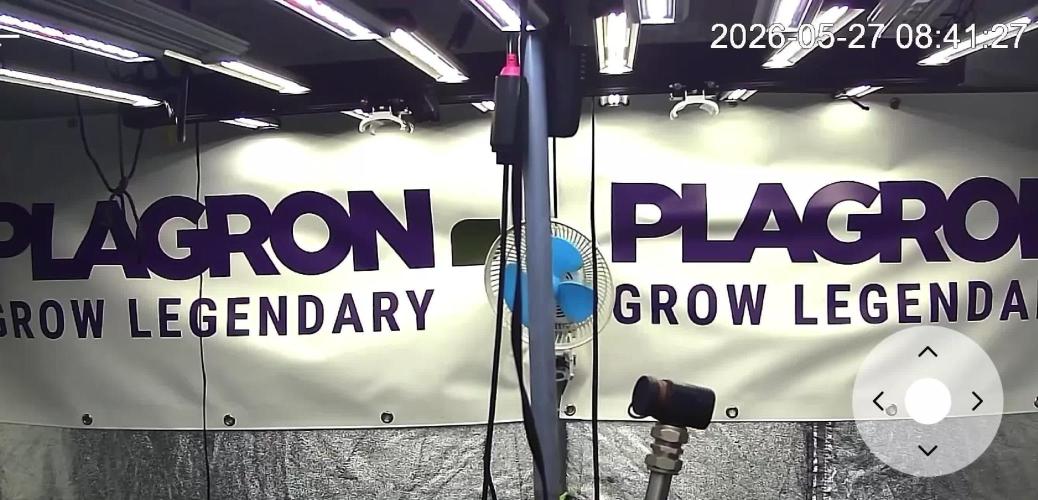
While the entire 8×8 Adventure is progressing beautifully under our 12/12 From Seed experiment, she and her sister have clearly decided they aren’t waiting for anyone. Both have entered flowering noticeably earlier than many of their neighbors, already stacking fresh white pistils and showing that unmistakable transition from vegetative growth into reproductive mode.
Whether they’ll ultimately finish well ahead of the others or simply settle back into the group’s pace remains to be seen—but that’s exactly what makes phenotype hunting so fascinating. Every day brings another lesson.
This diary is another chapter in documenting that unique journey.
⸻
🌱 Life Inside the 8×8 Adventure
The room continues to evolve into exactly what I hoped this experiment would become.
Multiple cultivars…
Multiple phenotypes…
One environment…
…all responding in their own completely unique ways despite receiving identical treatment.
Watching these differences emerge is one of the greatest rewards of this project.
Pink Rozay Auto B isn’t the tallest plant in the room, nor the widest, but she carries herself with incredible confidence. Every day the structure becomes a little more refined, with new flower sites appearing throughout the canopy while maintaining a compact and manageable shape.
She may not demand attention…
…but she certainly earns it.
⸻
🌿 Gentle Training, Better Light
Training continues to be extremely light and intentional.
Rather than forcing the plant into unnatural shapes, I’m simply guiding her architecture little by little.
Low Stress Training continues to spread the branches outward while preserving the natural growth momentum.
Combined with regular leaf tucking, more light now reaches the lower developing shoots without removing healthy foliage unnecessarily.
It’s amazing how much difference simply moving a few leaves can make.
Every exposed node becomes another opportunity for a future flower site, helping create a more balanced canopy while allowing airflow to penetrate deeper into the plant.
Sometimes the smallest adjustments deliver the biggest results.
⸻
🌸 Racing Into Flower
One thing is becoming increasingly obvious.
Pink Rozay Auto B is moving.
Fast.
The top flowers are already producing beautiful clusters of bright white pistils, and several lower branches have joined the race as well.
Compared with many of the surrounding plants, she’s clearly a step ahead in flower initiation.
Whether this means she’ll ultimately finish earlier or simply started blooming sooner is impossible to know at this stage—but that’s part of the excitement of documenting every single week.
Nature always has the final word.
⸻
🌡️ Summer Challenges Continue
Summer growing always keeps us humble.
Even with the air conditioning working around the clock, keeping temperatures under complete control during the hottest days remains one of the biggest daily challenges.
This week the environment averaged:
• 🌡️ Day Temperature: 33°C
• 🌙 Night Temperature: 25°C
• 💧 Relative Humidity: 63%
• 🌱 Root Zone Temperature: 21°C
• 💦 Nutrient Solution: 26°C
• ⚡ EC: 1.35 mS/cm
• pH: 6.1
• 🌿 CO₂: 639 ppm
Considering the outside temperatures, I’m genuinely pleased with how stable the room has remained.
The plants certainly don’t seem to mind.
Healthy color, vigorous growth and strong turgor continue to suggest they’re adapting very well.
⸻
Feeding Program
This week the feeding schedule remained simple and consistent using the Plagron Terra line:
• Terra Grow — 1.8 ml/L
• Power Roots — 1 ml/L
• Pure Zym — 1 ml/L
• Sugar Royal — 1 ml/L
The combination continues to promote vigorous vegetative growth while providing plenty of support as flowering begins.
No need to complicate things.
Healthy roots continue to build healthy flowers.
⸻
🔬 Looking Forward
Over the coming week I’ll continue monitoring her carefully.
If she keeps flowering at this pace, she could become one of the earliest finishers inside the entire 8×8 Adventure.
Or…
She might simply be an early bloomer before settling into the same finishing window as everyone else.
Either outcome is exciting.
That’s exactly why I love running multiple genetics together—every phenotype tells its own story.
Pink Rozay Auto B has definitely captured my attention.
Now it’s her turn to show us what she’s truly capable of.
⸻
💚 Thank You
As always, thank you to everyone following this adventure.
Every like, every comment, every question and every bit of encouragement makes these journals even more enjoyable to create.
A huge thank you to GrowDiaries for providing a place where growers from all over the world can share knowledge and learn together.
Massive appreciation as well to Plagron for supplying the nutrition driving this entire run, and to Zamnesia for providing the genetics that make this project possible.
Finally…
Thank you to everyone following the entire 8×8 Adventure from seed to harvest.
Every week brings us one step closer, and I can’t wait to see where Pink Rozay Auto B decides to take us next.
Growers Love and happy growing! 🌱💚


Likes
30
Share


@Plihan
Follow
Hi.подожду пока высохнет вода в горшке у одного wc ,созрел.остальных подожду ещё неделю.другому wc 350 ppm залил химии ,теперь только органику
Likes
6
Share


Likes
11
Share

@Growfather1
Follow
Hello everyone,
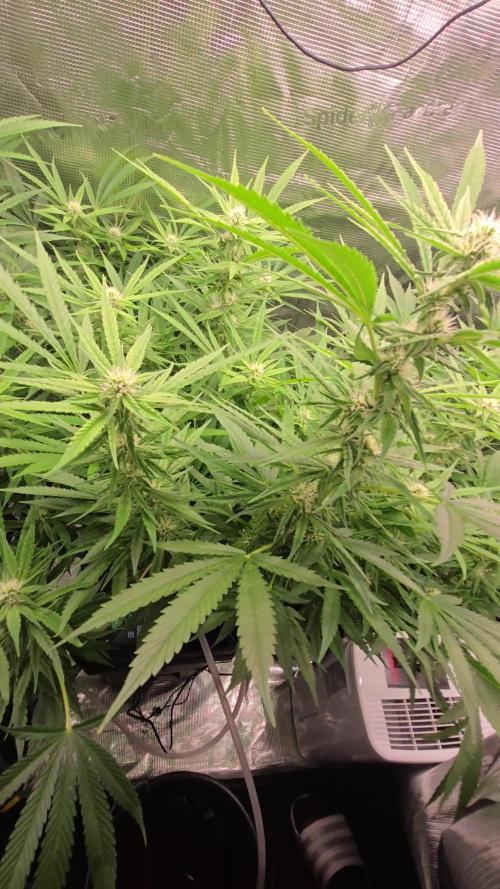
The weeks are flying by in the tent the amnesia fast is drink more and more consuming about 10 liters per 3 days.
She will get her last defoliation in a couple of days and then she will get almost no stress from my growstyle.
I placed a dehumidifier in the tent to counter high humidity 67% when the lights are off. I'm pulling about 5 liters of water out the dehumidifier per day.
Let's see how she looks next week after the defoliation.
Thanks for stopping by and have a nice day.
Best regards,
Growfather


Likes
2
Share

@eldruida_lamota
Follow
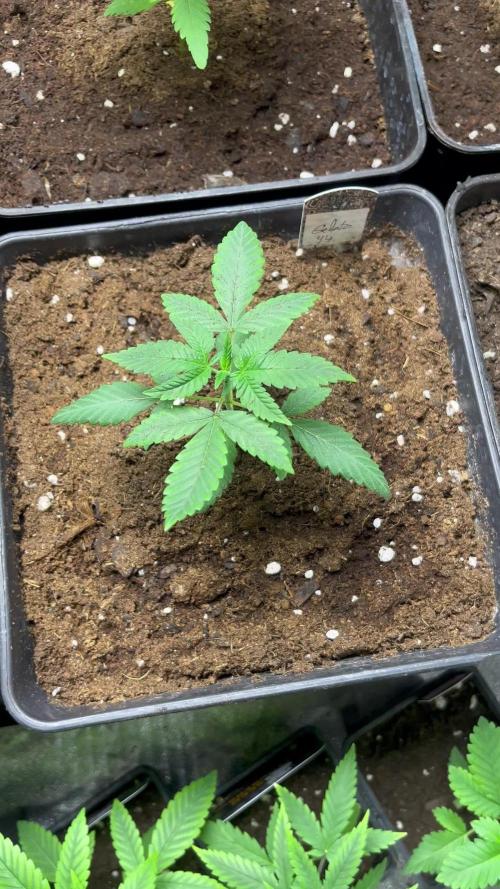
Vamos familia, actualizamos la cuarta semana de vida de estas Gelato 44 de RoyalQueenSeeds.
Tuve problemas con la temperatura que estuvo alta 28/26 grados y humedad dentro de los rangos correctos, la única queja es la temperatura, 16 horas luz, 8 oscuridad, estiraron un poco, pero van lentas por el momento, que cojan fuerza.
El trasplante a sido realizado a la maceta definitiva, 7L con sustrato Top crop.
Hasta aquí todo, Buenos humos 💨💨💨