


Likes
Comments
Share


Likes
7
Share


@nectarinepasta
Follow
New leaves still discolored but growing apparently correctly. Possible reasons:
- genetics (?)
- heavy fertilized soil - Batmix from Plagron was used (?)

Likes
12
Share


@CCSAUTOGROW
Follow
2nd week of flower for Blue Dream Auto! Pushing all her energy into creating flowering sites & stretching nicely. This girl has a lot of nice tops!!! She was thick with foliage so I did a final major defoliation & opened up the center of the plant for light penetration & airflow. She is smelling wonderful 💪. Two carbon filters running!

Likes
66
Share


@DogDoctorOfficial
Follow
i decided its time to start flushing this girls, so for this week only i will give them some enzymes and conditioner and after that just water for the next couple of weeks , lets see how long it will take them to finish 😅😆 so far I’m pretty happy with all of them, nothing to point out all is going as supposed 🙏💚 keeping my Par and VPD the same for now but soon i will start lowering them so that by the ending of this cycle I’l finish around 450/600 Ppfd
Week 8 day 50 since flipped to 12/12, I’m flushing and all is going as nomal, starting to fade out and I’m loving the frosty levels so far 😅🤩💚💚💚🙏🙏🙏
No idea why this doesn't allow me to crate a new week but I’ll keep updating here
Day 59 F And they are getting closer and closer but stil not ready, checking tricomes every day but all still very clear to my taste 😆 i think one more week at least, let’s see how they roll 🙏💪💚
Day 63 F And they are close but not there yet 😅 provably next couple days , I’ll keep on checking 😆 patience is a virtue, specially in this faze 💚😅
Week 11 day 72 FLower and j just gave them last watering 😅😁 they will have the day to enjoy lights as from today there will b no more of it for this girls 😅 i will do a 48h dark before harvest to increase more the tricomes production and the thc/cbd levels . From there hehehe we know whats coming from there , but lets wait for that time to comment on it 😆😅😁
Growers love you all see you on harvest mode asap hihihi
Ppfd- 1400 wUmol/m2s
VPD-A 1.51 kPa
Girls :
Tropicana Poison @sweetseeds - 7X
Chocolate Skunk @00seeds - 2X
Badazz Cookies OG @seedsman- 3X
Lights 2X Lumatek Zeus 465W Compact Pro @ 100%
All i Grow is medicine for myself, i do it with love for the love 💚💚💚
Growers love to you all💚💚💚


Likes
3
Share

@Wizardgreen317
Follow
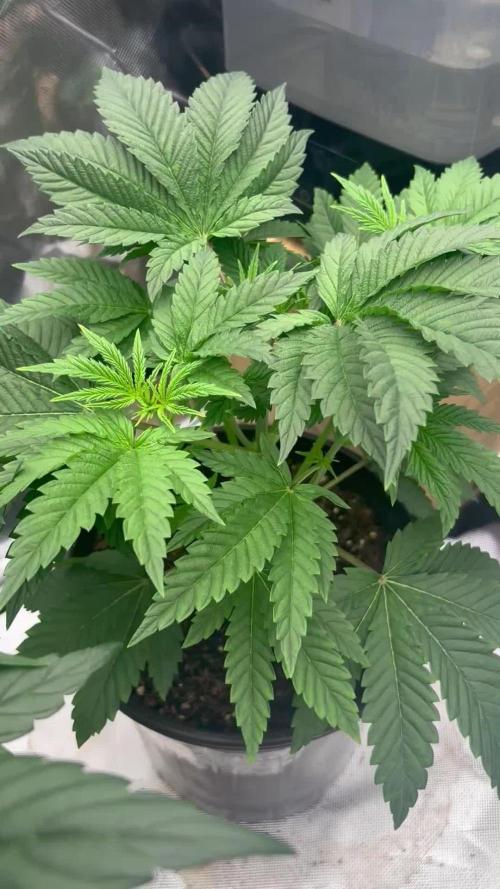
Well I see one has herm or look like was about so it got cut from the roster , other that I’ve never seen or grew a plant with 11 fingers so I’m pretty stoked they grow fast and other is growing slower . But great looking plants

Likes
2
Share

@OB-GYN-Kenobi
Follow
Chapter 18: The end.
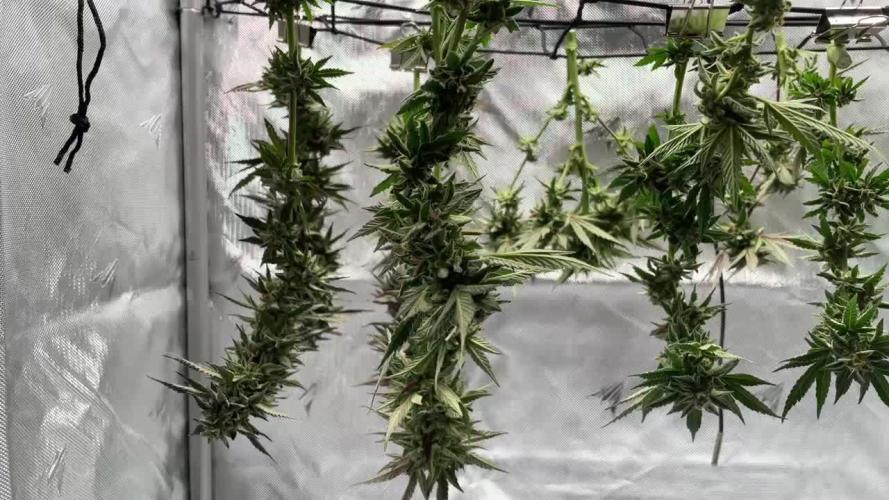
Cannabonsai was really starting to run out of juice, the tips of her larger sugar leaves were starting to show the same likely Ca / P deficiency as her fans, so I knew it was time. Duckfoot probably could've stacked another week or two, but I'm using the tent to dry, and I do prefer effects on the zippier side - so they both got the chop.
Since this was mostly an outdoor grow and they had recent issues with caterpillars, I decided to do a bud wash. One look at that water and no regrets.
Removed the fan leaves and hung full branches up to dry in the 60% humidity tent, though averaging a little warmer than I'd like at around 70 degrees. After about a week the hay smell dissipated, the smaller buds were moisture testing around 11%, so I bucked the branches into six-inch chunks and then let them sweat in paper bags for a few more days, rotating and airing out every several hours...just like the Grove bags say to do.
When each bag stabilized around 62% humidity, I trimmed everything. Final yield dry was 1.7 oz (48g) for Duckfoot, and 1.5 oz (43g) for Cannabonsai, with an additional ounce (31g) of dry trim. I already know I can do better on the next grow. :)
Early flower already smokes wonderfully - good taste, no hay, extremely potent, I would be very happy getting this from a dispensary. It's all in Grove bags now, can't wait to see how it cures up.

Likes
13
Share


@XoticGROW666
Follow
🍓🍌🍧🍨
NEXT YEAR WII RUNIN HER AGAIN IN FULL SUN CUZ SHE NEED ALOT OF SUN ☀️


Likes
7
Share


@StonedandSteady
Follow
1st Day of Flower: 2nd Feed Humboldt
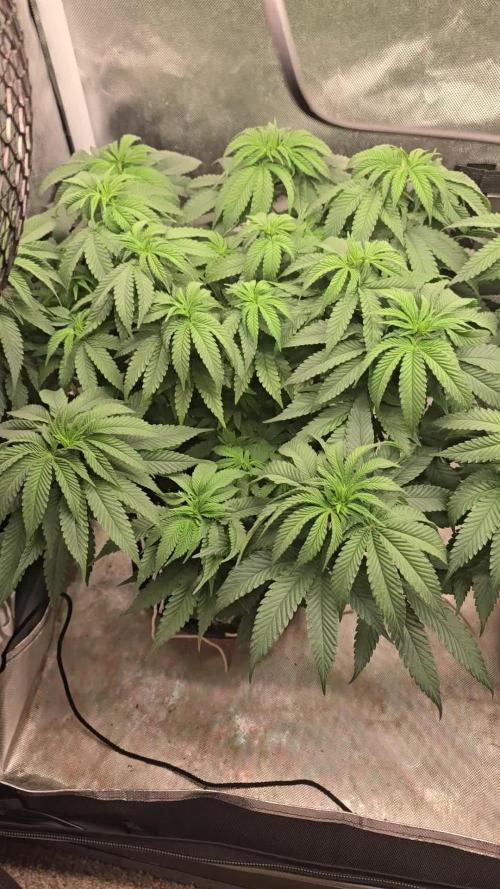
Let's Grow and Stretch Out to Fill your Mighty Branches with Giant Gorgeous Budz Ladies! Happy Birthday HoneyBuns!!! I Love you so Much and Thankful to be your Man and Husband! It's been a few days since I gave the Ladies thier 2nd Feed of #HumboldtCountysOwn Nutrients and they look Super Awesome!!! We'll definitely Grow back to everything here soon! I'm Glad it's May 1st and Flipped to Flower and also to Celebrate my Wonderful and Beautiful Wife's Birthday!
11th w/ Veg and Flowers Update #Pre-Sexed🚺 #SuperCropped #Defoliated #Lollipoped
Good Day and Happy Growing Everyone! These Ladies were Growing into thier 11th Week of Veg and Looking Totally Tight and Phenomenally *Femed* from the Right!
#Pre-Sexed 4/9/21 #Opium/#PabloEscobar *Fems* breed by Team #DivineSeeds #DivineSeedsSquad #DivineSeedsBreedingCompany and #SuperCropping continued! I'm Very Excited and Extremely Gracious!!!
Heck Yeah Growmies and Growmets!!! Check Out these Confirmed Females with thier Wild Pistol Hairs popping and I'm still Training and Widening them Out with #SuperCropping Everything looks Expanded and Growing Great!
After #SuperCropping the plant will Grow Bushier, Produce More Buds, and possibly even Produce More THC! This is how the plant naturally responses to danger and protects itself! Growers take advantage of this technique to get Bigger Yields and More Potent Buds than would be produced otherwise!
Getting Trained out into thier 11th Week of Veg and Looking Mighty Fine!!! Thier getting Humongous and Hearty in thier 10 gallon Grow Bag from Broski #www.as420.ca These Cannabis plants are Camping out in the Closet for a week or so! Lol
This is my 2nd run using the Osree.Light QB1000w and Everything is Mesmerizing!!!
My #Opium and #PabloEscobar *Fems* from #DivineSeeds Regs: SalamiLegF3's×2 and FireAlienRomulan look$ Outstandingly Awesome and Growing Up Phenomenally Fine into thier 11th week of Veg in our 2- 10 gallon The Grow Bags from Broski #www.as420.ca and also 2- 5 gallons as Well! Our others are Super and Breed by #thehumancannabiniod #AlienBloodGenetix #TNBNaturals #Foop
Yo!!! Thanks Again for All the Love and Support my fellow Growmies and Growmets!!! These Magnificent and Magical Ladies were Growing in our 48×24×60 ViparSpectra Official Club 🌿 ®️ Grow Tent and under our #Osree QB1000w and #GrowStarStore Kokokala QB1000w and our Purple Rose Cutting×2, Aloe Vera Cutting, Maters×3, Morel Mushroom, Lavender×3, Sunflowers×5 and The 6 Brand New and Fresh Starts are Wonderful with a Huge Hint of Fantastical Fire is my #SalamiLegF3×2 by Broski #thehumancannabiniod #DankFlowGenetics #EastCoastSeedBank #FireAlienRomulan by Broski #AlienBloodGenetix my #PabloEscobar and #Opium by Team #DivineSeeds #DivineSeedsBreedingCompany We Grow with #Growatt 600w with #FoopOrangicBioSciences and #TNBNaturals The Enhancer Co2 Despersal canister and ph'd them w/ Declorinated watering w/ TNB ph Up and Down! Totally Top Quality Topz all Around! Thanks Again #GallowGlas420 #HarleyGrower #thehumancannabiniod #AlienBloodGenetix #TNBNATURALS #FoopOrangicBioSciences #www.as420.ca #divineseeds #divineseedssquad #divineseedsbreedingcompany #BioFlux Family's and Teams!!! Your Genetics are Merry Magnificent, Mega Marvelous and Mighty Medical! Love um!!! I really Can't stress enough how Thankful and Grateful I am of All of you and what you've Shared with Us! Means the World!!! It's definitely a Pleasure being able to Grow with these Phenomenal Grow Lights! Please Enjoy! BudBrothers4-Life! Cheers Famz!!! Much Props and Much Topz!💯🔥 #Osree #GrowStarStore #Growatt #TNBNaturals #TNBTeam #FoopOrangics #GrowYourOwn #Bliss
HumboldtCounty'sOwn:
Email: [email protected]
Phone: (707) 725-4119
Toll free: (866) 872-9434
Humboldt Bottling
Po Box 429 · Fortuna, CA 95540
HumboldtCounty'sOwn Website Link: https://humboldtcountysown.com/
HumboldtCounty'sOwn Instagram Link: https://instagram.com/humboldtcountysown?igshid=1qj809qkkwych
https://instagram.com/divine.seeds?igshid=1r90iwe9xiwz8
https://instagram.com/thehumancannabinoid?igshid=17k159pumklkq
https://www.instagram.com/alienblood_genetix_official/
https://instagram.com/as420.ca?igshid=1f116alw054wp
The Grow Bags: https://www.as420

Likes
5
Share


@Gingercannacat
Follow
Week two had some challenges, weather started getting cold, night temperature reaching 17- not good- decided to stress them out with one day of 24 hours of light to adjust the 4 hours night time to be during the day to maintain good temperature thru out the day.. Transplant done into 11 L pot, fed them with plagron grow 2 ml and 1ml power roots and 2 ml vita Race spay on leafs. I will do the same every 5 days from now on. Will top one and Lst the other one without topping just for comparison.

Likes
34
Share

@DRXXI_GER
Follow
🌱 Auto-Flower | Ernte: Tag/Day 75/76
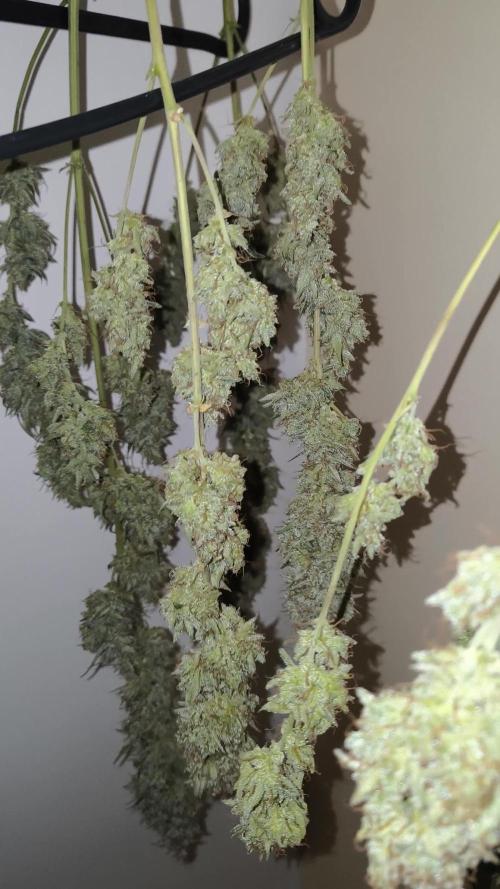
Apple Strudel Auto wuchs im Vergleich zu den anderen deutlich höher, blieb aber stabil. Der Duft war süß und fruchtig,wie echter Apfelstrudel. Die Buds sind kompakt, harzig und der Ertrag wirkt unfassbar hoch.
Bin gespannt, was sie trocken auf die Waage bringt. Updates folgen nach dem Trocknen🍀🌱💚
---
Apple Strudel Auto grew noticeably taller than the others, yet stayed sturdy. The smell was sweet and fruity, just like real apple strudel. Buds are dense, resinous, and the yield looks amazing.
Can’t wait to see the dry weight. Updates coming after drying🍀🌱💚


Likes
90
Share


@DreamIT
Follow
🍊🏵️ Red Mandarine x9 SoG X ViparSpectra XS1000🍊🏵️
🏵️8.6 ...
🏵️9.6 Last day before harvest, yeah !!!!! It is really gorgeous !!!
🏵️10.6 ...
🏵️11.6 ...
🏵️12.6 ...
🏵️13.6 ...
🏵️14.6 Latest photos of the plants still in pots, they are already hanging ready to be cleaned
_________________________________________________________________________________________
❓ Are you new to the world of the cultivation and don't know where to safely buy your seeds?
😮From SweetSeeds you can find award-winning, sweet, fast, fragrant, beautiful, and delicious genetics !!!
✅http: //bit.ly/SweetSeeds_
______________________________________________
👀 Are you looking for a good lamp to start with? 👀
🌞Viparspectra has something more than the others, take a look at their site.
⏩ Use "GDVIP" for an extra discount or "ViparDreamIT" for an extra 5 %% discount
👀 Search for it on Amazon
✅Amazon US: https://amzn.to/30xSTVq
✅Amazon Canada: https://amzn.to/38udUVe
✅Viparspectra UE: bit.ly/ViparspectraUE
👀 Watch my ViparSpectra XS1000 unboxing on YouTube, leave a like and write to the channel 🦄
✅http://bit.ly/UnboxingViparSpectraDreamIT
______________________________________________
📷🥇 Follow the best photos on Instagram 🥇📷
https://www.instagram.com/dreamit420/
🔻🔻Leave a comment with your opinion if you pass by here🔻🔻
🤟🦄💚 Thank you and enjoy the growth 💚🦄🤟
Processing
Likes
6
Share


@Ferenc
Follow
I spend less time with them my friend usually look after them. She went on holiday so I will be with them lucky ones. They are okay big plants flowering nicely I constantly removing old yellow leafs. All the same they do well :).


Likes
9
Share


@NewOfficialDrillInvaders
Follow
Smell like 🥦🍋 but like skunky little bit pungent smell kick good looks good just look at the video 😉love that orange bud looking colour

Likes
127
Share


@SwissKush
Follow
Day 43 - growing very well, preflowering
a. defoliated some of the under runt growth
b. bumped up the nutrients to my preflowering blend, 850ppm in DWC now, offsetting the measurements based of what is already in the res.
c. PH is 6.5, the plant is liking the dwc, very similar growth to West Coast OG
d. Fastbuds specifically recommends 6.5 PH for this strain, we are following directions
e. performed some very light LST to the outside branches
Day 44 - the very light LST is great
a. the plant is really stretching out
b. there are going to be many colas
Day 45 - drinking alot of water
a. growing very well, vegging hard
b. added 4L to the DWC, 1000ppm
Day 46 - she is stretching upward
a. everything is going great, I love Fastbuds!
b. when all other breeders are failing us, Fastbuds shines through
Day 47 - growing well
a. all is well in the world with our plant!
Day 48 - growing well all over
a. she is stretching upward, lowering the light a bit to encourage even more growth, 45cm away
Day 49 - what a monster!
a. all is growing well, in Geneva for the week, my grow partner is sending photos to me!
Likes
23
Share


@elementhc
Follow
3 autos are getting cut this week probably the last watering today.
The other 4 are a few weeks behind.
The big Photos are straight monsters Ethos genetics are amazing 👏.
They are in week 2 since flip.
The small photos are around week 5 or 6 veg they just got put under their own light for the first time SF7000 doing 50% at about 22" just to see how they react to the new light. They were also translated and topped yesterday.


Likes
3
Share

@Hren_Morjovii
Follow
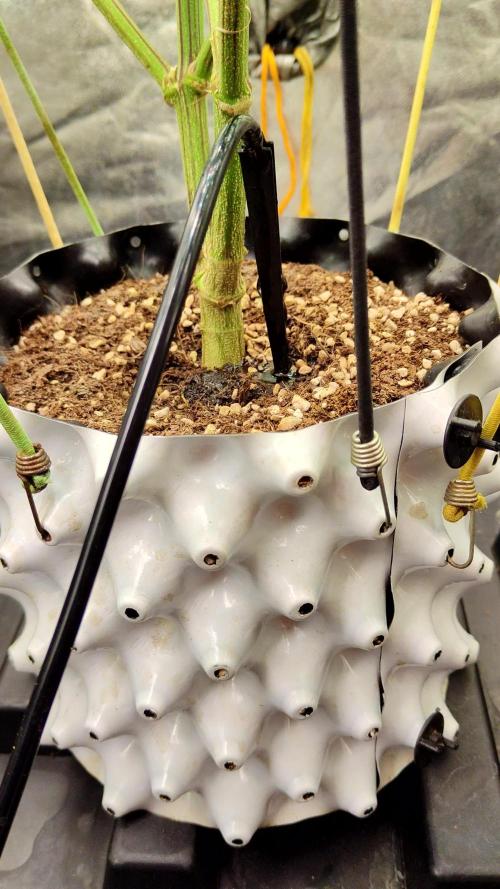
Клон. Пролил 1 раз Дельта 9, 4 мл/л 1 ЕС. В конце недели сделал дефолиацию.
Likes
25
Share


@OZDAOgrow
Follow
This week I defoliated all the flowers, did Bruce Banner's topping, increased the light to 75%, and continue to do LST. I think to give 2 more weeks of vegetation, defoliation once a week.
Next I'll transfer to 12/12 and we'll see 🙃
Likes
6
Share


@DE_BW
Follow
The plant is now in the final ripening stage and is clearly approaching harvest. Bud development is fully complete, with swollen calyxes and no further vegetative growth. Most pistils have darkened and receded, while trichomes are predominantly cloudy with the first signs of amber appearing. Resin production is very heavy, showing strong frost and deep purple coloration alongside a natural fade of the fan leaves. Feeding has been reduced to support a clean finish, with the next 7 days focused on controlled ripening and terpene preservation before harvest.