


Likes
Comments
Share


@603grower
Follow
Today marks day 21 girls are looking great! They are stacking beautifully. Finally starting to get some smells very weak though. But I am seeing frost on the runts layer cake and the rucu cucu og. It’s gonna be water based not this week sense I’ve gone heavy the last few weeks
Day 19 girls got some recharge and 10 ml of surge. Threw in a tbs of the terp tea bloom but I don’t think it did anything since it’s was a small amount and I diddnt aerate it.
Day 16-17 small defoliation with a lollipop


Likes
10
Share
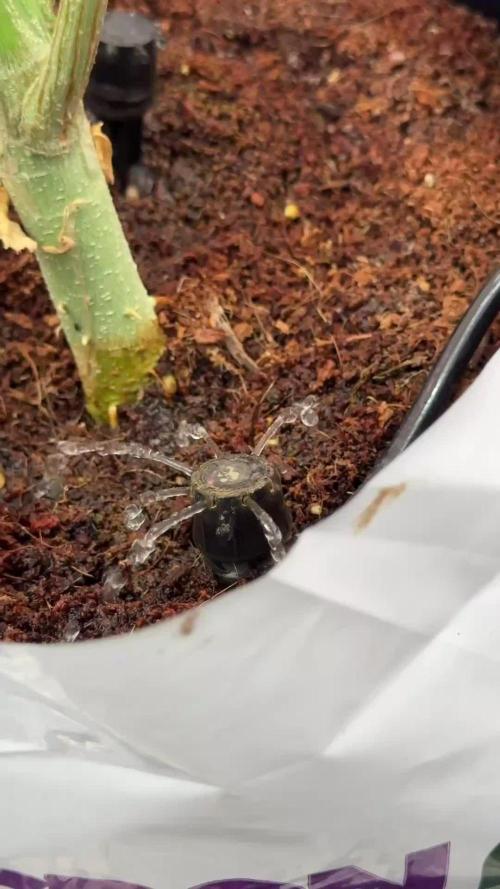

@DogDoctorOfficial
Follow
💙 Project Blue Tent – Week 10
Blue Waffle F1 – Pheno A
🌸 Sometimes the Best Thing You Can Do Is Watch
Hello everyone, and welcome back to another chapter inside Project Blue Tent! 💙🌱
If you've been following this project, you'll know that the last few weeks have been anything but quiet.
We had aggressive stretching.
We had to reorganize the entire vertical space.
We moved the carbon filter and extractor outside the tent.
We raised the LEDs.
We installed a second SCROG.
We performed a major defoliation.
We added another fan underneath the canopy.
We adjusted the nutrition.
Basically...
we gave ourselves plenty of work. 😂
But this week?
Not so much.
And honestly...
that's exactly how I like it.
Because when the plants look this good, sometimes the smartest thing a grower can do is step back and watch.
🌿 PHENO A – NOW WE WATCH THE WORK
Blue Waffle F1 Pheno A is looking absolutely beautiful.
She's still standing at approximately 145 cm, with an enormous amount of flowering structure developed throughout the plant.
And this is where I'm particularly enjoying the project now.
We're finally getting to see the results of all those decisions we made earlier.
The long vegetative period created the structure.
The first SCROG helped organize it.
The stretch showed us where we needed more control.
The defoliation opened the plant back up.
The second SCROG gave those tall flowering branches additional support.
Moving the ventilation equipment gave us valuable vertical space.
Raising the LEDs gave the tops more breathing room.
And the additional airflow helped keep everything moving through that newly opened structure.
Now?
We're watching the plant do its thing.
🌸
✂️ THE RESULTS OF THE DEFOLIATION ARE BECOMING VISIBLE
One of the things I'm paying particular attention to this week is the result of the heavy defoliation we performed previously.
At the time, the plants looked dramatically different.
We removed a substantial amount of foliage because the canopy had become extremely dense.
But the objective was never simply to make the plants look cleaner.
The objective was to create a more functional flowering structure.
And now we're seeing why.
There is much better visibility through the plant.
The flowering sites have more space around them.
Air can move through the structure more easily.
The individual branches are much easier to follow.
And most importantly...
the plant doesn't look like it's struggling because of what we did.
Quite the opposite.
She's continuing to develop beautifully.
This is the part of the process I find fascinating.
You make a structural decision weeks earlier...
and then you have to wait.
You don't immediately know what the final result will look like.
Now we're beginning to see it.
And I have to say...
I'm very happy with what I'm seeing. 💙
💡 INTRODUCING THE LUMIFLORA UNDER-CANOPY LIGHT
And because we're apparently incapable of leaving the setup completely alone... 😂
we've introduced another piece of equipment.
This week, we're adding the LumiFlora 150W full-spectrum under-canopy light.
The reason is very simple.
These plants have become BIG.
Really big.
😂🌿
At this stage, the upper canopy is receiving plenty of light from the main fixtures.
But once you have a plant with this much vertical structure and this much foliage, the lower portions naturally receive less direct light.
That's simply what happens inside a dense canopy.
So instead of trying to solve that by constantly removing more foliage, we're experimenting with providing additional light from underneath.
The LumiFlora unit is 150W full spectrum, with additional emphasis toward the red portion of the spectrum.
We're positioning it underneath the canopy so that we're able to provide supplemental light to areas that would otherwise receive considerably less from above.
And I'm particularly interested in watching how the lower flowering sites respond over the coming weeks.
We're not trying to replace the main lighting.
We're complementing it.
The main fixtures continue doing the heavy lifting from above.
The LumiFlora is simply giving the lower canopy another source of usable light.
And now...
we watch.
🌱💡🌸
🕸️ THE CANOPY IS FINALLY WHERE WE WANT IT
The second SCROG is also doing exactly what we hoped it would do.
The flowering branches are now supported within the upper structure, rather than being allowed to move wherever they want.
This is particularly useful with Pheno A because she has so much vertical growth.
The first SCROG helped create the architecture.
The second is now helping support that architecture.
And together they have transformed what could have become a very difficult flowering structure into something much more manageable.
Looking through the canopy now, you can actually see the work we've done.
And that's probably my favorite part of this week.
We're not building anymore.
We're seeing the result of the building.
🌬️ AIRFLOW – LETTING THE CANOPY BREATHE
The airflow arrangement we established last week is also staying in place.
With the additional Zamnesia clip fan underneath the canopy and the upper airflow working across the plants, we're keeping air moving through multiple levels.
That becomes particularly important now that we're supplementing the lower canopy with additional lighting.
The goal is to keep the environment moving and avoid stagnant pockets developing underneath the plants.
Again...
nothing dramatic this week.
And that's good.
😂
When everything is working properly, you don't need to keep changing it.
NUTRITION – KEEP FEEDING, KEEP WATCHING
The girls are continuing with the established PLAGRON Hydro feeding program.
The current recipe remains:
PLAGRON Hydro A — 2.2 ml/L
PLAGRON Hydro B — 2.2 ml/L
🌱 PLAGRON Hydro Roots — 1 ml/L
🌸 PLAGRON Power Buds — 1 ml/L
pH adjustment as required
The plants are responding very well to the feeding, so there's no reason to make unnecessary changes.
That's another lesson I'm learning from this project.
When the plants are telling you that they're happy...
listen.
😂💙
There's no prize for changing something every week.
Consistency is part of the experiment too.
🌸 THIS WEEK'S REAL EXPERIMENT
So, what are we actually doing this week?
Honestly?
We're watching.
😂
We're watching how Pheno A develops after the major structural work.
We're watching how the flowering sites progress.
We're watching how the second SCROG supports the branches.
We're watching how the airflow performs through the opened canopy.
And now we're watching what happens when we introduce supplemental 150W full-spectrum lighting underneath the canopy.
This is the point where I don't want to interfere unnecessarily.
We've already done the work.
Now we need to give the plant the opportunity to show us what that work achieved.
🌡️ CURRENT GROW CONDITIONS
🌸 Flowering: Week 10
📏 Height: approximately 145 cm
💡 Light schedule: 12/12
☀️ Day temperature: 27°C
🌙 Night temperature: 27°C
💧 Relative humidity: 61%
⚗️ pH: 6.01
⚡ EC: approximately 2.49 mS/cm
🌡️ Solution temperature: 26°C
🌱 Substrate temperature: 24°C
🌬️ CO₂: approximately 666 ppm
💦 Watering: approximately 1.6 L per plant / 24h
? Pot size: 8 L
💡 LumiFlora Under-Canopy: 150W Full Spectrum
🔬 SAME ROOM. SAME ENVIRONMENT. ONE VERY INTERESTING PLANT.
This is still one of my favorite aspects of Project Blue Tent.
We're documenting individual phenotypes while keeping the overall environment consistent.
Same room.
Same lighting environment.
Same irrigation.
Same nutrition.
Same cultivation philosophy.
And yet each plant still develops its own character.
Pheno A has certainly made herself known. 😂💙
She's tall.
She's vigorous.
She's heavily branched.
And she's giving us a fantastic opportunity to see what happens when a large flowering plant is managed through multiple stages of structural training.
Now we're simply waiting to see the flowers take over the story.
🌸 FROM TRAINING TO FINISHING
We've spent a huge portion of this project talking about growth.
Training.
Stretch.
Canopy management.
Defoliation.
Support.
Airflow.
Lighting.
But now we're entering a different part of the journey.
The structure is established.
The canopy is supported.
The room has been reorganized.
The airflow is in place.
The nutrition is stable.
And now the plant gets to concentrate on finishing.
That's why this week feels different.
There isn't a huge intervention to announce.
There doesn't need to be.
The work has already been done.
Now we're watching the result.
And sometimes...
that's the most exciting part. 💙🌸
💙 LOOKING AHEAD
Over the coming weeks, I'll be watching the response of the lower canopy particularly closely.
The LumiFlora under-canopy light is now part of the experiment, and I'm interested to see how the additional supplemental lighting influences the development of those lower flowering areas.
At the same time, we're continuing to monitor the upper canopy, environmental stability, nutrition, and overall flower development.
No major changes planned.
No unnecessary interference.
Just observation.
Because right now...
Pheno A is doing exactly what we want her to do.
And I'm very happy to let her continue.
🌸💙🌿
🙏 A HUGE THANK YOU
A huge thank you once again to Zamnesia for making Project Blue Tent possible and for giving us the opportunity to explore these Blue Waffle F1 phenotypes individually.
Thank you to PLAGRON for the Hydro nutrient line and for supporting the plants throughout this vigorous cycle.
A massive thank you to Mars Hydro for the irrigation and drainage system that keeps this ecosystem running smoothly.
Thank you to LumiFlora for the 150W full-spectrum under-canopy light, which we're now putting to the test as part of the next stage of this experiment.
And of course, thank you to GrowDiaries for giving us the platform to document the entire journey.
Most importantly, thank you to everyone following Project Blue Tent.
We've spent weeks building this canopy.
We've stretched it.
Bent it.
Supported it.
Opened it.
Reorganized the room around it.
😂💙
And now?
We're finally at the fun part.
We sit back...
we watch...
and we let Blue Waffle F1 Pheno A show us what she's capable of.
Until next week...
More flowers. More observation. Less interference. 🌸💙🌿
Growers Love, happy growing, and take care everyone! 🌱💙
Likes
6
Share


@DisTentAint4Campin
Follow
She growing nice and healthy even with some cold nights I had forgot to turn the heat on still had the ac on and it was like 65° in the house lights off no bueno but she rocking got the budtrainer bud clips on her and topped her

Likes
29
Share


@XiggYgreen
Follow
Hi all growers 🌱
She is like she was never in growbox. Beautifully she grows also on balcony..
I will just give her some but little bloom nutrients and watter her when she wants to 🌱 Regulary but I will watch over she
Happy growing I wish for all 🙏💚🌱

Likes
2
Share


@Elguacho420
Follow
Buenas a tod@s... Bueno otra semanita más para las niñas... Las gorilla zkittlez... De momento va todo bien, todo en orden, las eh pasado a la maceta de 7 lt para q ya estén ahí, un buen sustrato y un poquitito de nutrientes para las raíces... A esta altura no podemos hacer mas q darles cariño y dedicación... De momento esto, luego más y mejor, a seguir trabajando duro... 💪🏻💪🏻 Buenos humos para tod@s... 😎⚕️💪🏻💪🏻
🇦🇷🤝🏻🇪🇦

Likes
11
Share


@Kitties_and_Colas
Follow
My suspicions of some kind of infection with the plant on the right was confirmed this week and I learned a new word "fasciation"...it's all over the internet but i've never heard of this before now...the plant continues to look worse and worse no matter what i do, a few of the older clones are starting to do the same thing so i threw them all out...The plant on the left looks on track with maybe 2 1/2 weeks to go..

Likes
7
Share


@HookahCli
Follow
d71
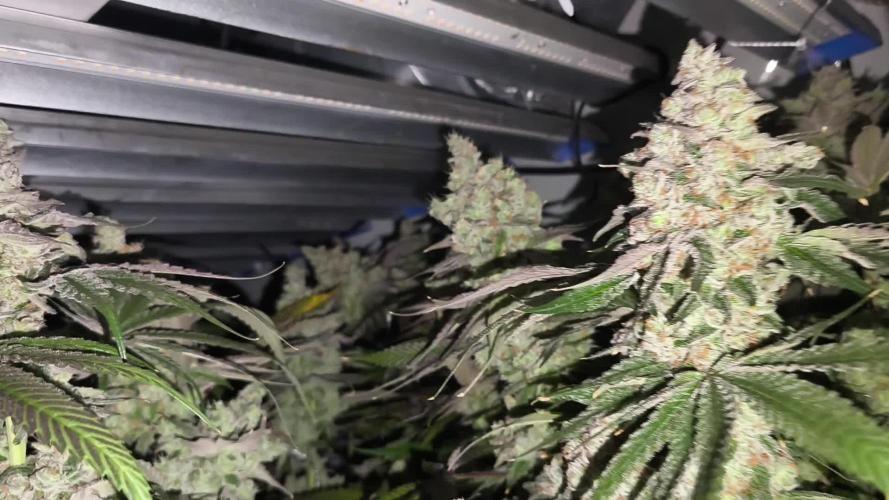
Se han cosechado 3 plantas de las 8, se han regado 3 que están mas avanzadas con kleanse y las 2 KOK que van más atrasadas en la floración, se les ha regado como la semana anterior nos quedan 5 plantas, pronto quedarán menos hasta terminar con este seguimiento.
He cosechado KOK1, luego LK y para terminar con el día KAK3, han sacado buen cogollo central, la LK esta super dura y se siente pesada., se ha pesado en húmedo, cuando se seque todo añadiré información sobre la cosecha de LK. KOK y KAK me esperaré hasta cosecharlas todas.
d74
Se han regado con igual, con Kleanse las que estan por terminar y las dos KOK que van mas lentas con TricoPlus, SugaRush y EnzymBoom.


Likes
Comments
Share


Likes
15
Share


Likes
17
Share


@P_Silas
Follow
Really loved this. Nothing more to say for now lol, it's been my first grow and grew her with 2 wild dwarfs and loved both, would grow them again. Really excited to try it out.

Likes
4
Share

@Organic473
Follow
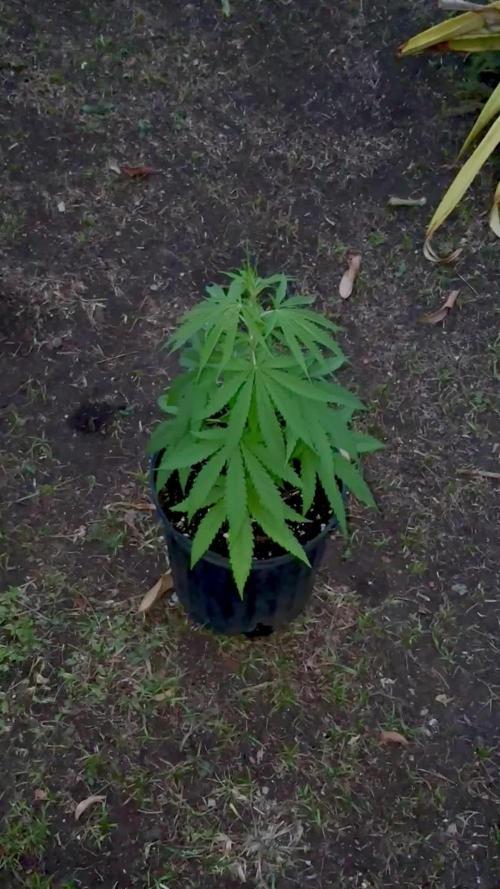
Transplant into a 1 gallon park pot he has three more weeks in veg and I would use the pollen on the female blueberries skunk.


Likes
48
Share


@Mz876
Follow
The beginning of Week 6 of Flower and boy is she getting stinky. I have high hopes for this plant to live up to her name .

Likes
7
Share


@Mr_nugs_lover_David
Follow
Beautiful pair of haze berries, both phenos #1 and #2 showing strong healthy roots and big leafs, can't wait to flower this ladies out, I Transplanted the plants after 17 days of being planted on February 2nd because the roots were super well developed and I considered that it was the right time to do so. So now they are in their new 11l house.
Likes
7
Share


@Whitemexican27
Follow
This strain was just what I was looking for. After the previous trauma of letting my plant grow WAY too tall, I went into this grow looking for something much shorter and manageable and this was exactly it. The tying down at times were a pain, but one of those things that’s better in the long run. The transplanting kind of screwed me up a bit. Not only did I not really fill the pot enough, but I put them in horribly. The soil was falling apart and it was just an ugly mess. Trying to OD the plants wasn’t part of the plan either but they bounced back just fine. All in all it was a very easy strain to grow. The dry amounts of each plant are as follows. Plant 1: 48.2 grams. Plant 2: 51.8 grams. Plant 3: 46.4 grams. Plant 4: 50.1 grams and Plant 5: 51.2 grams for a total of 196.4 grams (7.8 oz’s)


Likes
6
Share


@KannaGrowing
Follow
Toca cambiar las lamparas que hemos estado utilizando durante el periodo vegetativo, con un espectro lumínico más azul (entre 5000ºK y 6500ºK), por unas mixtas de 2500ºK.
Más adelante las cambiaremos por las definitivas 2000ºK.
Es importante decir que realizar fotos o videos bajos lamparas de floración, no ofrece un buen resultado... Así que a partir de este momento voy a utilizar un filtro corrector en las imágenes que muestro.
Sigo regando cada tres días, alternando entre agua+Bio Rhizotonic+Bio Vega y riegos solo con agua.
Llevo un diario de cultivo en una libreta y los principales cambios en una pizarra.

Likes
26
Share


@KingSalomonsWeed
Follow
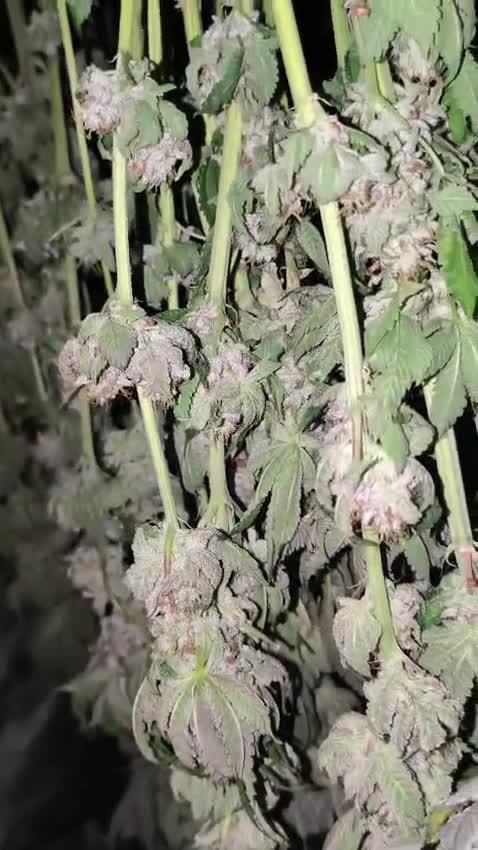
Nice lovely buds with an great smell of... Gelato(sry better taste than any weed I smoked before) energy relaxing potent yielding anything good till great. A. Real keeper. Fast!
AND, the smell, is from roses.. karamel cookis., i never had this before sweet, but not overall. Another terpenes.. Nelks?? for Real! Like an GELATERIA if you open the door and you step inside.
Just Great...
Ahmm by the way... 😛 💪 Women can't resist this smell!!!
Damn 10 points i should gave. For real.
Its not normal. Good, good, 👋
Hallo, wenn ihr mich fragt ziehe ich die Gelato 41 fast der Gelato 41 vor. Schmeckte mir besser, sah schöner aus. Die fast Version.



Likes
10
Share


@jayizrollin
Follow
Fast buds genetics are freakin awesome, I can’t wait to try some more soon, Mephistopho is next though.
Total Weight was 78 grams Dry, I dried for 9 days, 65 degrees and avg of 50ish humidity, was perfect but it was stable.
Smells of candy gas, had a lot of larf and buds I just didn’t want to trim so I have 37grams of trim to get some keif out of. Thanks for checking out this awesome grow of mine!