


Likes
Comments
Share


@Lazuli
Follow
The flowers on this pheno are insane frosty rockhard. Really scared to smoke these 😂
I must say this is the first strain that can handle high humidity up to 79% (with lights off) and no sign of mold even on the other pheno 0 problems and we are now in the final week, i only hive rainwater every day untill runoff for the past 5 days the leaves are still dark so she got enough left to finish up
Amazing strain she also fits nice in a 4x4 with only 5weeks veg

Likes
12
Share


@Mikefromjax
Follow
It’s been one hell of ride but I enjoyed every minute these are your babies and there like real kids I only let them listen to slow jams lol 😂

Likes
Comments
Share

@RooftopFarmer
Follow
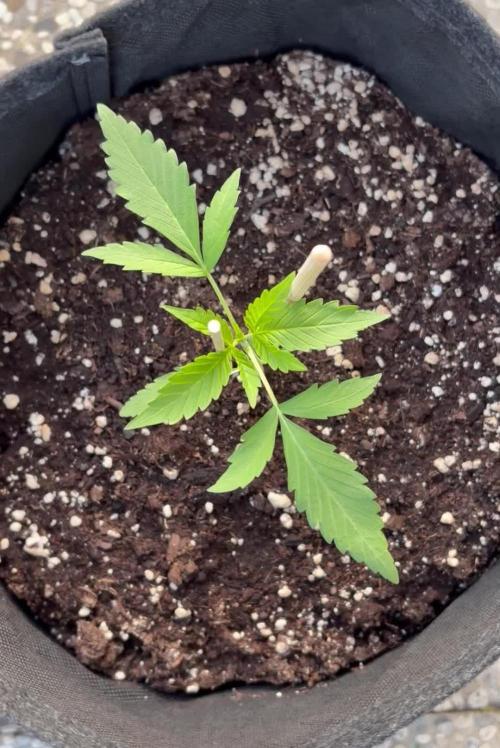
Banana Guava – Week 4 (Fast Buds Outdoor 2026)
Another week of great weather, which means Banana Guava is now living outside full-time, even through the nights. She’s getting as much direct sun as possible and responding beautifully.
I added some simple sticks to support the stem and keep her stable (still looking for an improved solution). She’s sitting at around 7 cm tall with a lovely, deep green color.
I also fed her lightly with BioBizz Fish-Mix and BioBizz Calmag. I’m staying ahead of any CaMg deficiencies this year after last season’s issues.

Likes
22
Share


@TechDCo
Follow
Week 3
15/06/2024
Lights On!
Switching to flower next week; maybe sooner!
16/06/2024
Lights On!
Time to get on the skateboard
June 16, 2024
The defoliated fan leaves. I'll just leave these here!
17/06/2024
Lights On!
I can't go any higher than 300watts in this small tent. I packed the sativa tent away.


Likes
50
Share

@TrickzGrowz
Follow
Servus Moin!
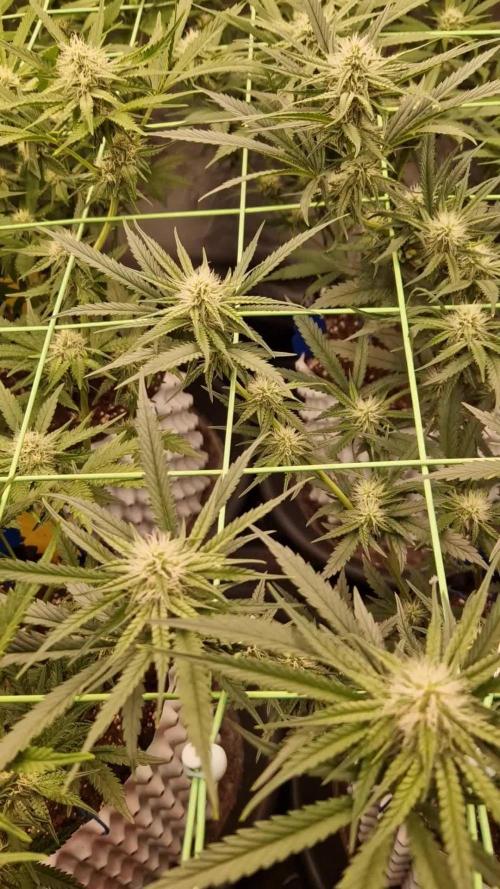
Die F025 macht sich prima. Die Buds werden immer dicker und man kann schon leichte süße Gerüche wahrnehmen.
Likes
4
Share


@Rko41
Follow
Jolie petit buisson 1,08 il resteras petit et touffu il débute les pistils blancs seulement !

Likes
6
Share


@captaincondor
Follow
no hermies or nanas so that's something to be happy about especially for me as I always seem to f***k things up in the flowering stage lol, looking forward to trying this strain shortly


Likes
73
Share


@Rwein93
Follow
Ciao ragazzi e bentoranti per i nuovi aggiornamenti!!!😉
Purtroppo ragazzi questa settimana non è stata delle migliori per i parametri. In Italia il caldo inizia a farsi sentire e nel box si sono raggiunte temperature di 30°C e l umidità è salita al 70% anche bagnando al minimo loro.😱
Le MimOrange crescono bene, forse il troppo caldo ha reso i rami più esili un po molli, ma tutto sommato crescono molto bene.👍
La numero 2 adesso misura 30cm. La numero 1 se non l avessi piegata sarebbe stata almeno 40 cm. Ottimo!
La numero 3 è più bassa e folta, penso che dovrò aprirla e pulirla un po.👌
Avendo cambiato zona di crescita non avevo calcolato il cambio di ph dell acqua del rubinetto e il fatto che non usi prodotti con un regolatore di ph incorporato mi ha tratto in inganno.🤦♂️
Ho misurato il Ph dell acqua dopo averla fertilizzata ed era di 7.7 così ho introdotto 0.25 ml di Ph Down e l ho portato a 6.27. Ora dovrebbe assorbire i Super nutrienti che gli stando alla grandissima!!!💪
Eh niente ragazzi! Speriamo che le temperature si abbassino di un paio di gradi, anche per noi perché si muore, e sembra solo l inizio.
Grazie a tutti per aver guardato e restate collegati per nuovi aggiornamenti.🙏
Buona settima e felice crescita🌱🌱🌱
P.S.
il video riprende le 3 talee varie all inizio, le Lemon tree, le MimOrange e 1 altra talea

Likes
11
Share


@Sejnik
Follow
Tento týden jsem provedl pořádnou defoliaci a odstranění nízkých větví, které se nedostanou na světlo.
Zakoupení odvlhčovače nepomohlo snížit vlhkost.. budu muset pravděpodobně v budoucnosti zalévat menším množství vody.
D82/19 Čtvrtek
Každá z holek dostala 1,5l vody bez živin.
Poté jsem rozpustil 2x RQS bloom booster tablets ve 13 litrech vody do které jsem přidal i ostatní živiny vypsané výše. Tento roztok jsem rozdělil mezi mé dívky.
Každá tím pádem dostala 3 litry vody a částečně jsem tím propláchl substrát jako prevenci usazování solí.
Likes
55
Share


@BodyByVio
Follow
Just got done with trimming the 4x4 @greenhouseseedco Super Silver Haze / @blimburnseeds Silver Surfer Haze tent.
The final yield is exactly 1000g plus some (kind of a lot)that I smoke in the last 2 weeks 😃
Also got 6, gallon size ziploc bags filled with good quality trim for concentrate.
To be honest I was expecting a little more but keeping in mind that this grow I did not supplemented with bottled CO2 I think I’m good with the results.
Definitely I enjoyed a lot this grow and I’ve learned even more.

Likes
2
Share


@Yiyis_Grow
Follow
Lámpara: Bestva Quantum Board LED LM301B
Sustrato: 2 Jiffy fino : 1 Floragard
Especies: Charlotte Dream CBD - Auto Dark Purple - Purple Kush - Triping 25 - Gelato Ice
Acontecimientos
1. Hoy 11/01/2022 se completarán las 10 macetas con tres plantas que ya germinaron y están listas para poner bajo la lámpara. Van a tener 1 semana de diferencia respecto a las otras 7.
2. Agua reposada, viento y Luz 20 h/día.
Buenos humos


Likes
10
Share


@Cauli
Follow
So far nothing special, everything seems to be fine.
She had some sunny days at the beginning, but weather got cloudy and relatively cold – this has slowed her growth for sure.
But want her to adapt well to her conditions, so only put her inside in really cold nights.
She got her endpoint directly on day 3, it's a 9L airpot. root was already at the bottom of the small starting pot. so maybe this stressed and slowed her too.
Let's see how she will grow the next days.
Video for this week will follow. Filming quality of my phone is not as good as would have liked it.
But working on it.
Likes
13
Share

@Kirsten
Follow
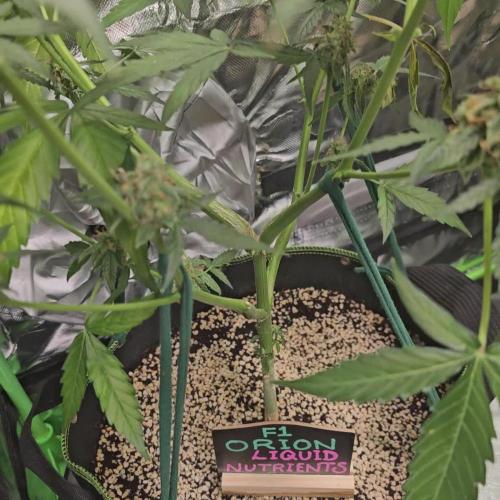
The twin Organic grow has been harvested on 18.8.25. Here we about a week behind that one, as I did not feed well enough. Hopefully next week she will be done, but lets see! This is definitely the smaller plant.
17.8.25:
I watered with 3L of dechlorinated water PH'd to 6.5 with;
💜 2ml Trace
PH: 6.5
PPM: 355.
Thanks for stopping by and hanging out 😁💚 ✌️ 🌱 🙏
Likes
12
Share


@2Stones1Bird
Follow
Checkout my Instagram @smallbudz to see the Small budget grow setup for indoor use, low watt, low heat, low noise, step by step.
21/12/2019 - Fed her 1.5l of 6.4PH water with 0,5ml of each: Grow, Bloom and Max, and 1ml of each: Heaven, Alga-mic and Vera, noticed almost no run off, I use about 1/3 of the nutrient dosage on the chart, to achieve about 200/300PPM (500 scale).
Did some light pruning also.


Likes
30
Share


@RakonGrow
Follow
Note :
+ jegliches Zubehör wird in der GermniationsWoche aufgelistet .
Ich hab keine Ahnung was es wiegt , da ich keine Zugwage hatte. Warten wir also ab was es an trockengewicht wirklich wird. Aber da ist viel Drann , bei 116cm größe ist selbst der kleinste Bud noch groß :))
Es sind nach 5 Tagen Trocknung bei 22°C und 55%rH genau 204g

Likes
5
Share


@terpasaurus
Follow
I transplanted all but the runt, because I was too busy this week to deal with everything. Still top watering for now, because I want the roots to get lower first before using the autopots.


Likes
12
Share

@Bread_n_Buds
Follow
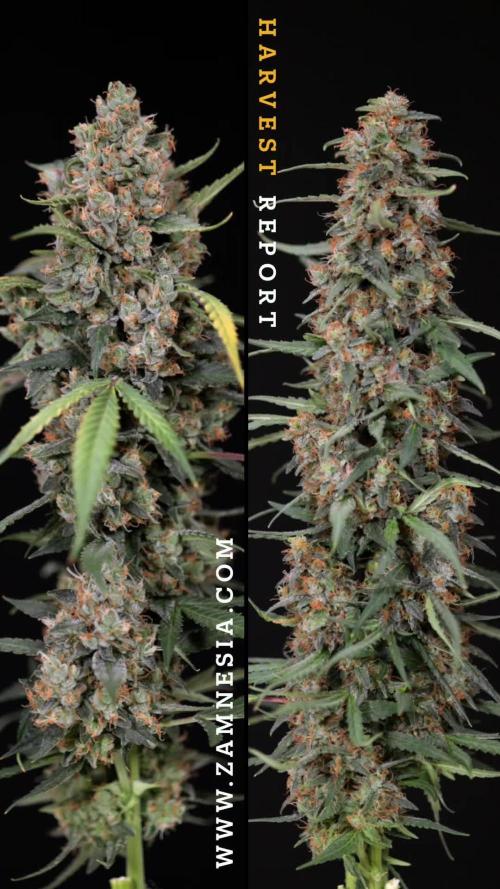
This week, you'll find the HARVEST of Chocolope Autoflowering #2. This plant has a different phenotype and will be available next week.
** This is plant and trichomes running AWC
The plant is a beautiful plant, around 100 cm tall, with beautiful, full, dense, and resinous flowers, despite growing in less than ideal temperatures.
Pot and Soil - This plant was grown in an 11-liter pot with Plagron's BioLight Mix organic soil.
Lighting/PPFD - A Zamnesia Phytonaut 480W LED lamp was used from mid-flowering until fruiting. We achieved a PPFD (photosynthetically active photon flux density) between 800 and 1200 μmol/m²/s, with a cycle of 24 hours, then 23 hours, then 20 hours, and finally 18 hours.
Z https://www.zamnesia.io/it/14526-lampada-led-per-coltivazione-phytonaut-480.html (National link if Google doesn't work)
Growing system: Zamnesia Ecosystem, fan, extractor, and grow box, all made by Zamnesia.
Trichomes: We harvested the plant at the beginning of the harvest window because we had to send the samples to the Autoflower World Cup. We still have a good amount of amber, 15% to 20%. 30-40% cloudy and transparent are still abundant, but in any case, with a sativa, you harvest early. Remember, amber is a sign of oxidation and means the plant is moving towards indica effects, so sativas should not be harvested too late to preserve their day-use effects.
Nutrients: Grown with Plagron Official, a 100% organic base fertilizer, and all recommended additives.
Visit www.plagron.com for grow cycle calculations, product selection, and general information.
All nutrients are available on the Zamnesia website. Also check out the live substrate and the fantastic new Zammi product line.
You can find this excellent strain here:
https://www.zamnesia.io/en/11102-blueberry-crumble-auto-zamnesia-seeds-feminized.html
(Google if the link doesn't work; it's a national link)
You can find this excellent strain here:
https://www.zamnesia.io/it/11113-chocolope-auto-zamnesia-seeds-femminizzata.html
(Google if the link doesn't work; it's a national link)
Zamnesia Description -
Chocolope Auto brings the beloved flavor and uplifting energy of the original Chocolope to a fast, compact, and easy-to-grow autoflowering strain. By blending OG Chocolate Thai, Cannalope Haze, and ruderalis, Zamnesia Seeds has created a 90% sativa hybrid designed for those seeking old-school aromas with all the convenience of modern genetics.
From seed to harvest in just 11–12 weeks, Chocolope Auto maintains a manageable height of 120–180 cm. In optimal conditions, it can yield up to 300 g/m² indoors or 200 g/plant outdoors. Despite its slightly compact structure, the buds are extremely resinous and bursting with sweet, chocolate, and fruity aromas.
With 21% THC, Chocolope Auto offers an uplifting, cerebral high that promotes creativity and focus. It's the ideal companion for daytime use, lively social gatherings, or for finding motivation without a heavy physical effect. Expect a clean, euphoric boost followed by a gently relaxing finish.
For growers looking for a quick and reliable way to enjoy one of the most iconic flavor profiles around, Chocolope Auto is a must-try. Fragrant, fast, and full of retro charm, it proves that practicality doesn't have to come at the expense of character.
Music - Frequencies 432 Hz and 528 Hz and black musc from www.radionula.com
"The best that nature has to offer"
www.zamnesia.com
Likes
14
Share
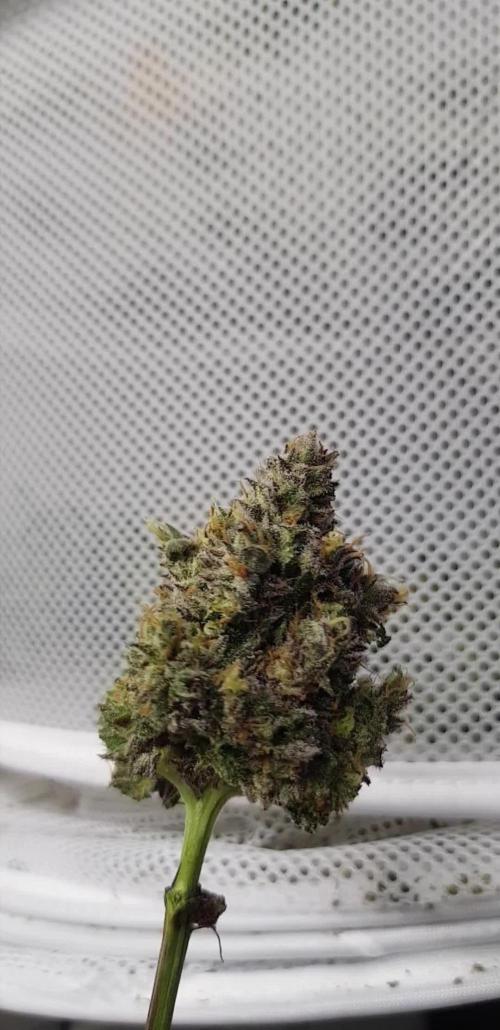

@GERGrowDesigns
Follow
Welcome to Flower Week 9 and harvest of Fast Buds Papaya Sherbet
For this Project , I’ve chosen the Feminized Photo strain Papaya Sherbet :
Here’s what I’m worked with:
• 🌱 Tent: 120x60x80
• 🧑🌾 Breeder Company: Fast buds
• 💧 Humidity Range: 35
• ⏳ Flowering Time: 58 Days
• Strain Info: 30%THC
• 🌡️ Temperature: 26
• 🍵 Pot Size: 16l
• Nutrient Brand: Narcos
• ⚡ Lights : 600W x 2
A huge thank you to Fast Buds for allowing me to try my Best with this amazing collection from Automatic and Photo Strains they managed to Sponsore . Big thanks for supporting the grower community worldwide! Your genetics and passion speak for themselves!
Let’s grow together – and don’t forget to stop by again to see the latest updates!
Happy growing!
Stay lifted and stay curious!
Peace & Buds!
Likes
34
Share


@GrowsHimself
Follow
Fed compost tea on Wednesday without added Bio Pk. Plain water all following feedings.
Did a light defoliation of some older fan leaves which has let more light in around the main stem.
I have used soft ties to stake her into the ground, this helps to prevent her from poking back out of the substrate once I bury the stem. I have buried her up to the first node.
I’m so far very happy with how she has been growing. She is very healthy looking currently.
