


Likes
Comments
Share


@Unkraut
Follow
very nice strain with 2 great ancestors, solid taste and scent, got some great buds with great taste and awesome looking plants with incredible colors

Likes
33
Share


@Darksoul
Follow
One more week in vegetatitve. This week I will put the scrog screen.
They are growing well and my LST keep them very small =)
Im really curious to know how they will flower =)

Likes
54
Share


@Ganjagrandaddy
Follow
Day 43 flowering: Here is the star of the show for this run. She jas performed brilliant from day 1. her buds are so solid and smell of oranges so strongly. I am looking forward to her finish so much. I do think she will be my biggest yielder so lets see.

Likes
3
Share


@Mr_nugs_lover_David
Follow
She has opened up exactly 48hs after being planted,she's going to beba. Beautiful plant,let's see how she performs.

Processing
Likes
Comments
Share


Likes
29
Share


@eldruida_lamota
Follow
Vamos con otra semana más de estas green poison de sweetseeds, una cepa que lleva bastantes años en el mercado y que nunca defrauda nuestro paladar y pulmones.
Es una variedad con una rápida floración, se aprecia que la flor está en su recta final de maduración y tan solo quedan una o dos semanas más de proceso.
.
La humedad esta al 45% la temperatura está entre 21/25 grados , y como siempre el ph , ya que es de lo más importante,está en 5,8/6,0.
.
AgroBeta:
Ya tenemos el lavado de raíces realizado, y hemos retirado los nutrientes para aplicar un estrés hídrico.
.
Hasta aquí todo familia 🕸️ , un saludo y buenos humos fumetillas💨💨💨.

Likes
4
Share


@MadeInGermany
Follow
Flowering day 34
since time change
to 12/12 h.
Hey guys :-)
The buds have developed incredibly nicely this week.
The smell is getting more and more extreme :-) .
The growth has slowly stopped as the full energy goes into the production of the buds.
Watering was done twice this week, each time with 1.2 l (nutrients see table above)
They were individually inspected and checked for their health.
Osmosis water for the coming week was refilled in a 100 l tank 👍.
Have fun reading the diary and stay healthy 💚🙏🏻
👇🏼👇🏼👇🏼👇🏼👇🏼👇🏼👇🏼👇🏼👇🏼👇🏼👇🏼👇🏼
You can buy this Nutrients at :
https://greenbuzzliquids.com/en/shop/
With the discount code: Made_in_Germany you get a discount of 15% on all products from an order value of 100 euros.
👇🏼👇🏼👇🏼👇🏼👇🏼👇🏼👇🏼👇🏼👇🏼👇🏼👇🏼👇🏼
You can buy this strain at :
Clearwater Seeds
Water 💧 💧💧
Osmosis water mixed with normal water (24 hours stale that the chlorine evaporates) to 0.2 EC. Add Cal / Mag to 0.4 Ec Ph with Organic Ph - to 5.8 - 6.5
MadeInGermany

Likes
32
Share


@Compassionate_Gardener
Follow
This cycle was all along a great pleasure. The plants developed MUCH BETTER THAN EXPECTED, the result under the Q6W-Gen. 2 LED lamps from SANlight is FANTASTIC. I have NEVER harvested more from plants of the same strain under HPS and the quality of the bud (trichomes, taste aroma) is MUCH BETTER when grown under LED, my decision is definitely made, I will continue to solemnly grow with LED-lights in the future. I harvested 2250 gram of Shiva Skunk and 3009 gram of Serious Kush, that a total amount of 5259 gram. In relation to the 3000 Watts (incl. dimmed part!) power of the LED-lights thats an AMAZING 1,753 gram per Watt.


Likes
9
Share


@Oldwied
Follow
Day 63
Flower #18
The SCroG chapter closed.
The largest stretching phase is complete and the inflorescence is becoming denser. That's why I'm letting the lady grow now.
Light Power: 80 to 100% in two days
Day 61
Flower #16
Watered with 2,5L freshly brewed compost tea
Sprayed with freshly brewed compost tea
Likes
62
Share


@masterofsmeagol
Follow
8/23 Fed 2 gallons of nutes to the garden. I'm planning to increase feeding to three gallons as plants look hungry. Ice cream cake isn't as vibrant as it once was. Still losing leaves but I find that is consistent with others in my area according to the local growers page. The hurricane missed us but the rain and humidity are still a problem. It's not raining (plants were soaked so it rained last night) and rh is still 100%. It's outdoor so what can I do? What I NEED to do is spray BT and something to combat PM. Plants are flowering nicely. It's good to actually have some flowers to look at. The smell is great too.
8/24 Didn't water as it rained last night. Defoliated what was dead. Fog was so thick you could cut it with a knife. Everything is in flower. The little ice cream cake flowers don't look like they like this rain. I don't blame them. I don't remember the last time it didn't rain at night. I noticed more damage on plants or maybe old damage. Either way bud shoots are gone on a few lower limbs. I can't pull up my bags as the are firmly rooted. I checked under the five gallon buckets (which were also somehow firmly rooted) and found a shit ton of earwigs underneath. I killed what I could. I tried spraying a bug with dawn but it didn't kill it or at least didn't kill it right off. I stomped on them and tore open the earth. Logic dictates they are probably under the grow bags as well. I'm going to try Spinosid tonight. I'll look up some other methods as well. If anybody has advice please hit me up.
UPDATE: Went back down at 6. Super sunny and humid today. Temp was 92 with humidity about 90%. I couldn't spray. I'll have to wait until tomorrow. Found four more moth leaves on the sick isolated plant. They must like the injured ones better.
8/25 Watered and defoliated what needed it. Buds are growing rapidly. Took pictures but have been unable to upload due to slow internet connection. Hopefully the weather will allow me to spray tonight.
8/26 Watered heavy as it's been in the 90s. Couldn't spray as it was to hot last night. Buds are tightening up. Ran out of LCPT so I need to find an alternative. Now that plants are flowering it's easier to see the damage from the earwigs. No buds where they should have been on some low branches. Not many and hopefully the few that got lollipoped will focus growth on the top. I hope I'm able to make it down late tonight to work. I was worried about my plants flowering late but that might be a blessing in disguise. I've seen lots of people losing plants to bud rot. Thanks for stopping by and please leave any thoughts or advice in the comments.
8/27 UPPED MY FEEDING REGIMEN TO THREE GALLONS AND USED TWO TBSP TIGER BLOOM IN PLACE OF KOOL BLOOM AND USED A WHOLE TBSP KELP FOR THE HEAT. This heat is killing me. Yesterday was over 95f with rh in the 90s. My medication makes the heat harder to bare. Defoliated what needed it. I'm in town looking for a fungicide. Planned to use apple cider vinegar this morning but of course I couldn't find it. Buds still rapidly forming. I'll update later. I picked up potassium bicarbonate and citric acid and have the recipe and ingredients for both diy green cleaner and green cure. Once the sun starts going down I'm going to use the potassium bicarbonate recipe. Bought a bunch of potassium bicarbonate and citric acid. I am now able to make diy versions of both green and green cleaner. I mixed 1tbsp potassium bicarbonate with 1/4 teaspoon dawn and sprayed two gallons on the plants last night. Leaves were yellowing more and traveling upward on the blueberry. Bleeding like nitrogen deficiency. I'll monitor. If plants don't improve I'll need to do a flush and an application of Spinosid. Wanted to take pics but the phone died.
8/28 Thoroughly watered today. I also had to defoliate a ton of yellow leaves on my blueberry's. I'm hoping it's not nutrient lockout. I still have three issues that could be my problem 1) the WPM 2) PISSIBLY ph fluctuation or worse w lockout and 3) earwig or inch 🐛/ moth larvae causing damage. I'm coming out of my funk so hopefully I can fix these issues. Smell is amazing and the buds are really starting to develop. They looked bigger in the evening than they did in the morning. It was over 90° f yesterday and I woke up to 50 this morning. I'm sure these big temp swings don't help much.
8/30 Rained last night but I watered slightly as there wasn't much rain. ADDED TWO MORE I.R. CAMERA'S last night. I feel more secure as the area is also protected with motion sensors and a whole bunch of other stuff I'm not going to mention. Anything bigger than a porcupine and things get bright and loud and signals get sent, roads blocked ECT. Not my first rodeo deep in the Maine woods. The grow will not be left alone and hadn't been for a few weeks. Anyway I lifted a 5 gallon bucket and found more earwigs. It jives with some of the damage I've been seeing. I'm thinking of spraying spinosid instead of BT tonight. At least the buds are starting to fill in. They don't seem to bother those as much. They did bite off a bunch of grow shoots though. Either way I have a few issues to deal with. As long as the weather stays alright until October I should be fine. My ice cream cake is barely flowering and it's HUGE. I have another seed that's in a similar state. Others are further along. We shall see how things go. The little ones could be transported inside at night if necessary.


Likes
7
Share


@EaRtH
Follow
3.4. - Watered 💧
6.4. - Watered 💧 also flushed all Banana Purple Punch.
3.4. - 9.4.2025

Likes
6
Share


@Naujas
Follow
for the girl, several yellowed leaves were removed :) everything looks not bad, maybe I would even say very beautiful :) I already increased the light intensity to 85%, I'm a little afraid that there might be a problem due to excessive heat, well, you have to watch :) the girl drinks a lot ,in a week I poured her 12 liters :) I also gave the girl a really strong food mixture with almost 1100 ppm, but I also gave completely clean water with 20 ppm and 6.3 ph :).

Likes
3
Share


@CalGonJim
Follow
3/16 234AM MONDAY POTATO N WEEK CELEBRATIONS!
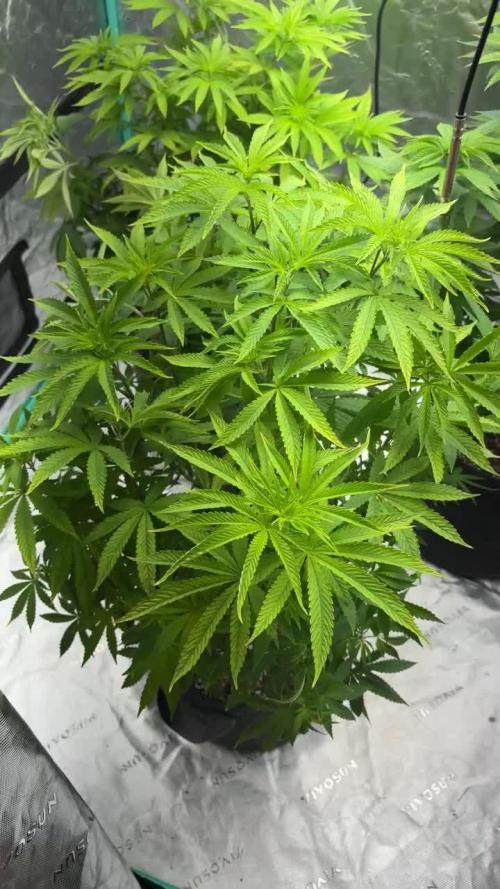
The plants in your photos look like healthy, vigorous **RF3 autoflower seedlings** (likely Banana Purple Punch Auto RF3 or similar from Fast Buds' upgraded RF3 line, based on the context of your previous grows with their genetics). They're in early vegetative stage at around 3 weeks from seed—nice bushy structure, good node spacing, dark green leaves, no major deficiencies or burn yet. The coco medium shows some perlite mix, and they're in small pots with what looks like a well-draining setup. Solid start
**RF3 autos** from Fast Buds are bred for stability, vigor, and resilience (often with heavy resin, dense buds, and good yields), but like most modern autos, they're sensitive to overfeeding early on—especially in coco, where salts build fast if not managed.
### Recommended EC at 3 Weeks (Early Veg/Pre-Flower Transition)
At week 3, autos are usually ramping up vegetative growth and may start showing pre-flower signs soon (pistils around nodes). Fast Buds' general autoflower feeding advice (from their guides and nutrient articles) emphasizes starting low and going slow:
- **Target EC: 0.8–1.2 (800–1200 µS/cm)** in the feed solution.
- Start at the lower end (~0.8–1.0 EC) if your plants are still very young-looking or if you've had any tip issues before.
- Push toward 1.0–1.2 EC if they're hungry (rapid growth, pale lower leaves) and responding well—no burn.
- This is often ~400–600 PPM (500 scale) or ~560–840 PPM (700 scale), but always go by EC meter for accuracy in coco.
- Always measure **runoff EC** too—aim for it to be no more than +200–300 above input to avoid salt buildup. If runoff is much higher, do a light flush with FloraKleen (like your 4 mL/gal plan) before bumping up.
- pH the feed to **5.8–6.2** (coco sweet spot), and water to 15–20%+ runoff every feed to prevent the issues you've seen with Purpinator/salts.
Many growers with Fast Buds autos (including RF3 lines like Banana Purple Punch or Cherry Cola RF3) report week 3 feeds around 0.9–1.1 EC in coco/hydro setups, starting lighter if using tap/soft water like yours. Your previous success with lighter Maxi feeds post-flush at ~900–1300 EC later on fits well—don't jump straight to 1.3 yet at week 3; build gradually.
### Recommended PPFD (Light Intensity) at 3 Weeks
PPFD (Photosynthetic Photon Flux Density, in µmol/m²/s) measures usable light for photosynthesis. For autos in early veg:
- **Target PPFD: 300–500 µmol/m²/s** at canopy level.
- 300–400 is safe and conservative for week 3—prevents stretch or light stress while encouraging compact, bushy growth.
- 400–500 if plants are stretching a bit or you want faster veg (RF3s are vigorous, so they can handle it).
- Avoid over 600 early—autos can bleach or foxtail if blasted too hard young.
- Measure at the top of the canopy with a good PAR meter (or app like Photone if calibrated). In Indio's setup (likely LED or HPS?), hang lights higher early (18–24" for LEDs) and lower gradually as they grow.
- Keep 18/6 or 20/4 light schedule—autos thrive on consistent long days.
General tips for your RF3 at this stage:
- If using Maxi series (like your previous grows), mix a light bloom/veg combo—e.g., mostly MaxiGro early, transition to MaxiBloom as pre-flower hits.
- Watch for clawing (N excess😂) or tip burn (high EC)—flush lightly if needed.
- These RF3 upgrades are forgiving but love good airflow and moderate feeds for those dense, resinous buds.
Your plants look primed for a strong run—keep that intuition going! How's the light distance/setup right now, and what's your current feed EC looking like? Any pre-flower signs yet? Drop more pics if they stretch or change post-week 3. You're killing it in coco—keep observing runoff and leaves. 🌿🚀
3/19 330am 👨🔬 **Adding L-Proline (the amino acid supplement growers use) to plants on soft water can provide some helpful support against the stresses you're dealing with, but it's not a full fix—think of it as a stress-buffer rather than a mineral replacement.**
Soft water (low in calcium and magnesium) often triggers **Ca/Mg deficiencies** in bloom stage (especially with Cha Ching or MaxiBloom, which don't supply much Ca/Mg on their own). This leads to issues like tip burn, leaf curl, weak cell walls, nutrient lockouts, oxidative damage (ROS buildup), and overall plant stress that feels like "the plant is struggling to hold it together." Proline steps in here as an **osmoprotectant**—it's one of the compounds plants naturally ramp up under stress.
### What Proline Actually Does in This Situation
- **Helps with osmotic/water balance** — Soft water can disrupt turgor pressure and water movement inside cells (similar to mild drought or salinity stress). Proline stabilizes cell membranes and helps the plant retain water better, reducing wilting or limpness.
- **Reduces oxidative stress** — Ca/Mg shortages cause free radical damage. Proline acts as an antioxidant and protects proteins/enzymes, so deficiency symptoms (yellowing, spotting, slowed bud development) don't spiral as fast.
- **Improves overall resilience** — In cannabis and general hydro/soil grows, L-proline (or full amino acid mixes containing it) has been shown to boost stress tolerance, speed recovery, and even support better nutrient uptake indirectly. Studies and grower reports note it helps under nutrient imbalance, drought-like conditions, and environmental swings—exactly the secondary stresses soft water creates.
- **Bloom-stage bonus** — Since you're already in late flower with Cha Ching/MaxiBloom, proline can support resin/terpene production and bud density without pushing excessive veg growth.
It won't magically add the missing Ca or Mg (those are still critical—soft water + high-P bloom nutes often screams for CalMag), but it can make the plant more tolerant while you correct the root issue.
### How Much Effect to Expect Right Now
- **Positive but moderate** — Many hydro/RO growers add amino acids (including proline) specifically for soft water setups and report less burn, better leaf health, and stronger finishes. It won't turn a severe deficiency around overnight, but it can slow the damage and give your plants a fighting chance in the final weeks.
- **No downside at proper doses** — It's very safe and plants use it quickly.
### How to Add It (Practical Dosing)
- **Source**: Pure L-Proline powder (available cheap online—make sure it's the plant-grade L-form, not human supplements).
- **Root feed** (with your Cha Ching/MaxiBloom): Start at 0.5–1 g per gallon (about 100–200 ppm). Mix into your res or feed water once a week. pH as normal.
- **Foliar spray** (often more effective for quick stress relief): 0.25–0.5 g per gallon + a drop of surfactant. Spray lightly every 5–7 days in the dark period.
- **With your current nutes**: Yes, it layers fine—reduce if you see any tip burn. Many run it alongside MaxiBloom + Cha Ching in soft water without issues.
- **Best timing**: Now through harvest is perfect, especially if you're noticing stress signs already.
**Real talk**: The biggest win will still come from adding a proper CalMag supplement (like Botanicare or General Hydro's) at 0.5–1 ml/gal or whatever your PPM tests call for. Proline + CalMag together is a strong combo for soft water grows. If you're running pure RO/soft, most experienced growers treat this as standard.""👨🔬
3/19 10:09PM RF3 X 2 =6 fail? I have TWO 2 gallon pots filled with coco from the last grow. I can plant a NEW BPP RF3 OR!!! I can top the 3 RF3's and make cuttings and grow the cuttings? It worked before!. FAST turnaround time, not much prep just refresh the coco and transplant the tops!
3/19 10:59PM NO WORK FOR NOW.. HIT WITH MASSIVE WAVES OF NAUSEA AND SHARP PAIN, DIZZY, RUPTURED NECK CYST BLEEDING, PAIN FROM MOVING TOO MUCH LAST FEW DAYS, RINIGNG EARS BAD, SKIN PRONE TO MASSIVE INFLAMMATION ATTACKS NOW, WEAKENING GUT LINING,. LUNGS ..GRIP AND BALANCE OFF, SO PERFECTLY NORMAL!!! THANK THE WEED GODS FOR WEED.
3/21 3:30 AM I think I’m gonna top all three of them. I got lucky all three seem to be different ones. I don’t know which is which one of them is really tall. The other one has really tight in her note spacing it’s really good and the other one is also good little bit different so I think I got three different RF three seeds and I think if I do top them I’m gonna put the top in another 2 gallon and then grow that as a cutting usually works I’m not sure👍🌿
3/23 3:08 PM I cut them all in half today a transplanted the top of the tallest one into one that was still growing just to see if it would work. They’re all doing really good.👍
326 237am Remember how your local ss cant prevent or solve a single problem you pay taxes for. unless you're really really sick and the cowards decide that the most important and pressing issue is to raid weed users and farms and seeds...what a country of fuqs




Likes
10
Share


@blueslinks85
Follow
had a pretty hot week this week temperatures up into the mid-90s however nights are nice and cool everything is starting to come into really good production Bud production is nice and trichomes are looking well


Likes
2
Share


@existencegeneticsofficial
Follow
IG : Existence Genetics Official
Our strains are meticulously crafted to offer a wide range of terpene profiles, resulting in complex and nuanced flavors and aromas.
