


Likes
Comments
Share


@SqwshKush
Follow
Major morphological changes being observed still. Stretch & bud thickening occurring.
Sept 18 - looking good. Hairy hairy buds!
Sept 19 - all watered with nutes 2ml/L all. 1.5L each.
Sept 20 - looking great, sticky colas when handling, smelling noticeably when opening the tent now & Lina’s hairs starting to brown off. Subtle purple colours are popping on some cola’s - notably BM & TB. Scrog’d them. Need to find out how to make it square and less bowed in..I’m guessing poles or bungee cord?
21 Sept - doing well.
22 Sept - all watered, 2L each w/ bud burst @ 3ml/L and in total 1/2 cup of molasses for 10L.
23 - all good
24 - looking great!


Likes
36
Share


@MadeInGermany
Follow
Unfortunately, I had to find out that my account is being used for fake social media sites.
I am only active on growdiaries here.
I'm not on Facebook Instagram Twitter etc.
All accounts except this one are fake.
Have fun with the update.
Hey everyone 😀.
The plant develops as it should 😍.
It grows very well and very beautifully. She also coped with the topping very well, so I will top it a few more times before it finally goes to the flower tent 😃.
Until then, I wish eucb a lot of fun until the next update.
Stay healthy and let it grow 🙏🏻
You can buy this Strain at :
https://originalsensible.com/original-sensible-seeds-zkittlez~20503
Type:
Zkittlez
☝️🏼
Genetics:
Afghan Kush Indica x Grandaddy Purple x Grapefruit hybrid
👍
Vega lamp:
2 x Todogrow Led
Quantum Board 100 W
💡
Bloom Lamp :
2 x Todogrow Led
Cxb 3590 COB 3500 K 205W
💡💡☝️🏼
Soil :
Canna Coco Professional +
☝️🏼
Fertilizer:
Green House Powder Feeding
☝️🏼🌱
Water:
Osmosis water mixed with normal water (24 hours stale that the chlorine evaporates) to 0.2 EC. Add Cal / Mag to 0.4 Ec Ph with Organic Ph - to 5.5 - 5.8 .

Likes
18
Share

@Roberts
Follow
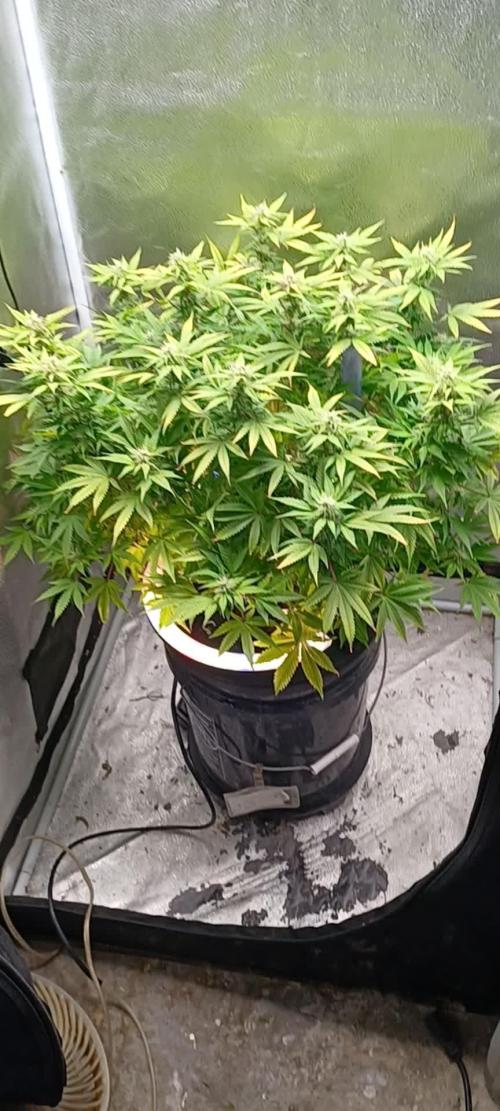
Mintz runtz auto is doing okay, she is building her colas and starting to get a aroma. I did a solution change on her today, along with some defoliation. It was looking like the light was too strong. So I turned it down to 75 percent. Thank you Elufah, Spliff, Atami, and Spider Farmer. 🤜🏻🤛🏻🌱🌱🌱
Elufah (Power by Growpros solutions) UAP1500,Die-cast radiator and featuring an optical lens design(Uniform PPFD),150W,PPE3.0μmol/J,PPFD1500umol/s/m²,Use the verified commercial-grade spectrum;Full/Epar Boost Spectrum adjustable,A very excellent grow light;
By entering the discount code, you can enjoy an additional 10% price reduction when making the purchase.
Amazon discount code:SAVEURCASH10
product Link:https://a.c1ns.cn/uap1500
Thank you grow diaries community for the 👇likes👇, follows, comments, and subscriptions on my YouTube channel👇.
❄️🌱🍻 Happy Growing 🌱🌱🌱
https://youtube.com/channel/UCAhN7yRzWLpcaRHhMIQ7X4g.

Likes
37
Share


@Rob96
Follow
Cut net down this week and had a reshuffle around, dos si dos was a lot taller so move lights up and put other 3 plants on top on boxes to level top as much as i can
Had to do a little late trimming to help airflow down low and just give a little more breathing space as suffered with a little rot on my first grow luckily not too bad though but fingers crossed none at all this time, i managed to avoid it on my secone grow so hopefully will be ok
Plant looks strong and healthy, had no issues so far plenty of tops cant wait to see it fatten up

Likes
3
Share


@Dico29
Follow
Day 136.... buds are swelling and looking nice, don’t really do much beside chill in my closet with my other plants but all in all it’s great smell and destroys all my chances of smell control, which is very little to a point of non existent

Likes
245
Share


@Nor_Cal_Kannabliss
Follow
May 24th : Went on a mini vacation and came back to my girls just growing strong!! wooo! can't wait to see these girls just explode as i'm flipping them to flower tonight! I'll be adjusting their nutrients soon and logging that as well! Tonight I just did a plain water / flush on the girls. Going to slowly lower the lights down to probably around 12 - 14 inches and try to keep it at around that height for the rest of the grow! It blows my mind how quickly these things have shot up.. Guess they don't call it weed for no reason!! P.S. The brackets i'm using to hold up my fans are actually an Ikea Wine bottle holder that my wife had, I cut it into three pieces cleaned it all up and zip tied it to the pole. Then hung the fans from the top of the tent with a quick adjust light rope. Now all I gotta do is push the fan up or down to where I want and tighten the light rope! works great!!
May 25th : Got a new little Hanging bulb for in the tent that I can move around for pictures. I'm thinking i'm going to pick up another but it sure helped with the overexposed photo's! Can't believe how much they shot up over their first night at 12/12. This is going to be insane!
May 26th : Opened the tent to pretty much all the girls praying! Sadly I must have miss watered the front right one. Oh well Soaked her good I'm sure she will be rocking again in no time.. Stretched them out a bit more after the photo's. I think maybe only a few more days of really finishing the LST with the scrogg net.
May 27th : Welp even after lst and bending the hell out of these girls after last night's photo, they are showing no signs of slowing down! It's beautiful! Had to move my lights up about 5 inches as they shot up so close!
May 28th : I am officially done with all lst and hst training and i'm gonna let them grow wild! Going to do another 1/3 str veg nute feeding tonight it will be their last veg feeding from this point on i'll be onto the flowering cycle of nutes. I plan on starting all Flower nutes at 1/2 strength and ramp up according to how the girls respond. Saw my first signs of Budding tonight Sorry for the overexposed pic on it but I realized it after the lights came on! I'll take more close ups tomorrow! (edit: changed my mind! decided to just go ahead and start all the flowering nutes also! will update log)
May 29th : Not a whole lot to report, had to move my fans up as the girls were growing dangerously close. It's amazing to see this stretch, and to imagine it's hardly even started!
May 30th : Opened my tent up to an explosion of growth. Humidity levels were way higher than what I wanted due to lack of air movement through and under the canopy. Decided it would be best to Get to the Lollipopping tonight. Put up some before and after pics of our crazy lollipopping adventure! Can't help but feel like I just mutilated the hell out of them.. Hope I didn't take to much!🙏 Guess we will find out! This marks the last day of the first week of flower! See ya all next week!

Likes
6
Share


@Ganeshasurvivel
Follow
I had to travel this week, I had no way to control the ph.
As the tips of the leaves are yellowed, I don't know if it changed or lack of iron.
nevertheless I gave calmag. and you will control this week before the wedding, does anyone have any tips?
will I do another defoliation?
I did last week but she grew a lot this week
THX

Likes
2
Share


@Stork
Follow
Day 16 Tue
PH 5.6
EC 0.5
DLI 18h
PPFD
Water 24
Day 17 Wed
ph up
PH 5.6 - 5.8
EC 0.5 -
DLI 18h
PPFD
Water 24
Day 20 Sat
Add Ph Up
PH 5.4 - 5.7
EC 0.5
DLI 18h
PPFD
Water 23

Likes
36
Share


@Regenwurm
Follow
In dieser Woche habe ich eine nicht gewünschte Verfärbung der Blätter festgestellt! Das grün ist blasser geworden und ein paar vereinzelte Blätter Sind von der Farbe leicht lila/ violett geworden. Ich bin bisher noch sehr zurückhaltend mit Dünger . Ich werde besonders in der kommenden Woche ein Auge auf pH Wert und Düngemenge legen da die Blüten stark am wachsen sind
Tage der Keimungsphase = 7 Tage.
Tage in Wachstum = 21 Tage
Tage in der Blüte = 21 Tage
Wachstum h Woche 3 Blüte = 8 cm
2 mal in dieser Woche mit Purolyt Mischung 1:25 besprüht
Lichtstärke: 90 %
PPFD: ca. 850 umol
Lichtabstand: 40 cm
Std Tag/Nacht: 18/12
Temperatur Tag: ca. 25 Grad
RLF Tag: 58%
Temperatur Nacht: 21 Grad
RLF Nacht: ca. 60 %
VPD Wert: ca. 1,0
PH Wert Wasser/Düngelösung: 6,2
EC Wert: nicht gemessen
Ventilator Oszillation: Stufe 1
Befeuchter: an
Entfeuchter: aus
Zusätzlicher Entfeuchter: 0 Stk. außerhalb vom Zelt im Raum
Bewässerung: 3* bewässert 1,5 l/Pflanze mit Dünger mit den o.g. Mengen
1 * pures Wasser mit 1 l/Pflanze
Purolyt Besprühung: 2 mal
Besprühung Fastplantspray : 1 mal
Controlling: Grow Control
Dünger: Greenbuzz Nutrients
Licht: Pro Emit Vollspektrum
Abluft: EC Carbon Active 750 m3
Danke an Zamnesia für die Seeds, den sonstigen Merch und natürlich das Vertrauen in die Kooperation
https://www.zamnesia.com/de/10681-zamnesia-seeds-pineapple-express-f1-automatic.html
Danke auch an Mia von GB:
https://greenbuzznutrients.com/de/
Ihr bekommt 25 % Rabatt bei der Nutzung des Codes auf der GB Homepage
https://greenbuzzliquids.com/de/shop/
Code: GD42025
(Mindestbestellwert 75€)

Likes
9
Share


@NanoLeaf
Follow
Week 3 - Transplant to fabric pots
Transplanted the ladies in to 17L fabric pots.
Used GHF BioGrow and BioBloom in a 2:1 ratio 1g per L to unamended coco-perlite (70/30) mix with extra worm castings.
Turned the wattage up on my ballasts to 400W each.
The ladies have finally settled in their final pots and the are happy in their new environment.
I also performed LST by tucking fan leaves and softly pinching and bending some of the bud sites.

Likes
78
Share


@ClubRiot
Follow
Week 6 ,
pH Perfect Connoisseur Bloom Part A ( 1 ml/L )
pH Perfect Connoisseur Bloom Part B ( 1 ml/L )
CarboLoad Liquid ( 2 ml/L )
Sensi Cal-Mag Xtra ( 2 ml/L )
Sensizym ( 2 ml/L )
Bio-Heaven ( 2 ml/L )
Big Bud ( 2 ml/L)
Nirvana (2 ml/L)
Likes
22
Share


@Damonkey
Follow
Gorilla Zkittles is looking the strongest and biggest so far but all 7 seem pretty healthy. Best smells coming from the Purple Strawberry Sherbert, wow something else🤤🤤🤤 the temperatures are dropping and nighttime’s are soon gonna be to cold in my little room. Possibly another timed heater to go in there to come on as the lights fade. Humidity almost under control i think I should be able to keep the tent at or around 50% fingers crossed, but that’s another few pence on electricity😕.

Likes
5
Share


@Bongcity710
Follow
This plant was chopped at 91 days from seed has been hung and slow dried humidity controlled at around 60% strong orange and skunk smell will be jaring for a month now as branches have become snappy and I have weighed up everything roughing trimmed dry at 31g which for 3.50 I’m pretty happy with sorry for rough late updates back to work after lockdown and have been busy! Stay green growmies 💚

Likes
10
Share


@jahredi
Follow
Things are looking good. I started counting Day 1 before the dummy leaves even shed the seed, also, I think the 3 gal pots are probably holding back the above ground growth a tad. Been watering about .5 gallons each in a ring just outside the plant every 2-3 days. They look healthy and I'm sure by the end of the week, they'll be screaming along.
Not sure if I'm more excited about the ganja or the melons. Lol. Can't wait to enjoy both ☀️🍉💨

Likes
1
Share

@BB-COLLECTIVE
Follow
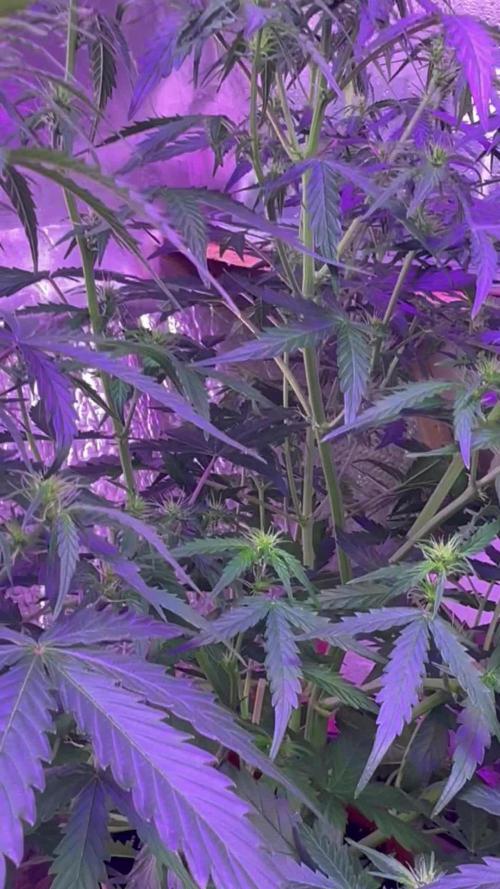
Slightly slower start and flower initiation with this one but impressed with the amount of flower sites all over and is pretty pungent although it’s merely just started flowering can’t wait to kick back and taste this one

Likes
44
Share


@Zorachus
Follow
Finally, 25 weeks i believe...
Mold, mildew, bud rot, rain, humidity, crazy wind, frost.
Somehow these girls turned out just fine and I am so proud of the end result. I am late posting, everything is pretty much all cured up and ready to smoke. Just finished making some stocking-stuffer jars for friends and family for Christmas.
It was interesting to see the different phenotypes from each plant. One was named Average Girl, medium size, medium height. Then there was Big Bitch. She was the tallest and had the skinniest nugs. Next was Dolly.. She had the fattest cones of the 4.. a little shorter than Average Girl. And last was Runt... She was about 2 weeks behind her sisters and about a foot shorter, but she did not get any mold or mildew, and her buds were ginormous. I let her go an extra 2-3 weeks later than her sisters, bringing her into the garage every night at 7 pm, and then waking up at 7 am to put her outside.
By far, my favorite plant was Runty. She finished up so nice.
Overall smell is Kushy blueberry diesel cat piss with a hint of citrus.
Wouldn't grow this strain again just because it did not handle the weather well, and I like a kushier final product, on the taste and nose.
That being said, I am a very happy guy right now.
Over and out.
Likes
23
Share


@Ganjagrandaddy
Follow
Day 27 flower: I love the Gz strain with a passion. The colours that are beginning to shown on all of their buds are beautiful already and they are not even half way through yet !!. #1 is by far the biggest girl with so many tops going for her final yield weight. #2 is plodding along still in her indica stout kinda way. forming ok too
#3 was the tallest of the 4 and had to be supercropped to get the lower buds some light down there. gave 5 mains a 90° bend.
#4 is still a little lady but is making nice bud stacks for the party too.
They are getting sticky icky now too and smell really fruity when rubbed a little
well done Barneys Farm
Likes
16
Share

@TrickzGrowz
Follow
Servus Moin!
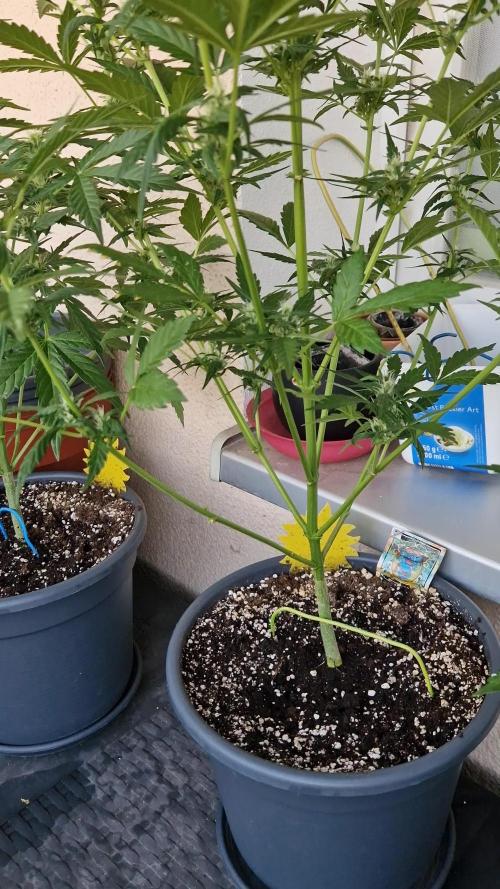
Die Pineapple Slush XL macht im Stretch ihren Namen alle Ehre. Ich habe das Gefühl, sie will gar nicht mehr aufhören in die Höhe zu wachsen. Langsam geht die Budentwicklung los. Bin gespannt wie sie mit den heißen Sommertenperaturen klar kommt.
Likes
21
Share


@Lontra
Follow
day 51:
I did some smaller repositioning and defoliation. It looks like she liked the more of nutrients i gave her yesterday. The buds are getting bigger, the pistils start to change their color and more trichomes are getting cloudy.
day 52:
Just visual check and filling up humidifier.
day 53:
Watering day. I increased the amount of Bio-Bloom, Top-Max and Bio-Heaven to 3ml/l. I'm now at about 6 liters of water every 3 days.
day 54:
Just visual check and filling up humidifier.
day 55:
Just visual check and filling up humidifier. The buds are getting bigger and more dense. From now I will have a close look at the pistils and the trichomes to decide when I will start to give her only plain (ph-regulated) water. I guess we have about 2-3 weeks to go from now. What are you thinking?
day 56:
Watering day. As most of the pistils are still white and most of the trichomes still clear, I gave her about 6 liters of water full of nutrients.
day 57:
While checking on her, I noticed some "burned" looking leaf tips. I guess that could've been a little too much nutrients last time. Overall she is looking happy.

Likes
2
Share


@AestheticGenetix
Follow
7/5/25 plant is stretching. Not sure if its preflowering or just being outside in a bigger pot. Im just going to let her grow naturally and see how it turns out. I may end up with just one diary of each strain at the moment. But im also not sure whether im going to be doing indoor or outdoor based on personal circumstances.


