


Likes
Comments
Share


@TheBulldozerSicily
Follow
Inizio un nuovo ciclo come sempre in ritardo, volevo iniziare a settembre e ho ritardato di un mese. Vediamo a questo coltivo cosa viene fuori! Peace✌️

Likes
37
Share


@iMpulsive_Grow
Follow
Day 50!
Finally it’s here!!!!! Flowering stage!!!!! 🤗🙏🏼🙏🏼🌱🌱🌱 👌🏼
Day 51! You can see them starting to expand faster again
Day 52!
You can definitely smell it now
Day 53!
Checked her height, and in three days she grew 2 “
Day 54!
Just fed them again. ( they are starting to consume a lot)
Day 55!
22”
Day 56!
Man they are eating so much!!! It’s crazy how fast my soil is drying up now. I’ll measure again tomorrow and see how much expansion they did in the first week of flowering 🤗🙏🏼🌱
Day 57!
This concludes week 8 💯



Likes
17
Share


@BLAZED
Follow
Week 13 (24-4 to 30-4)
24-4
Temperature: 23.8 degrees (lights on) 18.9 degrees (lights off)
Humidity: 66% (highest) 53% (lowest)
No pictures.
Opened the reservoir for a couple of minutes.
25-4
Temperature: 24.7 degrees (lights on) 18.9 degrees (lights off)
Humidity: 66% (highest) 52% (lowest)
Increased the strength of the light from 60% to 65%.
26-4
Temperature: 25.2 degrees (lights on) 19.5 degrees (lights off)
Humidity: 66% (highest) 51% (lowest)
No pictures.
I emptied the reservoir, there was 2750ml left.
I made a 15L new feed and added it to the reservoir.
Opened the reservoir for a couple of minutes.
27-4
Temperature: 26 degrees (lights on) 19.9 degrees (lights off)
Humidity: 65% (highest) 47% (lowest)
28-4
Temperature: 26.4 degrees (lights on) 21.5 degrees (lights off)
Humidity: 64% (highest) 47% (lowest)
Opened the reservoir for a couple of minutes.
29-4
Temperature: 26.4 degrees (lights on) 20.6 degrees (lights off)
Humidity: 64% (highest) 39% (lowest)
Increased the strength of the light from 65% to 70%
Opened the reservoir for a couple of minutes.
30-4
Temperature: 27.4 degrees (lights on) 21.1 degrees (lights off)
Humidity: 62% (highest) 47% (lowest)


Likes
2
Share

@NoProbation4Weed
Follow
This week was an absolute nightmare.
For five days straight, our residual-current circuit breaker (RCD) kept tripping multiple times a day until I finally discovered—regretfully—that the dehumidifier was the cause.
As a result, the ladies will now have to go without a dehumidifier for an indefinite period, which is leading to very high humidity levels in the basement.
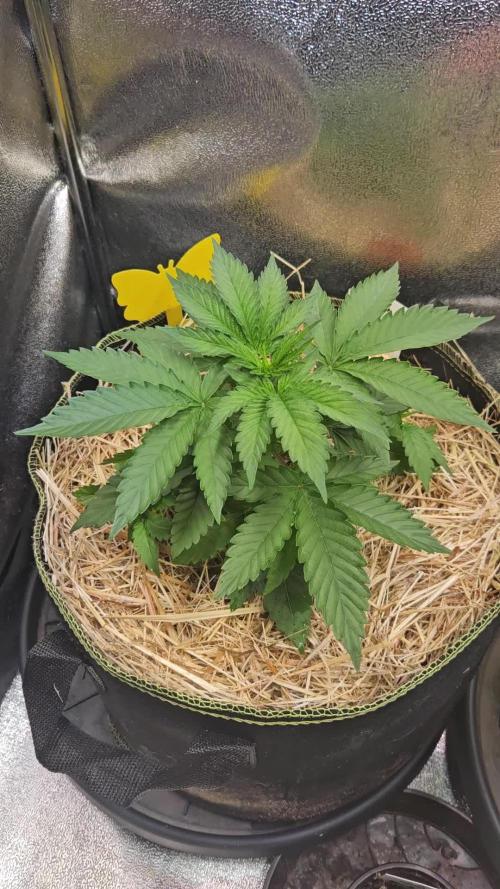
today she got transplanted into bigger pot.
Light hits with around 450 PPFD
Likes
6
Share


@SensimillaP
Follow
Shout out Seeds Mafia for sponsor this grow !! I'm very thankful for it🙏
As for the plant I'm very happy how it turned out, she didn't require much to give out those amazing buds !!!

Likes
8
Share


@wheedtobeus420
Follow
Day idk I forgot lol she’s super beautiful And getting so frosty it’s amazing. I’m very happy with her so far. She’s a good looking lady beautiful as ever. Can’t wait to watch her swell up and go threw the bulking phase.

Likes
17
Share

@HanzzCZ
Follow
Servus, sedmnáctý týden, devátý týden v květu, 114/58F den sekec mazec! ?👌🍾🍾🍾✌️
Tímto dnem jsem si splnil svůj dětský sidequest! 😅😂😎🏆
Šišky ještě schnou, čeká nás finální trim a curing ve sklenicích. ✌️
První kolo se blíží do finiše.
Ať se daří! ✌️kdyby měl někdo nějaký typy/rady uvítám váš komentář. 😂🔥
EN
____________________________________________________________________________________________________________________________________________________
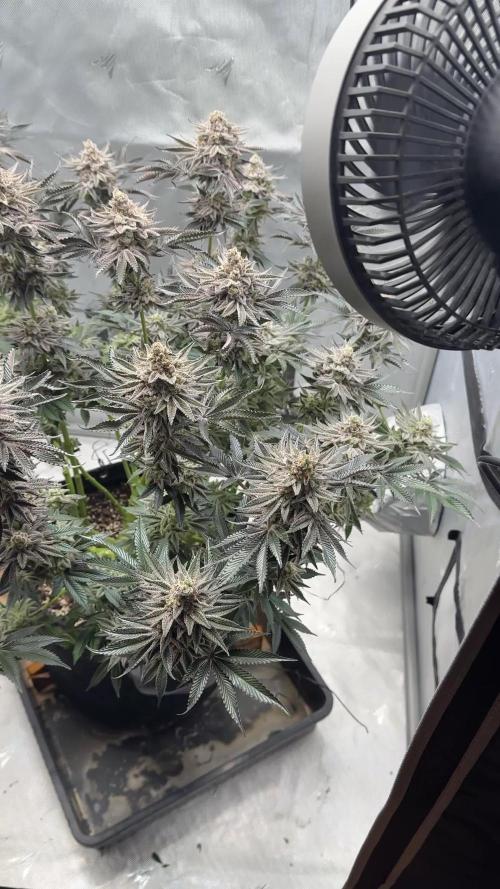
What’s uppp! Week seventeenth (nine in bloom),114/58F day is behind us! ✌️🌼
Chop day is finally here! ?👌🍾🍾🍾✌️
With this, I’ve officially completed one of my childhood side quests! 😅😂😎🏆
The buds are still drying, with the final trim and jar curing still ahead of us. ✌️
The first run is slowly coming to an end. 🌼🔥
Good luck every one! ✌️
Any tips or advice are always welcome 😂🔥

Likes
14
Share


@Professor_Chaos
Follow
Beginning of week...
This plant has been growing for over a month now. I didnt expect it to come out this amazing.. So now I am creating the grow diary lol. I flipped it to 12/12 this week. She was just going to be LST'd but the top had broke off while making adjustments to the LST one day earlier on.. Damnit.. She's still gonna make some dank ass nugs tho! After 3 - 4 days of 12/12 she has already begun her stretching!
End of week...
She has stretched some this week.. Not very much in my opinion.. But some for sure.. Not many pistils yet.. Some but no nugs building yet. When you cruch the leaves you have defoliated from this girl.. They have a more danky smell.. Its crazy.. Different than other strains I have grown.. I didnt expect leaves to carry different smells also!

Likes
2
Share


@JoExotic
Follow
Week 9 - Lemon Cherry Cookies Auto wow the Smell on these is Pure Lemons and the buds are extremely sticky for this being an auto 420 Fast Buds knows exactly what there doing Huge shout out to everyone over there your hard work is very appreciated !!!
Likes
9
Share


@Rufytaro
Follow
What do you think? What is the problem of the plant? Did it suffer? Or is near to the end?
Likes
6
Share


@emeraldlabs
Follow
All is well; fattening up. Using calmag every other watering, when not using nutes.
No amber in trichromes yet.
Pics/vid day 92/55F after breaking soil.

Likes
92
Share


@DogDoctorOfficial
Follow
Week 6 Flower Report: Maturation in Full Swing!
🌟 Welcome to the week where the magic of maturation takes center stage! 🌟
The garden has reached a pivotal moment as the trichomes are bursting with potential. Each one a glittering universe, they are the undeniable stars of this show, taking over every surface with their frosty brilliance. ✨ Watching them evolve is like witnessing art being created in real time – it’s a reminder of the beauty and patience this craft demands.
Trichomes: The Frosty Frontier
This week, the focus is all about those frosty beauties!
• Trichomes are the key indicators of ripeness and cannabinoid production. Watching their progression from clear to cloudy to amber provides the ultimate insight into maturity.
• Currently, we’re seeing a fantastic mix of cloudy trichomes with some clear still hanging around – a perfect sign that they’re gearing up for their final push.
• Fun fact: Trichomes serve as the plant’s natural defense mechanism, protecting it from UV rays and pests while being our treasure trove for cannabinoids and terpenes.
Spectrum Tuning: The Science of Light
Light plays a major role in shaping the maturation process, and this week, we’ve dialed in the spectrum for optimal results. Here’s the breakdown:
• Whites: Running at 77% to maintain robust overall growth and trichome density.
• Deep Reds, Far Reds, and UV: Maxed out at 100% to mimic the end-of-season spectrum, signaling the plants to finish strong.
• Deep Reds: Enhance photosynthesis efficiency through the Emerson effect.
• Far Reds: Promote stretch and flowering hormone production.
• UV: Stimulates trichome production for an extra boost of frost!
We’ve also added a timing twist:
• Reds & UV start 15 minutes before whites to simulate sunrise.
• Reds & UV finish 15 minutes after whites to mimic sunset, creating a more natural light transition.
These subtle timing tricks help reduce stress while optimizing light absorption, ensuring every photon counts! 🌞
Environmental Conditions: Precision is Key
Here are the dialed-in parameters for the week:
• Temps: 26.3°C
• RH: 70.1%
• CO2: 800 ppm
• VPD: 1.03 kPa
With these numbers, the ladies are thriving in their sweet spot, absorbing nutrients efficiently while maximizing trichome development.
Lighting Power:
• Lower layer at 800 PPFD and the upper layer shining bright at 1500 PPFD. The canopy coverage is perfect for even development throughout the garden.
Nutrition: Balanced and Boosted
We’ve stuck with the tried-and-true nutrient mix this week but with some strategic adjustments:
• Removed Breaking Powder to focus on trichome maturity.
• Introduced K-Boost at 0.5 ml/L, giving the plants the potassium edge they need to pack on weight and enhance terpene production.
• Feeding solution details:
• pH: 6.2
• TDS: 755 ppm
• Temp: 20.6°C
In the Autopots, the medium stays perfectly hydrated at 100% with:
• TDS: 580 ppm
• Temp: 22.2°C
Shoutouts and Gratitude
A huge shoutout to the amazing genetics and these incredible ladies, and a big thanks to Trol Master, Aptus Holland and Pro Mix for the stellar products that are elevating this grow to new heights! 🌱💪
To all growers out there, remember: Patience is the secret ingredient. Watch, learn, and trust the process – the results will always amaze you.
Here’s to another week of growth and gratitude. Onwards to Week 7 with hearts full of joy and gardens full of frost! 🌟💚
Growers Love,
Your Grateful Gardener
Discount Codes so you can save big on your next check out 💚💚💚
Kannabia - DOGDOCTOR 30% off
SeedsmanSeeds - DOGDOCTOR 10% off
CannaKan- DOGDOCTOR 15% off
terpyz.eu - DOCTOR 15% off
The Neutralizer - PORKIT5-DOG 15% off
Fast Buds - DOGDOCT 15% off
As always thank you all for stopping by, for the love and for it all , this journey of mine wold just not be the same without you guys, the love and support is very much appreciated and i fell honored and so joyful with you all in my life 🙏
With true love comes happiness 💚🙏 Always believe in your self and always do things expecting nothing and with an open heart , be a giver and the universe will give back to you in ways you could not even imagine so 💚
Friendly reminder all you see here is pure research and for educational purposes only
Growers Love to you all 💚💚💚


Likes
3
Share


@CanarianGrow92
Follow
Another week of veg for our Fast Version B from super sativa seeds club.
At the beginning of the week we gave some bactrex and orgatrex from biotabs.
The plant is evolving good! Nice and green
Likes
10
Share


@I_Identify_As_A_Dan
Follow
Week 3 of flower for White Widow
Hard not to love this girls structure to be honest...😍
Also showing purple signs from the could nights i think not ideal.
Bottom feeding just over a litre of water a day on her drip tray.
Likes
10
Share


@3lementa1
Follow
I think I trained too hard too late in harvest. One of the Wedding Cake plants went hermie and pollenated everything. I'm disappointed but I'll be more gentle at the end of flower next grow. The buds were still good in a vape but I had to be careful of the seeds. I made hash from most of it.
Processing
Likes
33
Share


@cojastym
Follow
floweeer
start day 104
change fertilizer from nettle to chicken manure, from my free run chicken yard

Likes
29
Share


@MadeInGermany
Follow
Info:
Unfortunately, I had to find out that my account is used for fake pages in social media.
I am only active here on growdiaries.
I am not on facebook instagram twitter etc All accounts except this one are fake.
Flowering day 65
since time change
to 12/12 h.
Hey guys :-)
We arrived in the last days before the harvest 😊.
The buds have swollen again the last few days.
The trichomes are 90% milky and 10% amber 👍.
This week it was poured twice with 1.2 l each time (for nutrients, see table above).
As always, it is put in the darkroom for 48 hours before it is harvested.
There is still a harvest update and a final update after fermentation 👍.
Until then, I wish you all a lot of fun with the update and stay healthy 🙏🏻
You can buy this Nutrients at :
https://greenbuzzliquids.com/en/shop/
With the discount code: Made_in_Germany you get a discount of 15% on all products from an order value of 100 euros.
You can buy this Strain at :
https://www.amsterdamgenetics.com/product/kosher-tangie-kush/
Type:
Kosher Tangie Kush
☝️🏼
Genetics:
Kosher Kush
X
Tangie
👍
Vega lamp:
2 x Todogrow Led
Quantum Board 100 W
💡
Bloom Lamp :
2 x Todogrow Led
Cxb 3590 COB 3500 K 205W
💡💡☝️🏼
Soil :
Canna Coco Professional +
Nutrients :
Green Buzz Liquids :
Organic Grow Liquid
Organic Bloom Liquid
Organic more PK
More Roots
Fast Buds
Humic Acid Plus
Growzyme Big Fruits
Clean Fruits
Cal / Mag
Organic Ph - Pulver
☝️🏼🌱
Water: Osmosis water mixed with normal water (24 hours stale that the chlorine evaporates) to 0.2 EC. Add Cal / Mag to 0.4 Ec Ph with Organic Ph - to 5.8 - 6.4

Likes
31
Share


@BigBadLion
Follow
Hey all!
Sorry for the delay!
And this is it, the last week! Pistachio was cut a little earlier than Matcha because I wanted to give her a little more extra time to allow her to mature a little more, but sadly I couldn't give her too much time since most of her trichomes were already starting to oxidise (which might sound appealing to some, but not so much for me). Still, I think the time given was enough!
Thanks to semi-flush I gave to my girls I also managed to see what was happening to Matcha! The poor girl was suffering for so long!
Anyway, my next update will contain the harvest information regarding my ladies!
Thanks!