


Likes
Comments
Share


@DeepRootsGrowTrees
Follow
MATERO BLUE by KANNABIA
Week #15 Overall
Week #1 Flower
This week it's that time we all wait for as growers she has flipped and is starting to flower she's looking good. Stay Growing!!
Kannabia.com MATARO BLUE

Processing
Likes
10
Share


@Murojuanna
Follow
Gave each medium around 15L water flushing,
Will continue to give only water for the next 14 days or so.
Flush began 30tht August.

Likes
Comments
Share


@gr3g4l
Follow
Seguimos teniendo unas altas temperaturas en el exterior por lo que sigo jugando con la potencia y lo mantengo a 220W.
Con 16 dias, pasados 8 de la última poda de primeros nudos de cada rama secundaria se hizo una nueva poda de los segundos nudos de estas.
Esta vez he optado por ir podando cada semana y no esperarme más adelante para hacerlo en una sola poda. Me gusta más y creo que se estresan menos.
A parte de los segundos nudos me deshice de alguna ramita del primer nudo del tronco que no crecia bien dejando solo una por nudo.
Una semana más de crecimiento loco, apurando ya el poco espacio que queda XD

Likes
24
Share


@The_Good_Twin
Follow
01 Jul 2021
Blue Ox, Blue Ox, Blue Ox! You’re such a small lady, but your buds make up for your height. She is considerably shorter than her Blueberry Muffin tent mate! I’ve mentioned this in previous entries, but it is what it is, I guess. I’ve had to use some other methods to position her buds up toward the light, but I don’t believe it is stunting her progress. She’s just a short, squat type of girl. She hasn’t been given the care she deserves, but she’s still doing well. I can’t wait to see her fatten up! I’m sticking with the Mid-Bloom nutrients for at least another week. Today I gave her CALiMAGic 5ml, FloraMicro 7.5ml, and FloraBloom 15ml in a gallon of water chilled to 43F. The initial pH was 6.6 and wasn’t adjusted. The TDS going in was 846 ppm. Runoff pH was 6.0, and TDS runoff was 2701 ppm. We’ve been having high temps here for the past week, so the tent temperature today was 86F, and humidity was 48%.
03 Jul 2021
My Blue Ox is developing quite nicely. She’s smaller in height compared to her tent mate, but that’s not a bad thing because her bud formation is doing wonderful! Anyway, I noticed some browning leaves on the side of the fan, and since her tent mate is showing the same signs on some of her leaves, I’m assuming they are getting dried out because of the fan. It’s not bad! Just a few leaves, so I’m not that worried. The rest of her looks good and healthy. I received and started using one of the new nutrient supplements I ordered today, Floralicious Plus. My Liquid Kool Bloom hasn’t arrived yet 🤷♂️. So today I gave her a gallon of water at tap temperature, about 65F, with CALiMAGic 5ml, FloraMicro 7.5ml, FloraBloom 15ml, and Floralicious Plus 1ml. The pH was 6.3 and was not adjusted. The TDS going in was 1245 ppm. Runoff pH was 5.9, and TDS runoff was 2777 ppm. The temperature in the tent was 79F, and humidity was 53%. I’m thinking about trying to find something for it to sit on when I come back, so maybe I can get her to use the support net better so her buds are more free to soak up the light! 🤔

Likes
23
Share


@Grey_Wolf
Follow
Fust Buds Originals Sour Diesel 5th week of flowering completed 18th Jan 2020
So that's another week gone by and the sour diesel auto looks pretty tasty to be honest. Not a lot of bulk and there is a tad too much internodal spacing for my liking
However the quality is definately there , with every bud glistening with trichomes and emitting a strong Diesel like smell.
The other plant (polyploid) isn't doing much really but will add to the final yield I get from this grow. Cheers for stopping by 👍

Likes
2
Share


@Ultraviolet_
Follow
Remember that, however you are played, or by whom, your soul is in your keeping alone. Even though those who presume to play you be kings or men of power, when you stand before God, you cannot say, 'But I was told by others to do thus,' or that virtue was not convenient at the time. This will not suffice. Remember that.
Day:18
84°F and 65% RH (VPD) for the vegetative stage. Approximately 1.15kPa(assuming leaf temperature is about 2°F cooler than the air), which falls right into the ideal vegetative sweet spot (0.8kPa to 1.2kPa). At 1.15kPa, plants can draw water and nutrients efficiently without risking stress or wilting. It keeps the leaf pores (stomata) open, allowing for ideal carbon dioxide intake and maximizing vegetative growth. VPD is determined by the leaf's temperature, not just the ambient air. Because leaves usually run 1° to 3°F cooler than room air under bright grow lights, my actual VPD will be slightly lower, closer to the 1.0kPa mark. As she transitions from vegetative growth to flowering, one can gradually lower the humidity (to around 45–60%) and drop temperatures slightly to prevent disease from settling inside dense buds when they appear.
Night:6
At 70°F and 60% relative humidity, Vapor Pressure Deficit (VPD) is 0.86 kPa. This is right on the cusp of whats optimal for the vegetative stage. During the nighttime, plants generally close their stomata and undergo cellular respiration rather than photosynthesis. Transpiration slows to a near stop, making VPD less critical at night than during the day. However, maintaining a nighttime VPD between 0.8 and 1.0 kPa is highly beneficial in that it ensures the air is dry enough to prevent powdery mildew or bud rot, but moist enough to keep the plant from undergoing unnecessary stress. This range keeps the environment comfortable for cellular processes and prevents large atmospheric swings. Keeping it all flowing.
(Not pushing them yet, these are photoperiods)
The optimal soil (root zone) temperature for cellular root respiration and nutrient uptake in cannabis is between 68F & 72F This narrow range balances biological energy production (cellular respiration) with the dissolved oxygen levels in the soil, maximizing plant growth and health. Warmer soils hold significantly less dissolved oxygen. When soil temperature exceeds 74F oxygen depletion occurs, inhibiting cellular respiration almost entirely, At 68-72F root cells generate optimal adenosine triphosphate (ATP) via respiration to power root-tip elongation and the active transport of water and nutrients.
Too Hot (Above 78F) Root respiration increases, demanding more oxygen, while the water's oxygen-carrying capacity drops. This creates a prime environment for anaerobic pathogens and Pythium (root rot).
Too Cold (Below 60F) Root metabolism and cellular respiration slow to a crawl. This severely impairs nutrient and water absorption, leading to yellowing, wilting, and phosphorus deficiencies.
A lot depends on whether it's automatic or photoperiod; with photoperiod, there is not as much of a need to push "hard" as the real countdown only begins once the flower is initiated. Automatics, on the other hand, the chronological "clock" begins ticking the moment the seed germinates. It is of critical importance that the seedling growth gets off to the races, understanding that early growth is like compound interest, which will pay off come harvest. This reality is why getting autoflowers "off to the races" early on yields such exponential benefits. The "compound interest" is directly related to the surface area of the leaves. Larger, faster-growing seedlings process more light and build bigger root networks early on, which translates into an explosion of vertical and lateral growth during their short vegetative window.
The margins for error are so thin with autoflowers; this early-stage momentum depends on several critical practices. Seedlings exposed to increased atmospheric CO2 levels early in life will develop at an increased rate. To effectively "extend" or optimize the capacity of Photosystem II (PSII) for increased photosynthetic efficiency. In standard oxygenic photosynthesis, Photosystem II (PSII) is naturally limited to the red-light spectrum, peaking at 680nm. Extending its light-harvesting capacity past 700nm into the far-red region requires bypassing the natural limits of standard chlorophyll a. Adding 730 nm (far-red) LEDs alongside standard red/blue lights has been shown to increase canopy photosynthesis by 20–30% in several crops by acting synergistically with shorter wavelengths. However, the limitation is that excessive, pure IR/Far-red light (without accompanying red light) can trigger the "shade avoidance response," causing plants to grow tall, weak, and spindly rather than robust. Utilizing infrared light (specifically the 700-750 nm far-red range) is a viable method to boost photosynthetic efficiency. It acts as a bridge to allow PSII to utilize a broader spectrum of light, breaking the traditional 700 nm barrier. UVR8-mediated signaling (often in conjunction with CRY proteins) triggers protective mechanisms that maintain the stability of the photosynthetic apparatus (including LHCII and reaction center proteins), thus ensuring that the efficiency of Photosystem II remains higher in UV-B-exposed plants compared to plants lacking this receptor. ΦPSII indictates the rate of electron transfer from water to plastoquinone, which drives the production of ATP and NADPH. There is a close link between ΦPSII and the true rate of CO2 fixation (Φ*co2).
ETR stands for Electron Transport Rate. It measures the speed at which electrons are moved through the thylakoid membranes in a plant's chloroplasts during the light-dependent reactions of photosynthesis. Infrared light (particularly Near-Infrared or NIR) improves cellular energy by interacting directly with the electron transport chain (ETC) in mitochondria. This process boosts adenosine triphosphate production, which acts as a metabolic coefficient multiplier by accelerating enzyme activity dramatically.
Extend then multiply.
Far-Red photons interact with plant photoreceptors to accelerate the plant’s biological "clock" or trigger a shade-avoidance response. Autoflowers don't use the plant's biological clock, although the IR will initiate a shade avoidance and make them stretchy. You can just add equal measures of 660nm-680nm to negate the shade avoidance effect. Replacing nights' "darkness" with a combination of IR+ and 660nm. Because autoflowers don't require a dark period to flower, many growers just blast them with light. 18/6 24/0. However, this ignores the plant's metabolic rhythms, where daytime photosynthesis (light reactions) must be perfectly balanced with nighttime carbon fixation and assimilation (Calvin cycle) to avoid bottlenecking plant development. Cellular respiration is a 24/7 process, but it can only function while the plant has the free oxidative capacity to do so. A 100% photosynthetically active leaf cannot perform cellular respiration. The viral trend of defoliation of every leaf that isn't "getting enough light" is of great detriment overall, putting 100% of the cellular respiratory "workload" and responsibility on the 0/4/6 hours of darkness in sub-optimal conditions for enzymatic activity. Photosynthesis captures nearly 100% of the initial energy as carbon, while cellular respiration is the process that unlocks 90% of that captured energy into usable ATP so the plant can use it. Respiration is considered only roughly 30% to 40% efficient. It captures enough of the potential energy in glucose to synthesize around 30 to 38 ATP molecules per glucose molecule. The remaining 60% to 70% of the energy in the sugar is not captured in ATP; instead, it naturally escapes into the environment as heat, which helps regulate plant temperature. In plants, the primary enzymes of the Electron Transport Chain (ETC) and the ATP synthase complexes are typically adapted to function optimally in warmer temperatures (roughly 77°F to 95°F, depending on the specific plant strain). As temperatures rise within this physiological range, molecular collisions increase, speeding up respiration and ATP production. The cannabis plant has a branched respiratory pathway. During heat or cold stress, plants activate Alternative Oxidase (AOX). AOX burns sugars to dissipate energy as heat rather than coupling it to ATP production. This pathway actually functions optimally at elevated temperatures to help protect the cell from the damaging build-up of Reactive Oxygen Species (ROS) during heat stress. Enzyme activity generally scales with heat; there is a strict biological limit. If canopy temperatures in a grow room exceed 104°F, the enzymes and their supporting lipid membranes lose stability. Not saying you need to go crazy, just optimize nights the same as we optimize days.
Phosphorus is the driving force behind early seedling development. It acts as the "energy hub" of the plant, directly driving cell division, robust root growth, and the creation of DNA. Without an adequate, easily accessible supply early on, the plant's overall growth potential and final yield can suffer permanently.
Likes
144
Share


@TOTEM
Follow
Day 28 update: I think the light was too close to the plant, so I increased the distance to 50cm. It should help with the stretch of lower branches. Then I switched to Advanced Nutrients feed chart, adding 4ml/L of A+B formula and 2ml/L of other additives (for every liter in the reservoir). This made the ppm go crazy. Let’s see what happens, but I don’t like these unclear instructions. Ph Perfect keeps the ph stable for just a few hours, and they don’t say anything about ppm. Bad!
Day 30 update: LST session + defoliation on fan leaves that were hiding lower branches.
Day 32 update: transplanted to her final 20L AirPot (from a 5L one)! Added some michorrizhae as well where I placed the plant. Since I got a bigger pot, now it’s 250ml of solution every hour, instead of the previous 125ml.
Day 34 update: immediately stopped using Advanced Nutrients feed chart (from their calculator) because I had that crazy 3100 ppm in the reservoir and noticed a small sign of overfeeding on a leaf in the top. I removed part of the solution and added tap water back until I got about 800 ppm. NOT HAPPY!
Day 35: LST! Again


Likes
13
Share


@Crwfz1
Follow
Trying to get ph fixxed got new meter but flushing the cake now and gonna let durban go little longer just like last time needs more time but getting betyer looking getting fatter !


Likes
13
Share


@wawasgarden
Follow
This grow went pretty well she was a very branchy plant, responded well to lst providing me with a wealth of super sticky buds. I had a slight deficiency problem but that was on me. I didn't do a wet weight when I cut her down. All the buds are super sticky and have a nice citrusy lemon smell that you would hope for from any lemon strain. I will definitely be growing this strain again. I will update final weight and smoke report later after the dry and cure. Made some rosin with trim and popcorn buds at bottom of bowl trimmer. Put in about 14 got like 2 a lil more than 2 gs back.
Likes
128
Share

@yan402
Follow
🌸🍊✨🍭🌸🍊✨🍭🌸🍊✨🍭🌸
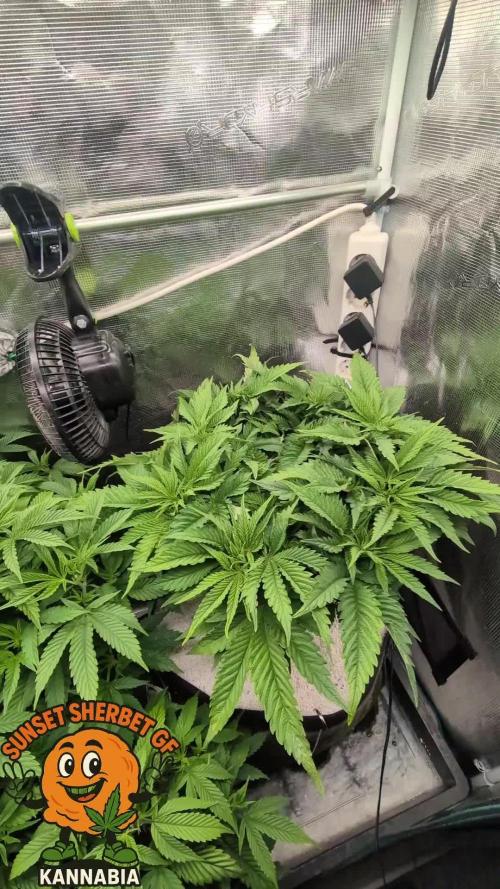
Back at it with Kannabia — huge thanks for the NEW EXCLUSIVE Upcoming Kannabia's seed Launch 🙏🍨🍊
Grateful for the trust and for everyone following along, I’ll run her clean and showcase what she can do.
Dessert-party goals: berry–citrus sherbet terps, creamy finish, tight stacks, easy trim, zero drama.
Veg 24/0, clean manifold + LST, flip on a happy, even canopy.
Coco’s fresh, seed goes in now. 🚀
Added on 12.10.2025
🌞 Light conditions: Limited direct light for the first 4 weeks — ~4 h/day on weekdays and ~10–11 h on weekends due to tent sharing and work schedule.
🌸🍊✨🍭🌸🍊✨🍭🌸🍊✨🍭🌸
💭❗💭❗💭❗💭❗💭❗💭❗💭
❗Events & thoughts worth noting❗
💭❗💭❗💭❗💭❗💭❗💭❗💭
10.08.25 GW1 Sowed seed, soaked starter pot with #1
12.08.25 GW1 Seed popped hip hip hurray
28.08.25 VW2 Stopped using GreenBuzzBloom, took it out of the schedule.
01.09.25 VW3 TriPartMicro 10→30ml, TriPart bloom 10→30ml
12.09.25 VW4 Applied nemadodes against thrips and fungus gnats.
20.09.25 VW6 topped and trained for first time, decided against a full manifold as I lost a few weeks already.
26.09.25 VW7 Topped her one more time for 8 mains
27.09.25 VW7 Topped up the pot with perlite instead of clay pebbles this time, just trying things out, TriPartMicro 30→40ml , TriPartBloom 30→20ml
10.10.25 VW9 have her a haircut, umm be trimming the side shoots tomorrow, rest in the video 📹
12.10.25 VW9 done some extra trimming to clean up a bit and chose two extra side shoots to nurture info mains, so kept the 8 original mains plus 2 rest in the video 📹
🌱💦🌱💦🌱💦🌱💦🌱💦🌱
🌿 Day to day tasks & actions 🌿
🌱💦🌱💦🌱💦🌱💦🌱💦🌱
10.10.25 VW8– no water no feed
11.10.25 VW9 – Fed 5l of #1 → 2l runoff
12.10.25 VW9 – Fed 5l of #1 → 2l runoff
13.10.25 VW9 – no water no feed
14.10.25 VW9 – no water no feed
15.10.25 VW9 – Fed 5 plain pHed water → 2l runoff
16.10.25 VW9 – Fed 5 plain pHed water → 2l runoff
17.10.25 VW9 – no water no feed
(*RUNOFF reused for tomato plants)
🍶💧🍶💧🍶💧🍶💧🍶
💧 Nutrients in 30L #1
🍶💧🍶💧🍶💧🍶💧🍶
💧 TriPart Micro: 10 → 30 → 40 ml
= 0.33 → 1.00 → 1.33 ml/L
🍶 TriPart Grow: 0 ml
= 0.00 ml/L
💧 TriPart Bloom: 10 → 30 → 20 ml
= 0.33 → 1.00 → 0.67 ml/L
💧 Cal-Mag: 60 ml
= 2.00 ml/L
🍶 Home-made FFJ/FPJ (new batch): 30 ml
= 1.00 ml/L
💧 pH Down:
Citric acid (BuxXtrade) — adjust to ~pH 6.0
📦 TOTAL : = 160 ml per 30L = 5.33 ml/L
🍶💧🍶💧🍶💧🍶💧🍶
⚙️✂️⚙️✂️⚙️✂️⚙️✂️⚙️
✂️ Tools & equipment ✂️
⚙️✂️⚙️✂️⚙️✂️⚙️✂️⚙️
✂️ 2× MarsHydro SP3000
⚙️ MarsHydro 150mm ACF Ventilator
✂️ Trotec dehumidifier (big unit)
⚙️ Mini no-name dehumidifier
✂️ Kebab skewers (LST – stainless)
⚙️ Wire + roast skewers (LST assist)
✂️ Scissors (HST)
⚙️ Vacuum (for spills & cleanup)
✂️⚙️✂️⚙️✂️⚙️⚙️✂️⚙️✂️⚙️✂️⚙️
---
🍊🍧🌬️🍬🍊🍧🌬️🍬🍊🍧🌬️🍬 Mystery seed (Kannabia Seeds) — NEW EXCLUSIVE
🍊🍧🌬️🍬🍊🍧🌬️🍬🍊🍧🌬️🍬
Species: Hybrid (GF / swift-flowering line)
Genetics: TBA (breeder sheet pending)
THC: TBA
Effect: Euphoric, relaxed, creative (target profile)
Flavor: Berry–citrus sherbet, sweet candy, creamy finish
Flowering (indoors): ~6–7 weeks target (GF)
Resistance: High (aim: no drama)
Indoor yield: TBA
Outdoor yield: TBA
Structure: TBA
Notes: Brand-new exclusive from Kannabia’s GF line — I’ll update specs when the breeder card drops. Goal is rich sherbet terps (berry–citrus + cream), low leaf-to-calyx, easy trim. Stage harvest stays on the table if tops finish early.
Likes
10
Share


@CampaCavallo
Follow
4ª settimana di fioritura alla CAMPACAVALLO per la Black Muffin di SweetSeeds 💚🐘🔝
Di piccoli peni 🍌 non se ne vedono più...
Ed i bud si stanno gonfiando alla grande😛🎈
Beve 🍺 propio tanto in questa fase di crescita 🐫
🖤La CampaCavallo manda un grande abbraccio a Valencia ed alle persone colpite dalla maledetta alluvione🖤

Likes
5
Share


@TheChronicHunter
Follow
It’s about week 8! A few weeks into flower now.
So far this is looking like the most successful indoor grow to date, but it is early of course. She’s filling the tent perfectly — flowering exactly at the right time — nice even canopy. These genetics have responded very well to scrogg. I am endlessly impressed by canuk genetics.
She’s smelling stronger this week and buds are starting to form. Vertical growth is slowing down — some stretching still.

Likes
39
Share


@BlackDragon22
Follow
Beve 7 litri al giorno... Non dico altro.. Lenta.. Ma sono sicuro che regalerà momenti pazzeschi 🤤😍 odore prelibato.
Likes
24
Share


@LittleBigTrees
Follow
Planted them direct into the soil about 2mm deep, all four were out within 48hrs and have grown well so far 👍

Likes
6
Share


@Wenz004
Follow
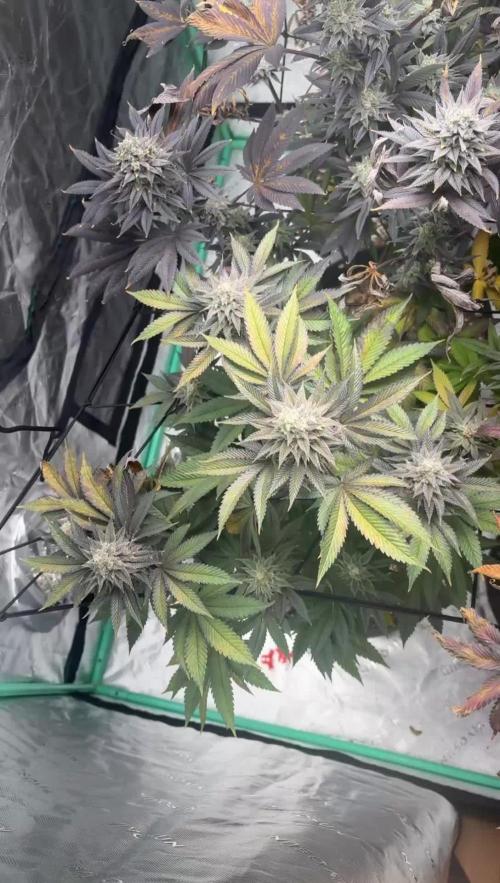
In der Woche 6 wieder regelmäßig Wuchsmeister 10ml/l beim gießen zus. beigemischt.
Ende der Woche 5 und in der 6. Woche
kam Phosphor Blüte Boost von Califarm zus. zum Einsatz
Ender der Woche 6 Topdressing 4 EL Azomite
Bis Ende der Woche 6 Minerlawasser mit höherem Mg Anteil zu 75% genutzt

Likes
2
Share


@koci263
Follow
not so pretty buds, but through their fragrance they are unforgettable flowers for me. It smells beautiful of grapefruit

Likes
77
Share


@SuggaShane
Follow
Started flushing last week. So just a few more days hopefully. She’s super sticky, and smells amazing. 👃 She’s been fun to grow. Pretty easy, just took a little longer than expected. Thanks for following and checking my diary out. 🌱💪🏽💪🏽