


Likes
Comments
Share


@RosQuare
Follow
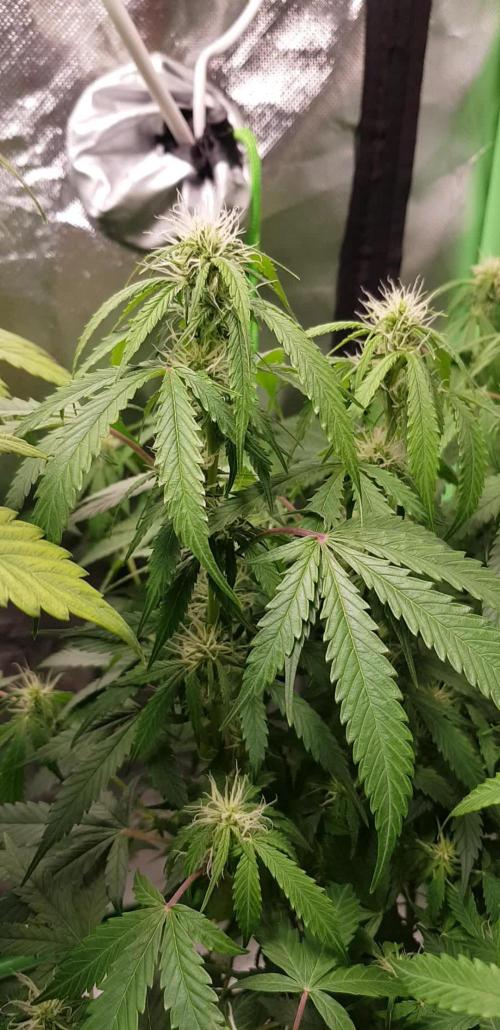
Day 15:
Switched lights to 20/4
I overwatered them last week when I did the feeding, the fabric pots dry fast but this soil holds water well and I’m not used to planting into final sized pots like this either. It’s taking so long to dry out but I’m letting it. I’ve stopped misting obviously. Watching humidity and temps between lights on/off. Looking good. I will do the same light feeding as last week once the pots are dry enough but will make sure to only water the root area this time. I possibly stunted them a little but they are alive and learning is fun 😅
Halfway through the week update. They finally dried out and are now getting 25ml water per day, with feed. I added an oscillating fan. Temp and humidity seems to have stabilized now. Started to grow again but leaves stacked tightly. I’m playing with the lights, they are a bit strong for this stage I think. I turned off the extra 100w light leaving just the 270w on and they seem to have responded well overnight. Will turn it back on once they start taking off. I think I need to reconsider switching lights to 18/6 if I can figure out how to stabilize temps during lights out.

Likes
9
Share

@GERGrowDesigns
Follow
Welcome to Flower Week 2-3 of Divine Seeds Auto Fractal
I'm excited to share my grow journey with you all as part of the Divine Seeds Autoflowering Competition 2025. It's going to be an incredible ride, full of learning, growing, and connecting with fellow growers from all around the world!
For this competition, I’ve chosen the Feminized Automatic strain: Auto Fractal
Here’s what I’m working with:
• 🌱 Tent: 120x60x80
• 🧑🌾 Breeder Company: Divine Seeds
• 💧 Humidity Range: 50
• ⏳ Flowering Time: 60 Days
• Strain Info: 23%THC
• 🌡️ Temperature: 26
• 🍵 Pot Size: 0.5l
• Nutrient Brand: Narcos
• ⚡ Lights : 200W x 2
A huge thank you to Divine Seeds for allowing me to be a part of this amazing competition and Sponsoring the Strains. Big thanks for supporting the grower community worldwide! Your genetics and passion speak for themselves!
I would truly appreciate every bit of feedback, help, questions, or discussions – and of course, your likes and interactions mean the world to me as I try to stand out in this exciting competition!
Let’s grow together – and don’t forget to stop by again to see the latest updates!
Happy growing!
Stay lifted and stay curious!
Peace & Buds!

Likes
31
Share


@Sider79
Follow
Didn't get the potential. Very happy with the look of the finished product , so far I'll give this particular strain 9.3. In it's best stability this would be my go to phenotype cause of the overall potential and ratio. Very happy for it being my first auto grow experience now I'm hooked. Definitely would suggest this bad girl for a first time auto enthusiast and for the connoisseur . I've been looking into that Purple Lemonade by Fast Buds and very excited to purchase also that Black Berry cause they remind me of the Blue Dreams large flower to plant ratio. For now and my next auto grow will beee......🥁
FB.Six Shooter,
VS.Super Xtra Skunk,
Seedsman's Northern Lights
Seedsman's Limited Edition
Strawberry Cheesecake.
I decided to do multiples this time because of finish times I feel will never be the extact either way
I'll try to get a rotation going .😃

Likes
11
Share


@Greenfingers666
Follow
Into week two all cuttings have taken 8 have been topped, spacers have been deployed to train branches 3cm spacers I will increase the size of spacers once the branches develop a little more.
about every 3 days Is required depending on how the strain performs.
this is a more creative method of growing with the final picture of your media in mind {peecock effect}.
once the media has starched I will snap on the spacers to create the scrog for a level canopy, holding the outer plants left and right further out to the left and right for more light exposure to develop my flowers to there full potential.
middle of week 2 I put the spacers together to make the scrog mainly two train the left and right rows of plants outwards for more space in the middle of my canopy.


Likes
4
Share


@Wescoas
Follow
Let the girls do their thing for the most part this last week. Started to stack up real nice, started to notice white pistils coming in. After 2-3 days there were more popping up and some beginning to flush to orange. Decided to LST and defol one last time, watered without any nutes. Today marks week 5 with the ladies, and I will officially say they are ending their veg cycle and transitioning into flower. Cranked the fans up tonight to circulate more air, tapering humidity down. Been pretty easy going so far
Likes
7
Share


@JeyGanesha
Follow
4 sett.ho iniziato subito con un hst.non voglio che cresca troppo alta in balcone

Likes
18
Share


@Staffedition
Follow
Привет друзья. Моей растихе сегодня 155 дней
Сегодня перестал кормить и начал проливать чистой водой
20.10 перевёл свет в режим 12/12
Начал применять LST технику на 19 дне, а 18 августа добавил ДЕФОЛИЗАЦИЮ
С 20.08 ДЕФОЛИЗАЦИЮ
С 20.08 LST технику
На сегодняшний день влажность 54%
5.09.2023 заметил высокий Ph 7.9
С 48 дня Ph не ниже 5.8
На сегодняшний день Ph 6.0
Начал кормить с 60 дня Canna Terra Vega
PPM 150
Всем мира и добра!
Не забудь поставить лайк❤️, если понравилась как прошла неделя
И читайте наш TELEGRAM: https://t.me/smail_seeds
#Smail_Seeds 😀

Likes
13
Share


@Pungolian
Follow
From all the reviews ive read on this strain i was expecting more resinous buds tbh. Trichs look good though. Definitely will grow again, waiting on the dry and cure now

Likes
35
Share


@eldruida_lamota
Follow
Bueno familia ya finalizamos, estas red hot cookies son una cepa bestial.
La verdad que el secado muy bien 7 días en Malla y a los botes, 45% humedad y 23 grados es la temperatura ambiental que han tenido en el secado.
4 plantas que se cultivaron en un armario de 1.20 pero estos ejemplares solo ocuparon 80x80.
Así que ya está cultivada esta gran variedad que es novedad este 2020, americana de la familia Cookies, la Tropicanna Cookies (Girl Scout Cookies x Tangie) con un porcentaje de thc entre los 17/25%, una bomba.
Que decir de Agrobeta, lo peta 💪 en cuanto a nutrientes. Un saludo y buenos humos.

Likes
3
Share


@French__flair
Follow
Si vous avez la moindre question n'hésitez pas à me contacter.
La préparation des boutures est assez simple, il existe plein de guide pour les réaliser, contactez moi si vous rencontrez un problème.
Ce qui est important c'est de partir d'une plante saine, ne présentant pas de carences. Si les branches ou feuilles de vos plantes ont un aspect/toucher étrange, il faut vous assurer de régler le problème avant de prélever vos boutures pour vous assurer de la réussite finale.
En cas de carence sur vos pieds mères vous pouvez utiliser Revive et B-52 en foliaire et en irrigation pour régler le problème! J'ai donc fais une pulvérisation foliaire le jour précédent les boutures pour m'assurer de leur santé et également une pulvérisation de B-52 sur la plante mère après l'opération de taille!
Une fois les bouture réalisé j'ai pulvérisé avec un mélange Voodoo/Tarantula/Piranha pour m'assurer qu'aucune bactérie ou champignon ne puisse venir infecter mes clones.
J'ai utilisé des Rockwool Cube et je déconseille. Je trouve que l'enracinement est beaucoup plus difficile qu'avec Root it ou Root Riot de Growth Technology!
Le processus dure environ 10 à 15 jours pour l'enracinement et il faut compter encore 5 à 7 jours pour l'enracinement dans le pot 1L.
A ce stade les plantes sont enfin enraciner et prêtes à commencer leur croissance!
Processing
Likes
12
Share


@Zoe_Spacecake
Follow
He hecho varias podas para controlar el crecimiento de las plantas. Sirve también para hacer las ramas un poco más fuertes, porque es una variedad que tiene tendencia a crecer alta, fina, con ramas débiles.
Likes
33
Share


@DWCbuds
Follow
Starting the week with most fan leaves removed and fresh water/nutrients 280ppm for now but will increase if she response well.
Day 58 fed her again : 380ppm
Day 60 noticed a small amount of white on the flowers turning brown...most likely nutrient burn so I added 1 gallon of distilled water to dilute.
This week has been pretty laid back letting her do her thing. I plan on feeding her again in 3 days to 350ppm. She's starting to get frosty!

Likes
21
Share


@MG2009
Follow
02/26/2022
Just enoying the smell, pollination was successful!
On #6 seeds forming nicely 🙏🏻
Also some weird stretching I'm top buds from accidentally leaving light's on a couple days. But should be good. looks like my efforts to pollinate one branch didn't do so well plenty of seeds to grow out now lower buds look clean of pollen no sign of pollination.
Should start adding weight in next two weeks.
Likes
5
Share

@Thedibber
Follow
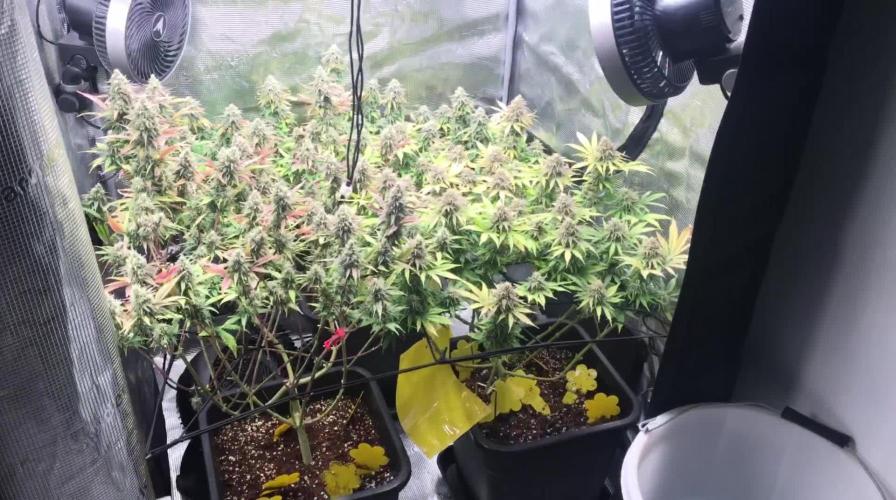
31/10/25 - Not long now until the 2x Bubba cheesecake can move into the 3x3 and flip to flower under a scrog. 2x bubba cheesecake + 1x Badazz OG cheese going into the 3x3.

Likes
42
Share


@MrJoint
Follow
✌️🎃 Thank you for checking my cultivation.
✂️ Defoliation Time’s
🌷 Started flower stage


Likes
37
Share


@XperencdGmanXG
Follow
week 4 and she is filling out nicely. bud growth is on par with a synthetic grow. Smell is wonderful! There is something in the organic soil that makes the weed smell divine. I'll never go back to synthetic nutrients. 4 weeks to go can't wait.
Likes
8
Share


@420Somewhere
Follow
The best quality cannabis I have grown so far. Sweet and smooth with a mellow, balanced and creative high. Nuggs look amazing after 12 days curing. Shame I don't have any more seeds, will def grow again. RQS done a great job. 123 Gram of top quality bud and 32 Gram of trim for hash.
Sincere thanks to the grow diaries community. In just over a year I have learned enough to grow top quality medicine at a fraction of what I would normally pay. Plus, it's such an interesting hobby!
I will continue giving to this great community. This plant is mother nature's gift to us all.
Likes
10
Share


@420DeepGrow
Follow
Gracias al equipo de Zamnesia, Marshydro, XpertNutrients y Trolmaster sin ellos esto no sería posible.
💐🍁MAC 1:
La MAC 1 es una variedad muy solicitada, creada originalmente por Capulator y distribuida solamente a determinados criadores y cultivadores. ¡Pero ahora ya puedes cultivar este tesoro en casa y disfrutar de sus cogollos densos, jugosos y potentes!
Gracias a su densa copa y vigor, la MAC 1 es una opción ideal para LST, poda apical y otras técnicas de entrenamiento (incluido el lollipopping). Cuando entra en floración, las plantas de la MAC 1 se estiran bastante y una vez maduras pueden alcanzar una altura de 160cm en interior y más de 180cm en exterior. De media, las plantas feminizadas de la MAC 1 necesitan un total de 9-10 semanas para terminar la floración, momento en el que estarán repletas de cogollos índica pequeños y compactos.
🌻🚀 Consigue aqui tus semillas:
https://www.zamnesia.es/10906-zamnesia-seeds-mac-1.html
Código Descuento 20%: ZAMMIGD2023
💡TS-3000 + TS-1000: se usaran dos de las lámparas de la serie TS de Marshydro, para cubrir todas las necesidades de las plantas durante el ciclo de cultivo, uso las dos lámparas en floracion para llegar a toda la carpa de 1.50 x 1.50 x 1.80.
https://marshydro.eu/products/mars-hydro-ts-3000-led-grow-light/
🏠 : Marshydro 1.50 x 1.50 x 1.80, carpa 100% estanca con ventanas laterales para llegar a todos los lugares durante el grow
https://marshydro.eu/products/diy-150x150x200cm-grow-tent-kit
🌬️💨 Marshydro 6inch + filtro carbon para evitar olores indeseables.
https://marshydro.eu/products/ifresh-smart-6inch-filter-kits/
💻 Trolmaster Tent-X TCS-1 como controlador de luz, optimiza tu cultivo con la última tecnología del mercado, desde donde puedes controlar todos los parametros.
https://www.trolmaster.com/Products/Details/TCS-1
🍣🍦🌴 Xpert Nutrients es una empresa especializada en la producción y comercialización de fertilizantes líquidos y tierras, que garantizan excelentes cosechas y un crecimiento activo para sus plantas durante todas las fases de cultivo.
Consigue aqui tus Nutrientes:
https://xpertnutrients.com/es/shop/
📆 Semana 4:
Aparecieron un monton de erizos esta semana, el temporal ha hecho algo de mella en la carpa al bajar las temperaturas aunque todo sigue correcto.
Continuamos con las dosis de nutrientes recomendadas por el fabricante.

Likes
12
Share
@eldruida_lamota
Follow
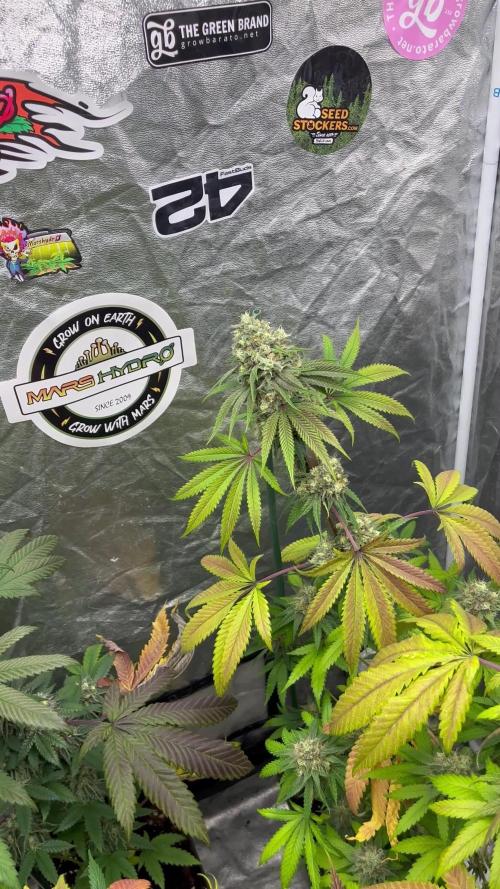
Vamos familia, actualizamos la sexta semana de floración de estas Lemon Cherry Runtz de FastBuds.
La temperatura que estuvo entre los 24-26 grados y humedad dentro de los rangos correctos.
En cuanto a las plantas las veo verde sano, estiraron bien y ensancharon bastante también.
Se nota que los nutrientes de la marca Agrobeta cubre todas las necesidades de cada ejemplar, también añadí Thor y Mega Pk.
Hay que reivindicar que en este indoor no tengo ni plagas ni problemas.
Las flores empezaron a tricomar y engordar, por el momento todo correcto, os dejé también alguna novedad y un cambio en la sala, agradecer al equipo de Mars hydro por el nuevo TSW2000. (los últimos 5 años cultive solo con los leds de esta marca) los cuales probé, TS600, TS1000, TS3000, TSL2000.
- os dejo por aquí un CÓDIGO: Eldruida
Descuento para la tienda de MARS HYDRO.
https://www.mars-hydro.com
Hasta aquí todo, Buenos humos 💨💨💨